At a Glance
Trip Length: 9 days
Destinations: Rome/Civitavecchia → Naples → Santorini → Athens → Mykonos → Ephesus → Chania → Rome/Civitavecchia
Cruise Line: Royal Caribbean
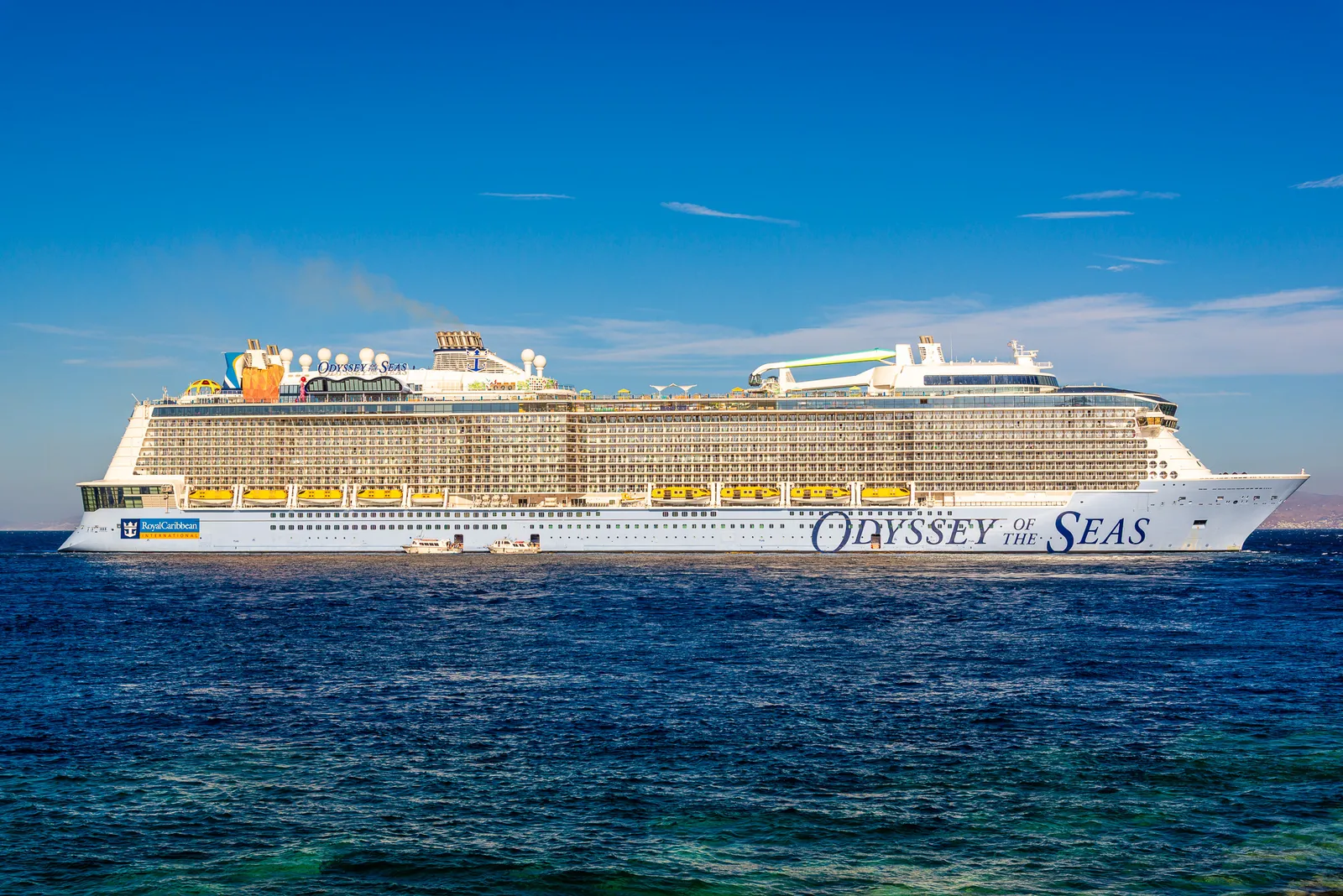
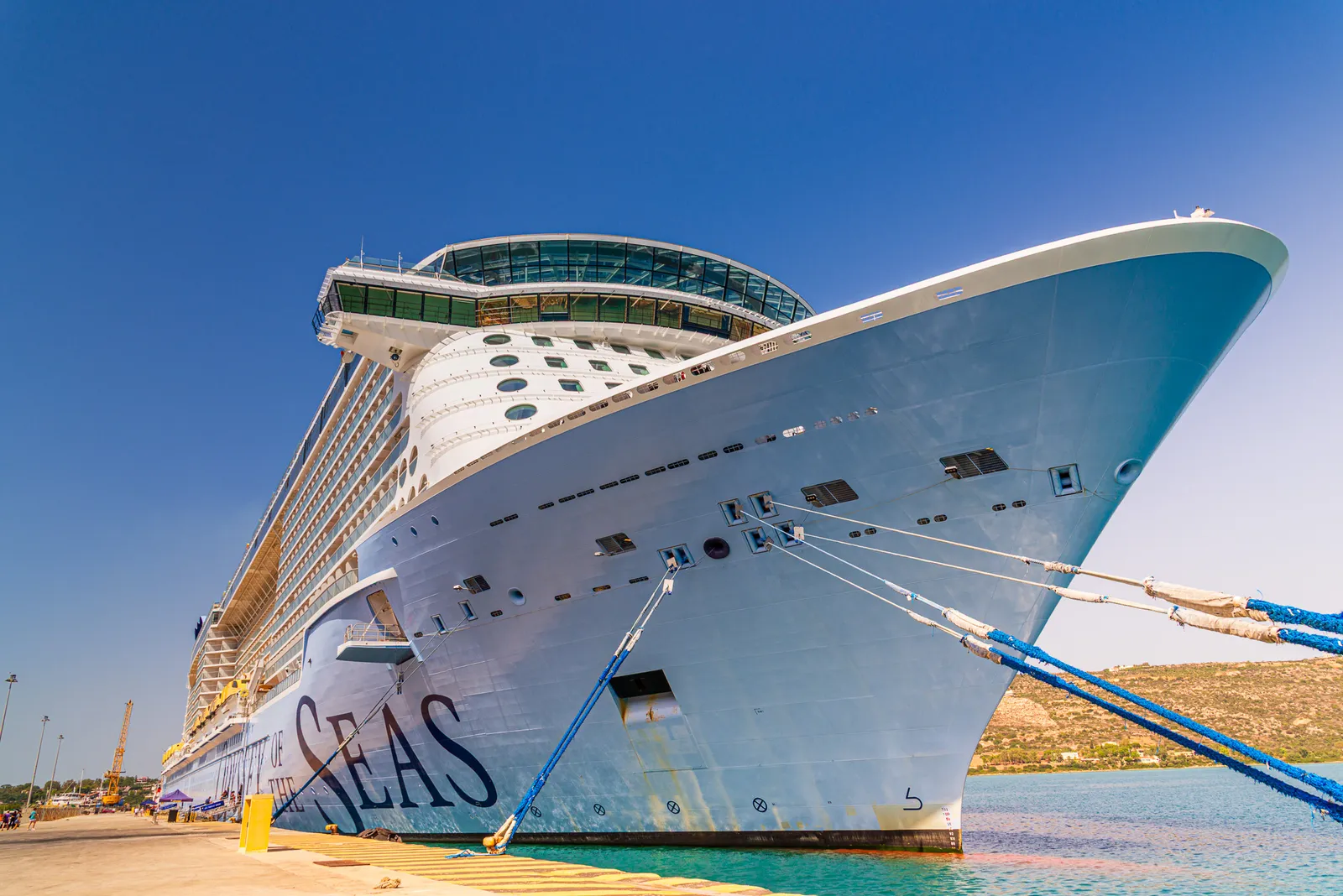
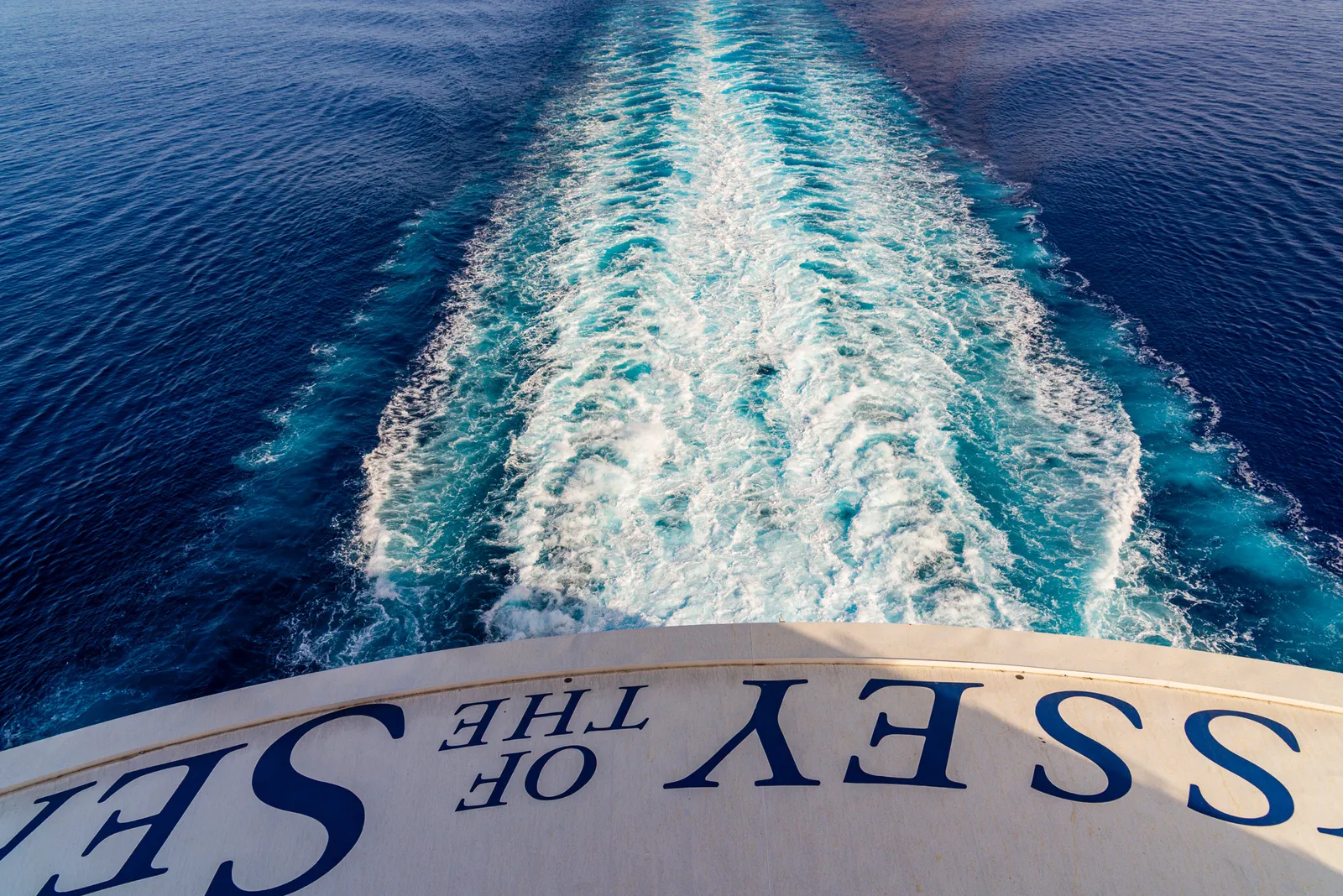
Ship: Odyssey of the Seas
Best For: First-timers, history lovers, families, photography enthusiasts
Trip Style: Private drivers + DIY exploring + guided excursions
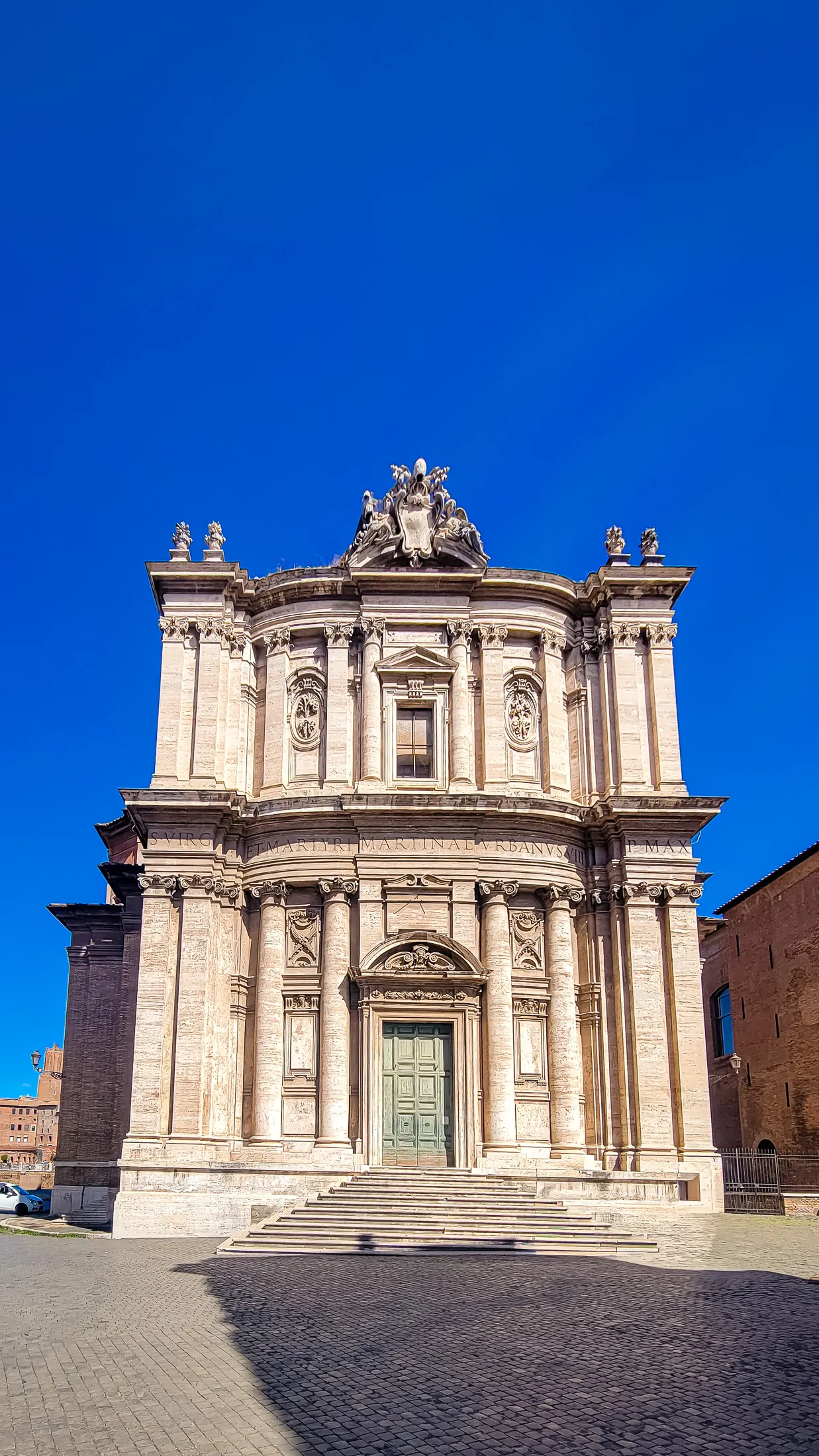
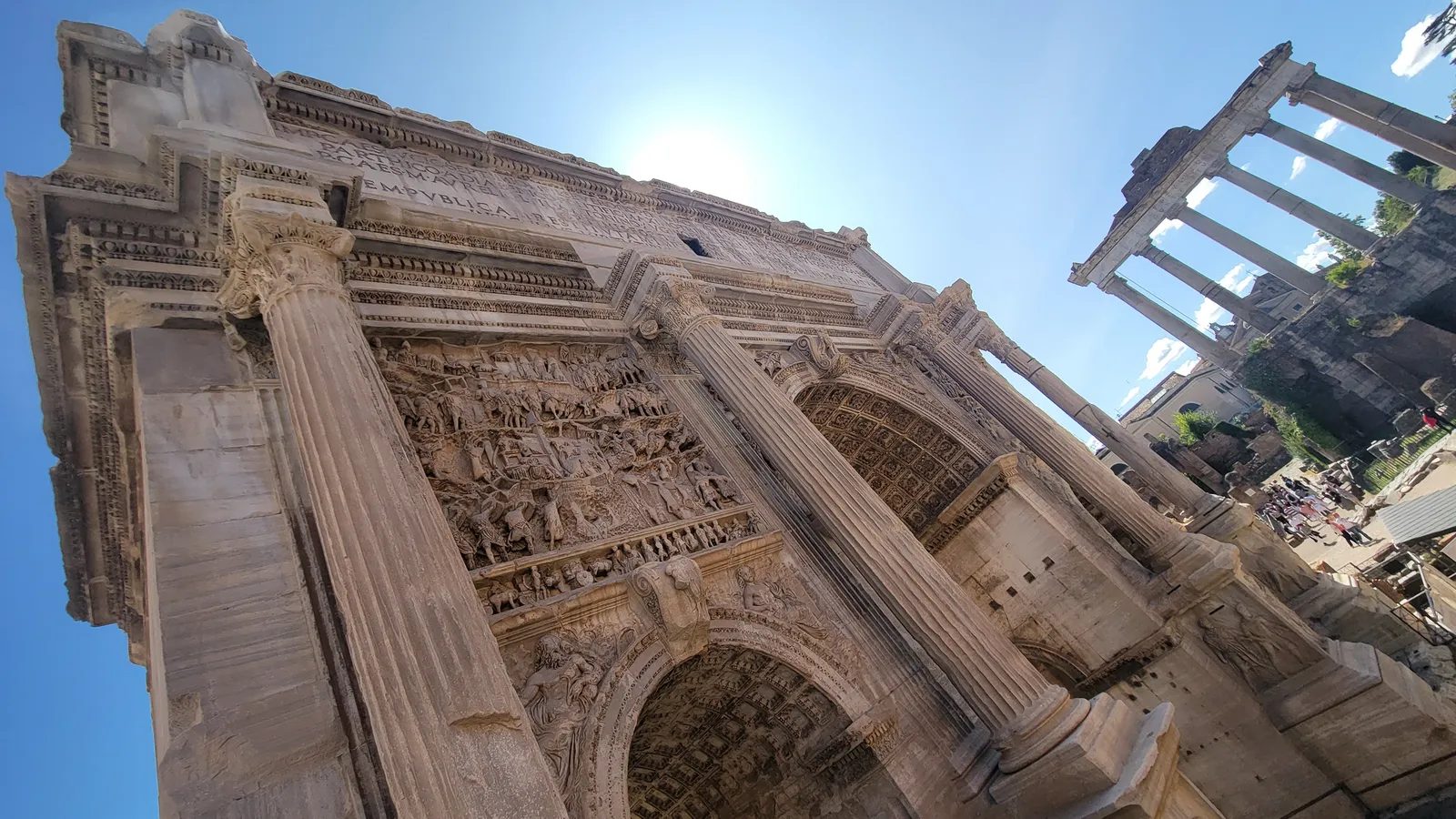
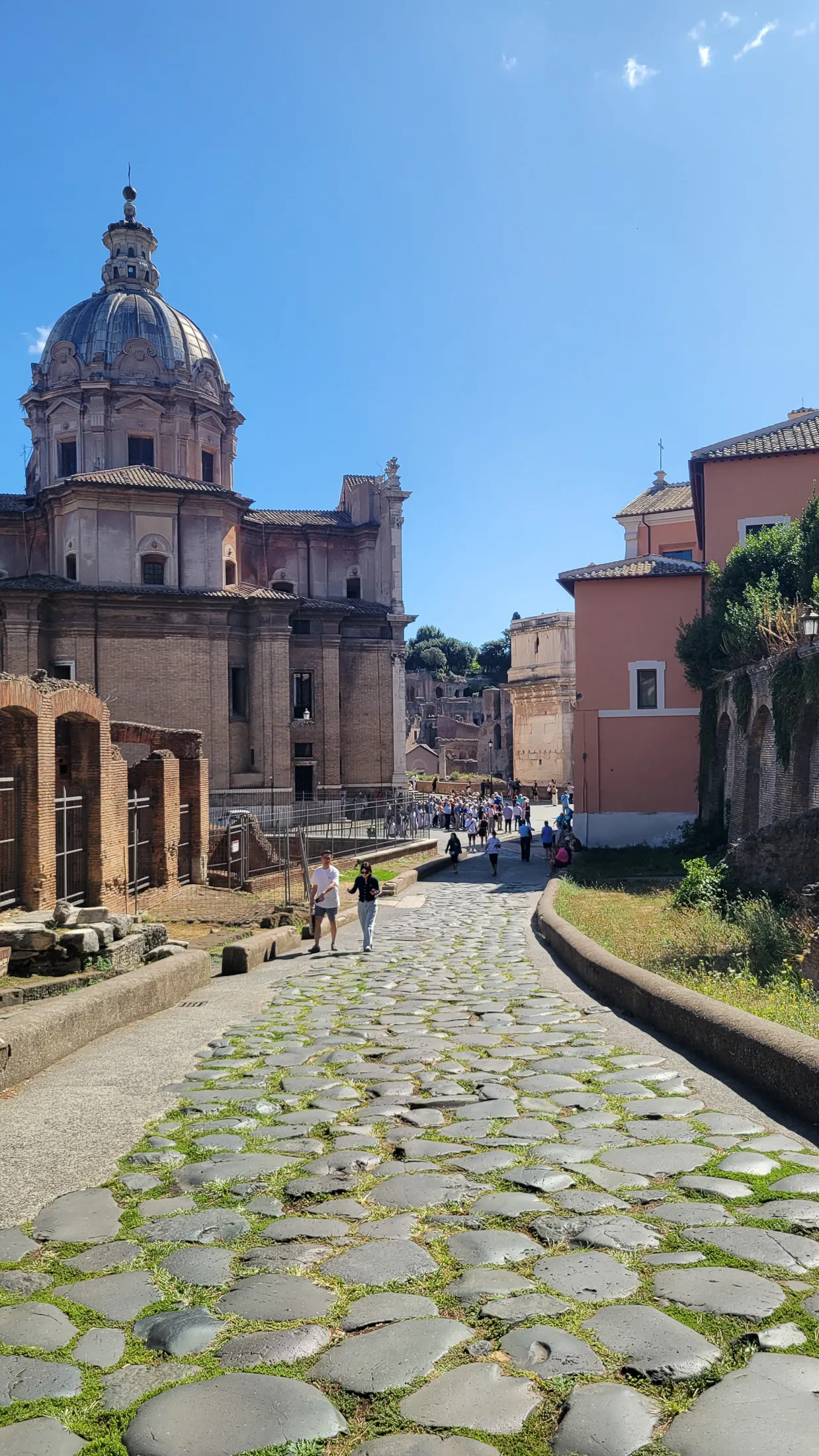
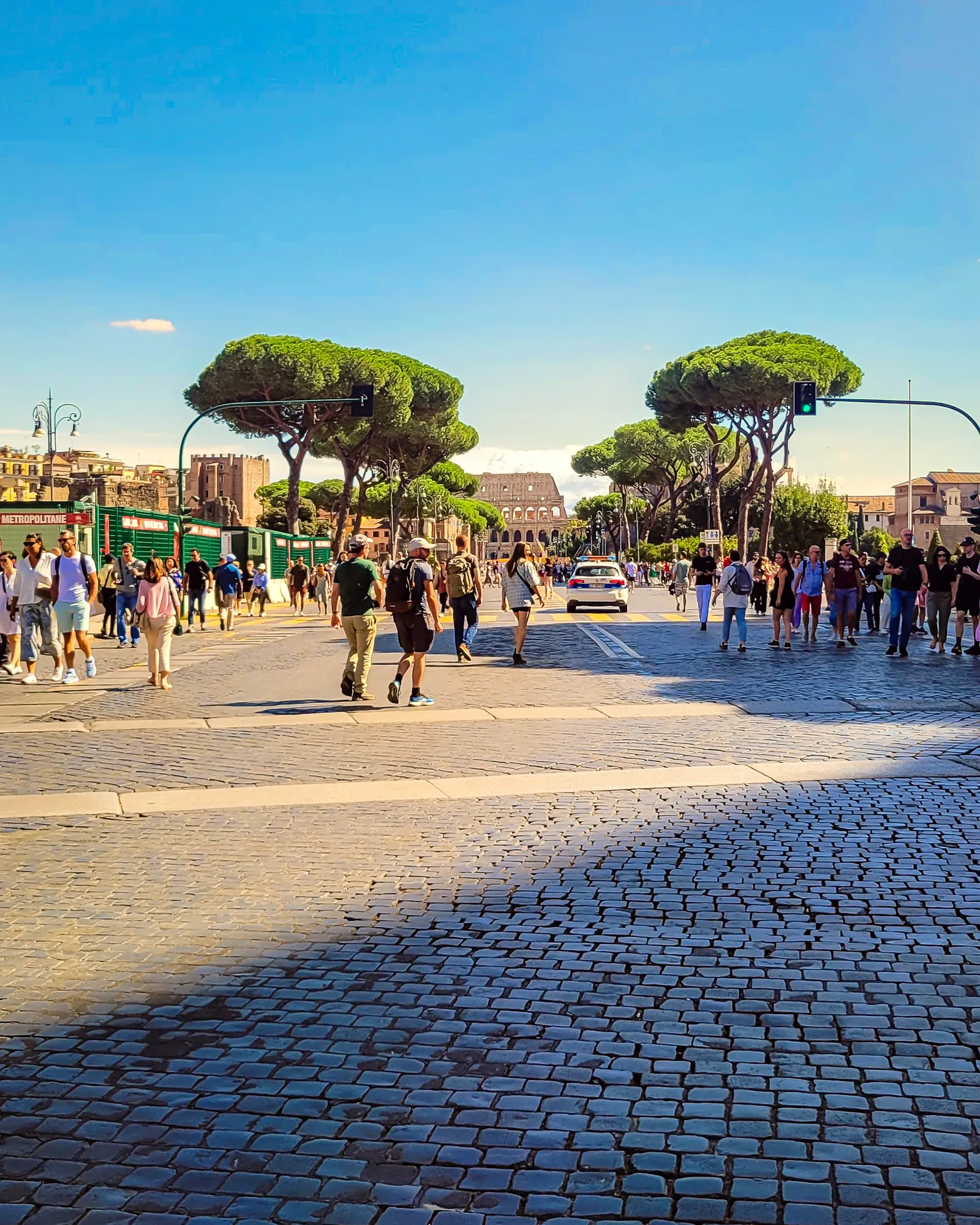
After three unforgettable days exploring Rome, it was finally time for the next chapter of our two week adventure: a nine day Mediterranean cruise aboard Royal Caribbean's Odyssey of the Seas. What followed was a whirlwind of ancient cities, cliffside villages, blue domed skylines, and ports with their own story.
This guide breaks down our full Mediterranean cruise itinerary, port by port, blending personal experience with practical tips to help you plan your own cruise adventure.
A Positano & Sorrento Day Trip
Naples was our first port and a full land day. With limited time and a lot of ground to cover, planning ahead is essential. I hired a private driver who met us right at the dock and took us straight to the Amalfi Coast. The goal: Positano → Sorrento, with Amalfi as a "maybe." Spoiler: Amalfi would've been too far for a cruise timeline.
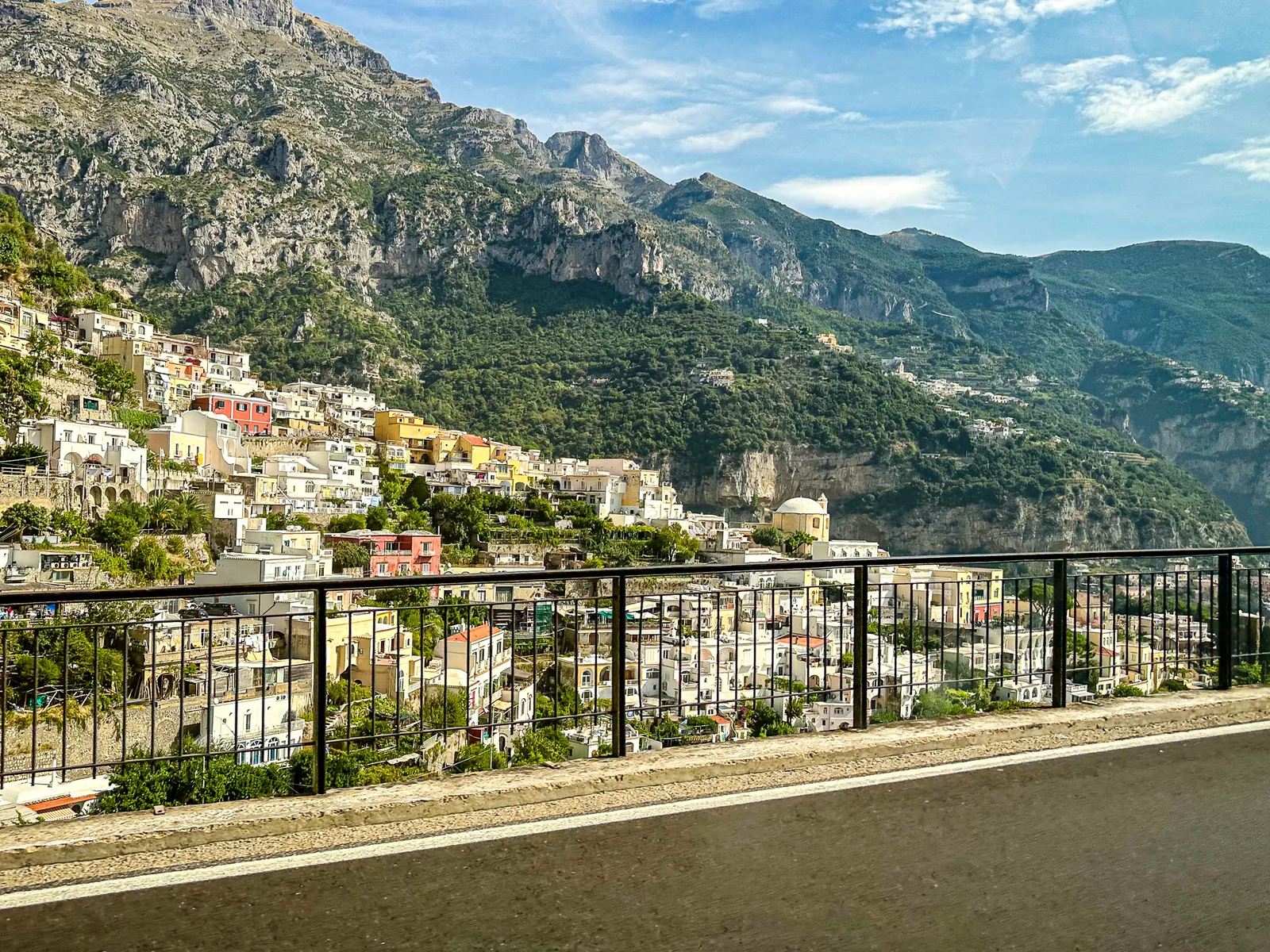
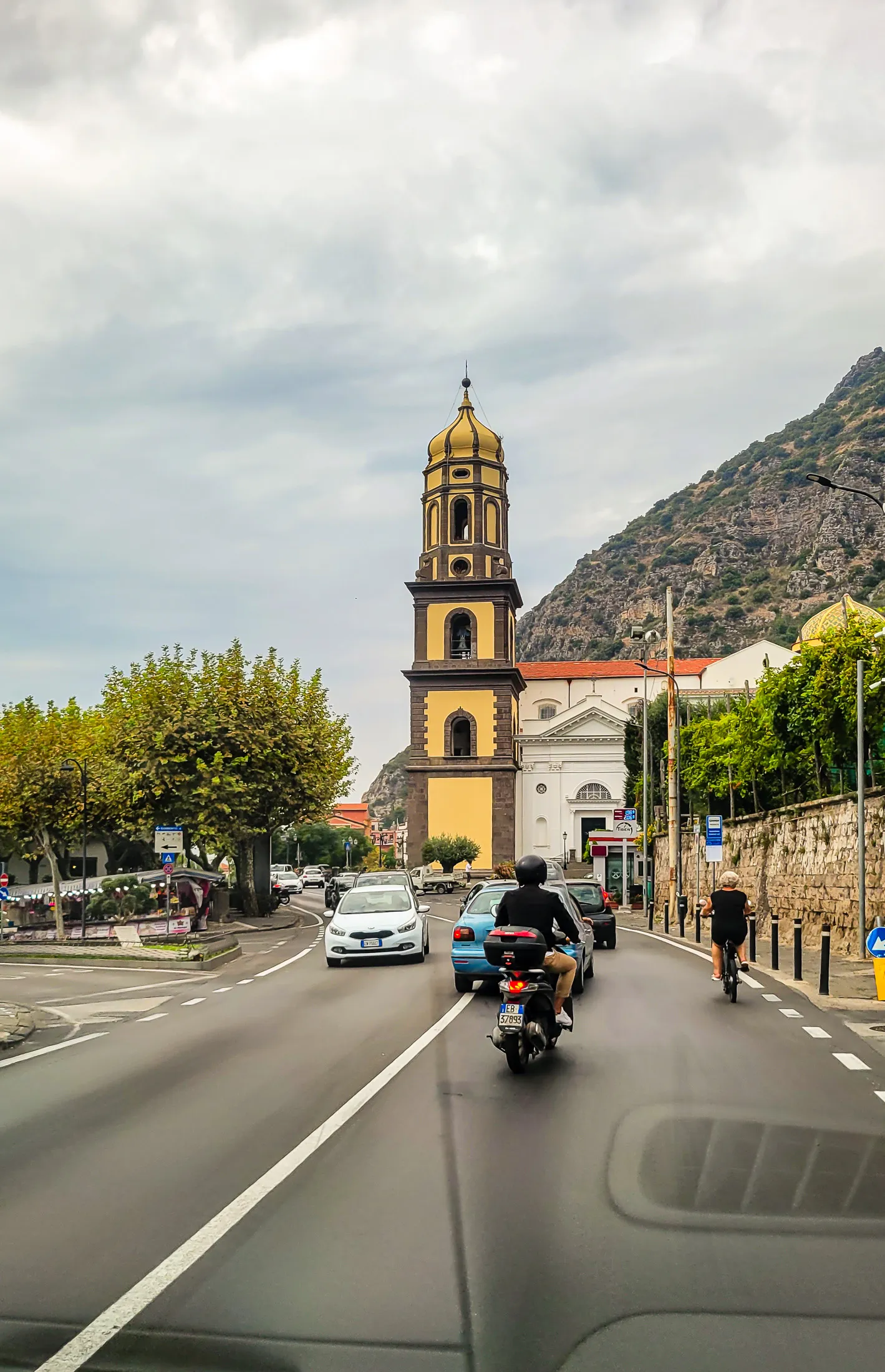
The drive from Naples is stunning, winding along the cliff-hugging "Amalfi Drive" with some of Italy's most dramatic coastal views. It's narrow, full of hairpin turns, and often congested in peak season, with odd-even license plate rules adding extra complexity. Thankfully, our driver Adolfo made the journey stress-free, knowing exactly where to park and wait.
For cruise-ship travelers, this is crucial, delays or parking issues can risk missing your ship. Hiring a local driver or planning carefully around the schedule is the best way to enjoy the coast without worry.
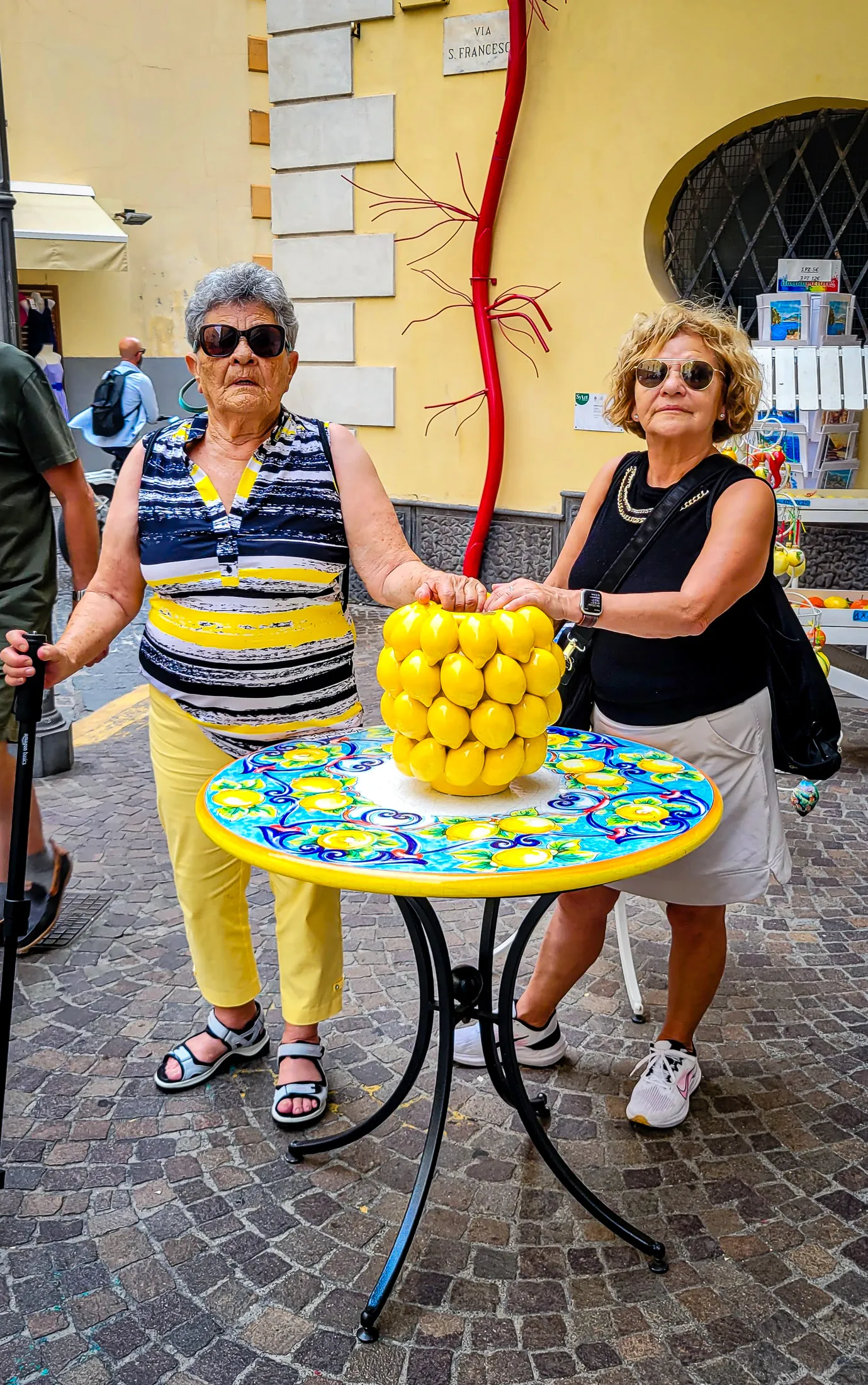
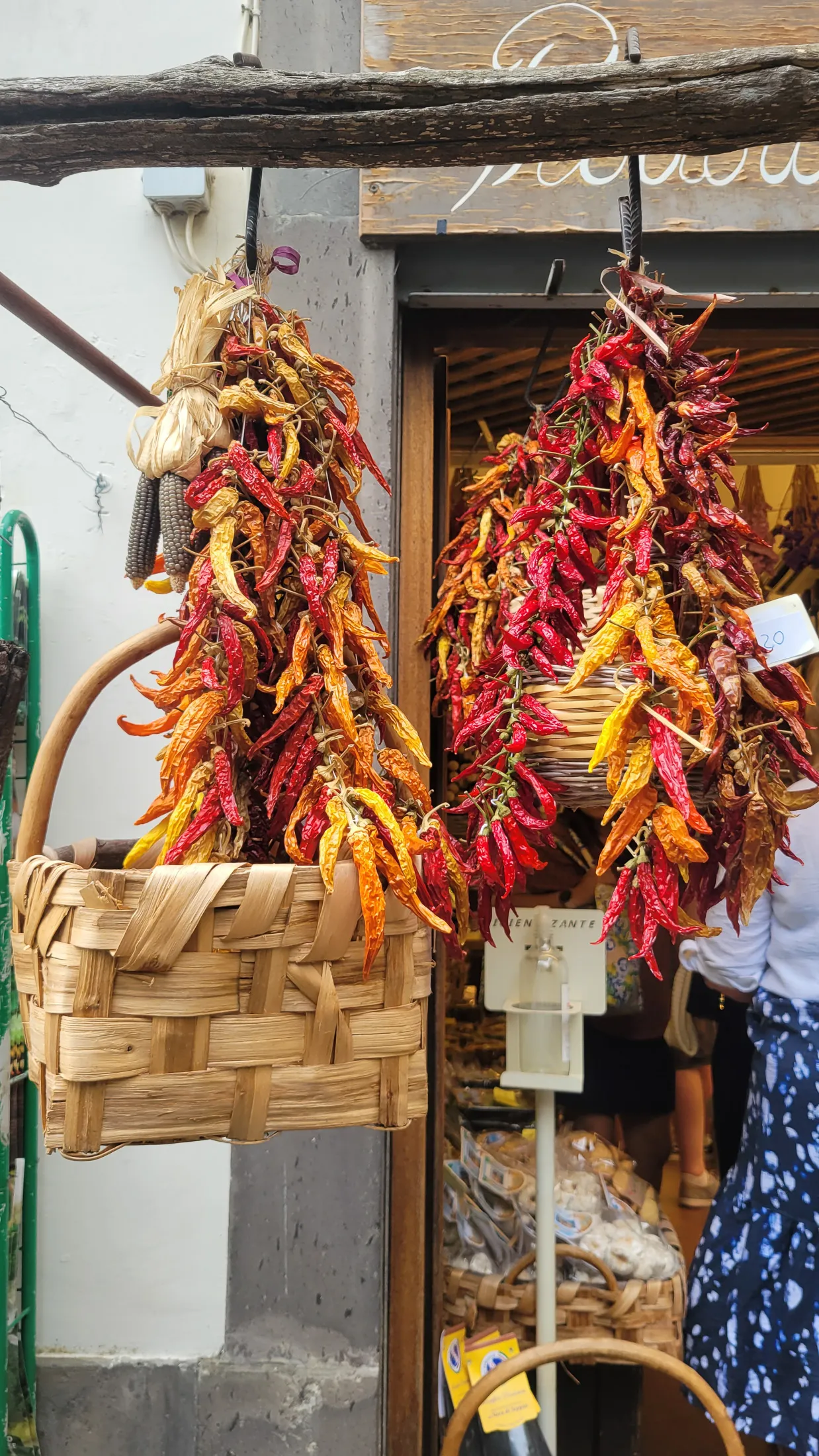
Positano grabs you the moment you step onto its narrow, winding streets. Built into the cliffs of the Amalfi Coast, the town thrives on a delicate balance where cars, scooters, pedestrians, and restaurants share the same tight spaces. We walked down to the church and eventually to the beach below, stopping along the way to window shop and enjoy the fresh sea breeze. Everywhere, vibrant lemons peeked out from shop displays and gardens, a staple of the region, used in everything from the famous limoncello to local desserts. It's a lively, unforgettable place where the streets aren't just pathways, they're the heartbeat of the town.
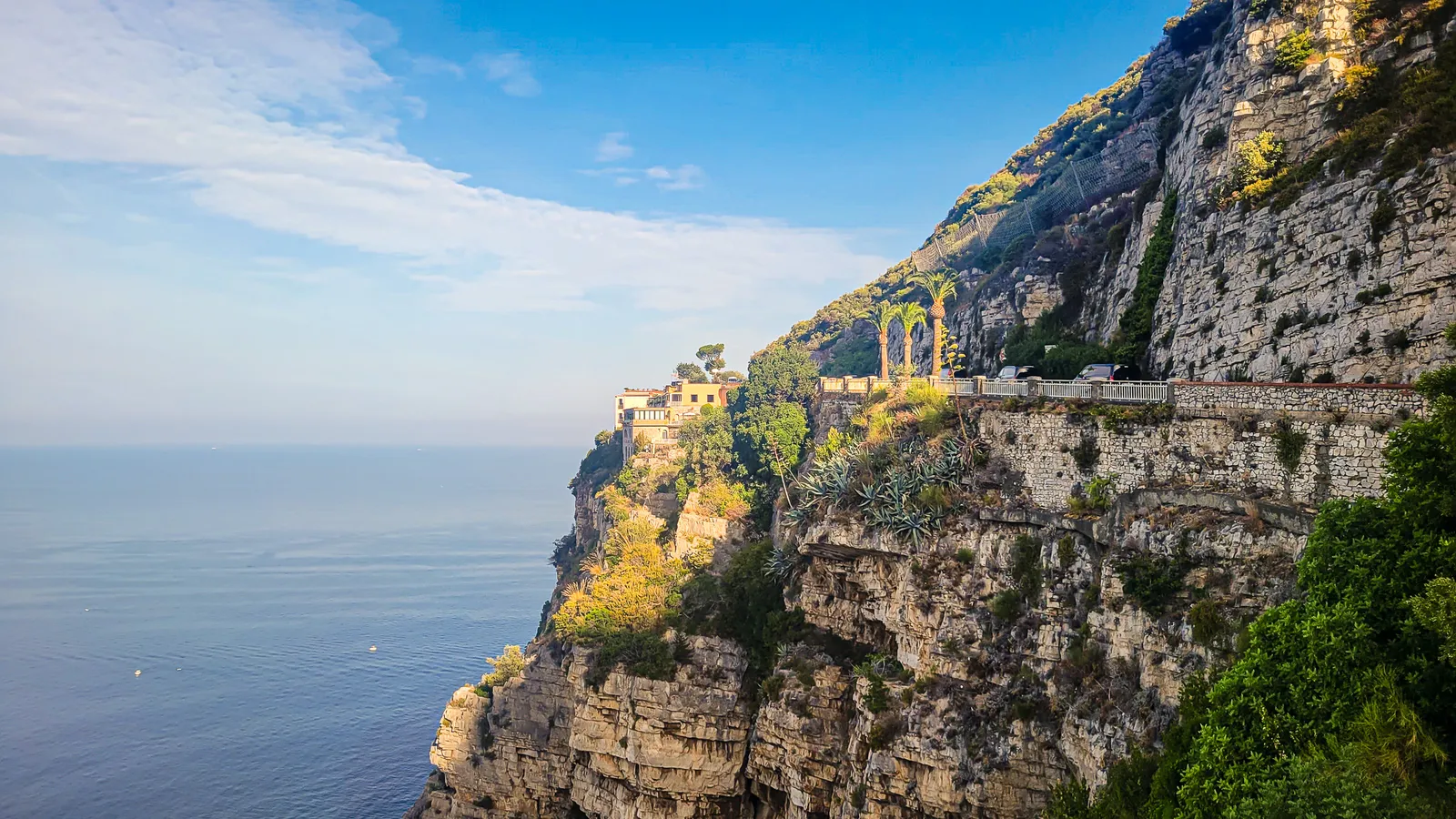
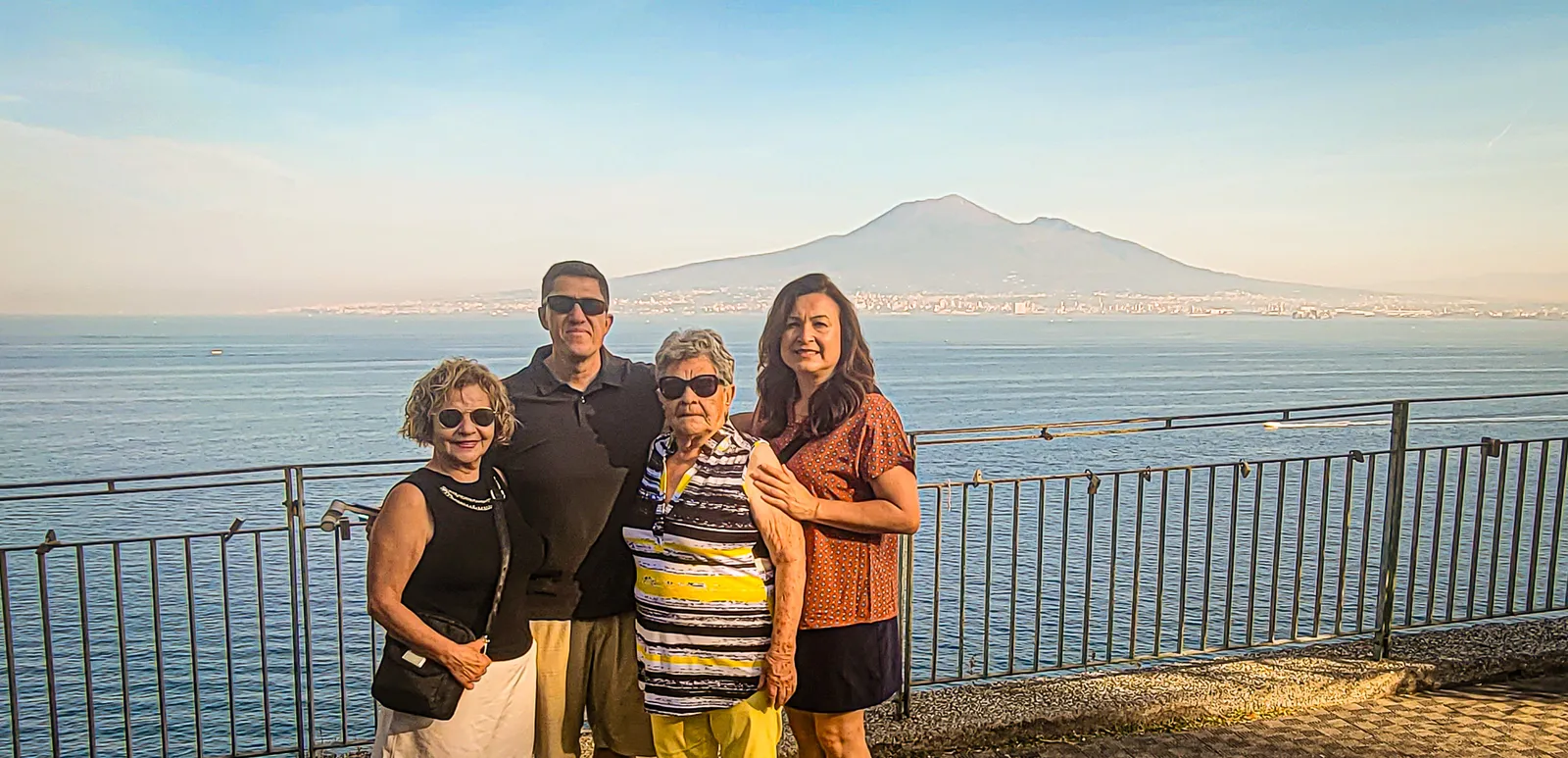
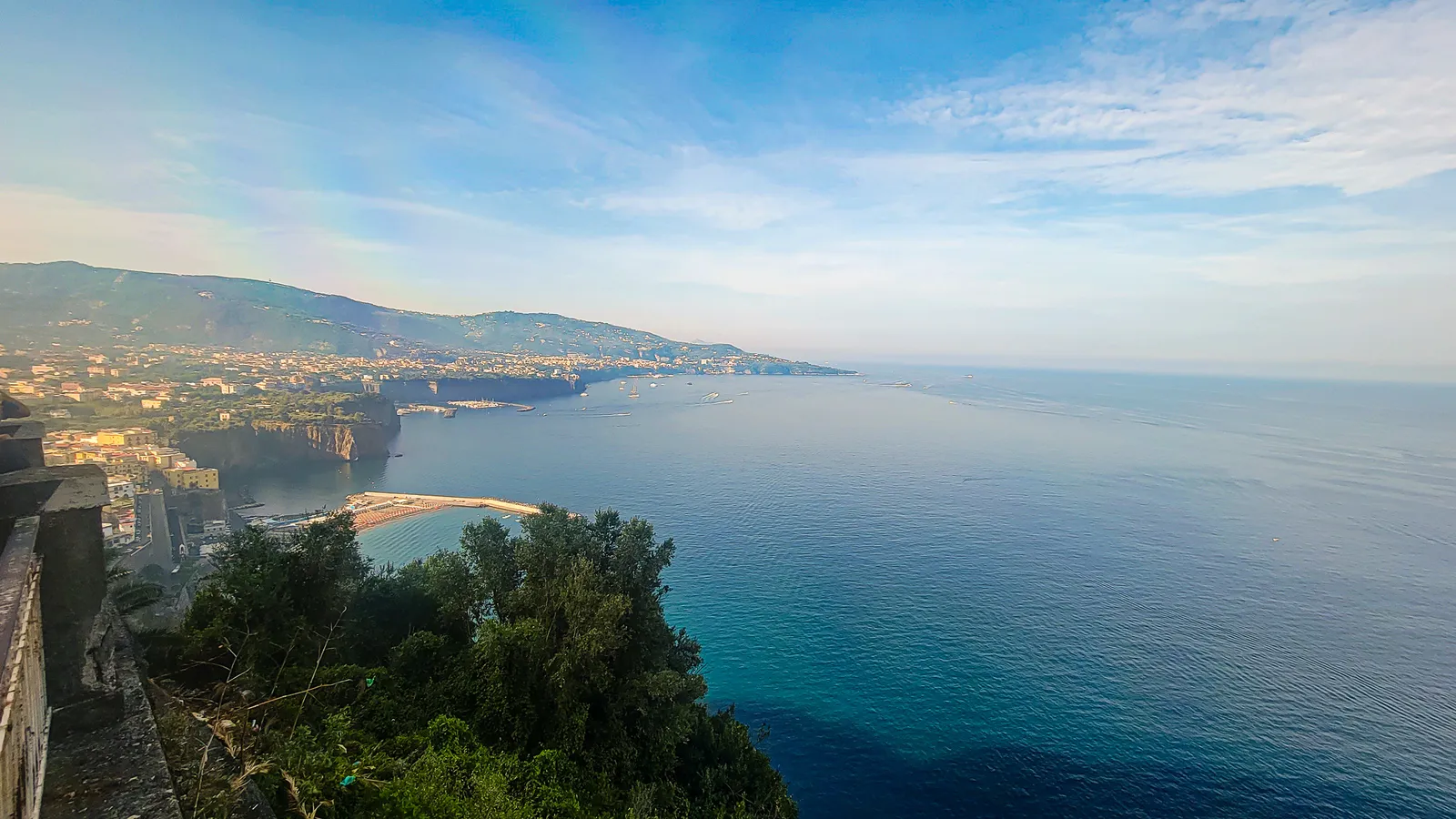
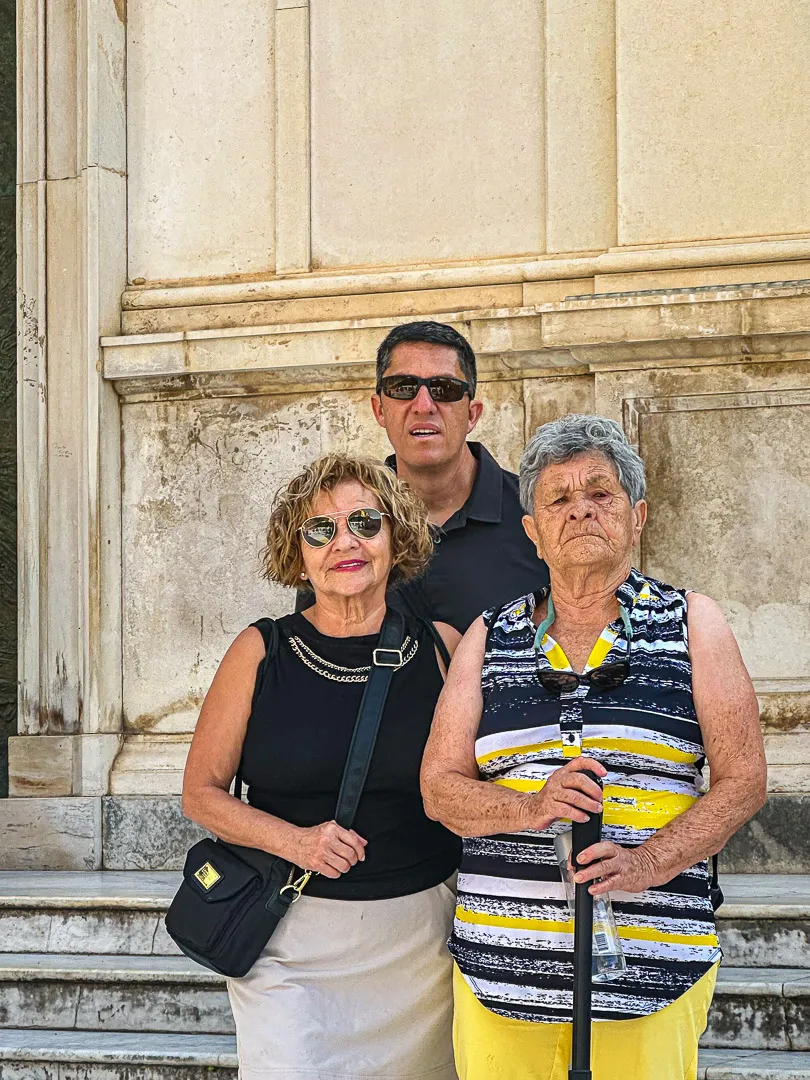
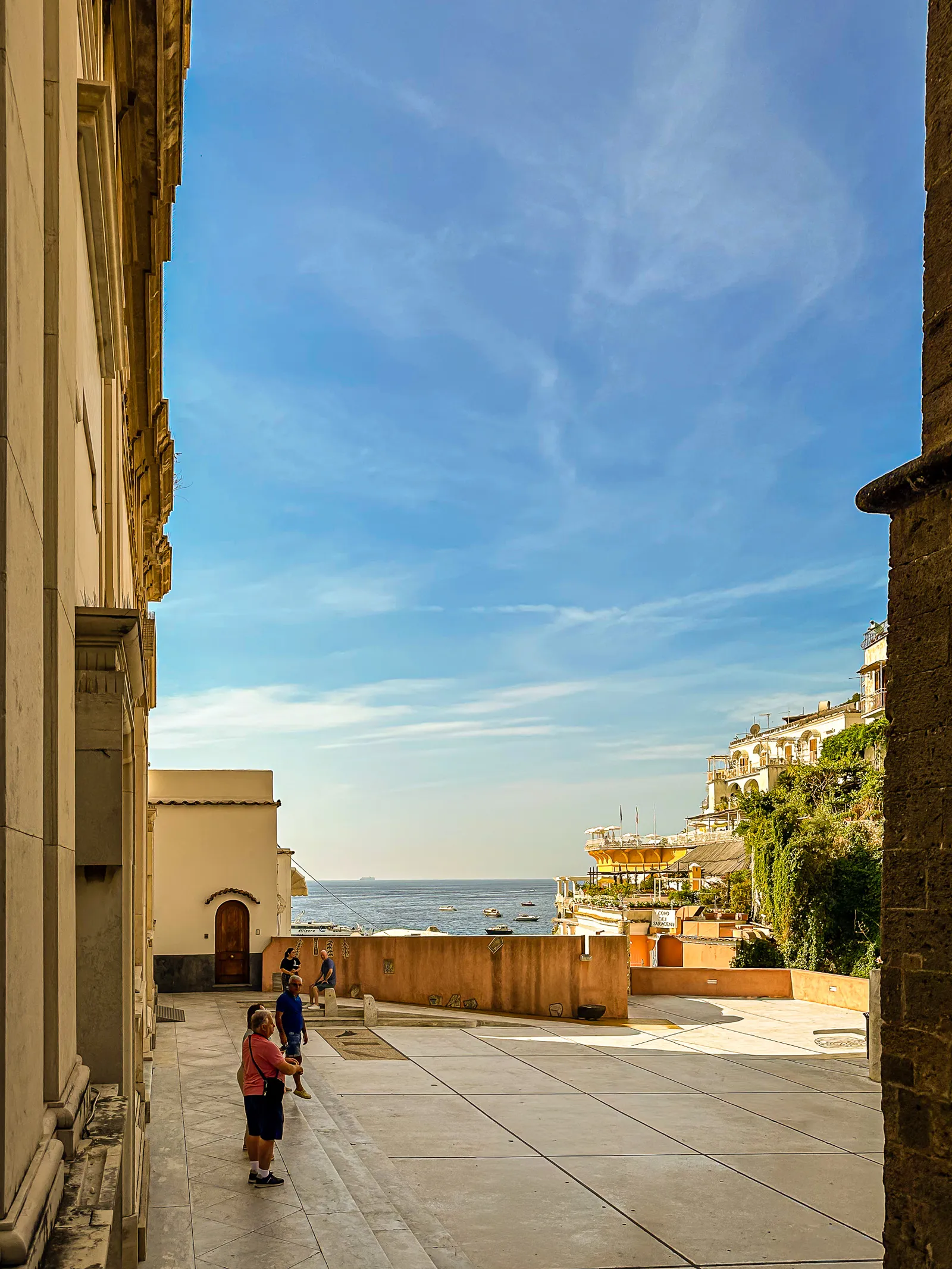
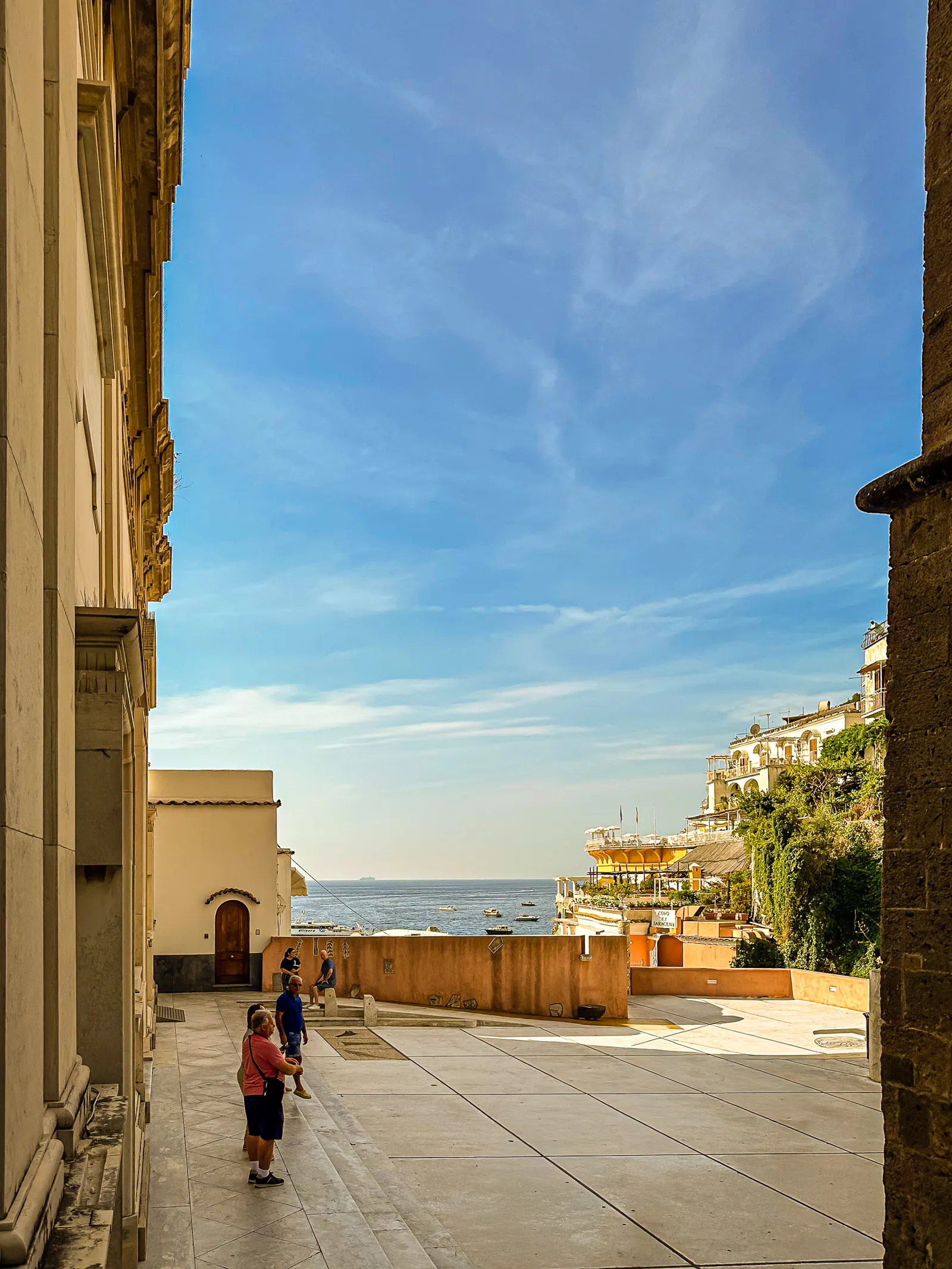
After walking back up to the main road, we decided to get an early start on lunch and headed toward the parking area, where Adolfo was waiting for us. Along the way, we stopped at a few shops and picked up some souvenirs, unique pieces we couldn't resist.
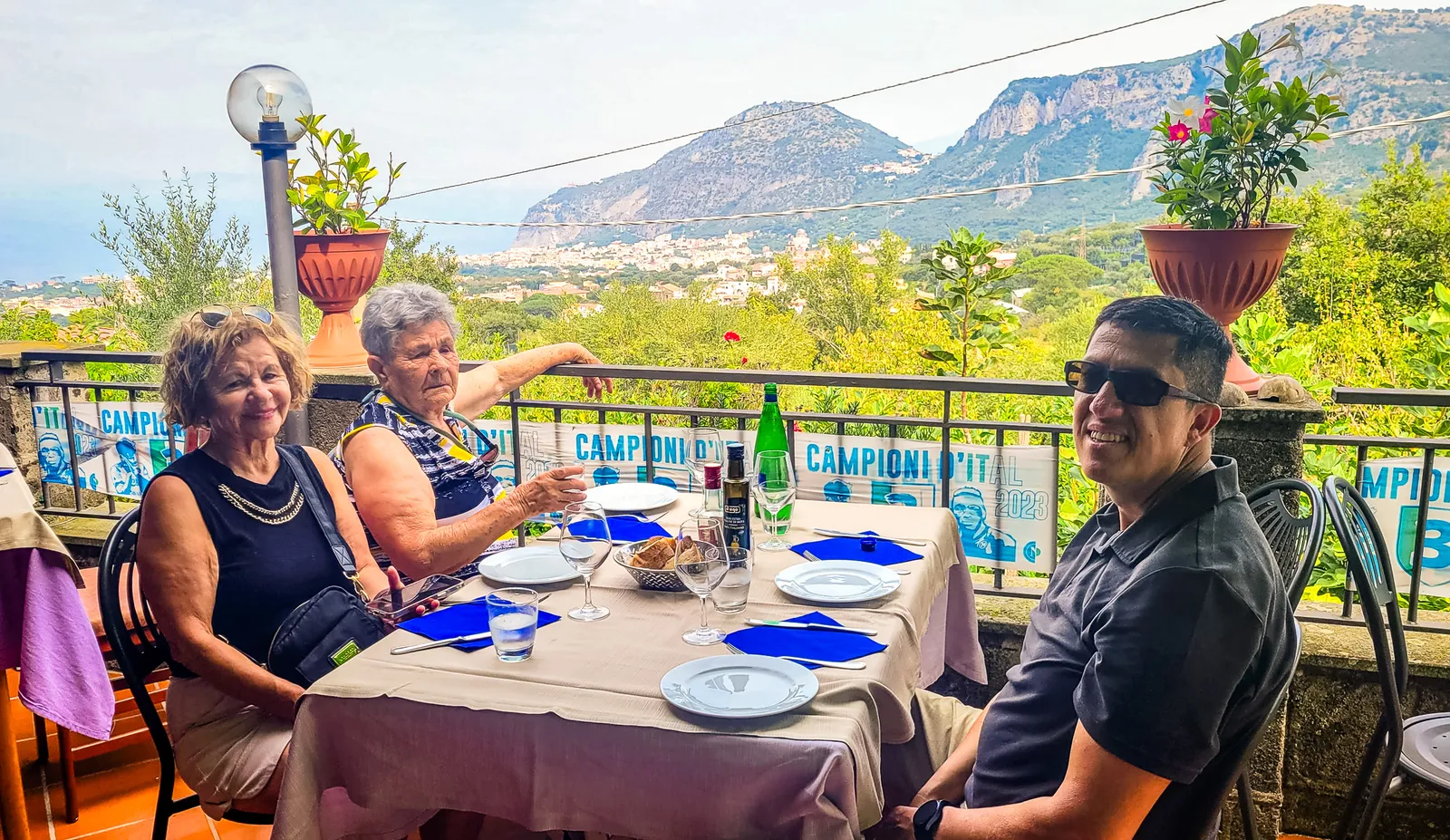
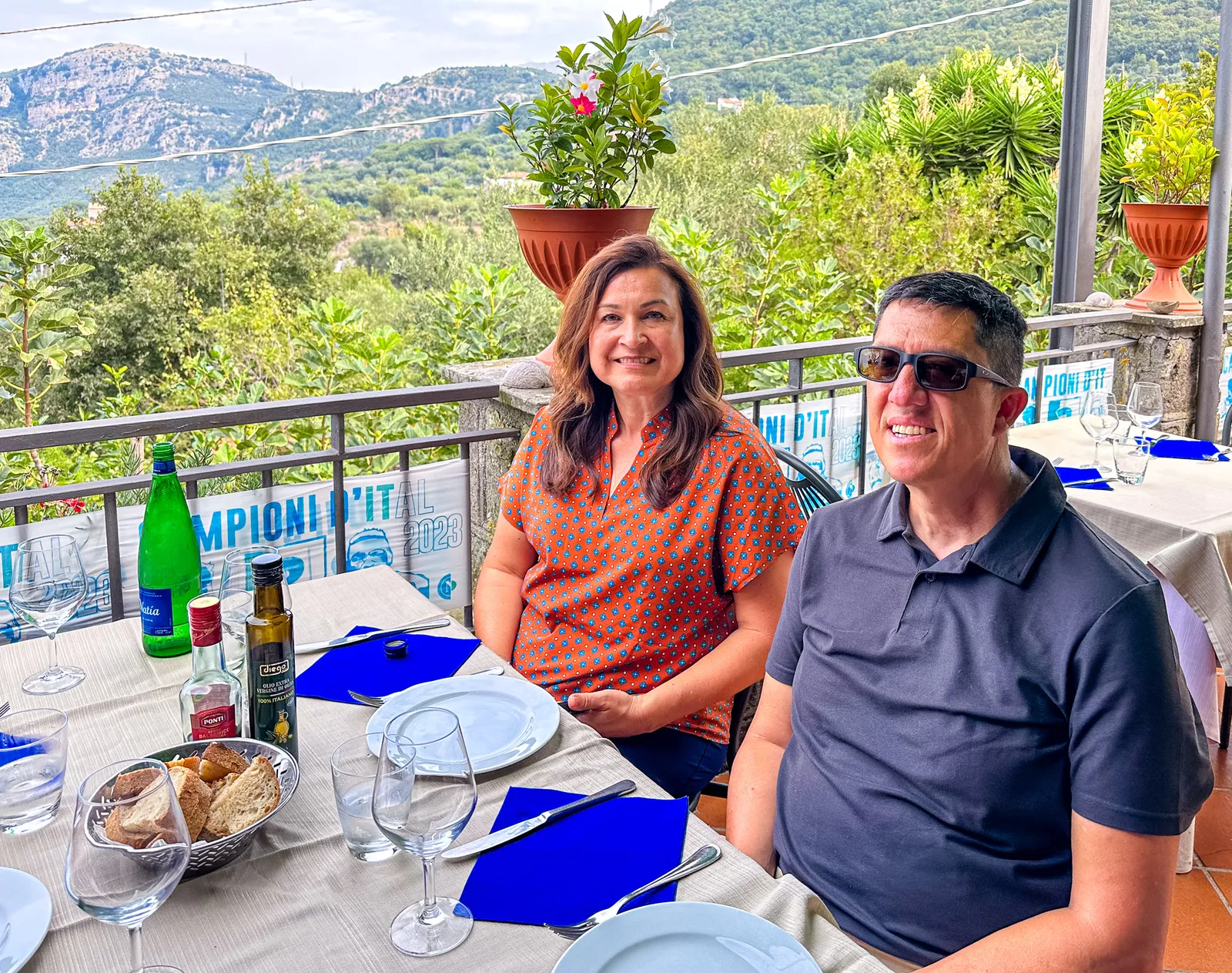
Lunch was memorable as Adolfo had chosen a spot he described as a truly unique experience. The owner, originally from the Middle East, had immigrated with his family and was essentially raised Italian.
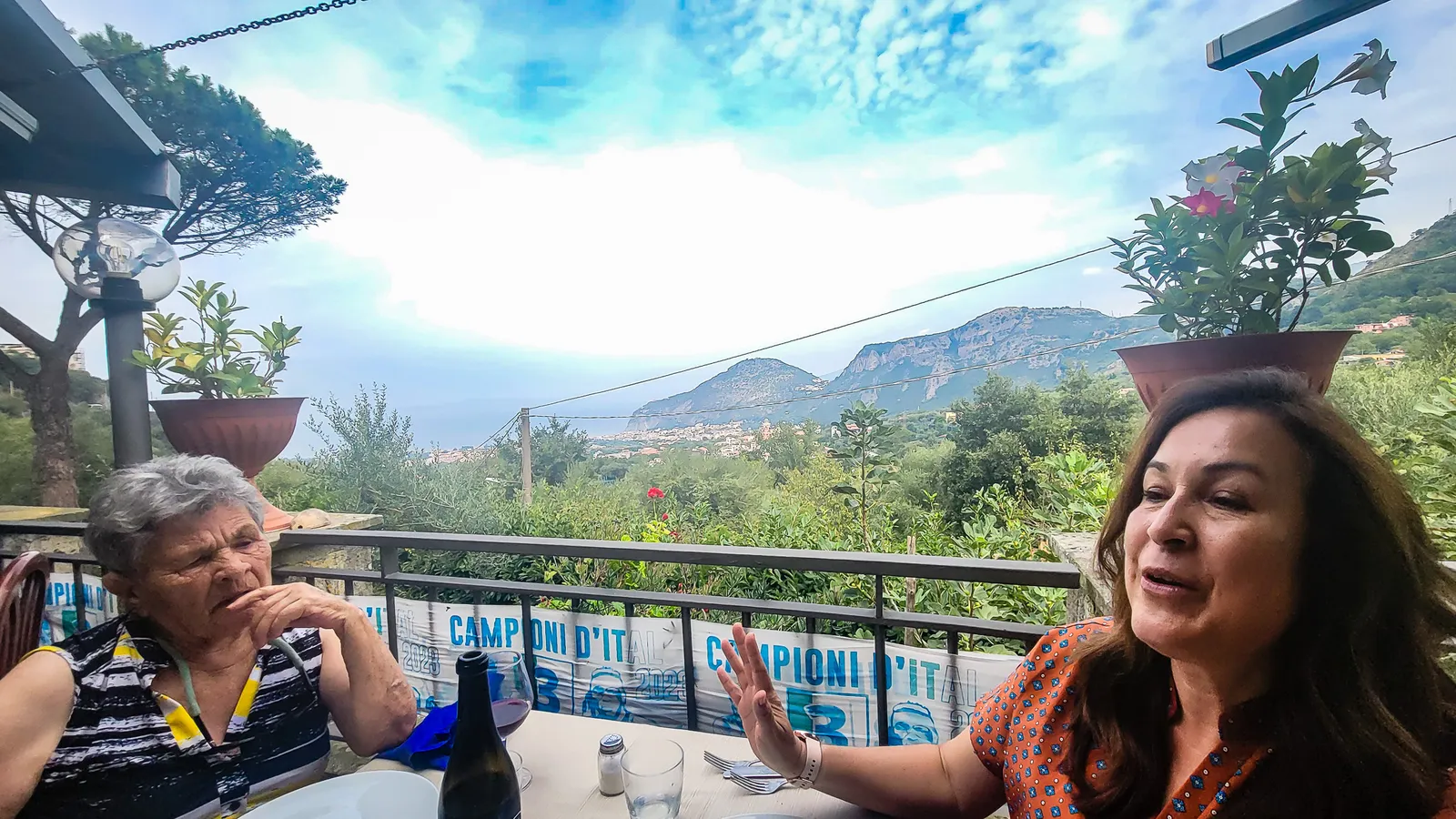
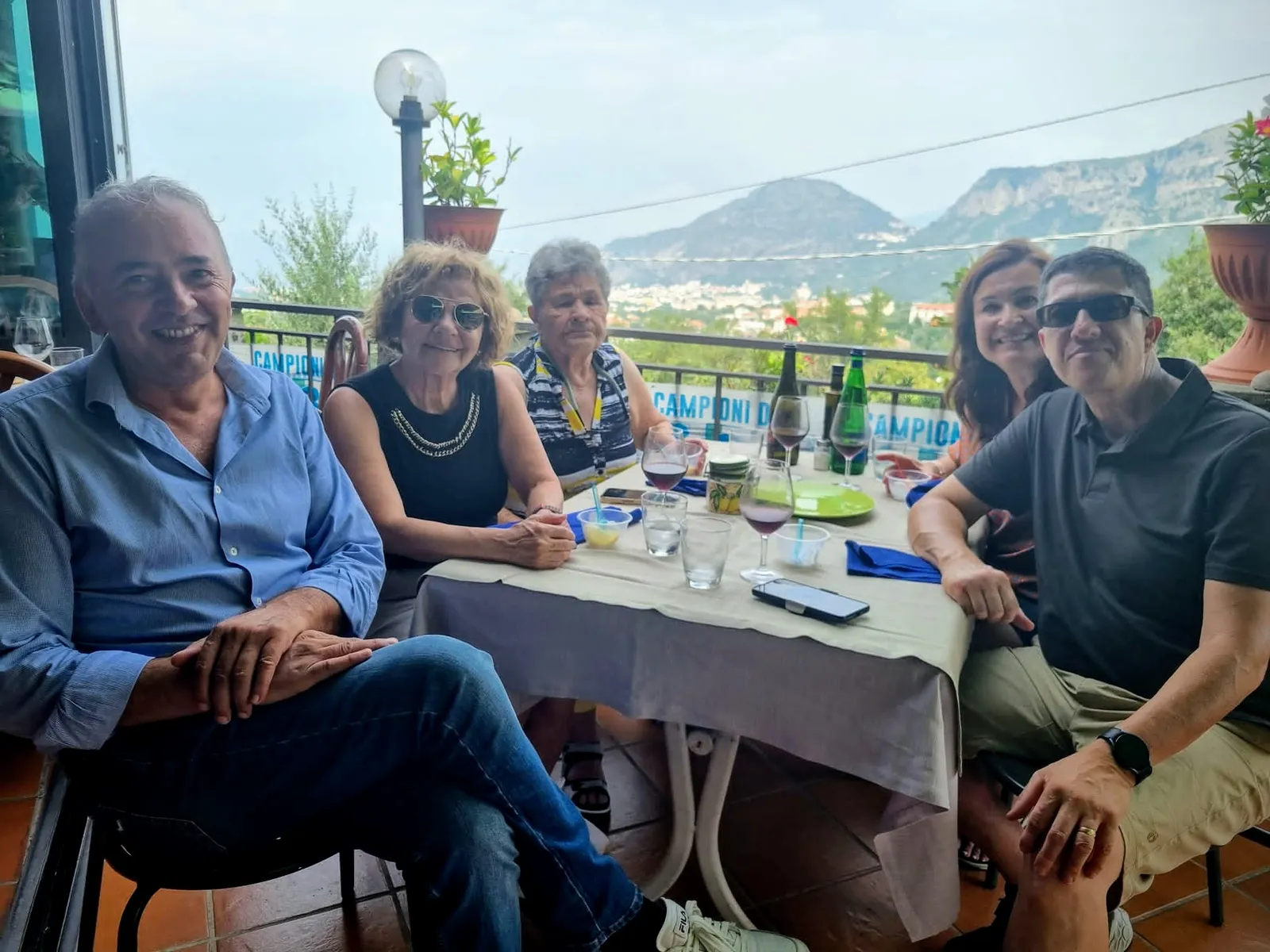
The restaurant was tucked off the beaten path, a short drive inland, and opened up to a view that was nothing short of spectacular. It was the perfect way to enjoy a meal with family, new friends, and scenery that felt straight out of a postcard.
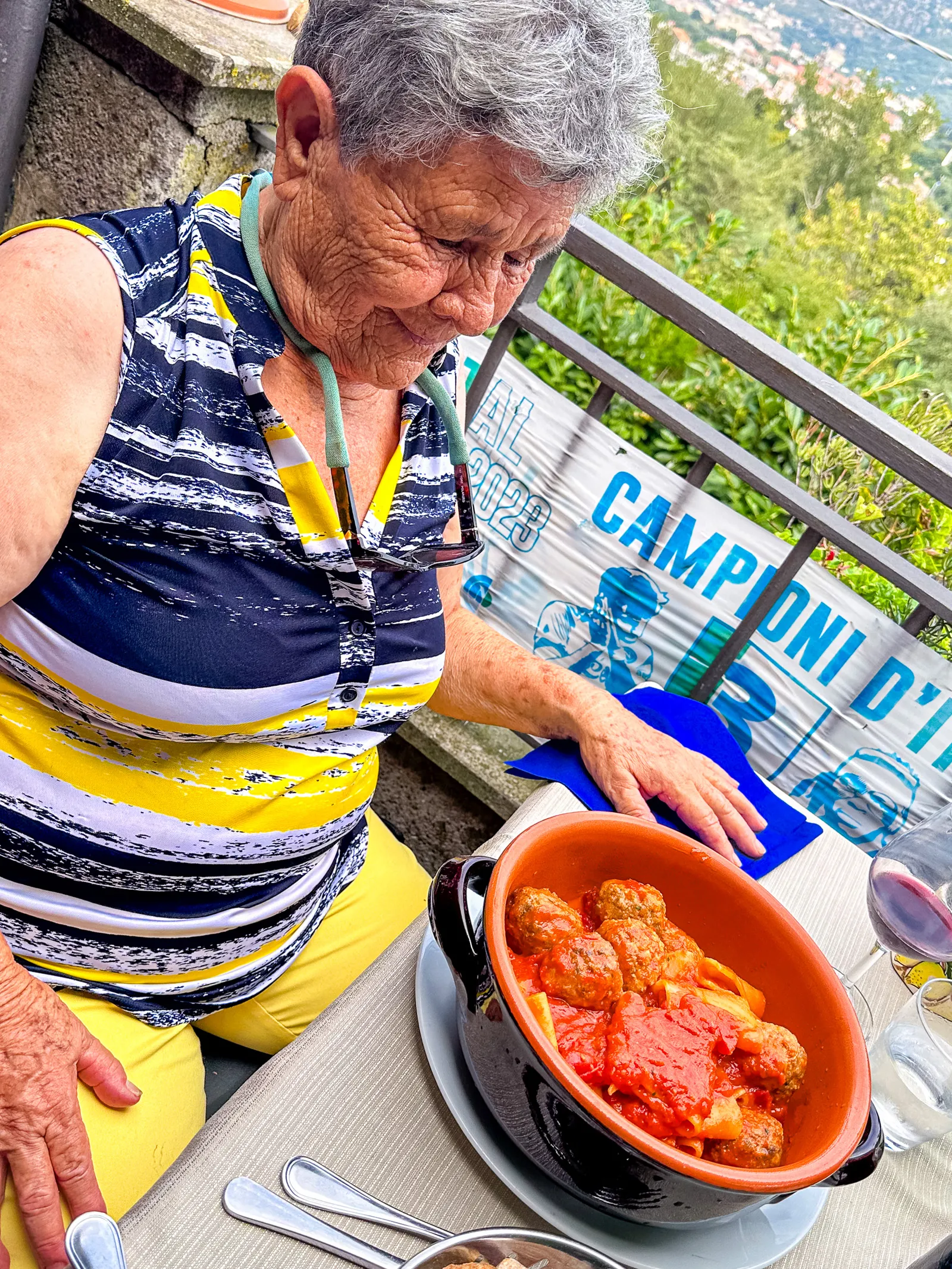
After we were seated, the owner approached and spoke to us in rapid Italian. We just nodded along, assuming he was welcoming us and asking what we wanted to start with. We didn't understand a word, but we smiled, agreed to everything, and let him bring out the food. Whatever arrived at the table, we simply nodded and said, "Grazie mille!"
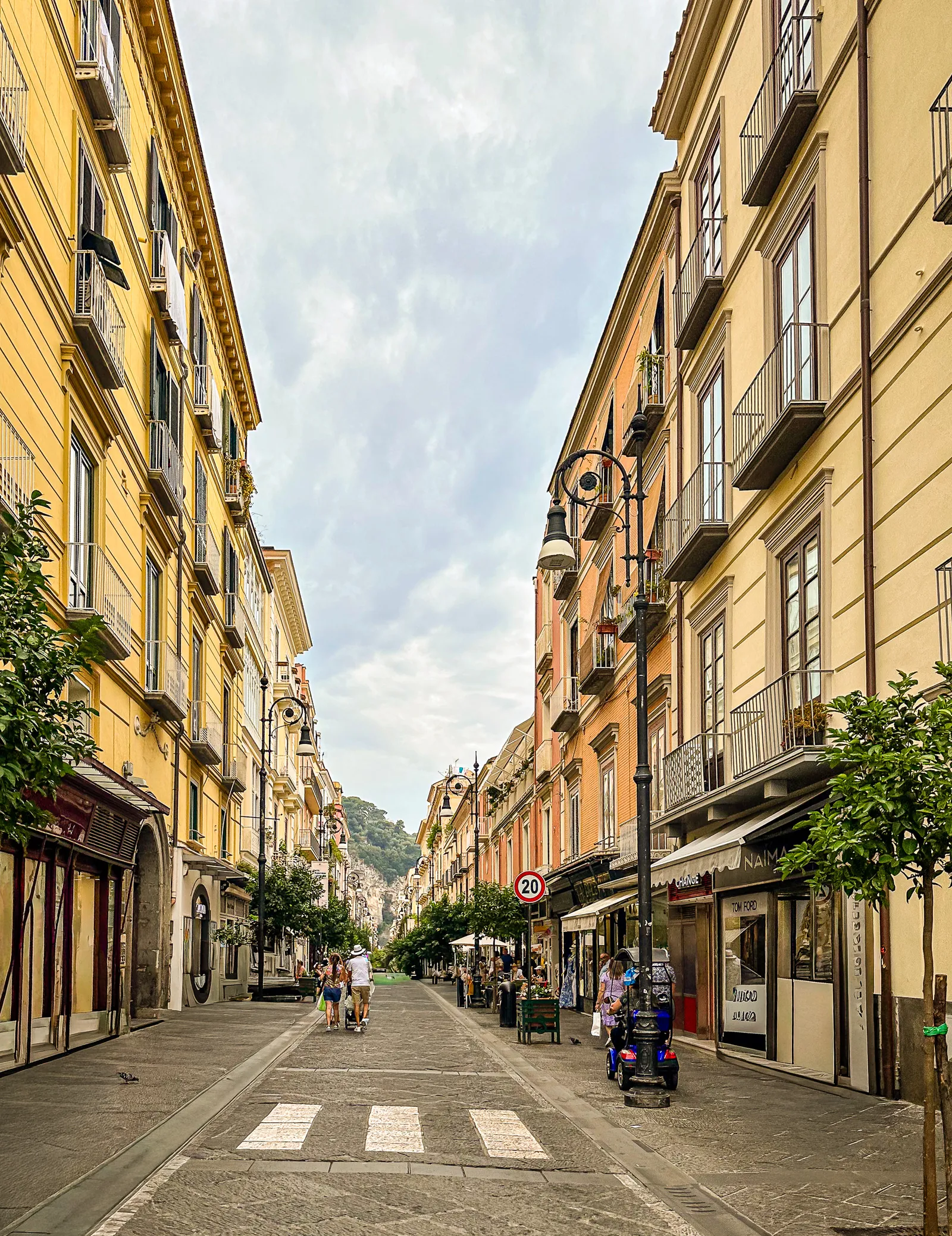
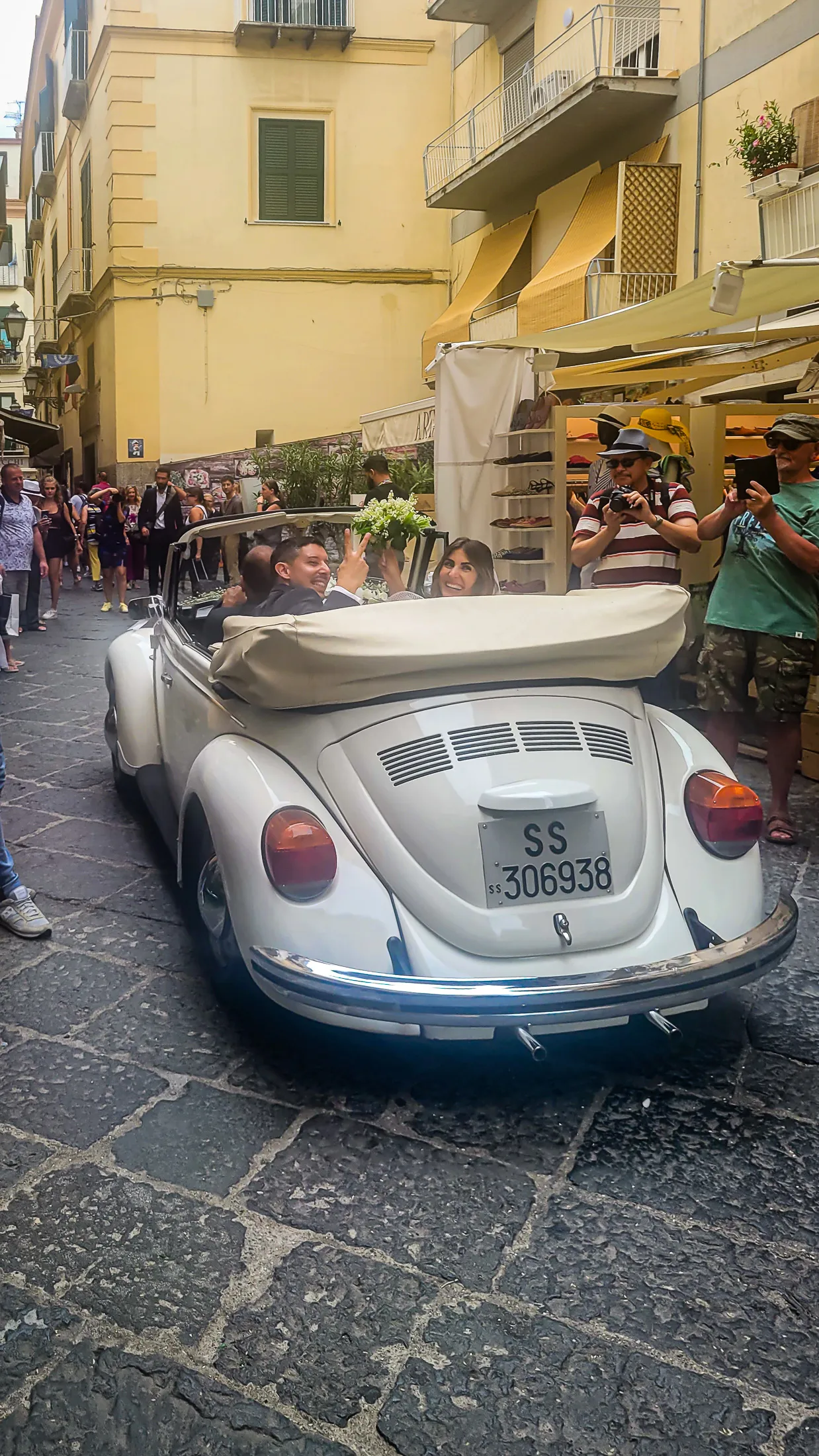
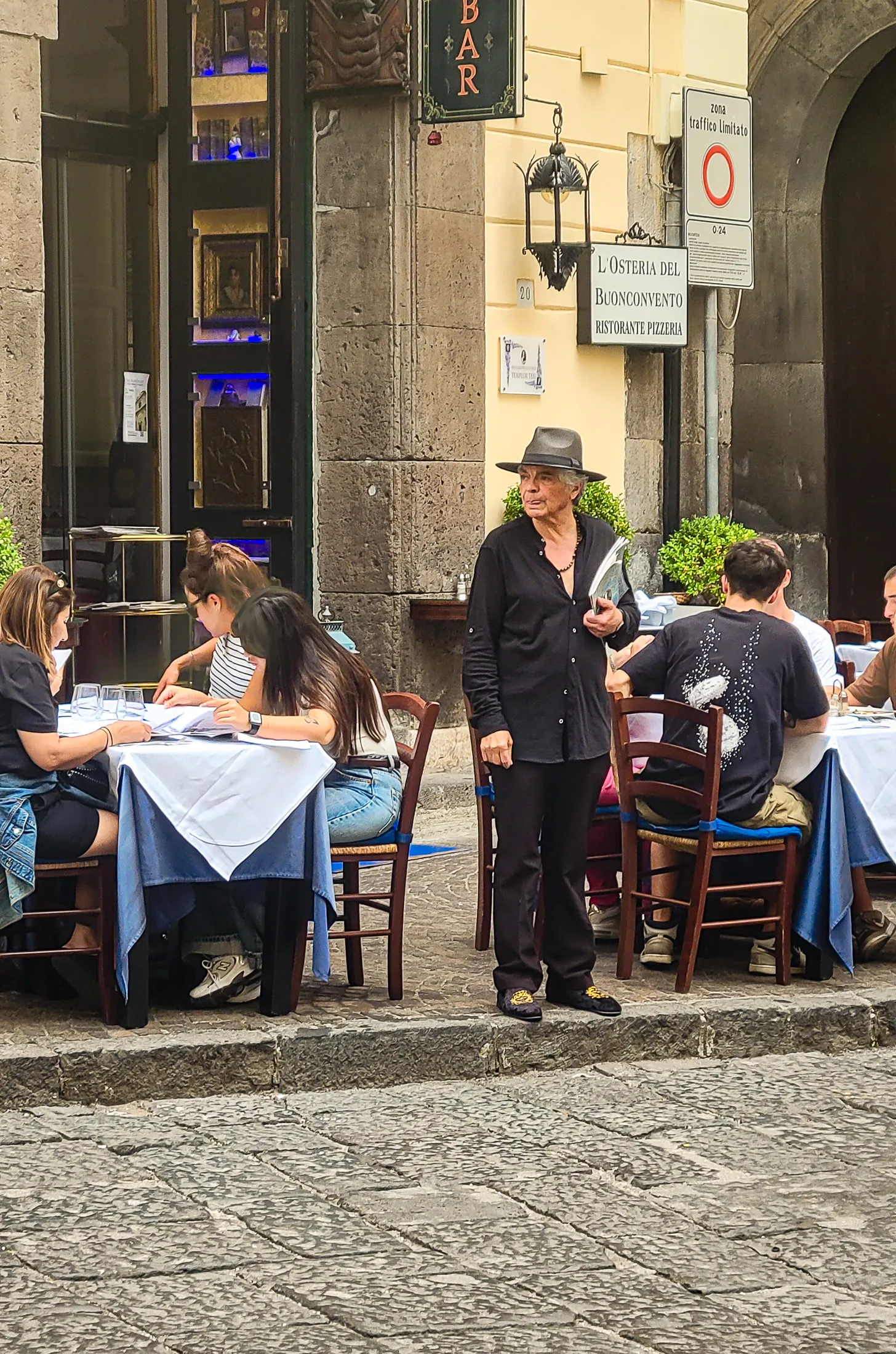
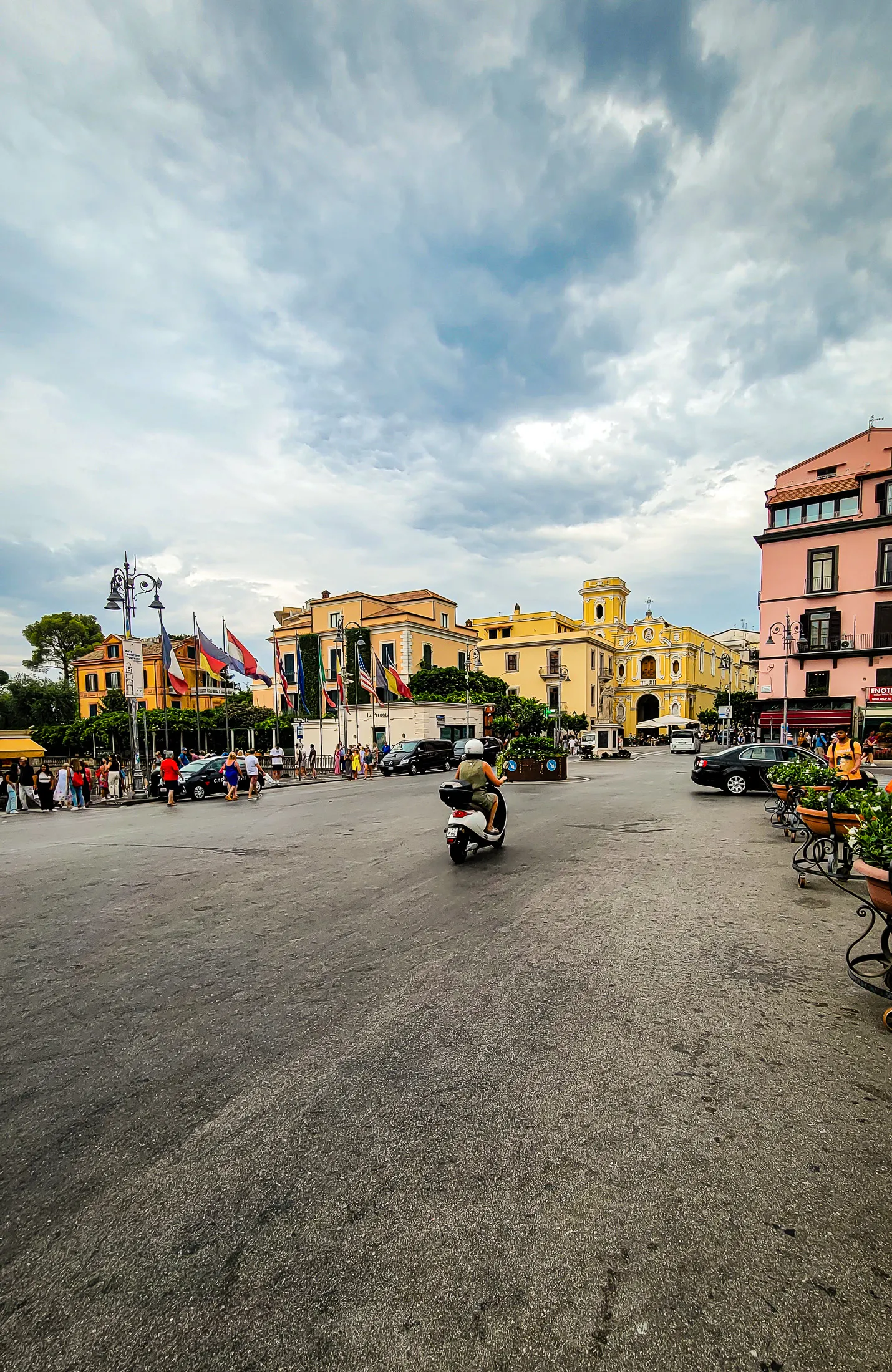
Our final destination for the day was Sorrento. We spent the afternoon wandering through its charming streets, browsing shops, and soaking in the atmosphere. At one point, we found ourselves swept up in the crowd cheering and waving goodbye to a newlywed couple driving off in a classic white convertible VW Bug, a perfect slice of Sorrento life.
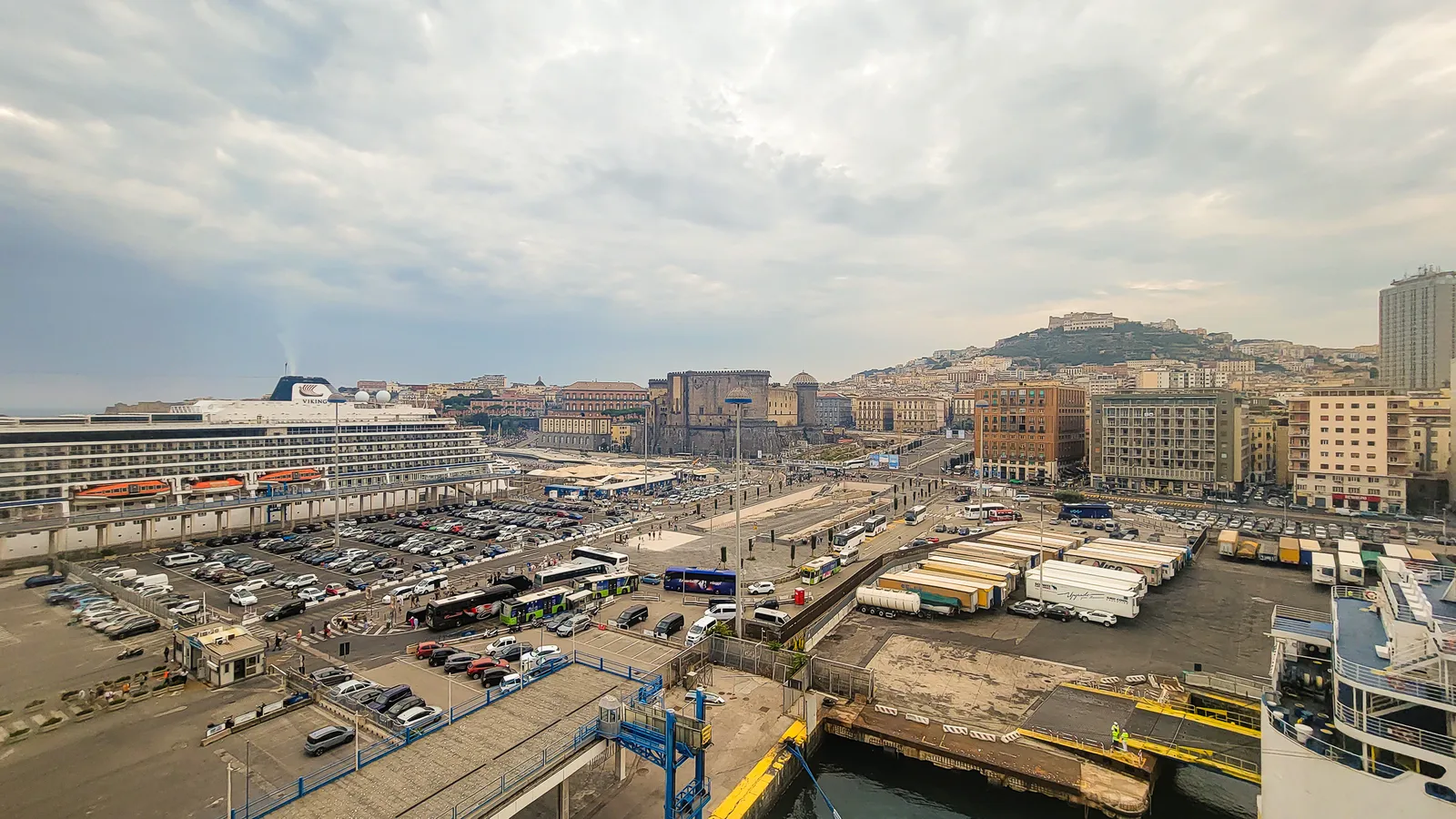
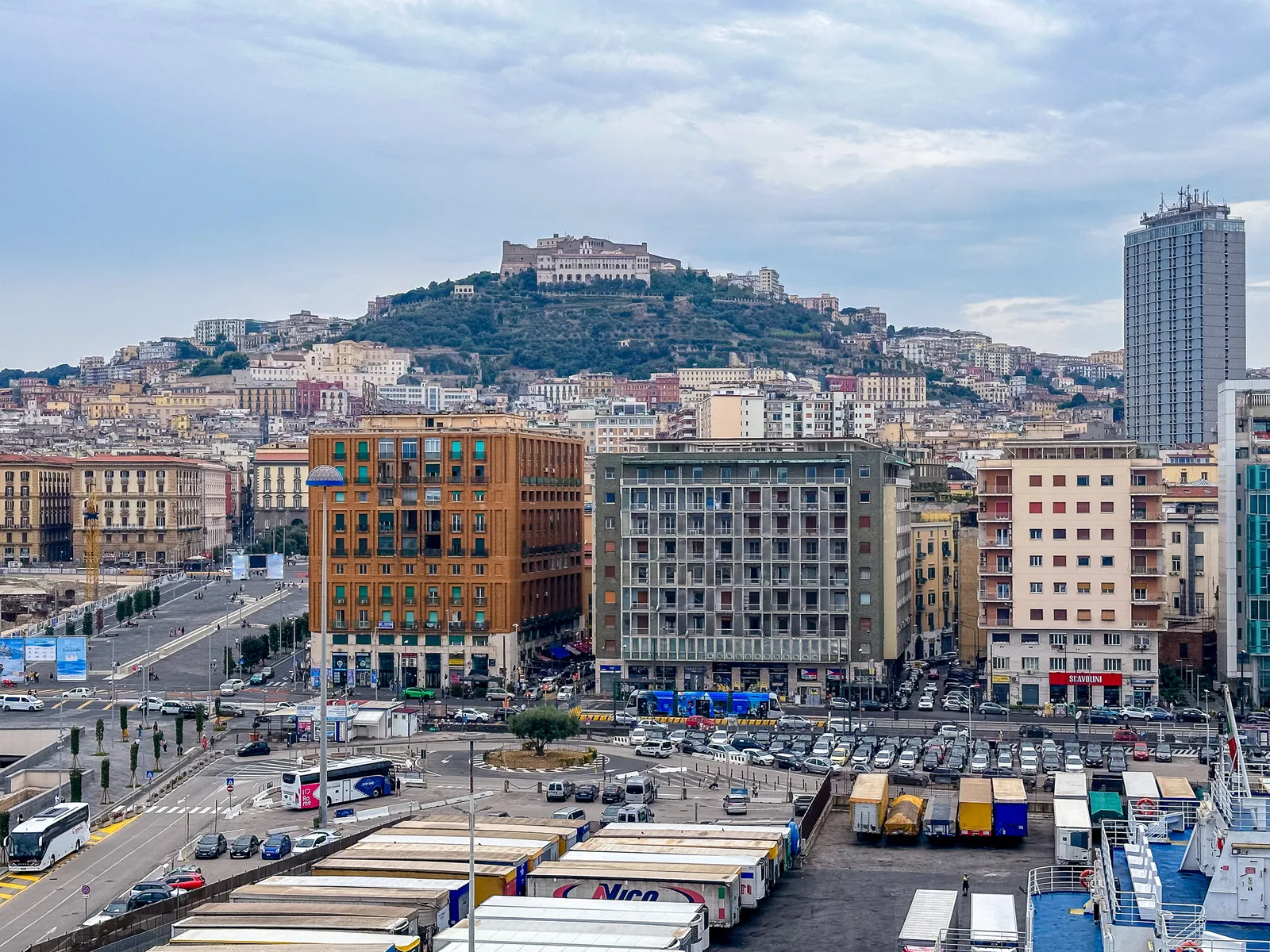
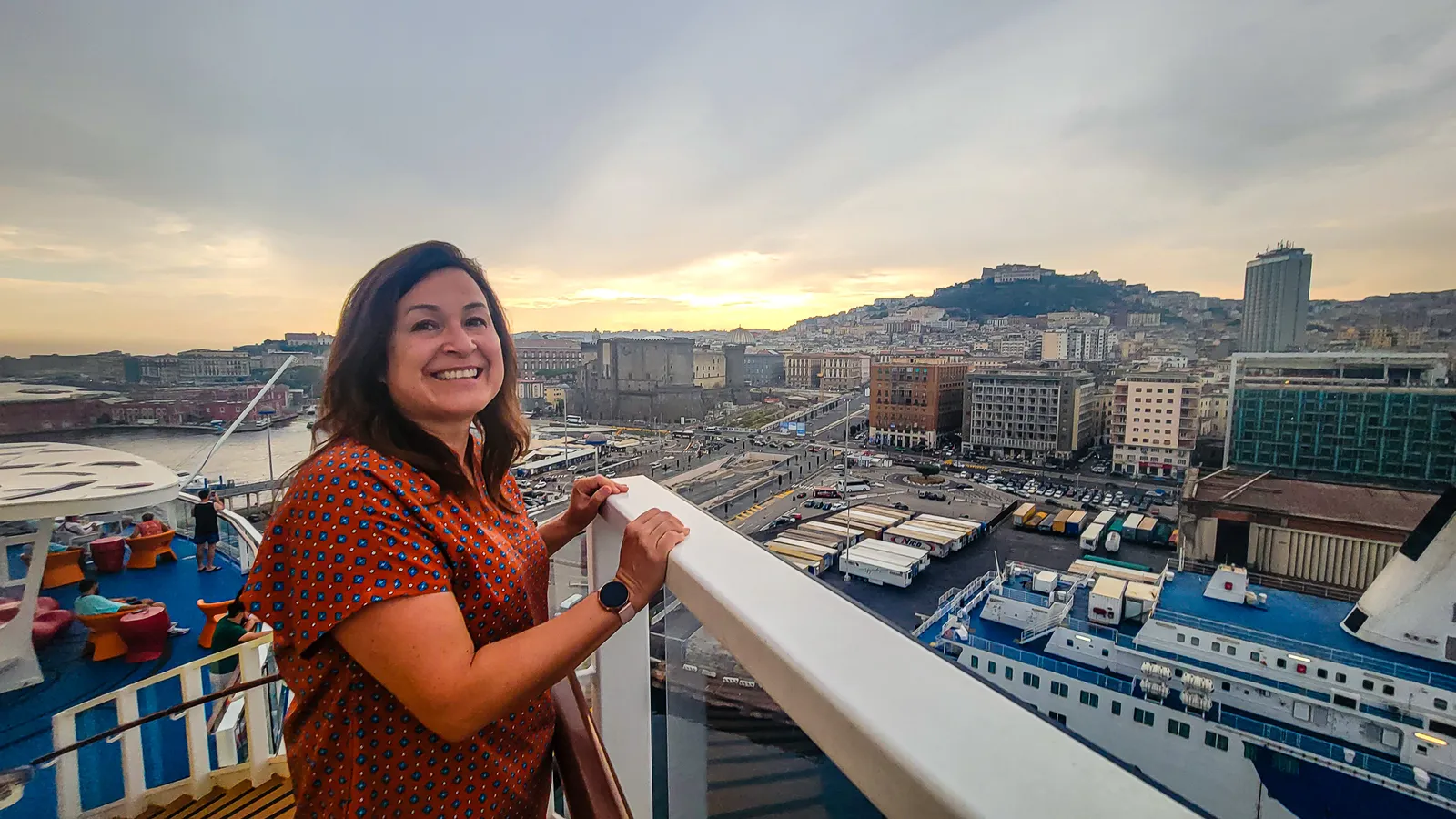
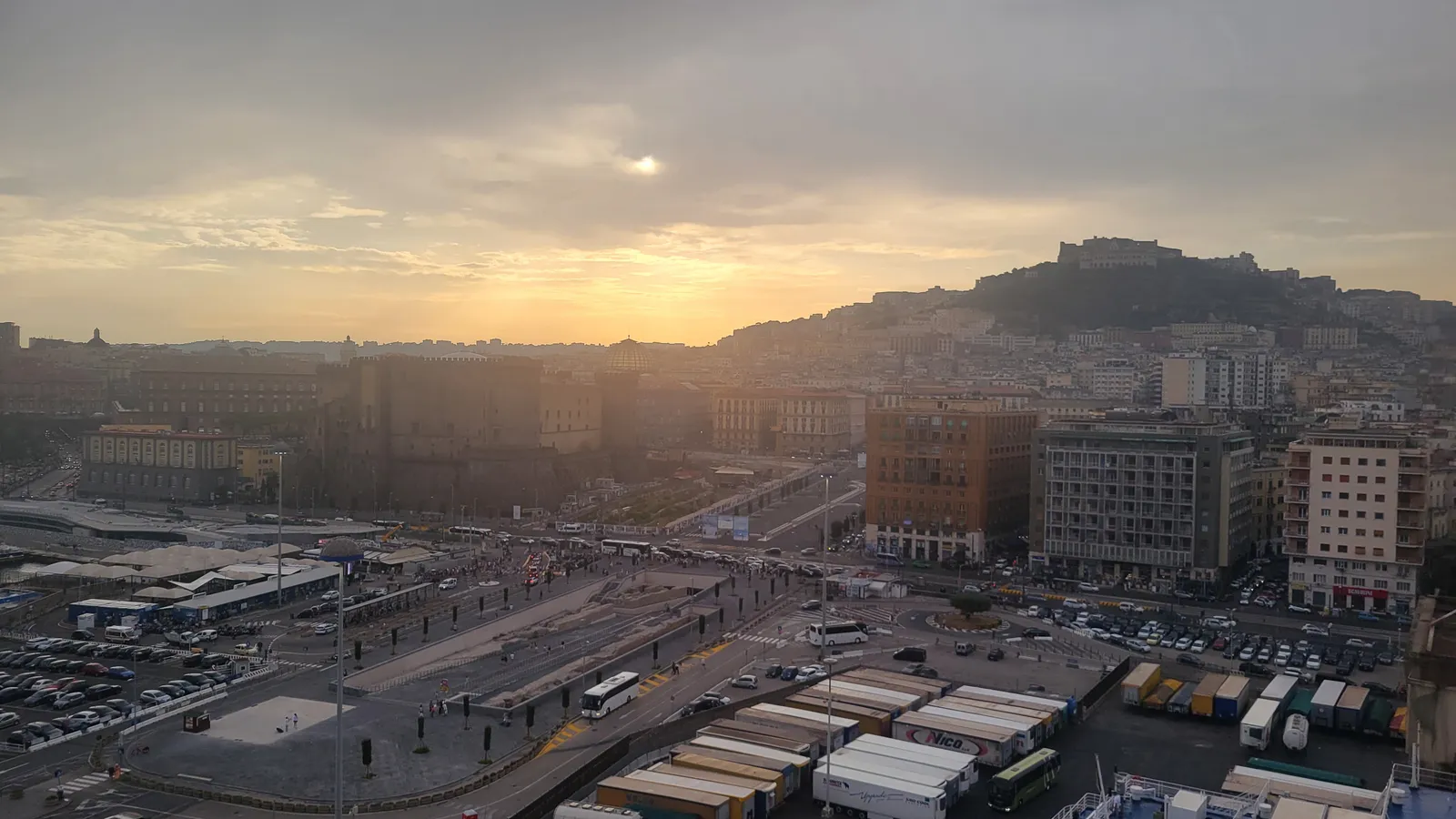
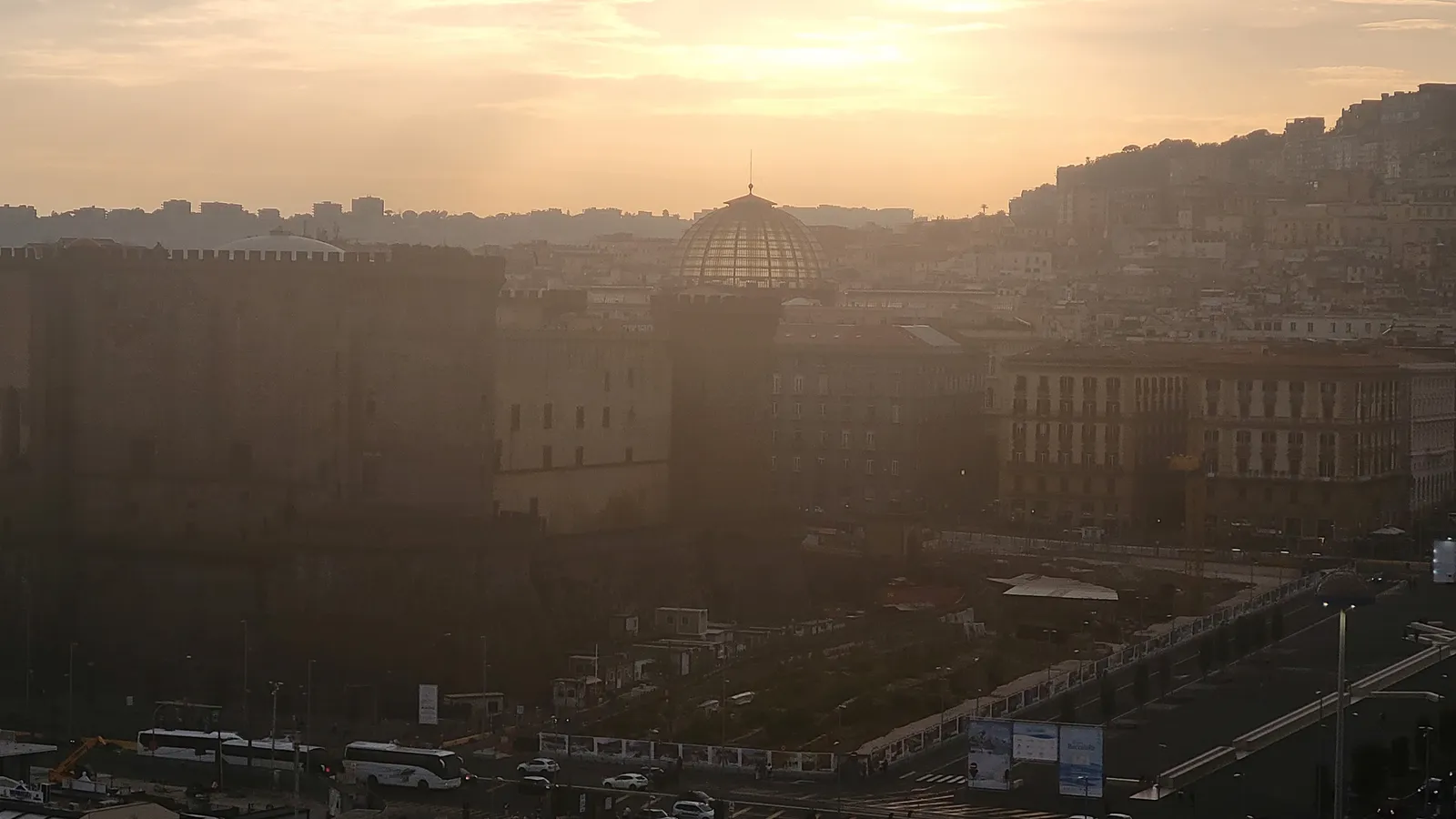
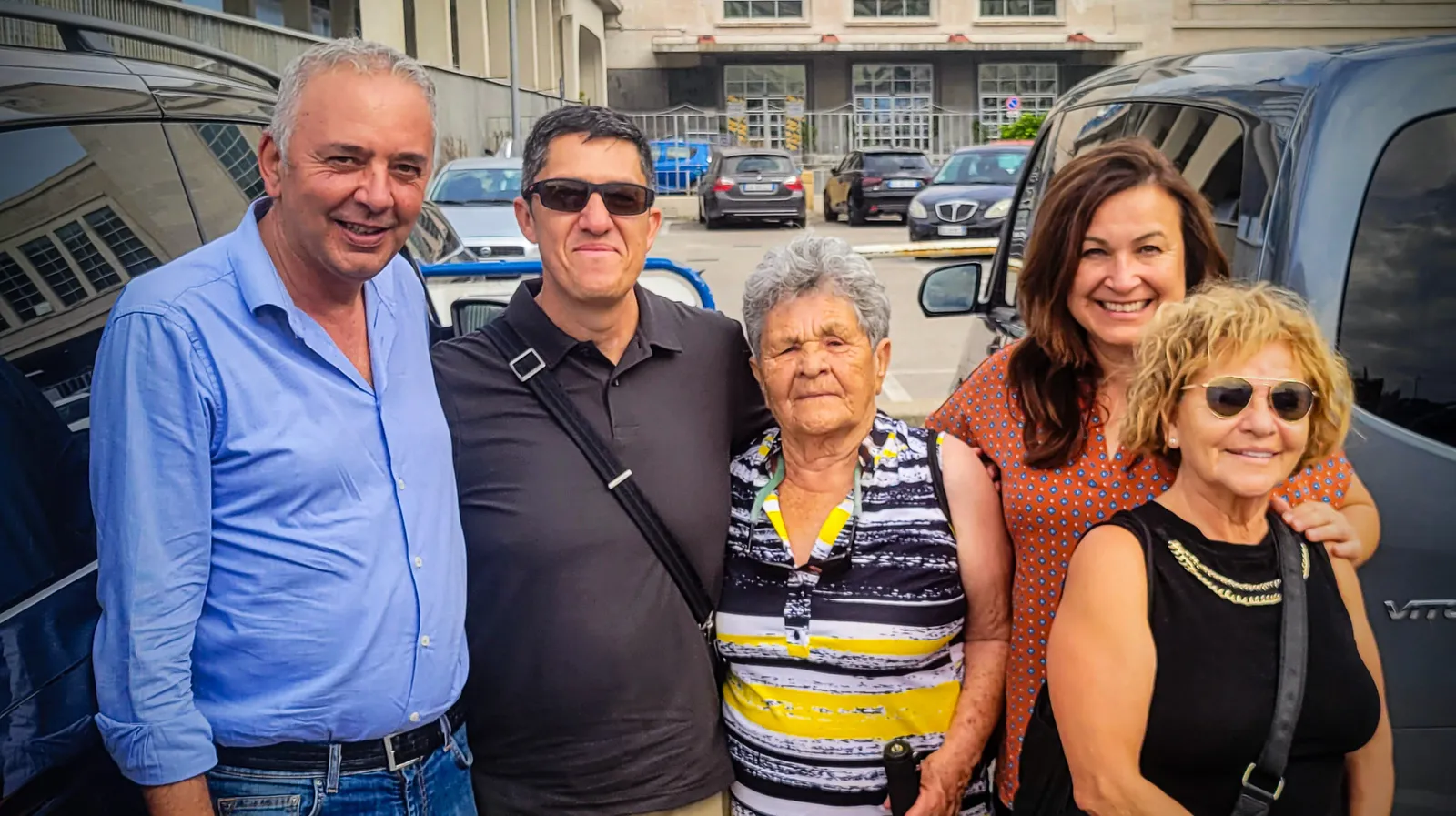
The drive back toward Naples was relaxed, filled with conversation and laughs as we chatted with Adolfo about the day's adventures. We wrapped things up with a group photo before saying our goodbyes; not bad for our first port of call. Once we were back on the ship, we noticed a nearby Ro-Ro ship being loaded with cars and trucks. My wife was excited to see it, since in her line of work, this is how some of their packages are shipped, it was a fun, unexpected moment that brought her world and our travels together.
- Getting Around: Private driver is essential (€400–500 for up to 6 people), driving is really for locals who know the streets and have access to limited parking
- Time in Port: 8–9 hours, plan to return to the ship 1 hour before all-aboard due to unpredictable traffic
- Must-See: Explore Pompeii, wander Positano's cliffside streets, soak up Sorrento's charm, and take in a few Amalfi Coast viewpoints
- Difficulty Level: Moderate, steep walks and stairs in Positano
- Book your driver well in advance: Ideally 2–3 months before your port call
- Stay in touch via WhatsApp or email after booking to get tips on the tour, restaurants, and must-see stops, most drivers speak English
- Trust your driver's lunch recommendations: Ours led us to a hidden gem
- Sorrento offers better shopping and easier walking than Positano
- Plan your timing carefully: Visiting Positano early helps you beat the crowds and enjoy the views
- Skip Amalfi & Ravello for one-day port calls: There's simply not enough time
Exploring the Caldera
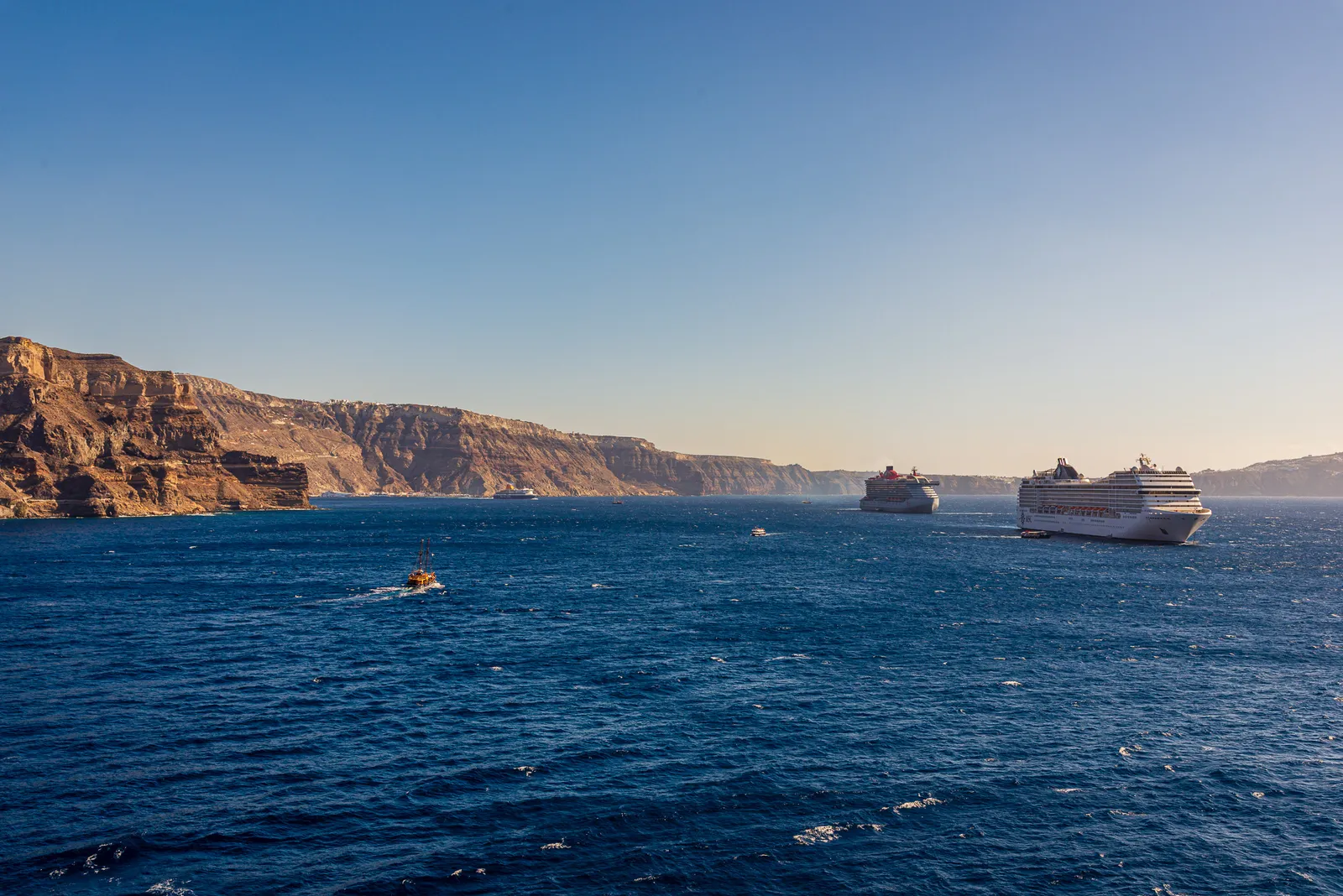
Waking up and walking out on the balcony to a new port, never gets old. The weather in Santorini was picture perfect. Blue skies, bright sun, the right amount of humidity, and a comfortable temperature.
To make sure we were among the first groups to be tendered, I had us up early and on our way to the Windjammer for breakfast. Tendering can be a slow process and easily eat into valuable port time if you're not in the first few groups. Thankfully, we were, and with calm early-morning seas, the ride to shore was smooth and easy.
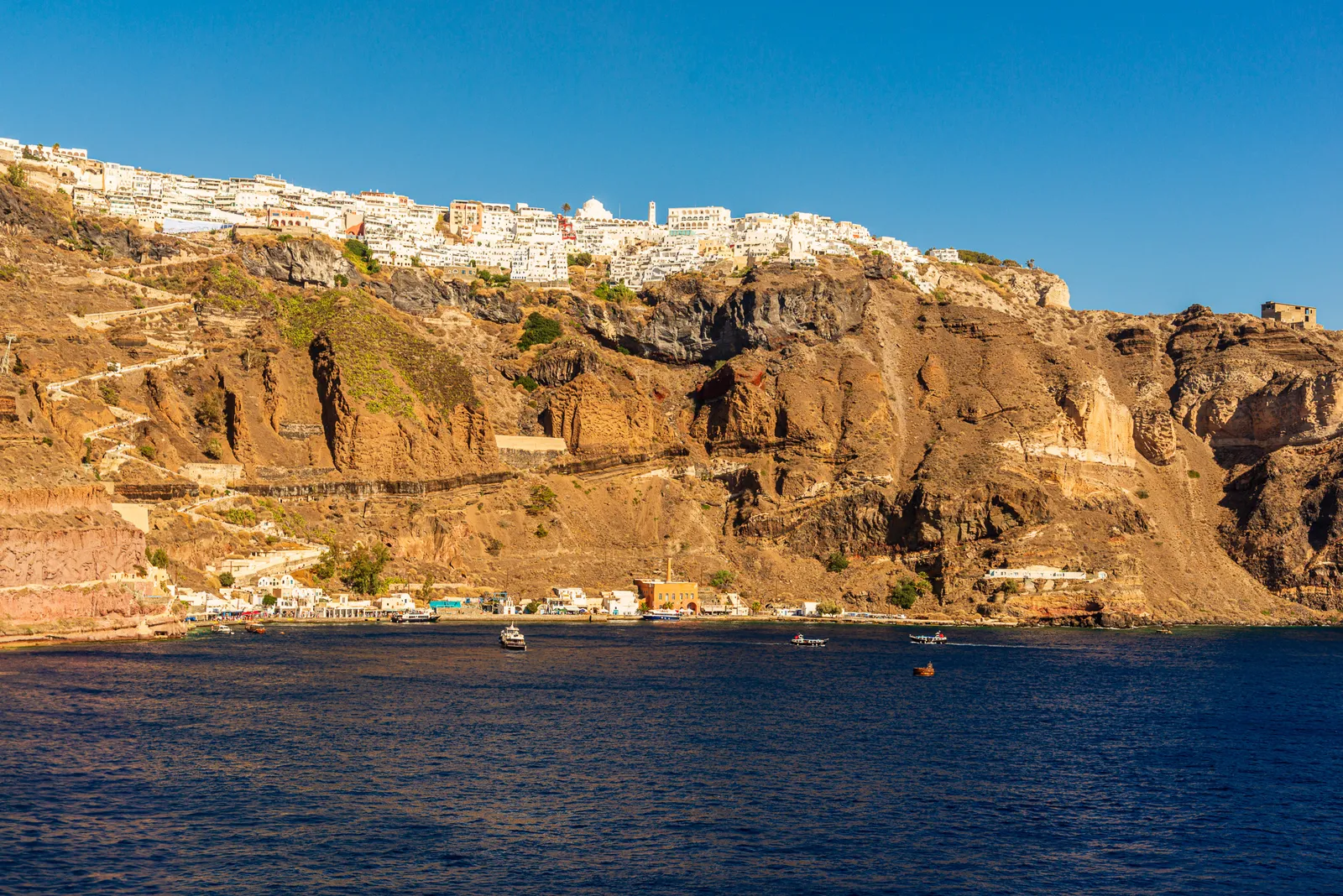
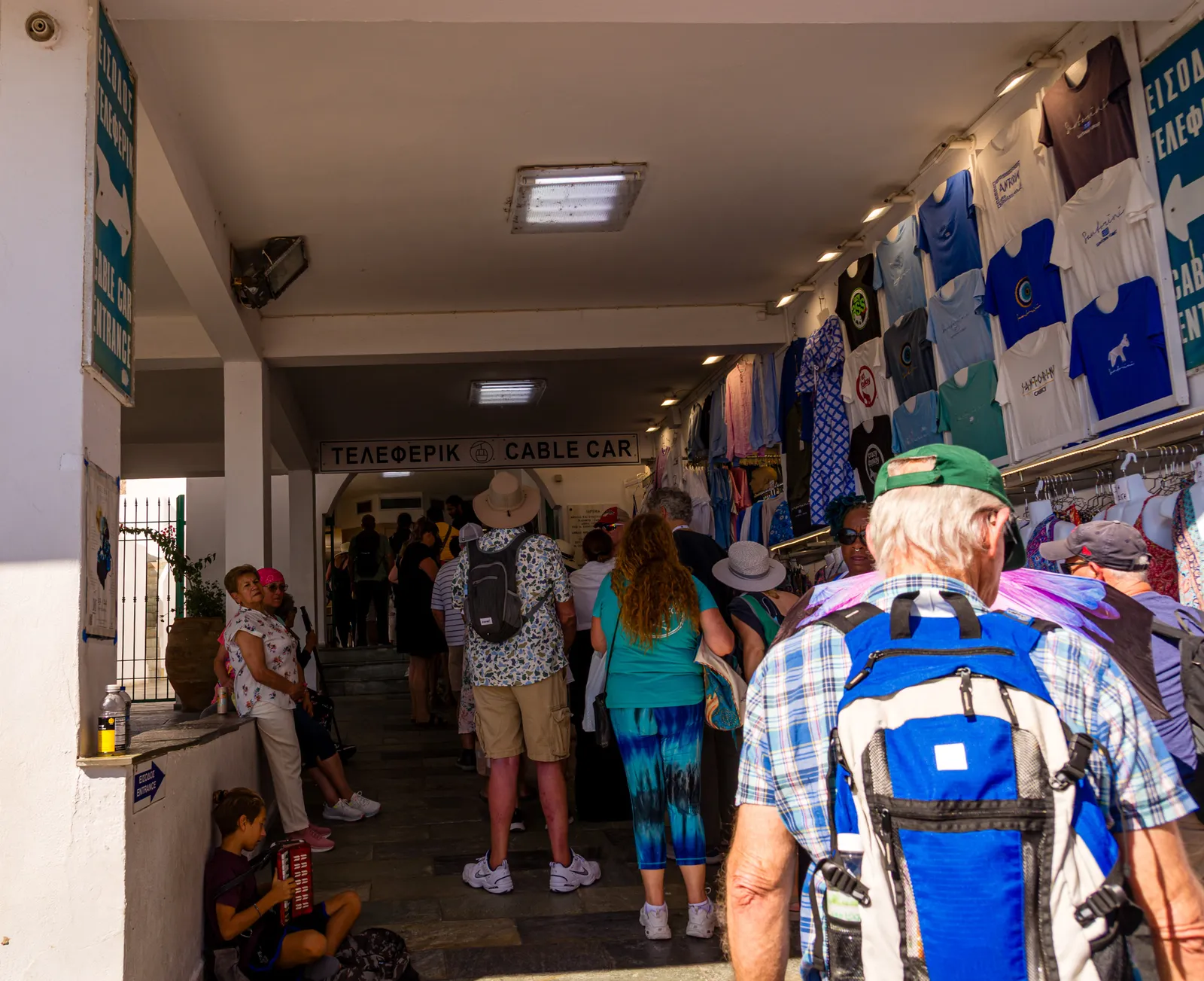
Once you arrive at the Old Port of Fira, you are presented with some options on how to get to the top to Fira.
- A steep 0.6 mile walk (if you want to get your steps in)
- Riding a donkey (don't)
- The cable car (do this)
On Santorini, donkeys and mules are often used to carry visitors up the steep steps to Firá. These animals are usually donkeys or mules (a horse donkey cross), prized for their sure-footedness. While the tradition is historic, animal welfare groups have raised concerns about overwork, heat, and ill-fitting equipment.
In my opinion the cable car is the most efficient and provides the best views of the caldera.
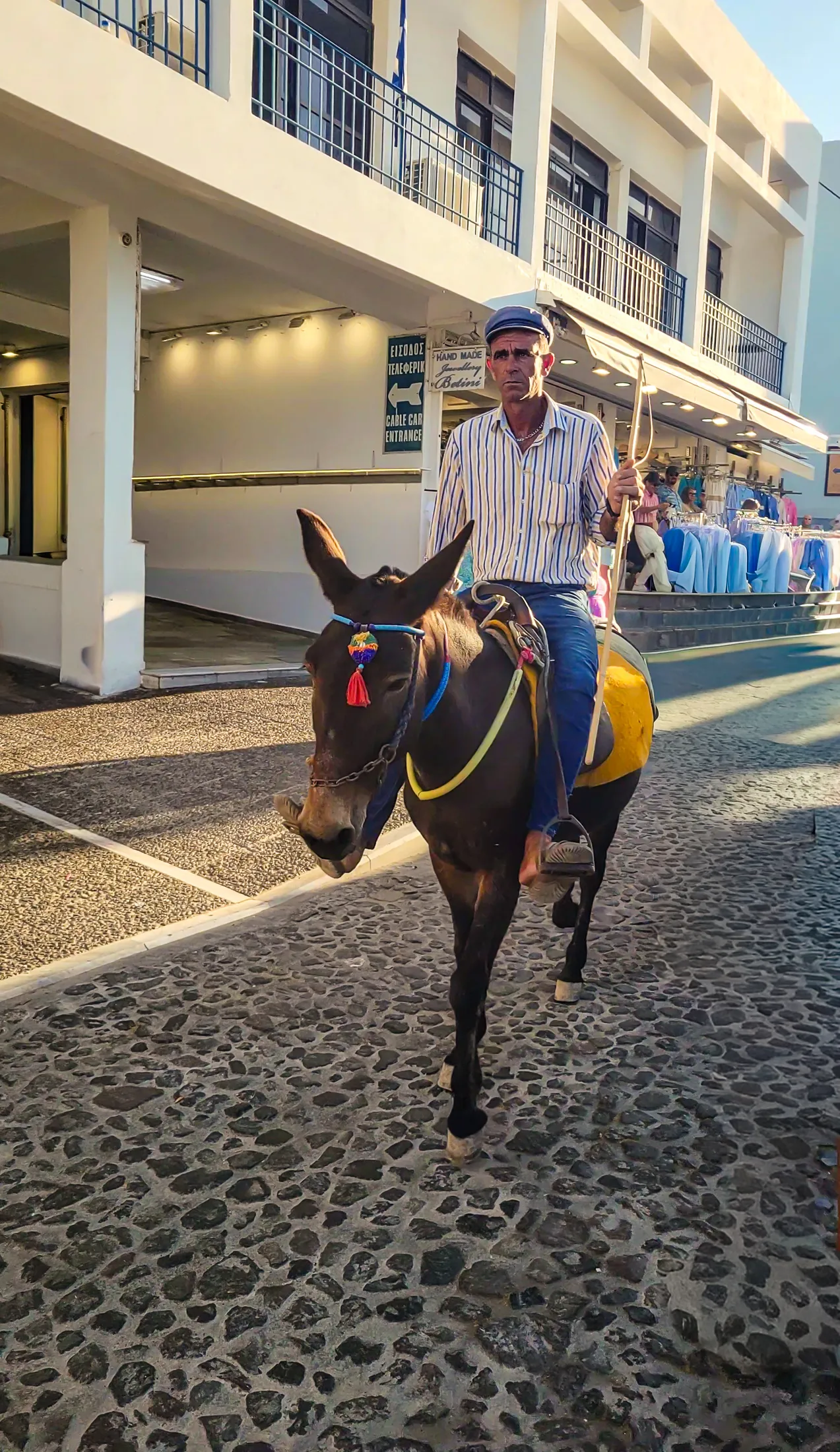
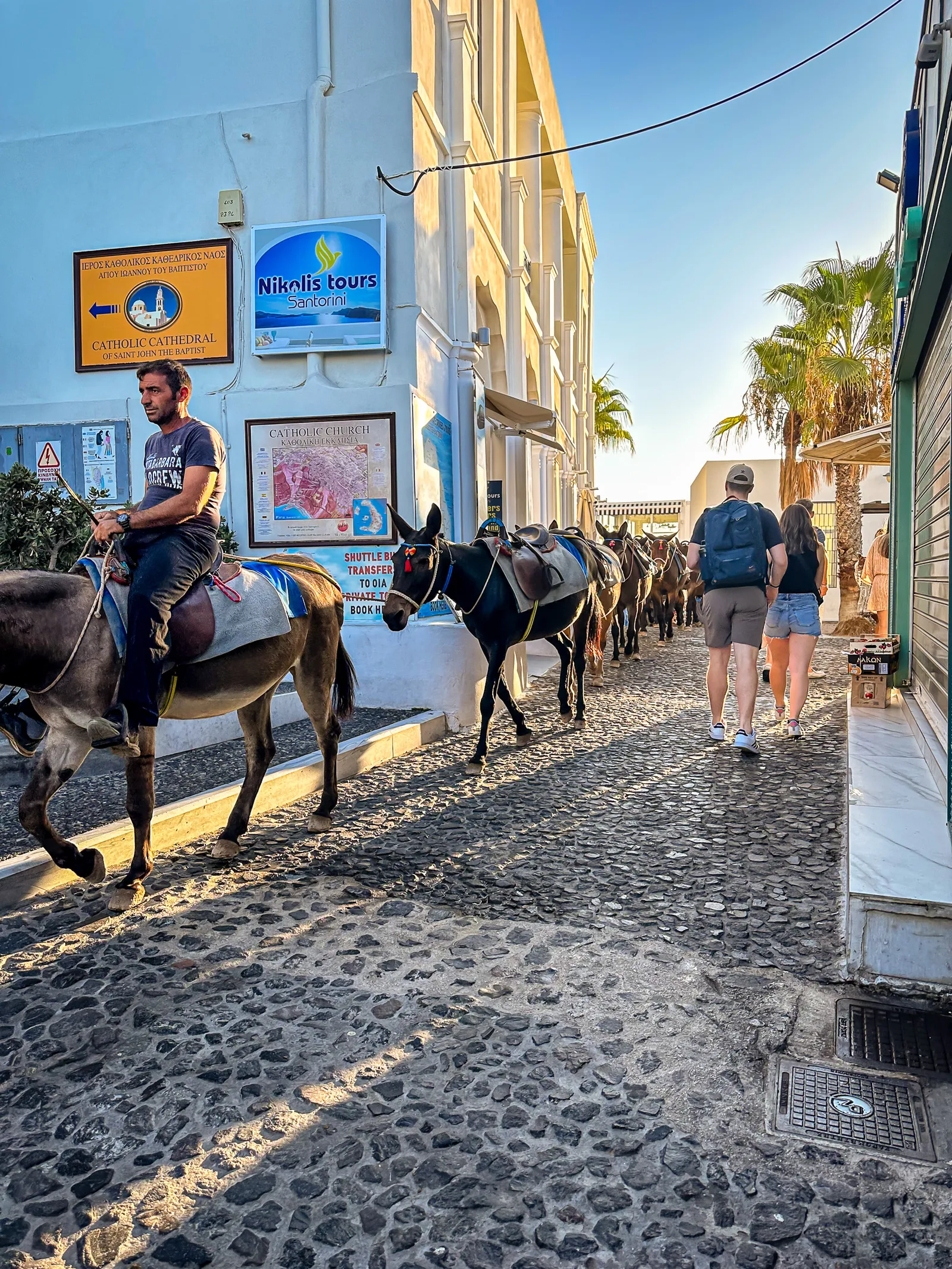
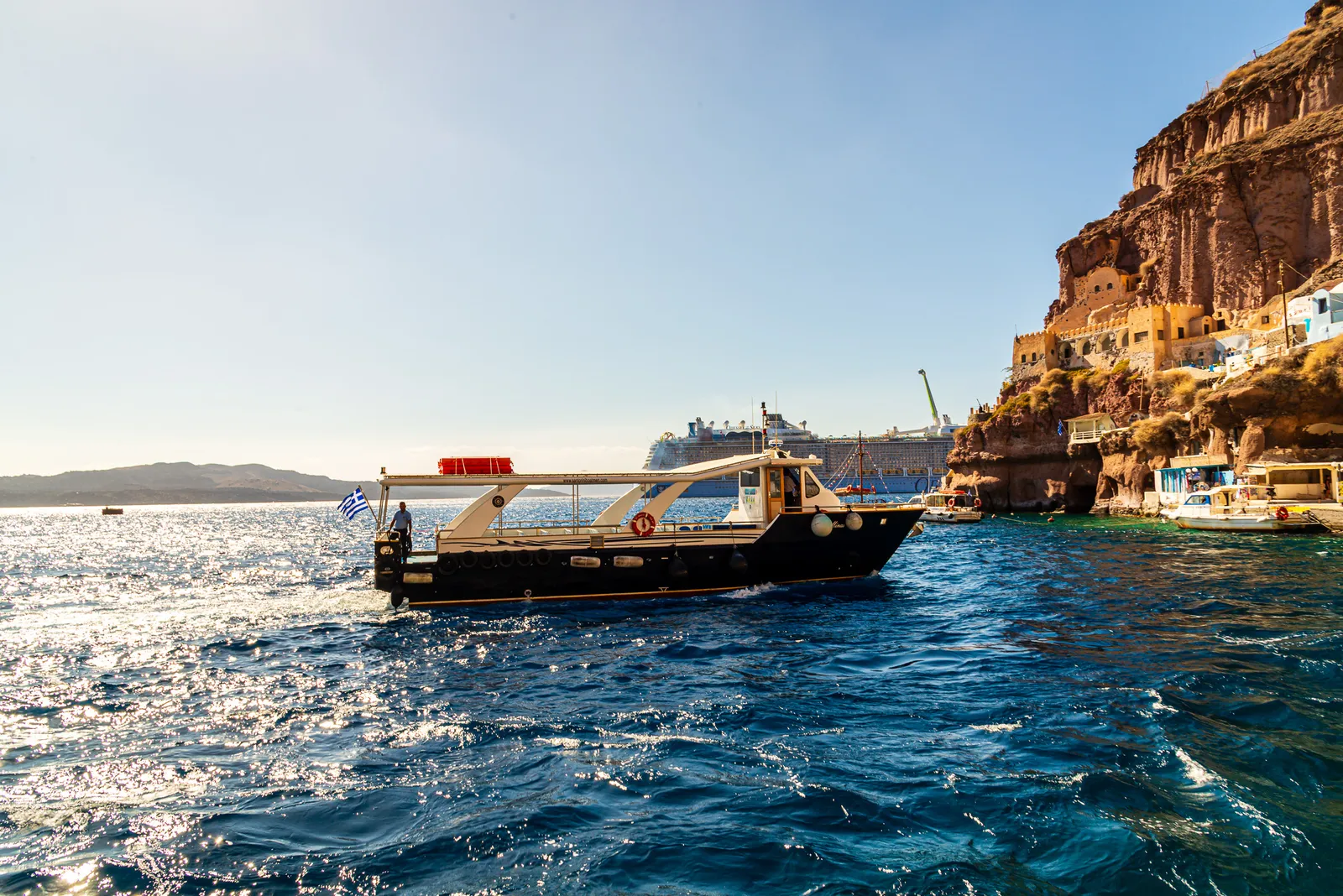
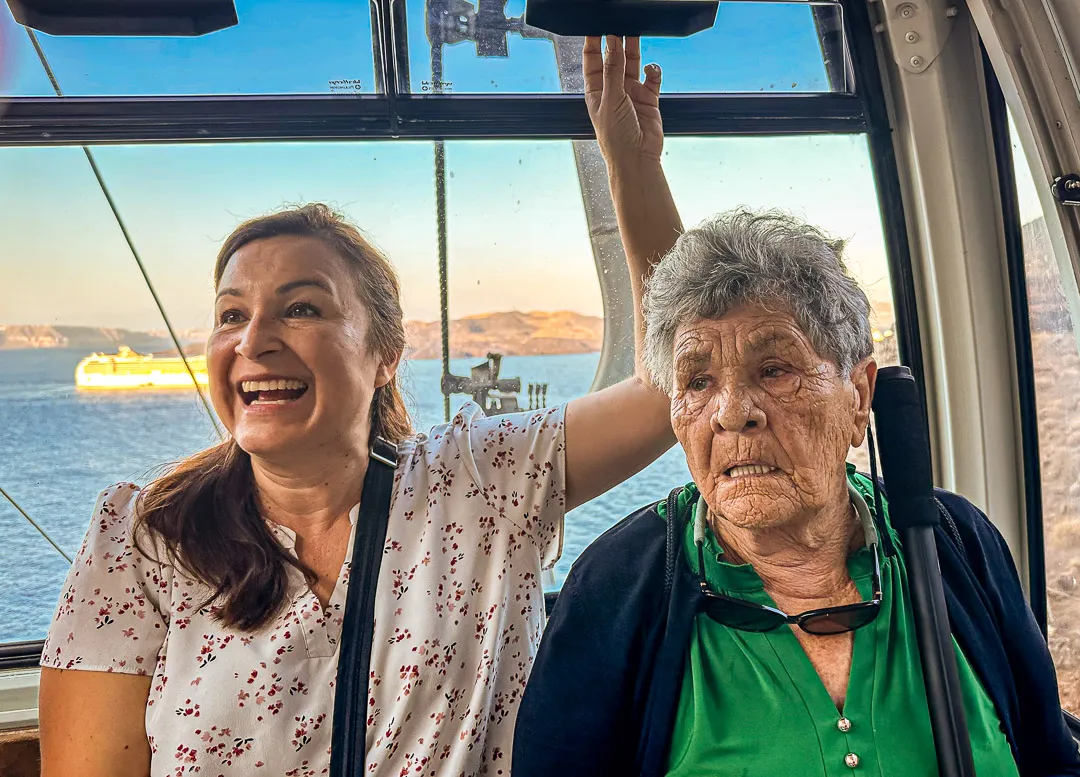
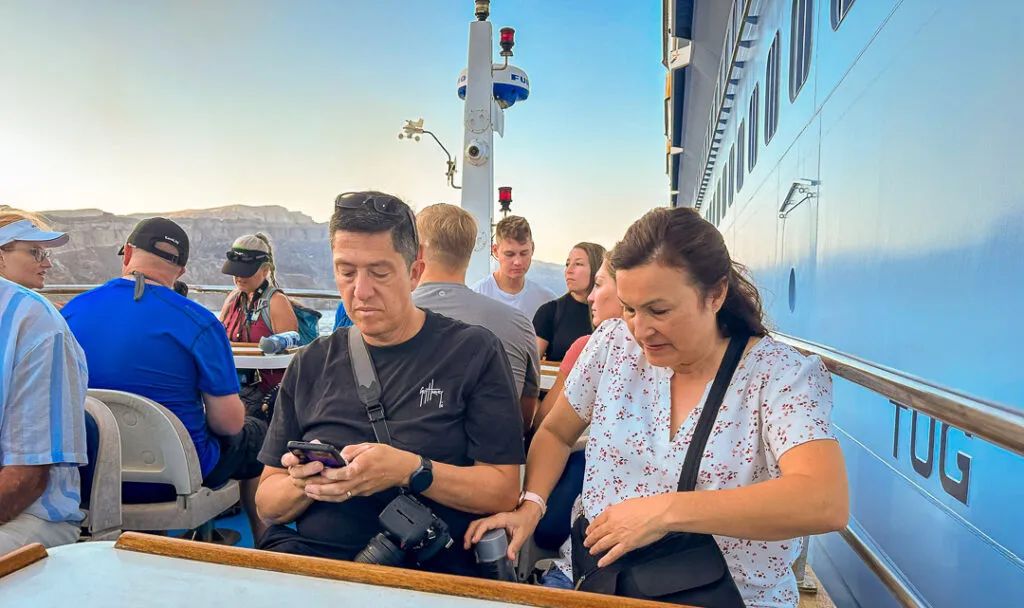
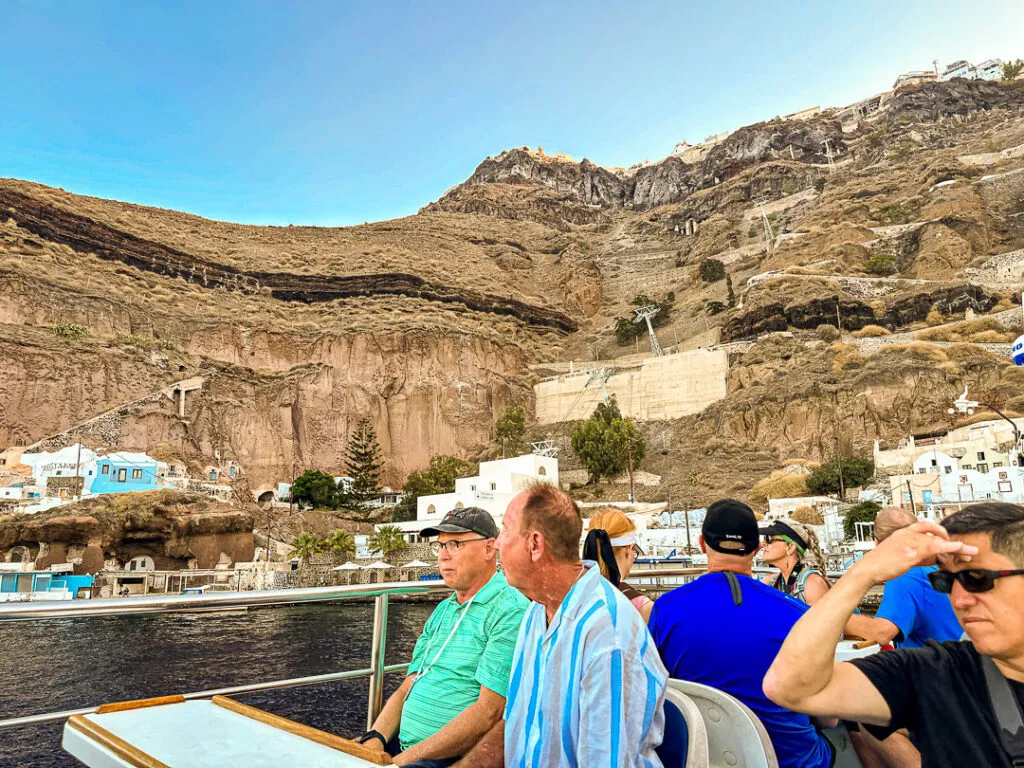
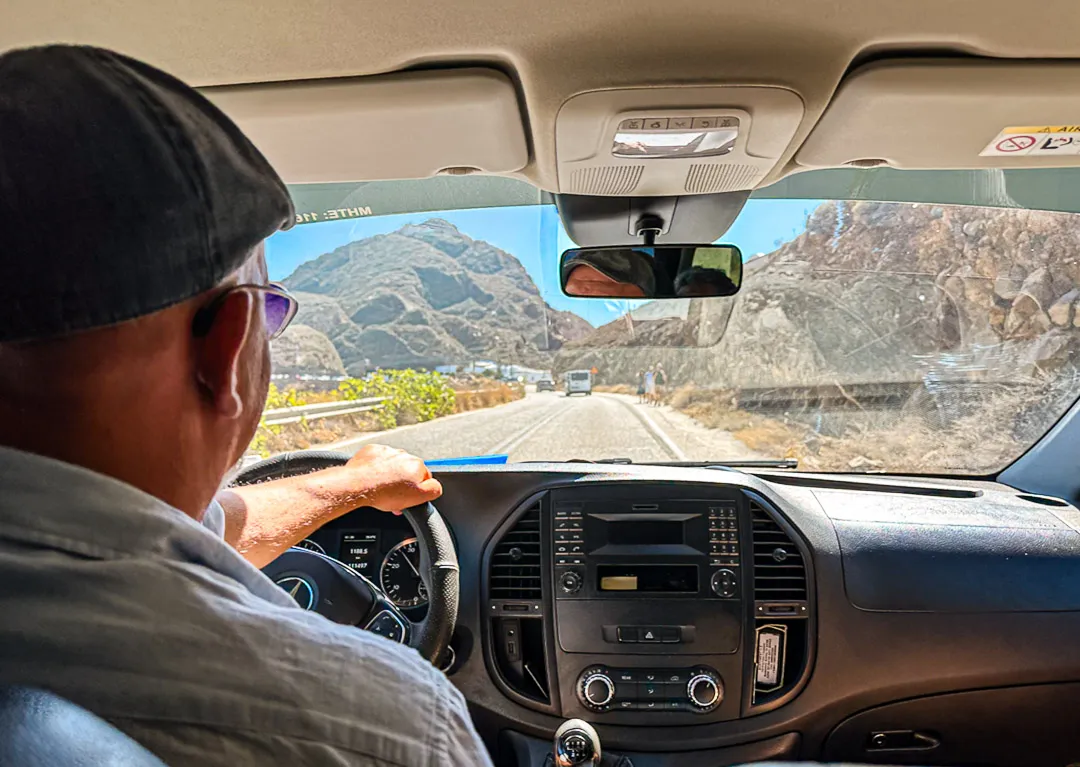
After arriving at the top, we waited for our driver and guide for the day, Kostas. While we waited, we watched locals expertly maneuver the mules up and down the path.
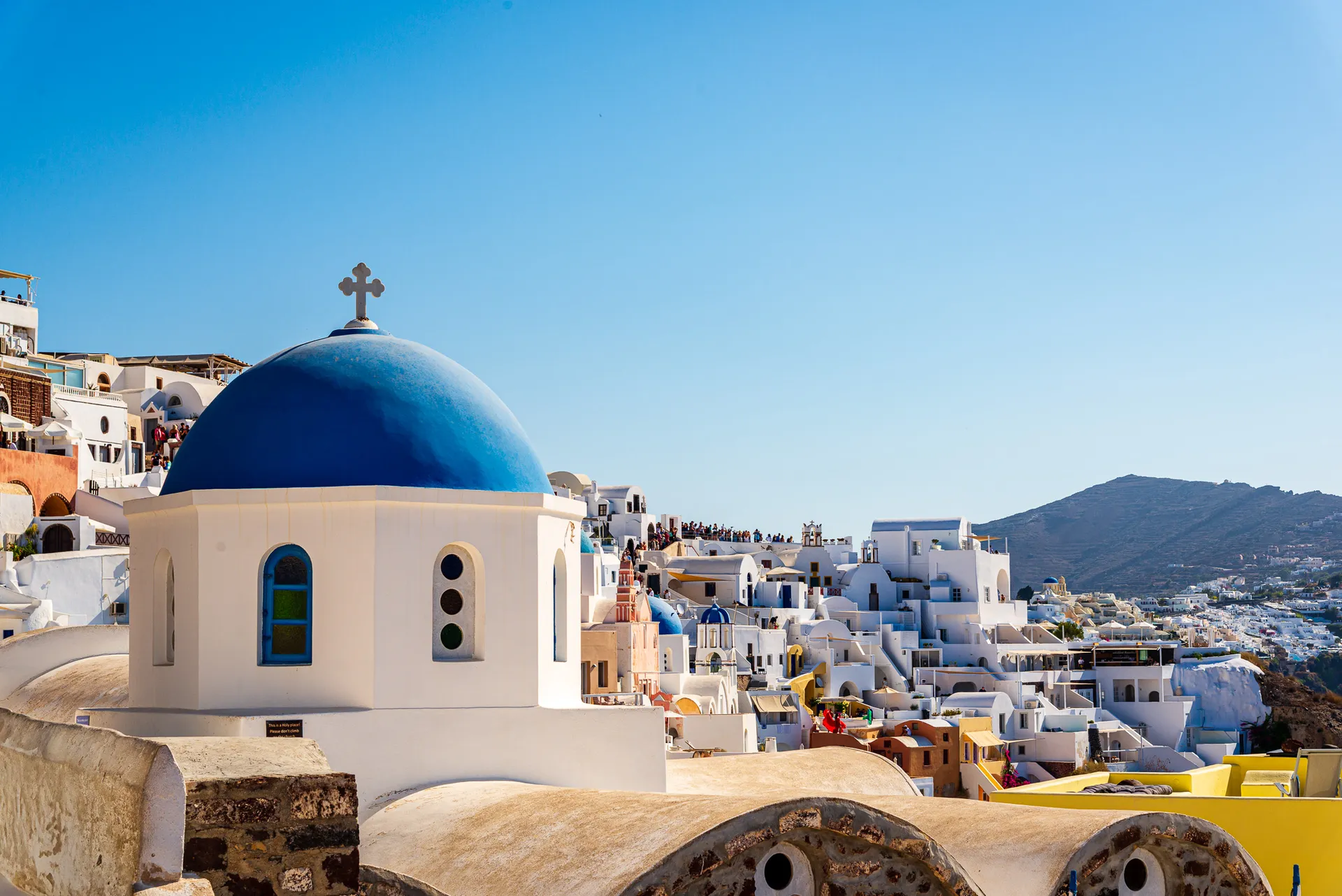
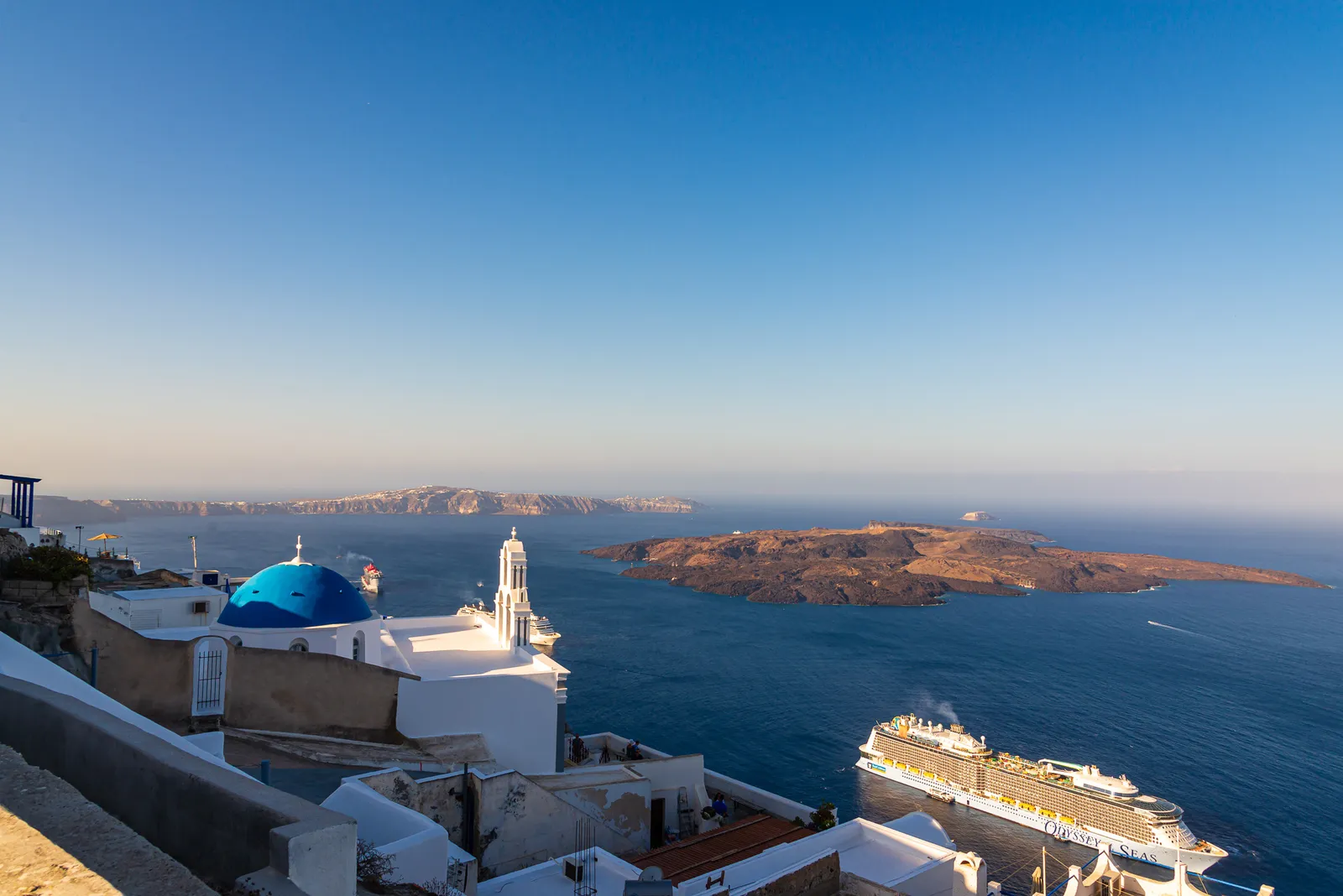
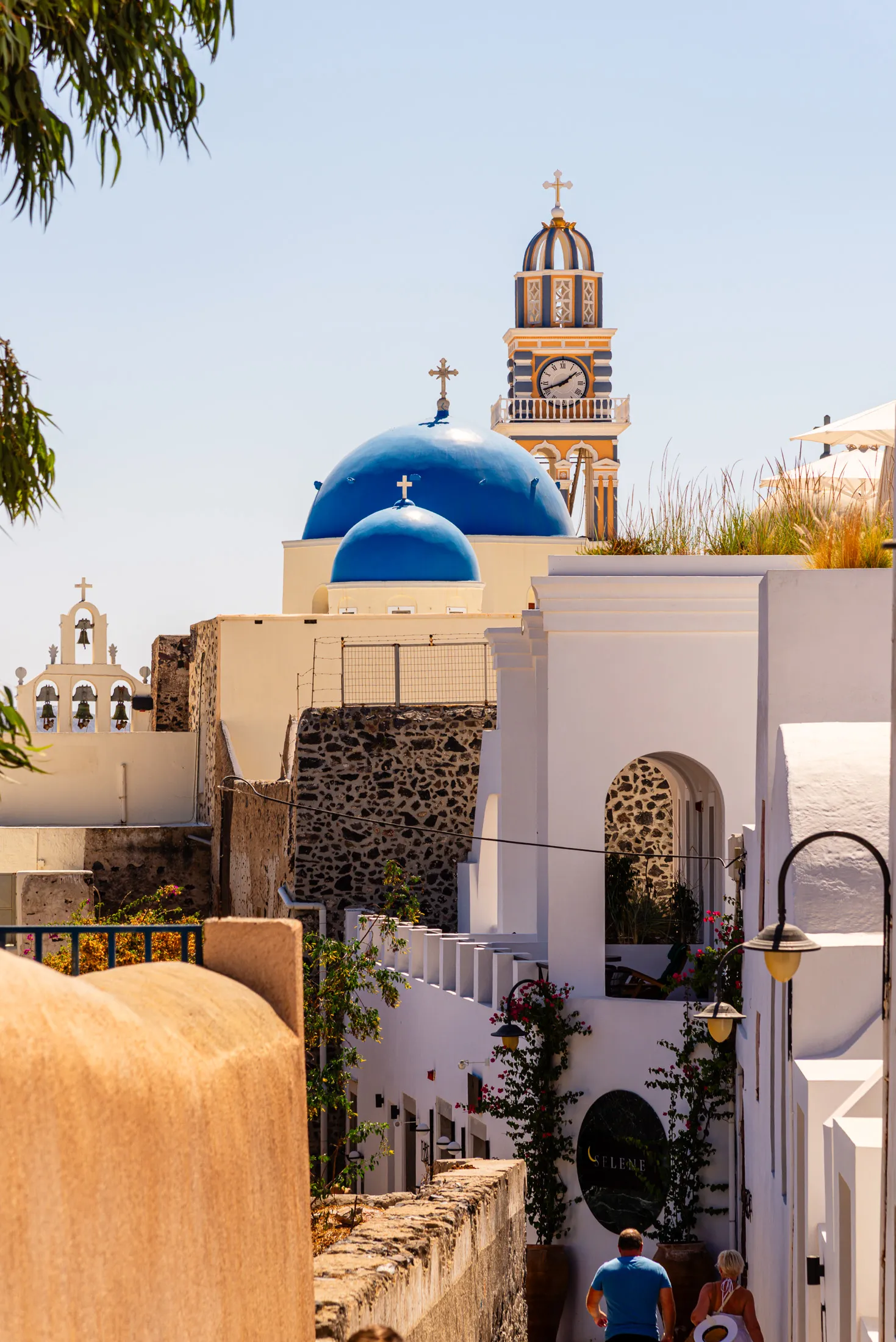
After meeting Kostas, we set off to explore the island. He took us to the highlights and the best lookout points for photos, each one more stunning than the last. We had time to enjoy the town and explore the iconic blue domes and the overlook where the blue caldera stretches out below. Even with the early start and a private driver, this area was starting to fill in with day-trippers.
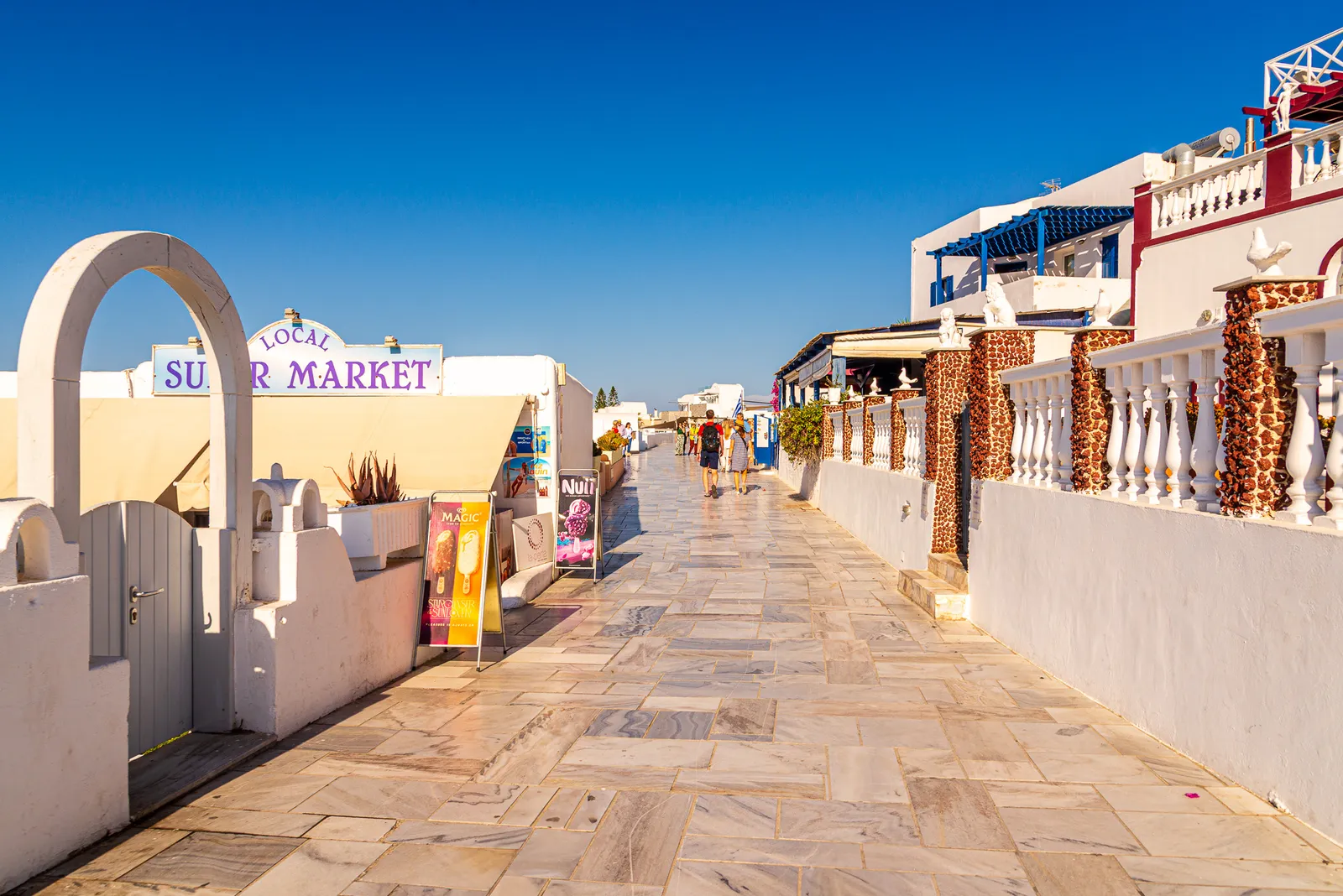
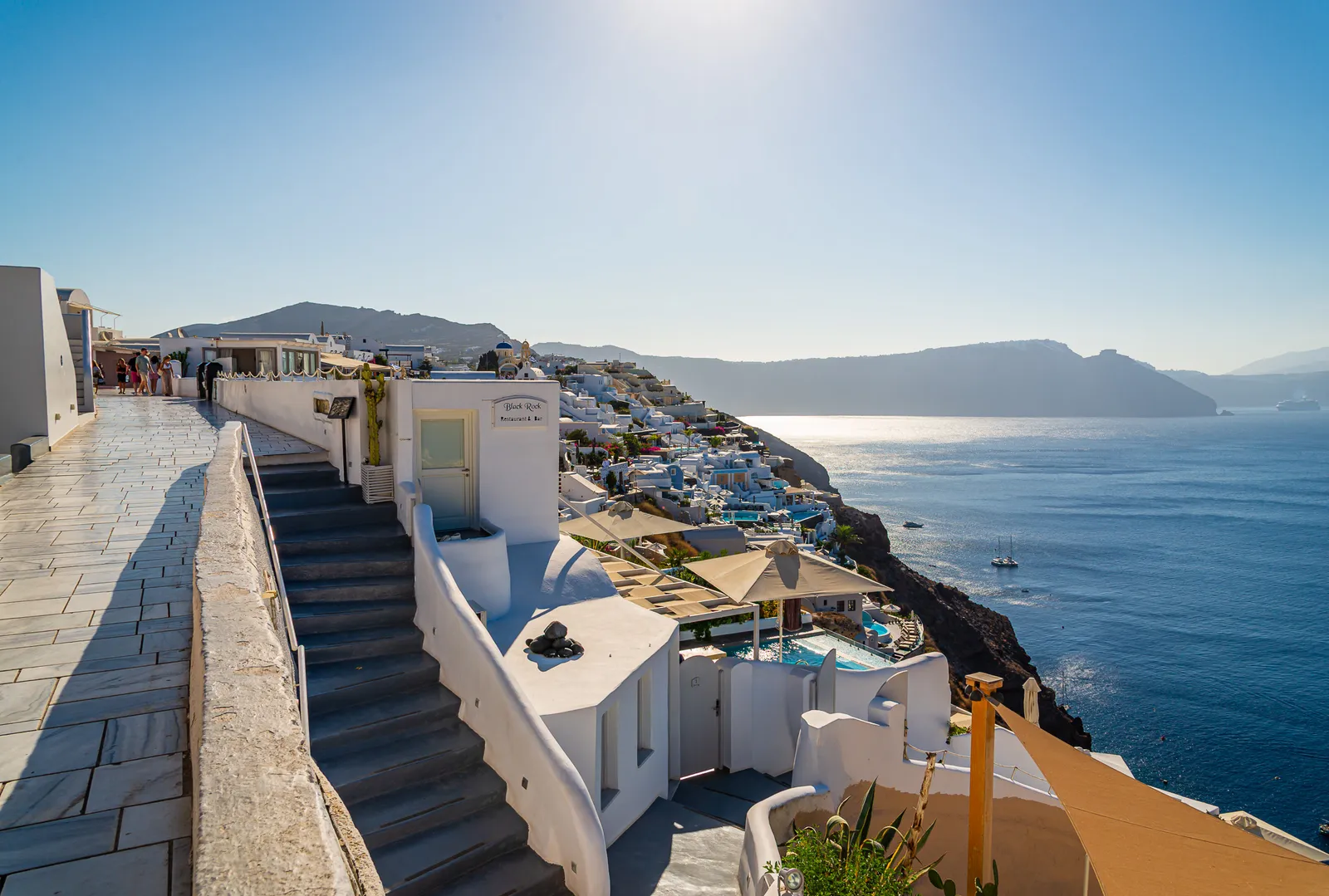
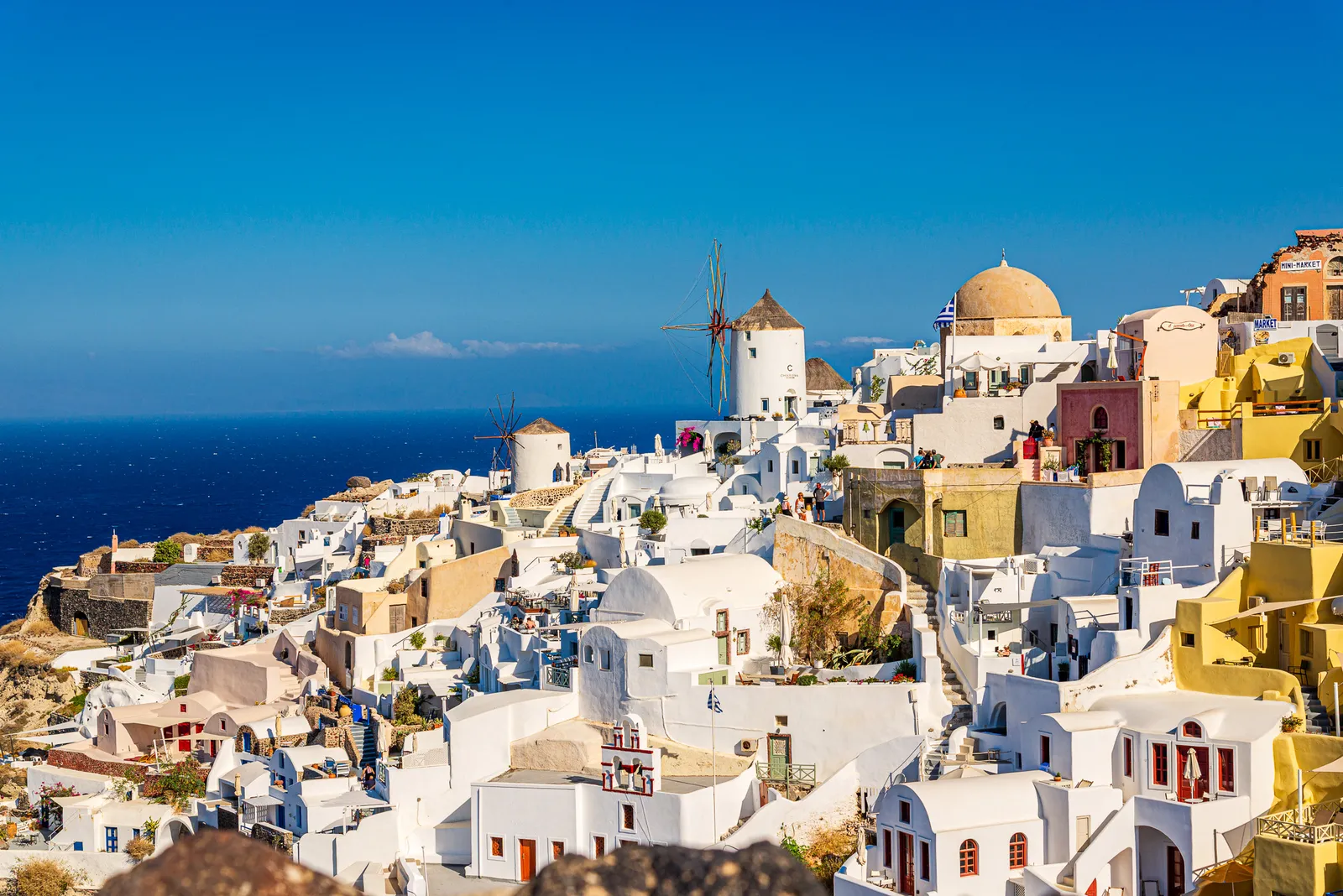
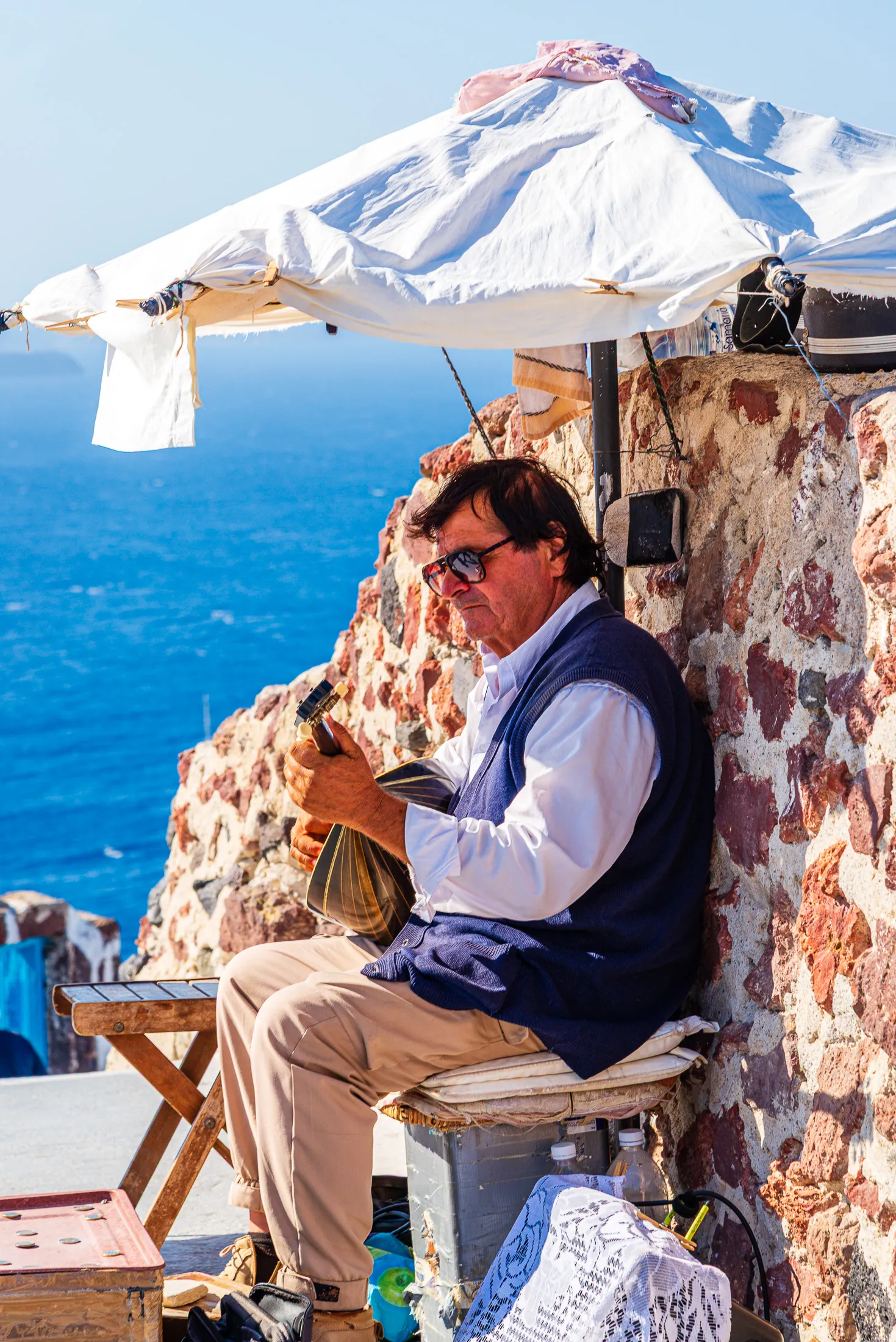
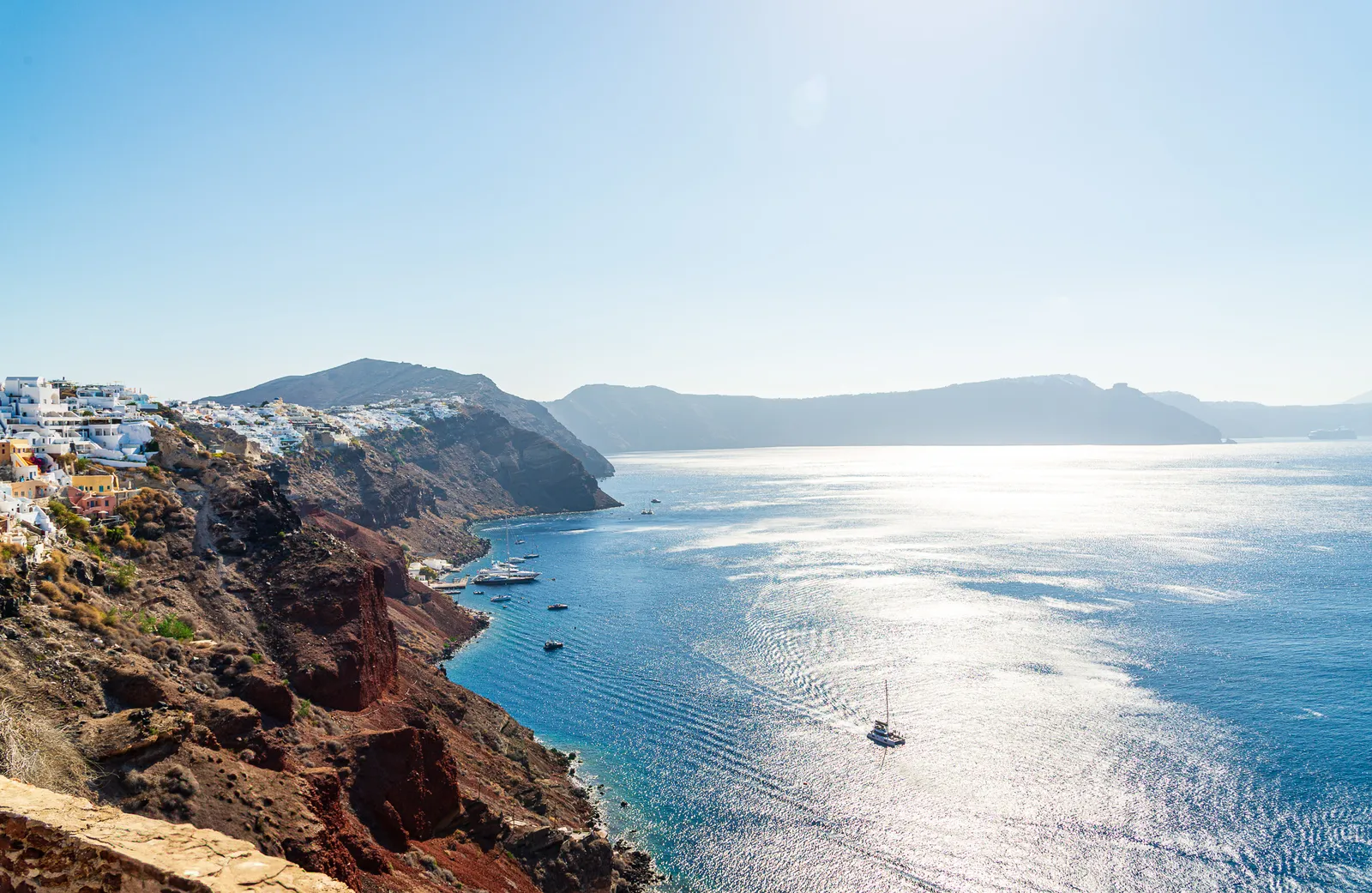
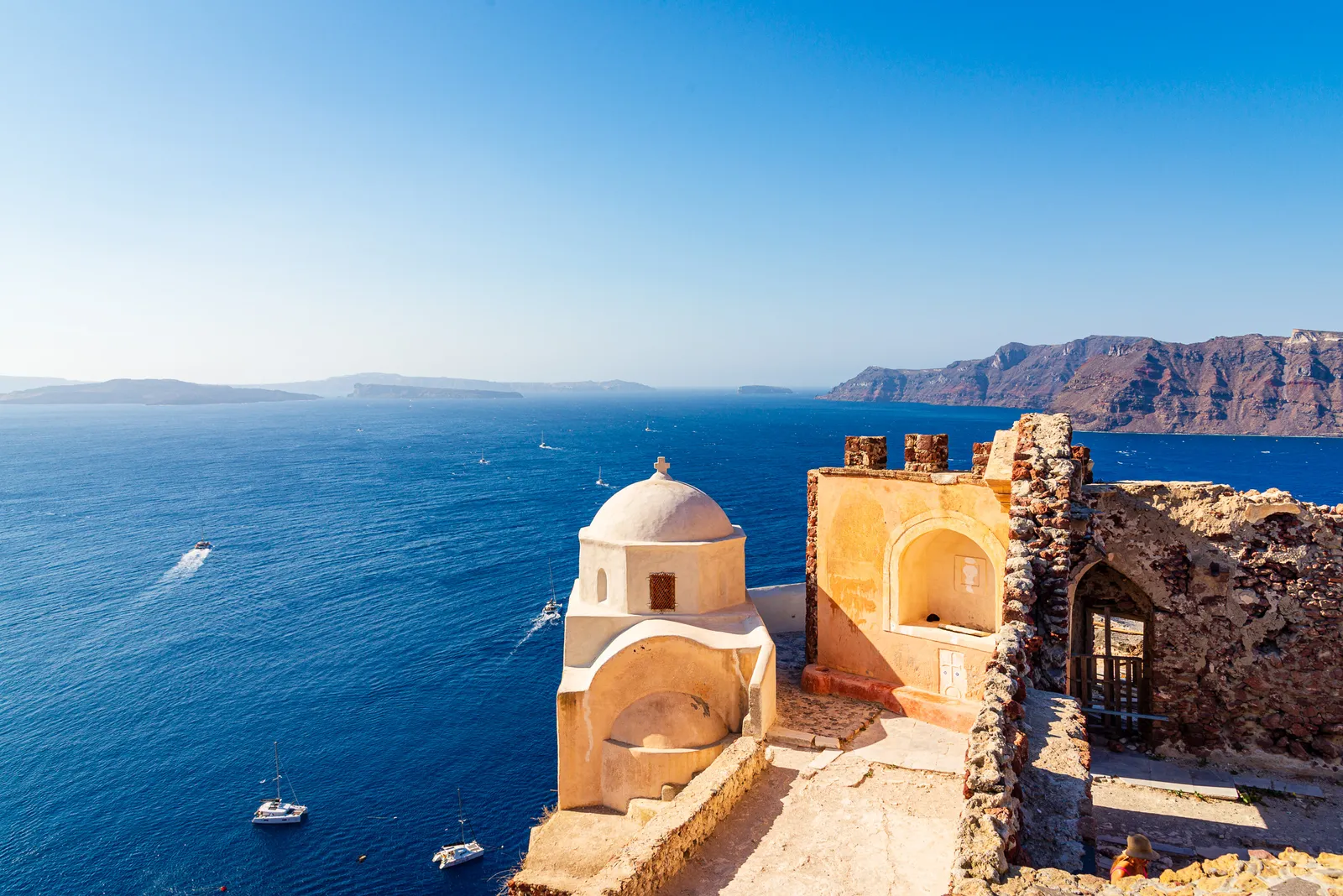
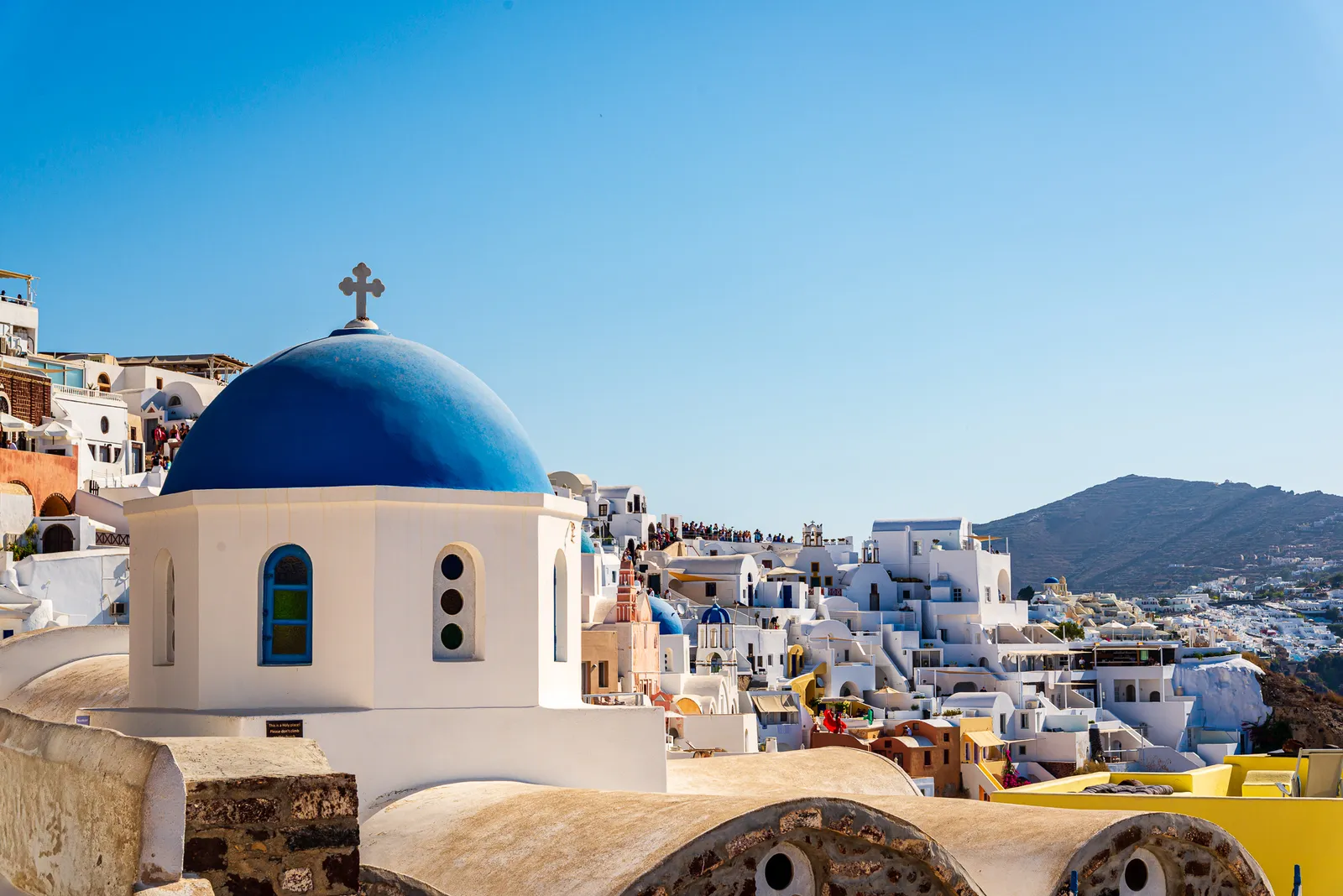
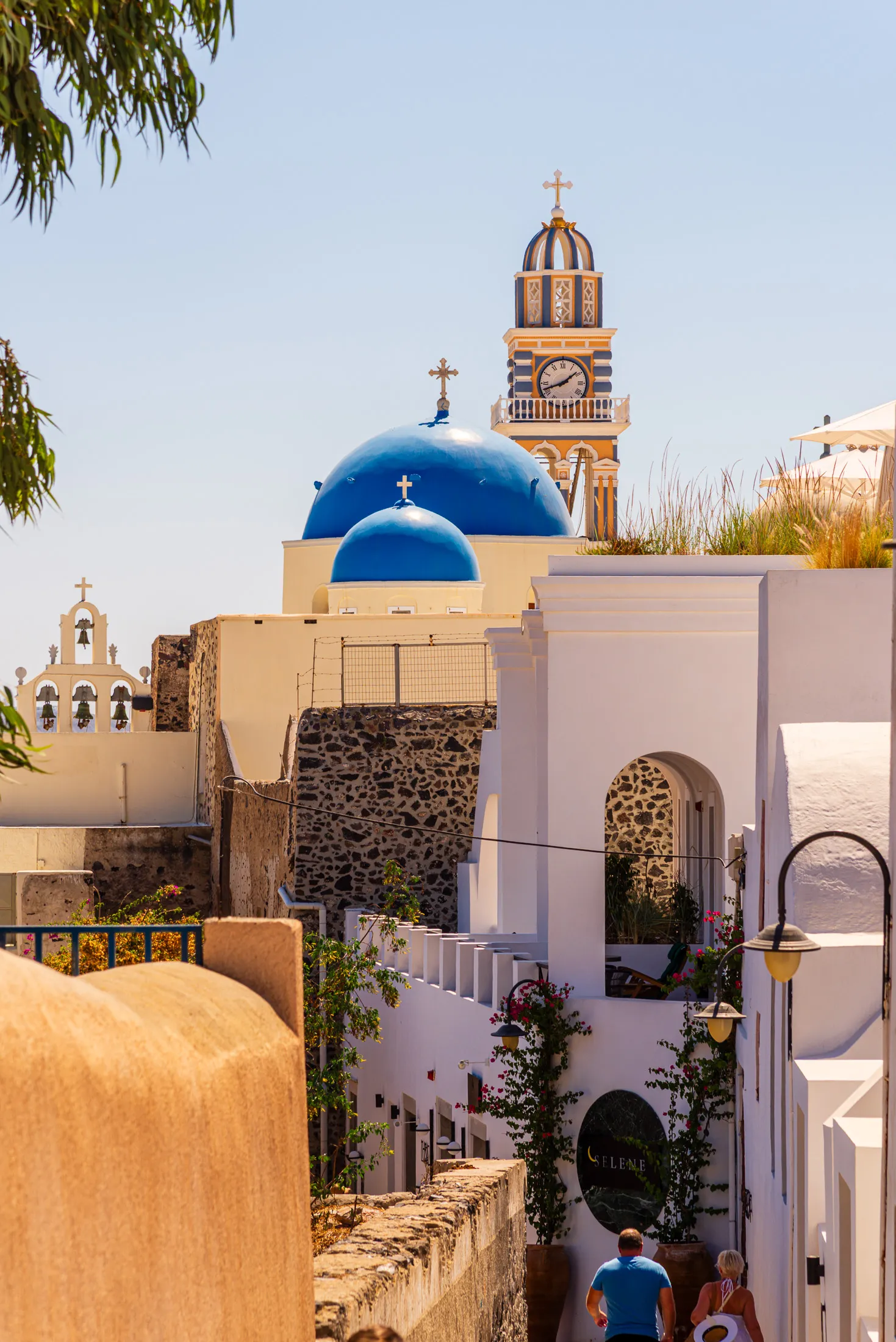
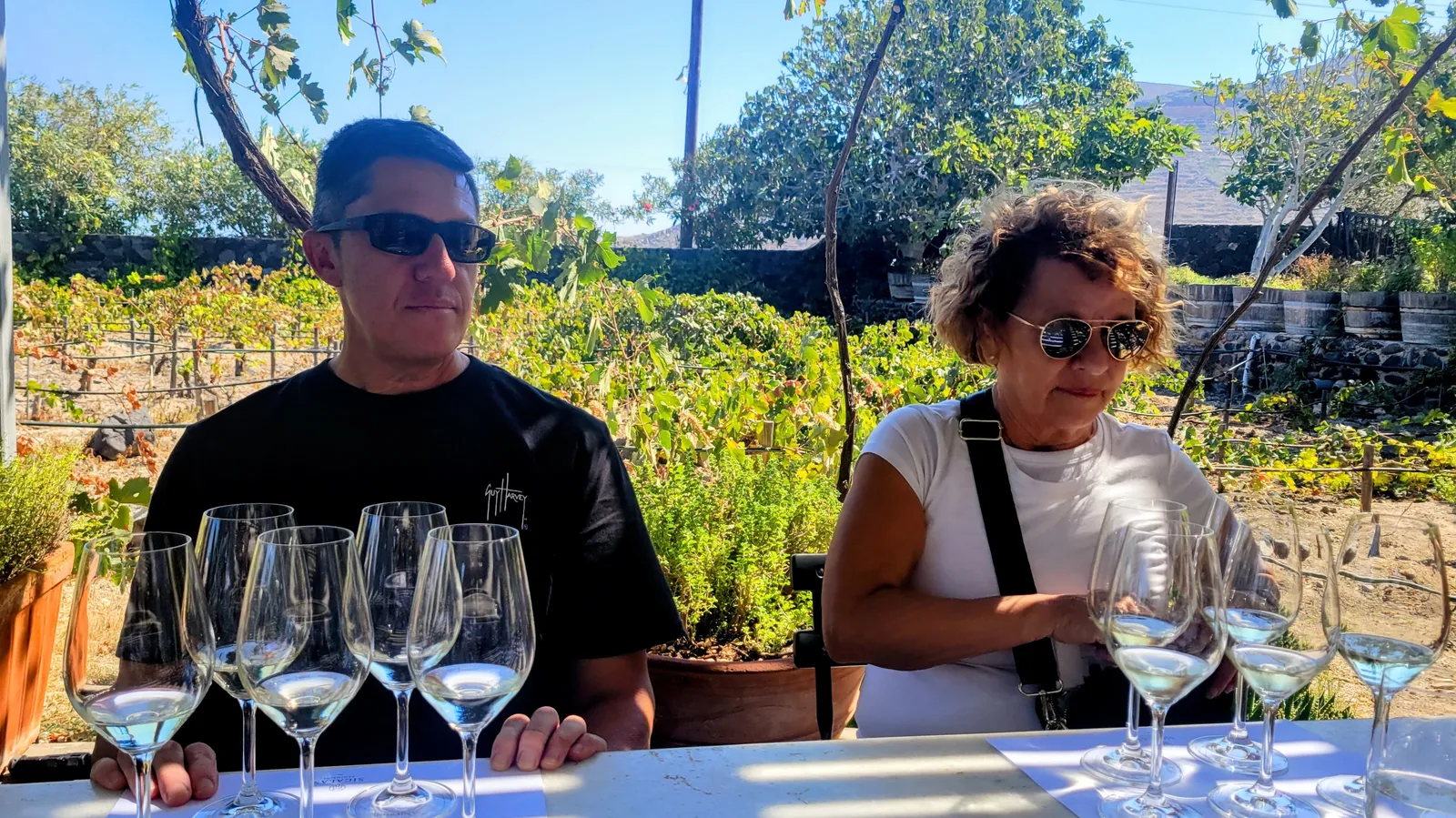
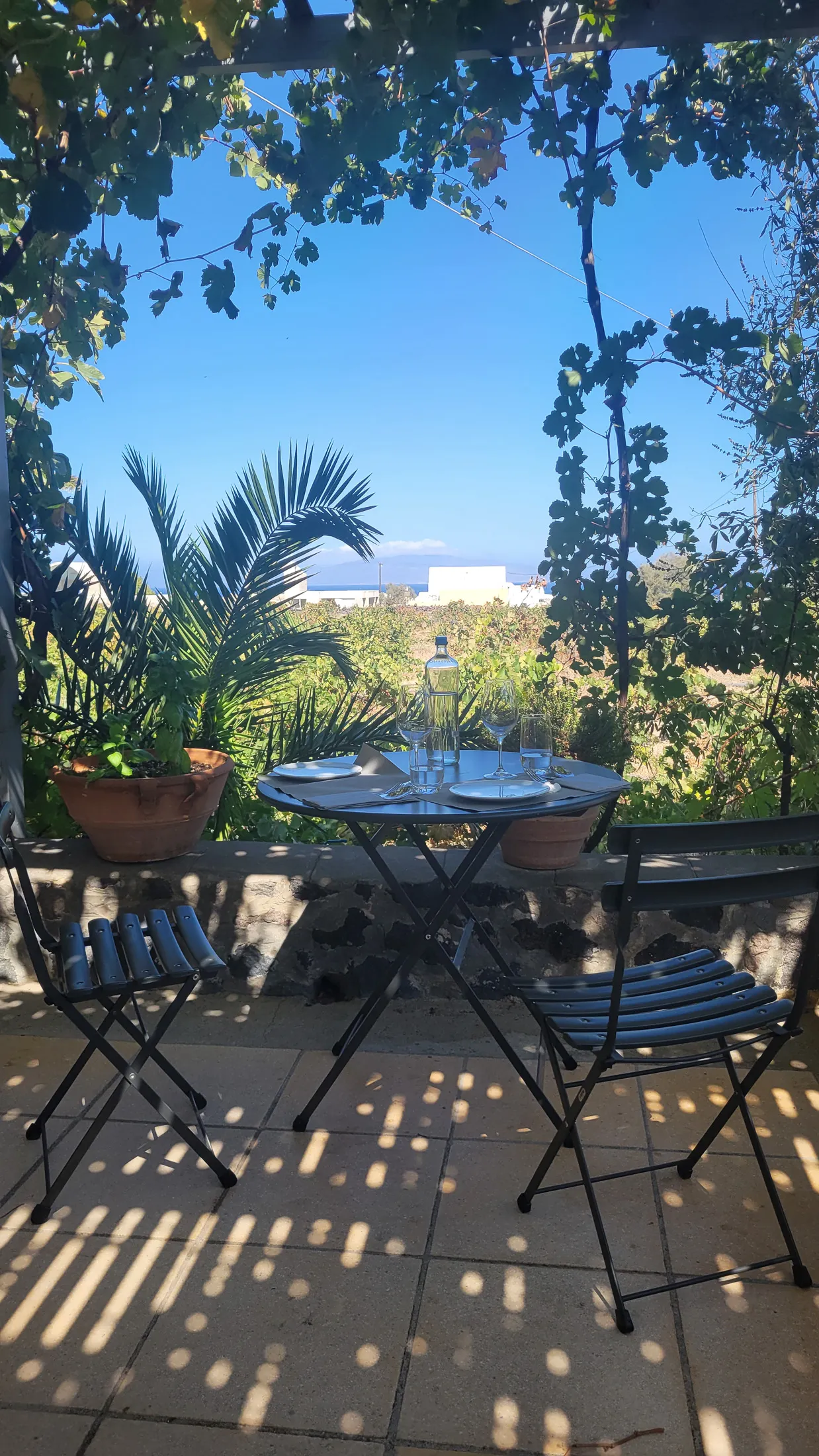
Domaine Sigalas was one of the highlights of our Santorini day trip. The moment we arrived, the setting felt calm and open, it had that quiet, countryside pause that makes you slow down without even thinking about it.
The winery is rooted in Santorini's unique terroir, especially its Assyrtiko grapes, which thrive in the island's mineral rich volcanic earth. Kostas explained that Sigalas has built its reputation on preserving these traditions while refining the craft, creating wines that feel clean, bright, and shaped by the landscape.
The tasting was simple and genuinely enjoyable. We tried a few wines and paired them with paninis that made the whole experience feel relaxed and easy. Nothing felt rushed or overly structured, just good wine and good food in a setting that you wish would never end.
Looking back, it was the combination of the atmosphere, the flavors, and the slow pace that made the stop stand out. Domaine Sigalas offered a glimpse into Santorini's winemaking heritage while giving us a comfortable place to enjoy it, making it a perfect moment in the middle of the excursion.
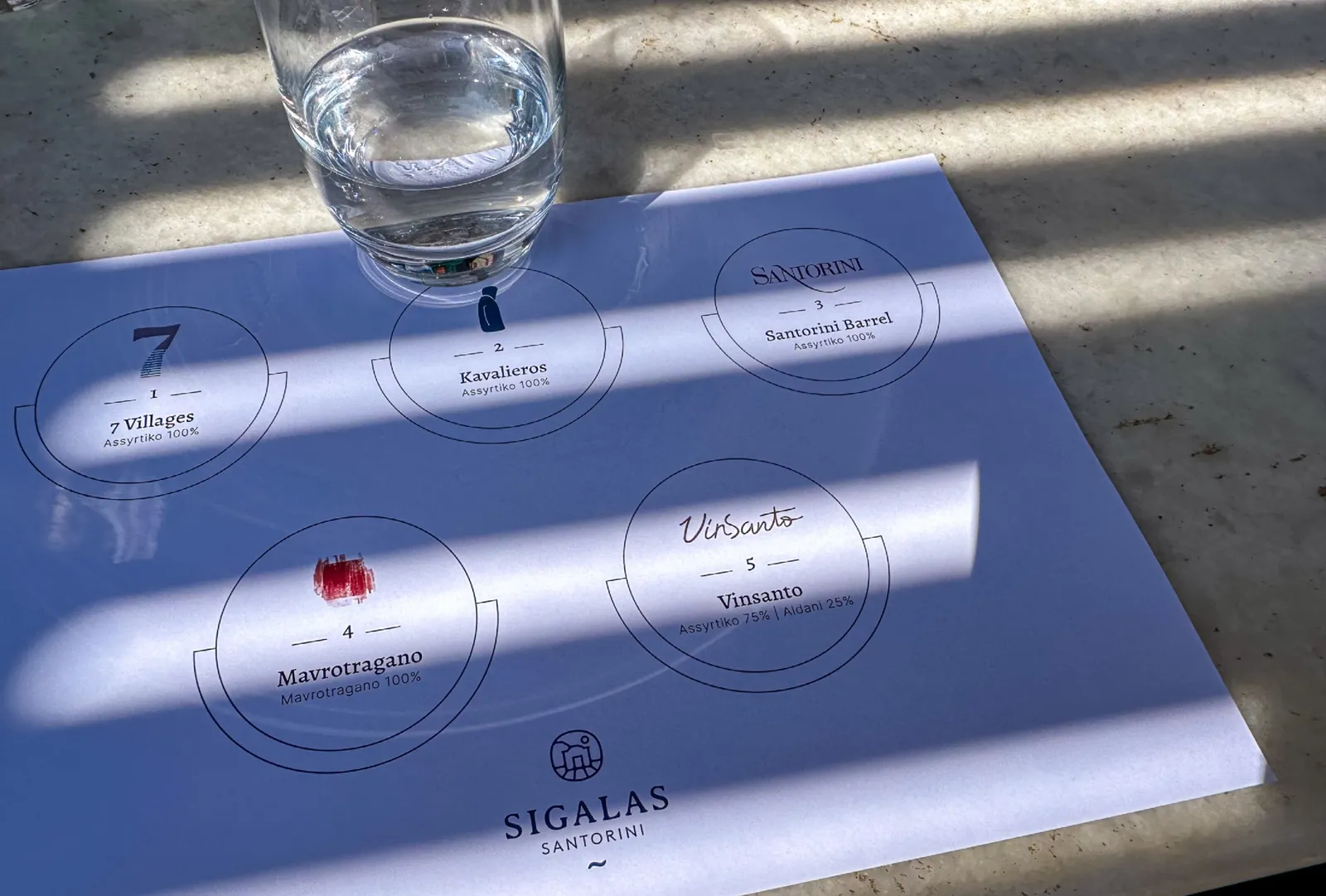
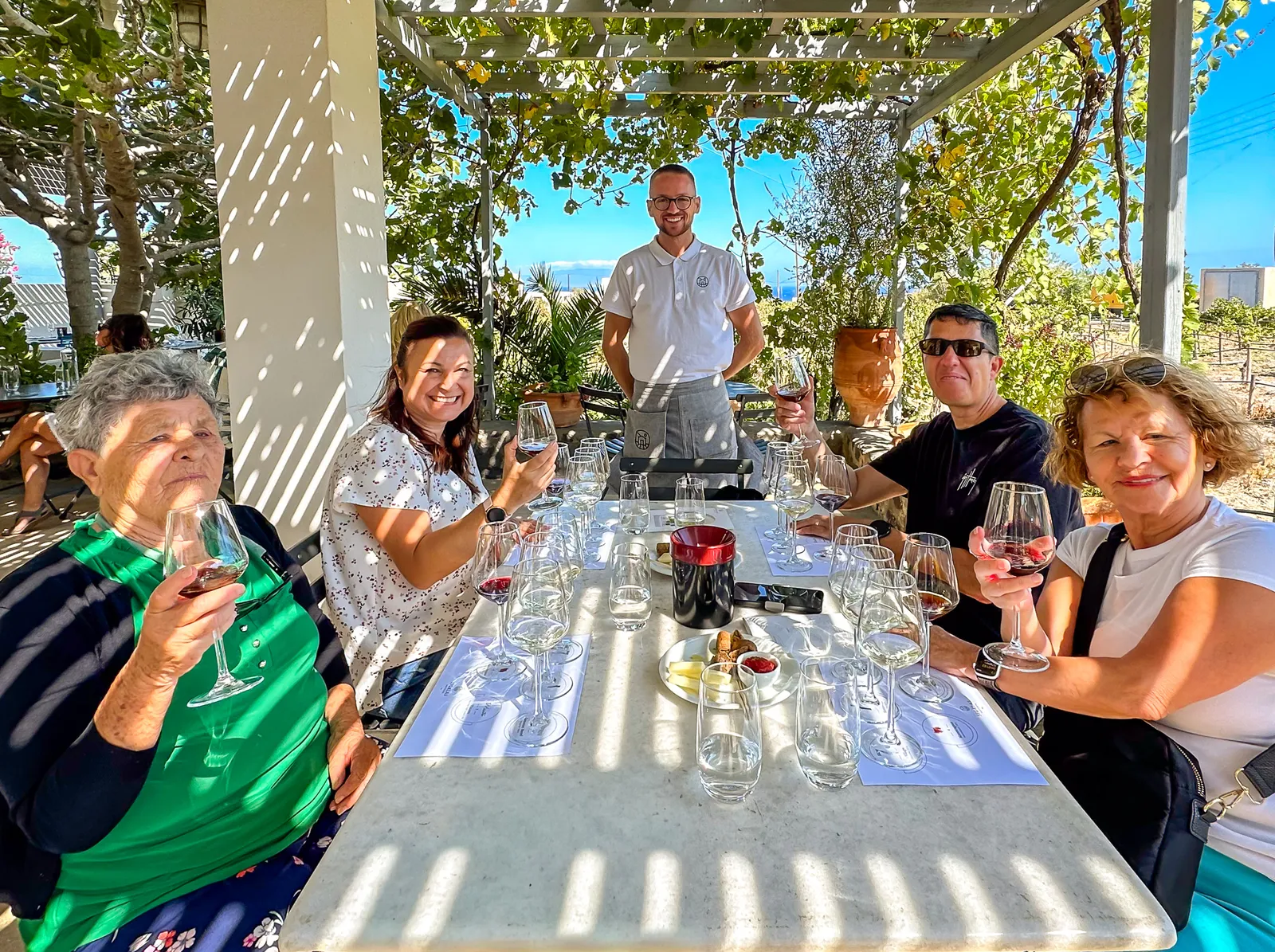
After the wine tasting Kostas drove us to the outskirts of town, away from any touristy areas and surprised with a stop for some classic gyros before heading back to the cable car for the short trip down to the port and the tender ride back to the ship.
Once we were back on the ship, we took some time to unwind and enjoy the incredible views of Santorini from the deck. Angie even tried the onboard skydiving simulator, which was a fun contrast to the calm scenery around us.
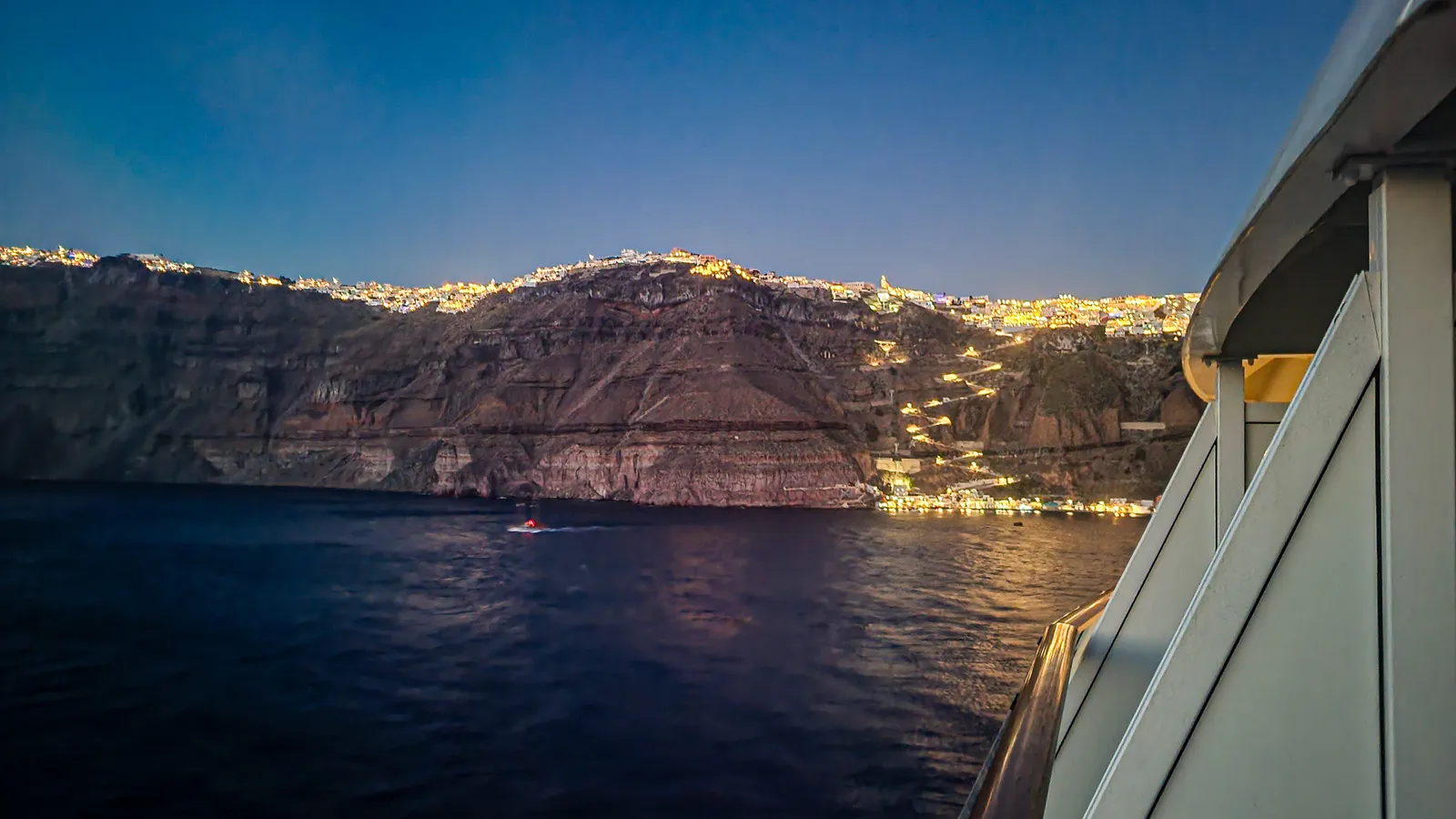
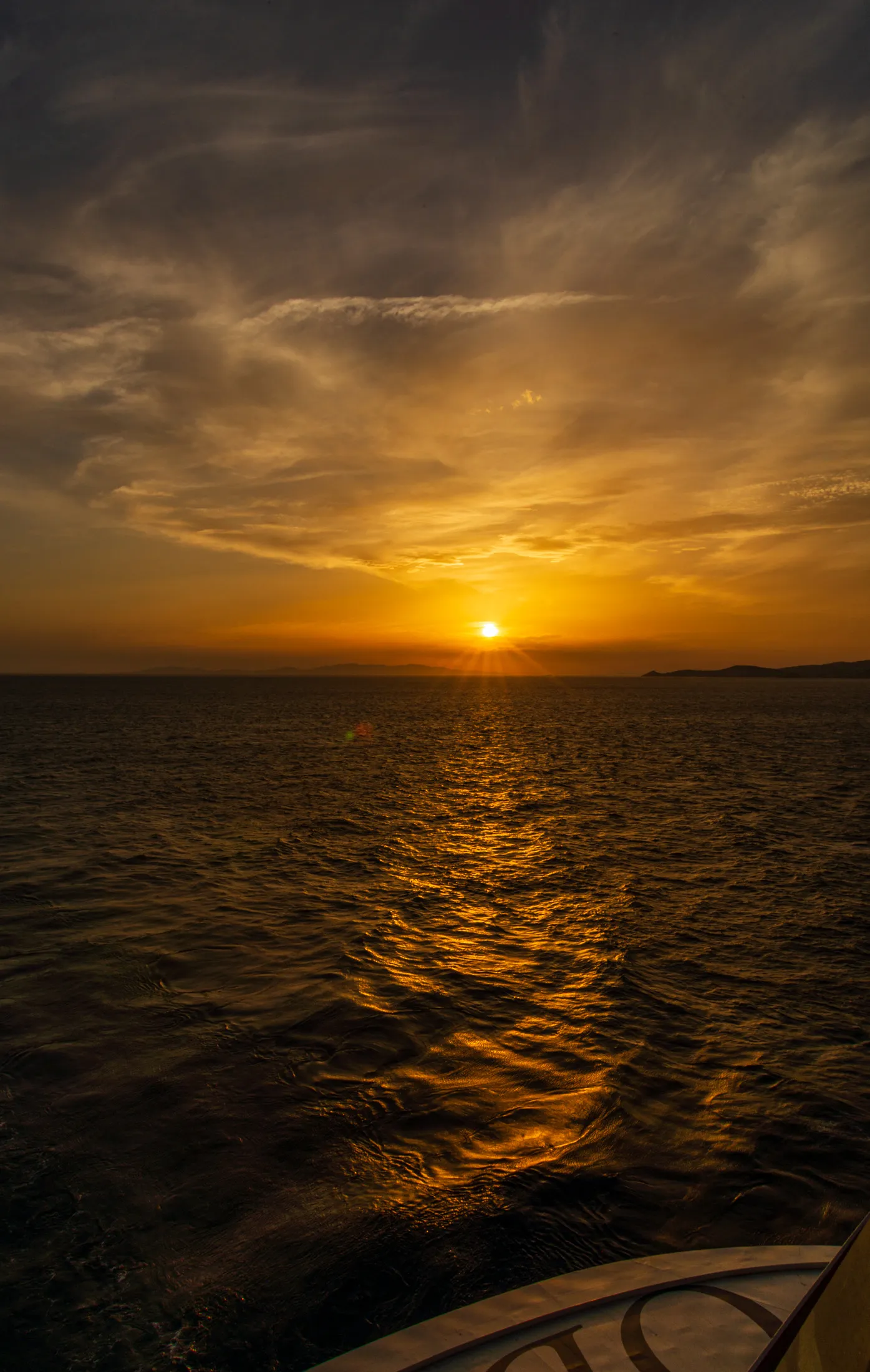
The ship remained anchored until sunset, giving us the perfect opportunity to take in our first Mediterranean sunset with the island's lights beginning to glow behind us. It was one of those quiet, perfect cruise moments where the day's adventure blended seamlessly into a peaceful evening.
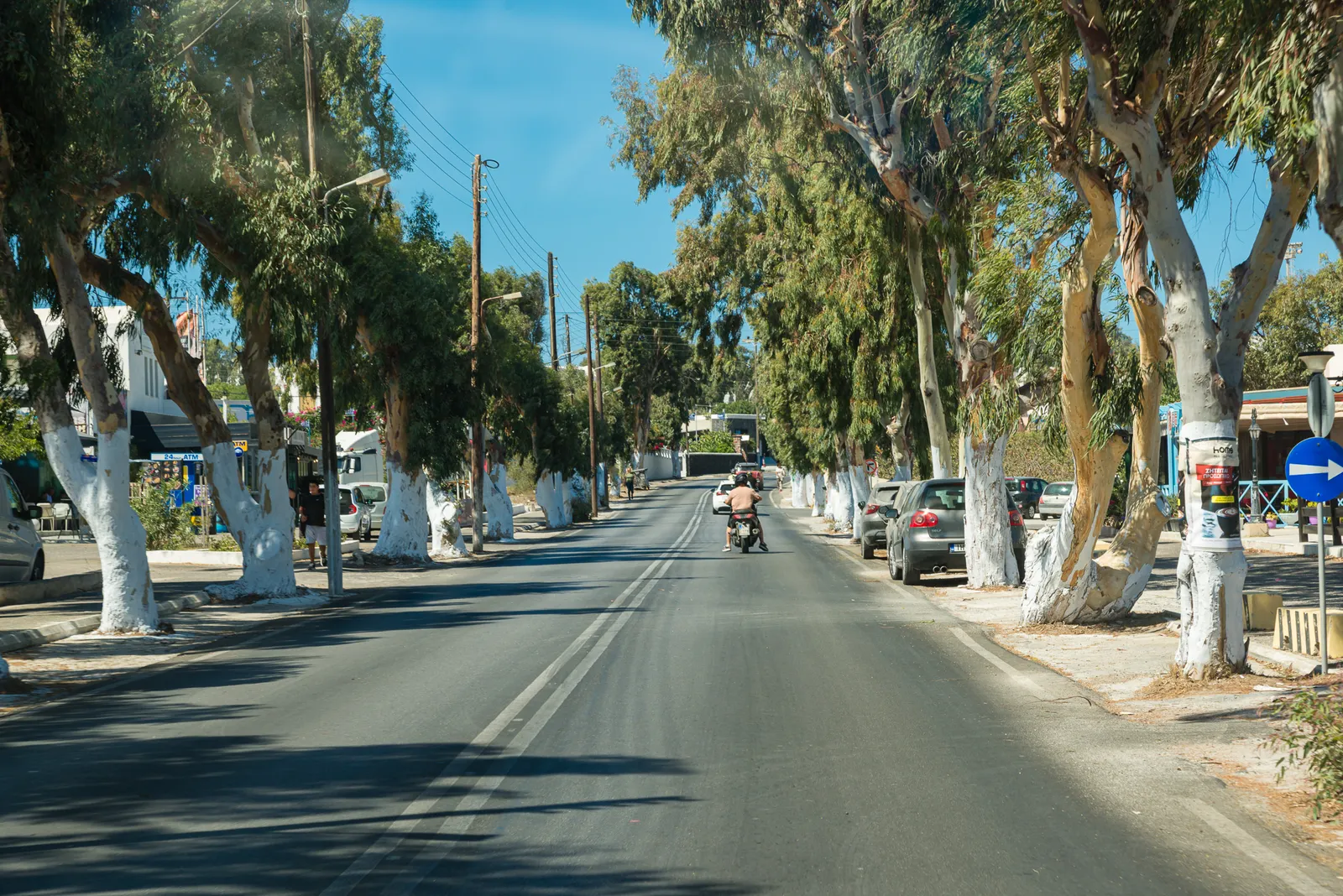
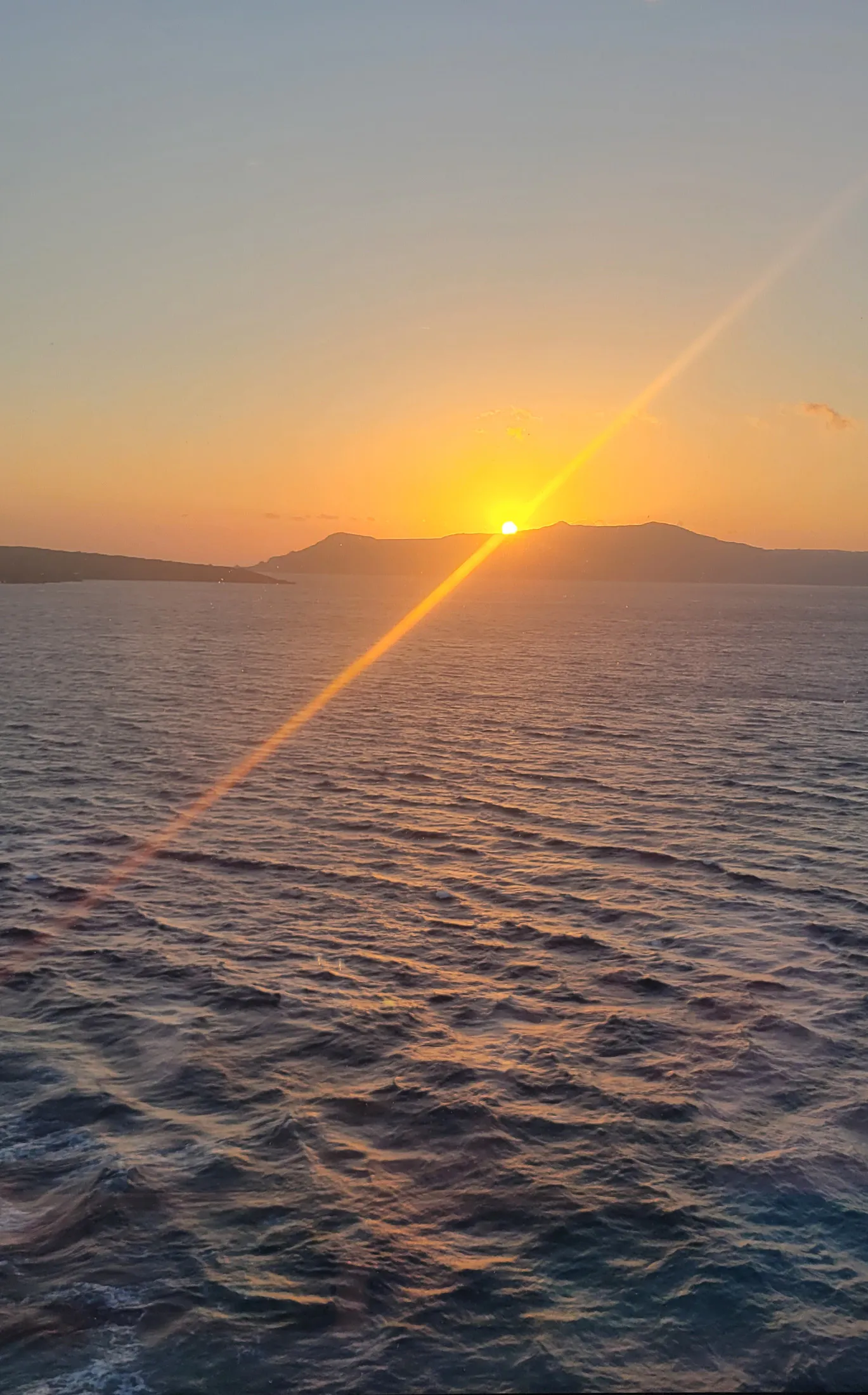
- Time in Port: 10–11 hours, with some waiting for the tender boats, so plan your day accordingly
- Getting Around: Walk in the town center, use public buses (KTEL) for other villages and beaches, the cable car to Fira's Old Port, and a private driver/guide.
- Must-See: Oia's blue domes, Fira's caldera views, and a wine tasting
- Difficulty Level: Moderate, with some walking on uneven surfaces and stairs, so wear comfortable shoes
- Start Early: Being among the first to breakfast and the first tender saves 30–45 minutes
- Book in Advance: Reserve your driver or guide ahead of time, taxis are limited and the island is spread out
- Cable Car & Transfers: €6 each way, fast and scenic; taxis or pre-booked transfers are convenient but pricier
- Wine Tasting: 20+ wineries across the island, many with caldera views
- Iconic Photo Spot: The Church of Agios Spyridonas in Oia with its famous blue dome
- Focus on the Highlights: Concentrate on Fira and Oia, trying to see everything will make your day feel rushed
The Acropolis, Mars Hill & Plaka District
I was genuinely excited to visit Athens, with the Parthenon and Mars Hill high on my bucket list. From the moment you arrive, it's clear this is a city shaped as much by conflict as creativity. Over more than two thousand years, Athens has been fought over, rebuilt, occupied, and transformed. Today, it's a vibrant modern city that seamlessly blends ancient ruins into a truly memorable experience.
By the time we woke up, we were already docked. Our cruise itinerary listed 6:00 AM, but we had arrived much earlier. Once the all clear to disembark was given, we made our way to the main port area to wait for our scheduled pickup. At that hour, there weren't many people around, the few who were there had already been picked up. It was just before sunrise, still dark, with only a little light coming from a guard structure.
We started to get a bit anxious because our driver should have already been there. I wasn't able to call him (note to self: make sure you have an international SIM card). After about 10 minutes, I looked behind me and saw someone about 30 feet away holding a sign. I approached and confirmed his name; it was our driver.
To this day, I still don't know why he didn't approach us, since we were clearly the only group waiting
Once our ride was sorted, we were on our way to the Acropolis. The drive through Athens was quiet and uneventful, sunrise just beginning to break over the city. We were excited to finally see the Parthenon and walk on Mars Hill. Our driver dropped us near the south slope entrance, pointed us toward the path, and we set off.
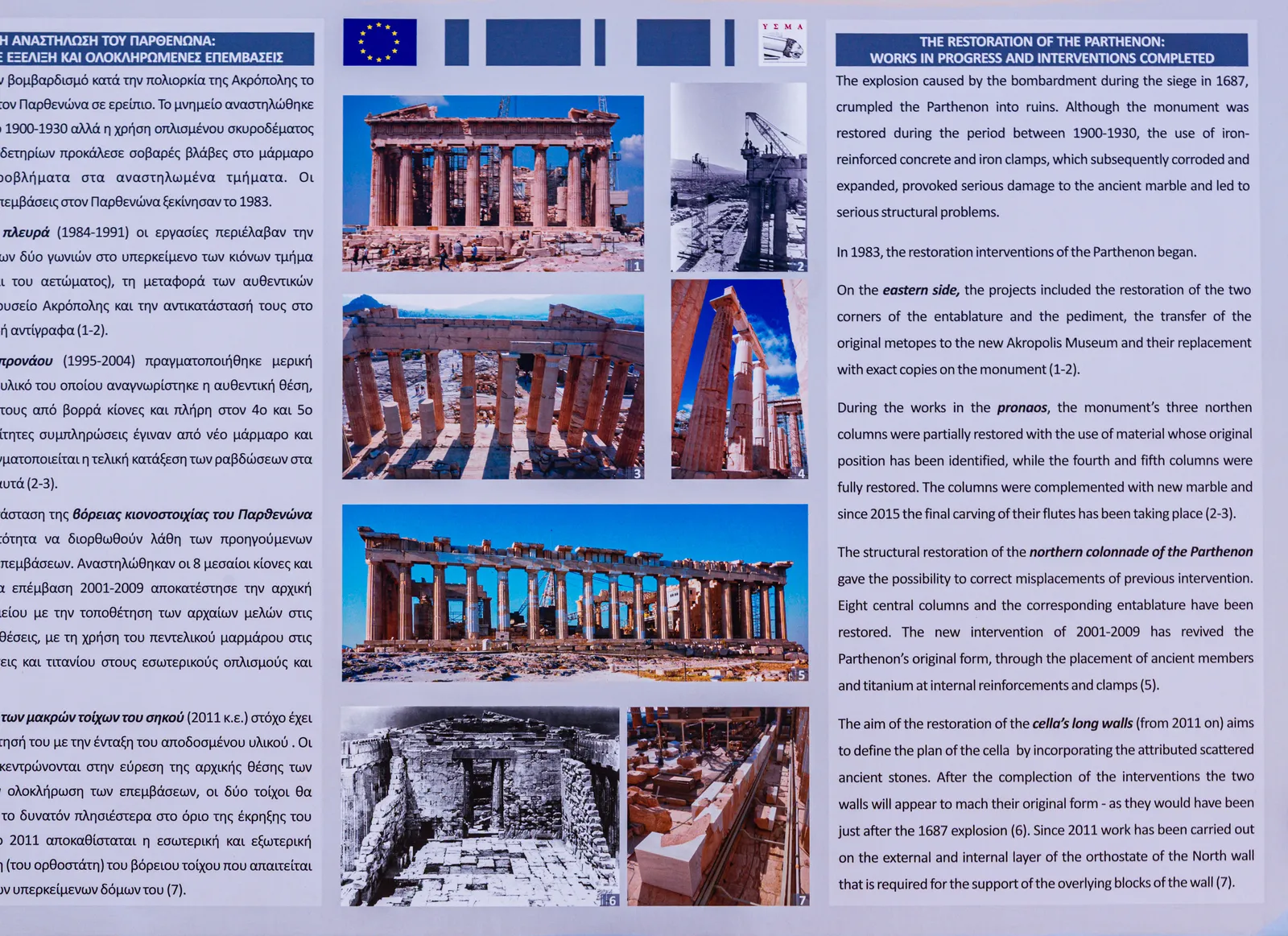
The walk up was peaceful, with olive trees along the marble pathways and views opening as we climbed past the Odeon of Herodes Atticus, the Roman theater still used for performances today. It's one of those moments where you realize you're literally walking the same routes people used thousands of years ago.
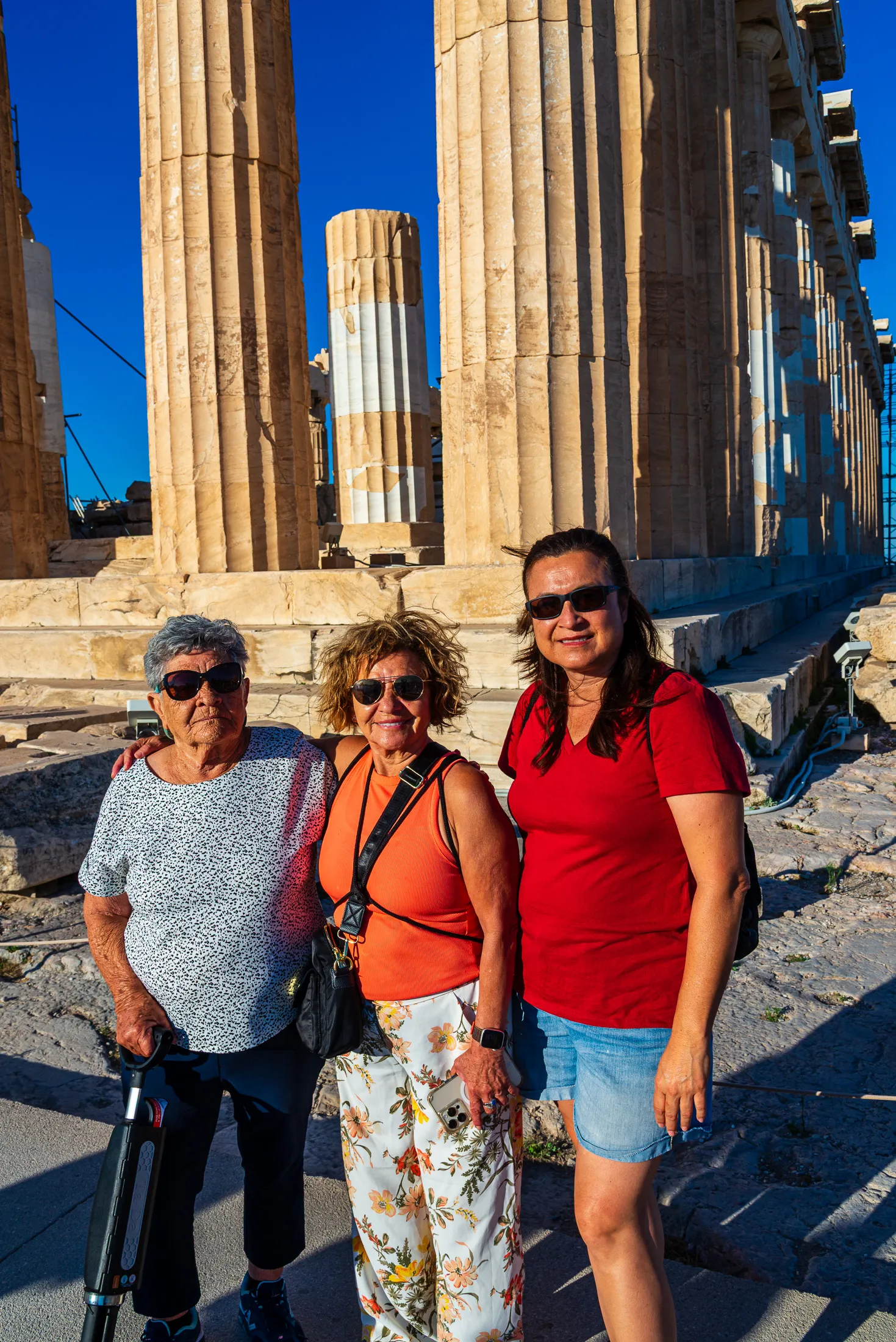
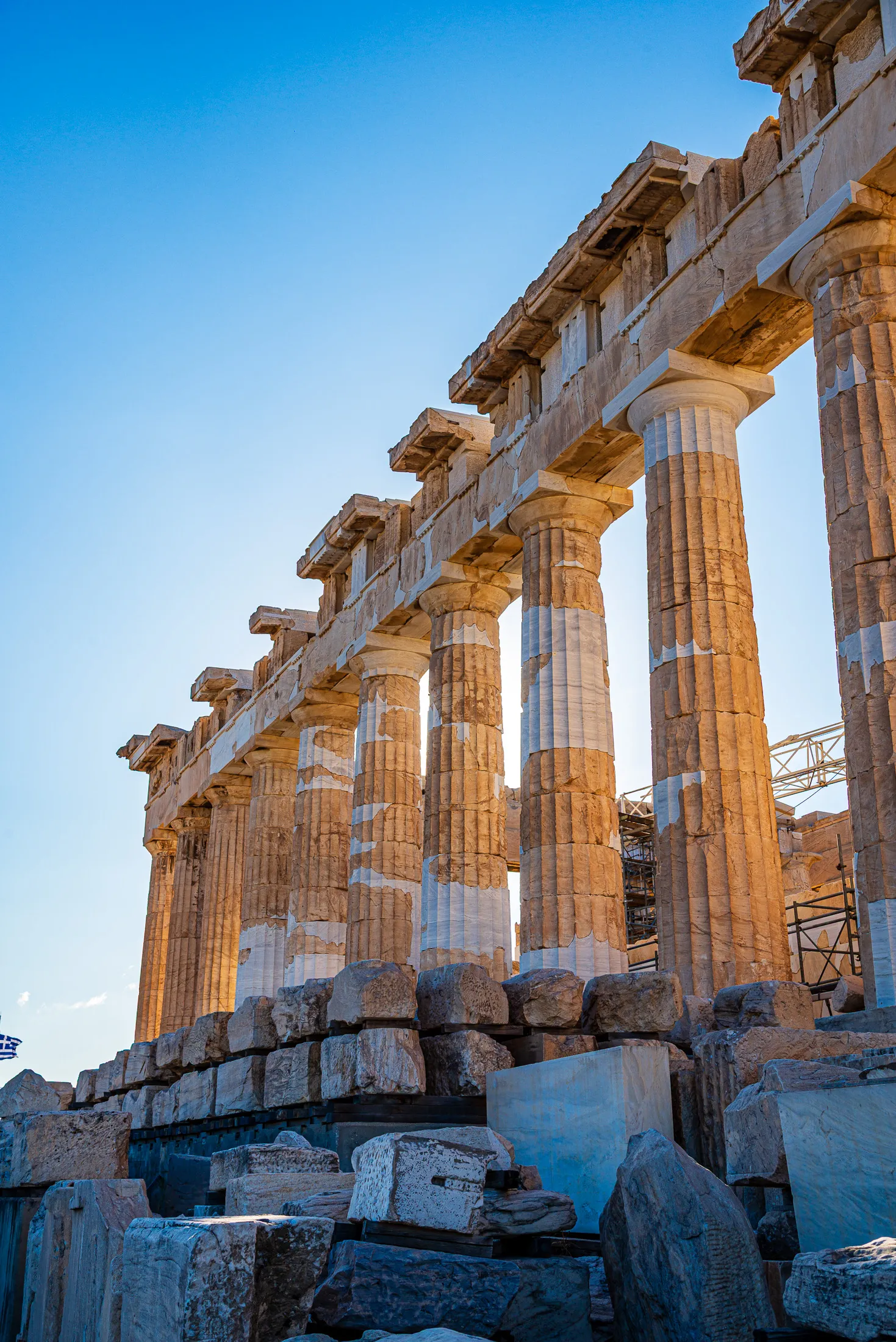
At the top, we explored the major monuments: the Parthenon, the Temple of Athena Nike at the entrance, and the Erechtheion with its Caryatid statues. We paused by the sacred olive tree beside the Erechtheion, tied to the myth of Athena's gift to the city. After taking group photos, I broke away briefly to capture a few shots before the sun grew harsh.
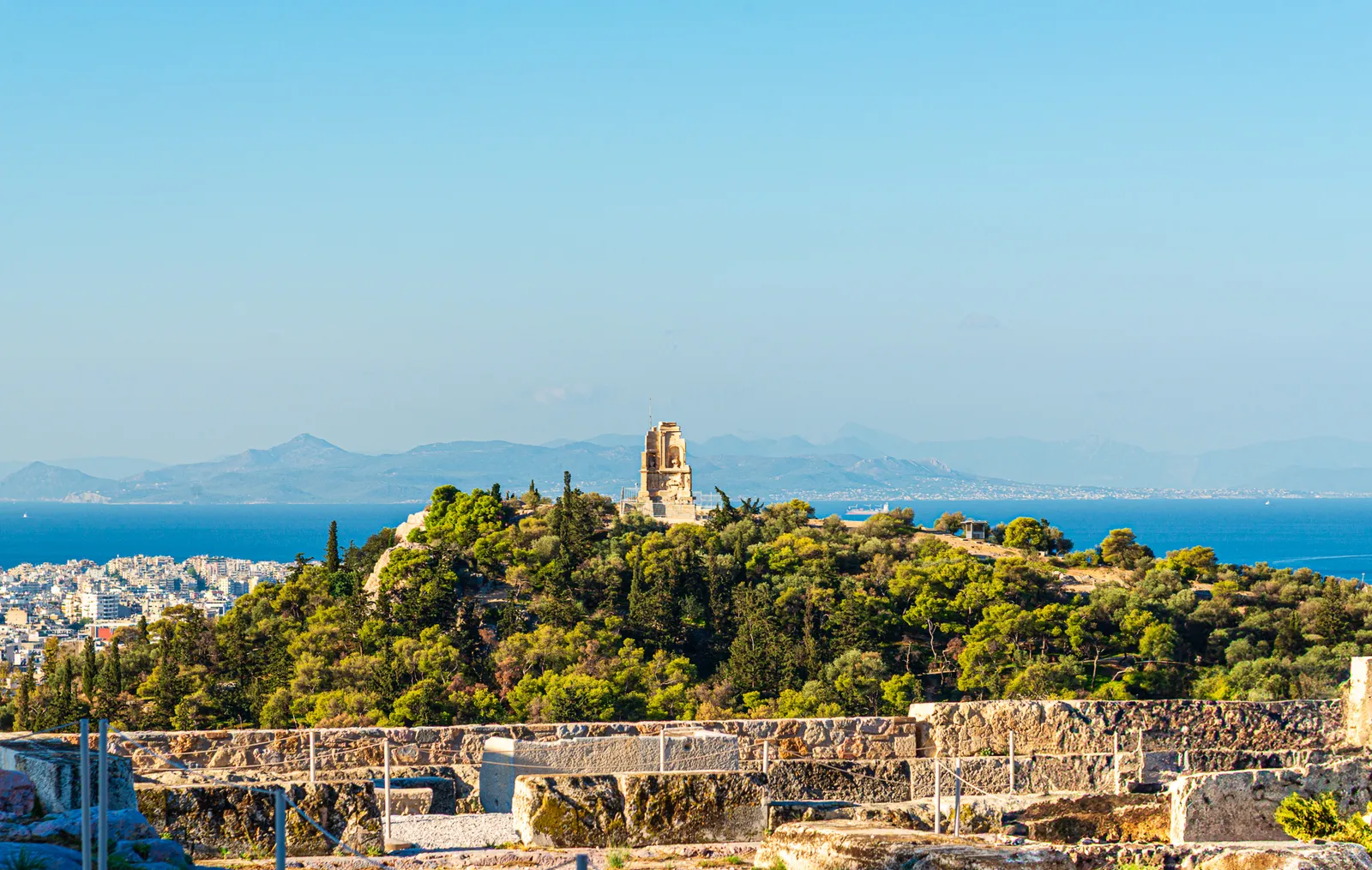
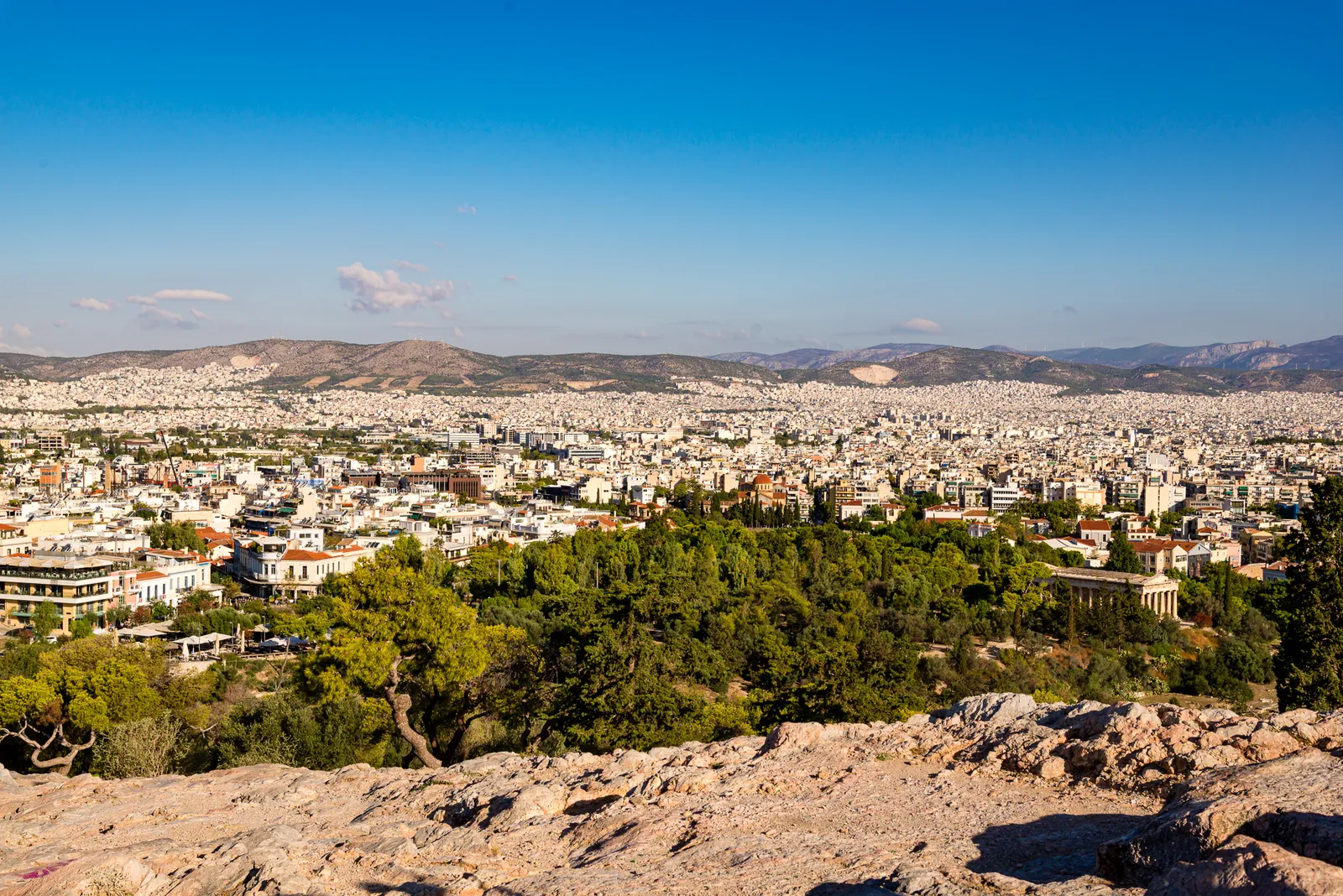
After finishing at the summit, we descended to Mars Hill, the rocky outcrop below the Acropolis. This is where the Apostle Paul delivered his sermon around AD 50, and a bronze plaque on the stone marks the passage from Acts 17. Standing there, with the city spread out below, makes you stop and reflect on just how much history sits in one place.
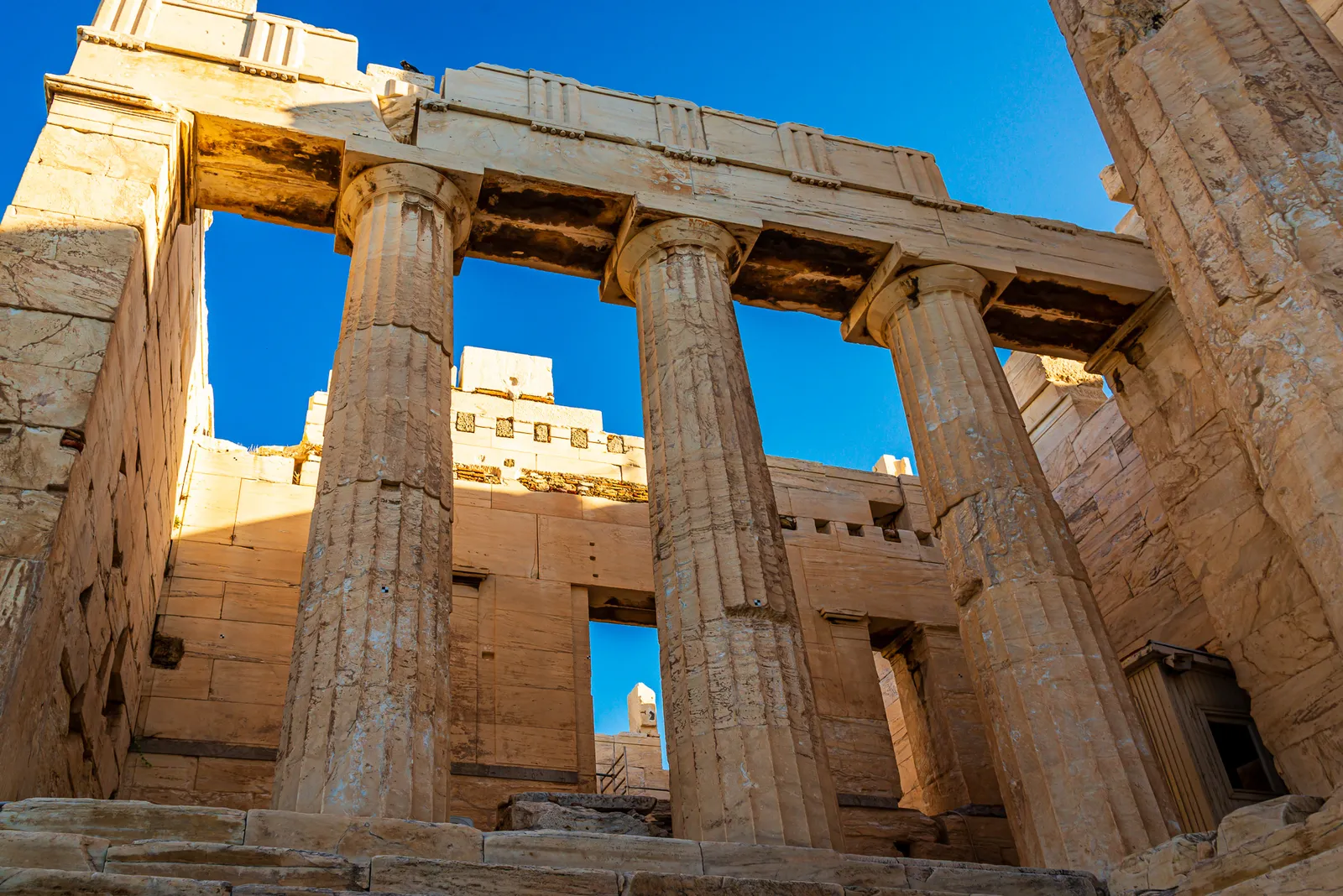
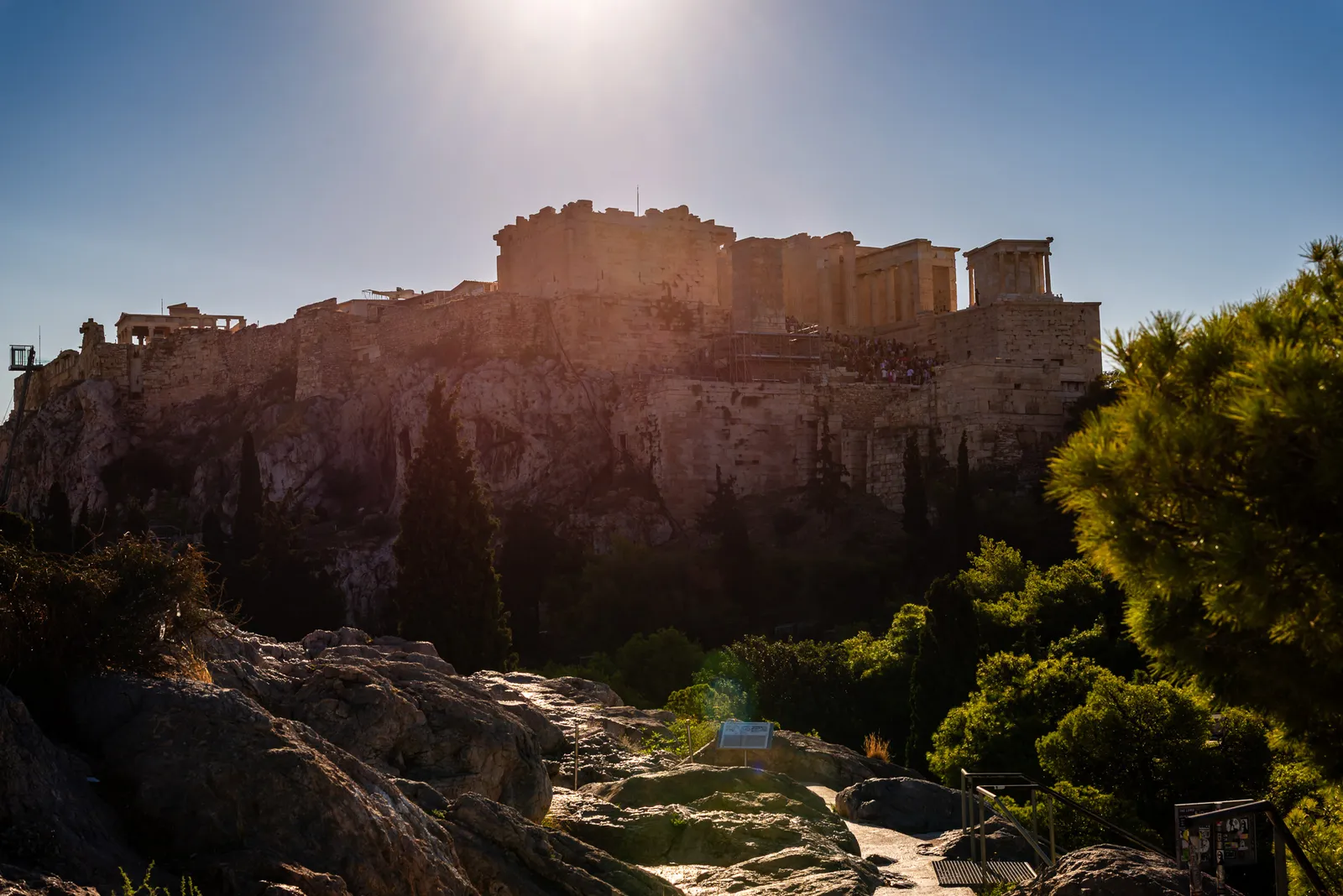
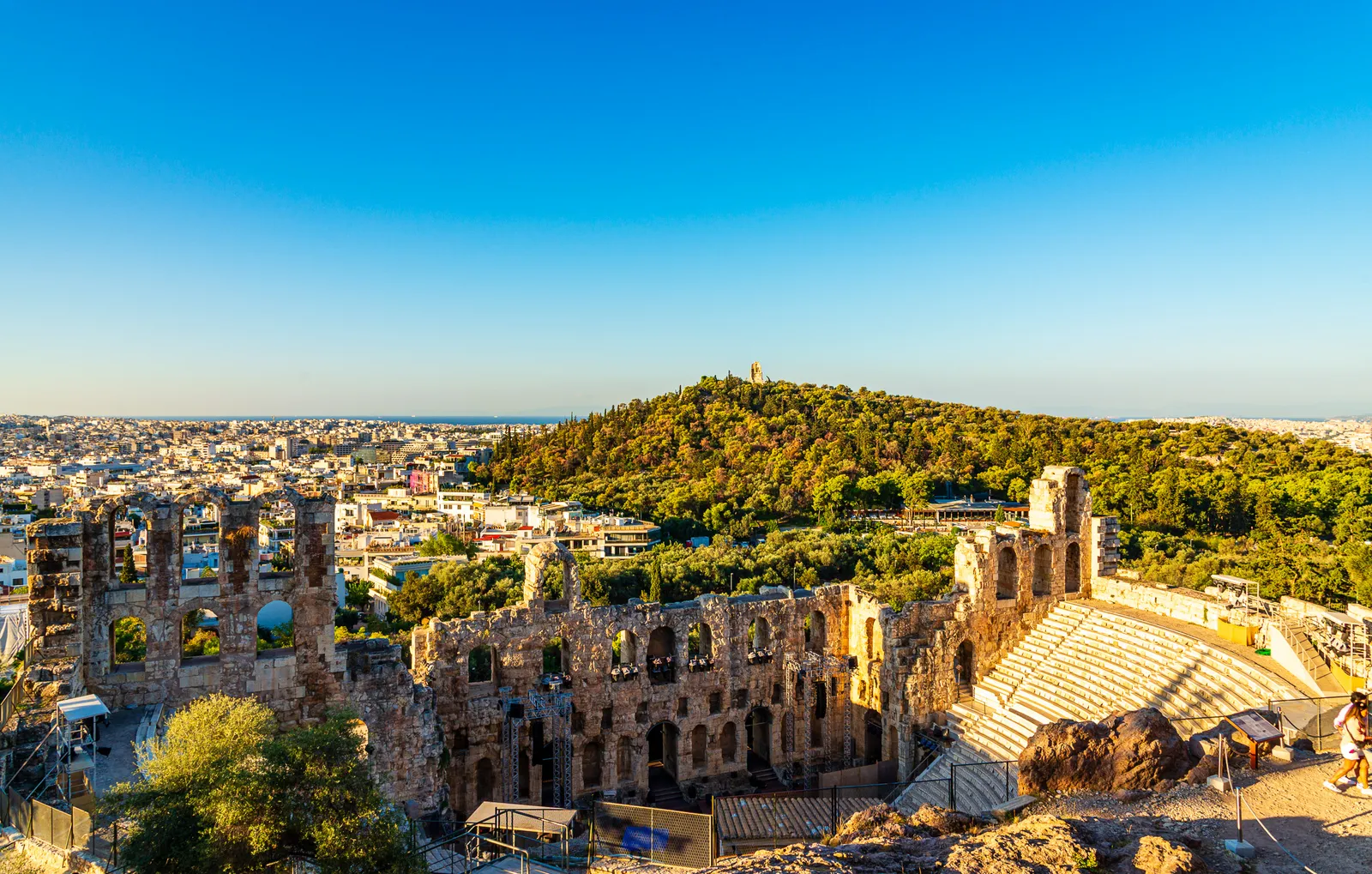
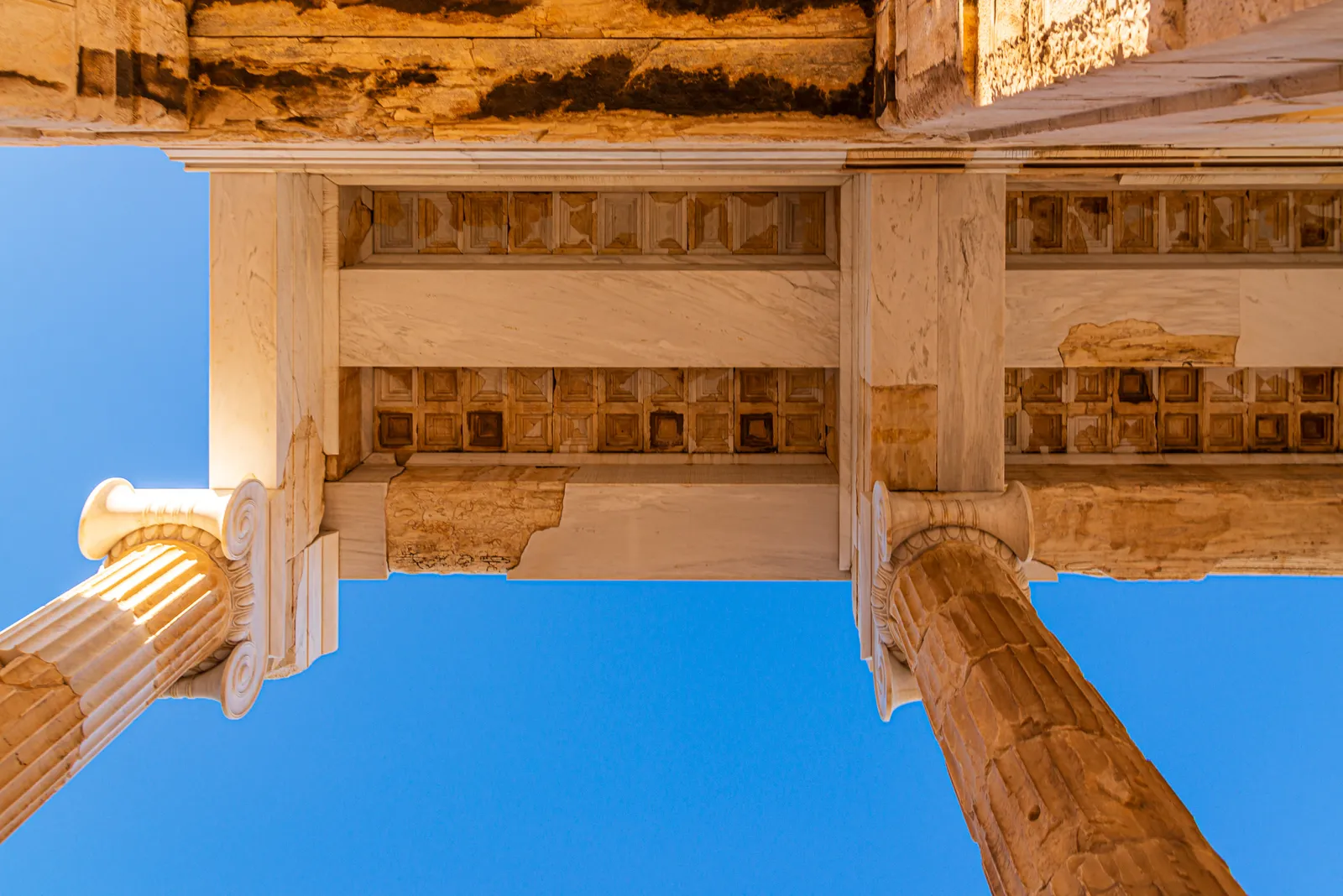
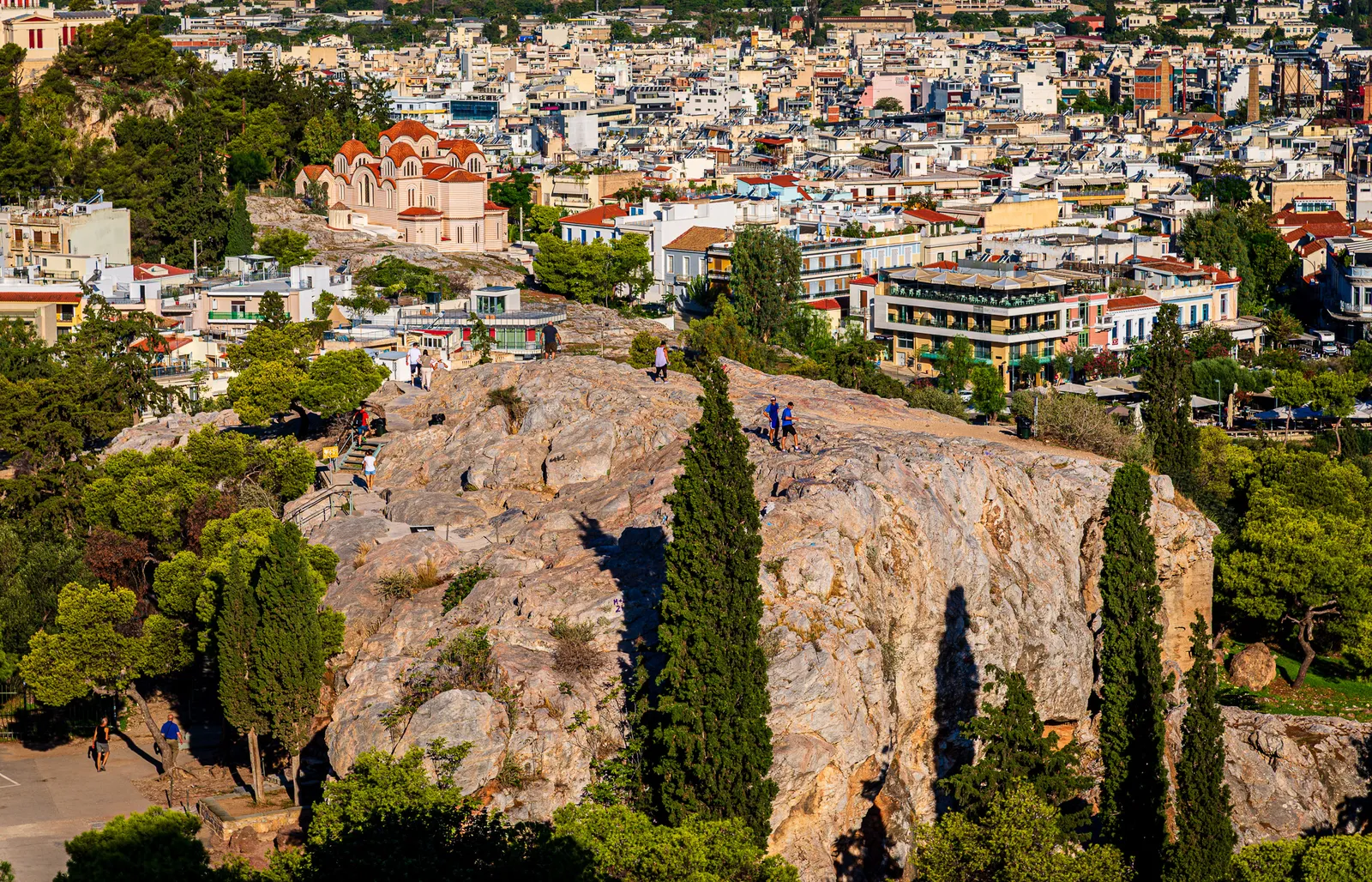
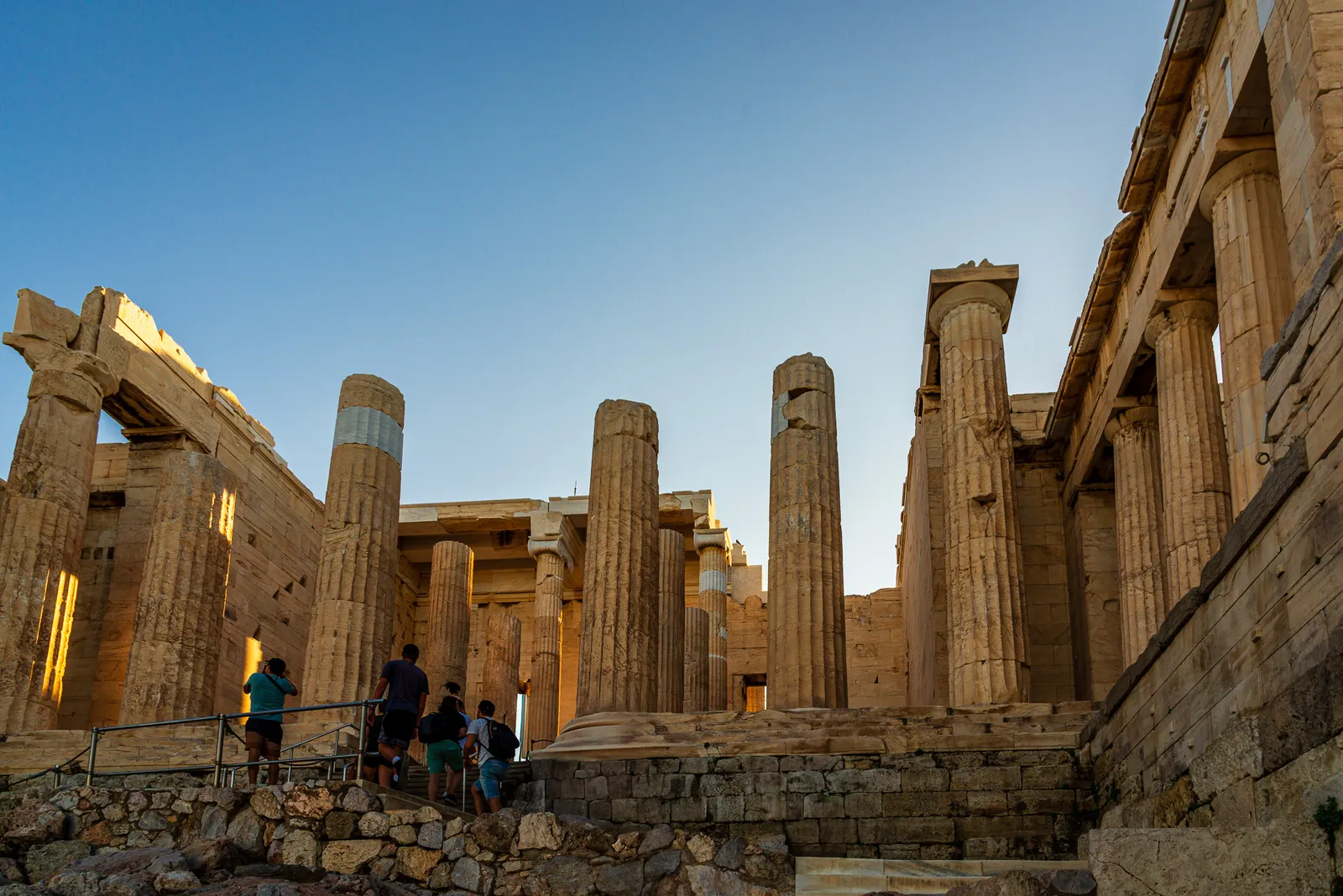
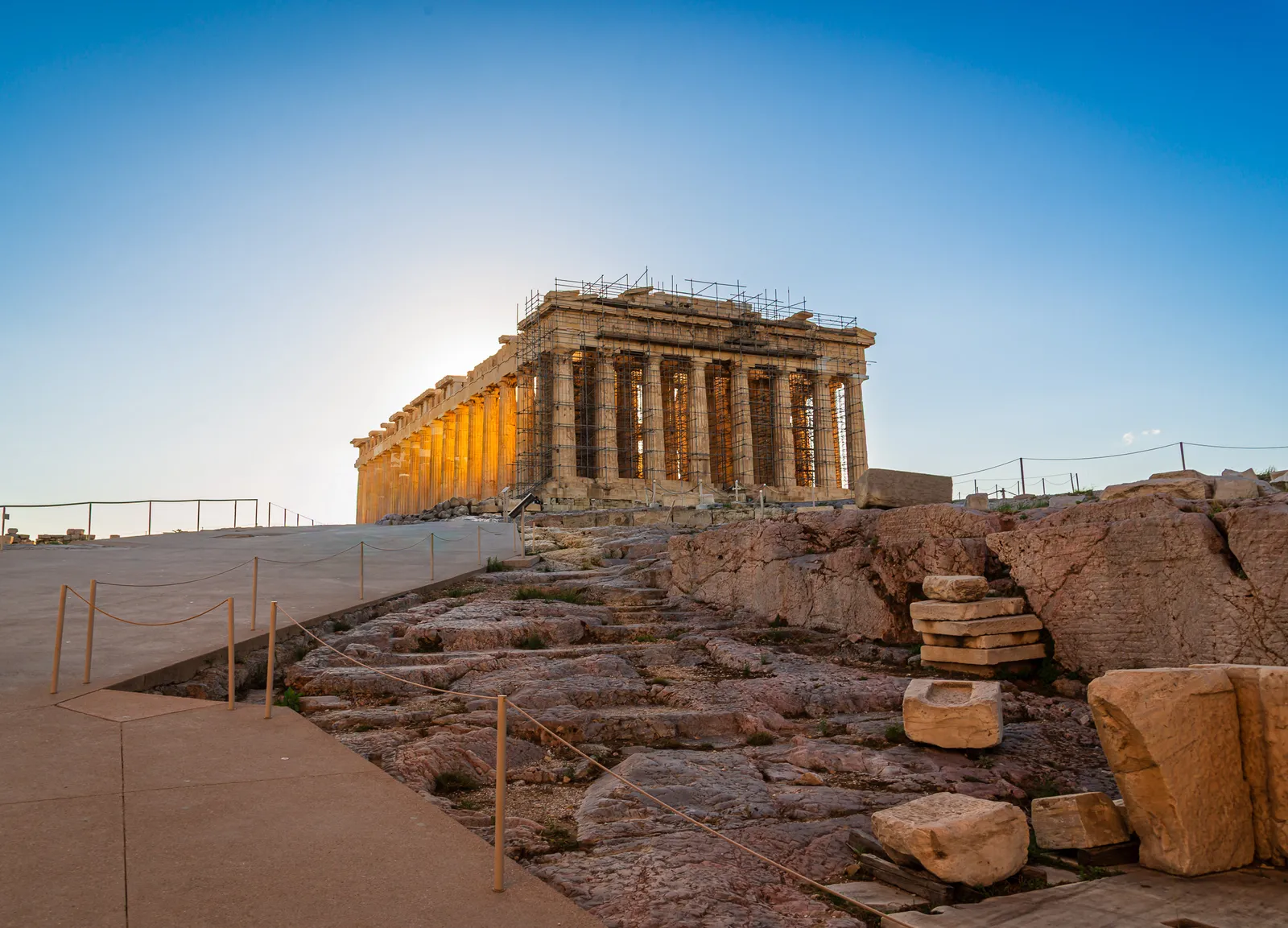
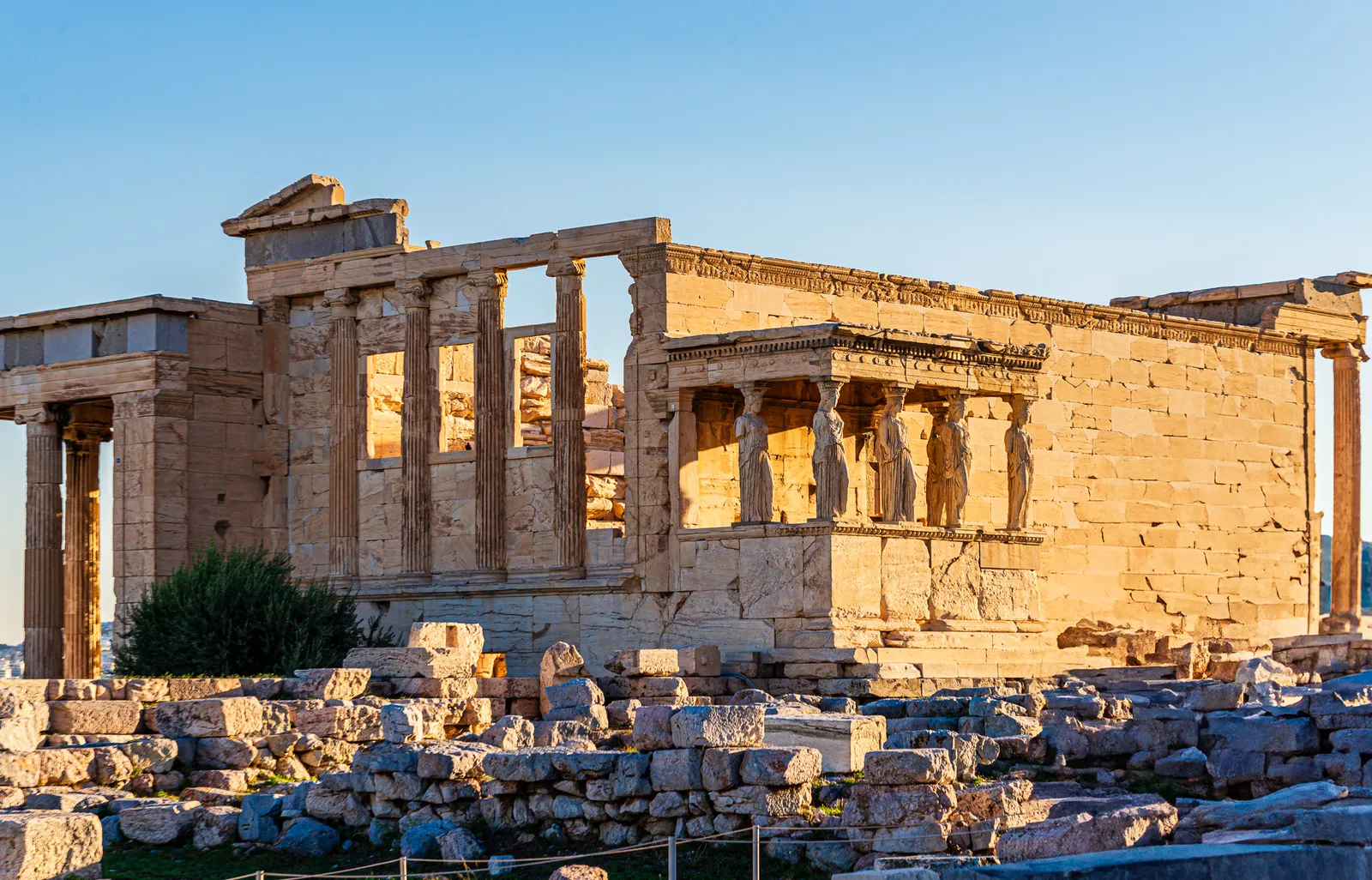
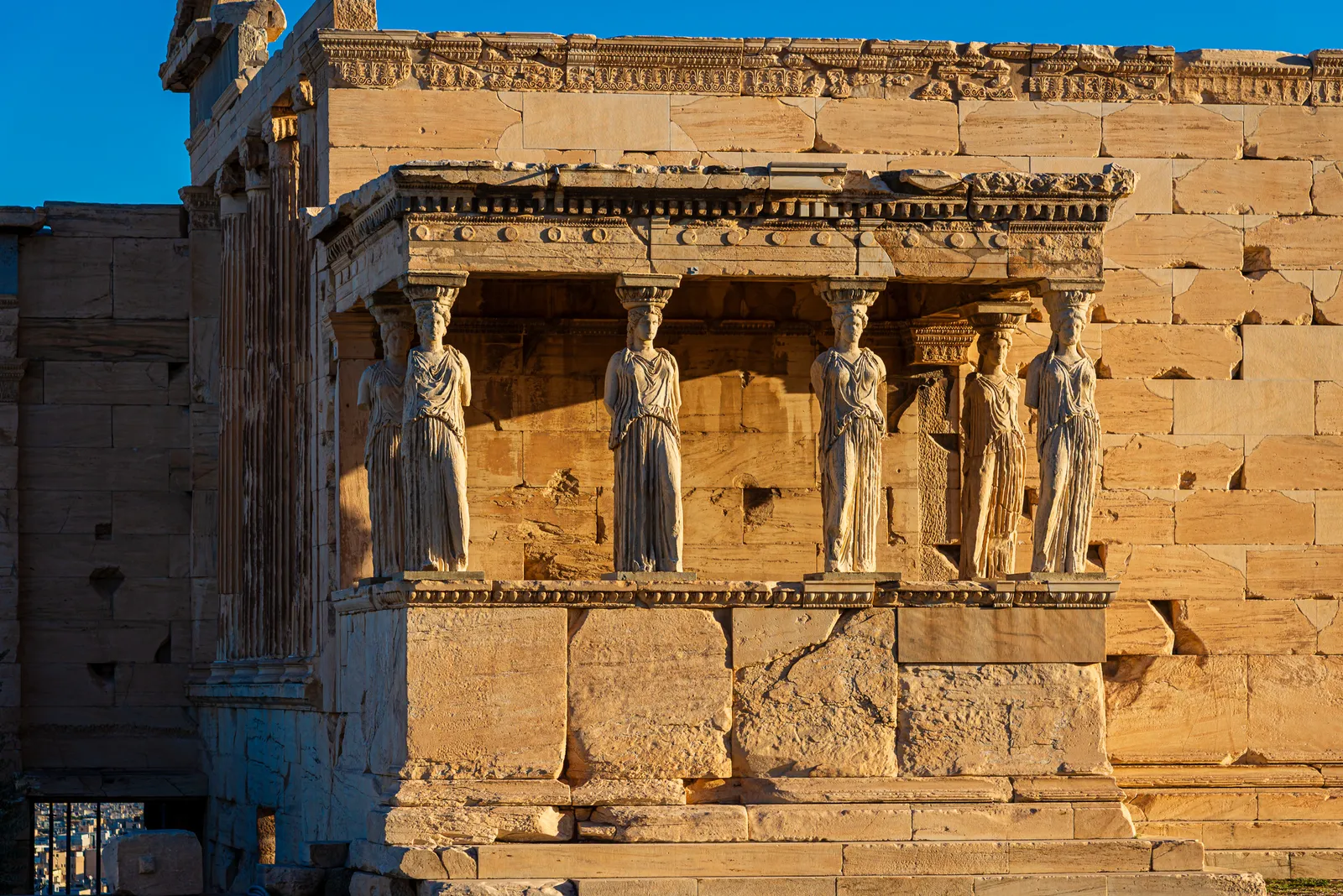
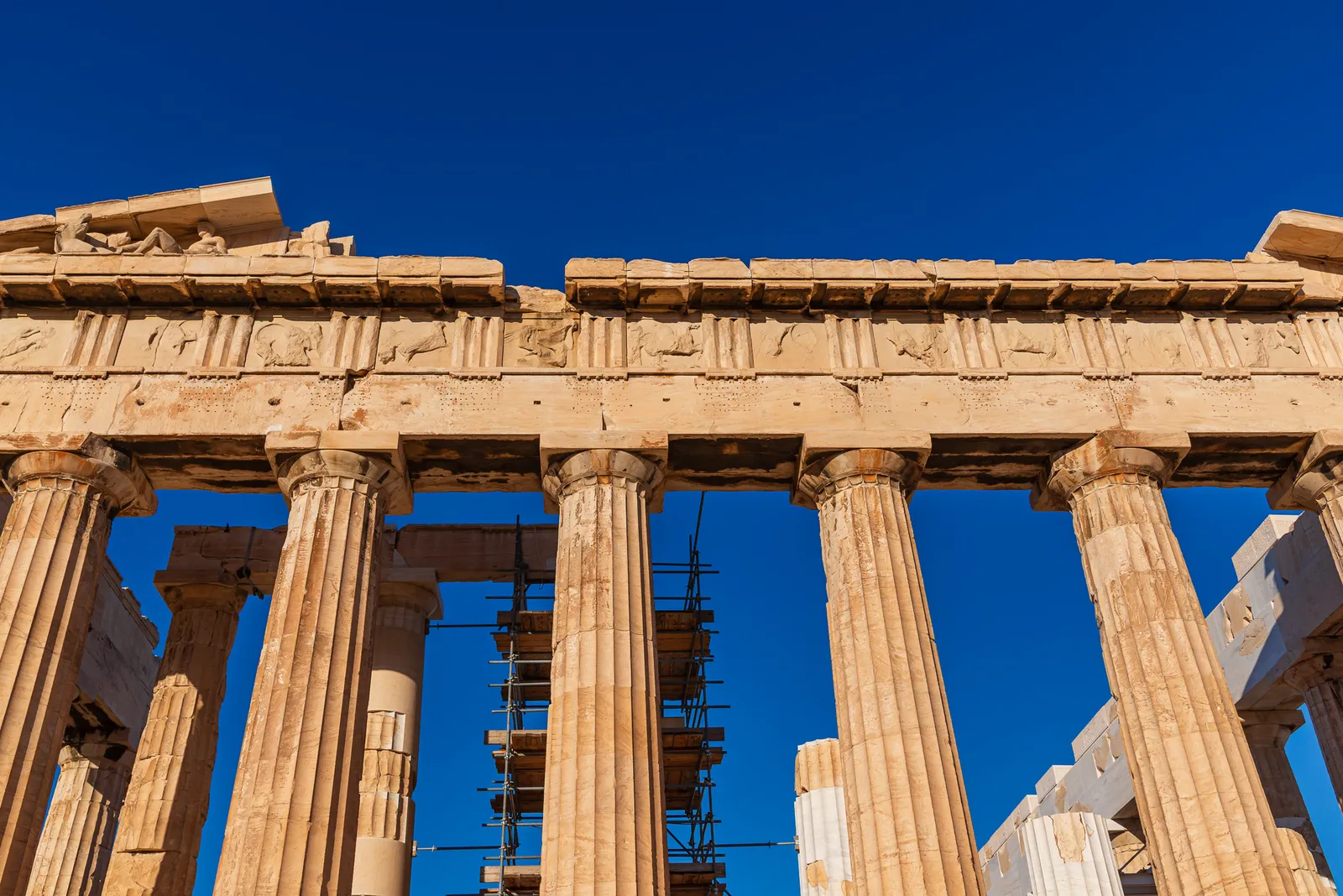
We capped off our morning with some shopping in the Plaka district, making our way down Adrianou Street, one of the oldest and most atmospheric streets. It stretches through the heart of Plaka and is lined with traditional shops, cafés, and artisan boutiques. It's the kind of place where you can find exactly what you're looking for, making it an easy and enjoyable spot to shop, stroll, and soak in the character of Athens' historic center.
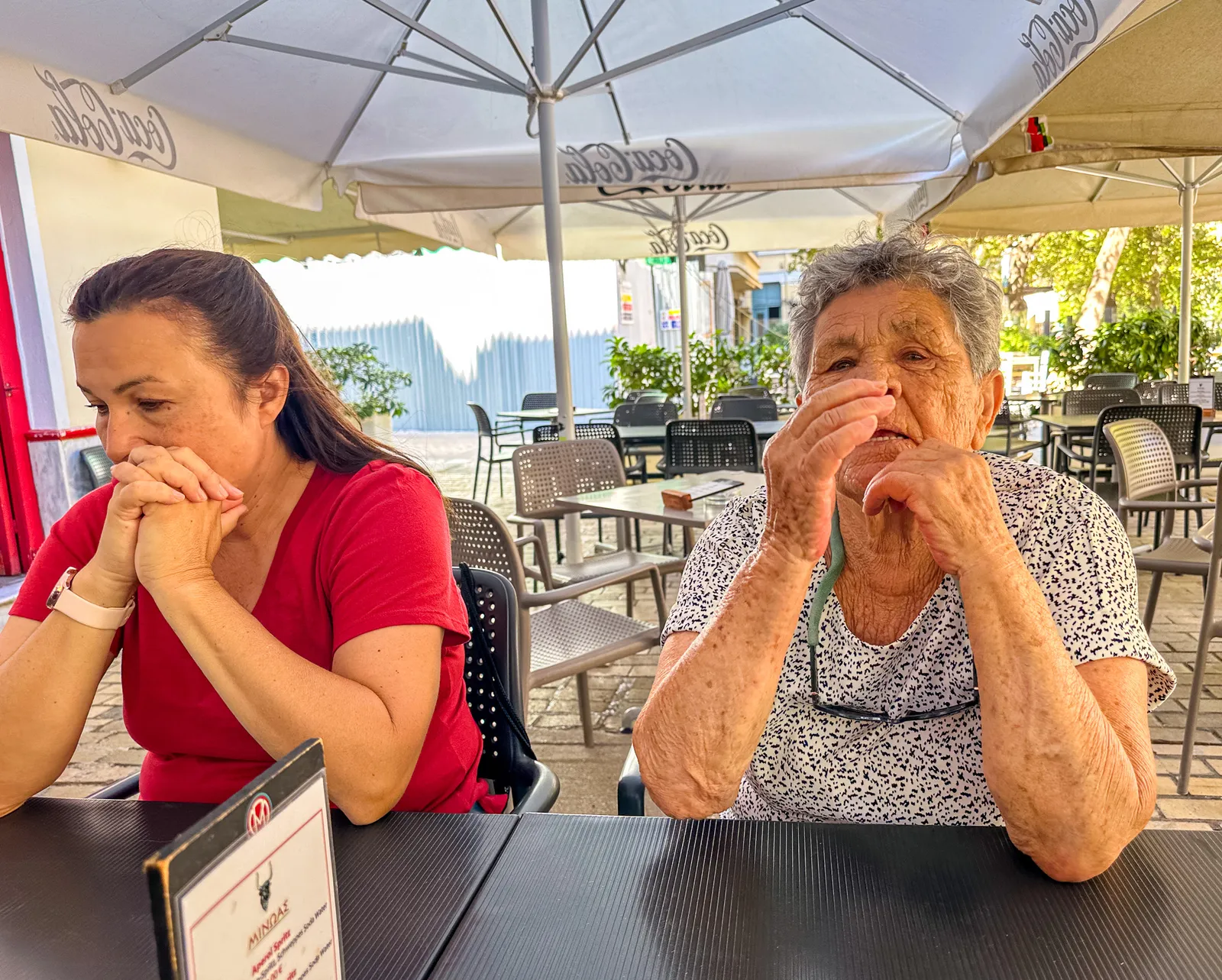
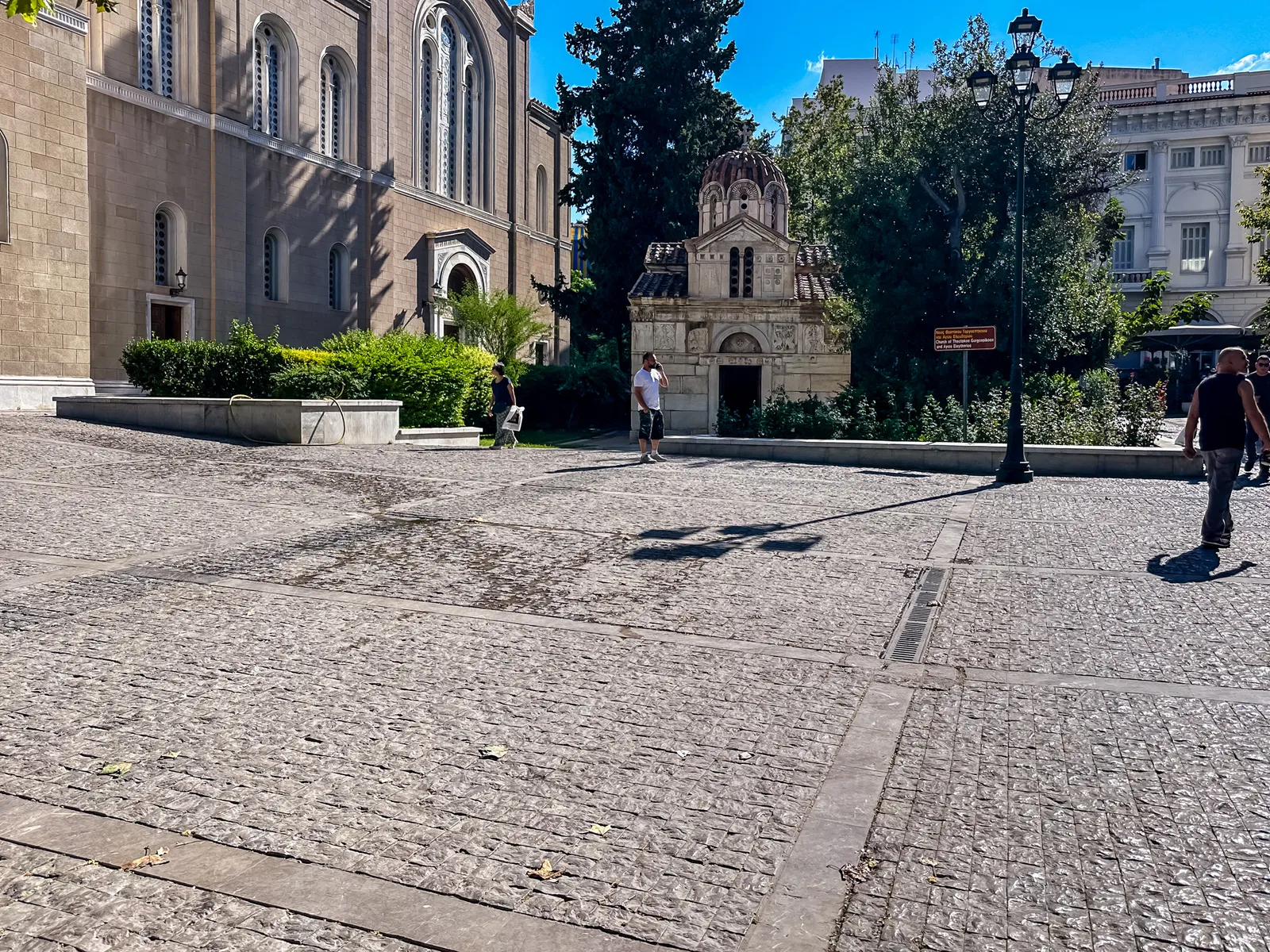
After shopping, we were ready for a bite to eat, so we walked to Mitropoleos Square and found a small dive with a decent outdoor seating area. After some people watching, we made one last stop before heading back to the ship: KORRES, a must for anyone who loves Greek skincare.
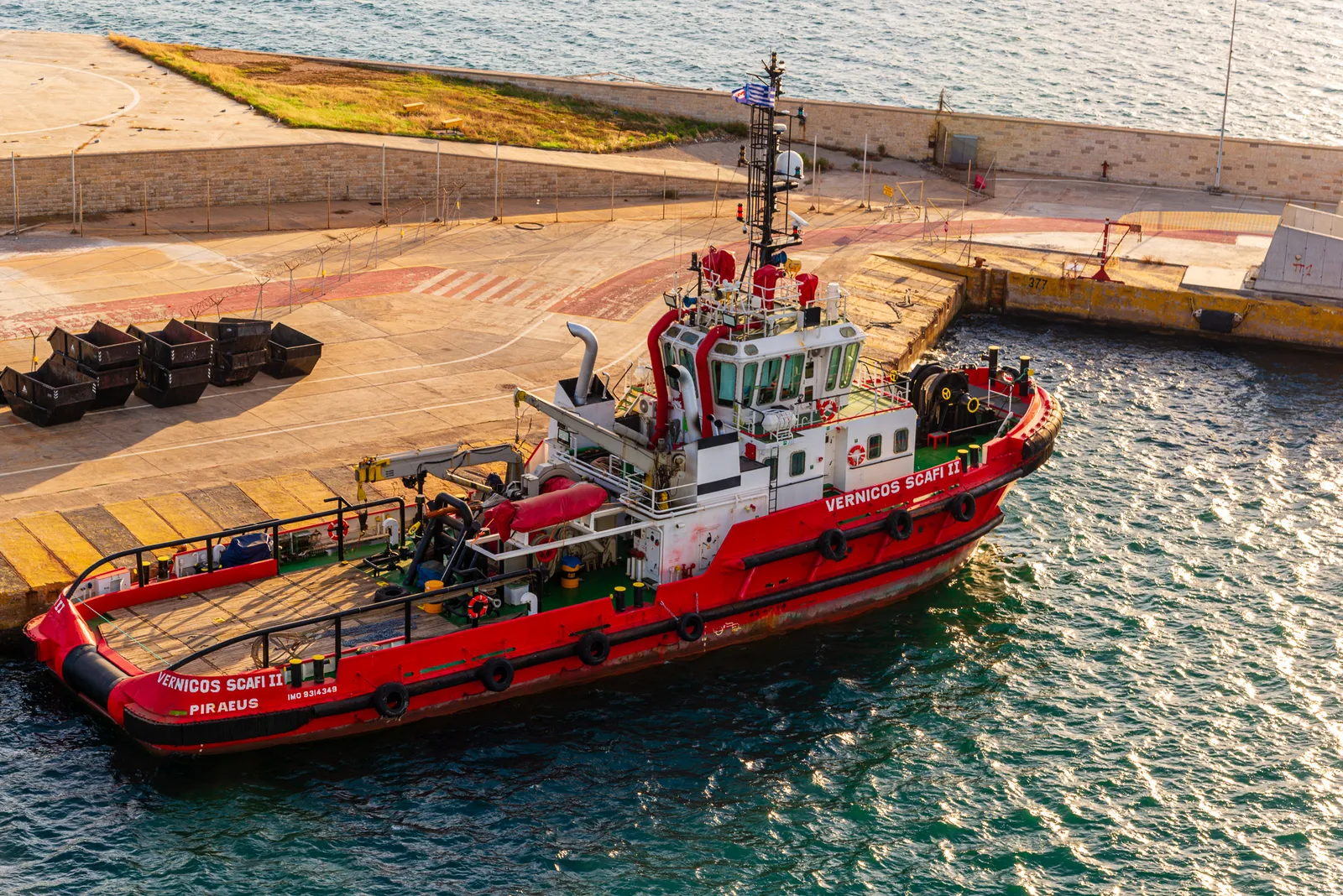
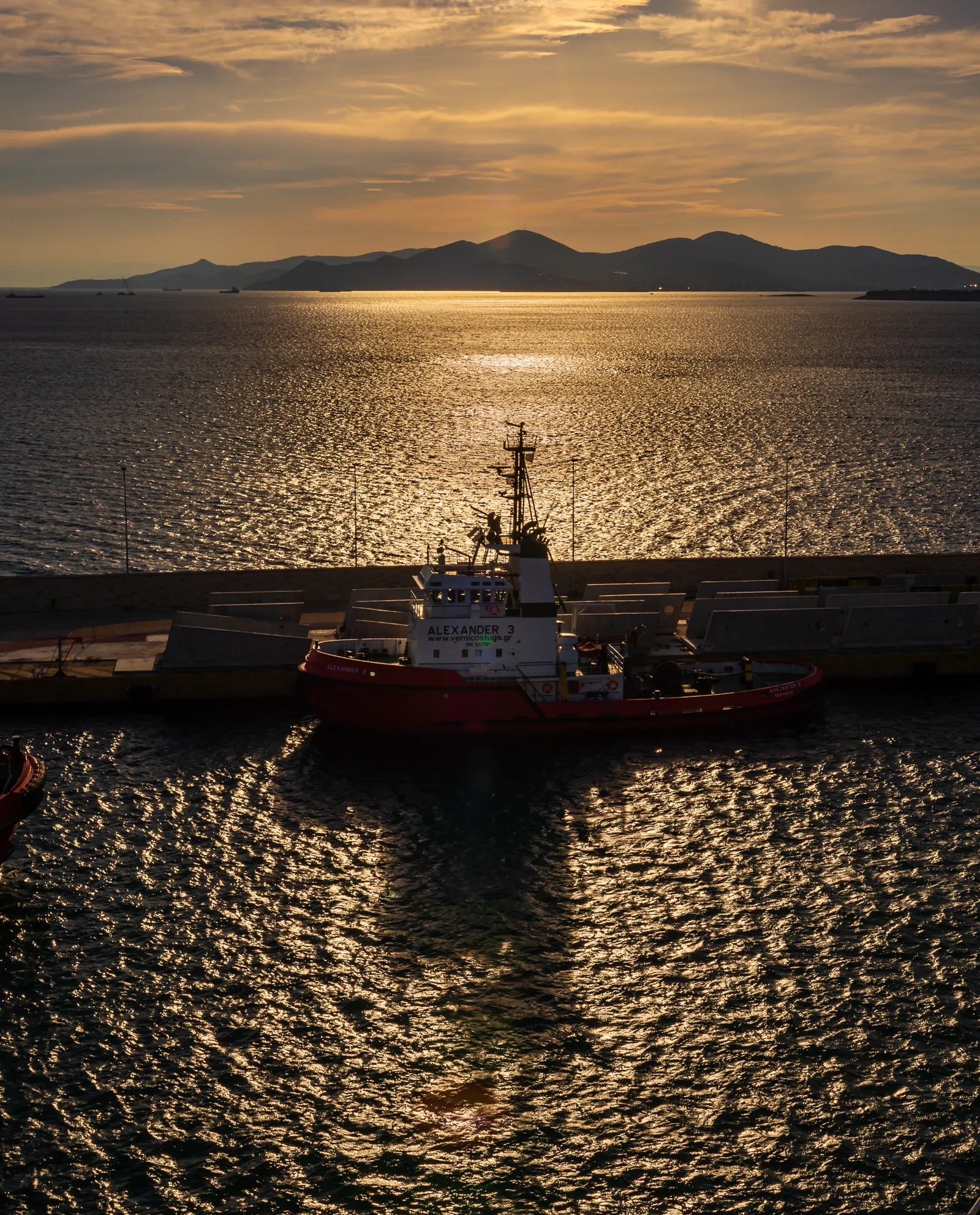
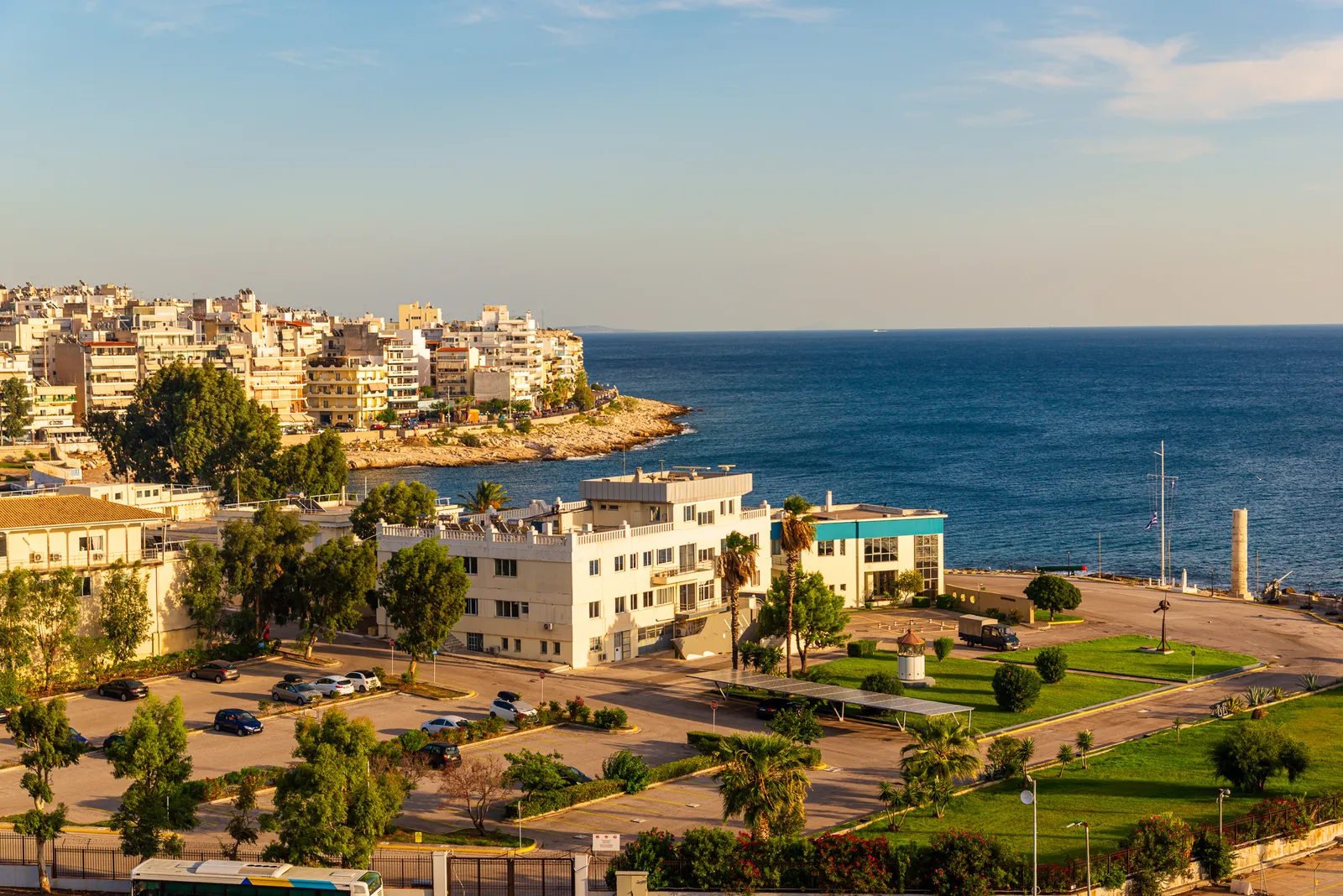
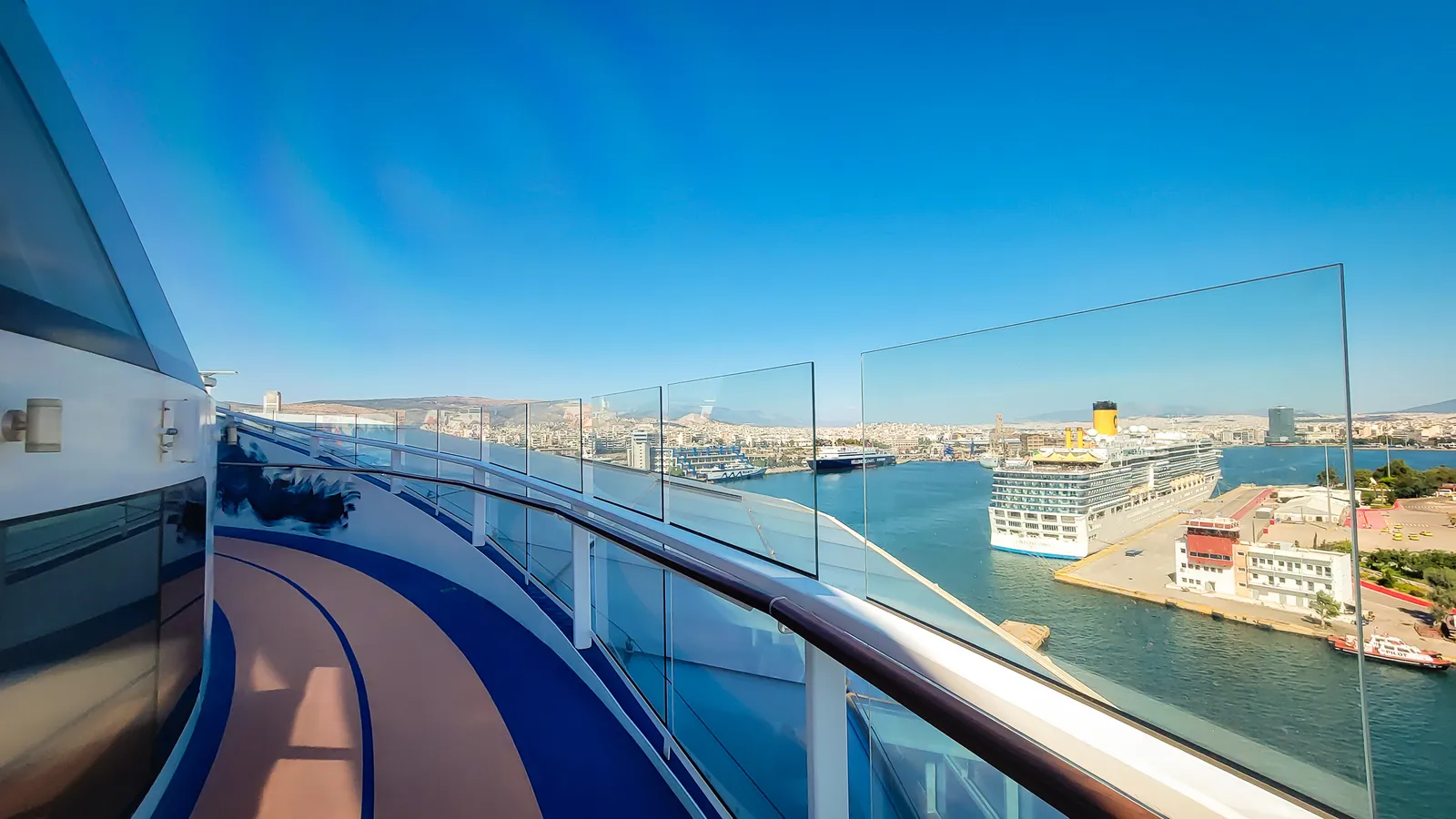
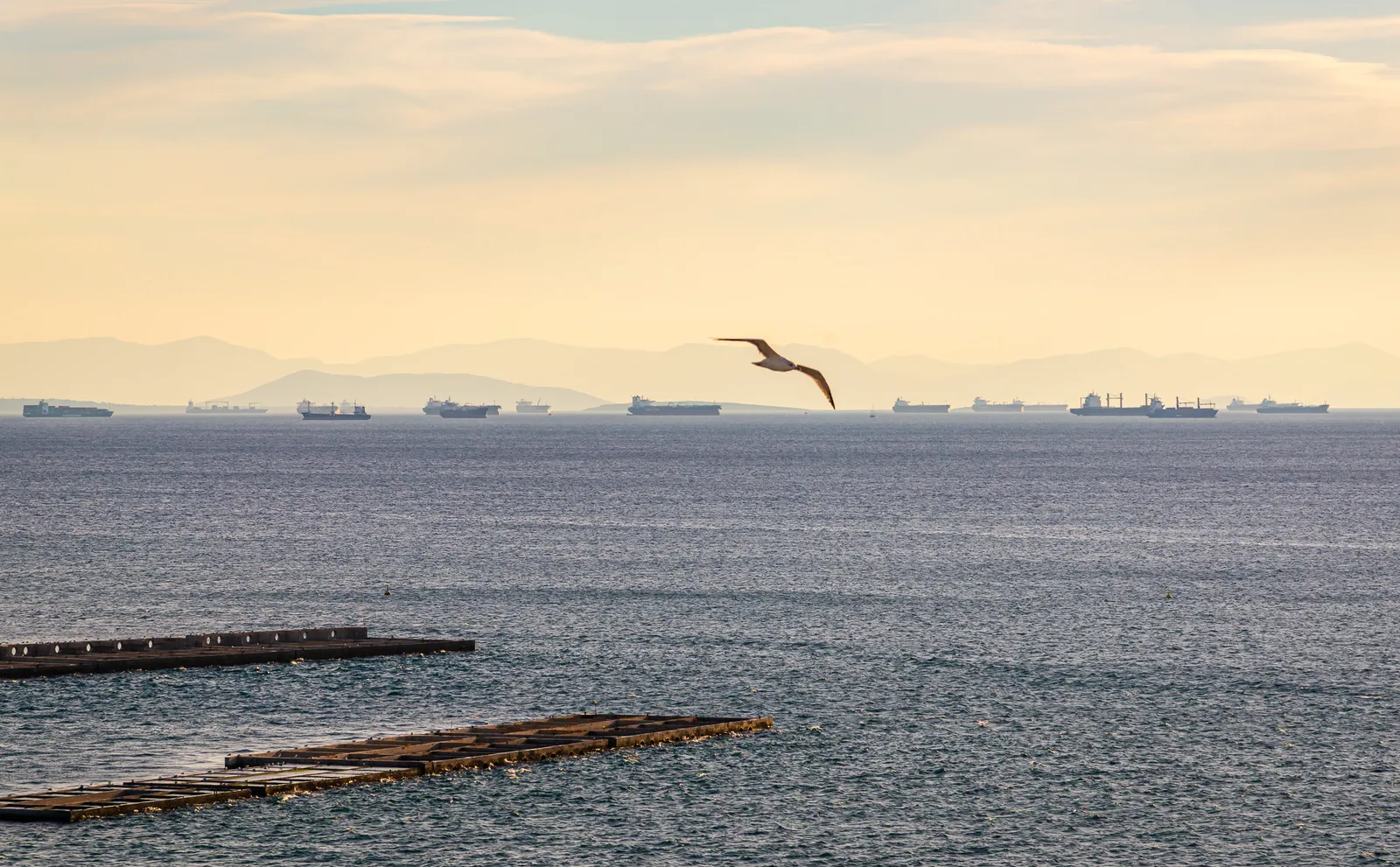
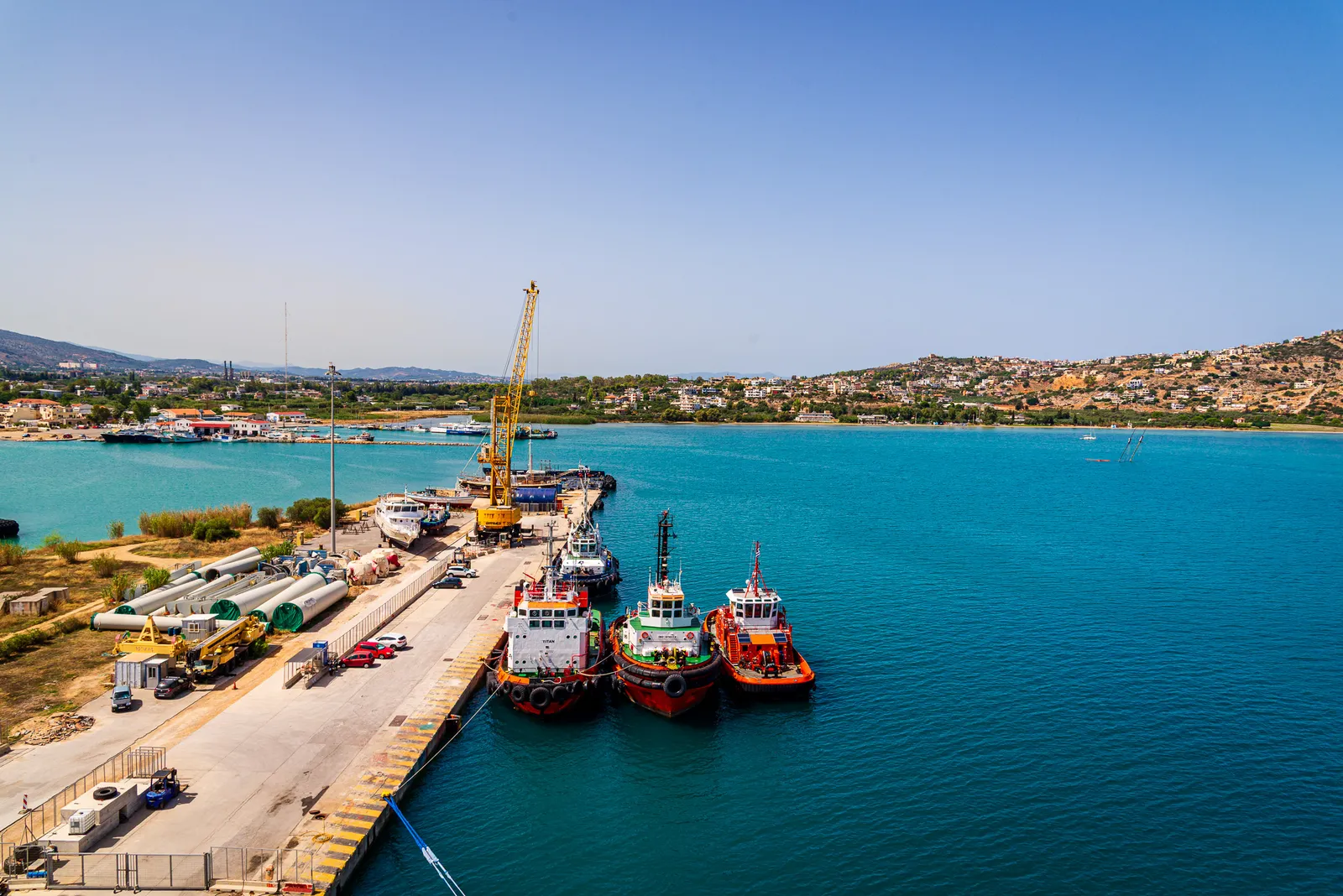
By this point, between the early wake up and all that climbing, we were thoroughly spent. We ordered a taxi through the FreeNow app, and by 2 PM we were walking back onto the ship. With plenty of time before sail-away, we headed straight to the top deck, grabbed a pair of lounge chairs, and settled in for the afternoon. From up there, we watched ferries, cargo ships, and tugboats weaving through the harbor and took in the sheer scale of one of Europe's busiest ports. It turned into one of those unexpectedly peaceful moments, just hanging out, enjoying the warm breeze and the industrial coastal scenery.
- Time in Port: 8–10 hours, enough time to see the highlights without rushing
- Getting Around: Pre-book a driver or taxi for efficiency (30–40 minutes to the Acropolis), or take the metro (20–30 minutes) for a fast, budget-friendly option
- Must-See: Acropolis, Ancient Agora, Mars Hill, Temple of Olympian Zeus, Syntagma Square, Monastiraki Square, Panathenaic Stadium, National Archaeological Museum
- Difficulty Level: Challenging, with uphill walking and uneven ancient stones, wear grippy, supportive shoes
- Book Early Time Slot: Reserve the entry time slot (7:30–8am) to beat the Acropolis crowds
- Tickets: Acropolis tickets are €20, buy online to skip ticket lines
- Plaka Lunch: Tourist prices, but convenient for a quick and classic meal
- Focus on Essentials: Stick to the core sites, trying to add more will make the day feel rushed
- Plan Your Return: Expect heavy traffic leaving Athens, so give yourself extra time to get back to the port.
From whitewash alleys, iconic windmills & cerulean waters
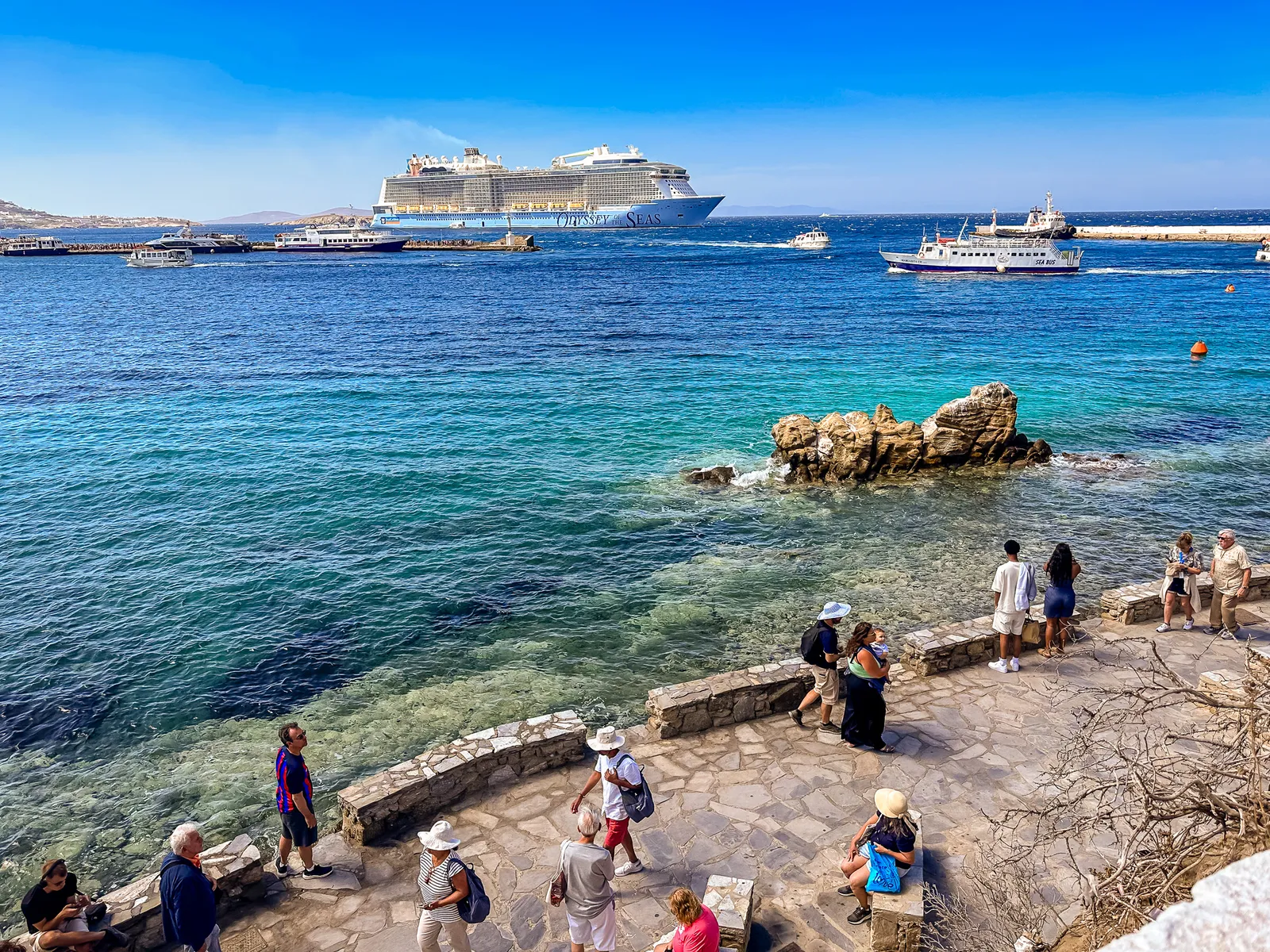
Mykonos ended up being my favorite port, and I'd absolutely return, preferably for an overnight stay to experience the island after the day trippers leave. During peak season, several cruise ships can arrive at once, bringing 10,000 to 12,000 extra people to an island smaller than Manhattan. Thankfully, our ship was the first to tender into the old port, but by 10 a.m. the other ships had arrived and the island was packed with tour groups.
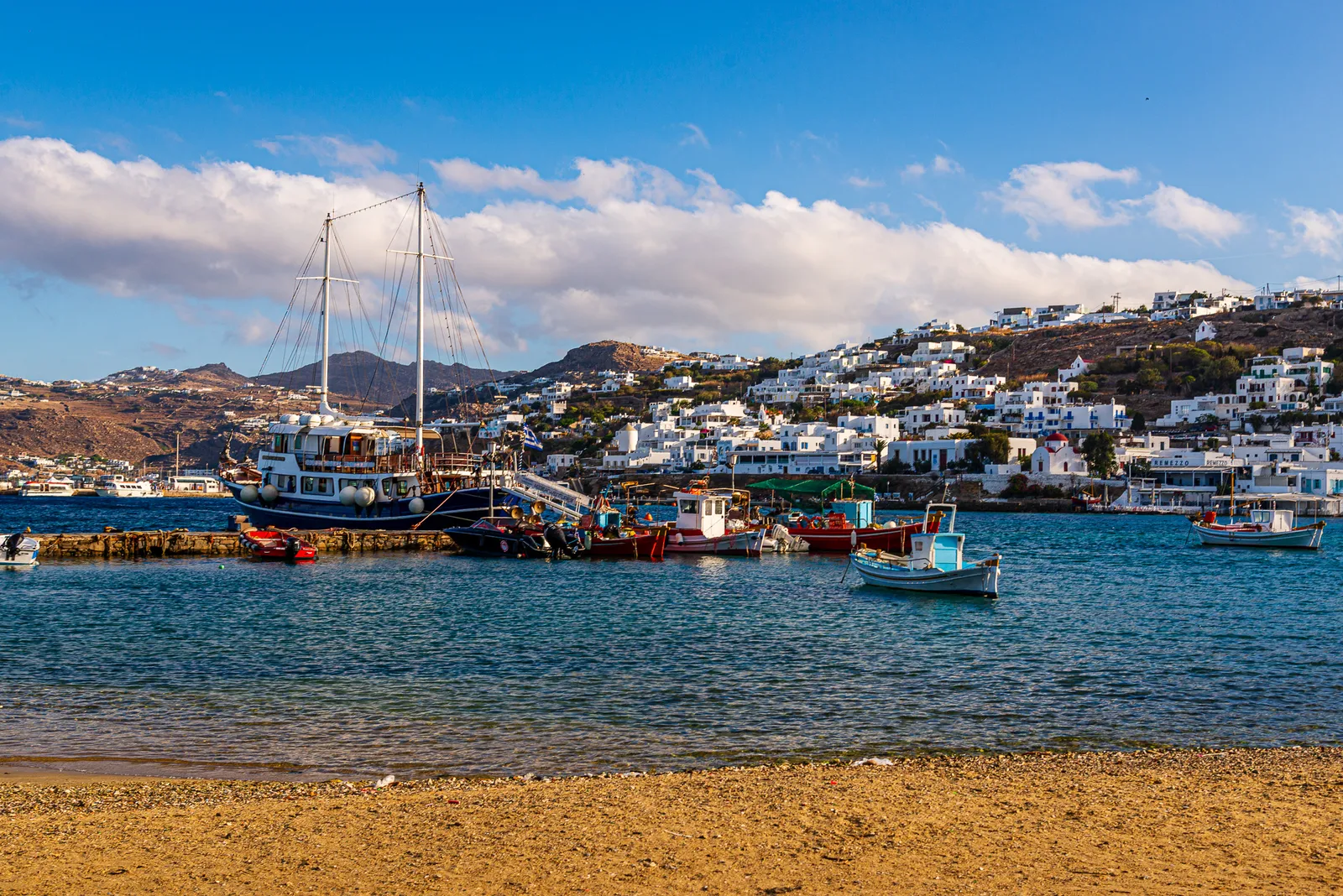
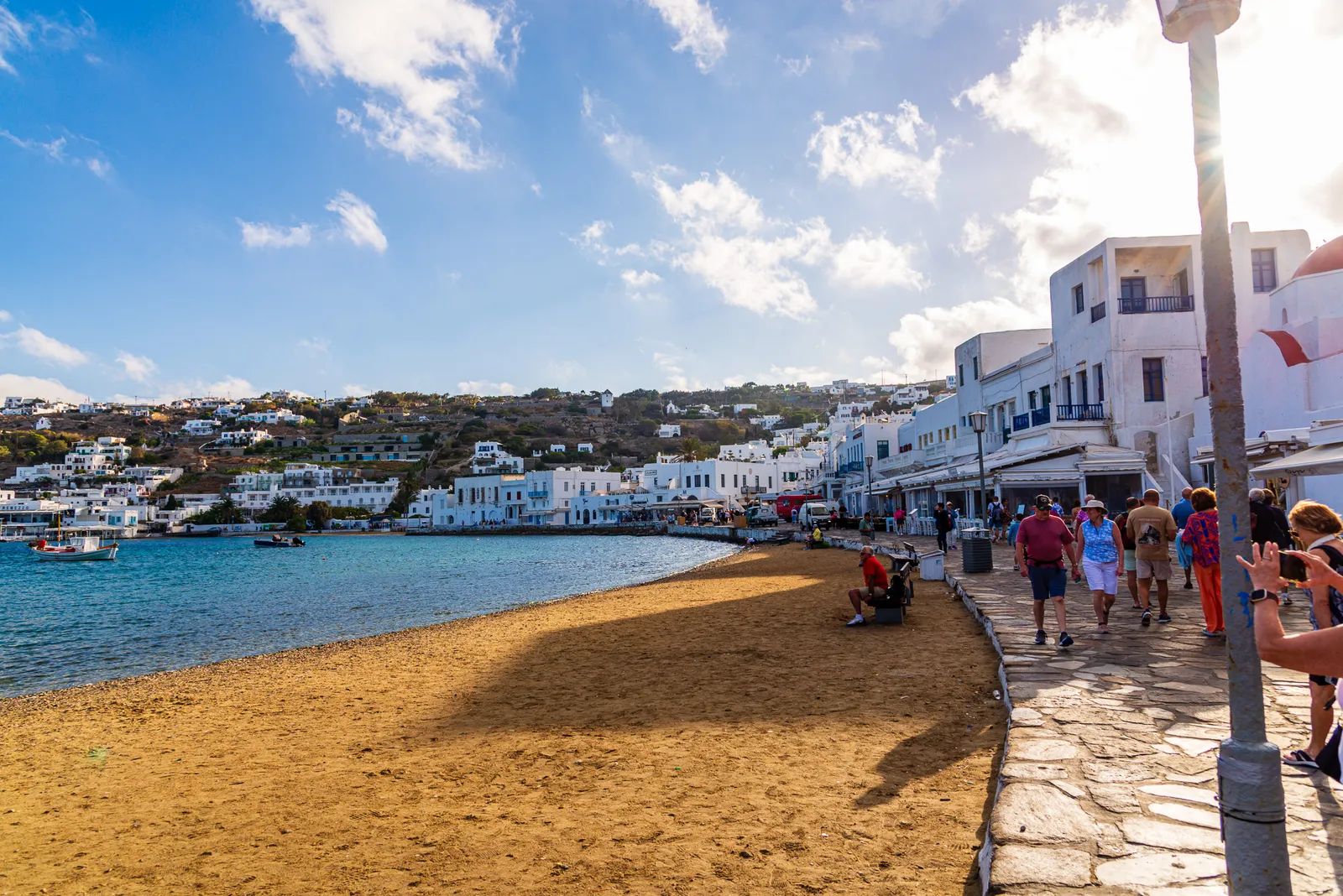
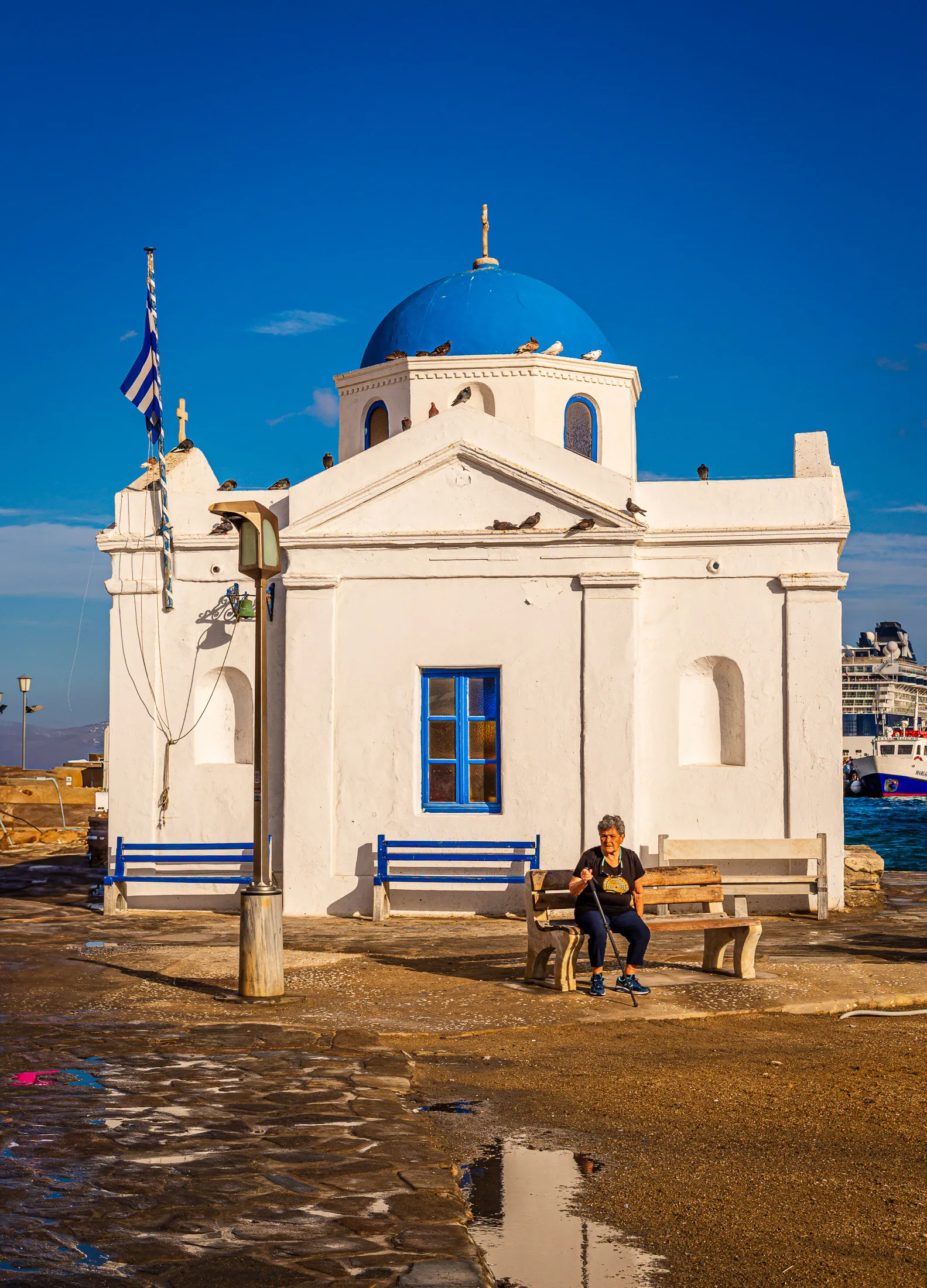
By 9 a.m., we were already walking the historic waterfront toward Mykonos Town. Restaurants and shops lined one side, while sand, clear water, and fishing boats stretched along the other. It felt like stepping into a simpler, more traditional way of life. After a quick stop at the blue domed Holy Church of Agios Nikolaos of Kadena, we continued exploring.
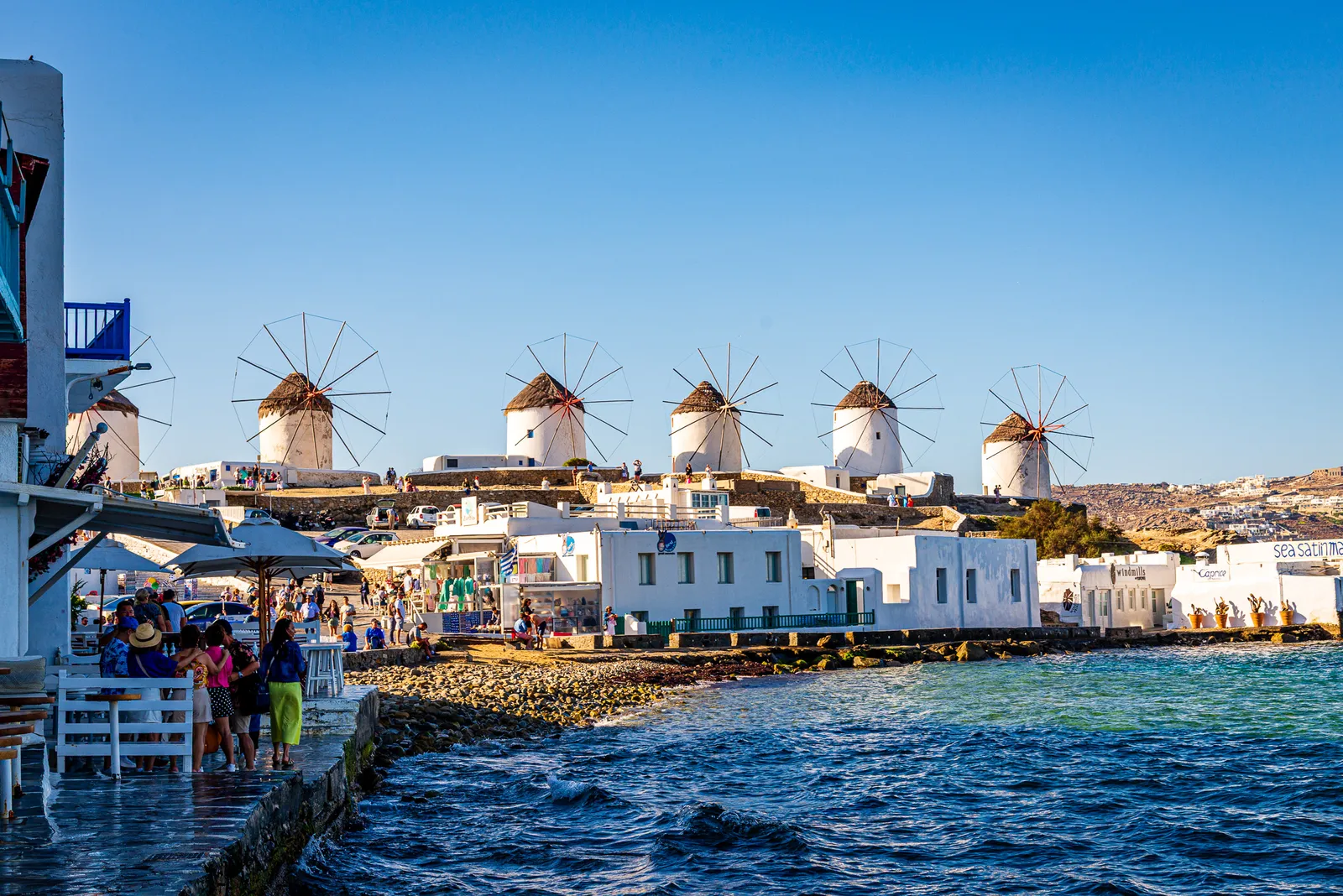
We didn't follow a set route, just tried to stay ahead of the crowds. A short walk brought us to the iconic Windmills of Mykonos, where the wind, the views, and the growing crowds all came together. From there, we wandered back toward town, passing ARGO Bar and making our way down Matogianni Street, the island's most famous shopping street.
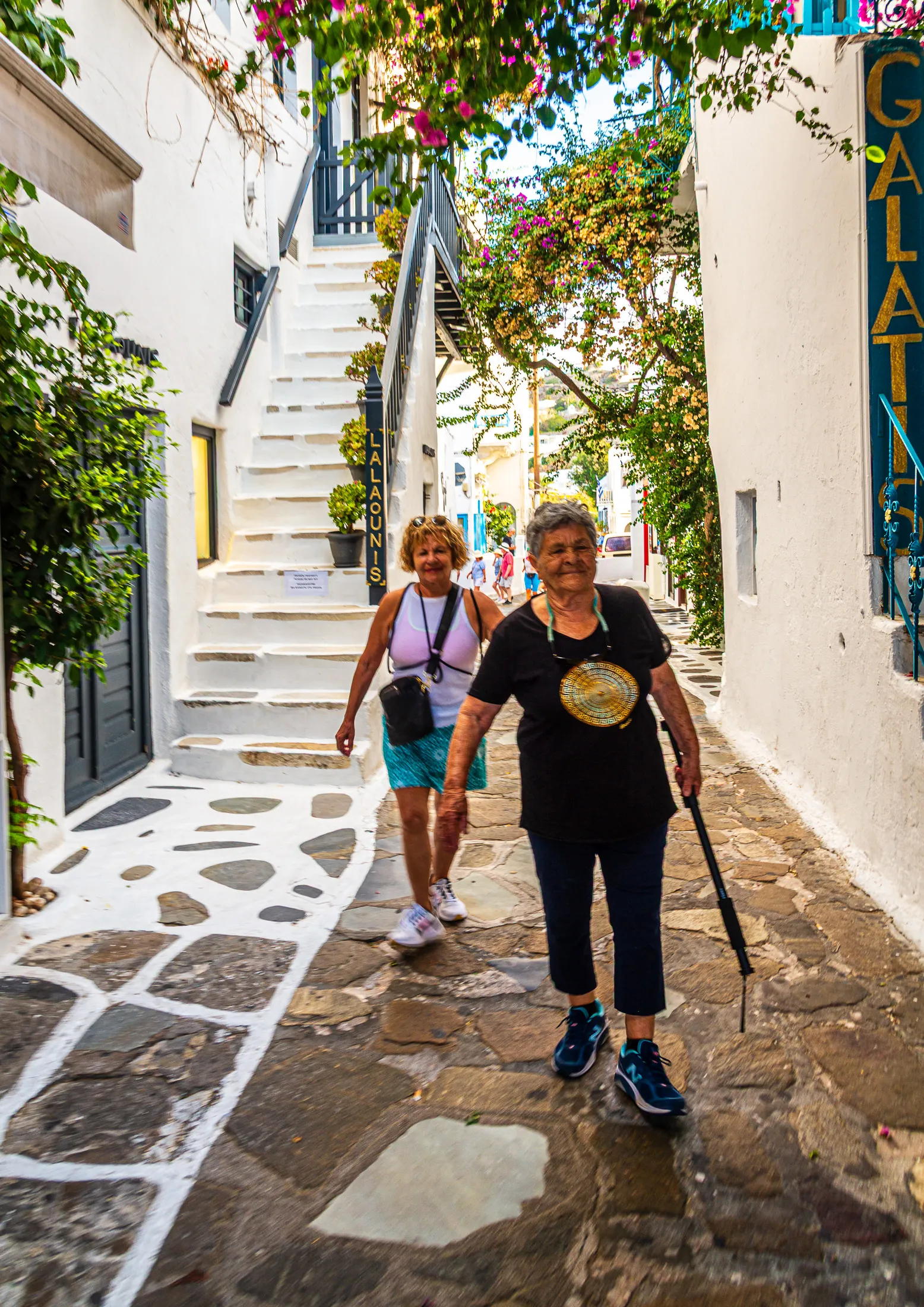
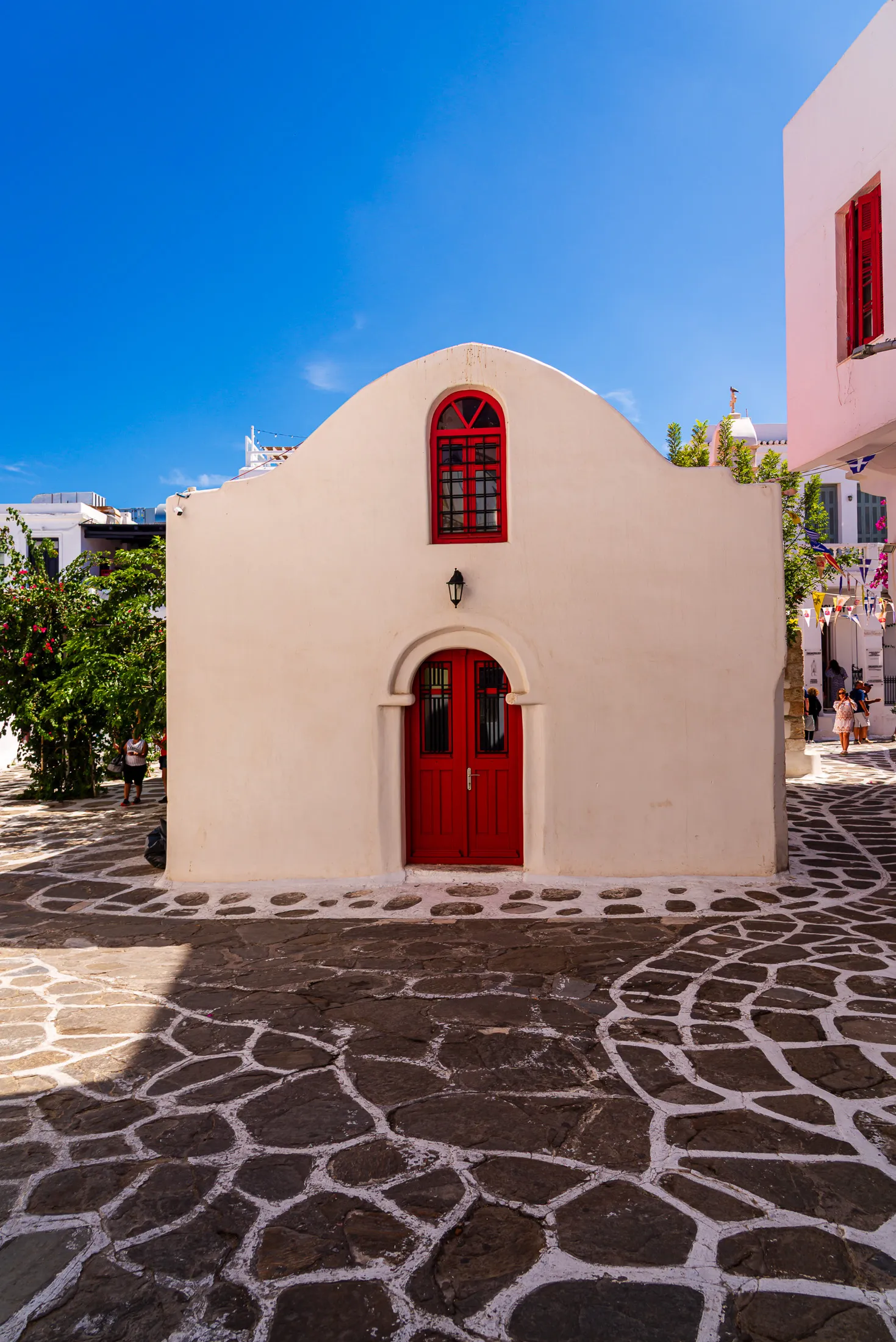
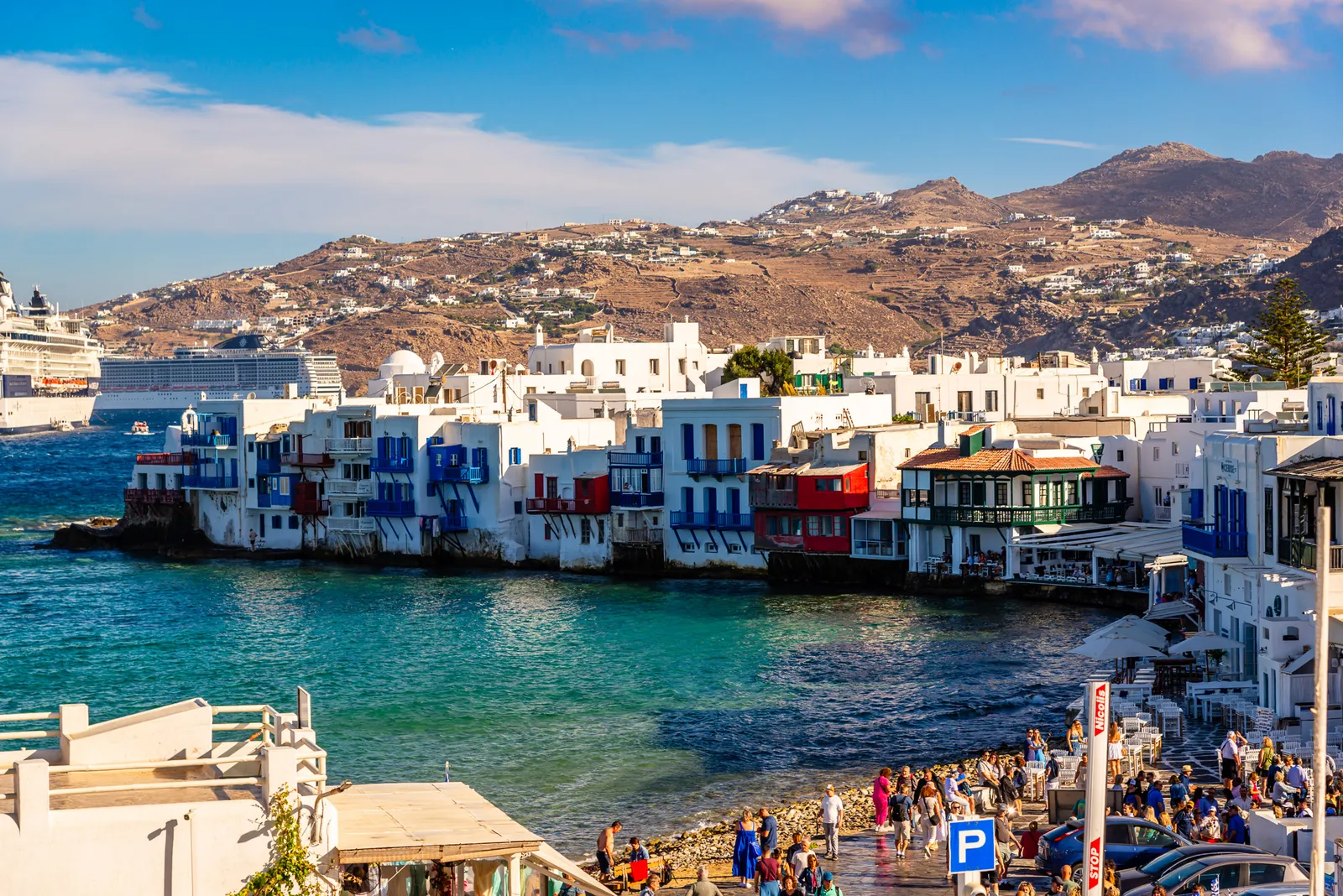
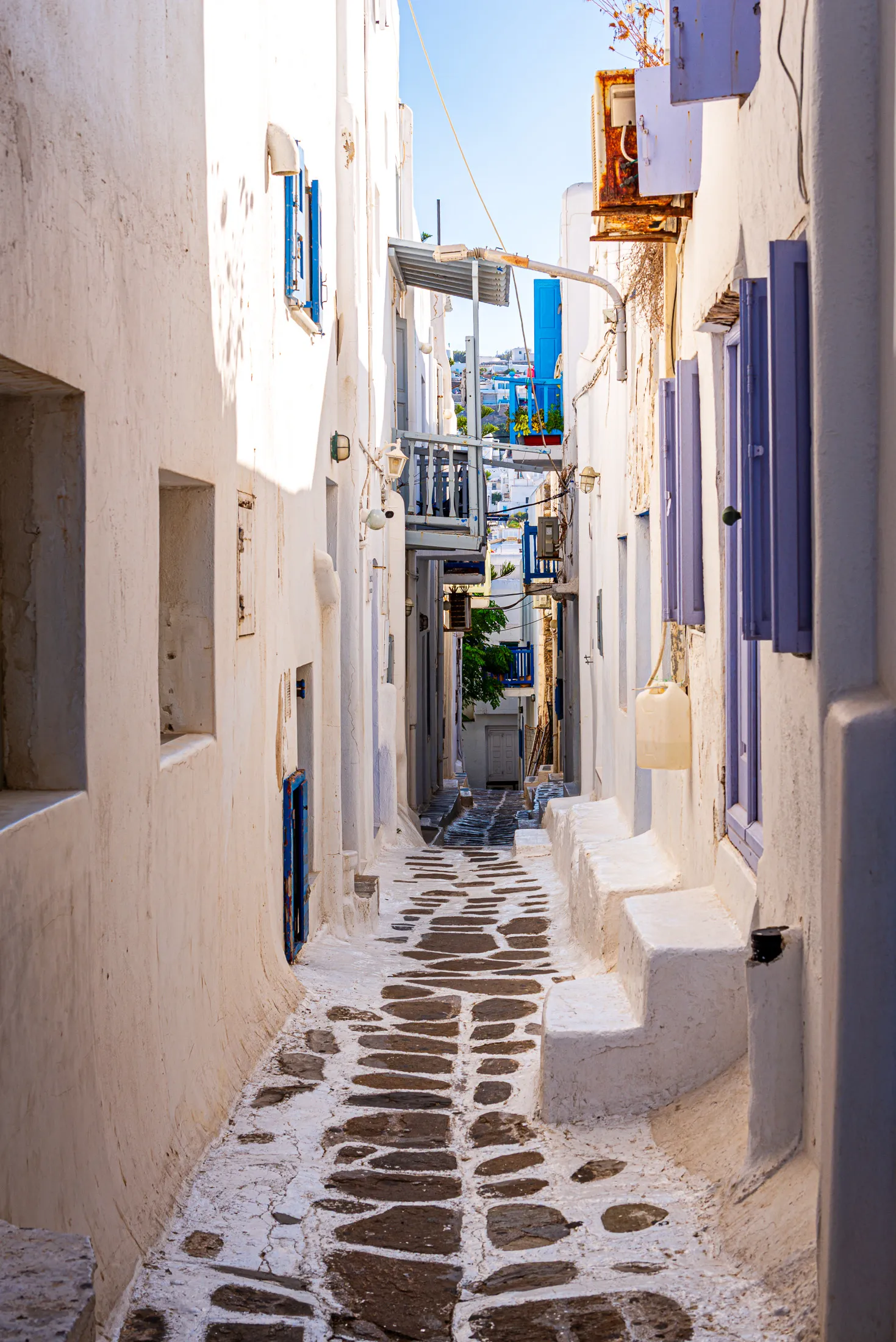
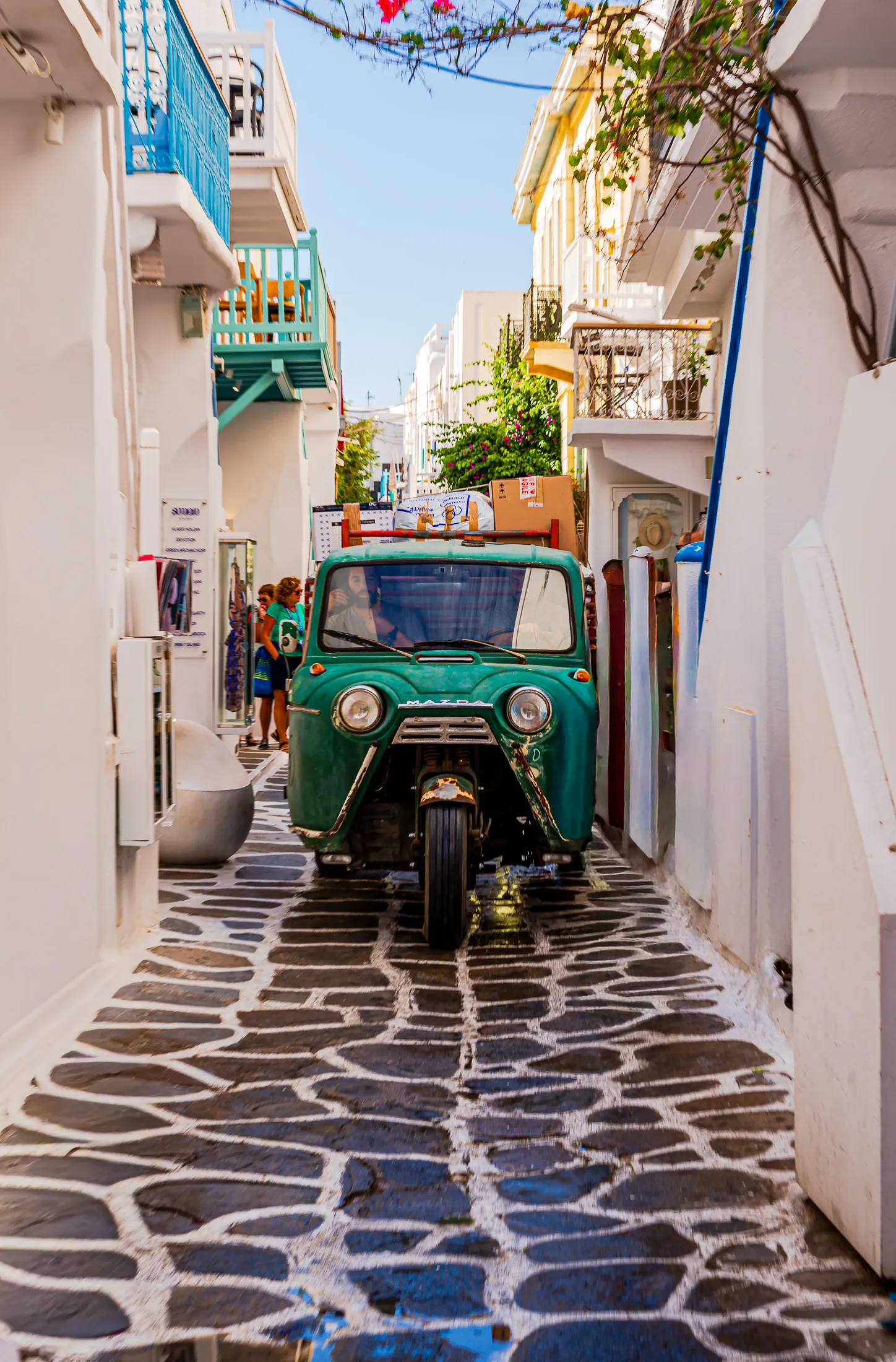
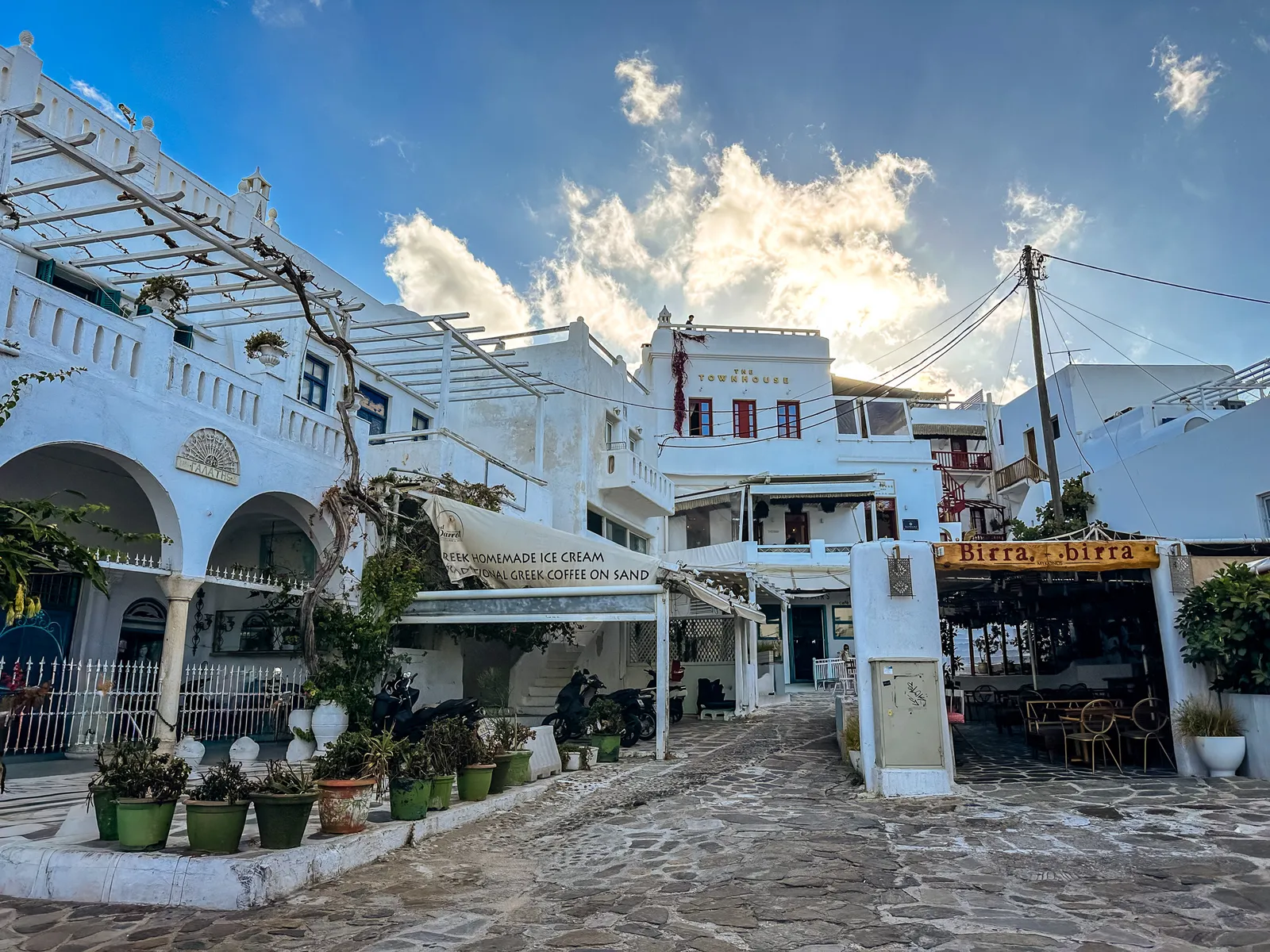
Mykonos Town looks exactly like the postcards with whitewashed buildings, blue doors, and flowers spilling from balconies. But once you start walking, you realize it's a maze. Turn left and you'll find a designer boutique. Turn right and there's a tiny jewelry shop. A few minutes later, you're lost, sipping overpriced coffee in a quiet courtyard. That layout wasn't accidental. The narrow streets were designed to confuse pirates, creating a defensive maze that has become one of the island's biggest attractions.
By 11 a.m., the crowds were overwhelming. You were either shuffling along with everyone else or stepping into doorways to let people squeeze past. We escaped into the packed Sakis on Kalogera Street for lunch and were grateful to find a seat, even if it was next to the bathroom. From our table, there was a nonstop stream of people, many stopping only long enough to use the restroom before disappearing back into the crowds.
After lunch, we continued through the alleys to Agia Kyriaki Church, one of the prettiest squares in town, before finishing our walk at Townhouse Square. It was the perfect place to relax, people watch, and soak in the Mykonian atmosphere before returning to the old port for the tender ride back to the ship.
Mykonos is a fascinating island, but I don't think it's the best cruise stop. If you only have a day, book a jeep tour that takes you beyond town. Otherwise, you're just another person in the crowd.
- Time in Port: 6–8 hours is enough to explore Mykonos Town, add an overnight stay to see the island after day-trippers leave
- Getting Around: Tender to the old port, then explore on foot, narrow streets make cars impractical in the main town
- Must-See: Little Venice, the iconic windmills, Matogianni Street
- Difficulty Level: Easy to moderate, mostly flat, but streets are narrow, crowded, and can be uneven
- Early Start is Key: Arrive first to beat the crowds, by 10 AM the town is packed with passengers from other ships
- Walking Around is Part of the Fun: Get lost in the streets, every turn leads to something interesting, from boutique shops to hidden cafés
- Pirate-Proof Streets: Use a map or download the offline version to navigate efficiently
- Lunch & Refreshments: Eat early if possible, restaurants fill quickly, and the best spots get crowded by mid-morning
- Avoid Crowds: If your day is short, consider a jeep tour or excursion outside town to experience the quieter side of the island
- Souvenir Shopping: Matogianni Street has everything from luxury brands to local crafts, but prices are high, bargain if you can
Our gateway to Ephesus
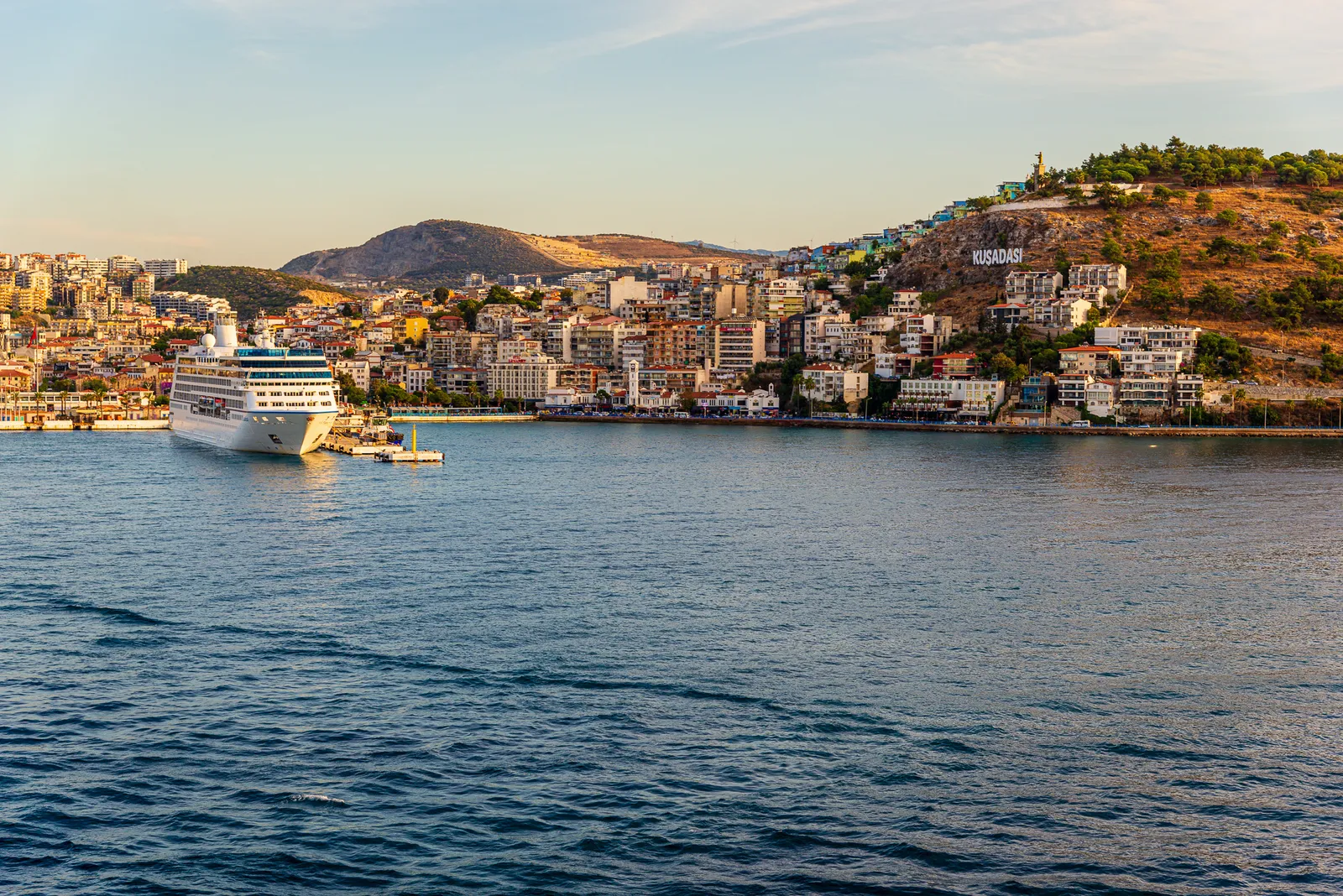
The next morning, we were already docked in Kuşadası, the port for our Ephesus adventure. This was one of the ports I had been looking forward to most, so rather than book a crowded cruise excursion, I arranged a private Spanish-speaking guide months in advance. It turned out to be one of the best decisions of the trip. After disembarkation, our guide was waiting and greeted us with a warm Turkish welcome, making the start of the day completely stress free. We followed him through the terminal and eventually climbed into a the van and started driving. I was partially in shock and disbelief as I watched and heard our guide, a native turk, speak perfect Spanish. During the drive, our guide shared stories about modern Turkey, the region's history, and what we would soon be seeing, but first, a visit to the House of the Virgin Mary.
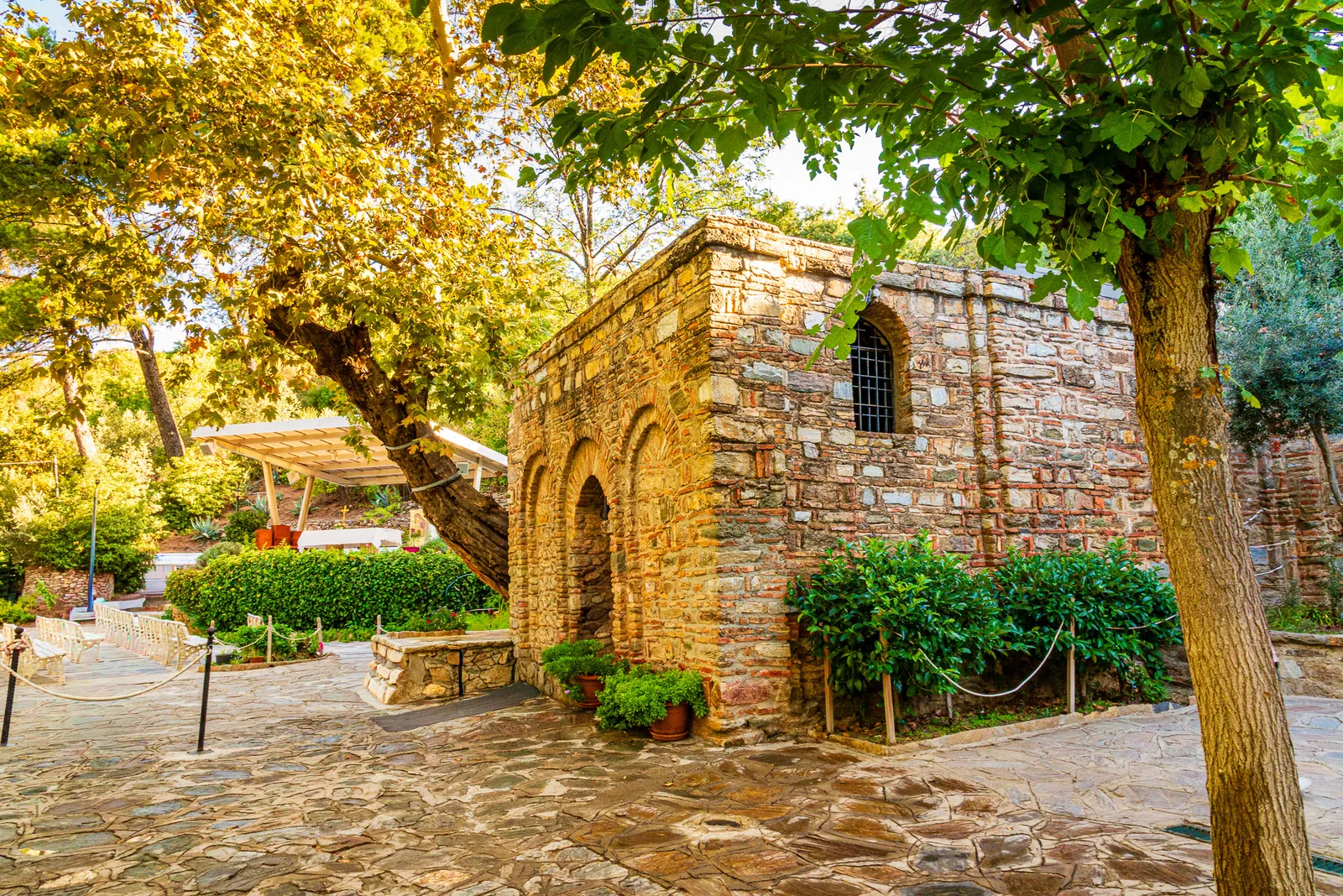
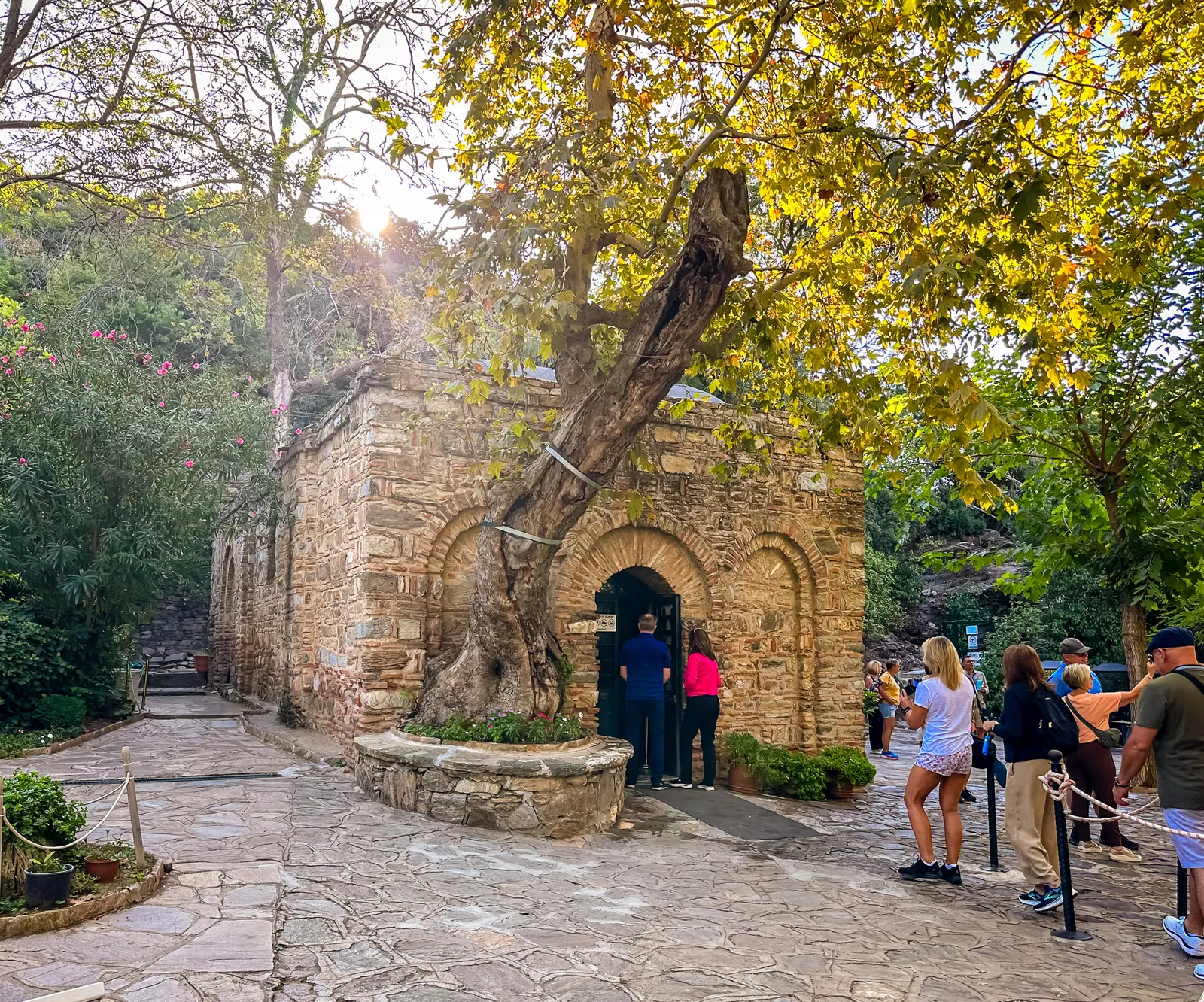
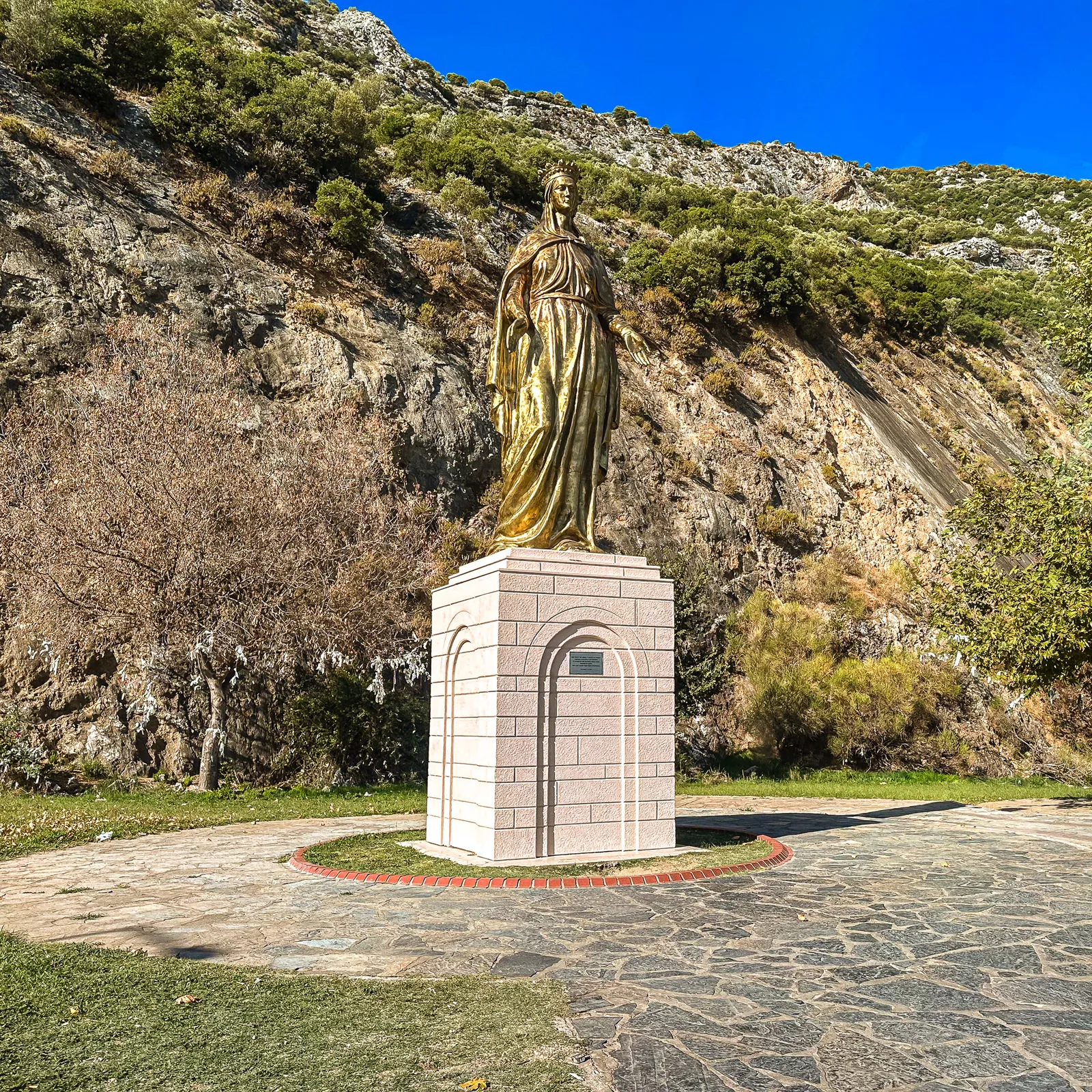
Our first stop was what is believed to be the final home of the Virgin Mary, a small stone house on Mount Koressos above Ephesus. Tradition holds that after the crucifixion, the Apostle John brought Mary here to protect her from persecution in Jerusalem, following Jesus's instruction to care for his mother (John 19:26–27).
The site was discovered in 1891, based on the visions of a German nun who had never left her bed, let alone visited Turkey. It's a strange story, but French priests followed her detailed descriptions and found the ruins exactly where she claimed.
Whether you believe the history or not, the house has a peaceful energy that resonates with visitors. Three popes have made pilgrimages here, and even Muslims honor Mary as the mother of a prophet.
Our guide mentioned debate over whether Mary truly lived here or remained in Jerusalem, but standing in that simple stone dwelling overlooking the valley, it felt entirely possible. We entered quietly, observing the humble interior.
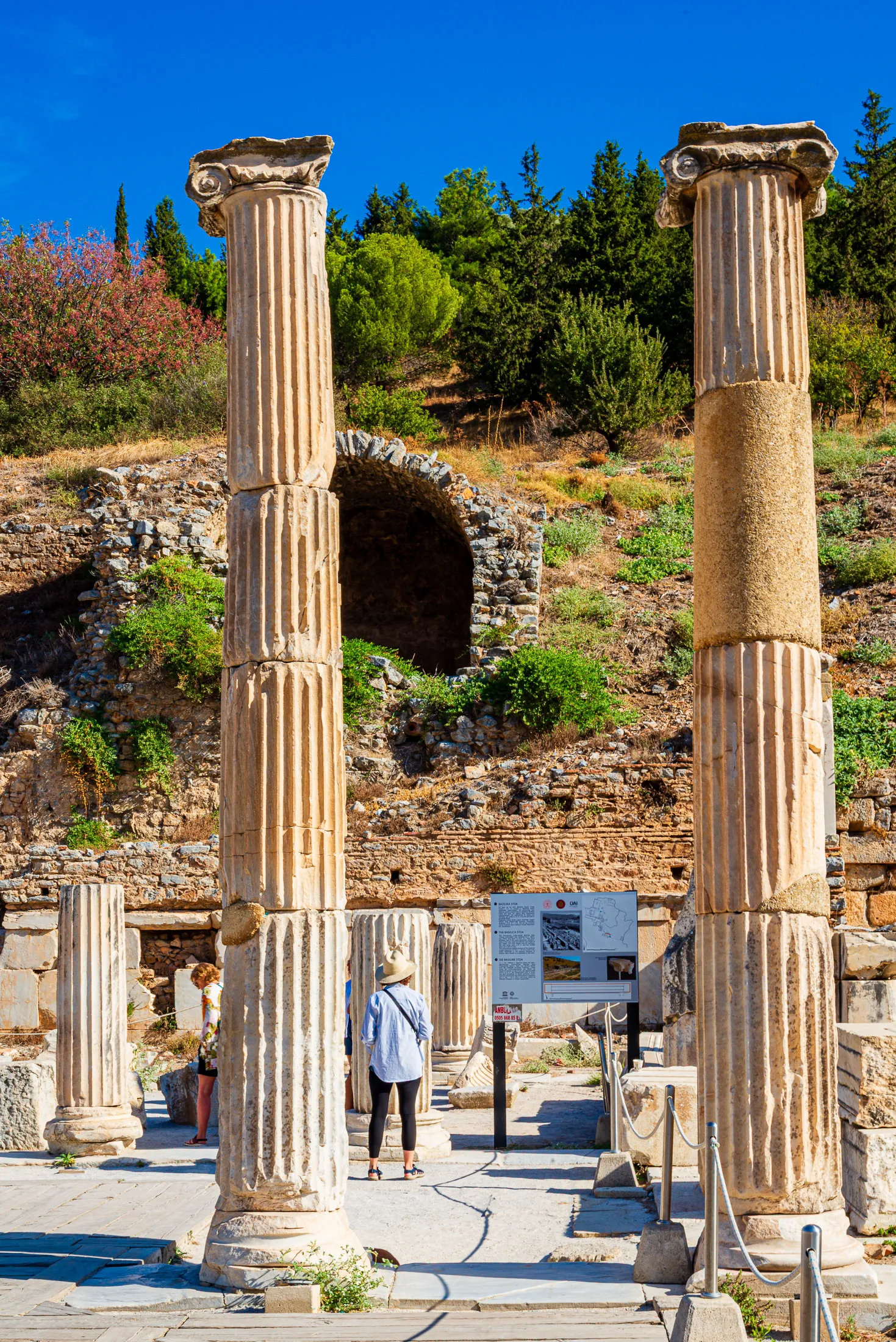
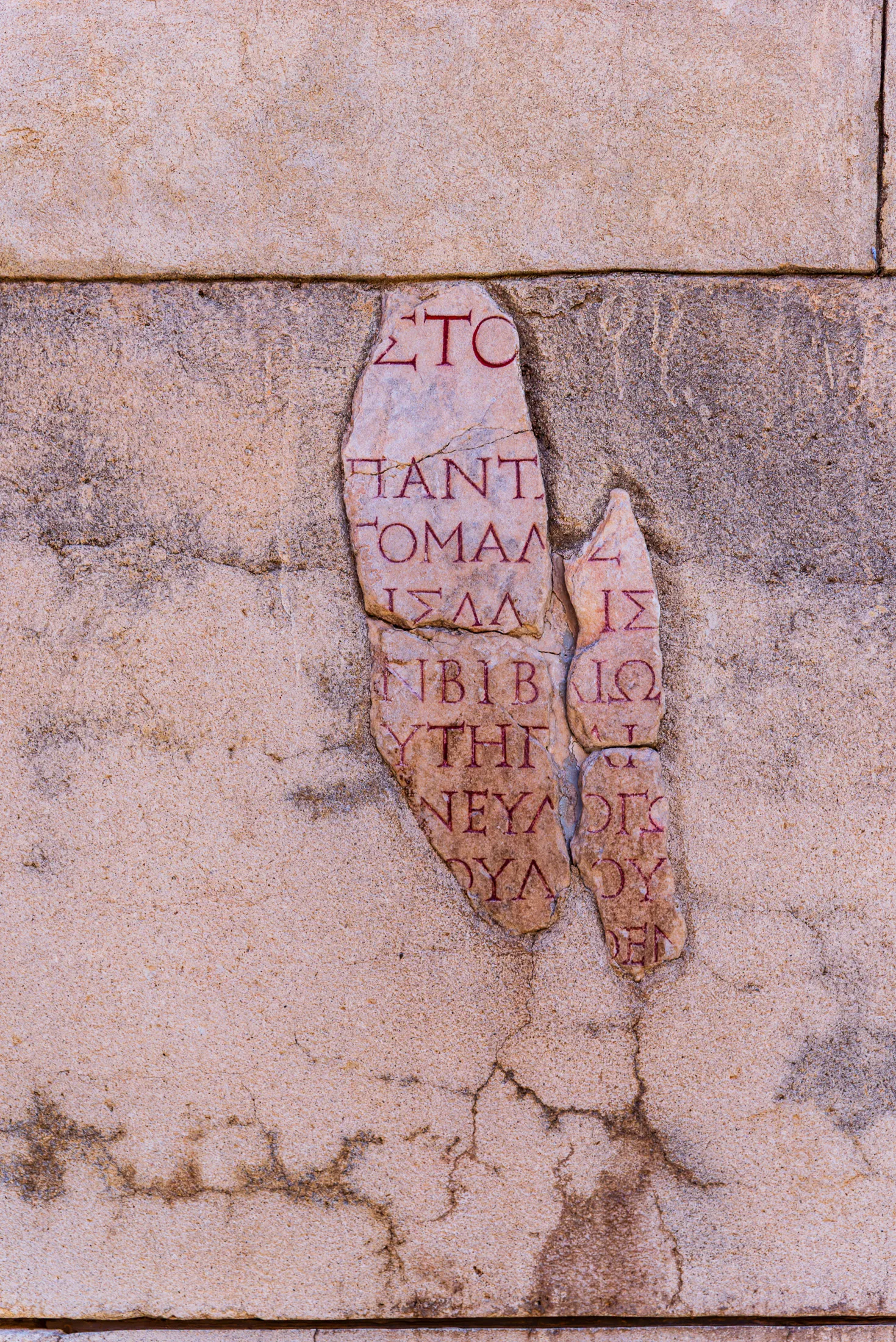
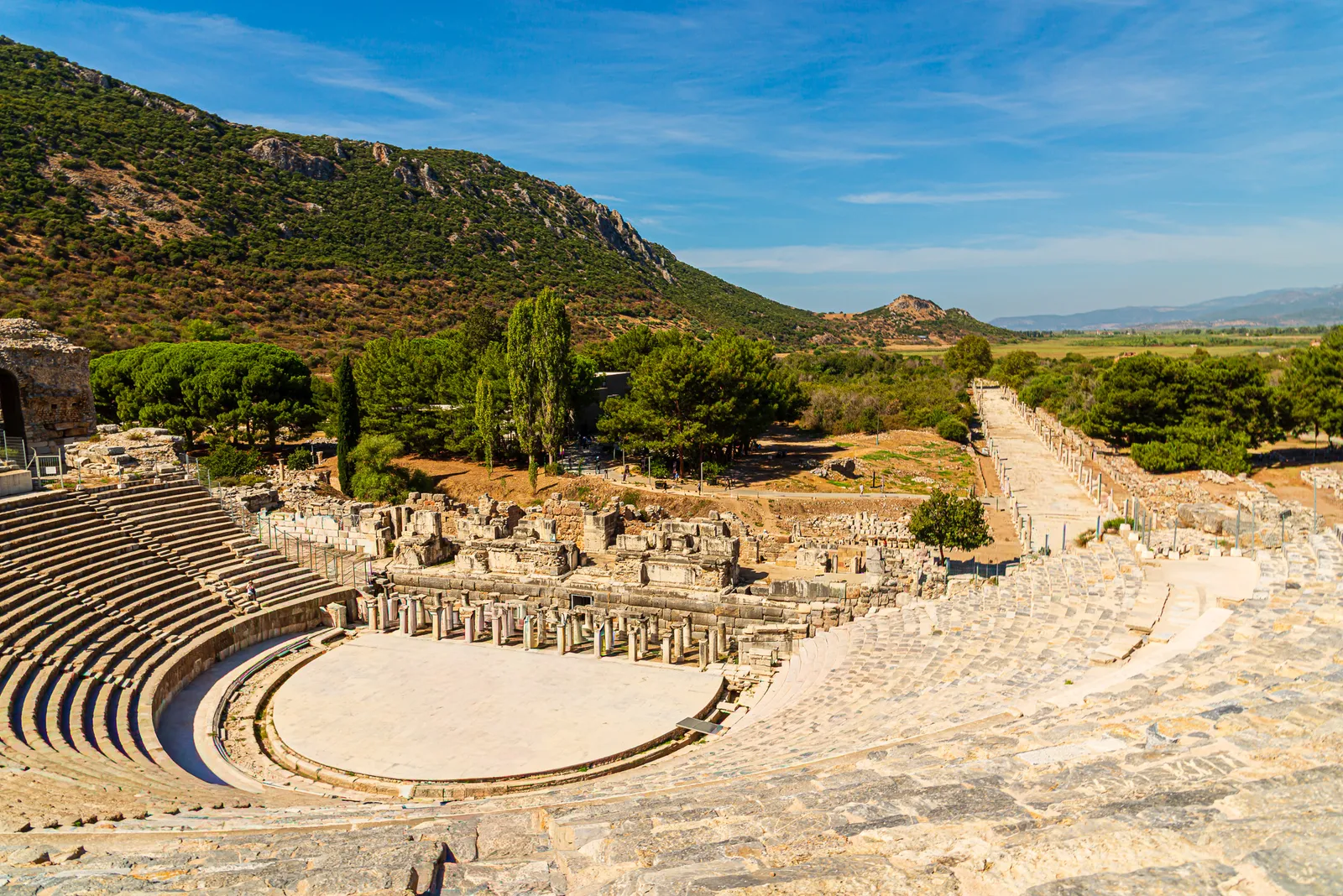
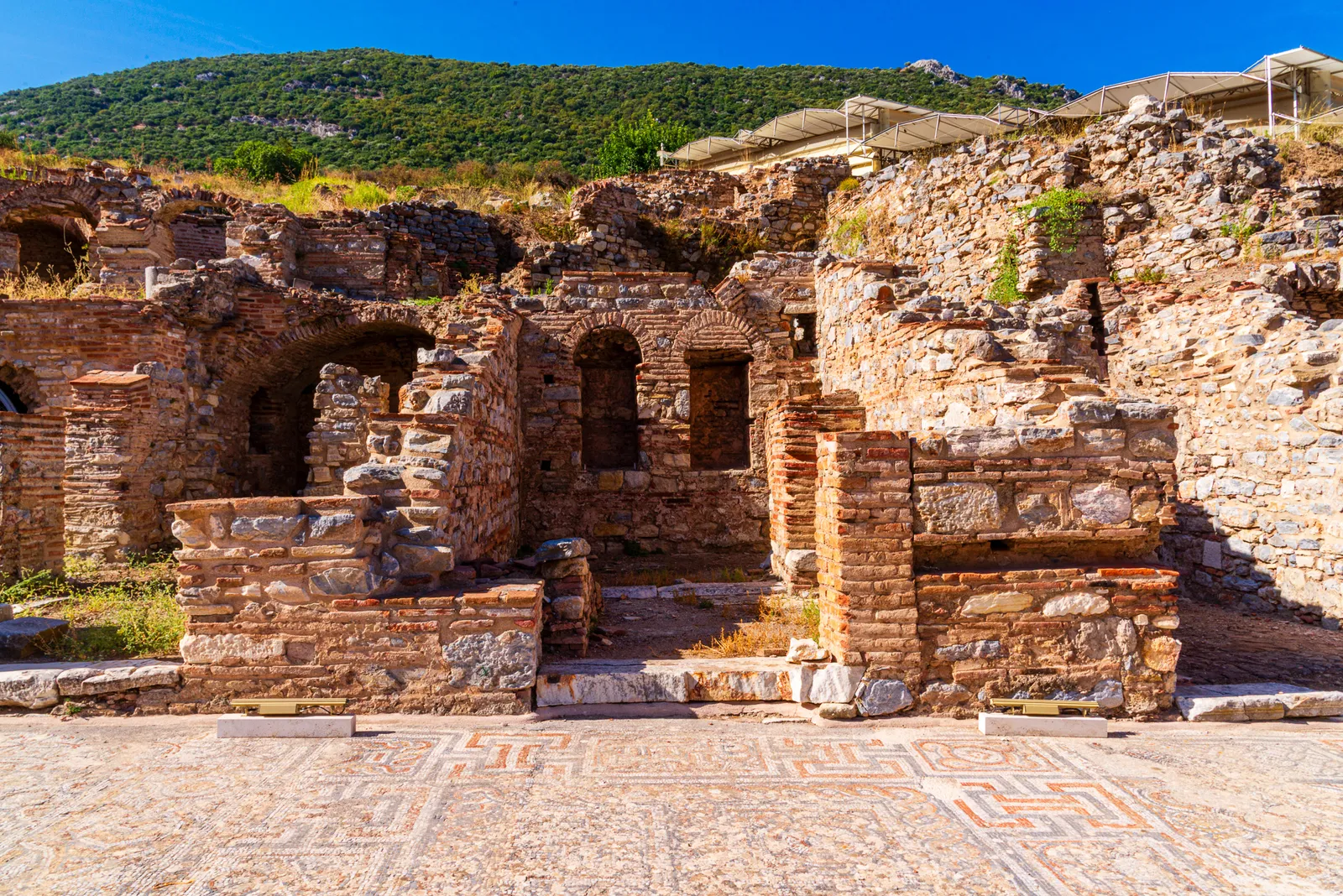
From there, we drove to the ancient city of Ephesus, one of the most important archaeological sites in the world, with a history stretching back nearly 3,000 years. The city was founded by Ionian Greek settlers in the 10th century BC, built on the earlier site of Apasa, the former capital of the Arzawa kingdom. Over time, Ephesus developed into a major Aegean port, a commercial hub, and one of the leading cultural centers of the ancient Mediterranean.
Under Roman rule, Ephesus entered its golden age. It became the capital of the Roman province of Asia and one of the largest and most prosperous cities in the empire. Population estimates vary by source, but official Turkish cultural records place the city at around 200,000 residents during its peak as the region's largest port and administrative center.
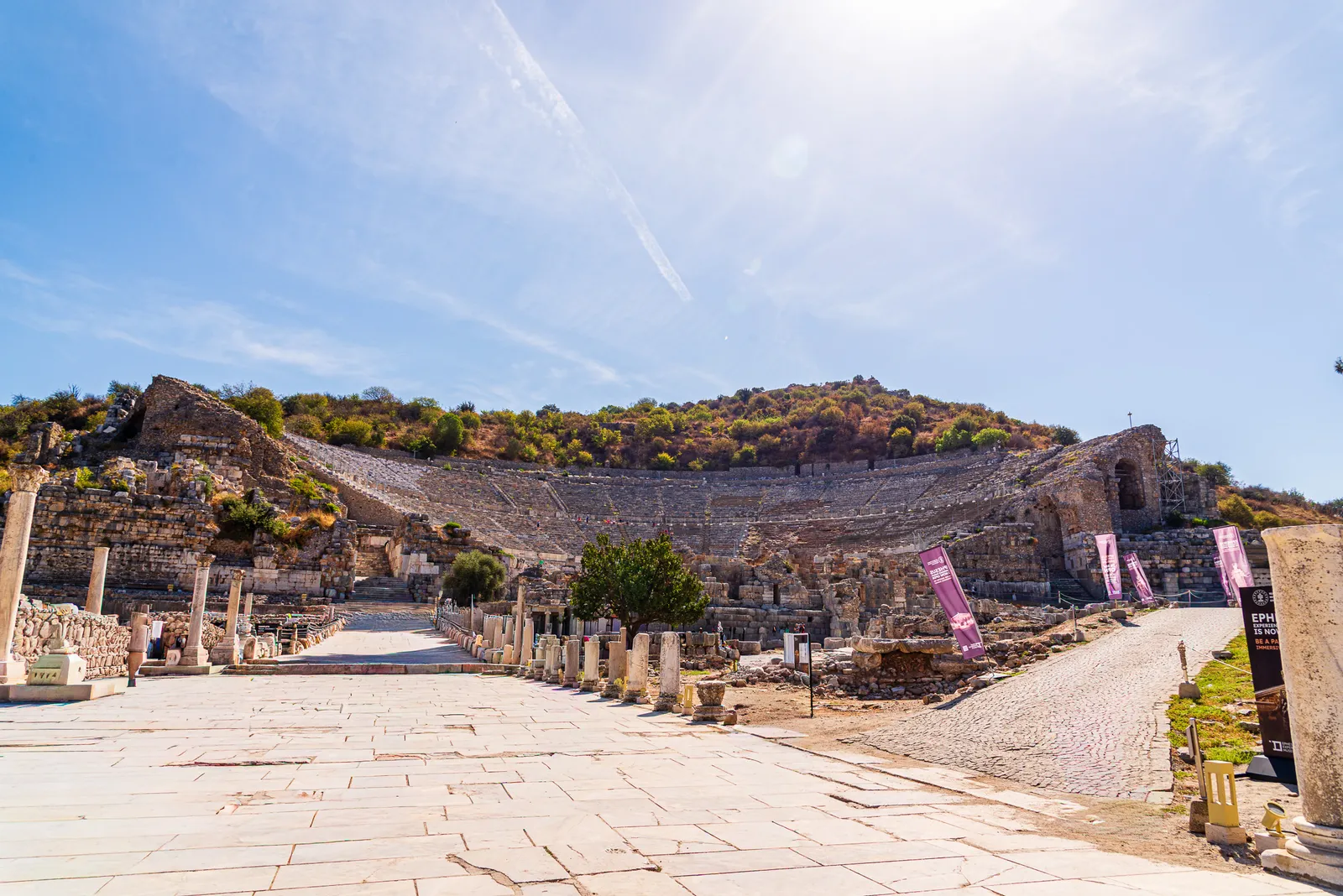
The Apostle Paul lived and preached here for several years, and the biblical Epistle to the Ephesians was addressed to this early Christian community. According to Acts 19, Paul's preaching caused such an uproar among the silversmiths who profited from the cult of Artemis that a massive riot broke out in the city's Great Theater, the same 25,000-seat arena you can still walk through today. While Paul's companions were dragged into the stadium, Paul himself was famously prevented by his friends and local officials from entering the theater for his own safety -- (Acts 19:23–41)
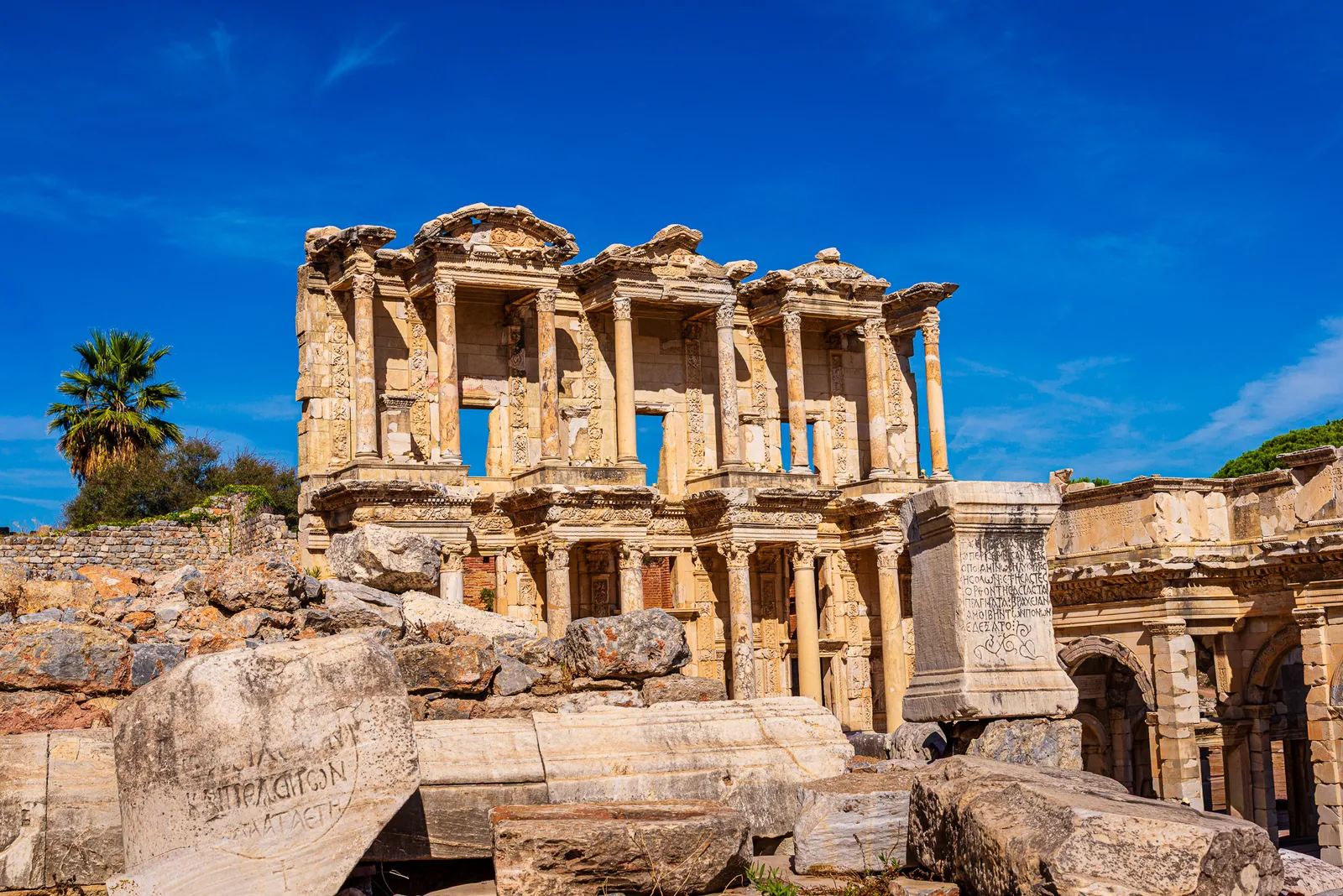
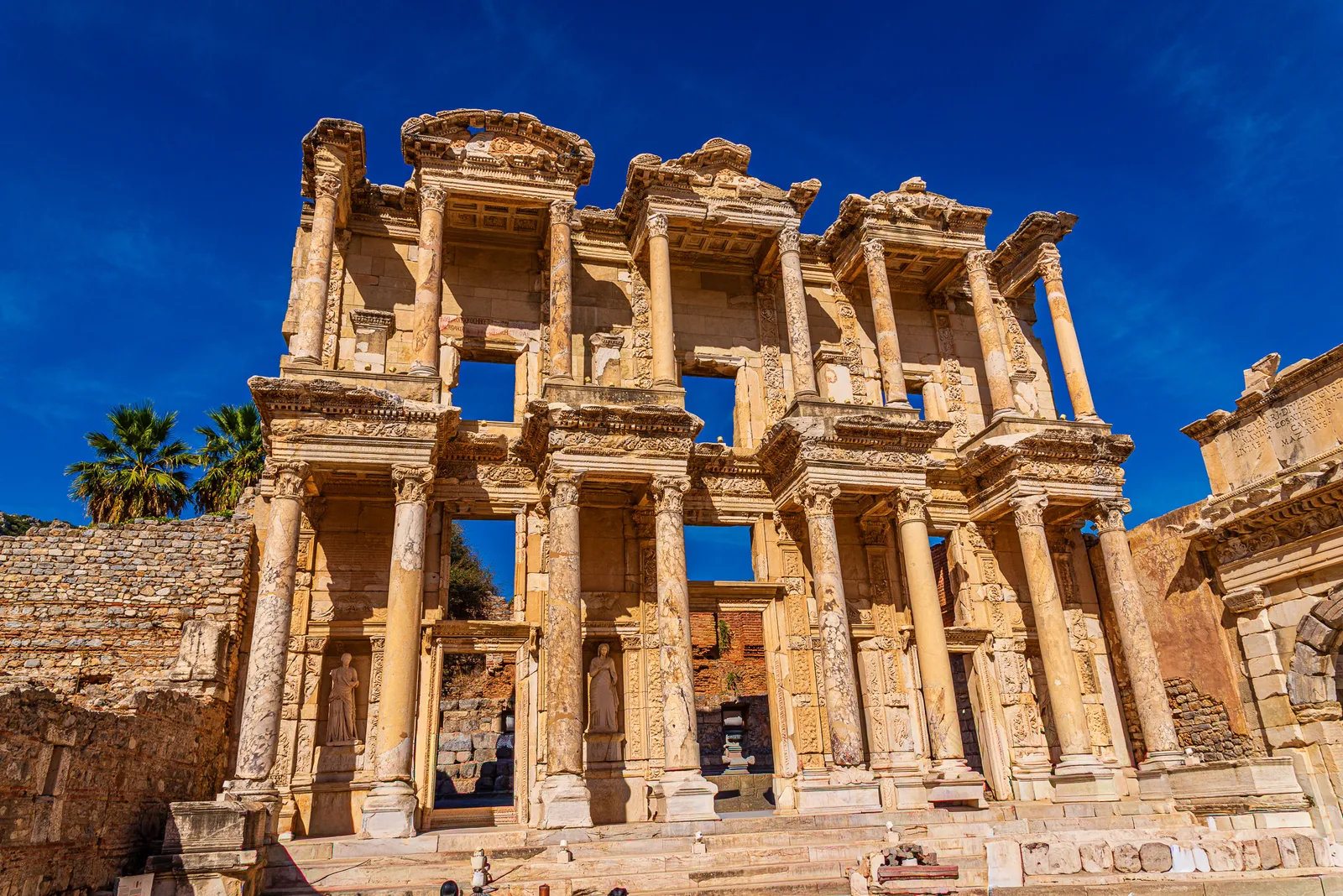
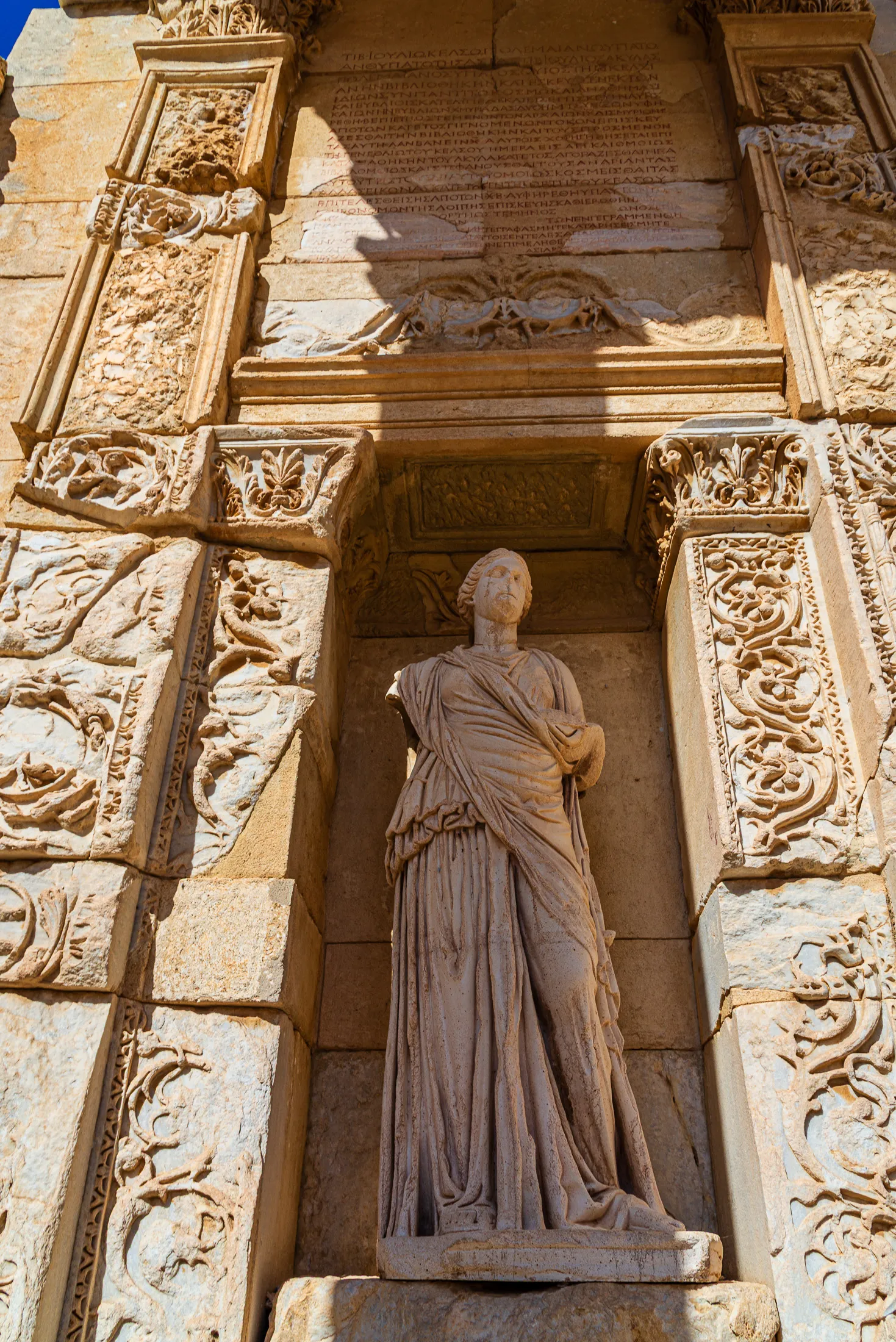
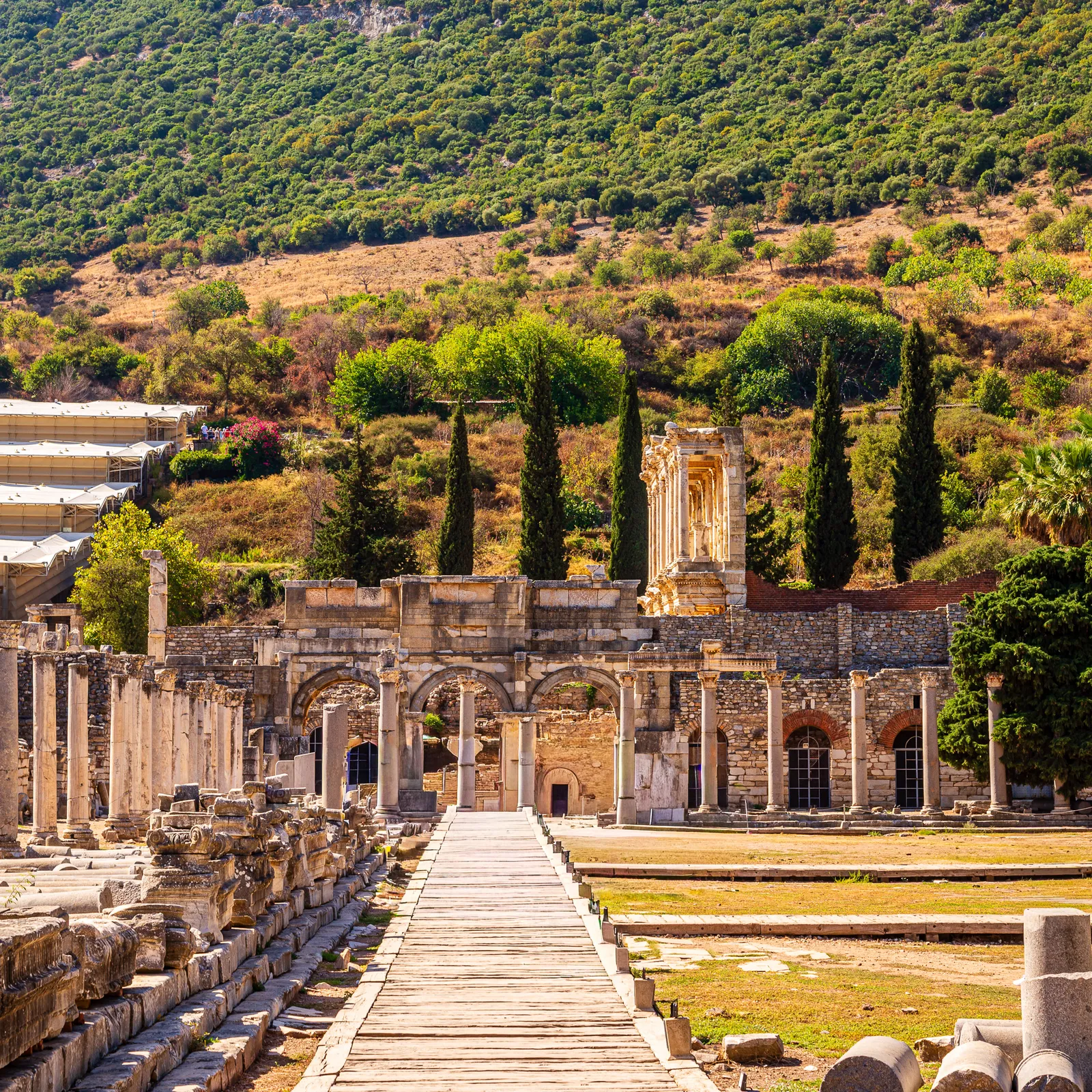
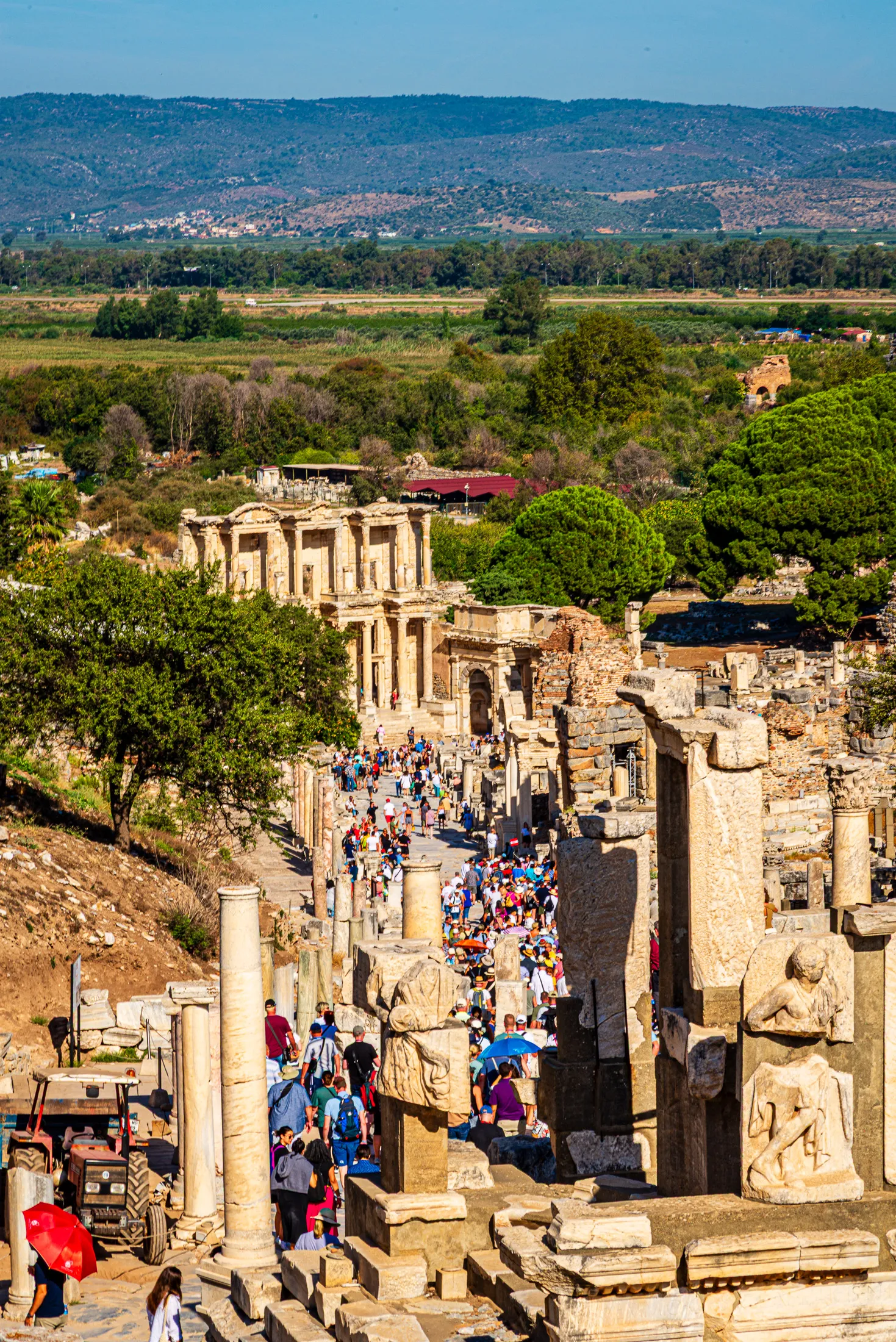
- Library of Celsus: An iconic two-story façade that once housed the third-largest library in the Roman world, with around 12,000 scrolls.
- The Great Theatre: A massive amphitheater carved into Mount Pion, seating up to 25,000 people.
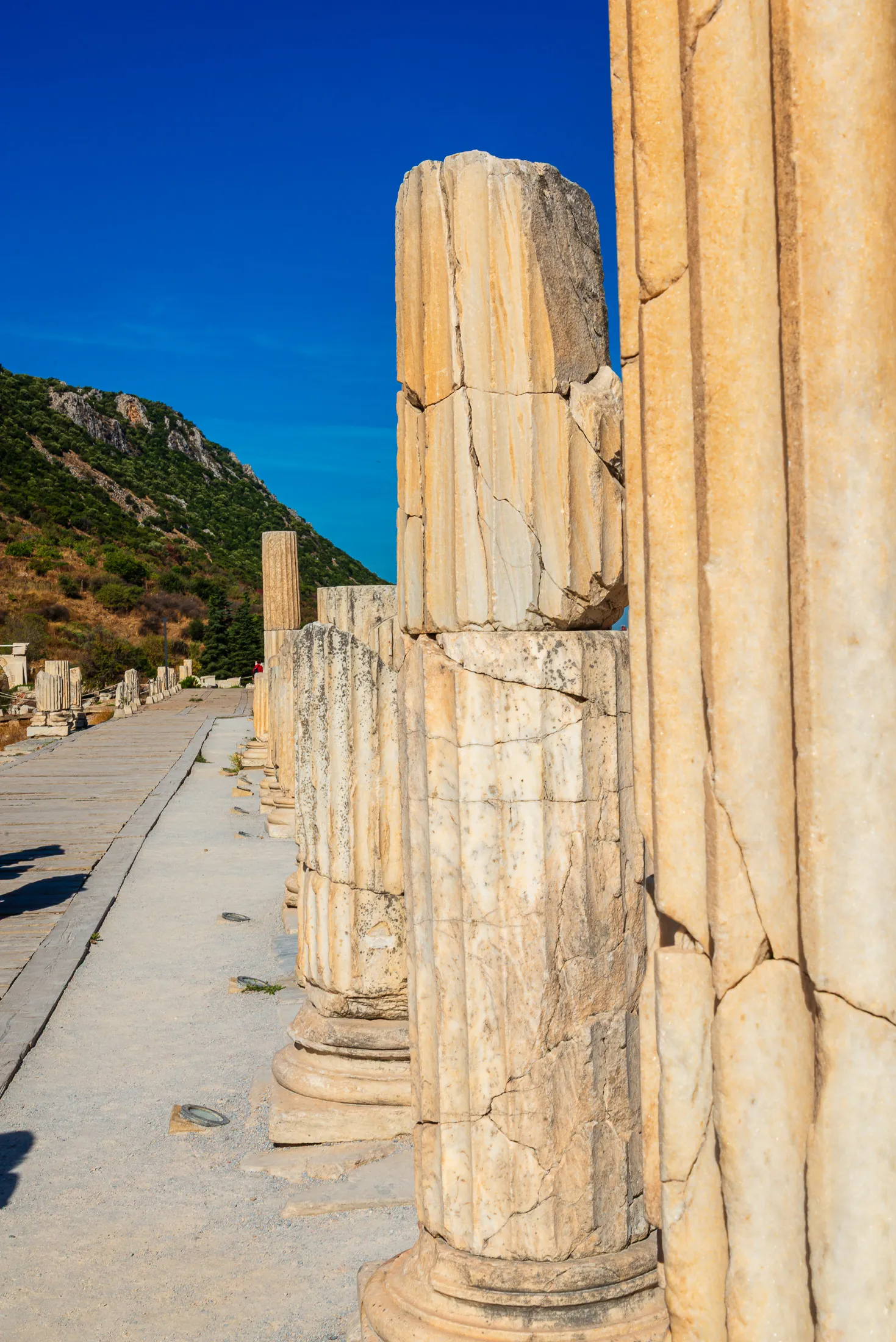
- Curetes Street: A marble-paved thoroughfare lined with columns, statues, shops, and monuments, offering a vivid glimpse of ancient life.
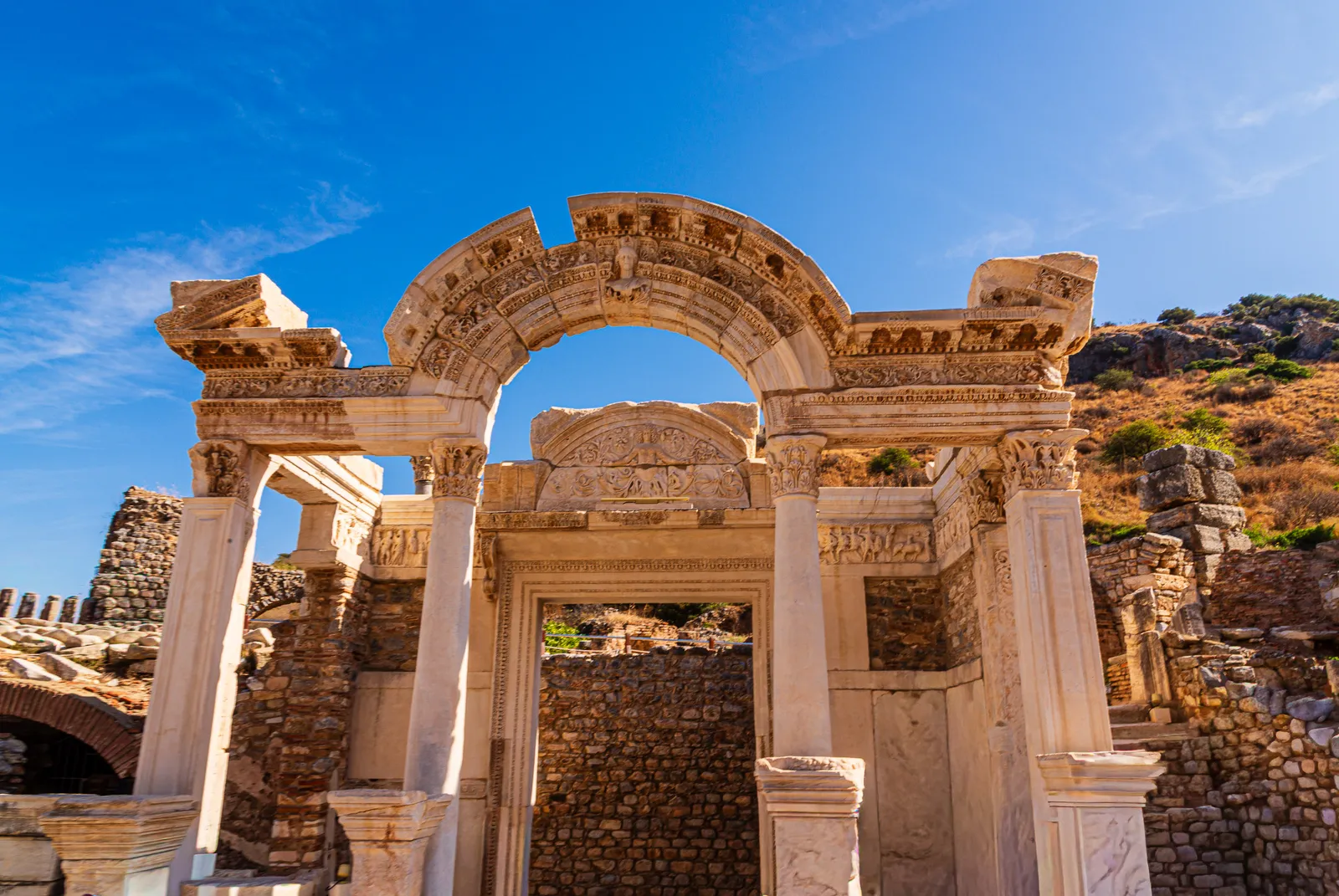
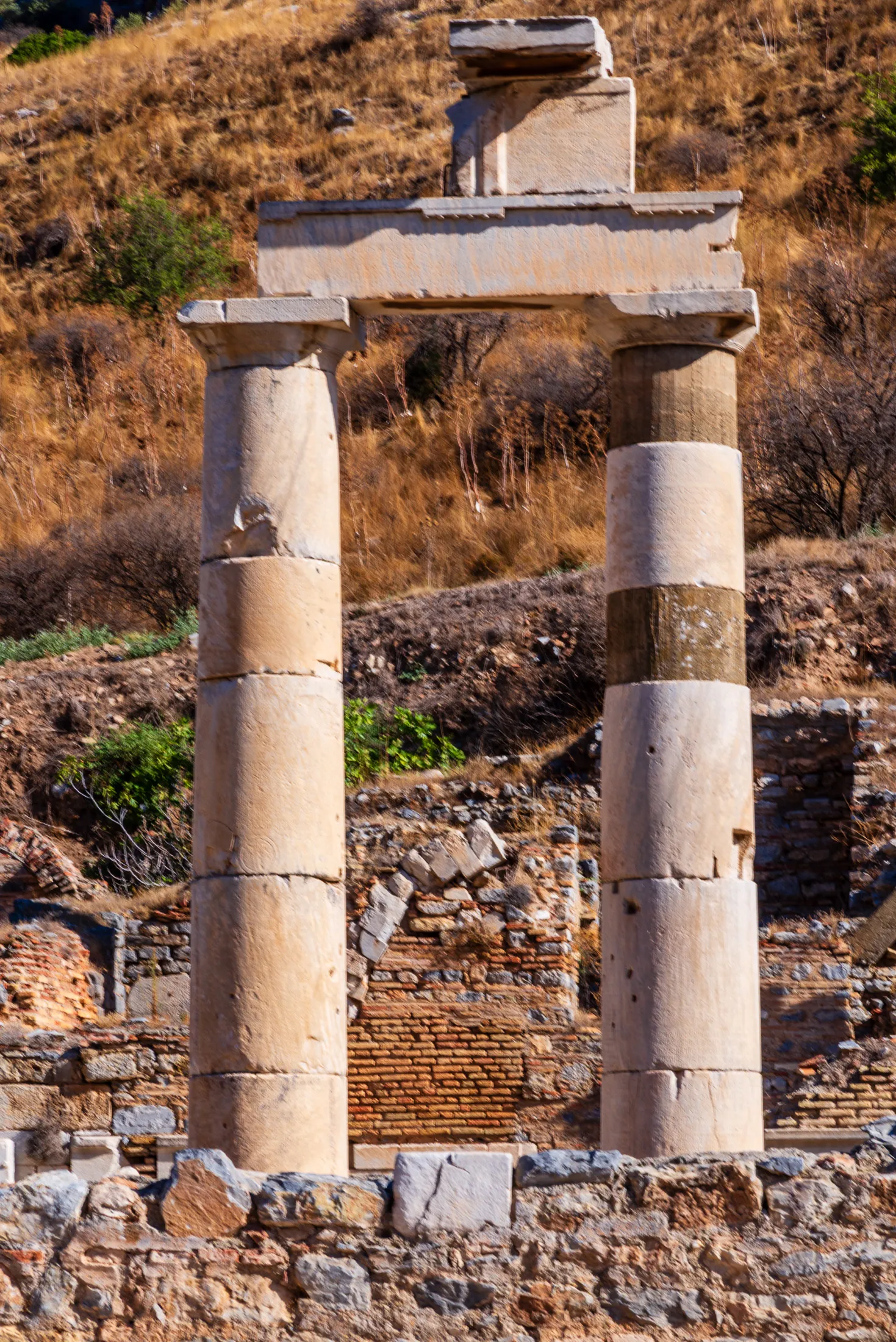
- Temple of Hadrian: A small but beautifully decorated temple with detailed carvings and an ornate arch.
- Agora: The city's bustling marketplace and commercial center, surrounded by porticoes and shops.
Spoiler Alert: The Temple of Artemis is not what you might expect. Only a single column and some foundations remain today, so it's barely worth getting out of the car. Once a massive Greek temple and one of the Seven Wonders of the Ancient World, it's now mostly a quick drive-by.
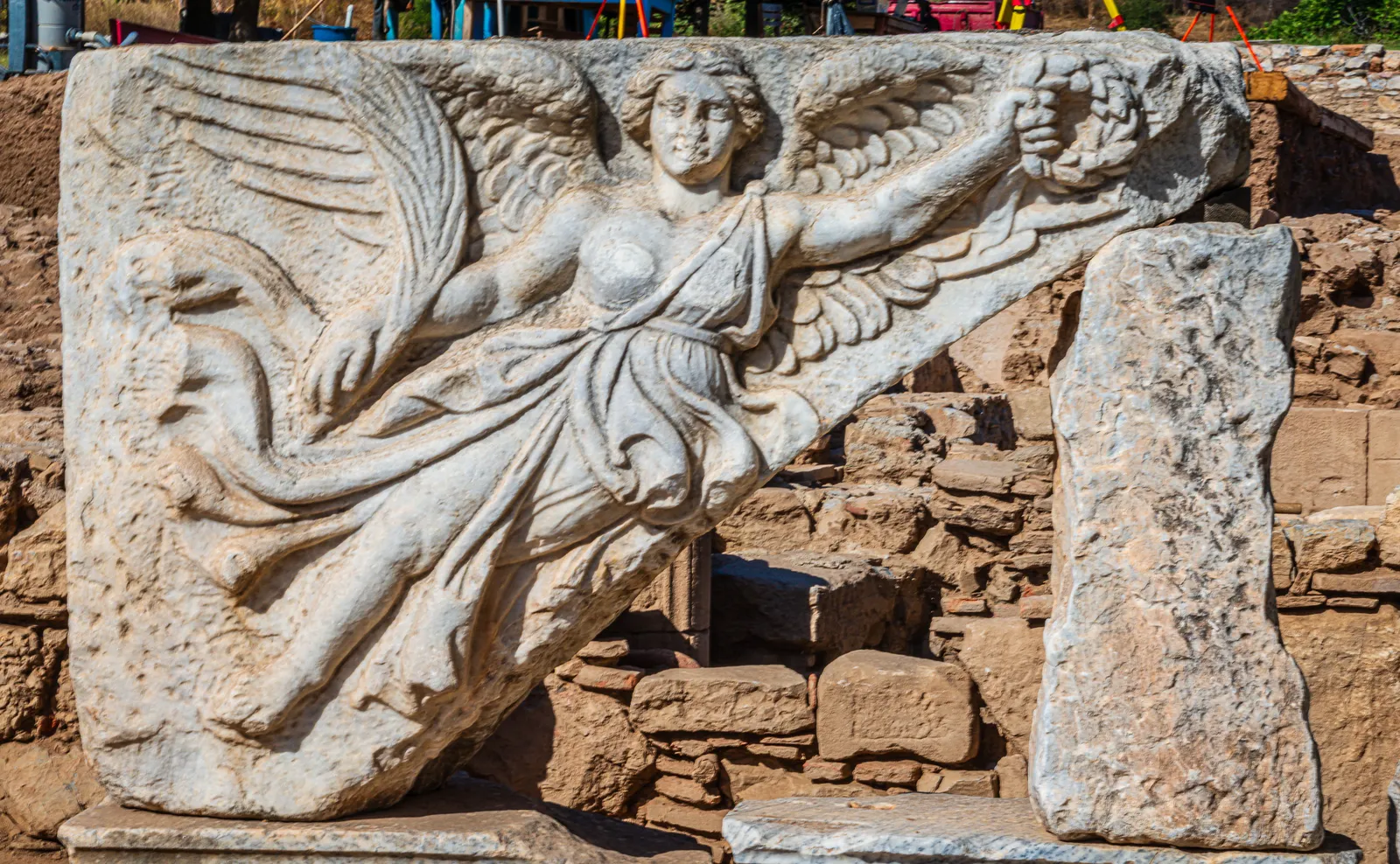
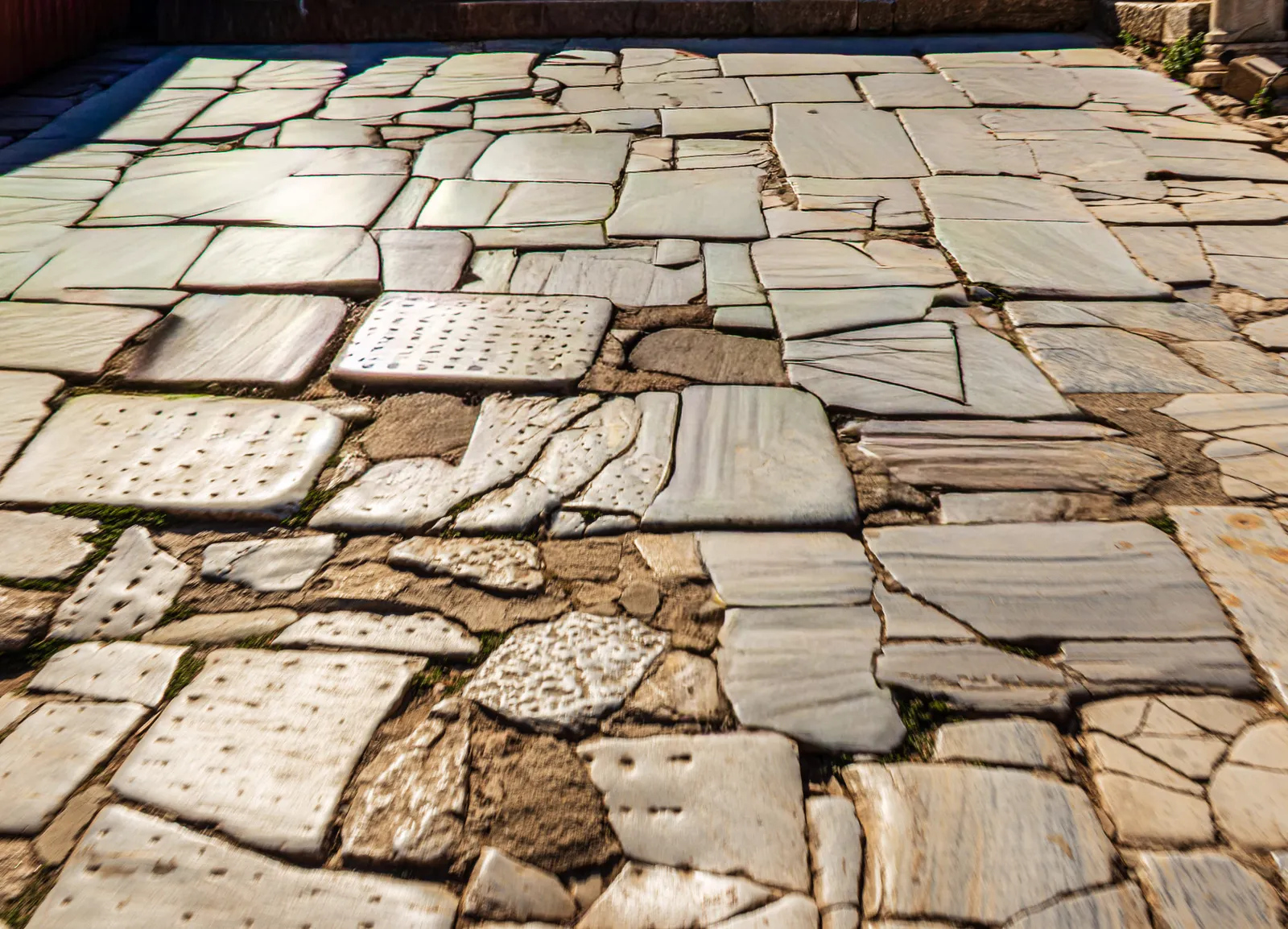
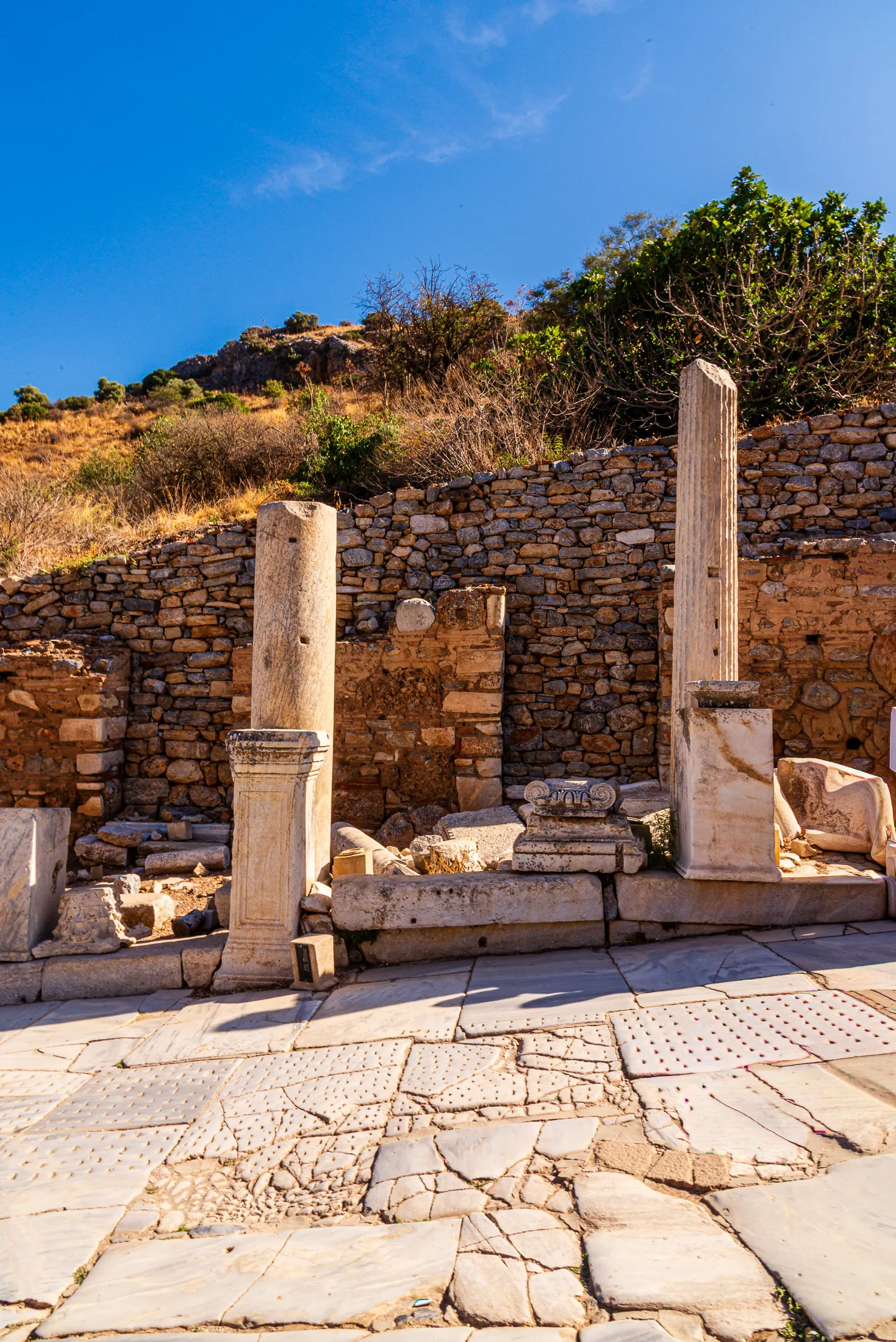
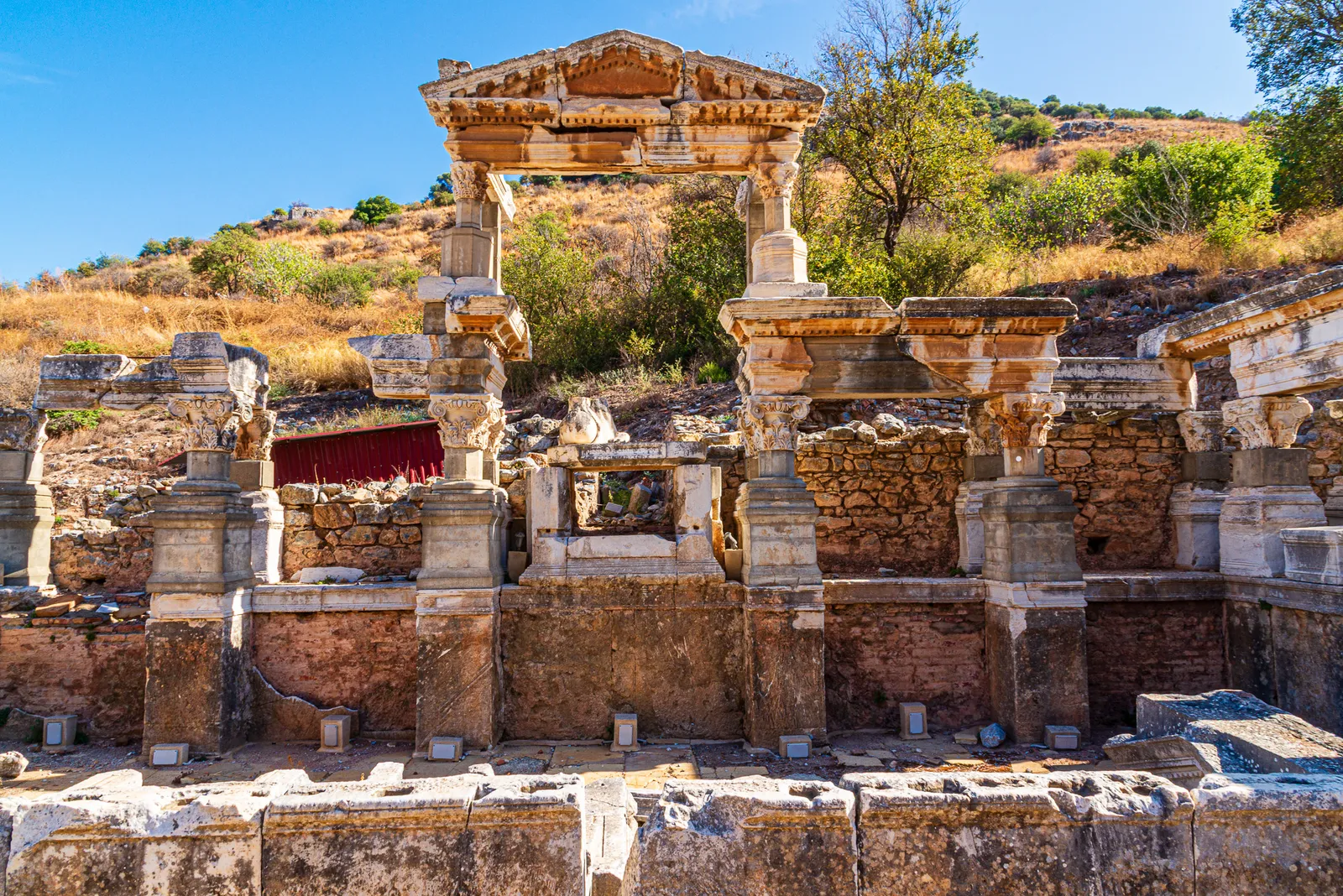
Regardless of your tour company, expect a visit to a fashion store for a runway-style show. If you enjoy designer knockoffs, this is your moment, my aunt went wild over a purse and praised its craftsmanship.
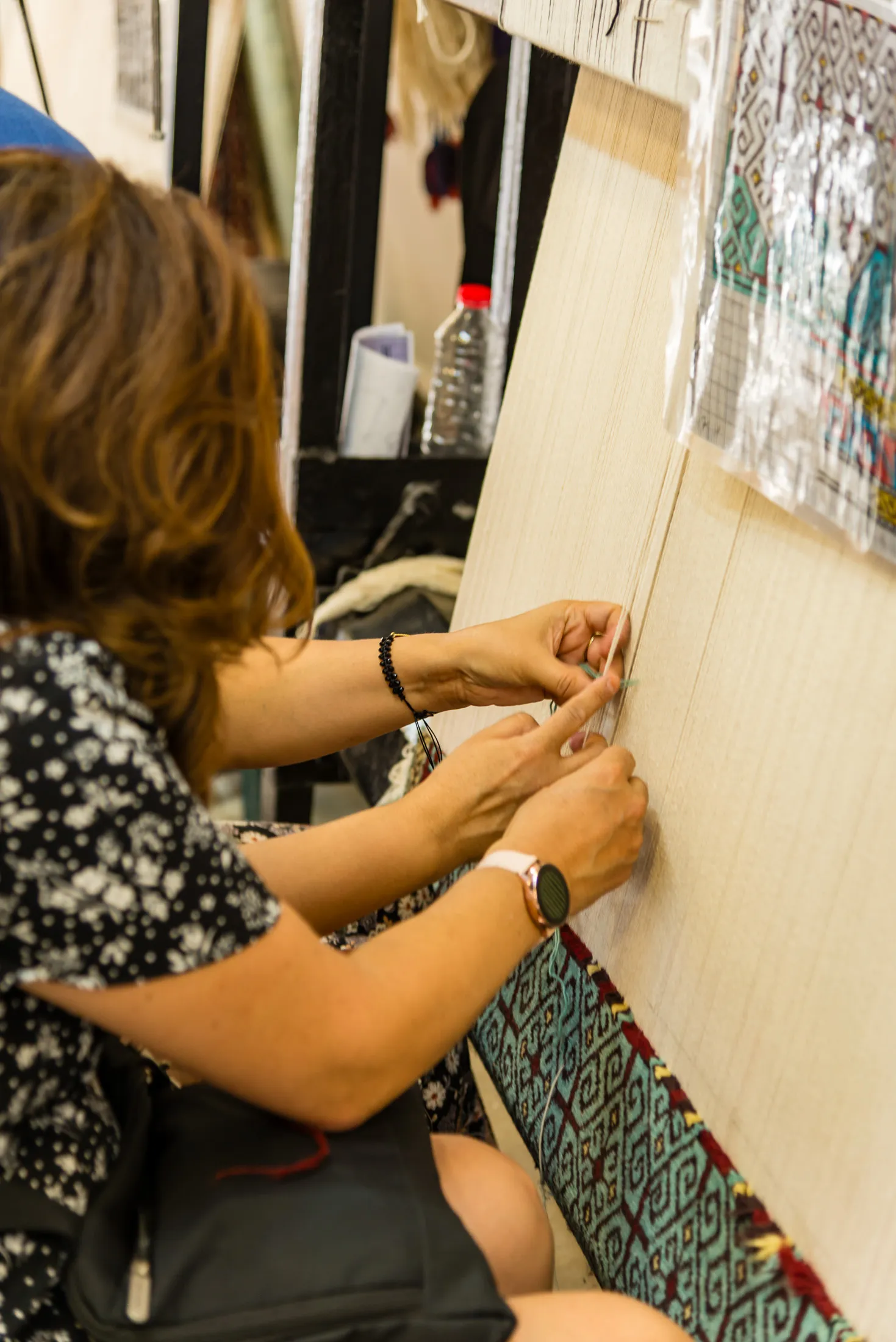
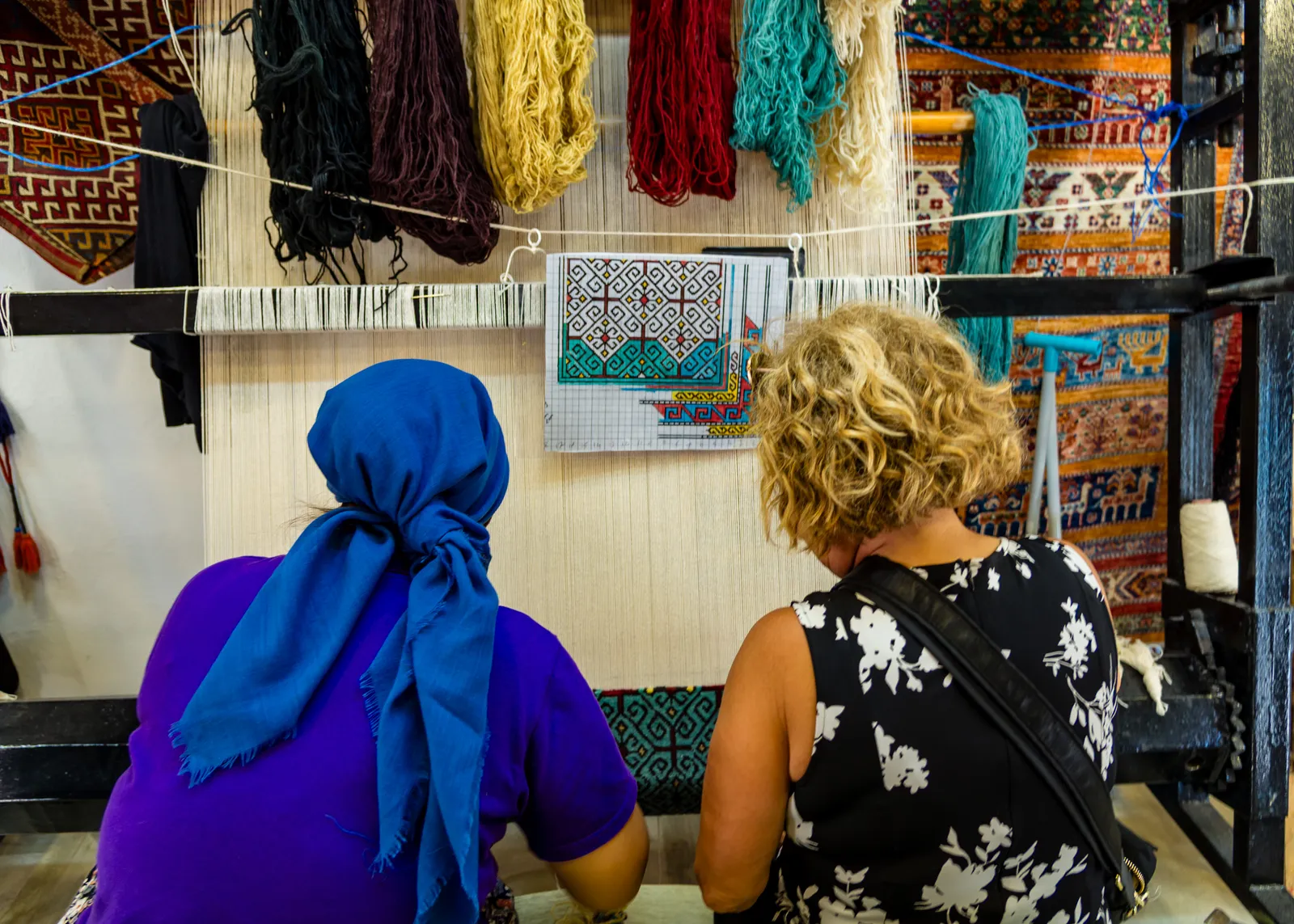
Next comes a carpet weaving demonstration. Know ahead of time if you're interested in buying, it can be a hard sell, though prices are very negotiable. We ended up purchasing a Turkish carpet, which was delivered to our door about six months later.
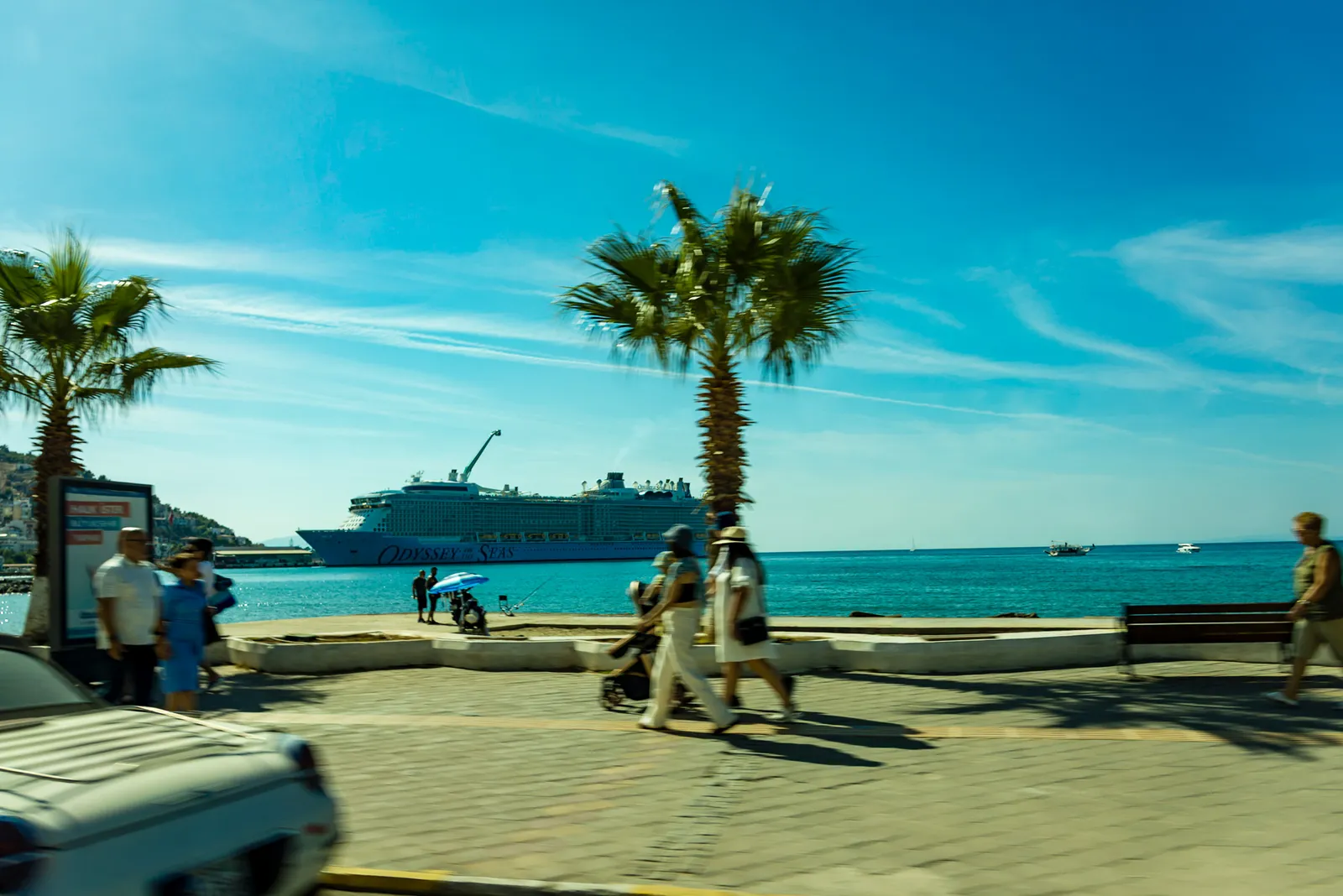
Finally, after the ruins, the fashion show, and the carpet factory, it was time for lunch. This is a shared experience, with all tour groups seated together in a large outdoor area, enjoying conversation with fellow travelers from our cruise ship and others. It was a long day and the drive back to port was overdue. After our goodbyes, we were dropped just outside of the entrance to the terminal, near a popular shopping area where we purchased our Turkish delight.
A Venetian Harbor, with a unique old town
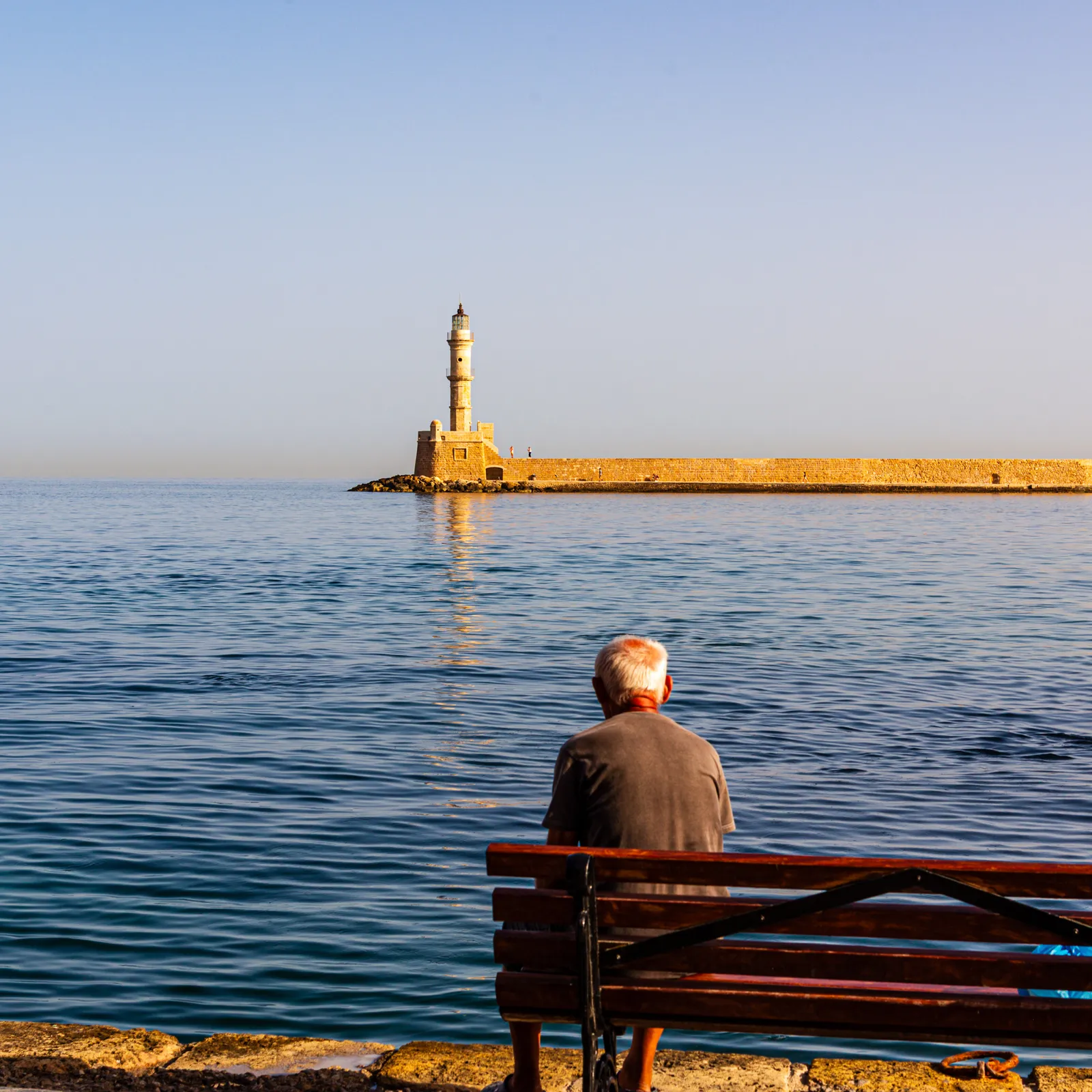
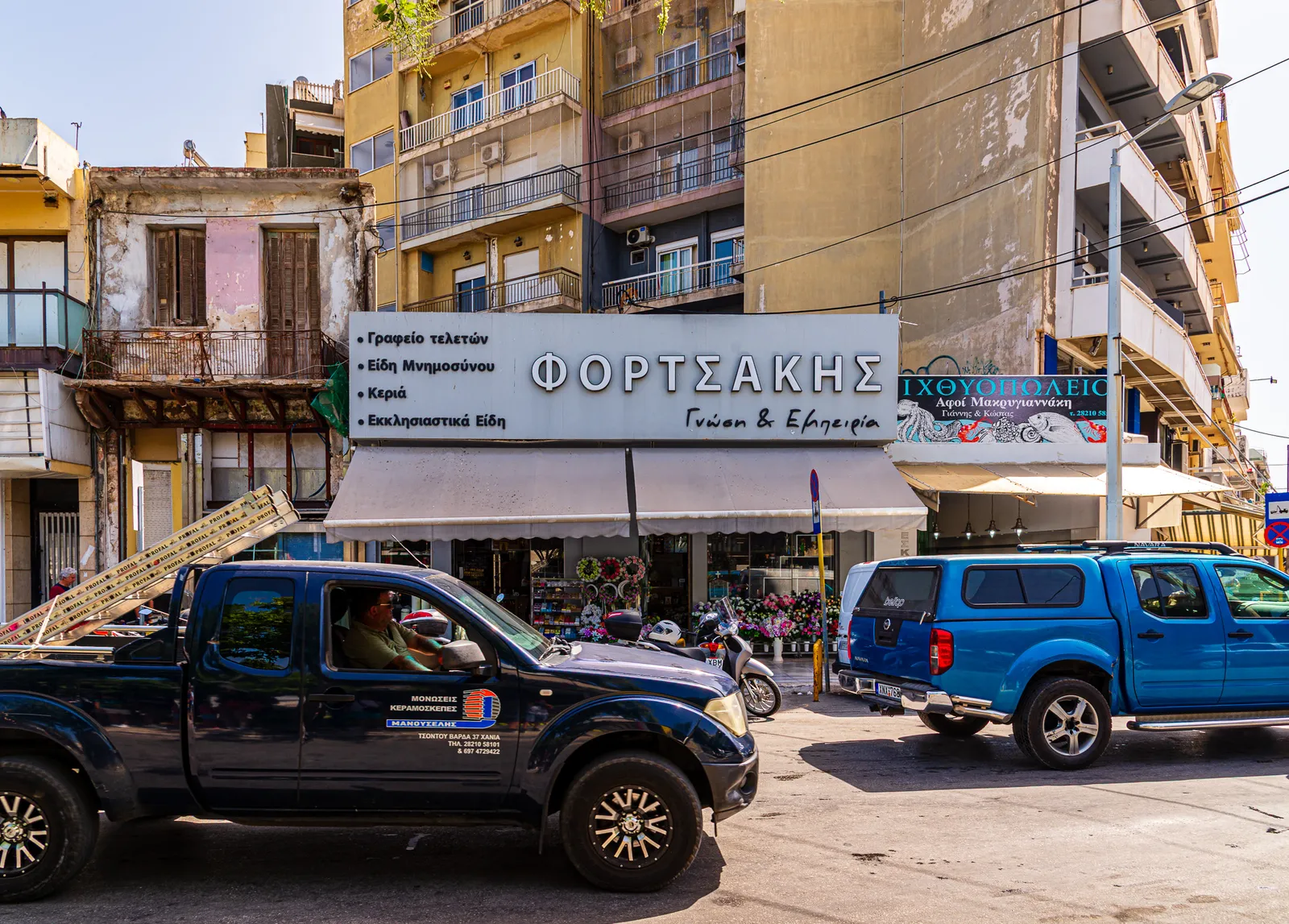
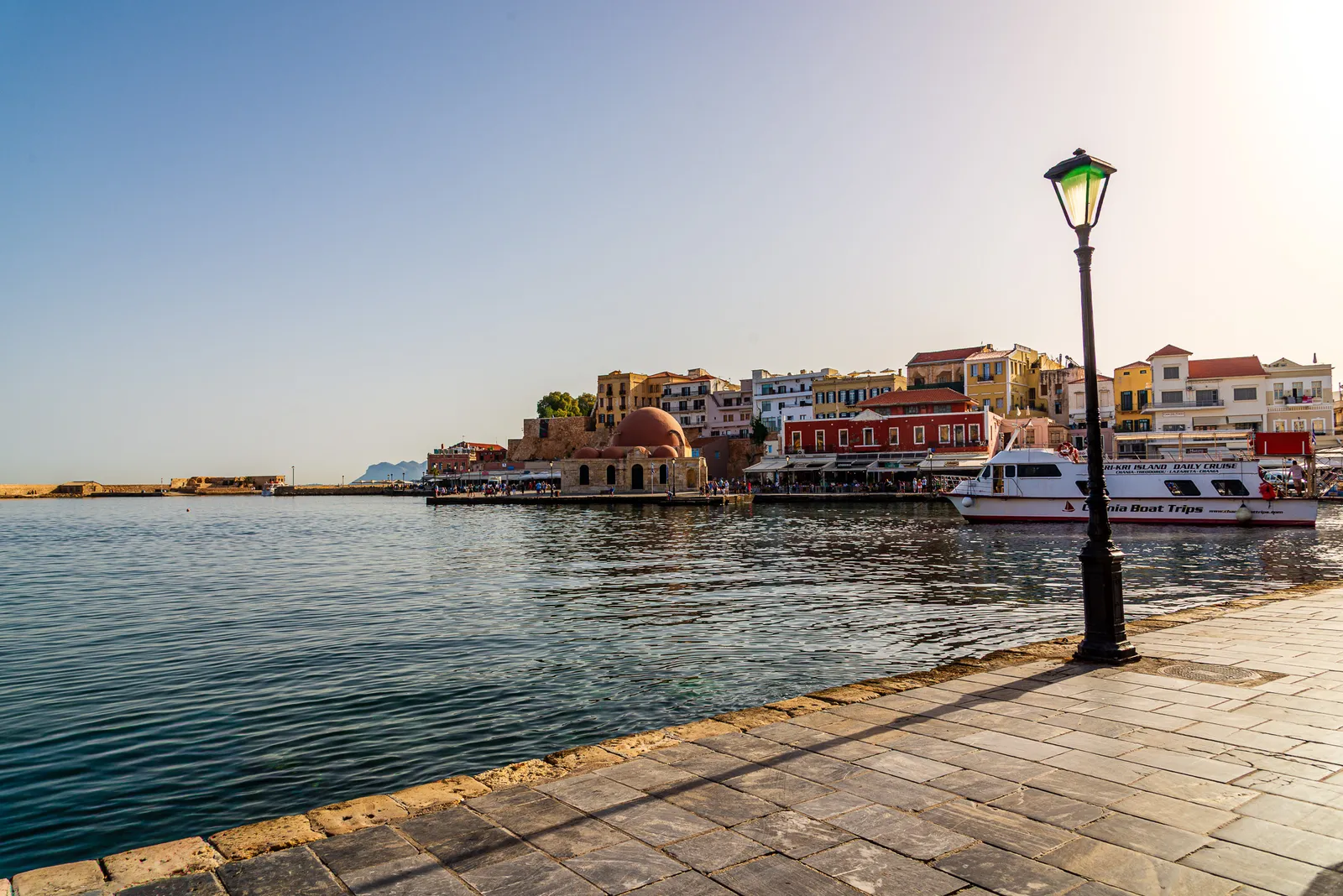
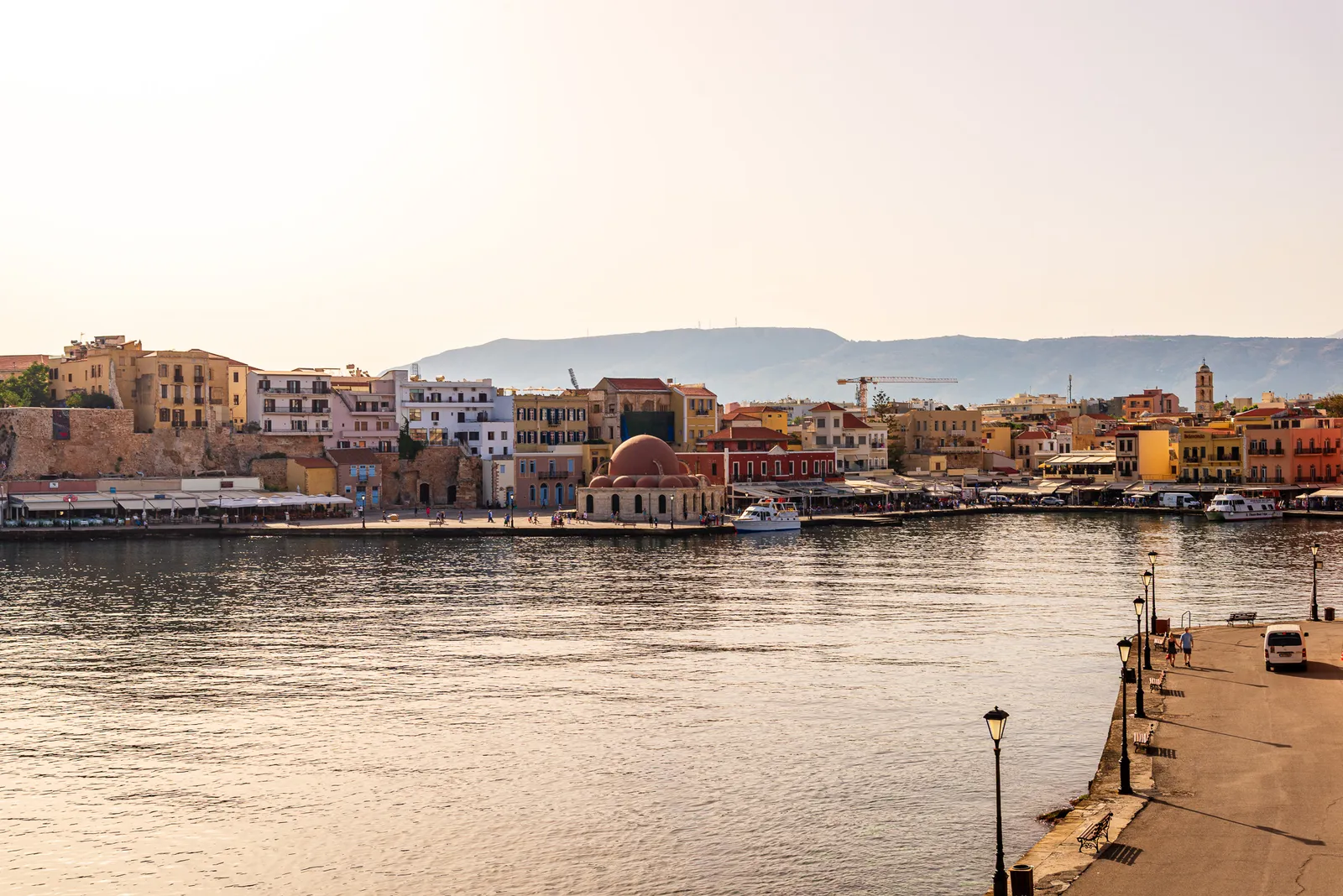
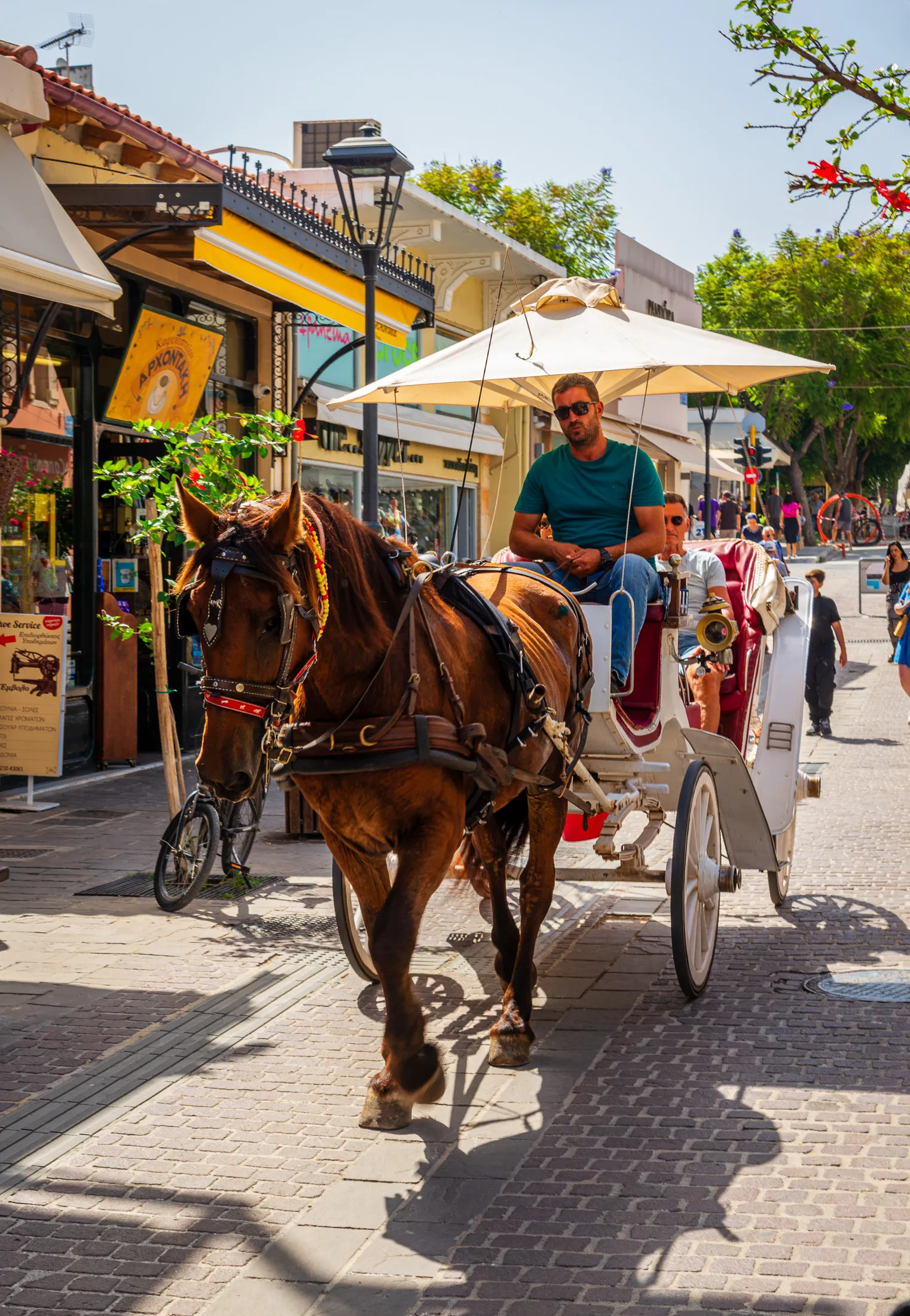
Our last port was Chania, and it felt like the Mediterranean was saving one of its best for last. The Venetian harbor is ridiculously photogenic, the lighthouse, the waterfront restaurants, the mountains as a backdrop. But unlike the other Greek ports, Chania felt livable, not just built for tourists.
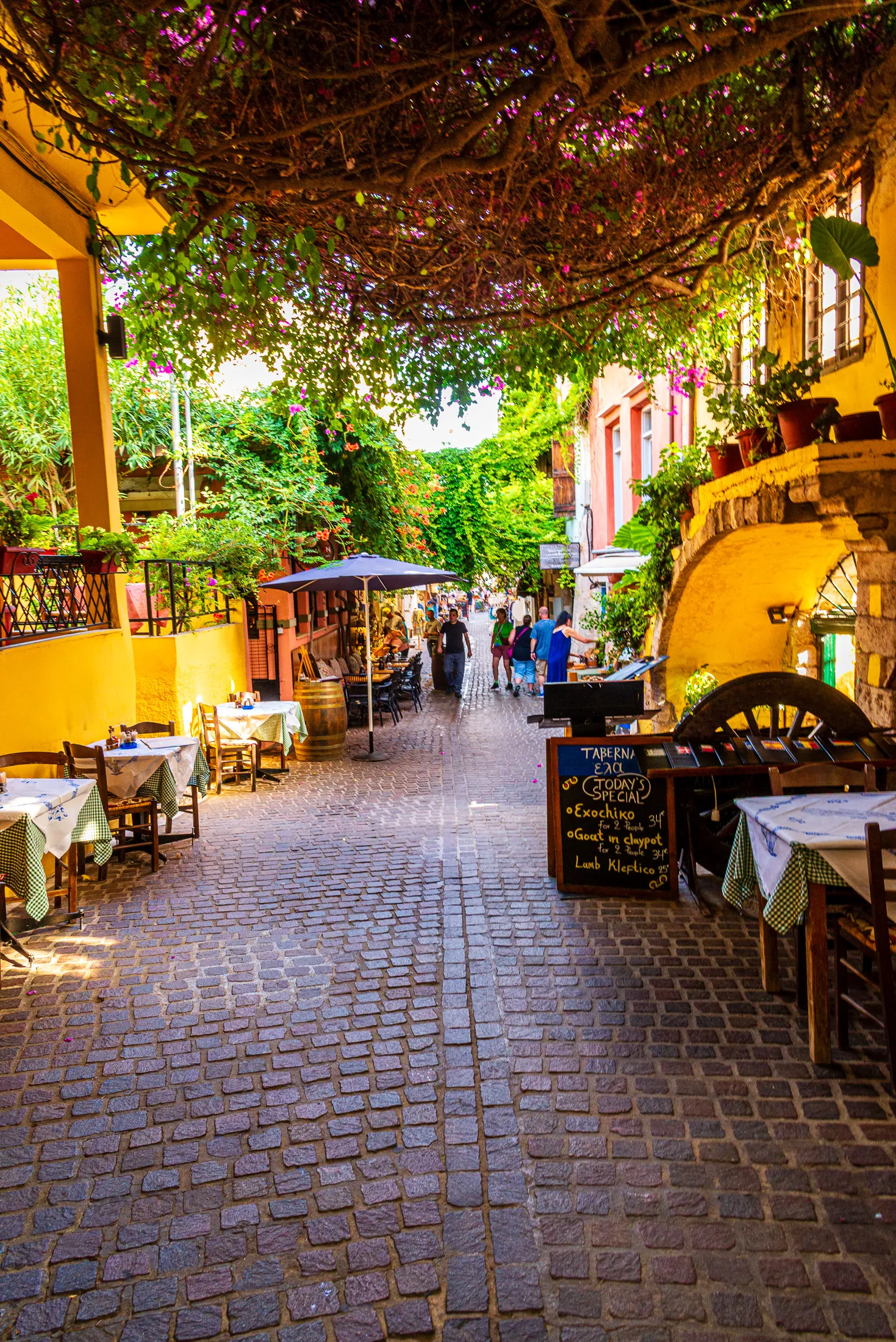
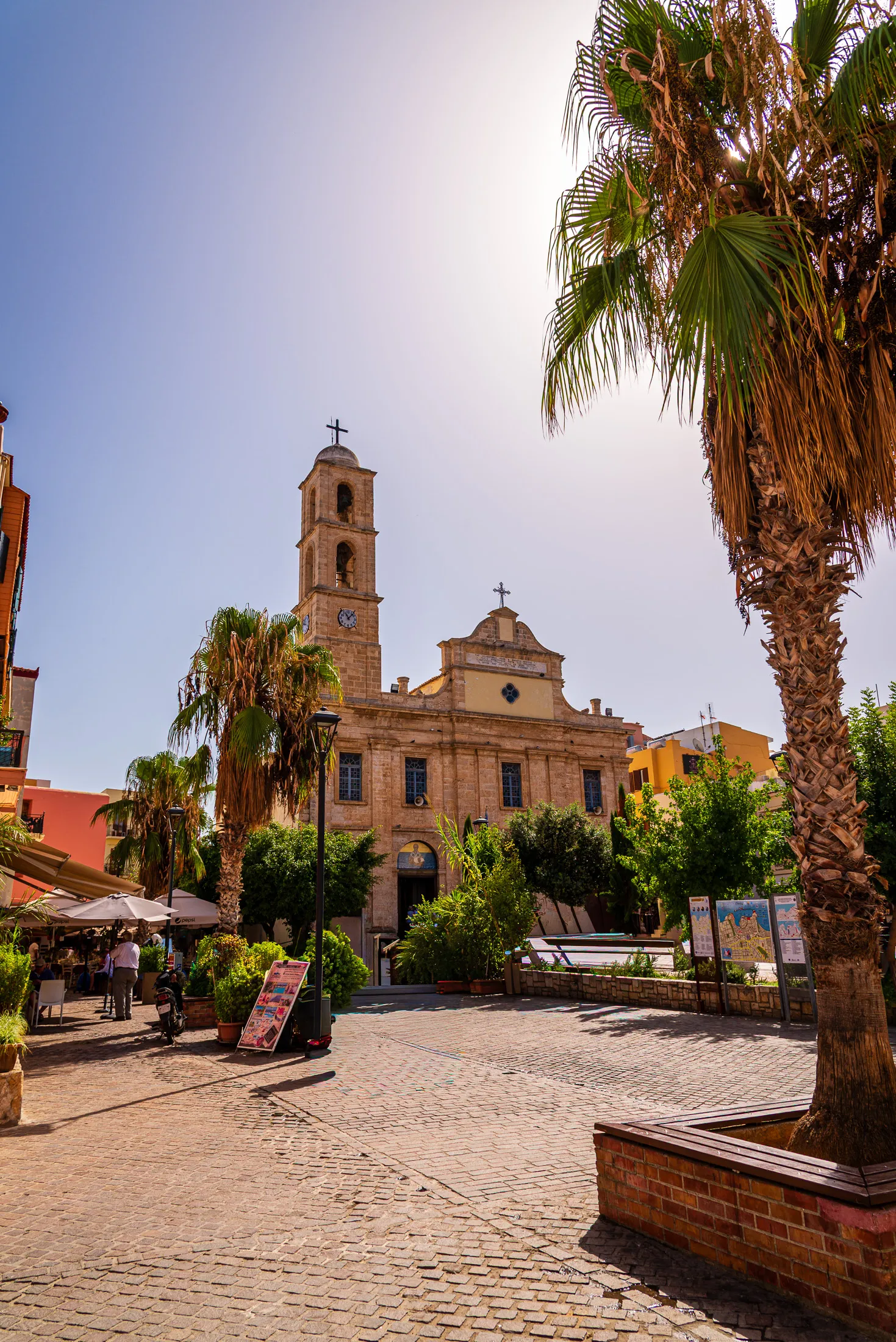
The port sits about five miles from Chania's Old Town, so we hopped on a shuttle to the city center. From there, it was just a short stroll into the heart of the old quarter. The area blends Venetian and Turkish architecture, shaped by centuries of occupation. You see it everywhere in the narrow alleys, where Ottoman wooden balconies hang over Venetian stone archways.
We walked down Halidon Street, browsing local shops before stopping for breakfast at Namaste. Fueled by good coffee and pastries, we continued toward the harbor, ready for some photos.
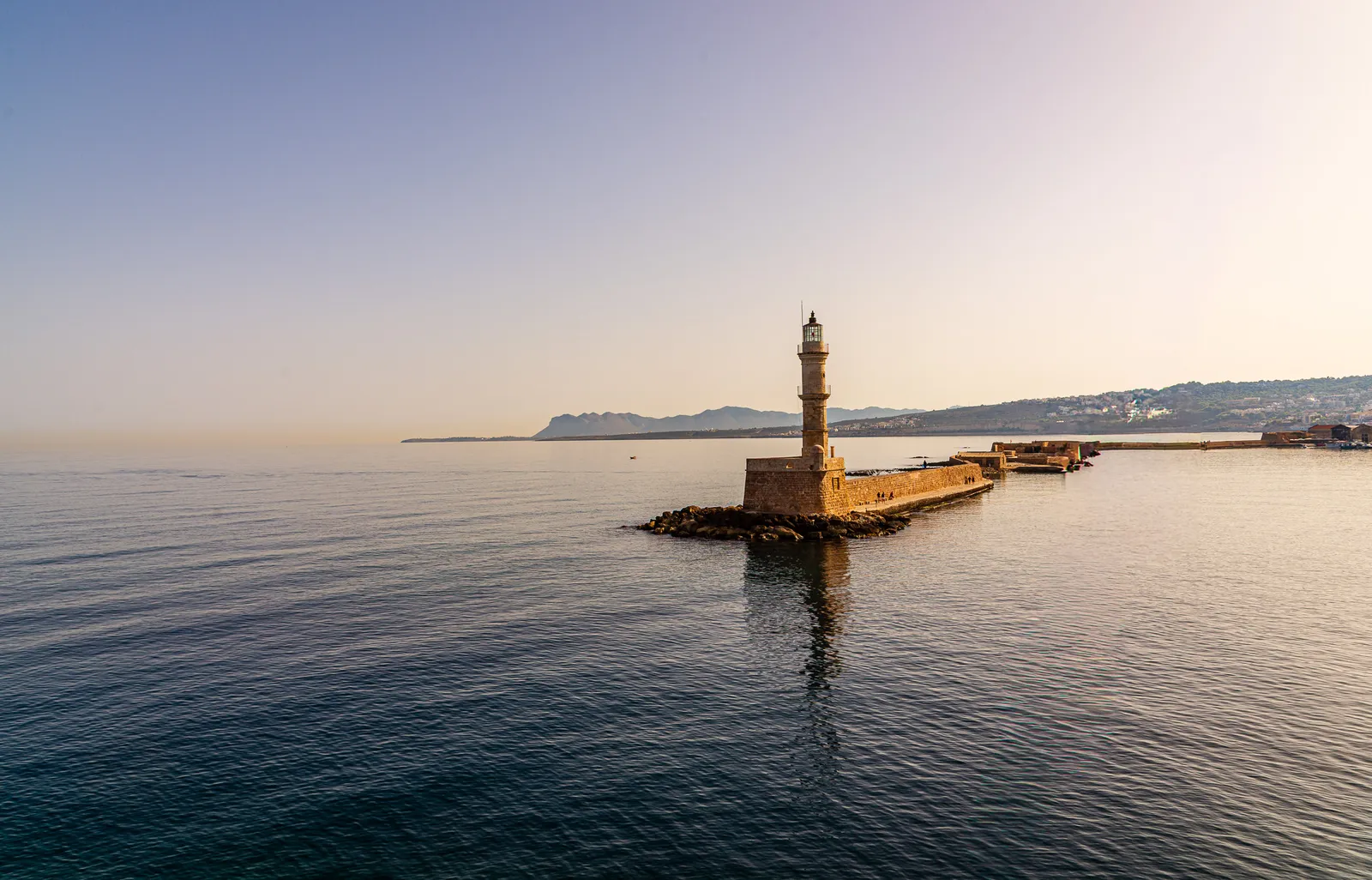
The harbor itself was built by the Venetians in the 14th century as a protected port, while the iconic lighthouse everyone photographs has a more tangled history, originally Venetian, rebuilt in an Egyptian style by the Turks, then reconstructed again by the Egyptians in the 1800s.
Walking the pier out to the lighthouse is worth it. You can't go inside, but the views back across the harbor are fantastic. The walk itself feels like a quick history lesson, with every stone hinting at who ruled Crete and when.
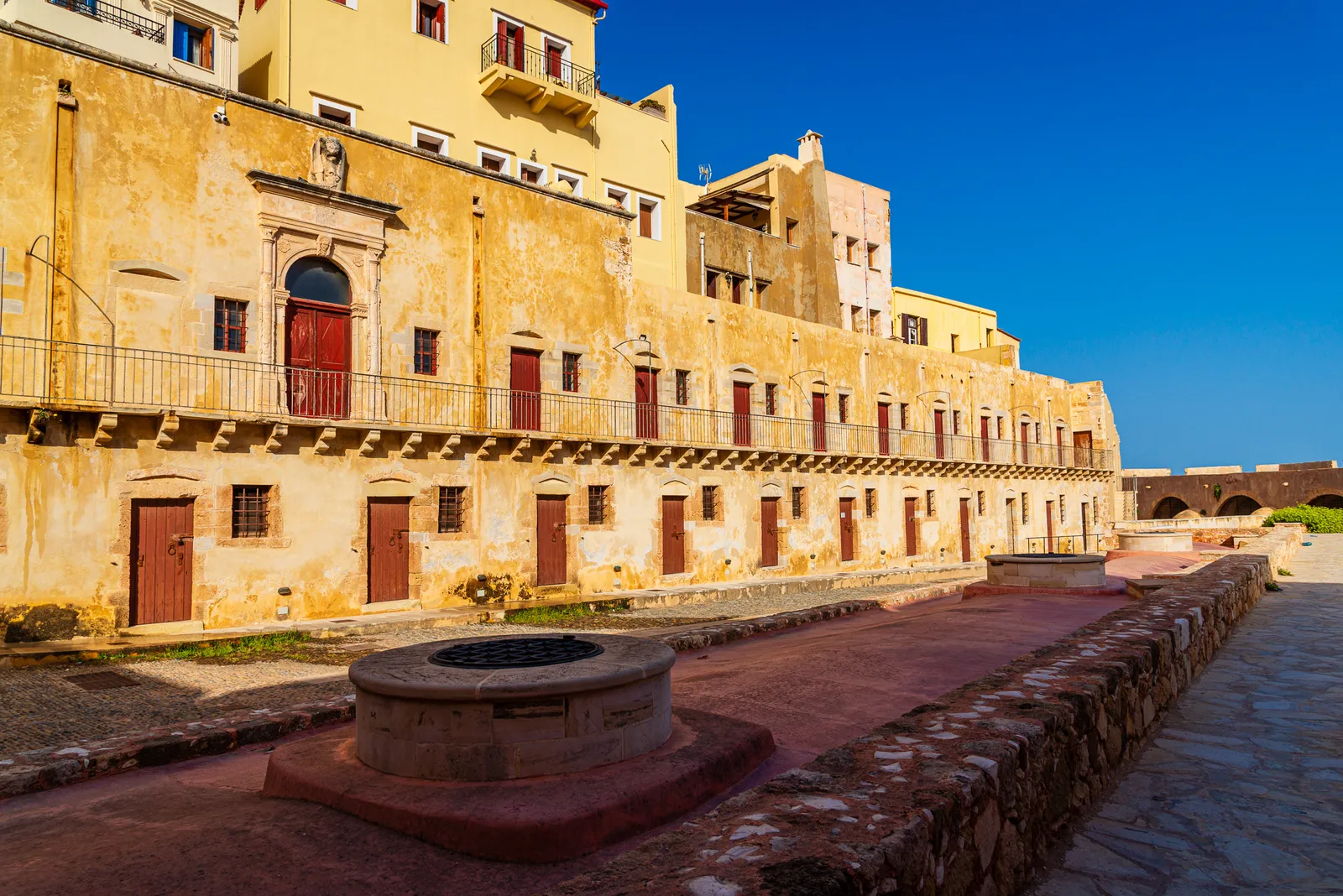
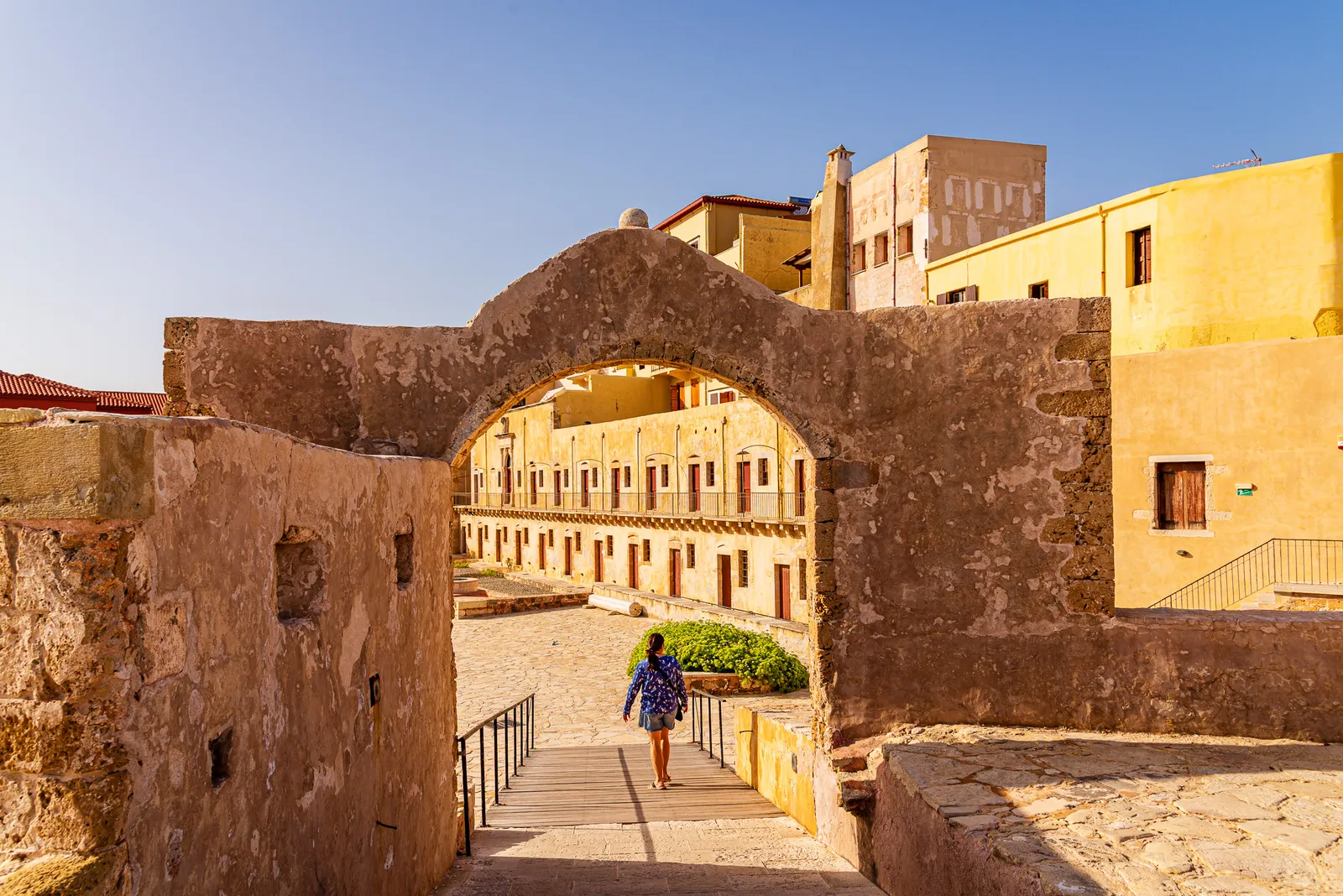
At the harbor entrance stands the Firka Fortress, now a maritime museum. The Venetians built it in 1620 to guard the port, and the Ottomans later used it as barracks. Its real significance came in 1913, this is where the Greek flag was raised for the first time after Crete officially joined Greece. We didn't go inside, but wandering the fortress grounds offers a great view of the lighthouse across the water.
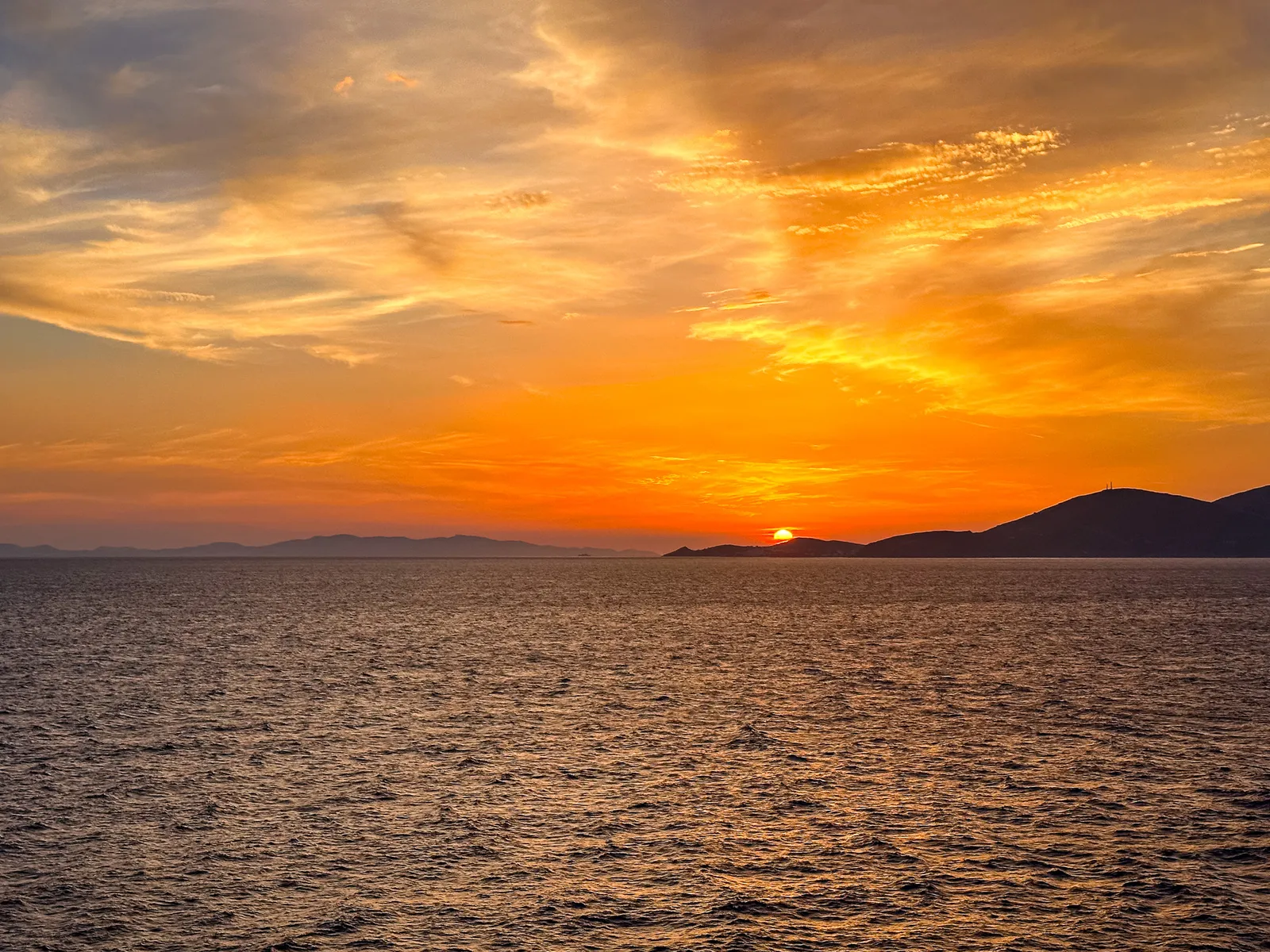
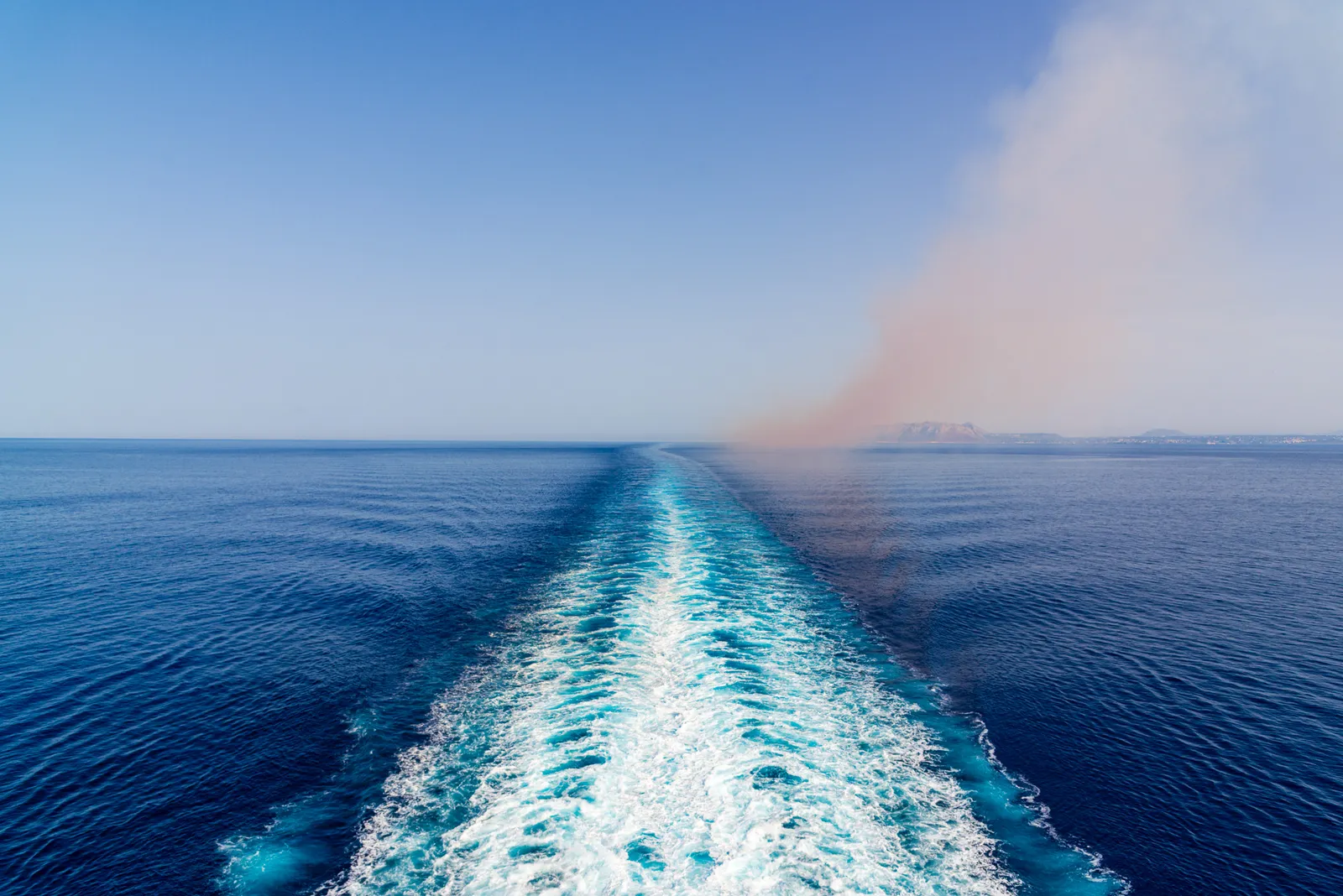
We left Chania in the early afternoon, the mountains of Crete fading as the ship pushed out to sea. It was the perfect ending to our time in Greece, less chaotic than Mykonos, more authentic than Santorini. Just a working port town that also happens to be beautiful.
Watch this part of the journey
Rome: One last visit before our departure
We disembarked from our cruise with one more night before flying home. Rather than head back into central Rome, we stayed at the Isola Sacra Hotel near the airport, a practical choice that turned out better than expected.
After checking in, my aunt wanted one last trip into Rome, so I took her and my mom back into the city. I should have trusted my instincts and used the Free Now app, but instead I asked the front desk to call a taxi. Big mistake.
The driver was sketchy from the start. He quoted one price at pickup, then added another 20 euros at drop off. Classic tourist scam. We argued, but he wouldn't budge. Lesson learned: stick with the apps where pricing is set.
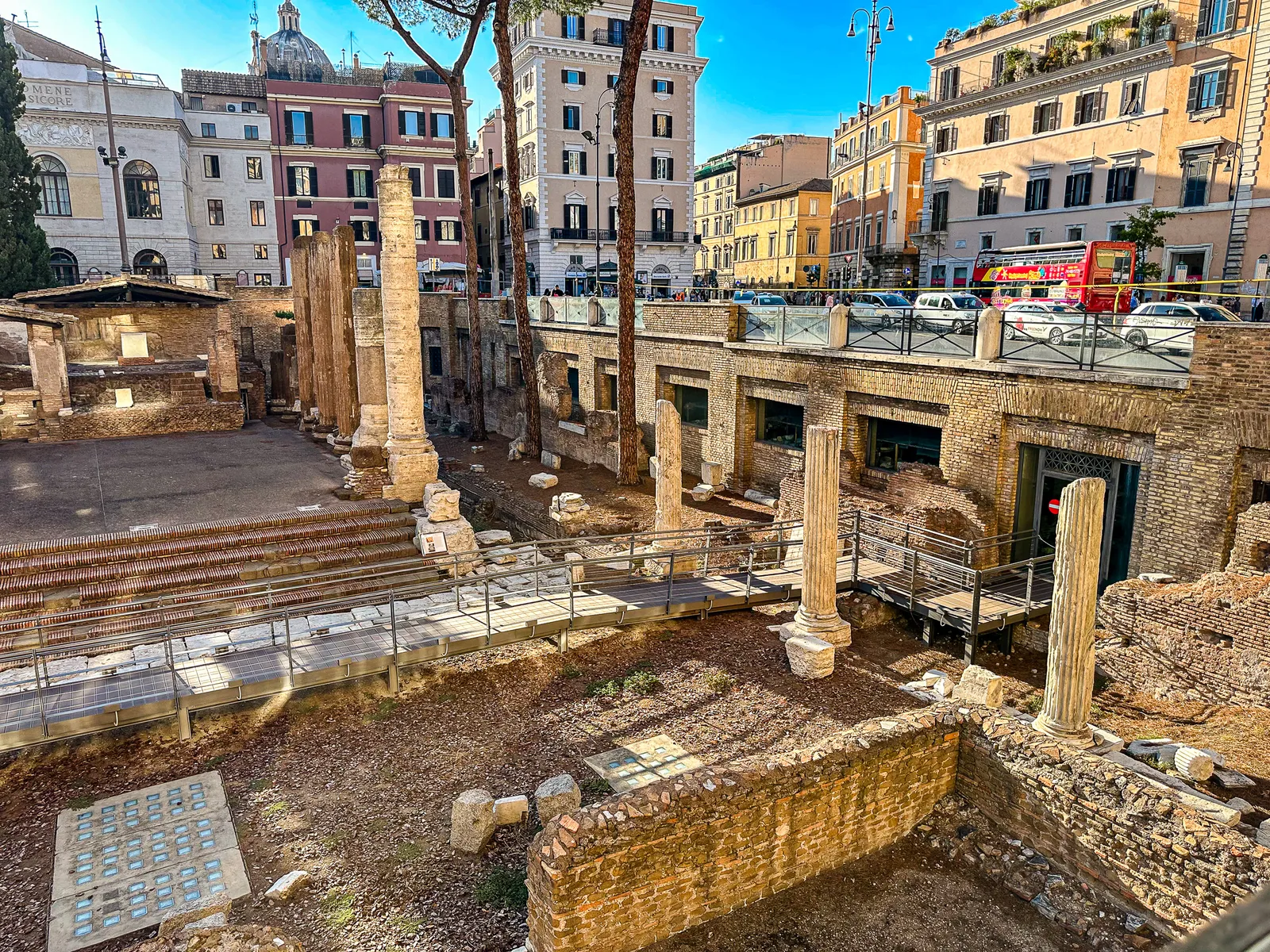
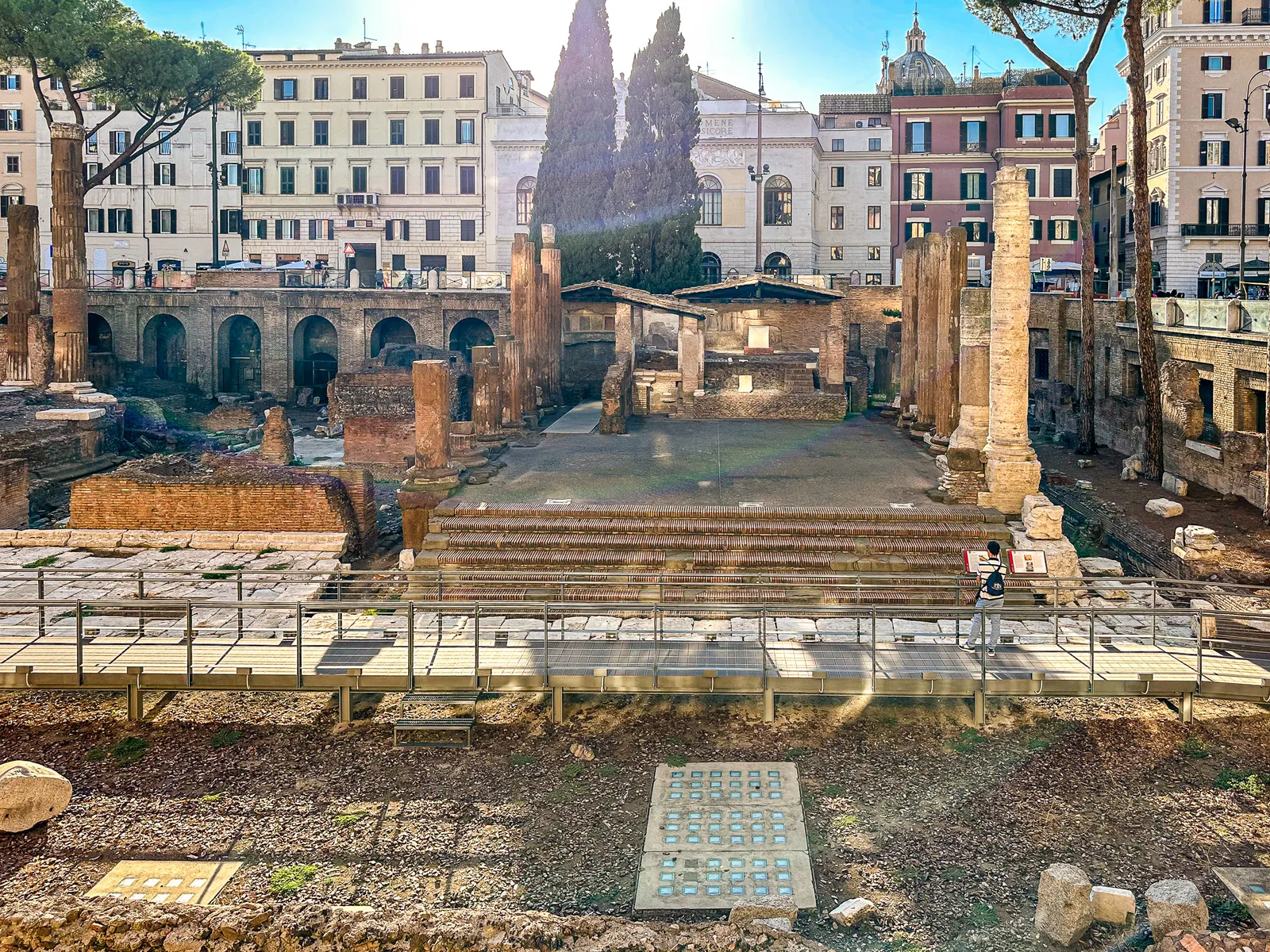
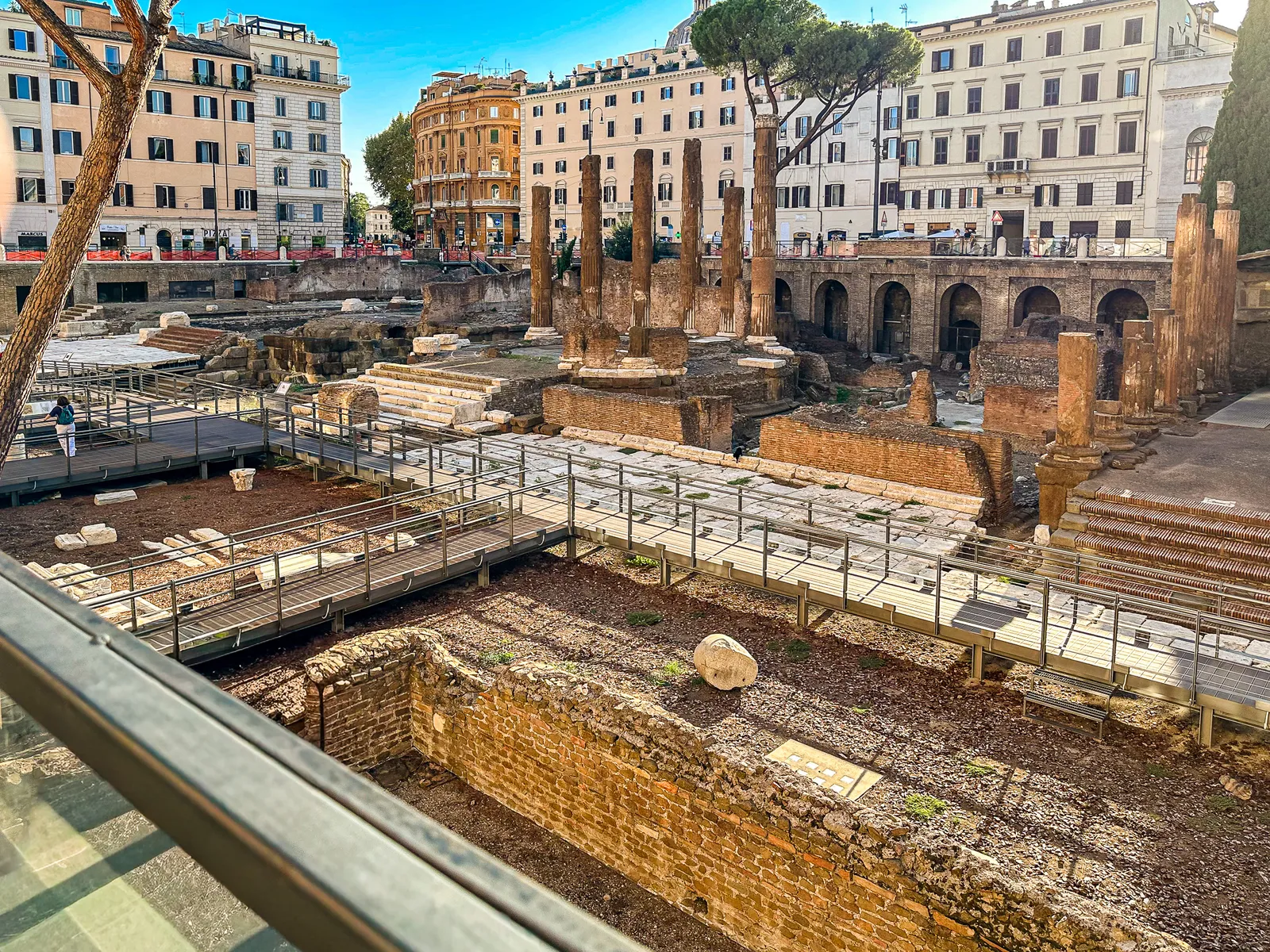
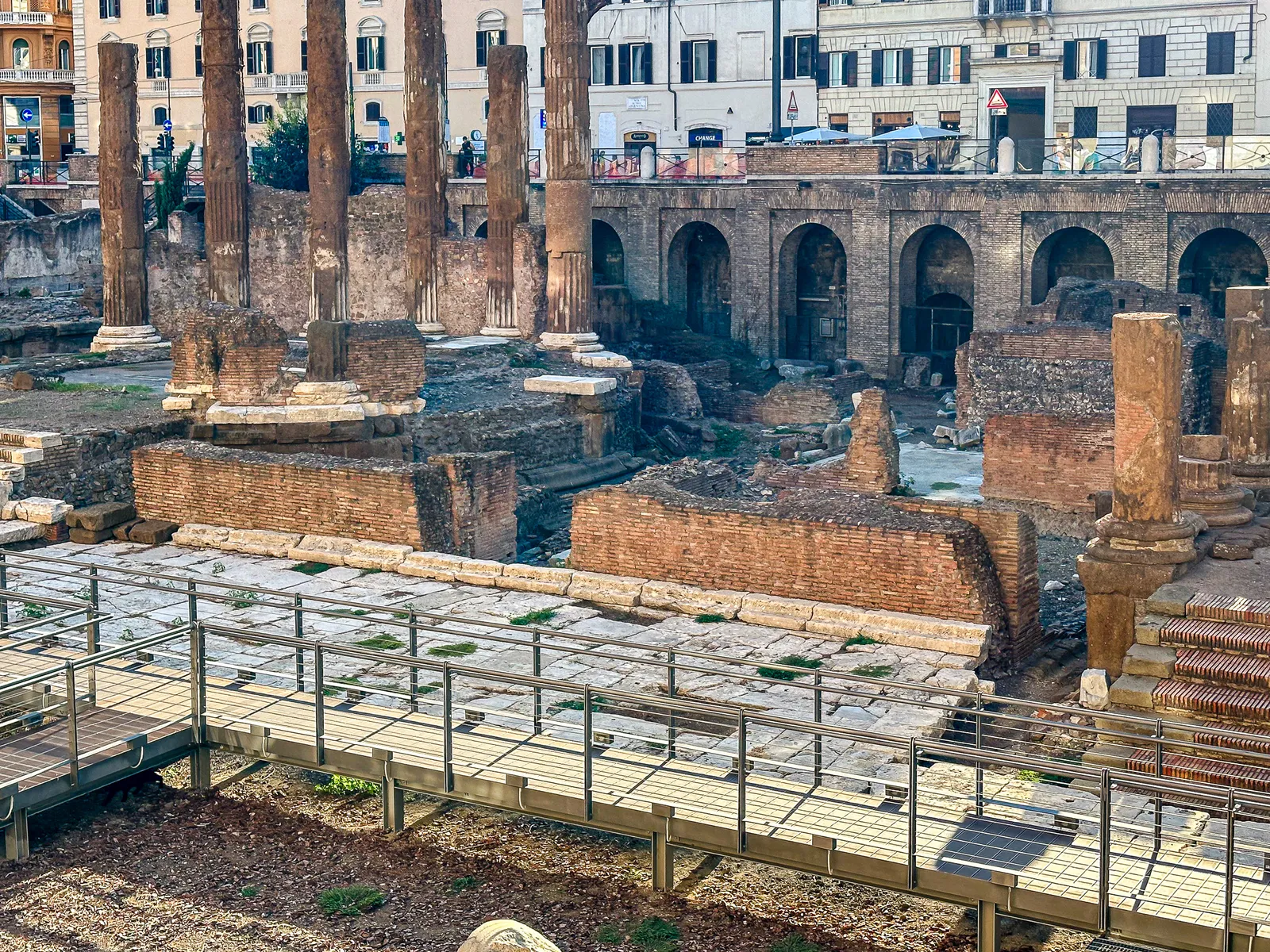
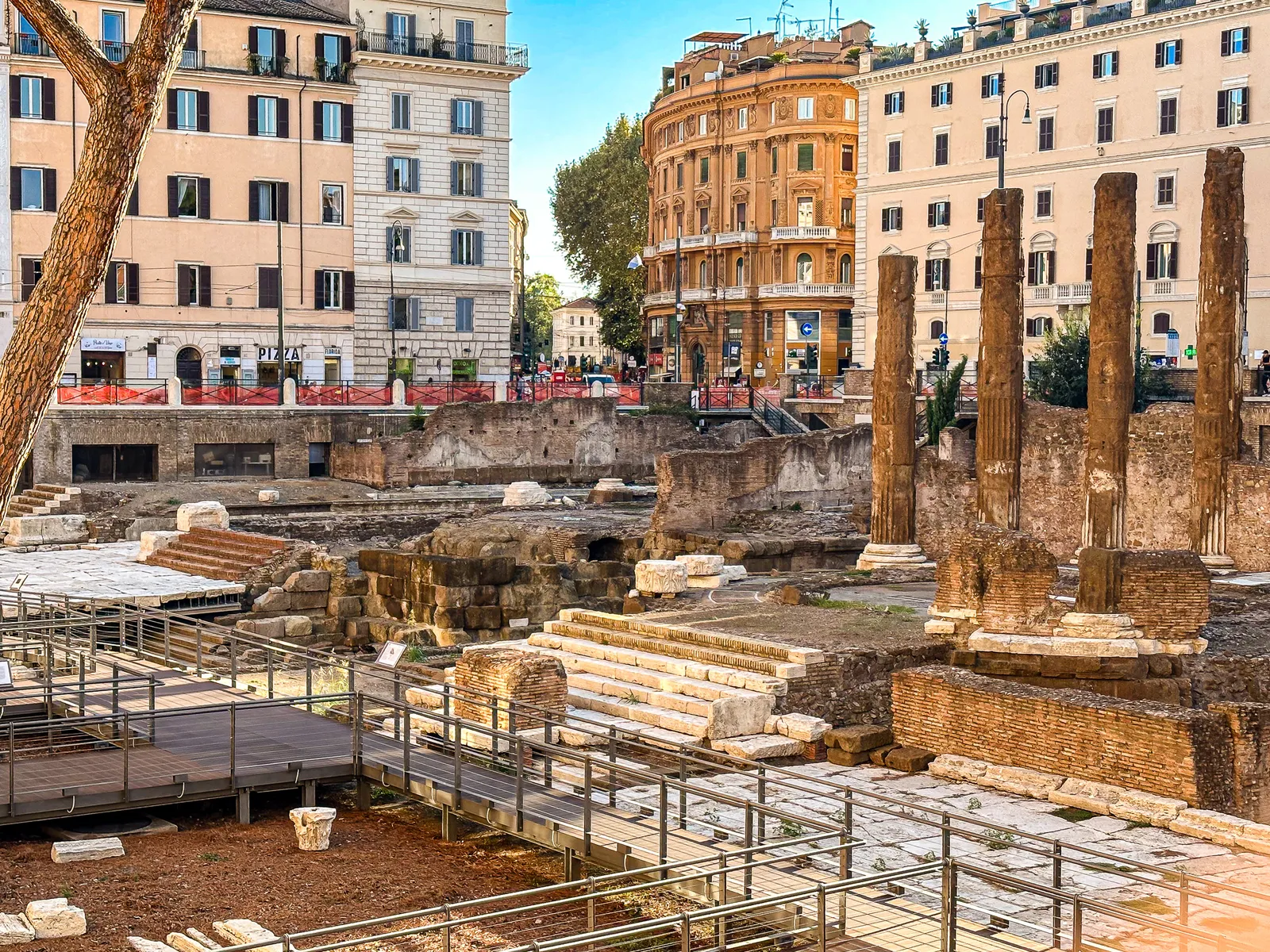
Despite the taxi drama, we made it to Largo di Torre Argentina, a sunken archaeological site about 20 feet below street level with four temples dating to the 3rd century BC. It's also where Julius Caesar was assassinated on March 15, 44 BC in the Curia of Pompey, betrayed by senators, including Marcus Junius Brutus.
Today, the ruins belong to about 200 cats. They settled here after excavations in the 1920s, and volunteers have cared for them ever since. My aunt, the cat lover, was far more excited about the cats than Caesar's assassination site. Priorities, right?
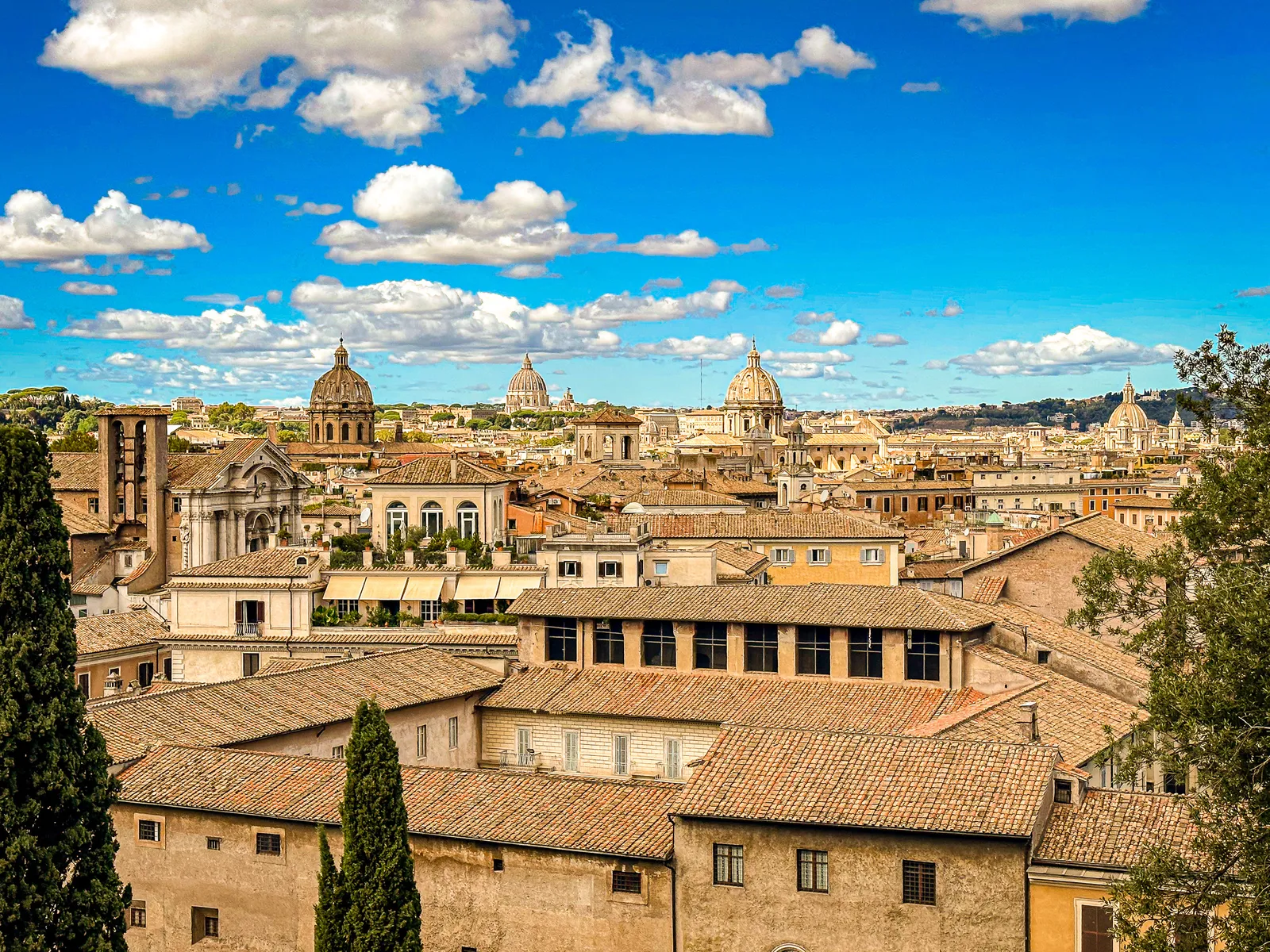
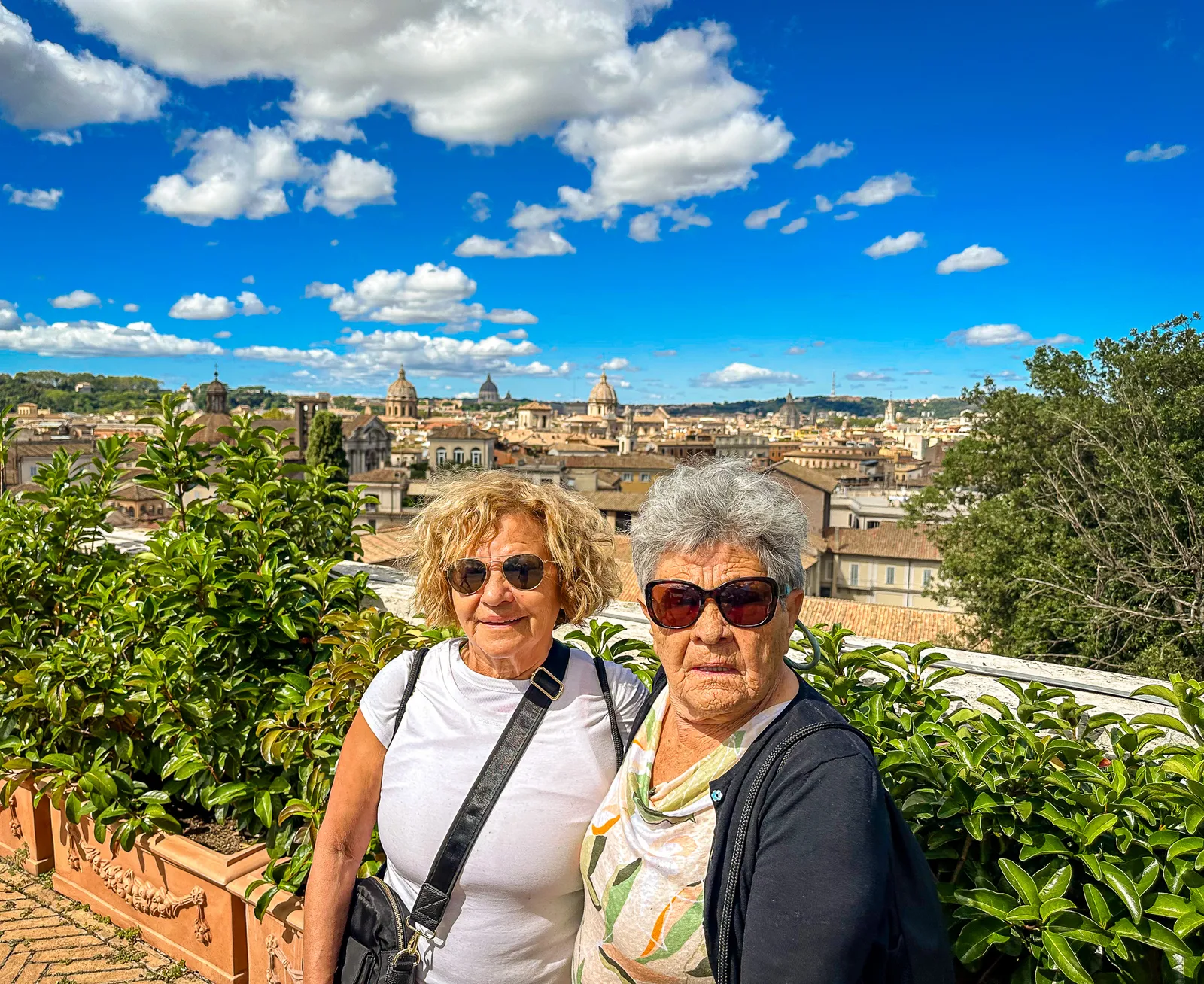
From there, we walked to Piazza del Campidoglio on Capitoline Hill and found our way to Terrazza Caffarelli. The espresso may have been overpriced, but the panoramic view over Rome's rooftops made it worthwhile. It was the perfect place to capture one last timelapse of the Eternal City.
Watch this part of the journey
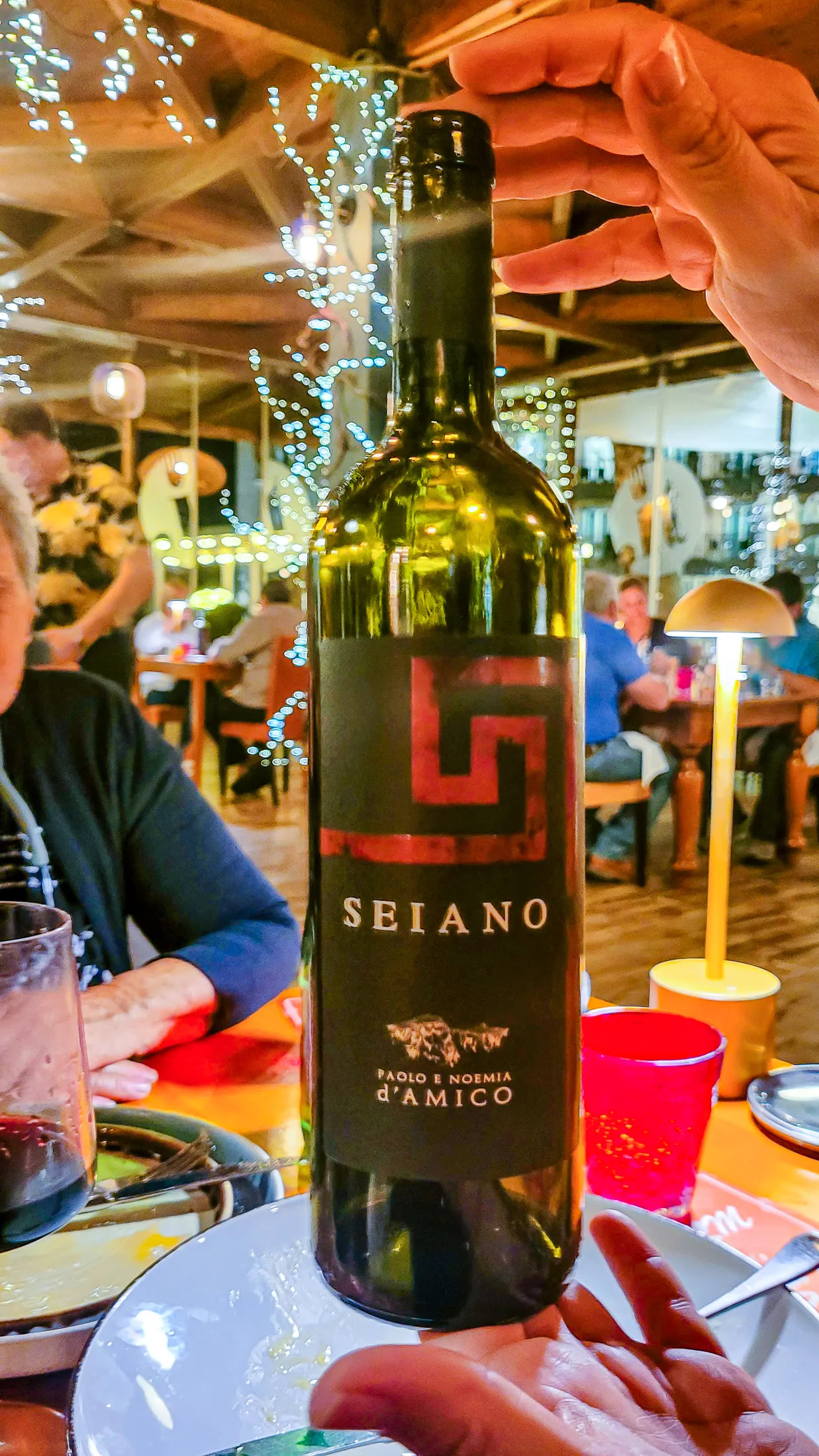
Back at the Isola Sacra Hotel, the restaurant exceeded every expectation. After a week of cruise food, the fresh pasta, good wine, and my aunt declaring the seafood risotto "deliziosa" made for the perfect final dinner. We lingered until they were nearly out of wine, not wanting the evening, or the trip, to end.
The next morning came too quickly. The short drive to the airport didn't leave much time to reflect, but it was hard to believe that just two weeks earlier we had been arriving in Rome to begin our Mediterranean adventure.
Rome isn't a city you visit once. It's too big, too layered, and impossible to absorb in just a few days. We missed the Borghese Gallery, Trastevere, the Catacombs of Rome, and countless other places.
But that's the thing about Rome. It's been waiting more than 2,000 years. It'll wait a little longer for us to come back.
Arrivederci, Roma.