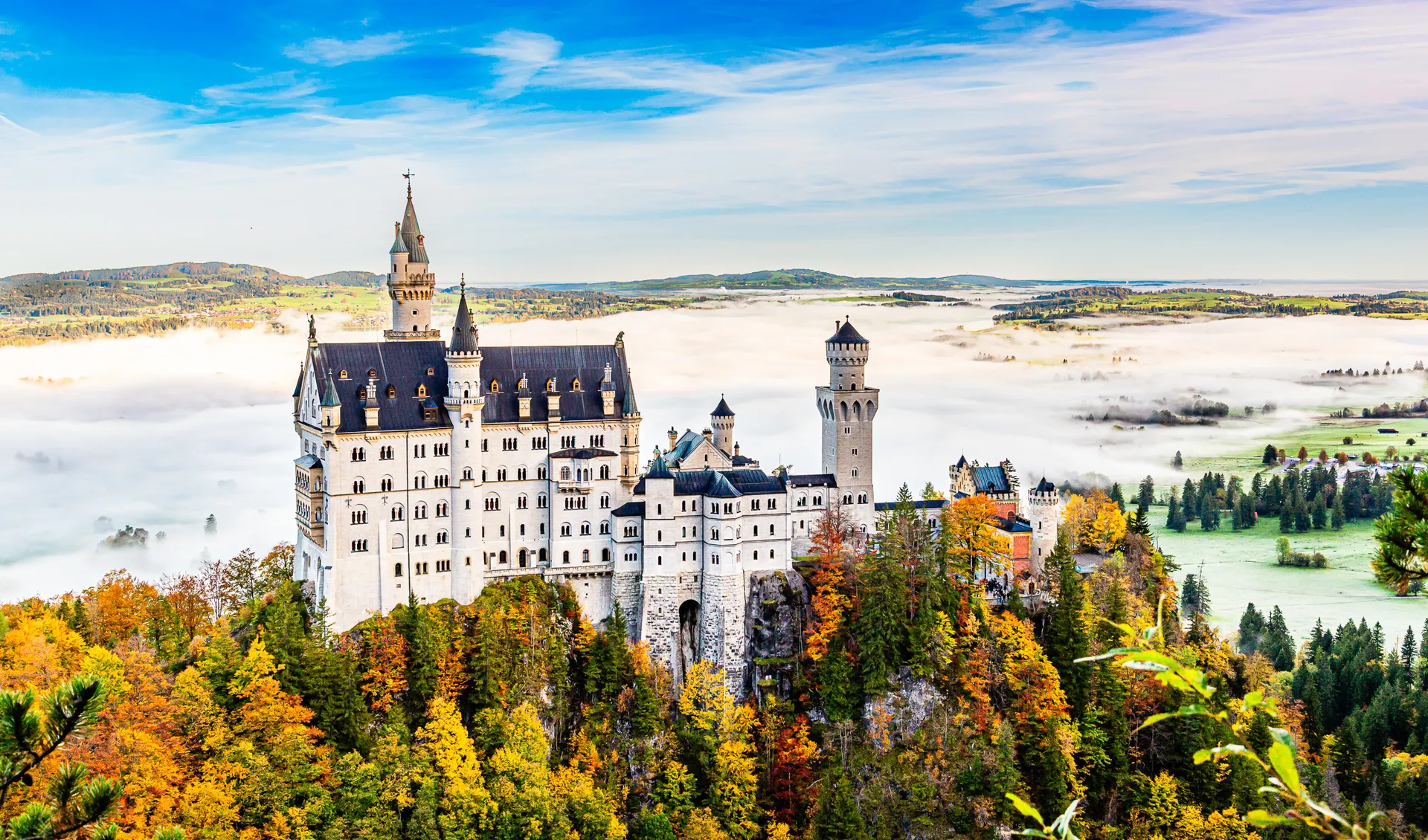
At a Glance
Dates: October 11–28, 2024
Cruise Line: Viva Cruises
Route: Munich → Passau → Budapest → Passau → Munich
Best For: History lovers, culture travelers, families
Trip Style: Pre-cruise road trip + Danube river cruise + post-cruise Bavaria
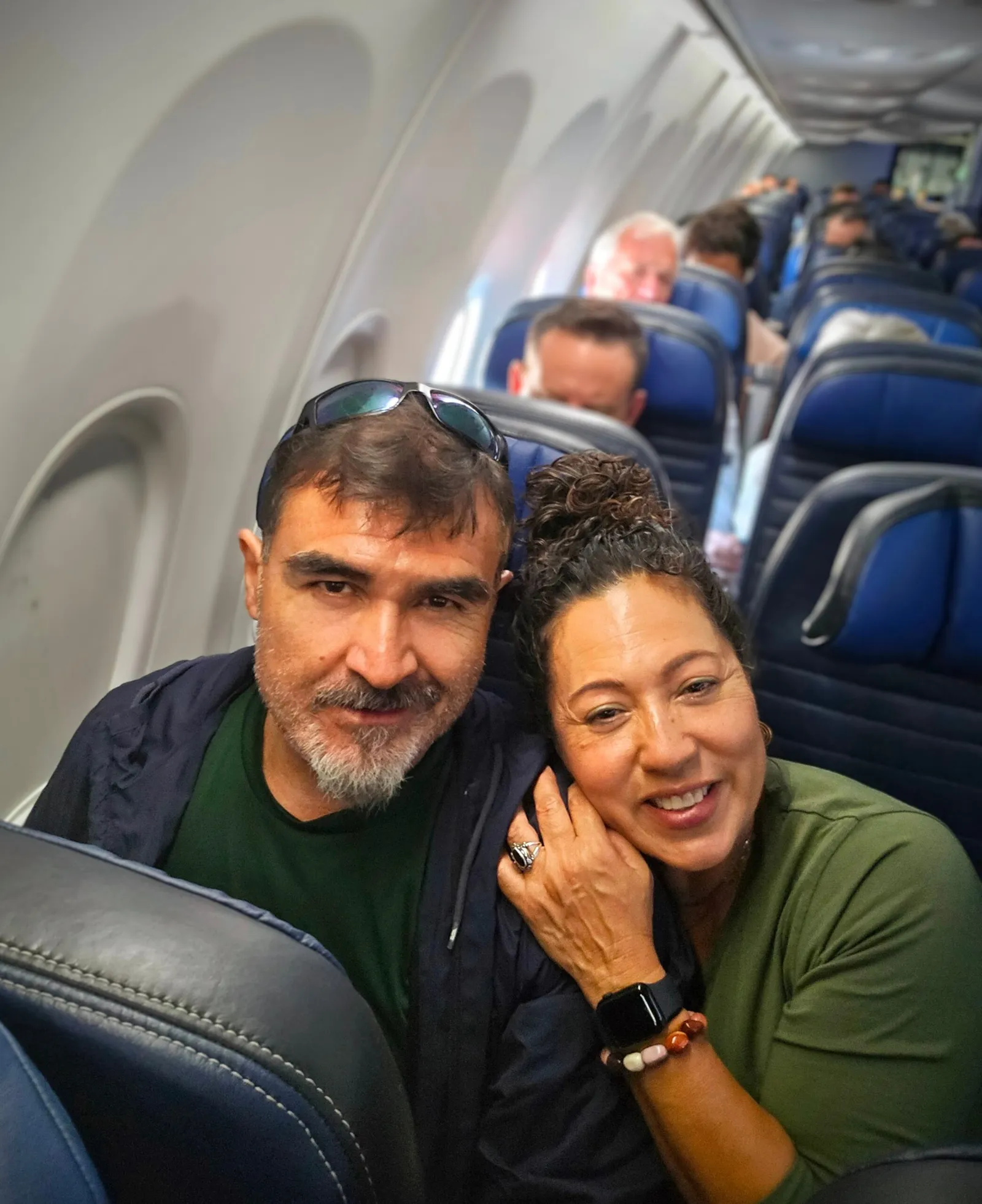
For 2024 we were planning a solo trip and settled on a river cruise through Germany's Bavaria heartland. That same year, my wife's sister had been through a challenging medical issue, and extended the invitation to her hoping it would offer a welcome change of pace. When we mentioned the idea, my wife's brother and his wife immediately wanted to join us. This would be my brother-in-law first transatlantic flight, he never showed it, but was nervous and excited at the same time.
For three of our five travelers, this would be their first visit to Europe. What began as a quiet river cruise for two quickly grew into a family adventure spanning Germany, Austria, Slovakia, and Hungary.
Here is our Complete 18 Day Germany Itinerary
Pre Cruise Road Trip
- Munich
- Füssen and Neuschwanstein Castle
- Garmisch Partenkirchen
- Hallstatt Austria
- Passau
Danube River Cruise
- Passau Germany
- Melk Austria
- Esztergom Hungary
- Budapest Hungary
- Bratislava Slovakia
- Vienna Austria
- Linz Austria
- Passau Germany
Post Cruise Bavaria
- Walhalla Memorial
- Nuremberg
- Munich
Munich to Passau: Exploring Germany Across Three Generations
The Danube route was an easy choice. It combined iconic cities, fairy tale castles, and the convenience of unpacking only once while drifting along Europe's second longest river. Our plan was simple: begin with a road trip through Bavaria and Austria, board the river cruise in Passau, and finish the journey with a few more days exploring Bavaria by car.
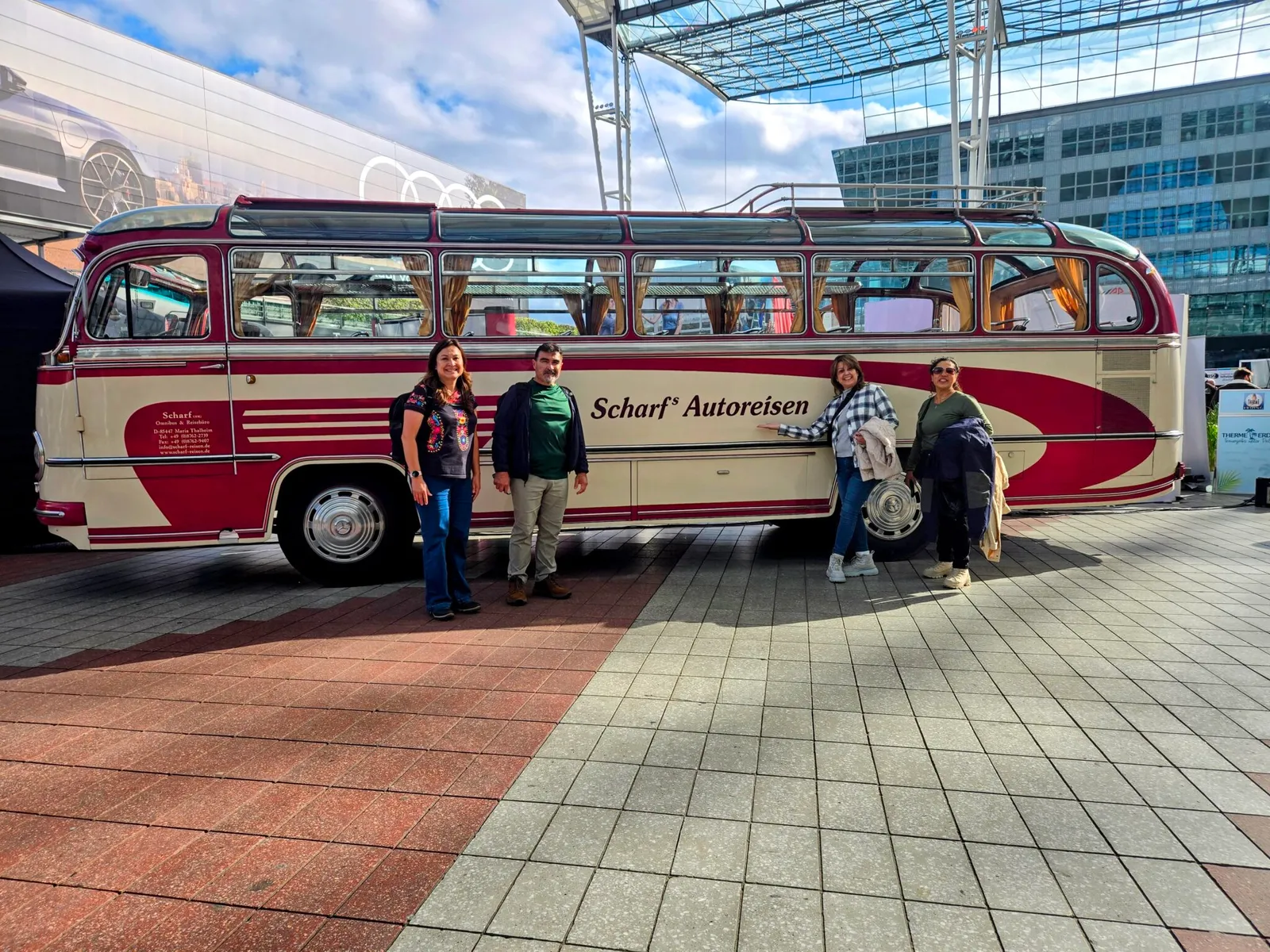
Our 18 day adventure began on October 11, 2024, in Munich. After collecting our rental car, we quickly discovered that traveling as a group of five brought an entirely different dynamic than our usual trips as a couple. There was more laughter, more planning, and definitely more opinions about where to eat.
As we pulled onto the Autobahn and left Munich behind, we realized this trip would be more than visiting castles, scenic villages, and famous landmarks. It would be about experiencing it together. Creating memories across three generations, and sharing moments that would stay with us long after we returned home.
Bavaria's Fairy Tale Corner
The drive from Munich Airport to Füssen took about ninety minutes. Nightfall came quickly, so by the time we arrived, there wasn't much to do but check in and unwind.
Our hotel was Hotel Hirsch, and I can highly recommend this place. The property is well maintained, and our room was comfortable with all the necessary amenities. It's a family-run gem that showcases rustic elegance. The interiors are a standout feature, with hardwood floors that creak when walked on and carefully crafted furnishings that give the space a timeless, authentic feel. The hotel has a lot of history, so if you visit, take a moment to look at the framed images along the main hallway. They're a nice escape into a past world.
After resting and showering, we decided on dinner at the hotel. It offers several dining areas, each with its own unique character. There's the historic hall, the original Bavarian ale house, or if visiting in summer, the cozy beer garden. We went with the original Bavarian ale house, and it didn't disappoint. After dinner, we all took a night stroll into the old town and found a café for a nightcap of coffee and danishes. We turned in early since the next day's agenda was visiting the castles at nearby Hohenschwangau village.
The History of a King and his dream
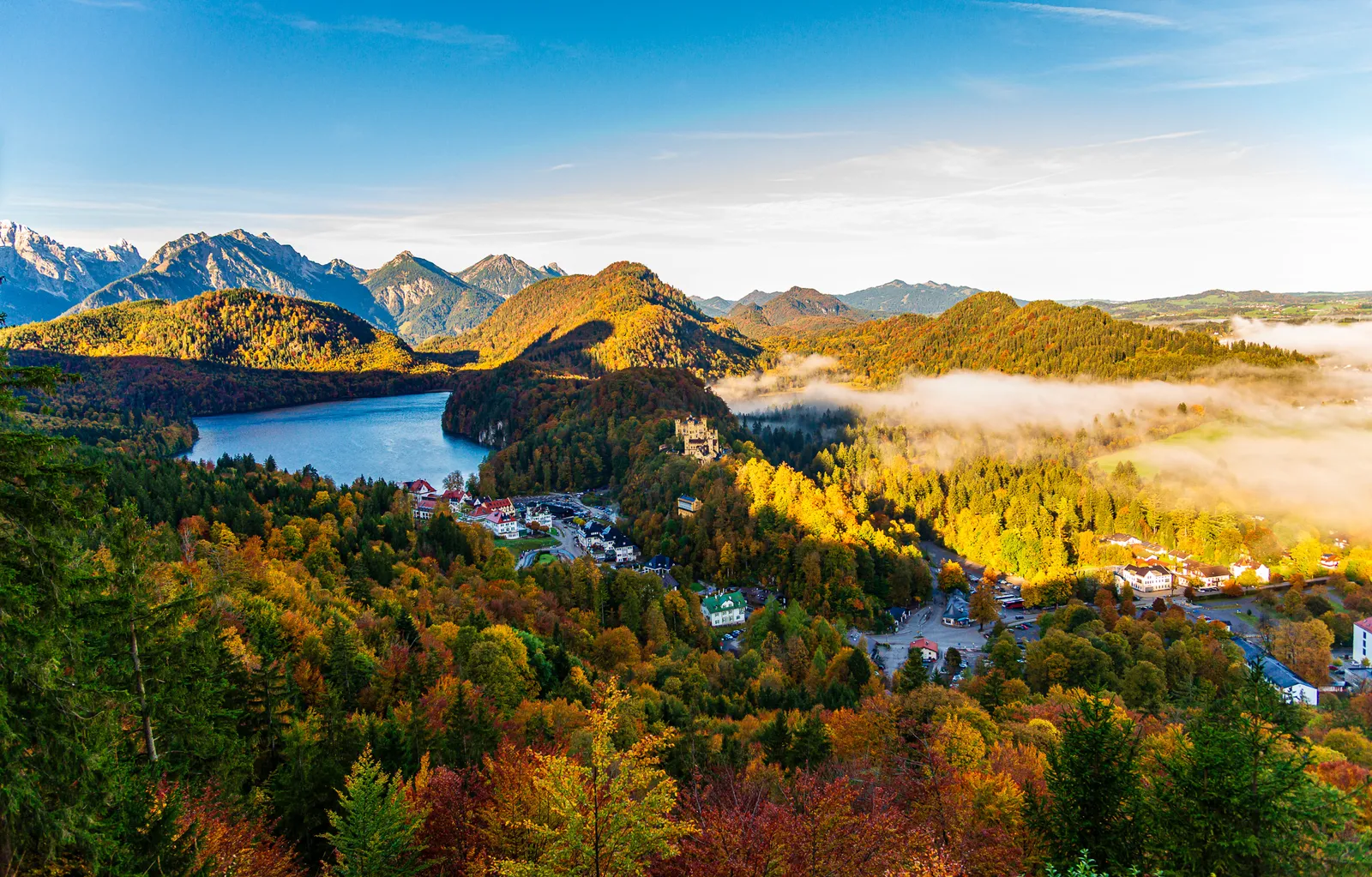
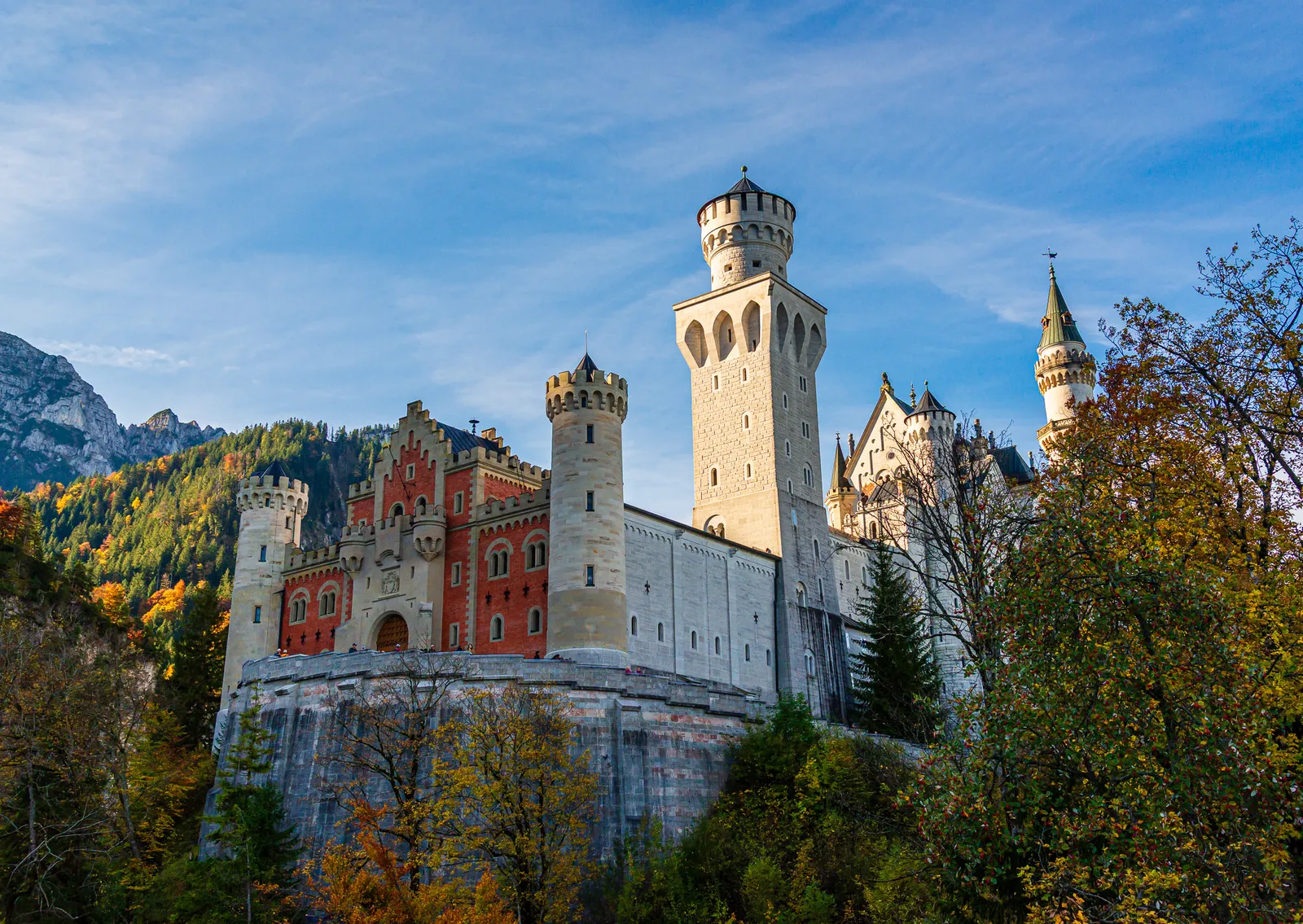
Hohenschwangau is a small Alpine village surrounded by forests, lakes, and two castles that shaped the life of King Ludwig II. Hohenschwangau Castle, rebuilt in the 1830s by King Maximilian II, served as Ludwig's childhood home. Its mural lined rooms, filled with medieval legends, swan motifs, and heroic tales, helped spark the romantic ideals that later defined his reign.
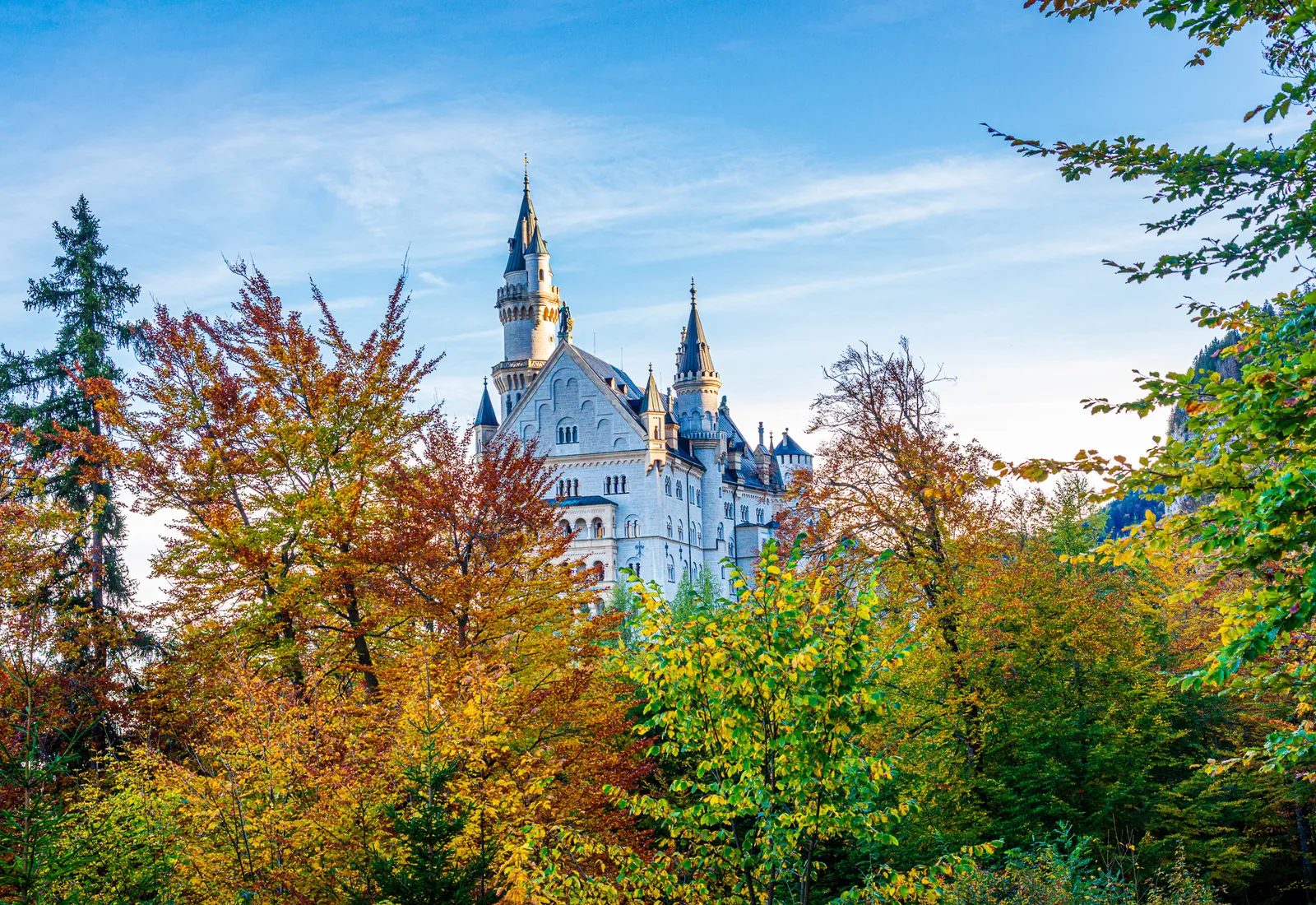
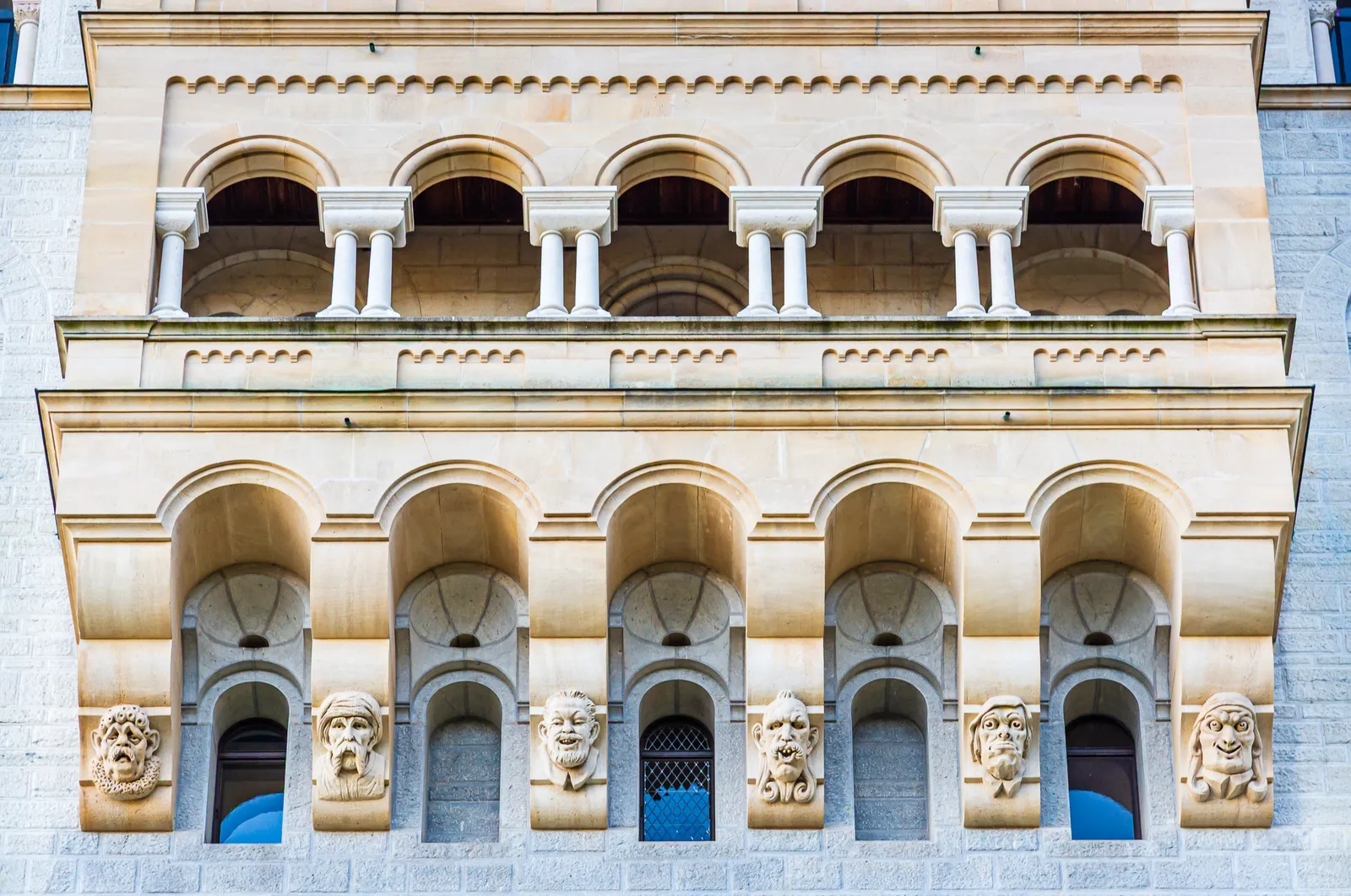
Across the ridge stands Neuschwanstein, the dramatic expression of those early inspirations. Construction began in 1869, blending Wagnerian mythology, medieval revival architecture, and Ludwig's desire for solitude. The castle was never completed, and Ludwig lived there only briefly before his mysterious death in 1886. Together, the two castles trace the arc of his life: one rooted in reality, the other built from imagination.
Walking through the village today, it's easy to see how the landscape shaped him. The same mountains that framed his childhood still rise behind both castles, and the valley retains a quiet, dreamlike quality. Hohenschwangau reflects where Ludwig came from; Neuschwanstein reveals what he longed for.
Marienbrücke and the Castle Views
We started the morning early to stay ahead of the day trippers. Once everyone was packed and checked out, we made the short scenic drive to Hohenschwangau, parked, and caught the first shuttle bus up toward Neuschwanstein.
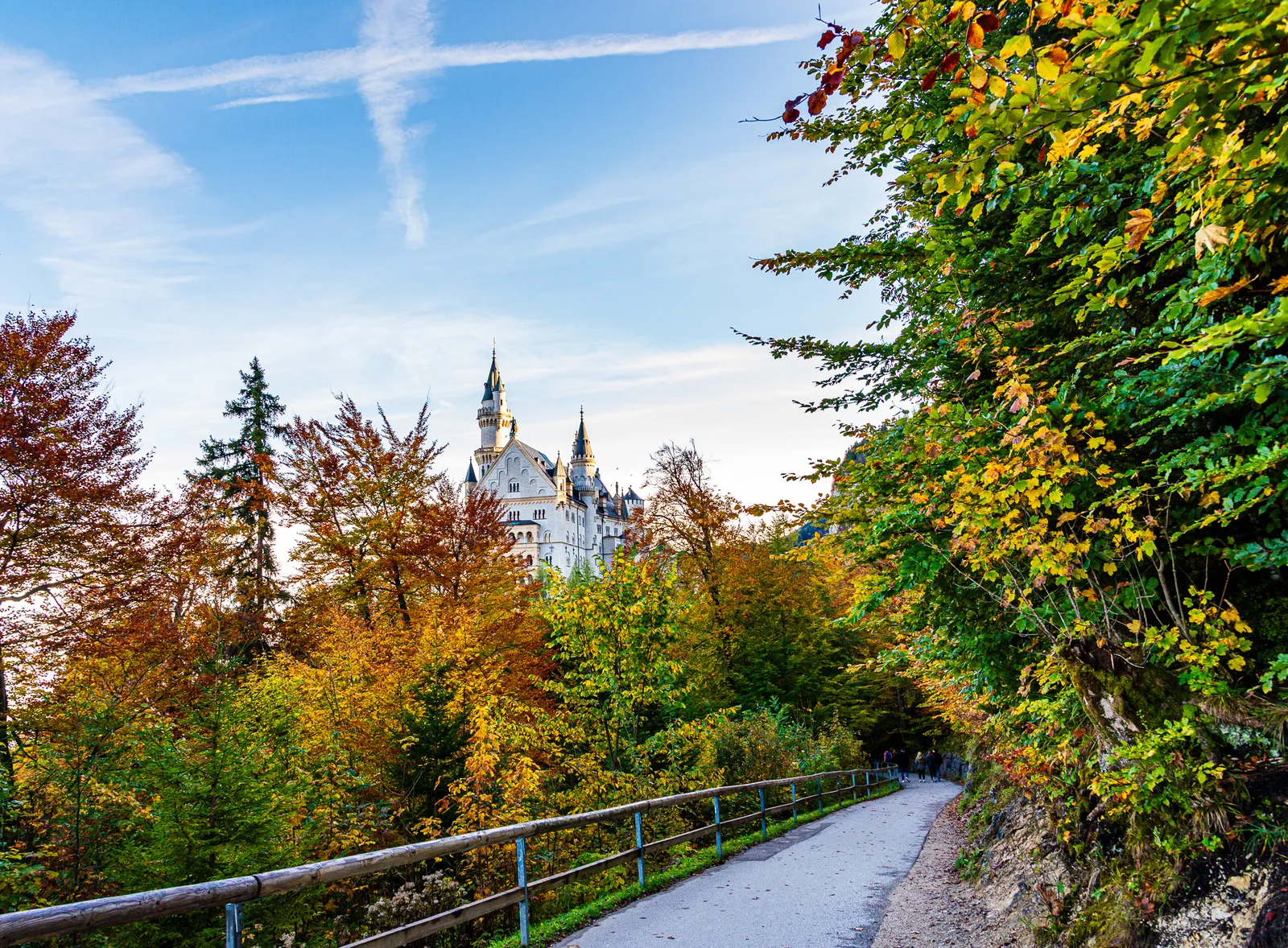
The shuttle dropped us at the Jugend lookout point above the castle. From there, it was a short walk to Marienbrücke (Mary's Bridge), the classic spot for unobstructed views and the best photos of Neuschwanstein perched above the valley. After taking in the panorama, we crossed the bridge and followed the trail to a higher viewpoint, which offered an even more dramatic perspective. Absolutely worth the climb.
My in laws decided to take the castle tour and enjoyed it. My wife and I weren't feeling it, and we had looked into it beforehand and weren't particularly motivated, so we spent the time wandering the grounds instead. We soaked in the views, snapped photos, and grabbed hot coffee and chocolate from the small outdoor shop. It turned out to be a relaxed, enjoyable way to experience the castle and the valley below.
The Geology of Partnachklamm Gorge
After our castle visit, we drove into the charming town of Grainau (gry-now), checked into our hotel, and took a short rest. Jet lag hit my brother in law hard, so he stayed behind while my wife, my two sisters in law, and I set out to explore the Partnachklamm Gorge.
The gorge is accessed near the historic Olympic Ski Stadium in Garmisch Partenkirchen. Built for the 1936 Winter Games, the stadium now serves as the main parking area and trailhead. From there, it's about a 25 minute walk along a mix of paved and gravel paths. The route winds through open meadows, past grazing animals, and toward the growing roar of rushing water. It's an easy, scenic stroll that naturally builds anticipation.
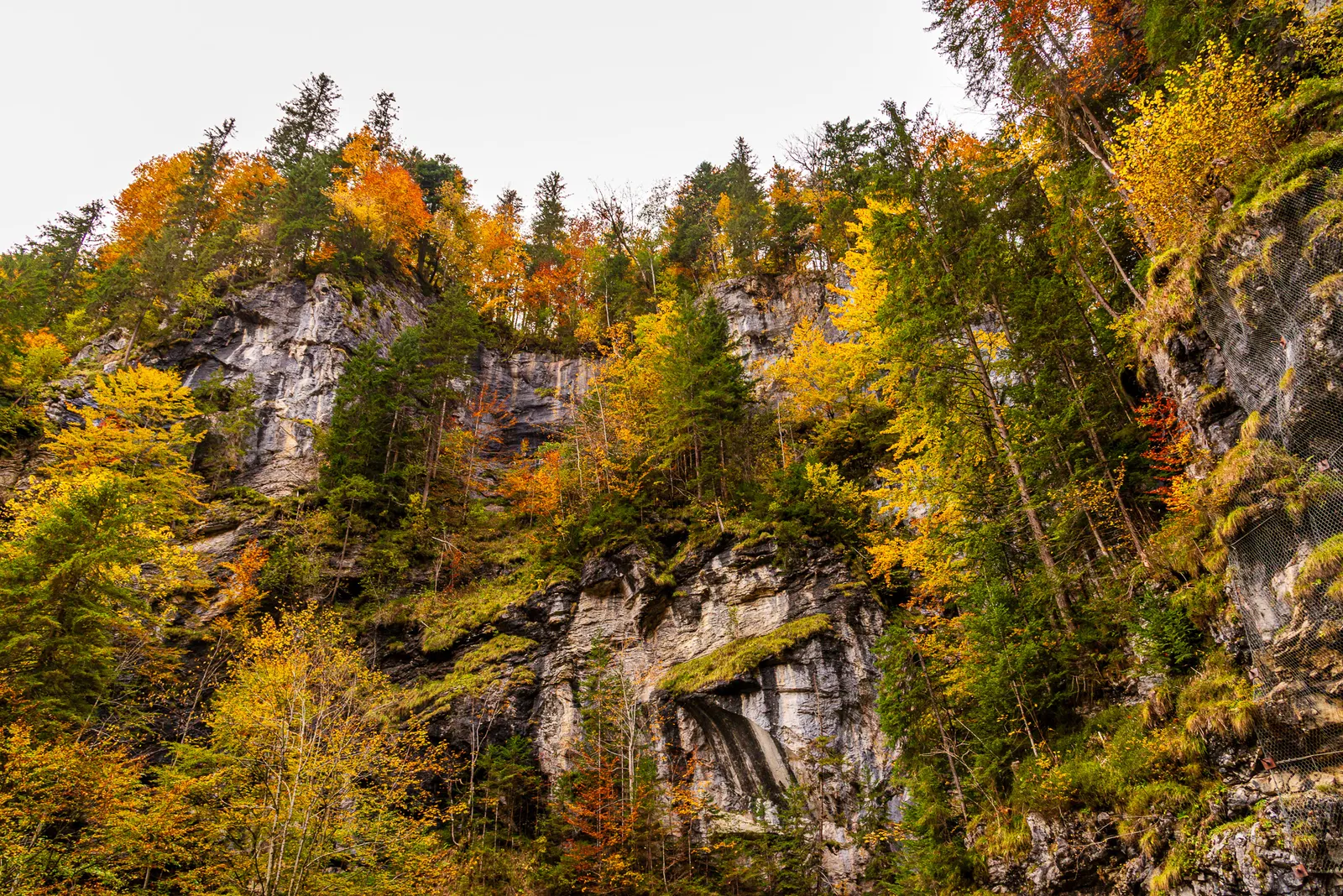
As soon as you reach the entrance, the landscape shifts dramatically. What begins as a pleasant walk becomes an immersive canyon passage carved over thousands of years by the Partnach River. The gorge stretches nearly 700 meters and became safely accessible in 1912 when guide Josef Naus helped establish a trail along its cliffs, waterfalls, and powerful rapids.
The trail winds through narrow rock corridors, past thundering water below, dripping overhangs above, and tunnels cut directly into the cliffside. It's an unforgettable transition from quiet open fields to one of Bavaria's most breathtaking natural wonders.
Watch this part of the journey
The Clearing at the End
At the end of the gorge, the scenery opens into a serene clearing where the river, forest, and surrounding mountains spread out. (Remember to hold onto your ticket; you'll need it to pass through the turnstiles at the exit.) The landscape was a bit unexpected and picturesque at the same time. My wife and sisters-in-law made their way to the riverbank, completely enchanted by the smooth, colorful stones scattered along the edge. They spent nearly half an hour exploring, crouching by the water, laughing, and searching for the "perfect rock." In my head, I kept thinking, They're just rocks!
After exploring, we walked back through the gorge, seeing the path from a new angle. Once we exited, we headed toward the stadium parking area, enjoying the walk and the surroundings along the way.
To finish off the day we enjoyed dinner at Jägerstüberl Restaurant, where the locals eat; this place had a nice homey appeal. During the day, it offers beautiful Alpine views and I'm glad that I made reservations as this place was packed.
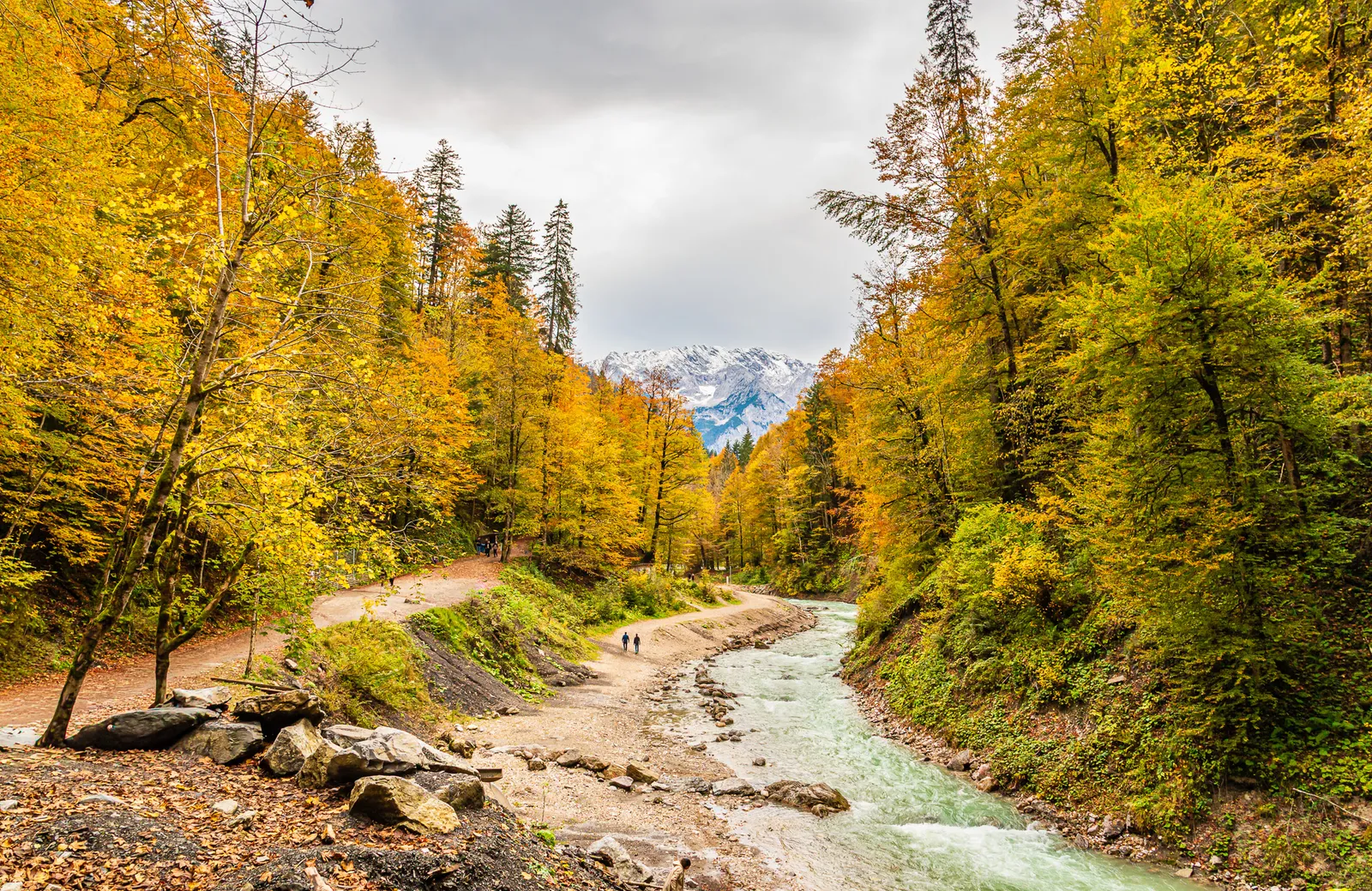
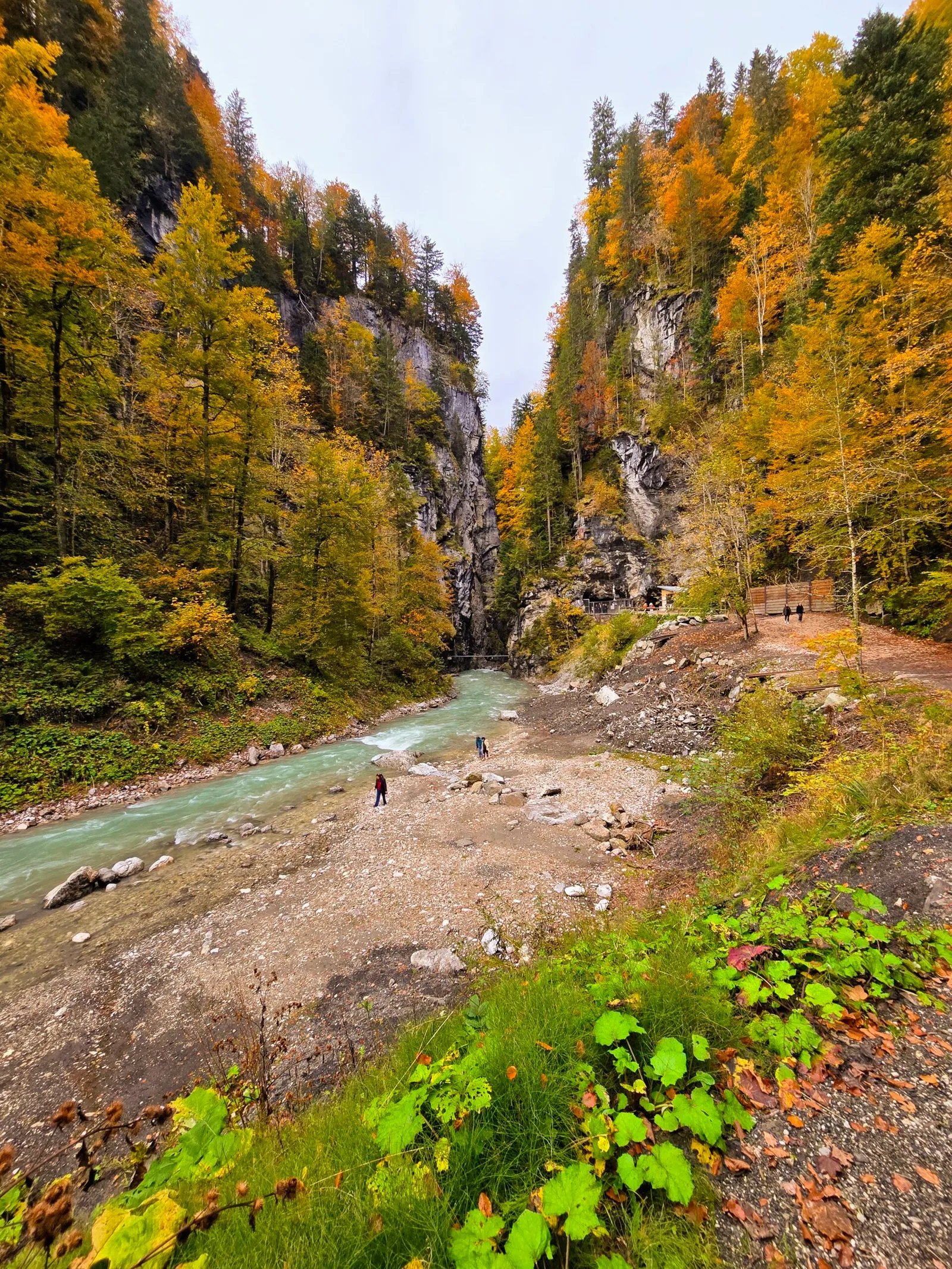
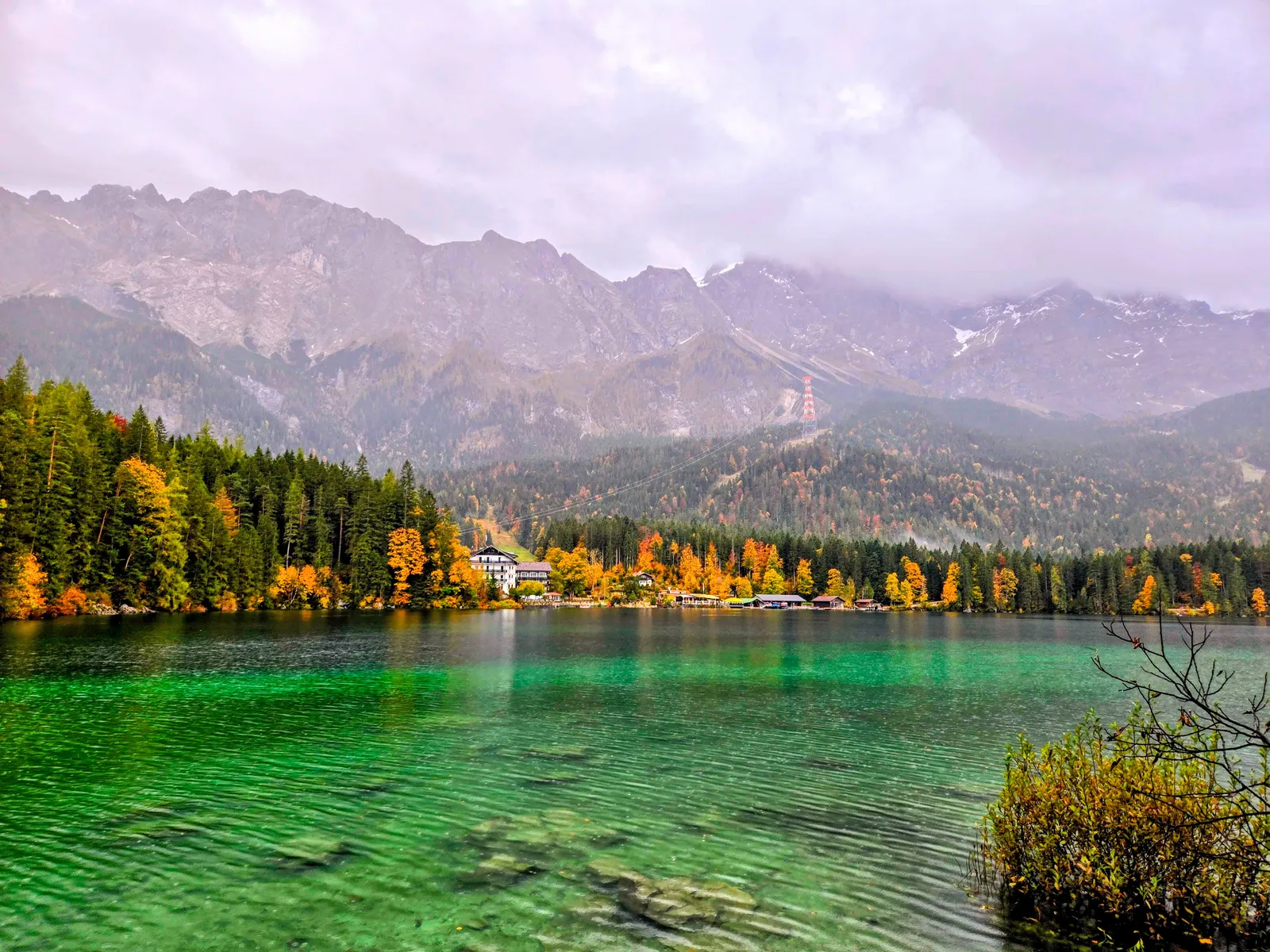
Our consolation prize, Lake Eibsee
The next morning we met for Frühstück: a buffet of fresh rolls, cold cuts, cheeses, hard-boiled eggs, muesli, fruit, and plenty of coffee and juice. The morning stood out as we had the dining hall to ourselves, and Christian, our host, kept the coffee flowing. Meeting him felt familiar, the kind of brief connection that stays with you. Saying goodbye carried a touch of sadness, knowing we wouldn't cross paths again. He was a solid host and ran a clean hotel. The Zum Franziskaner was well-kept!
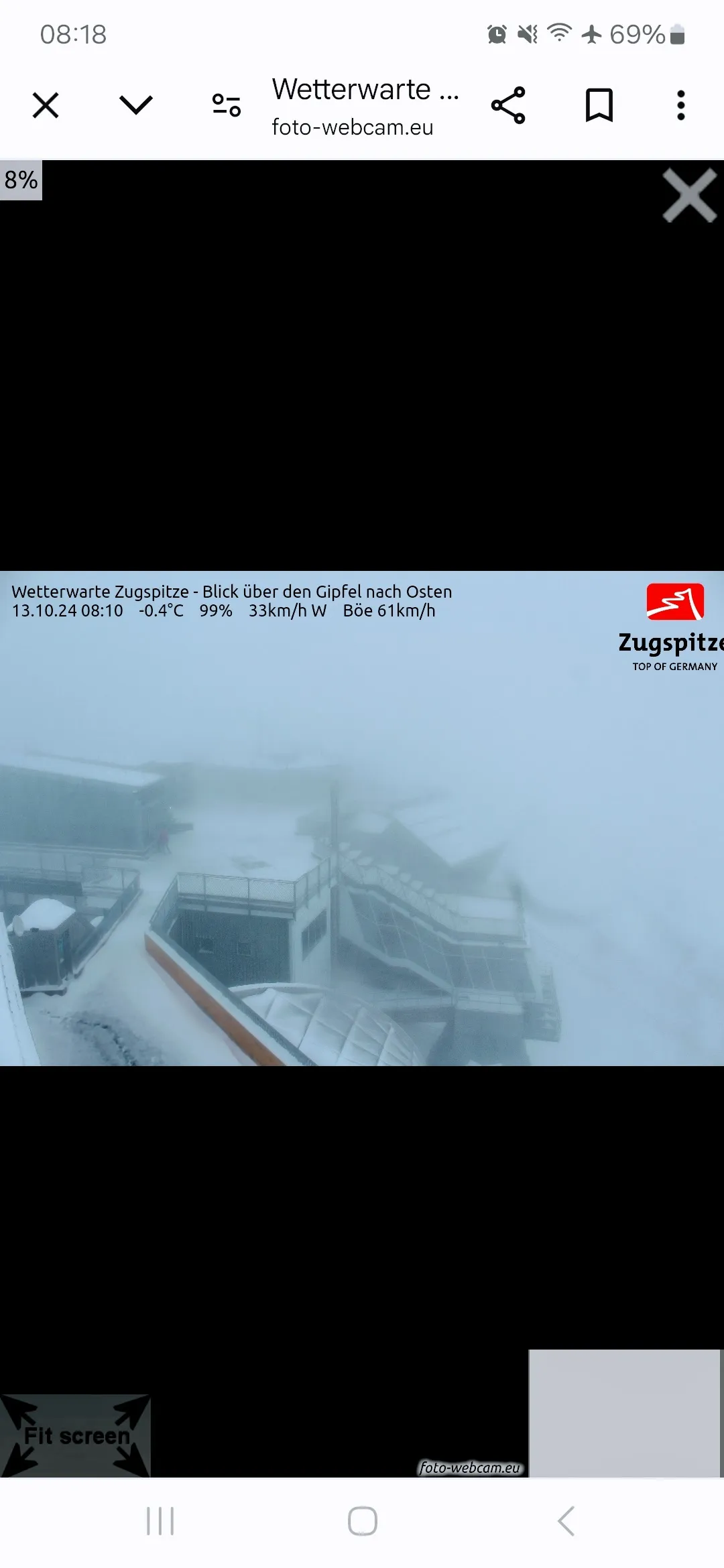
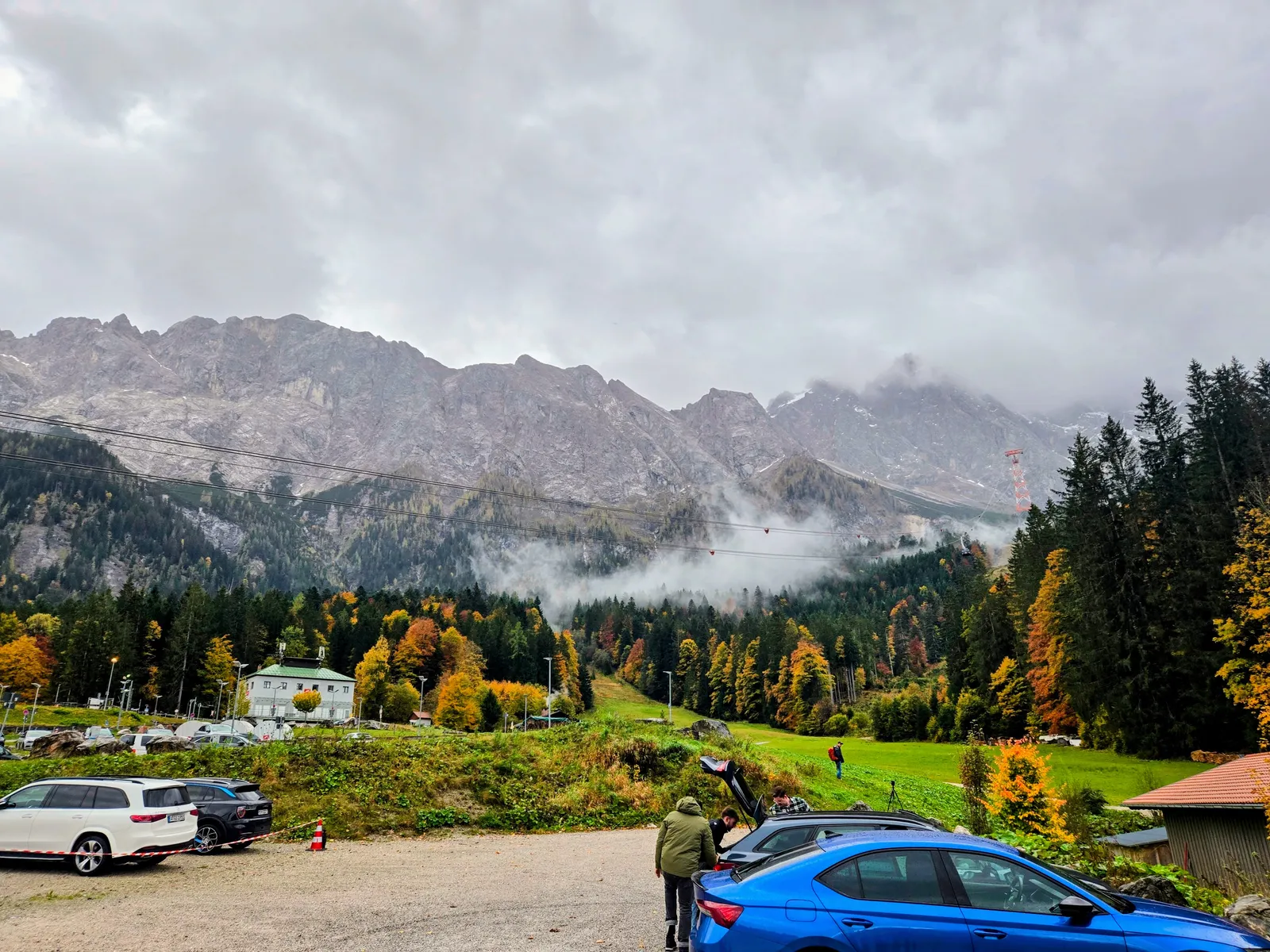
A short drive brought us to the base of Zugspitze, Germany's highest peak at 9,718 feet. Unfortunately, snowy, overcast weather dashed our hopes of taking the cable car up for those sweeping 360 degree summit views.
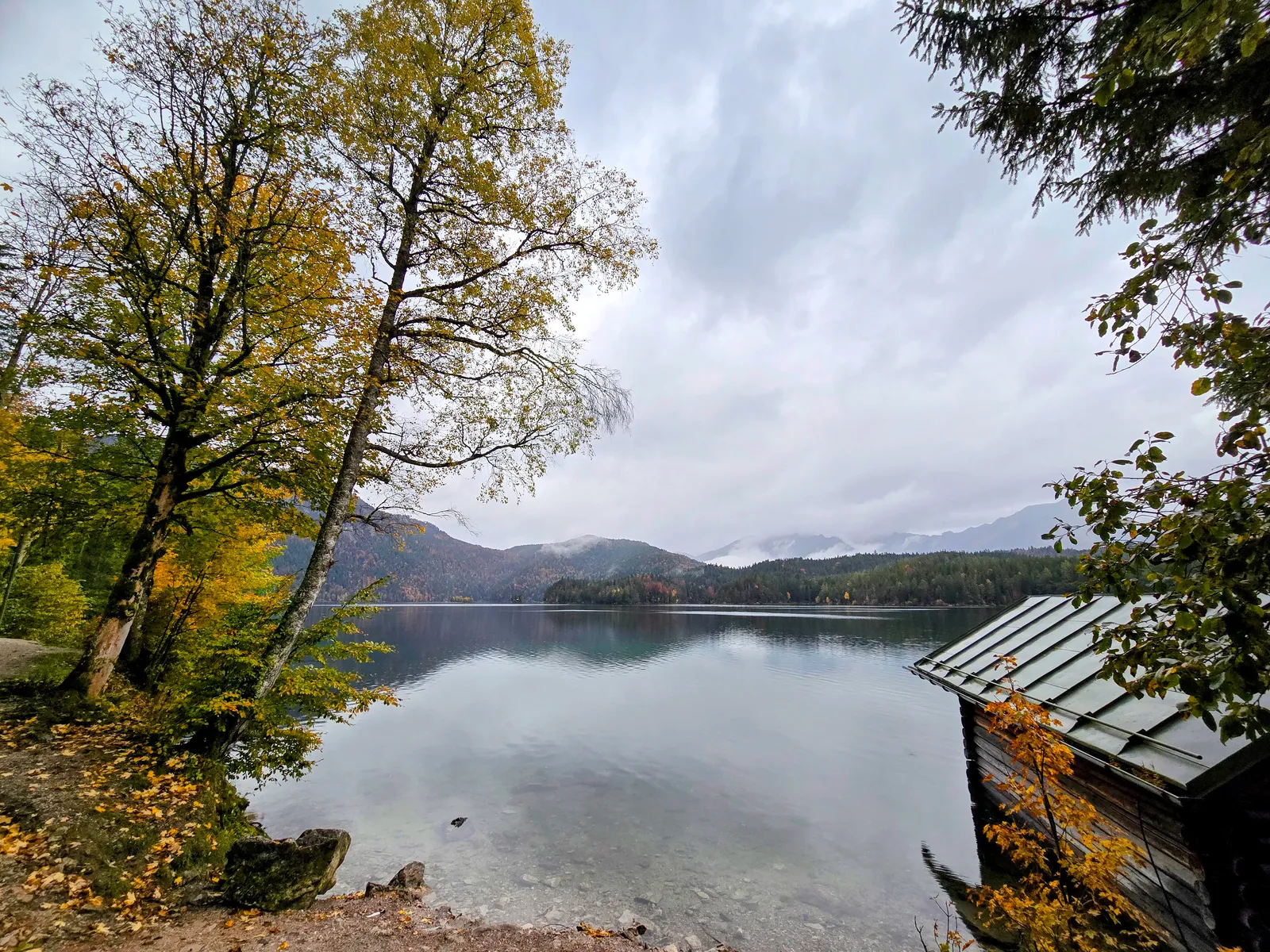
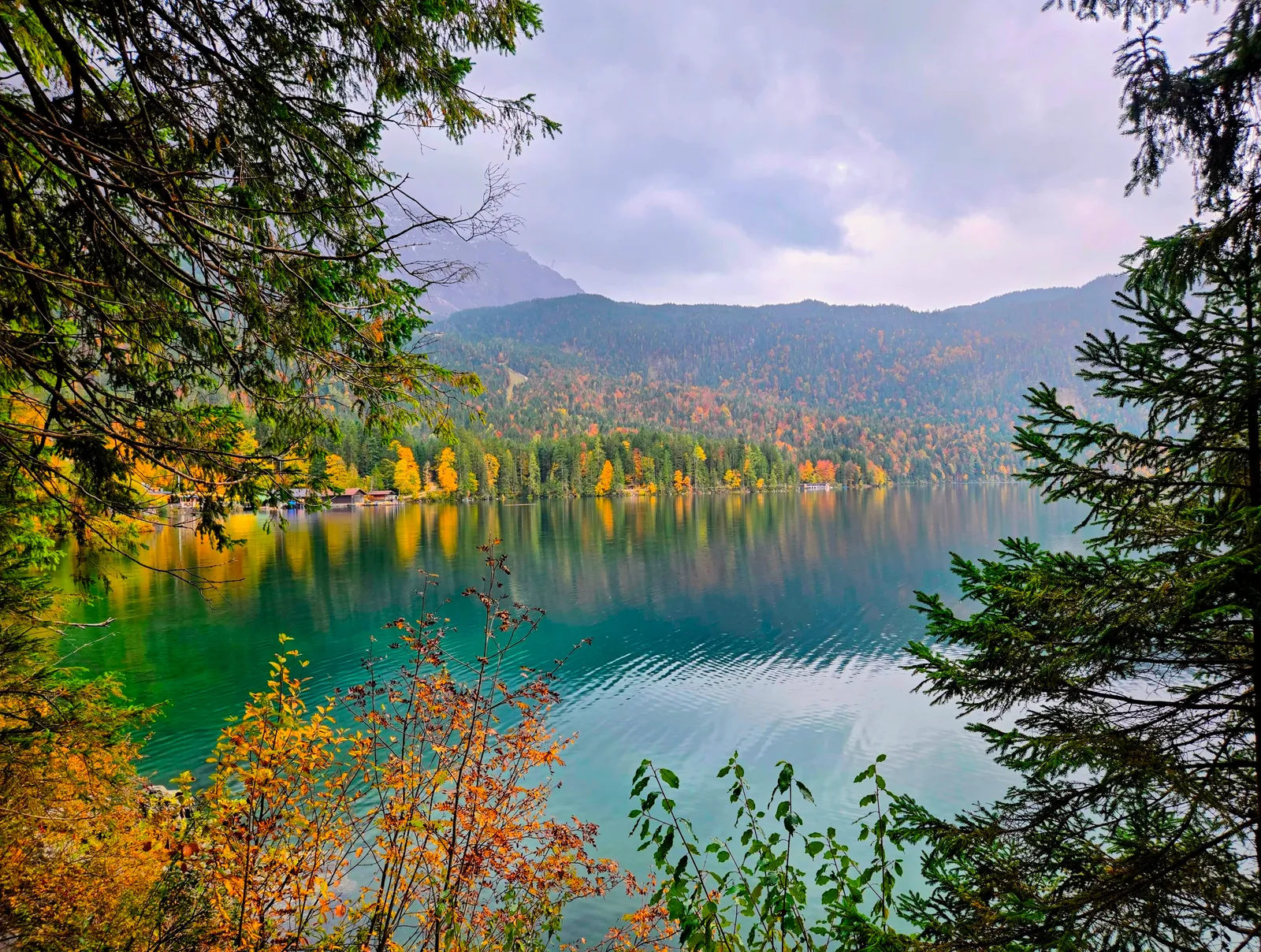
Undeterred, we parked at the Zugspitze cable car station at the mountain's base and just a short stroll later, we were walking along the outer edge of Lake Eibsee, a 4.5 mile trail loop that circles the shore. We took it as a consolation prize.
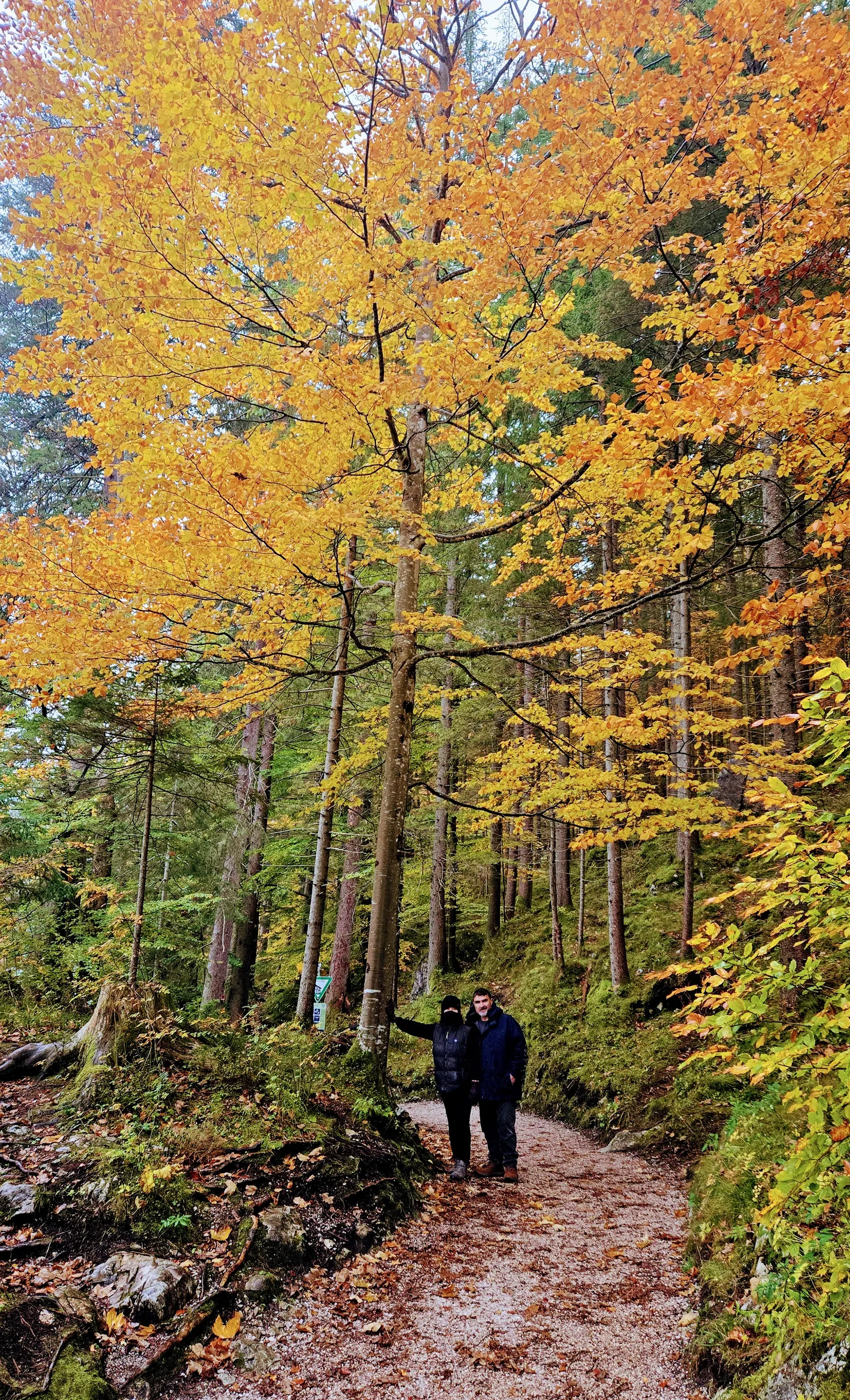
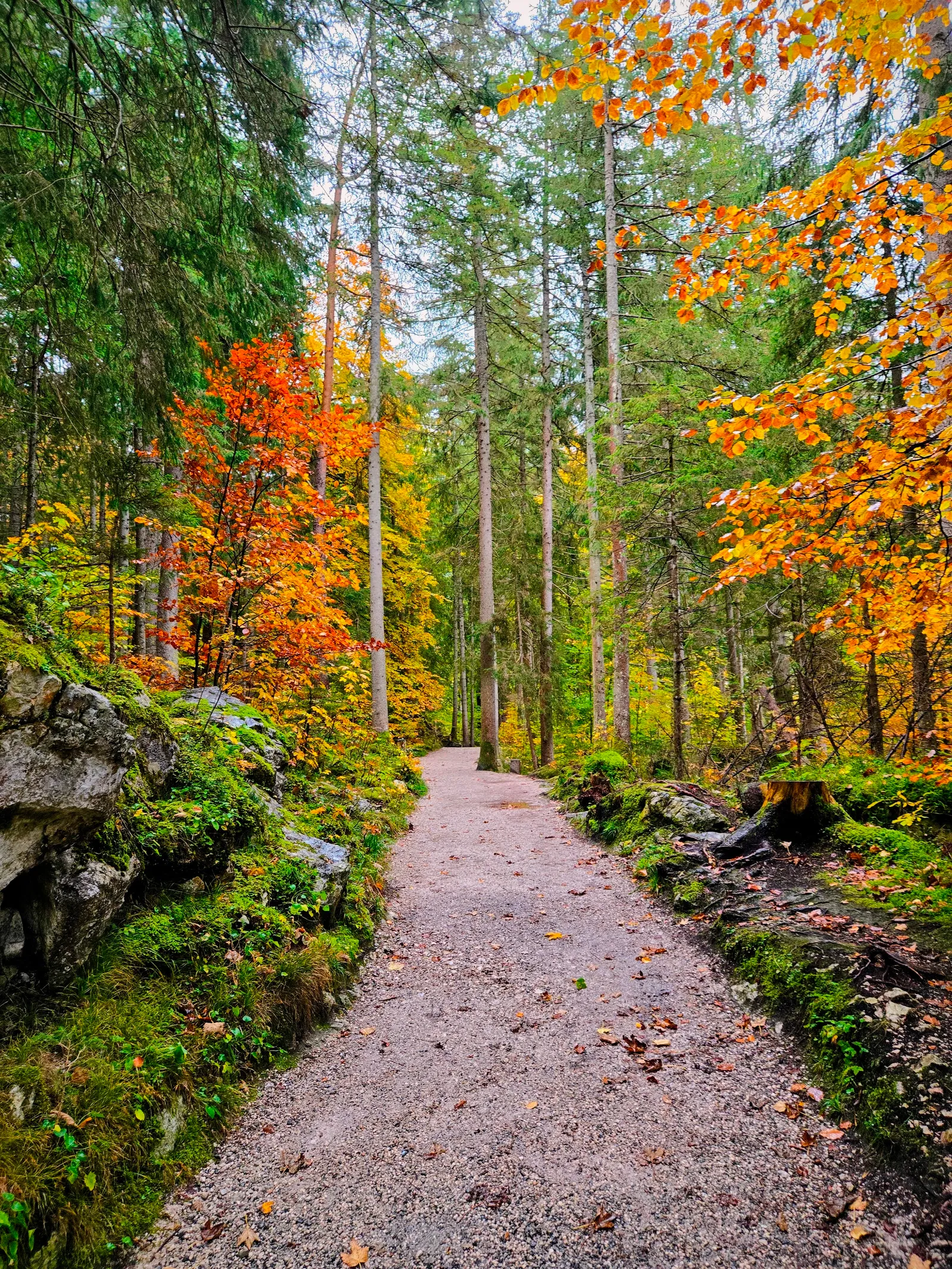
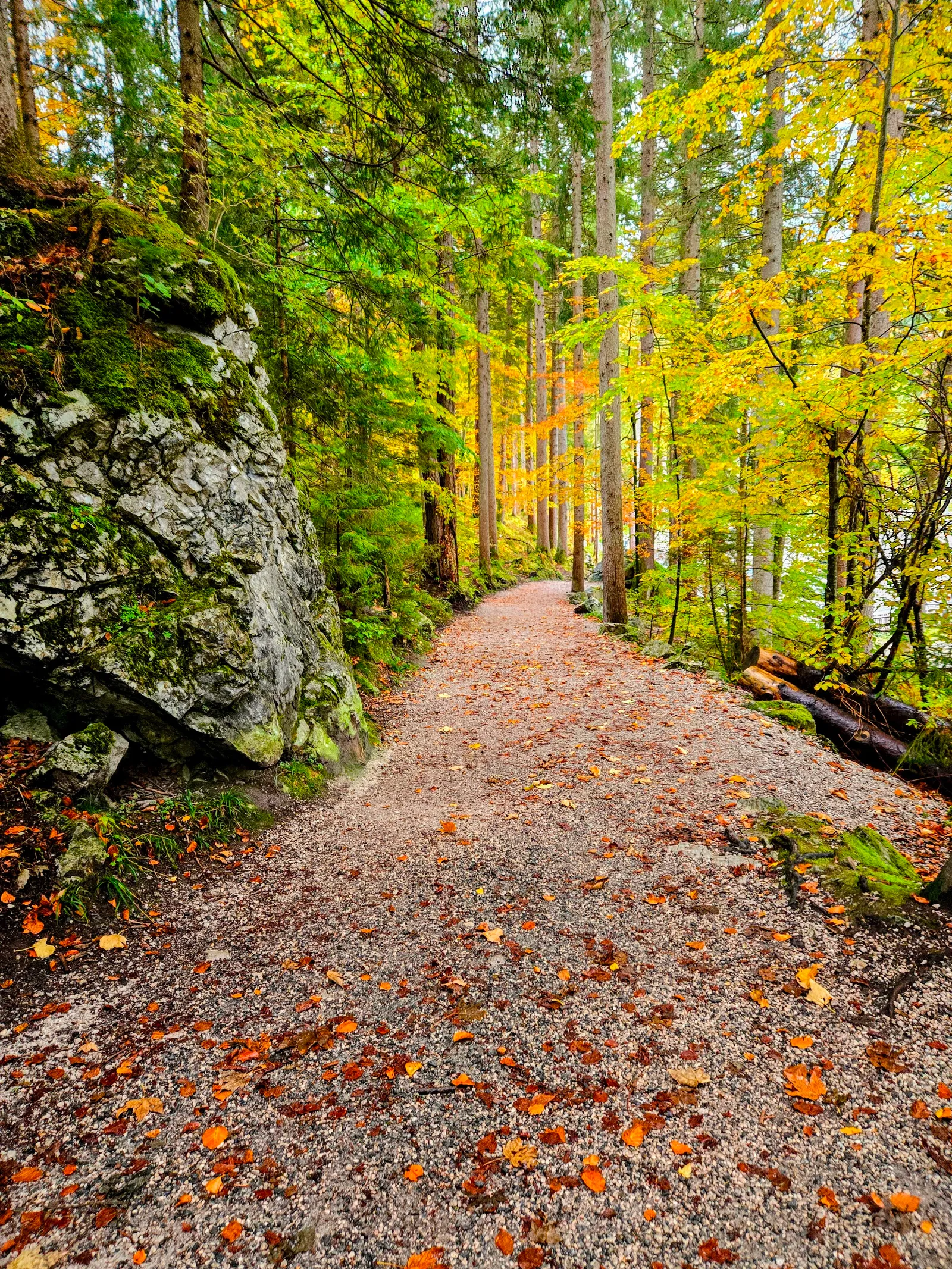
The trail circles the lake with mountain views and is one of southern Germany's most rewarding short hikes. Even in the light rain, the trail was peaceful and scenic, lined with moss covered rocks and towering trees. I managed to capture a few photos before the rain grew heavier, sending us back to the car in a rush. This turned out to work in our favor, as it got us on the road earlier than expected.
The Garmisch Gas Station Mishap
Before crossing into Austria, you'll need a vignette, a prepaid toll sticker for their motorways. We stopped in Garmisch-Partenkirchen to fuel up and buy one.
At the gas station, my brother-in-law started pumping (standard in Germany: pump first, pay inside after) while I went to buy the vignette. The clerk's response to my English question? A curt "no" with a look that could freeze beer. Fine. I walked out, irritated, and spotted another station next door.
Inside station #2, the clerk was chatting with a customer. She said something in German, glanced my way, and they both laughed, definitely at my expense. But when I asked "Sprechen Sie Englisch?" she switched gears completely. Vignette purchased, crisis averted. Back at the car: "All good?" "Yup." And off to Hallstatt we went.
A month later, an email landed in my inbox: unpaid gas, police report filed. The station owner had reviewed the footage, realized the car was a rental, and German authorities tracked me down through Enterprise. Fortunately, the owner was reasonable. I paid the €50 via PayPal and apologized for the mix up.
A scenic drive to enchantment
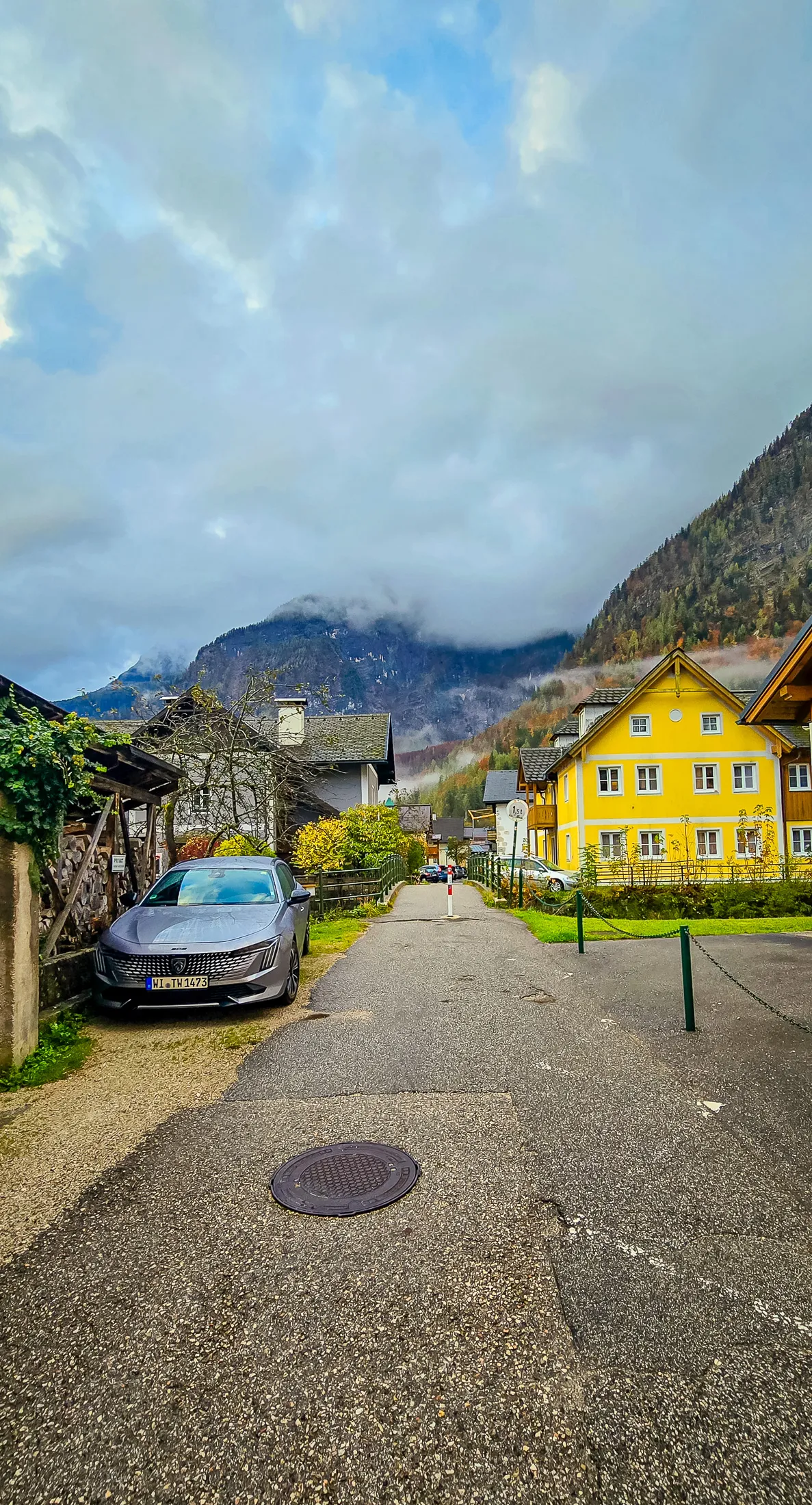
The drive from Garmisch-Partenkirchen to Hallstatt typically takes 3.5 hours, but we opted for the scenic route, Bavaria at its best. Rolling farmland, onion-domed churches, and the Alps growing larger with each mile made the detour worthwhile.
The final approach demands attention: five miles of narrow mountain roads funneling through tunnels before reaching the village gates. As we pulled up, the parking attendant was already waving us away, his automatic response to the hundredth car that day. We had to stop him mid-gesture: "We're staying inside, we have a booking." He paused, clearly thrown off script, then waved us through. Probably the first non-local he'd let pass all week.
Hallstatt: 7,000 years of salt and history
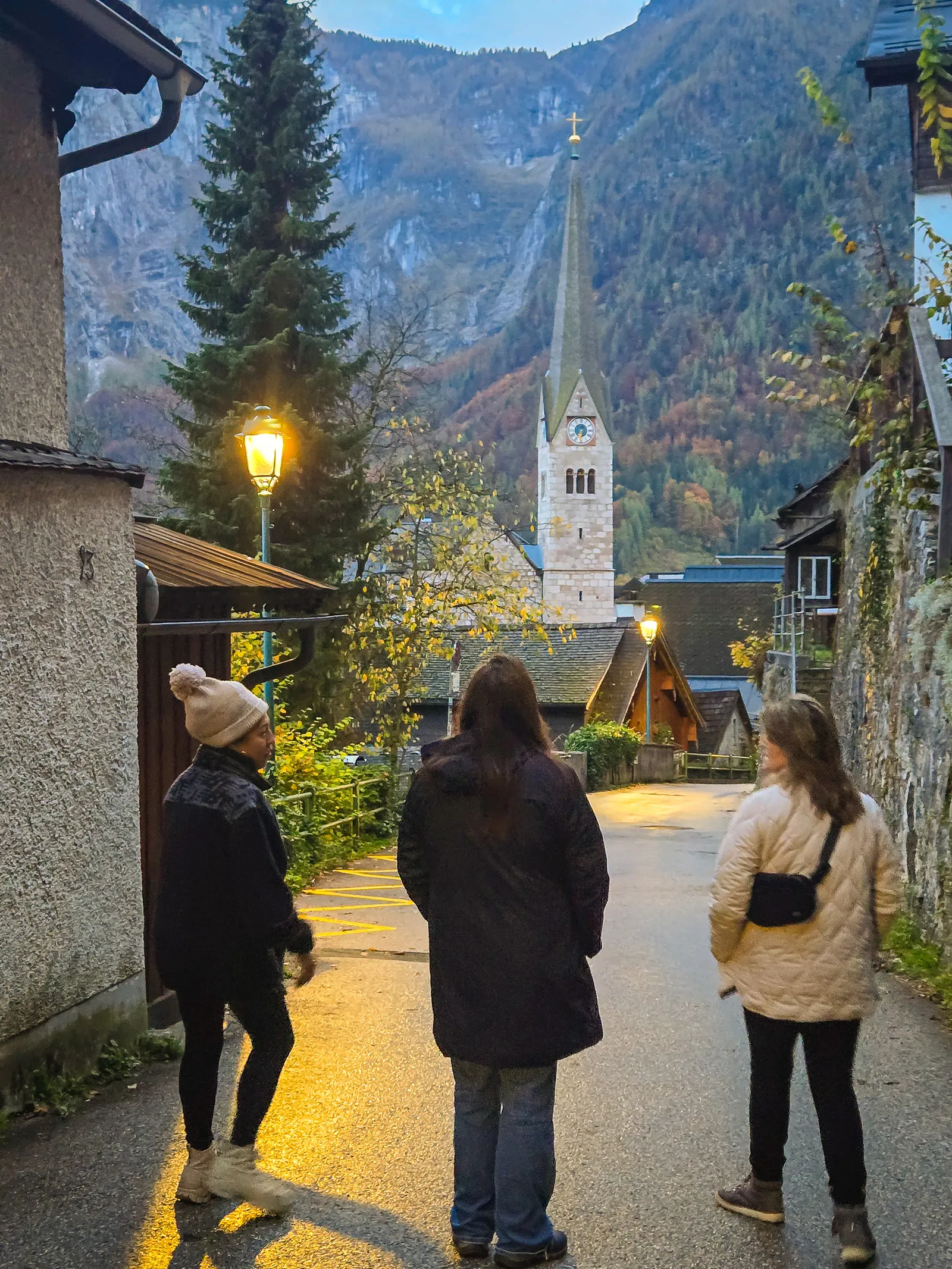
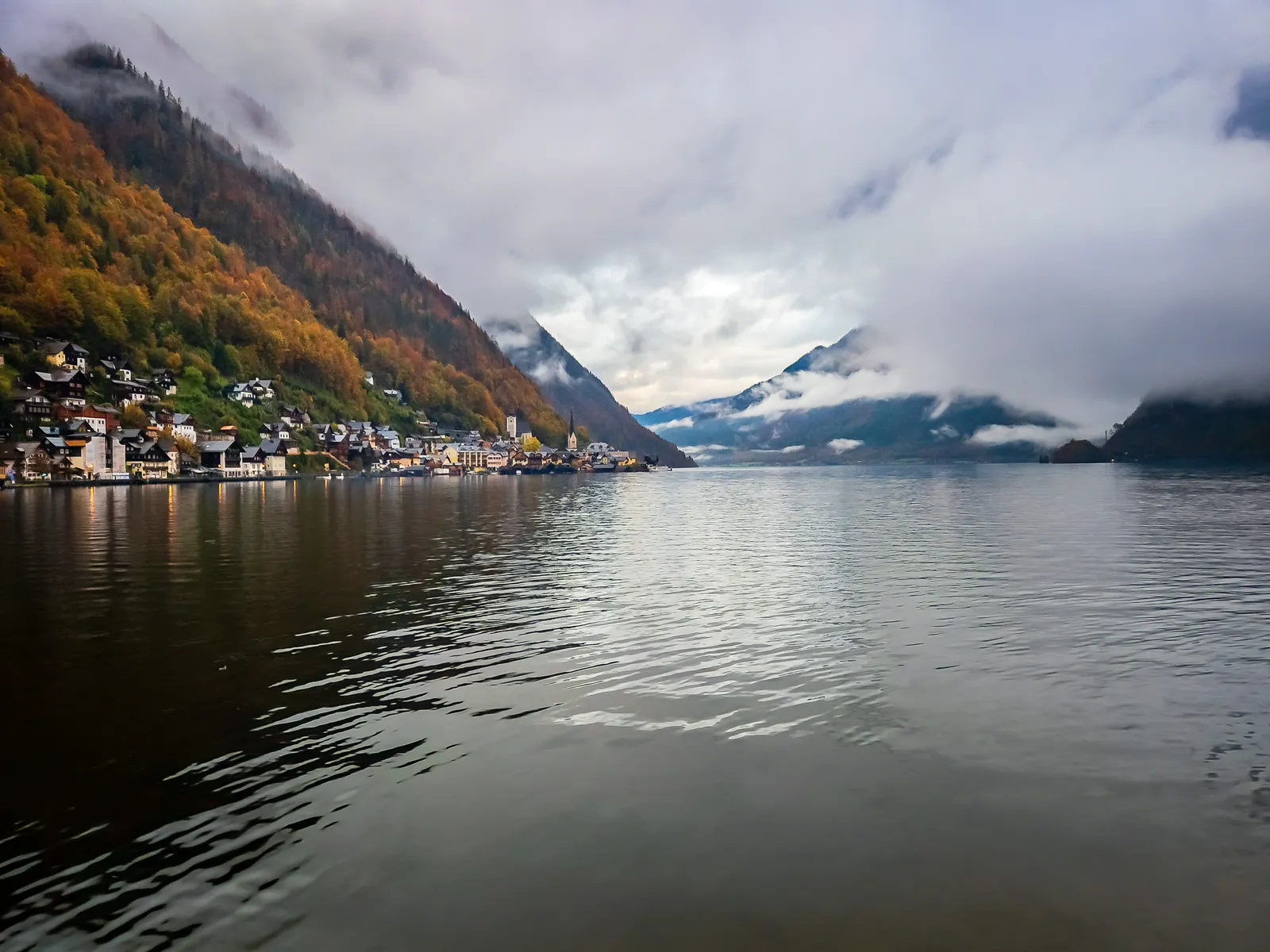
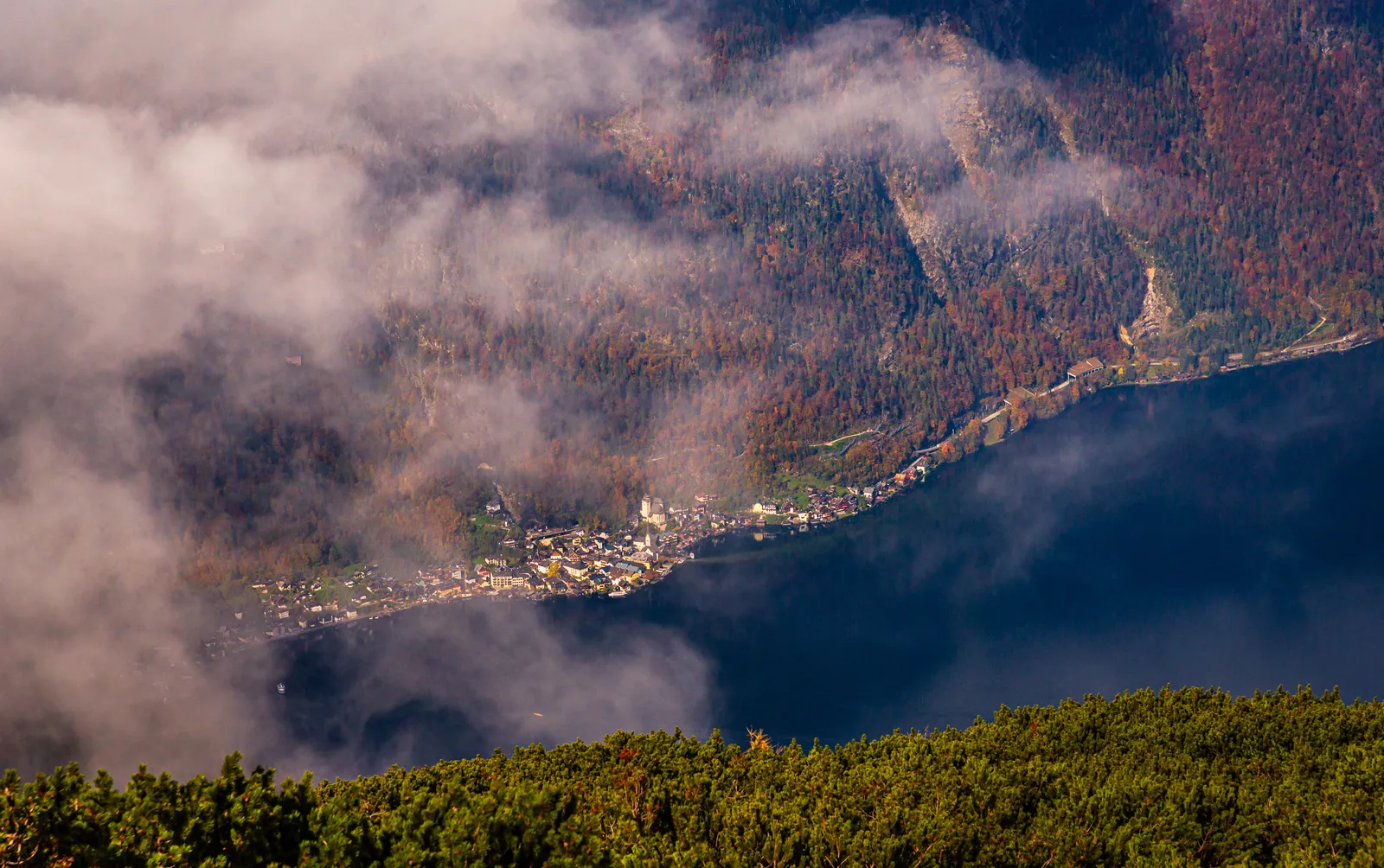
Hallstatt sits between a calm lake and the steep Dachstein Alps. It's considered one of the most beautiful villages in the world and is a UNESCO World Heritage site. Social media boosted its fame even more after people started comparing it to Arendelle from Frozen, but its real history goes back more than 7,000 years to the world's oldest salt mine and the early Iron Age Hallstatt Culture.
The village gets an enormous amount of tourism, around one million visitors a year, and up to 10,000 people a day in peak season. The village's global appeal became clear when China built a full-scale replica of the town in 2012.
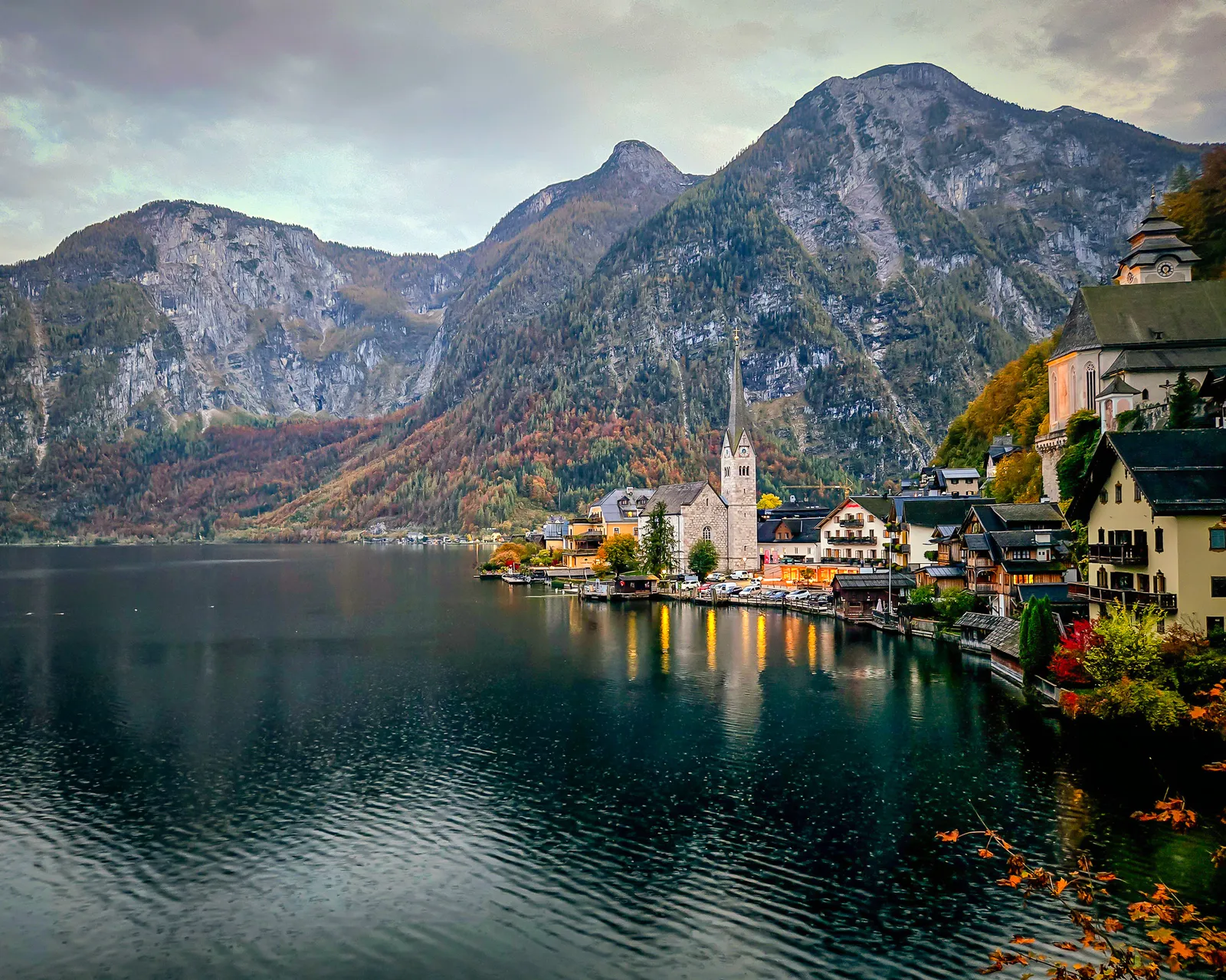
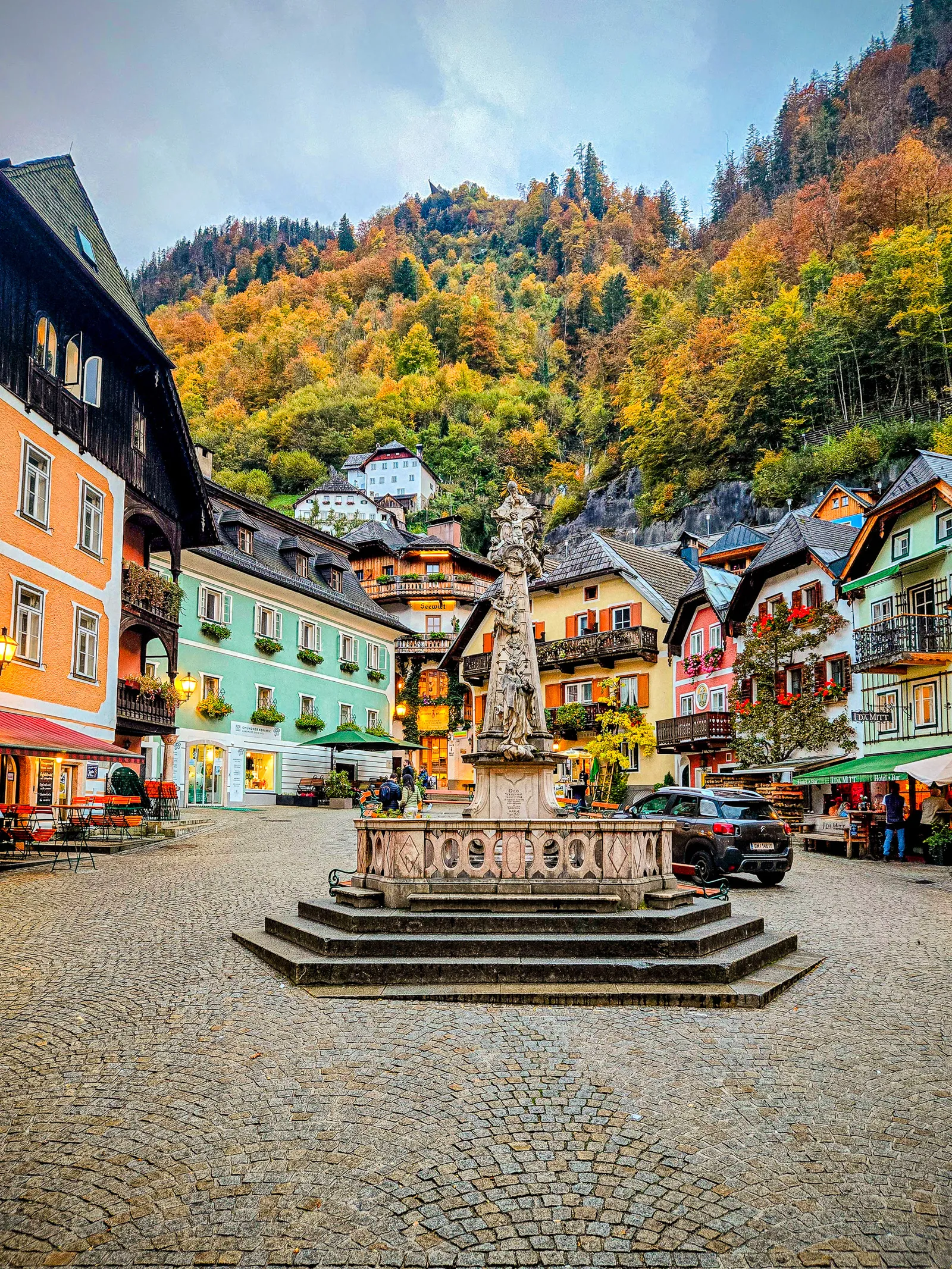
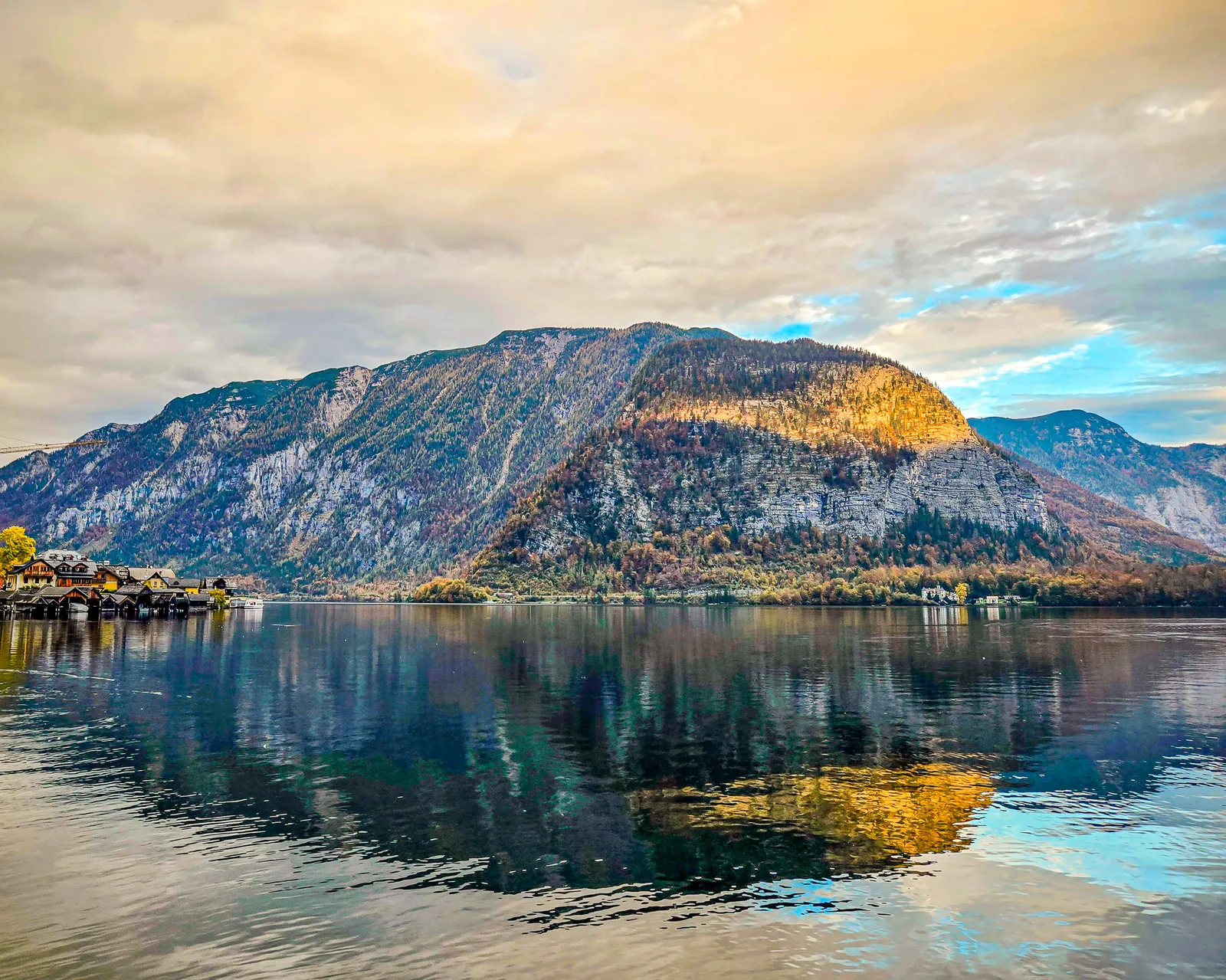
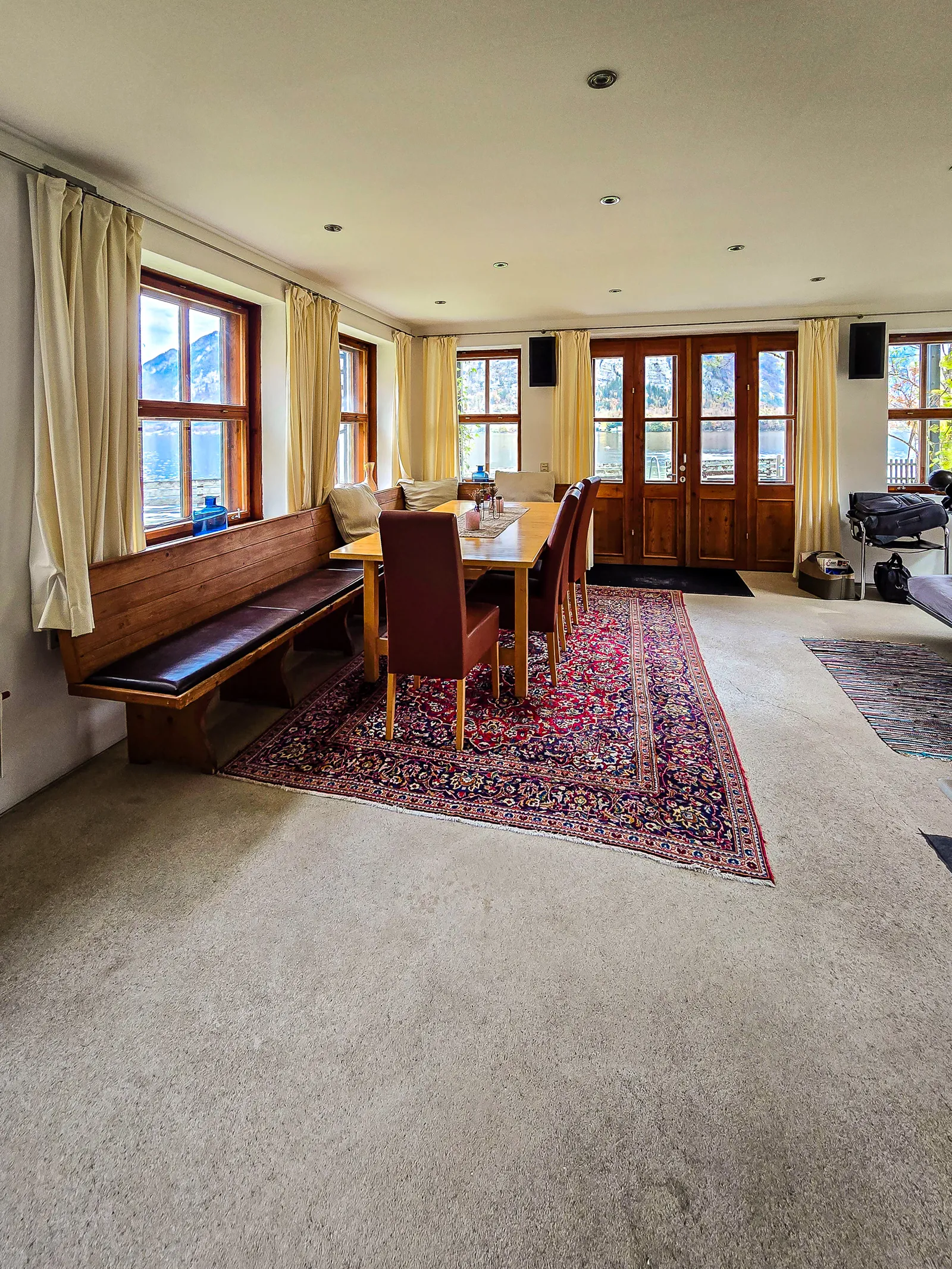
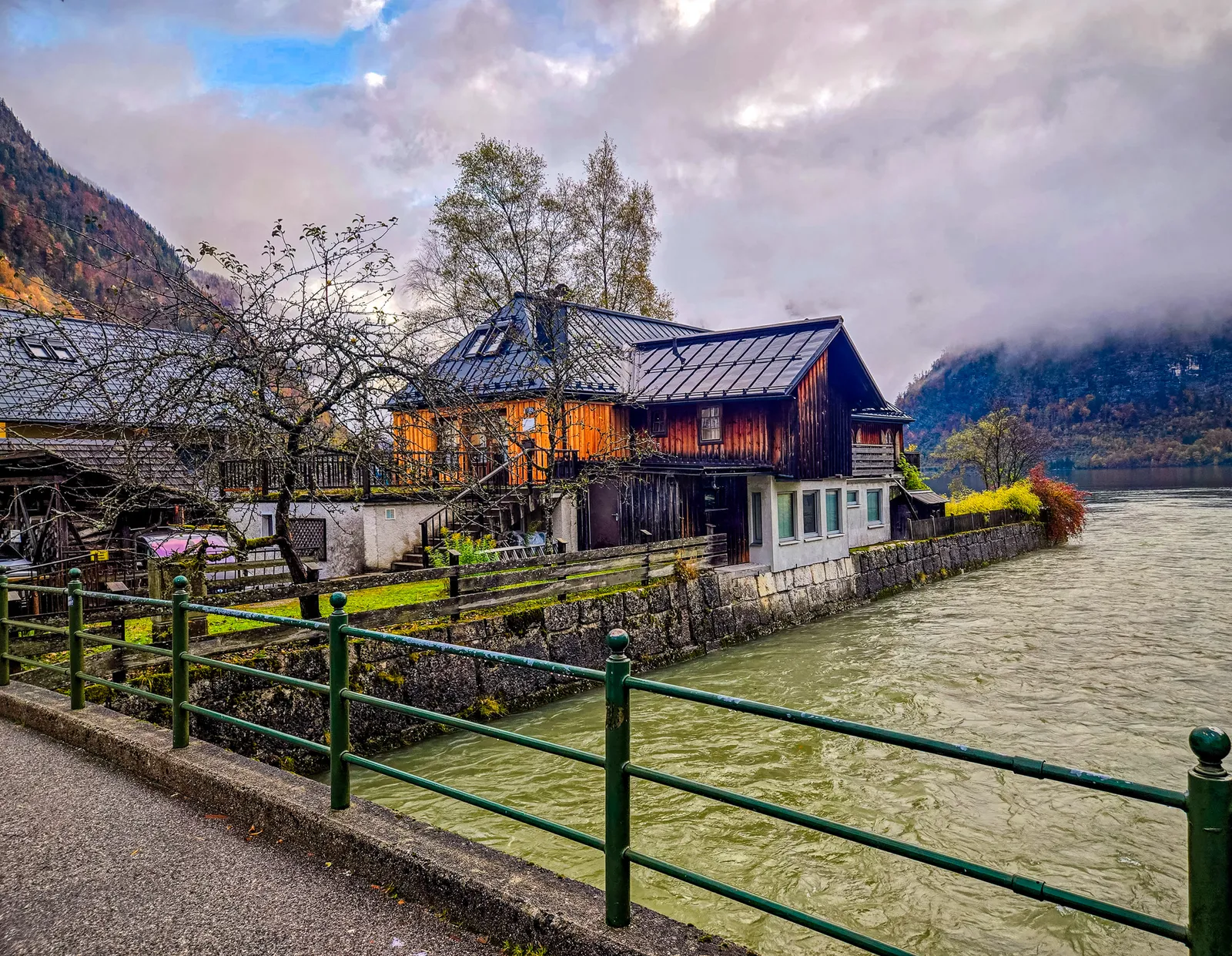
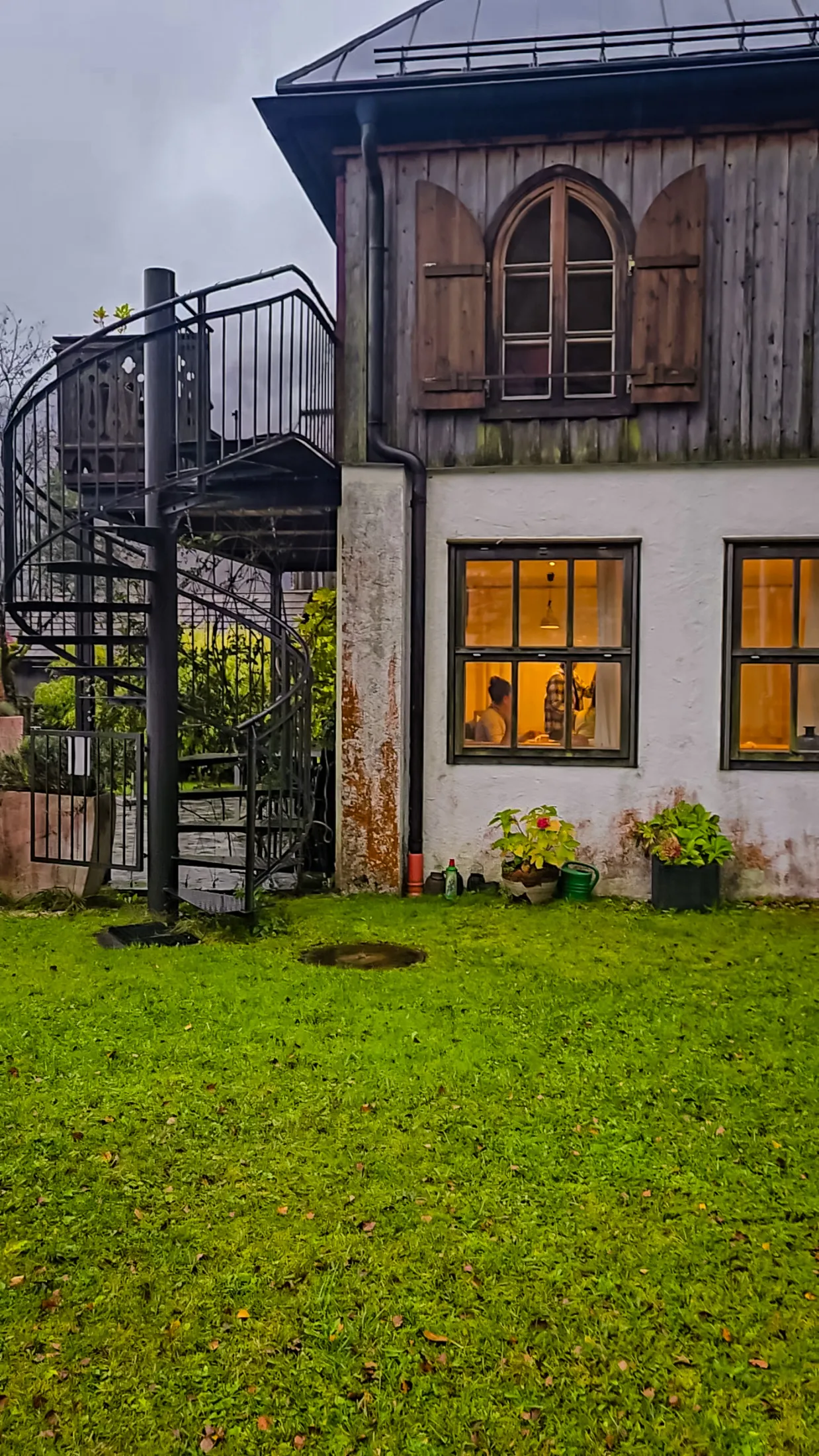
Our BNB loft: a converted mill on the lake
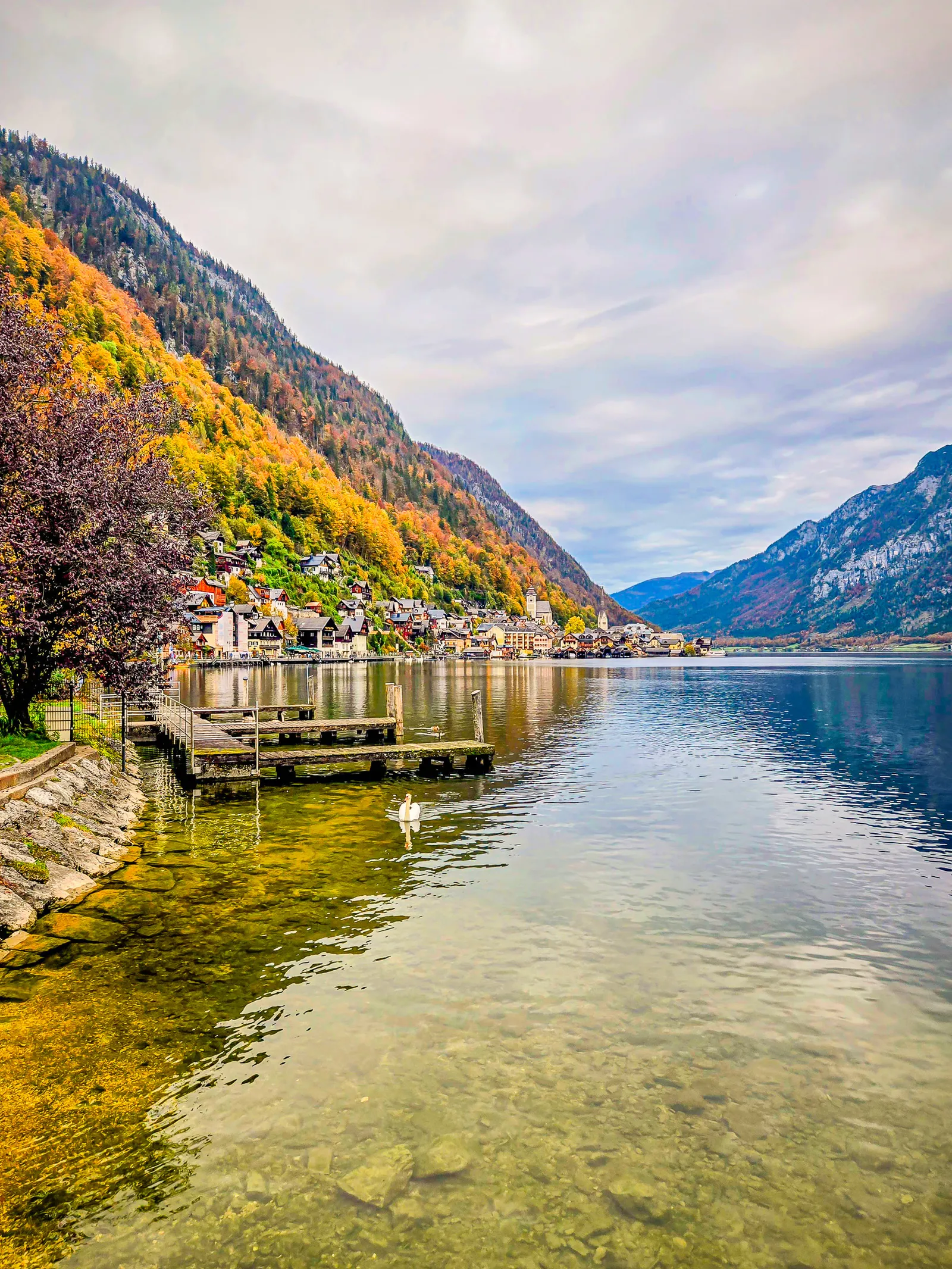
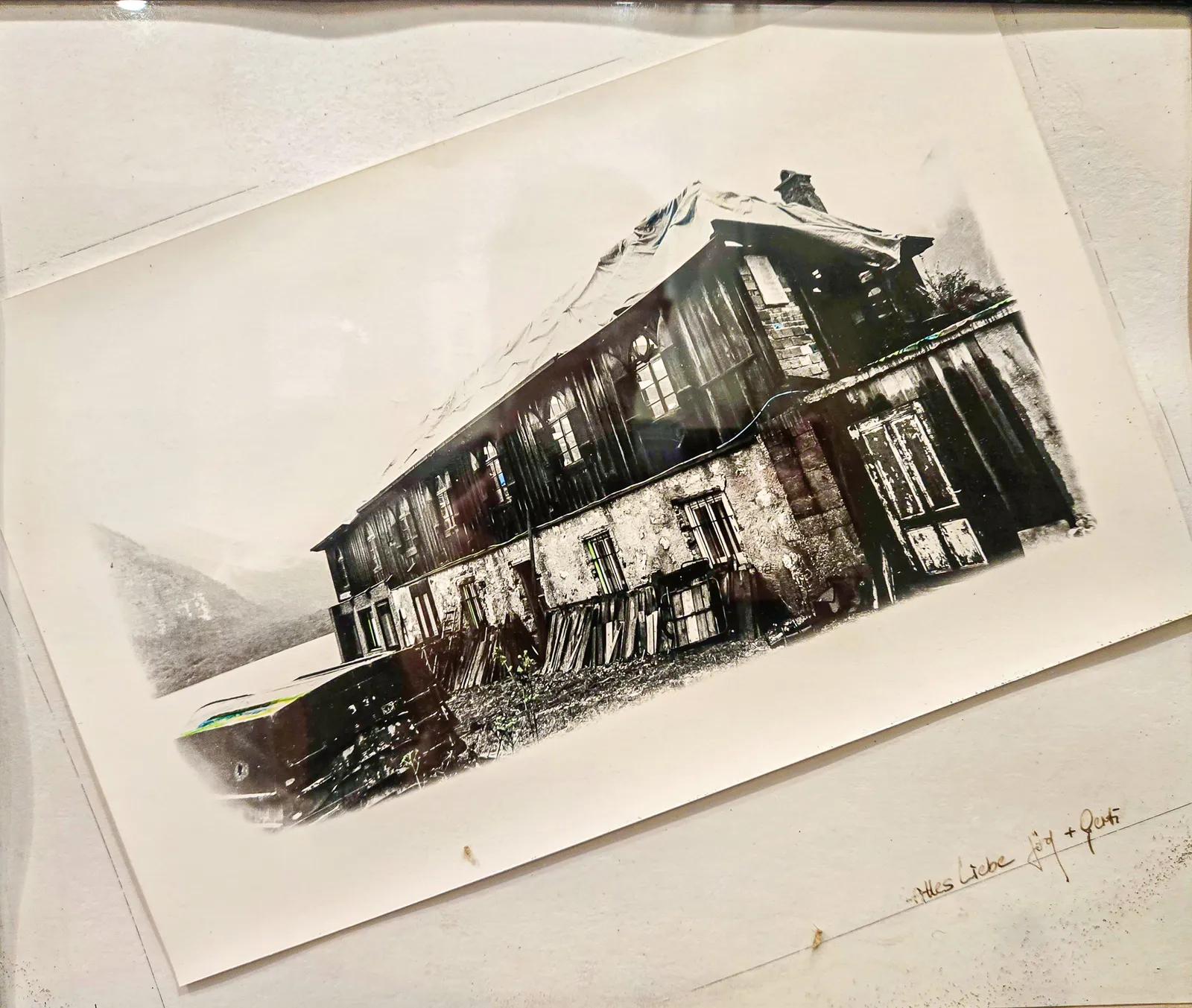
Our BNB loft ended up being the highlight of the trip. We stayed in a converted mill, a Waldbachsäge, inherited from the owner's grandmother and renovated into a modern apartment. It was in the perfect spot: just outside the village and a short walk to the famous church viewpoint. Even after the day-trippers left, the waterfront filled with photographers, everyone from beginners to pros, lining up their tripods and putting on their ND filters for that smooth long-exposure shot.
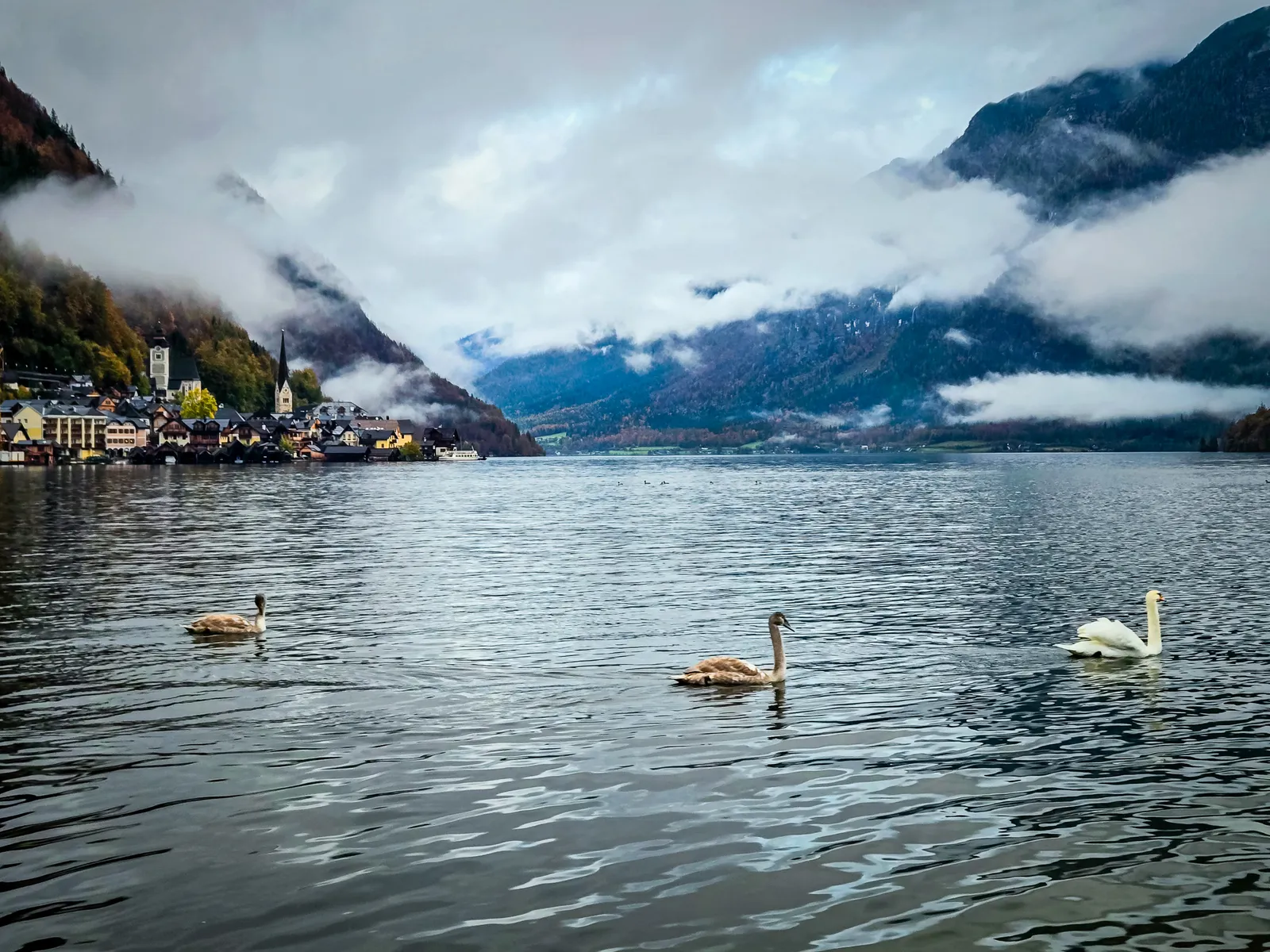
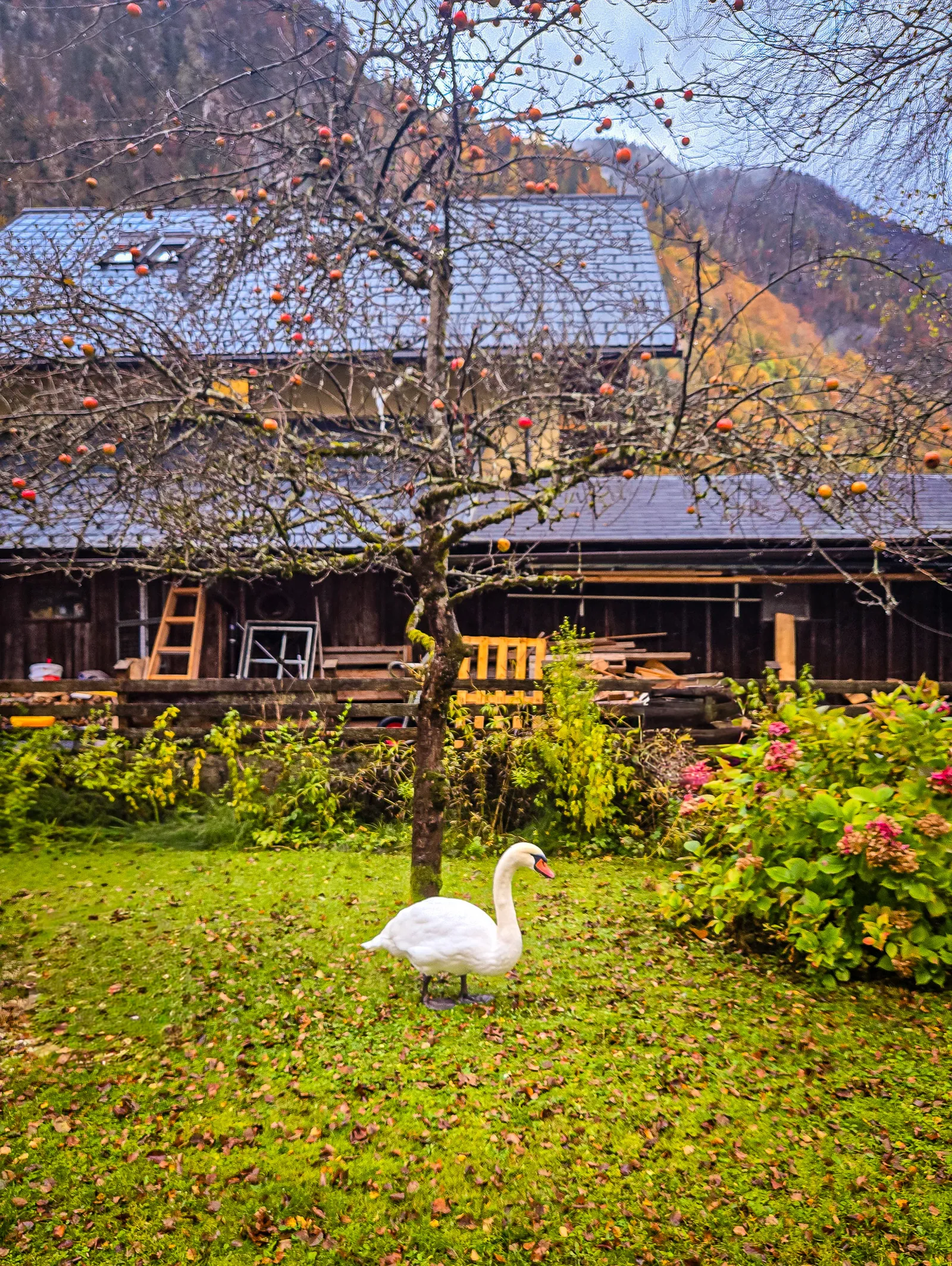
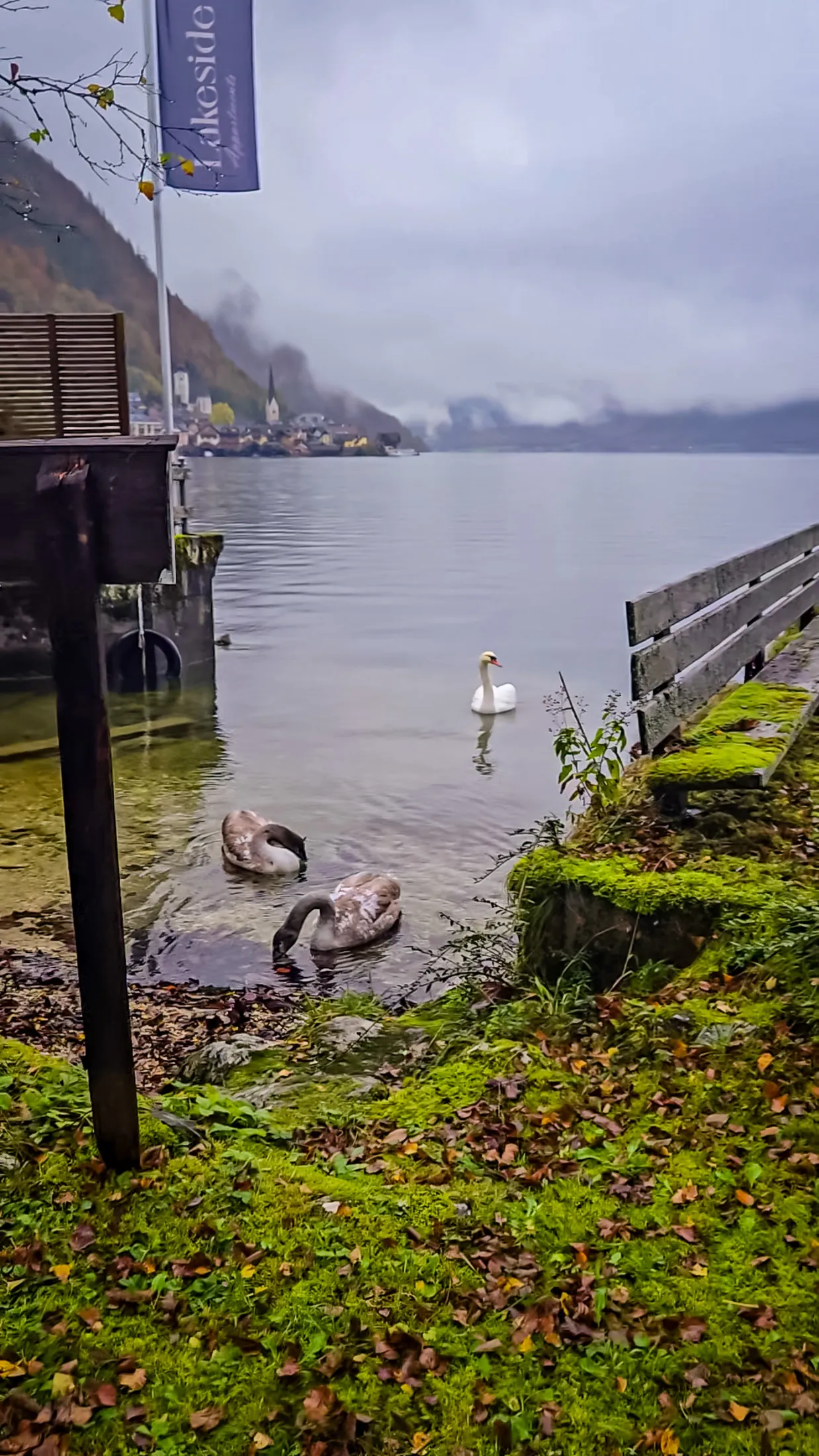
The loft sat right on the lake with direct water access. Every morning, swans showed up to forage for fallen apples along the private boat ramp. If you visit Hallstatt, slow down and enjoy it. Over two days we toured the salt mine, explored the ice cave, and took in the 5-Fingers lookout. The sights were incredible, but what really made the trip was where we stayed.
Inside the world's oldest salt mine
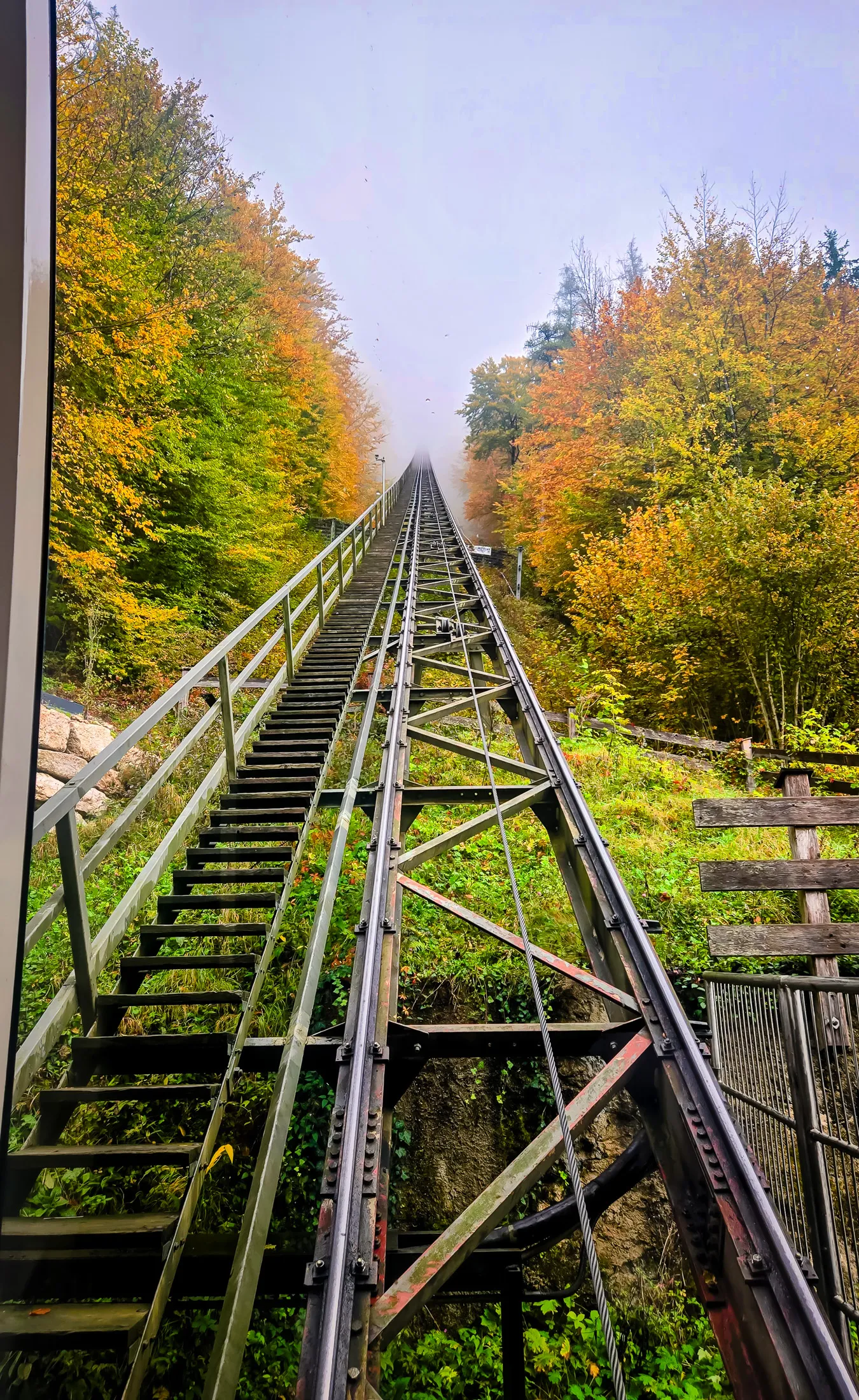
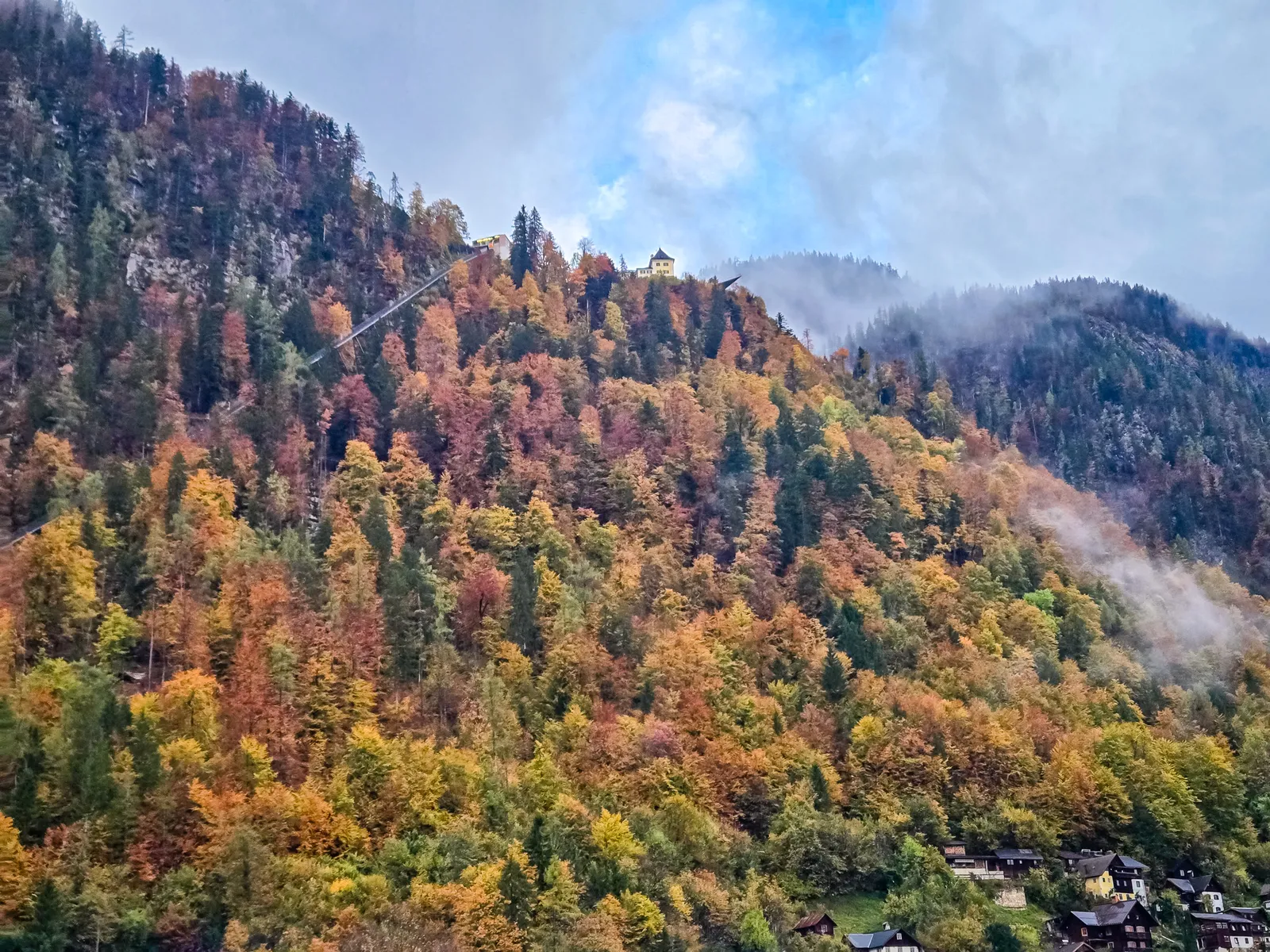
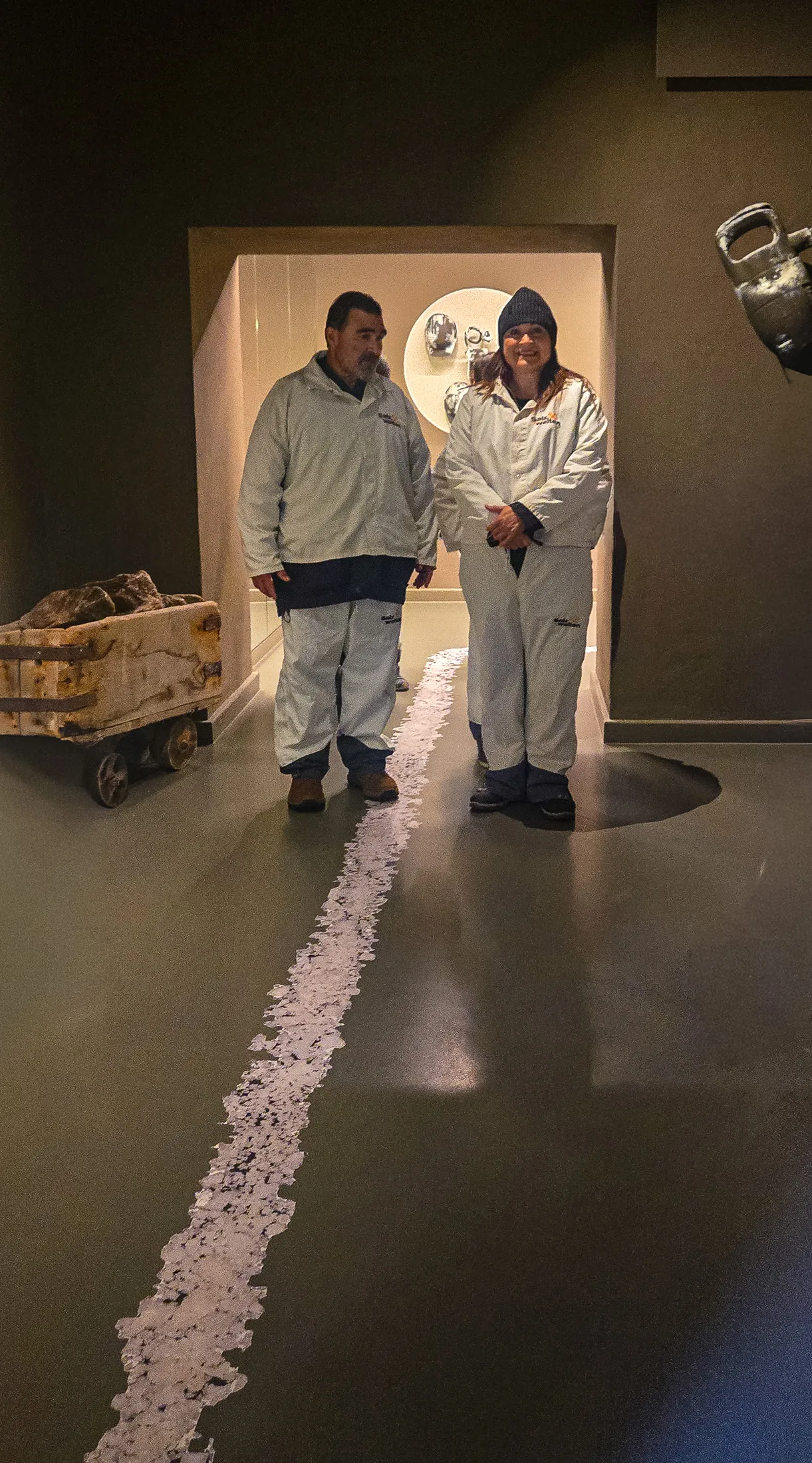
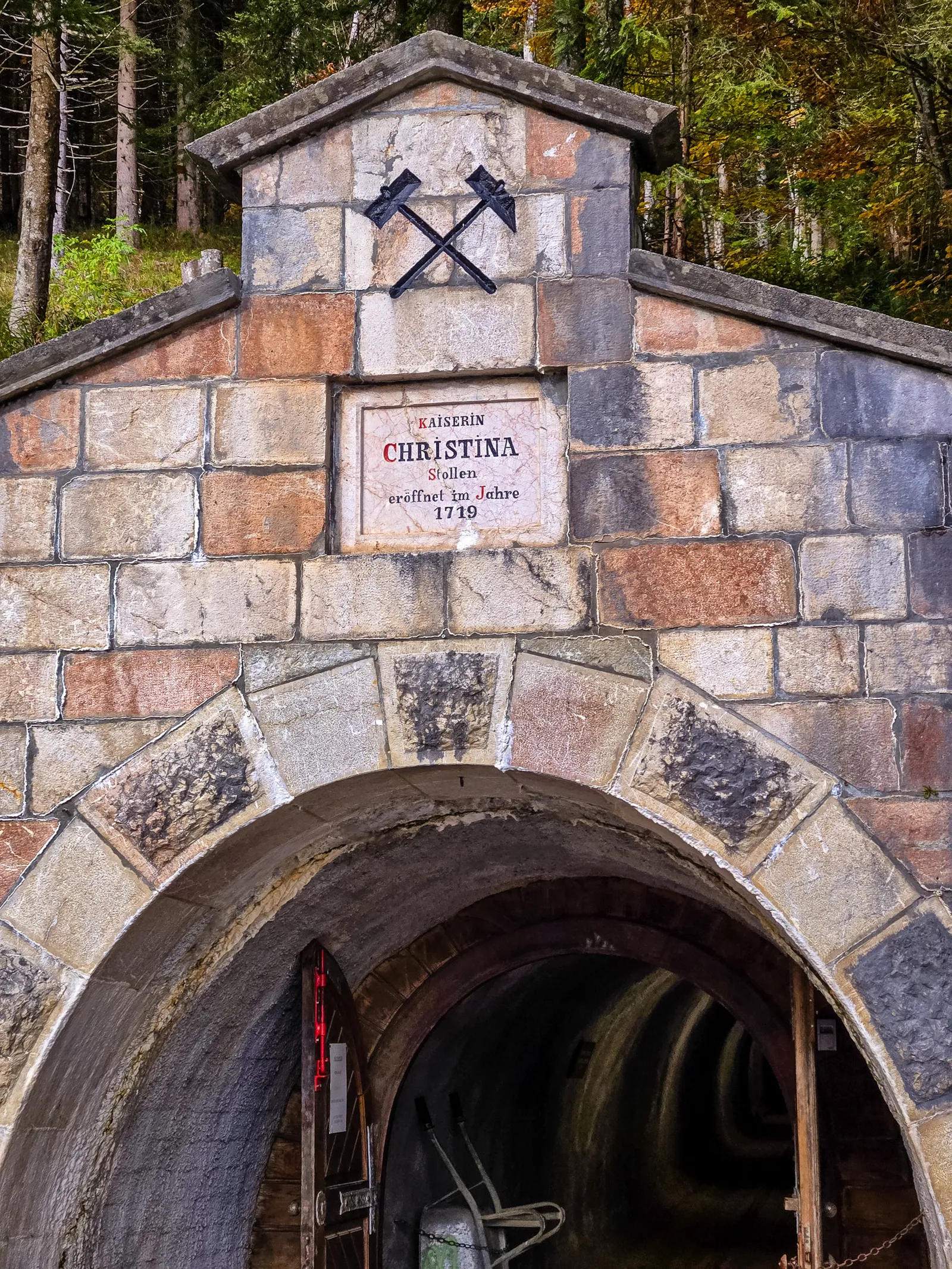
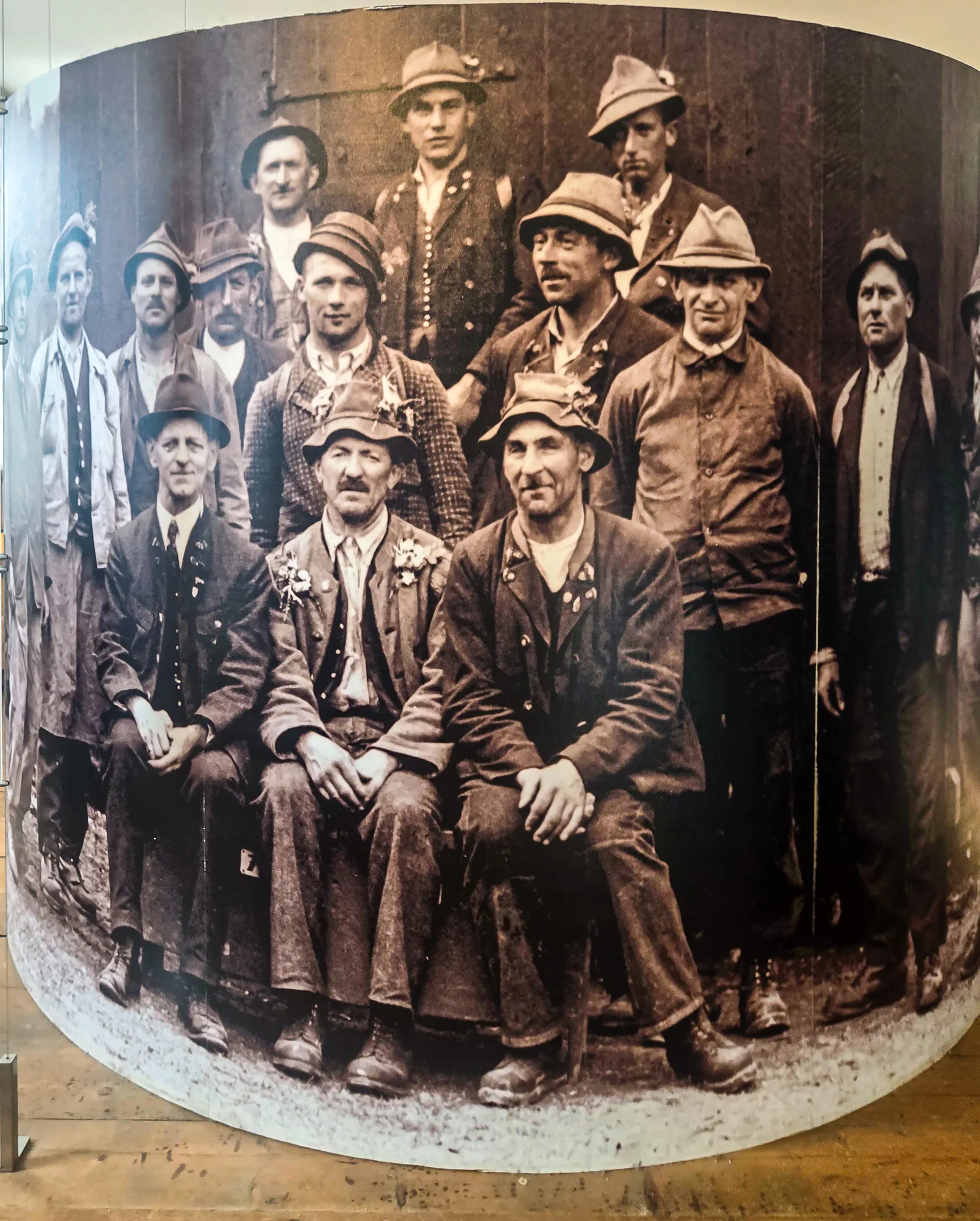
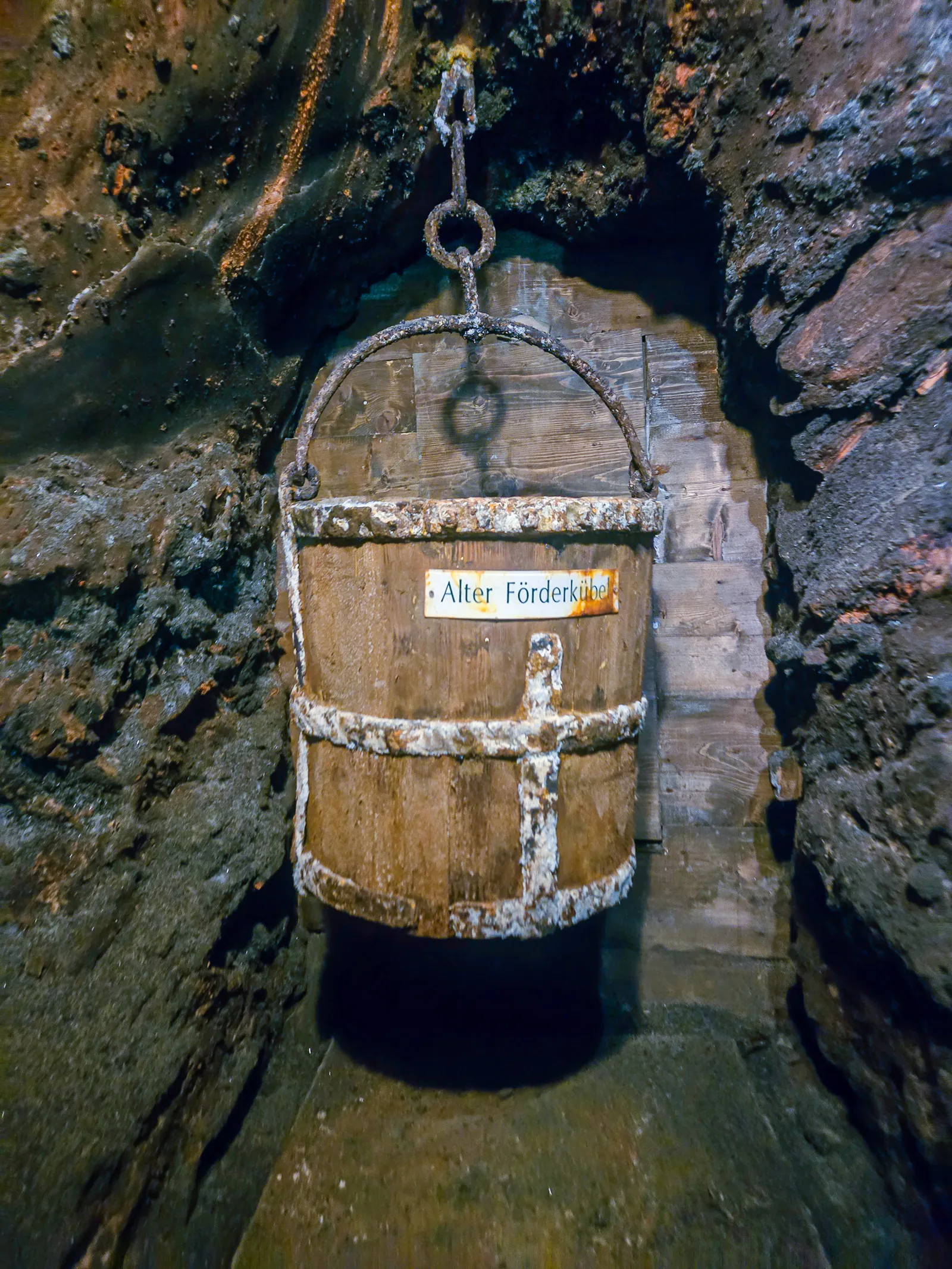
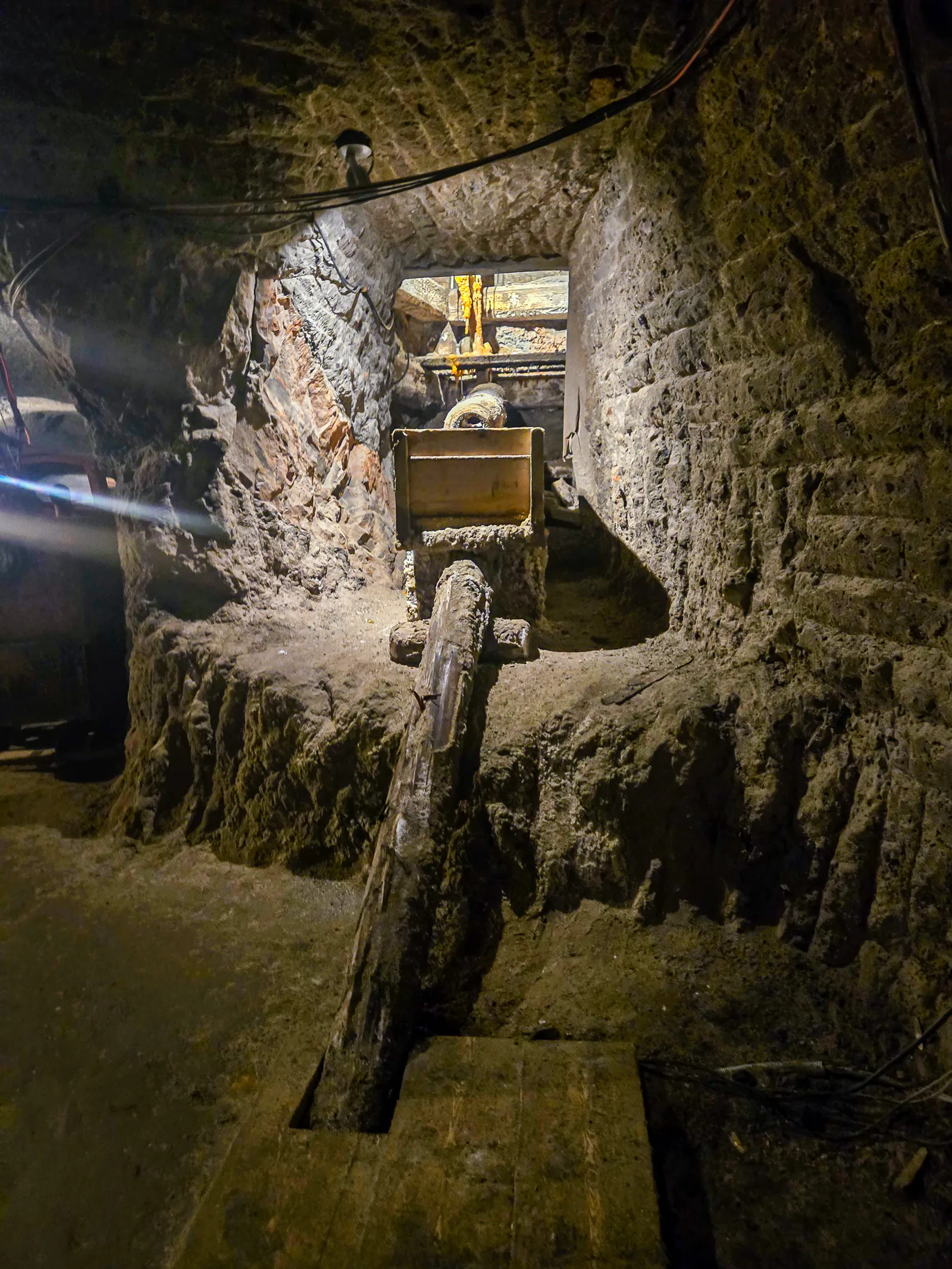
After a scenic funicular ride up to Salzwelten, we followed the panoramic path through the high valley to the Knappenhaus, the main staging area just outside the mine. Once there, we were oriented by the staff and geared up in our protective miners' overalls before stepping through the mouth of the historic Christina-Stollen tunnel.
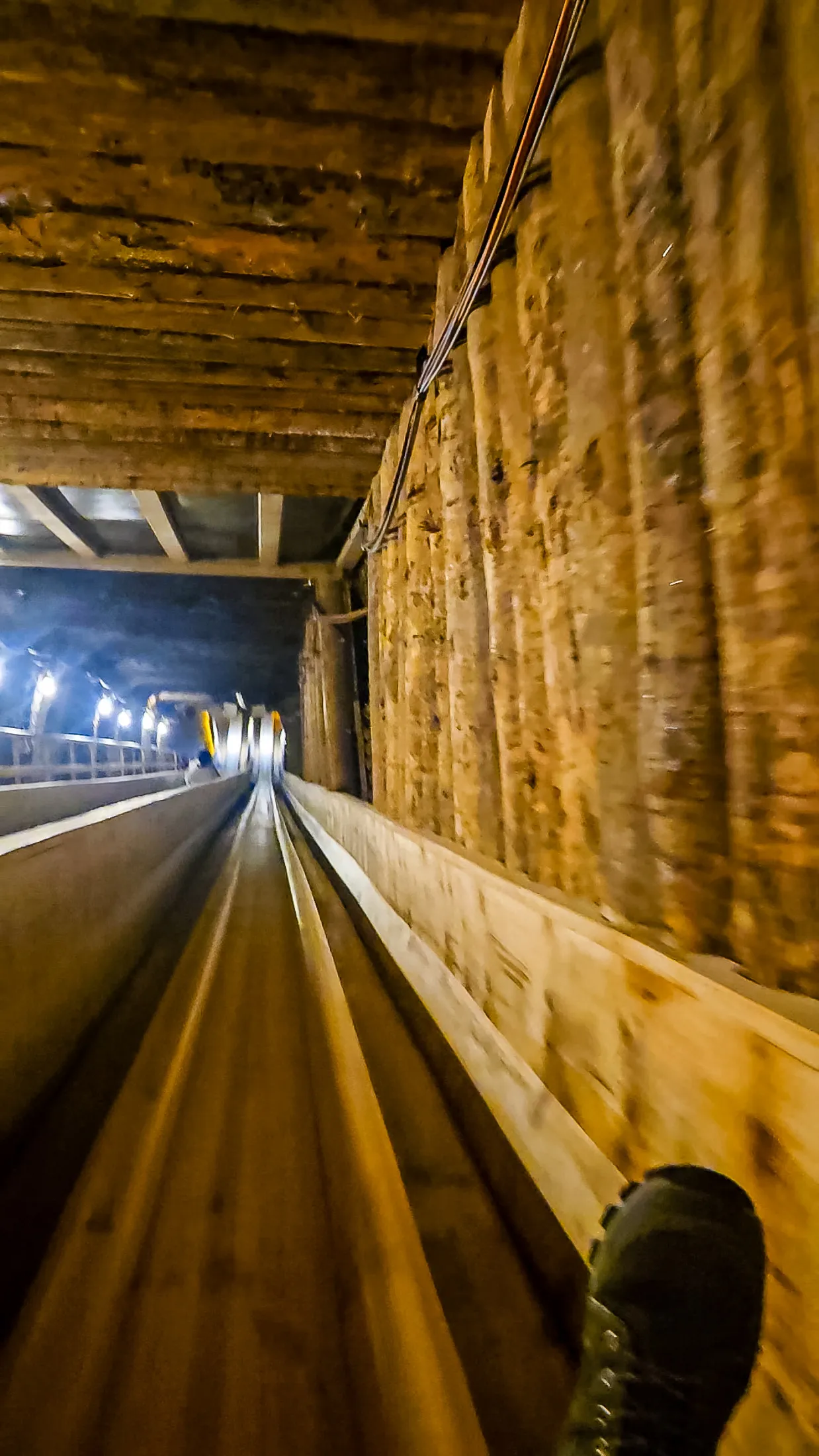
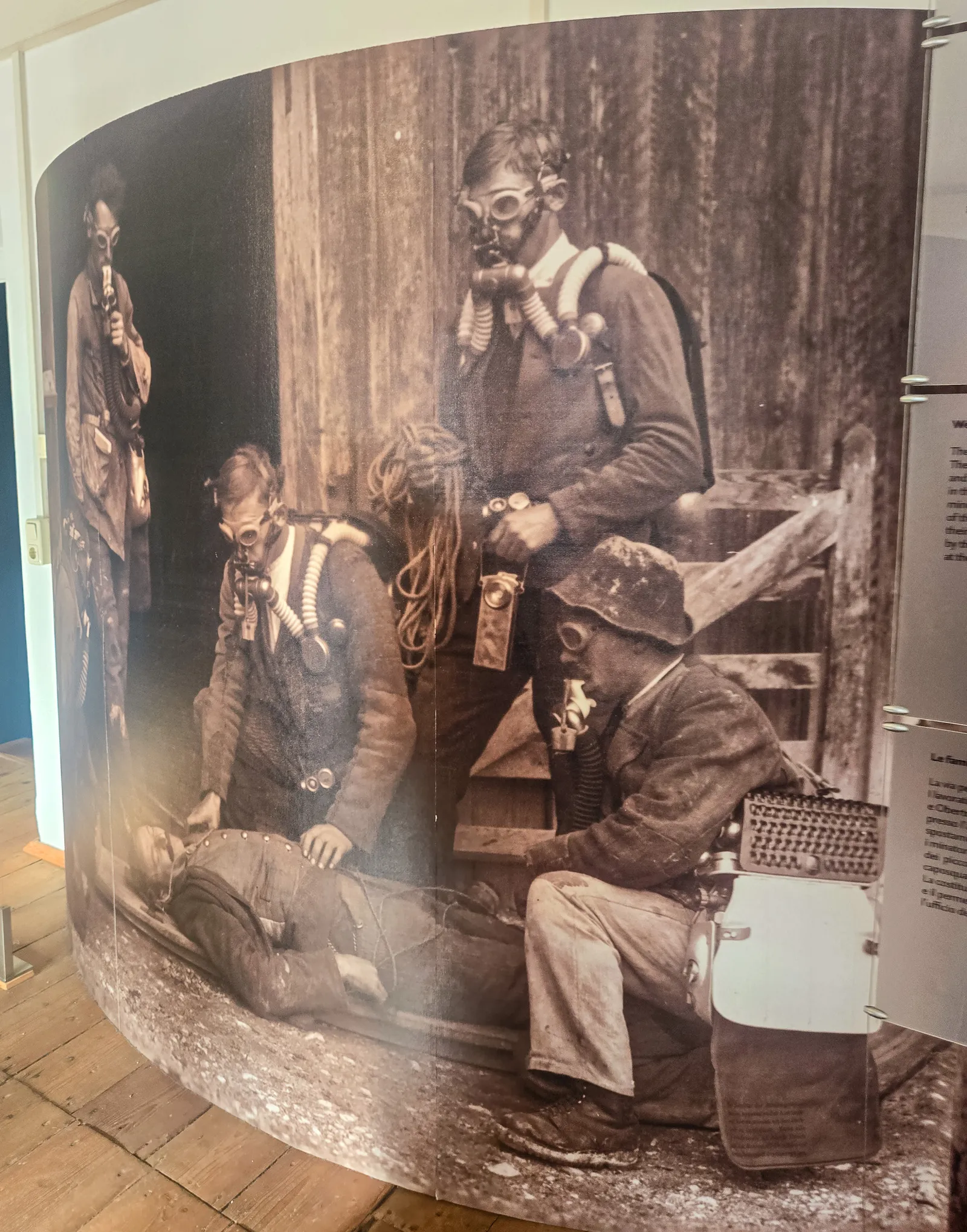
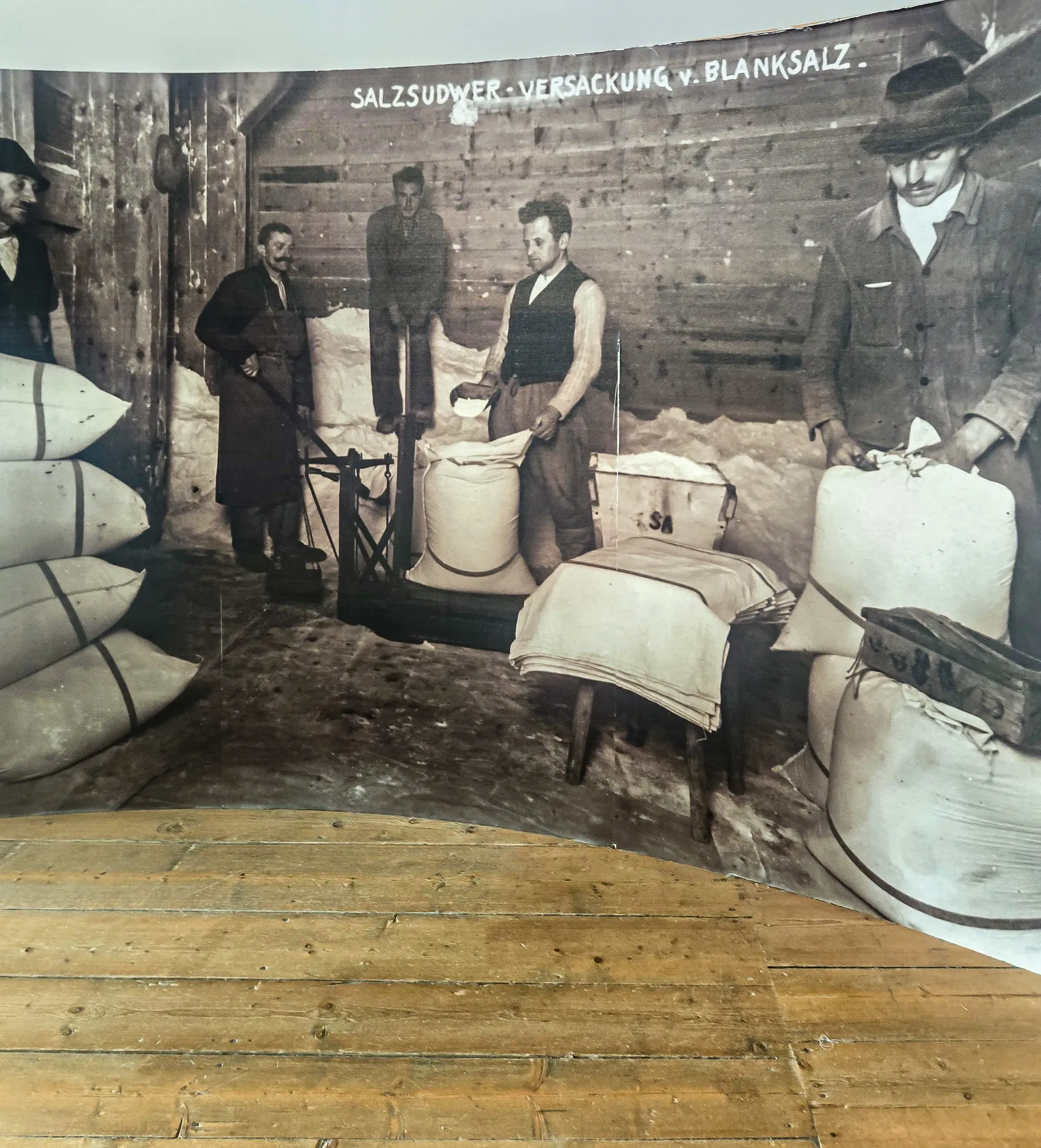
Entering Salzwelten Hallstatt is a deep journey into the heart of the world's oldest salt mine, a subterranean labyrinth steeped in over 7,000 years of history. Over the course of the 90-minute tour, you follow your guide through ancient tunnels, witness breathtaking multimedia shows across a mystical underground salt lake, and stand before Europe's oldest wooden staircase, dating back to 1344 BC. But the absolute highlights are pure, adrenaline-pumping fun: flying down a thrilling 64-meter wooden miners' slide to descend deeper into the earth, and finally exiting the mountain aboard a fast, open-air mine train.
Coffee with a view: Rudolfsturm and the Skywalk
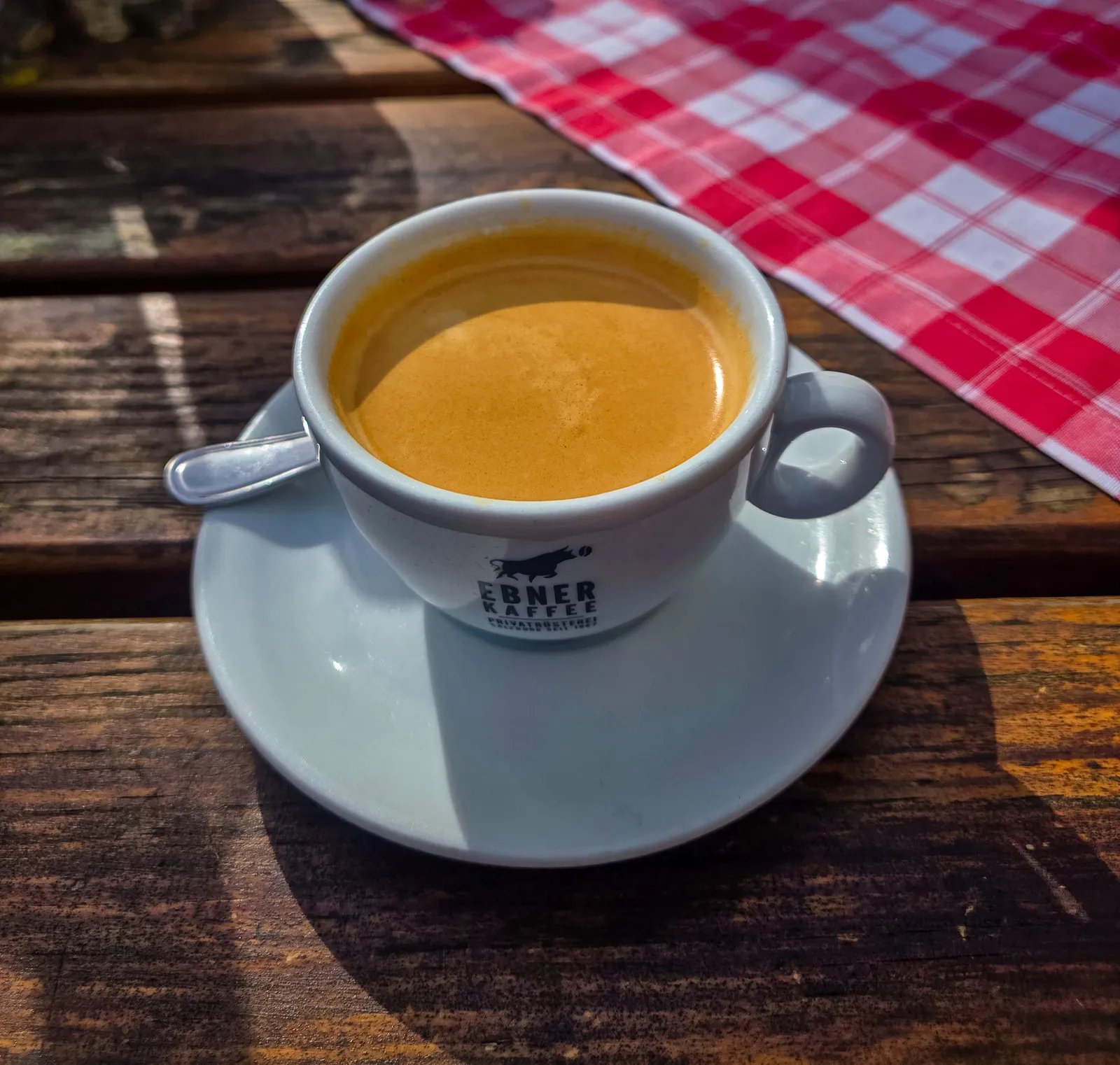
After wrapping up our underground salt mine tour, we headed back out into the daylight and made our way down to the Rudolfsturm and Skywalk. Originally constructed in the late 13th century as a medieval defense tower to protect the region's invaluable salt trade, the Rudolfsturm has beautifully evolved over the centuries into a charming panoramic restaurant and cafe.
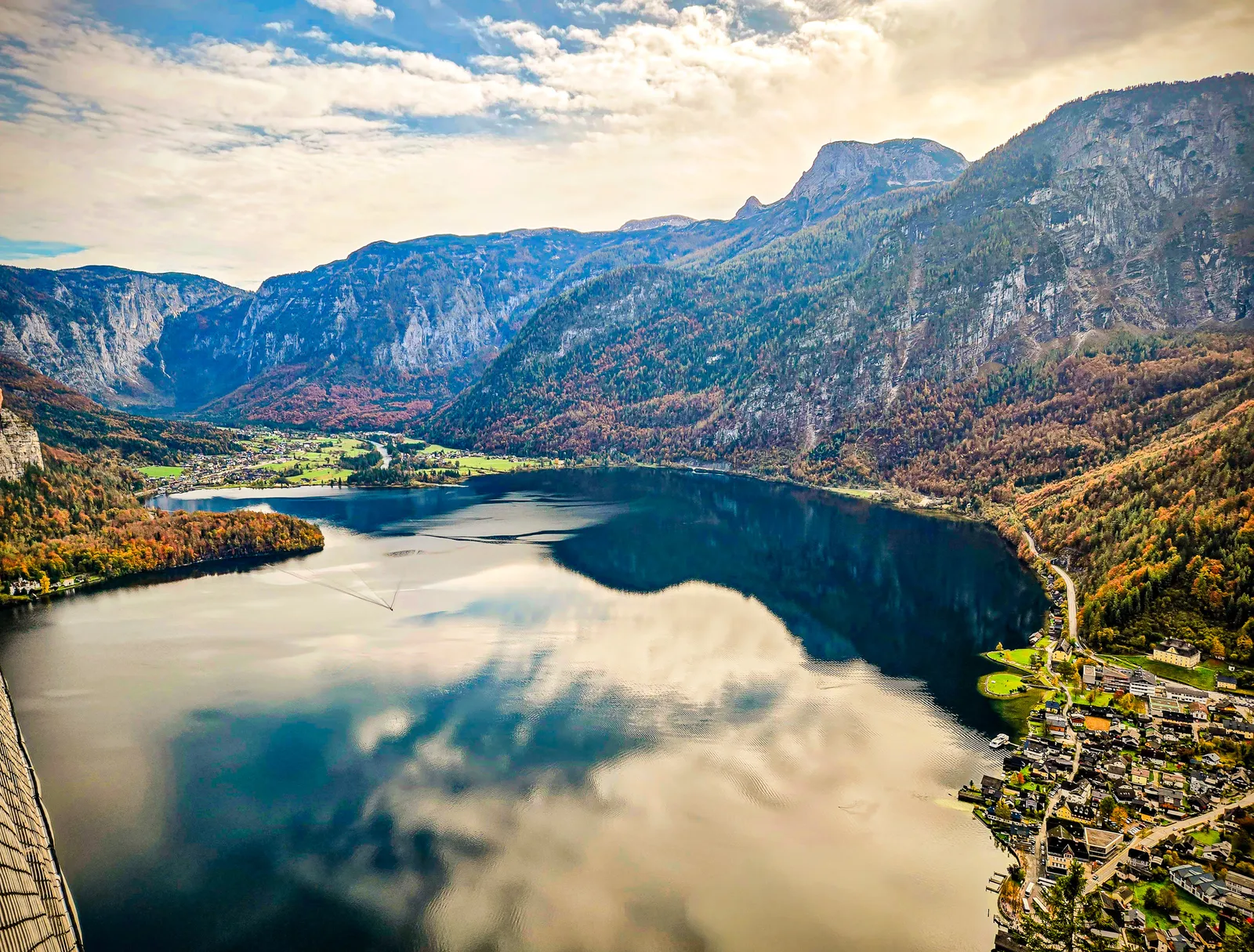
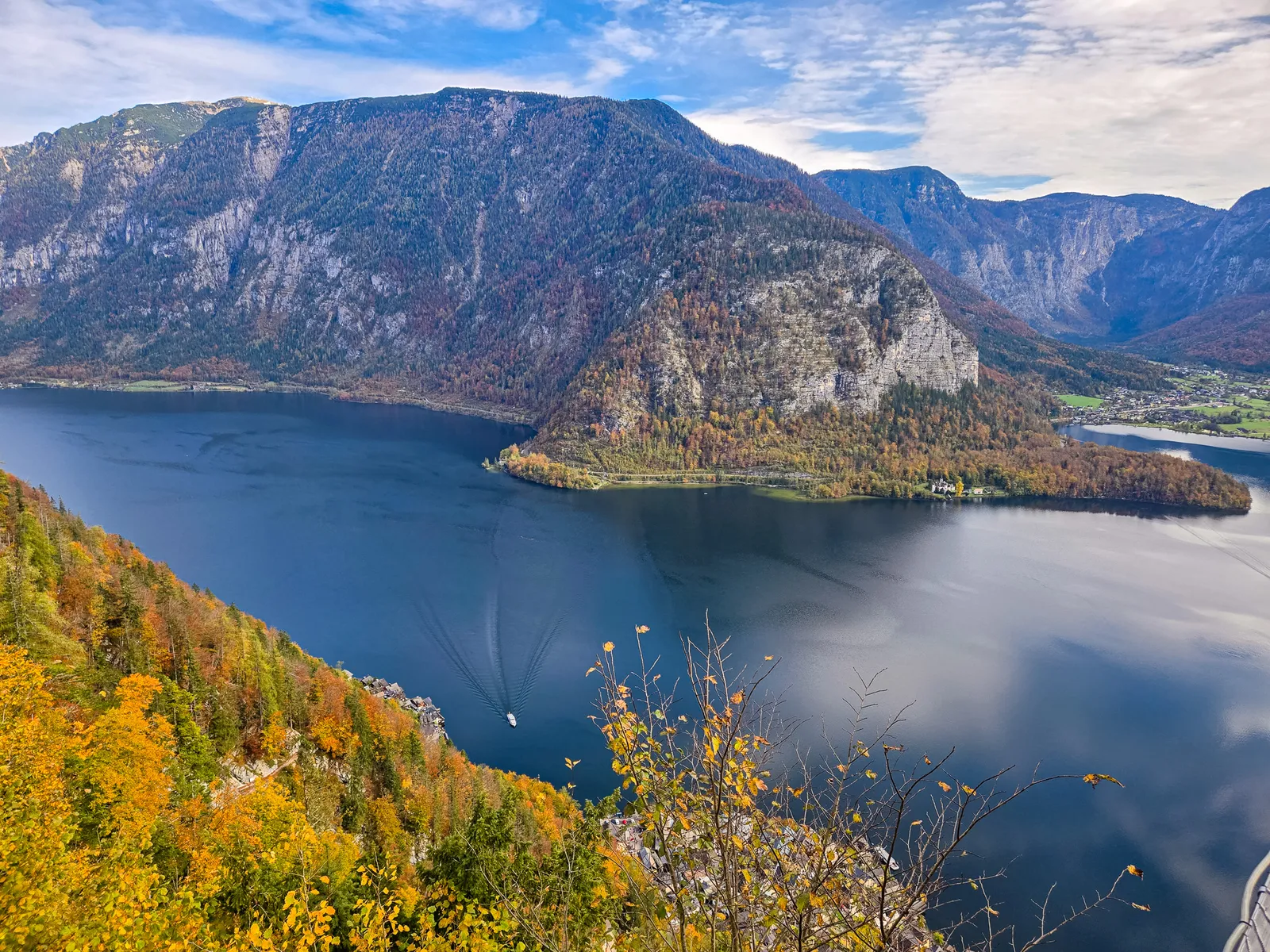
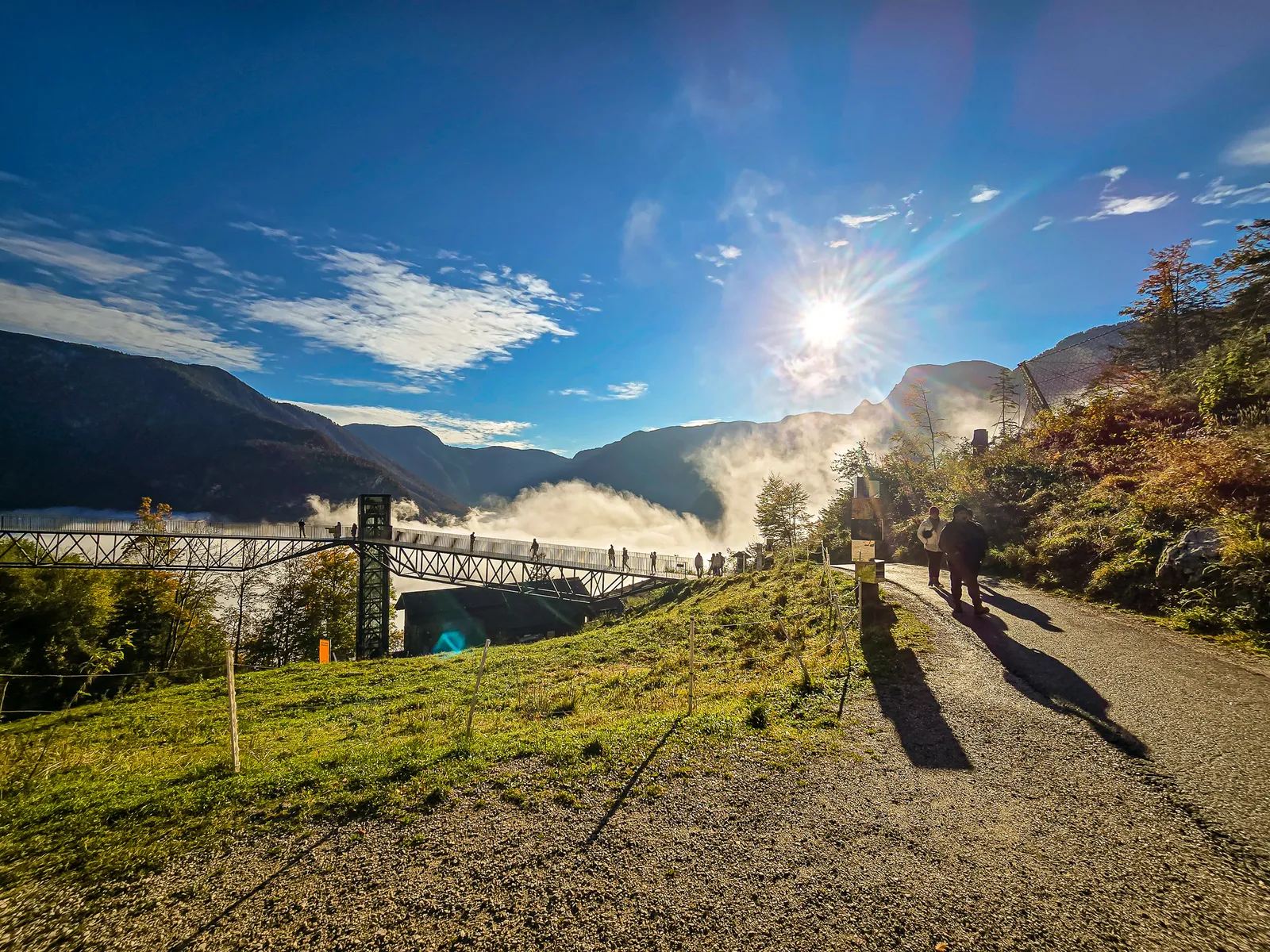
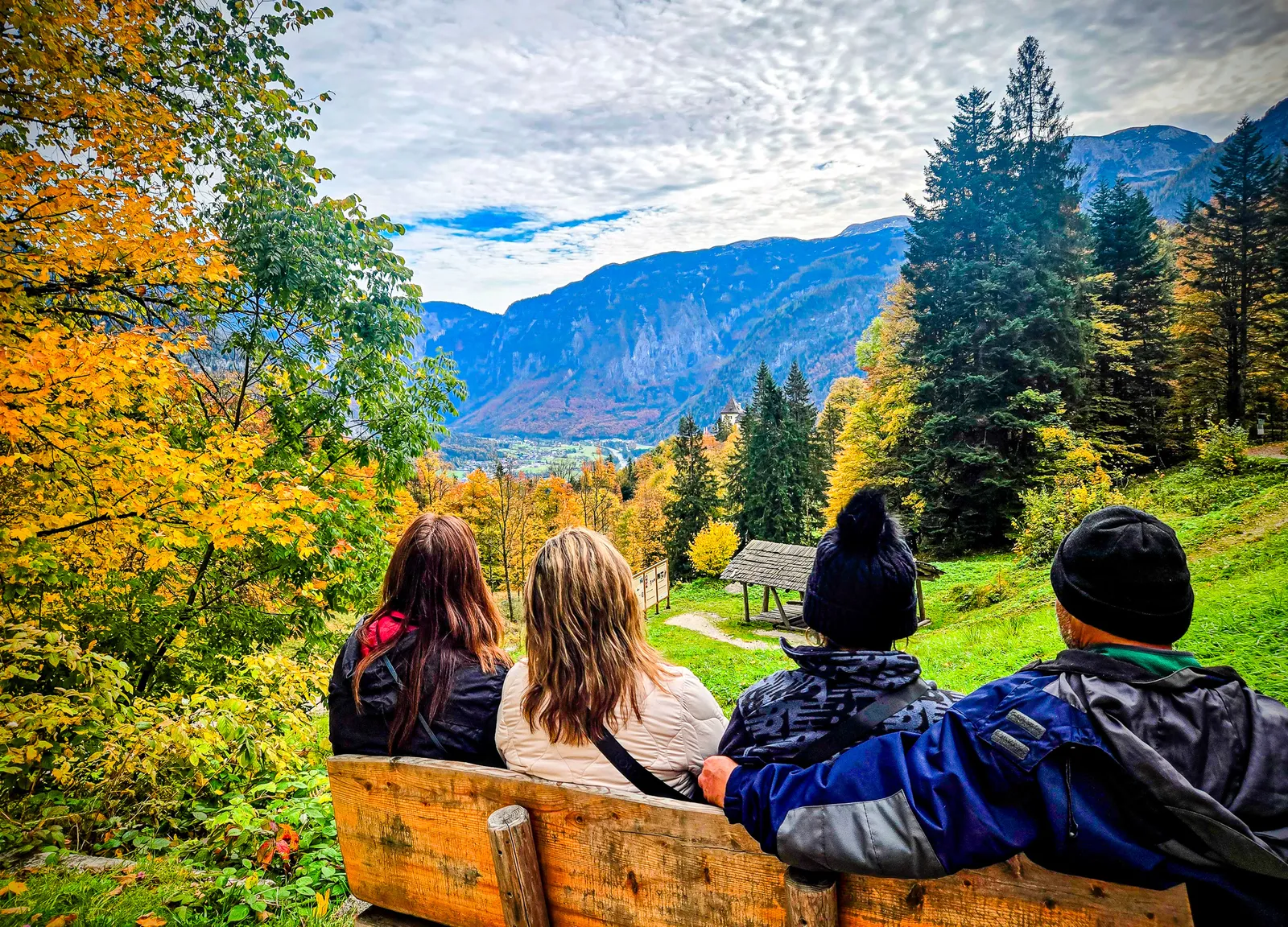
We managed to grab an outdoor table on the terrace, treating ourselves to hot coffee alongside a truly spectacular view of fjord-like Lake Hallstatt and the sweeping alpine valley below. Just beneath the restaurant sits the famous Hallstatt Skywalk, a dramatic steel viewing platform that juts 12 meters out over a sheer abyss. Standing at the point, suspended nearly 1,200 feet directly above the rooftops of Hallstatt, gave us an unforgettable, 360-degree look at the UNESCO World Heritage region. It was the absolute perfect spot to unwind and take in the sheer scale of the landscape after a morning spent deep inside the mountain.
Walking through limestone and touching the sky
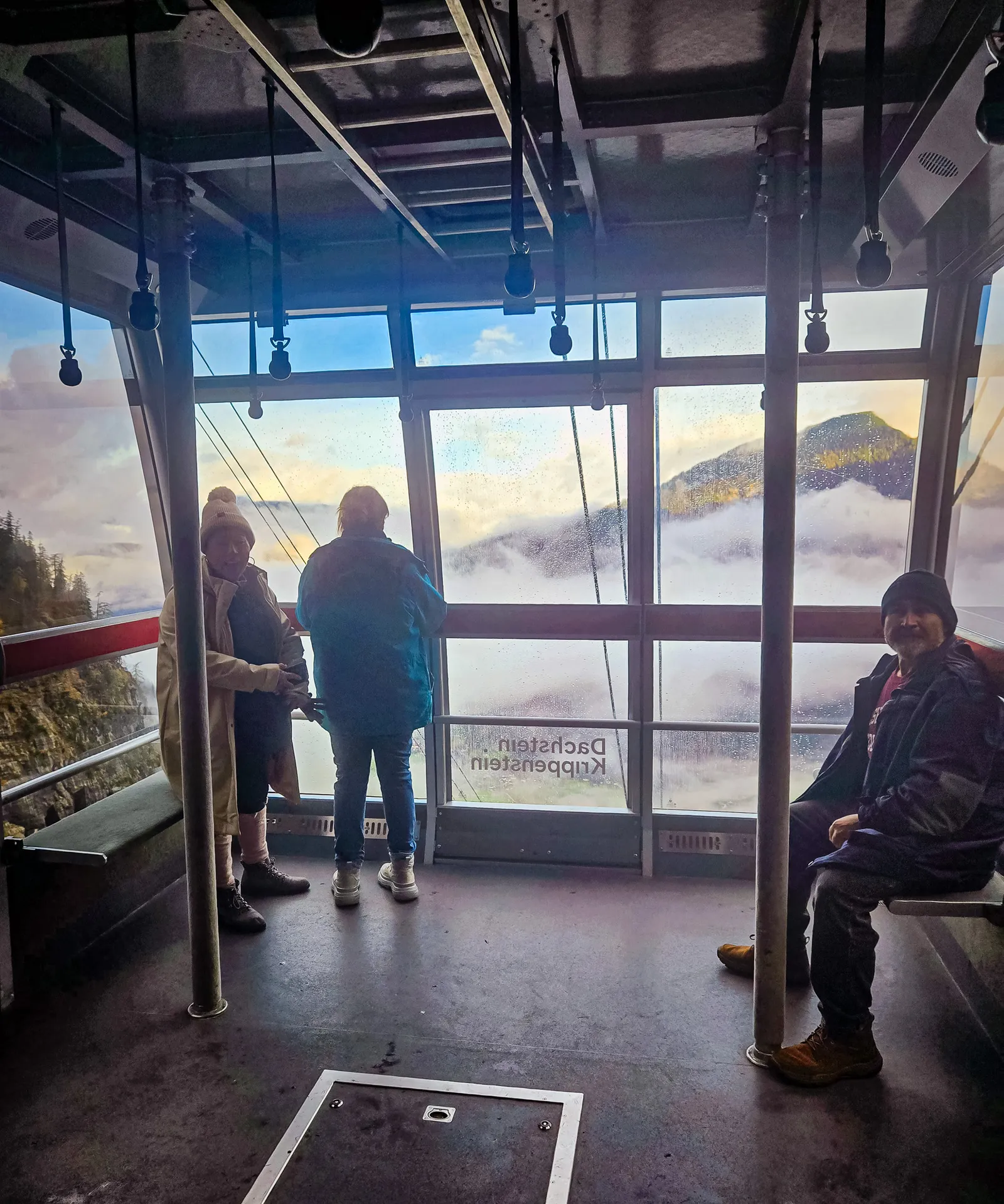
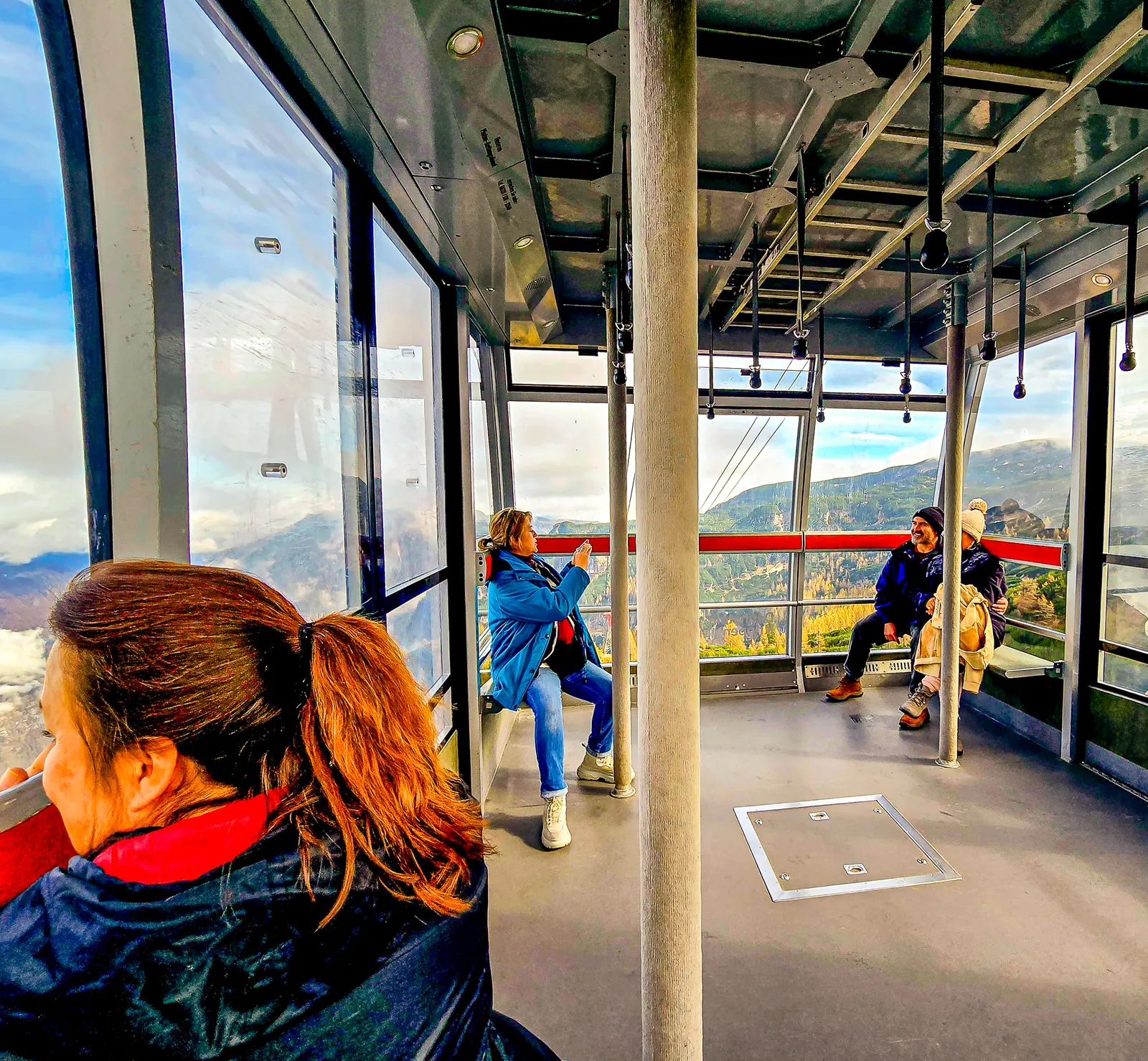
The following day, we drove around Lake Hallstatt to the Dachstein Krippenstein cable car station for a completely different kind of adventure. At the visitor center, we purchased the Dachstein All In One Ticket, which includes the multi stage cable cars and admission to the Dachstein Giant Ice Cave.
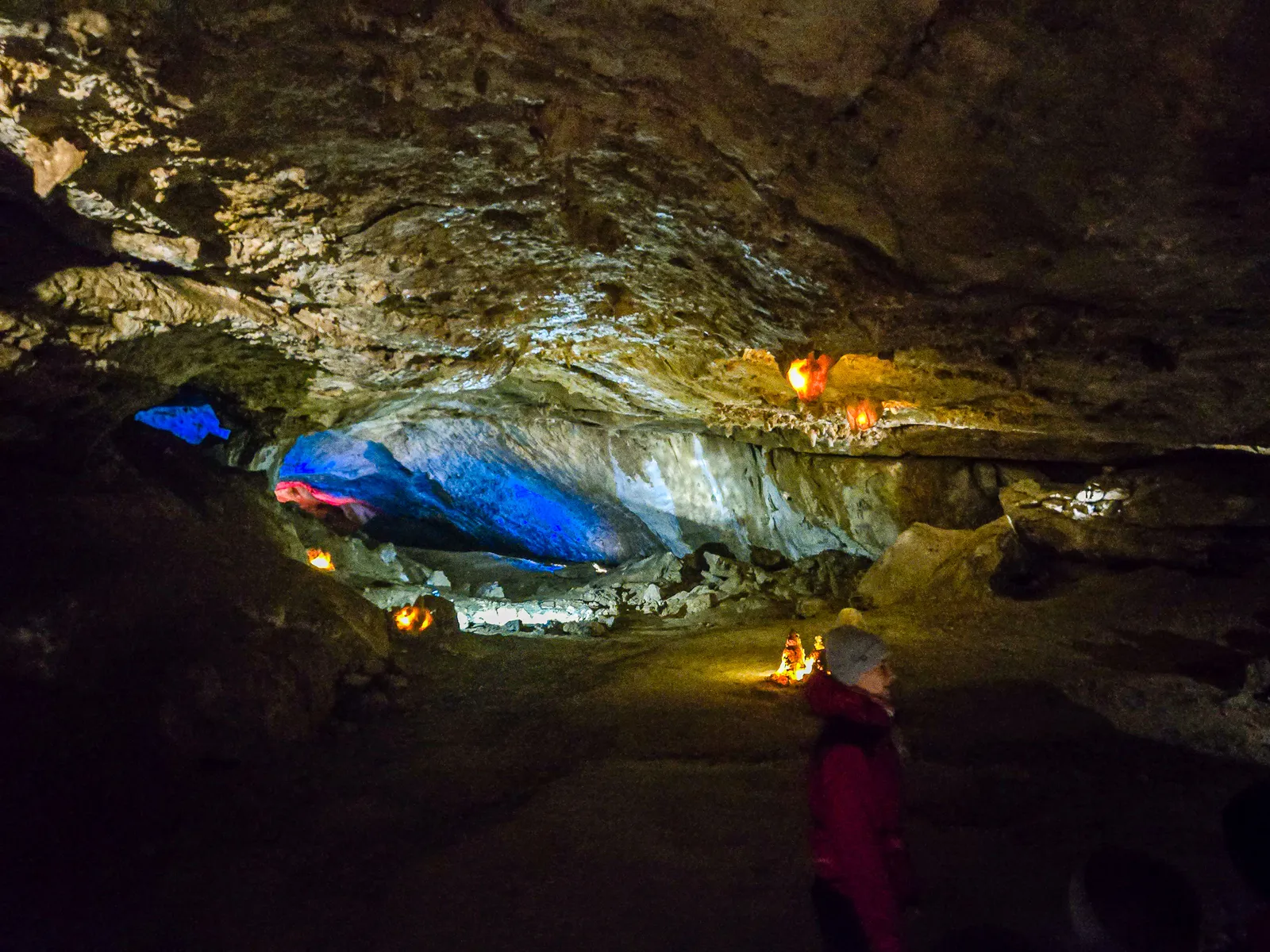
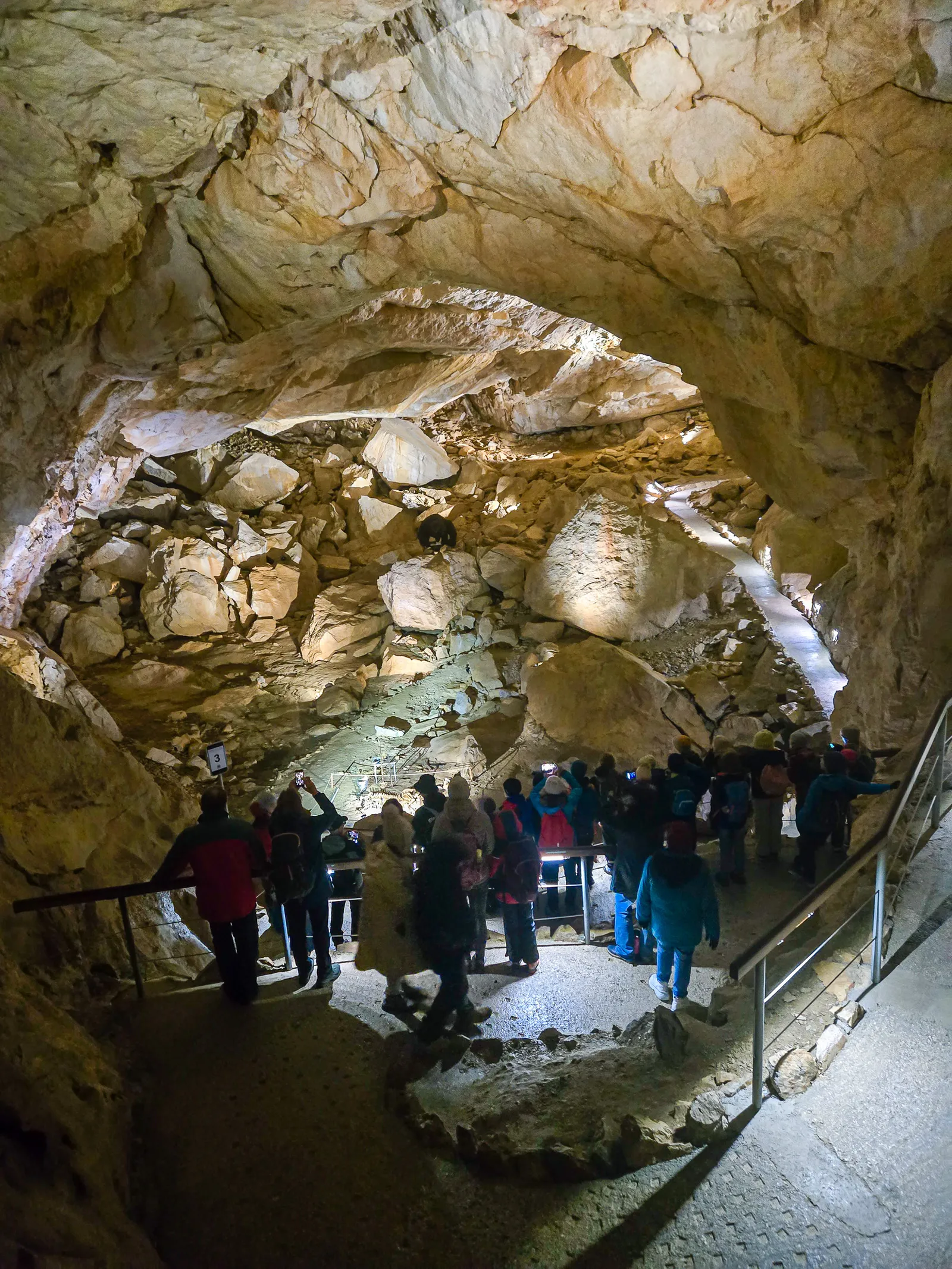
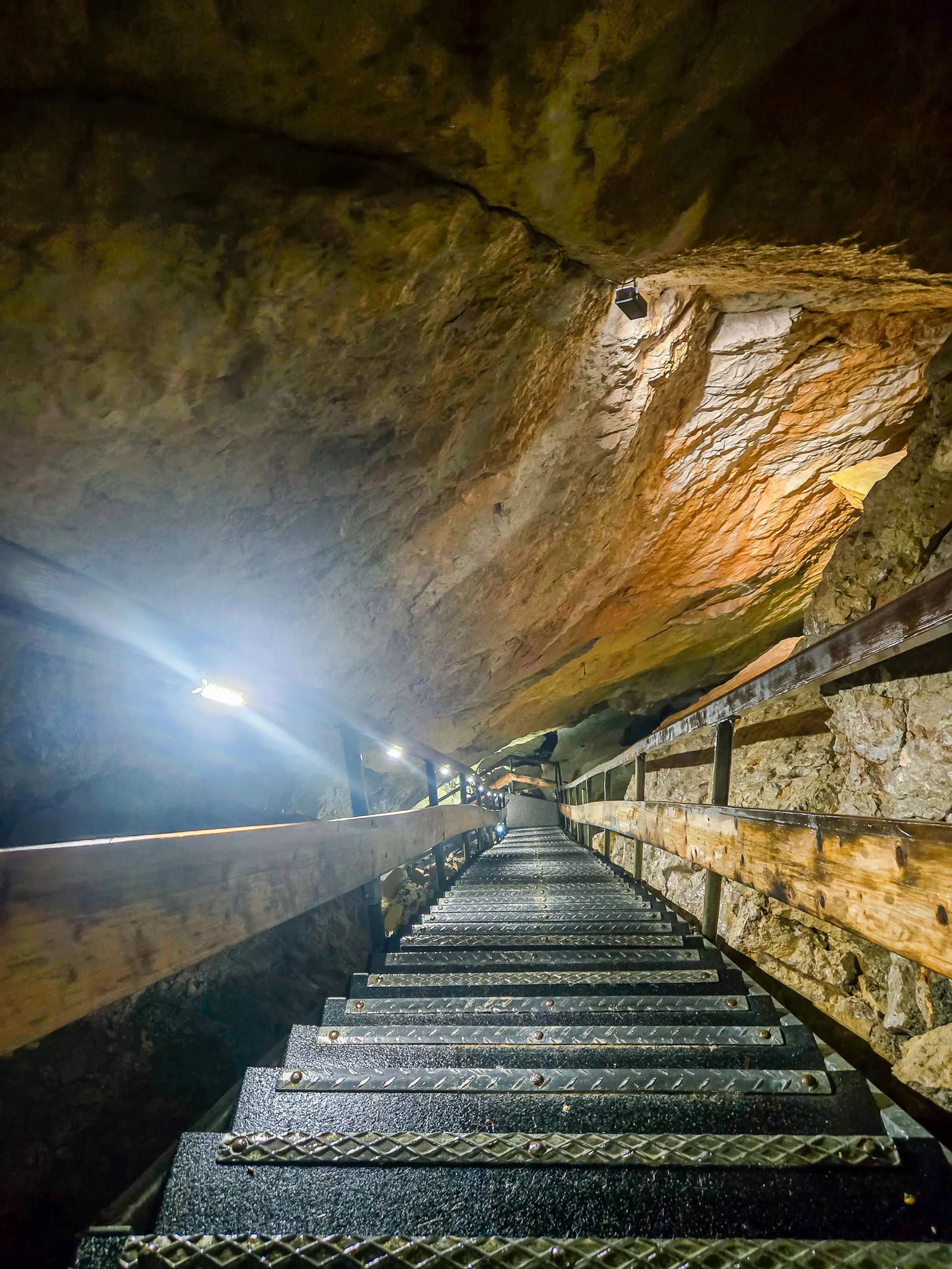
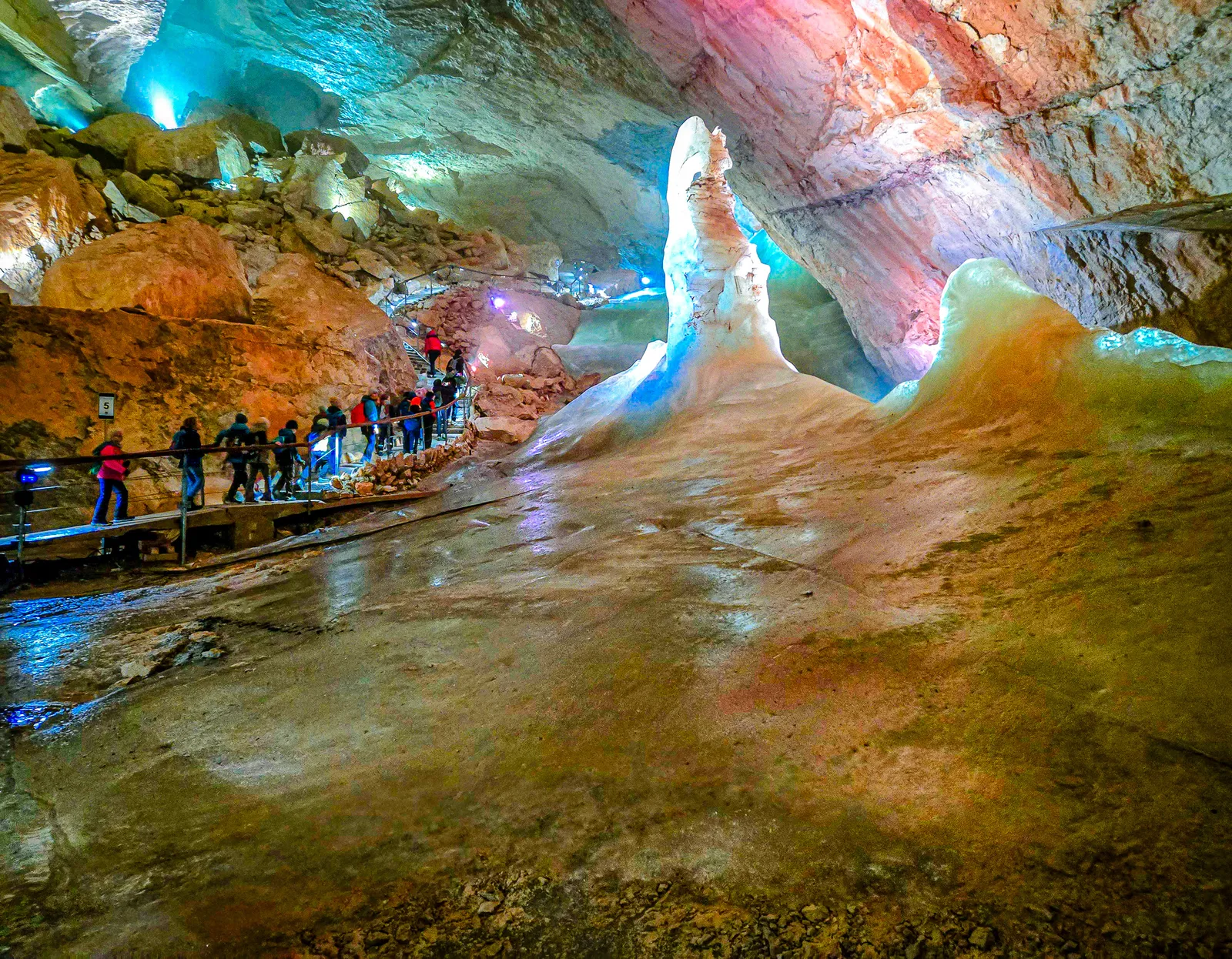
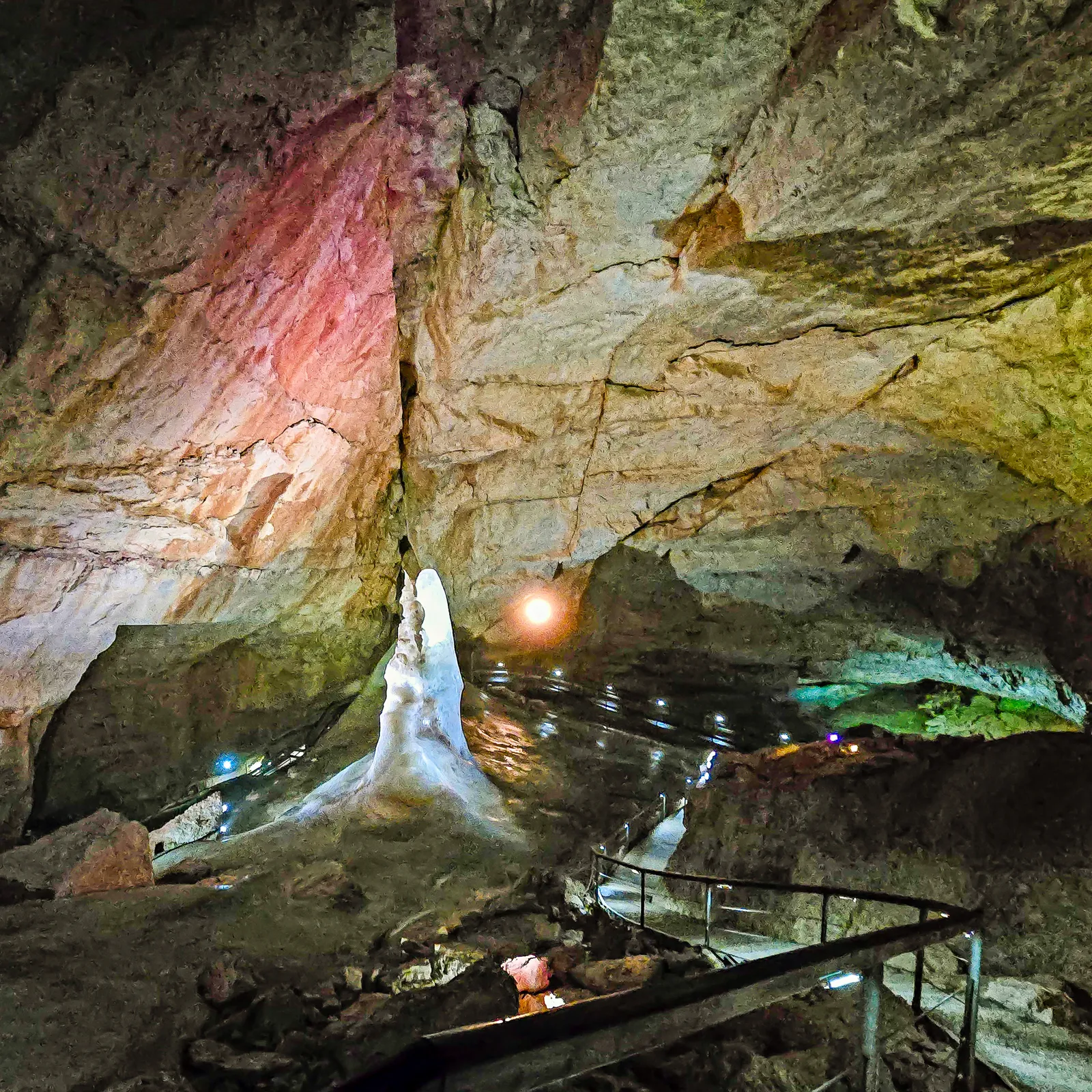
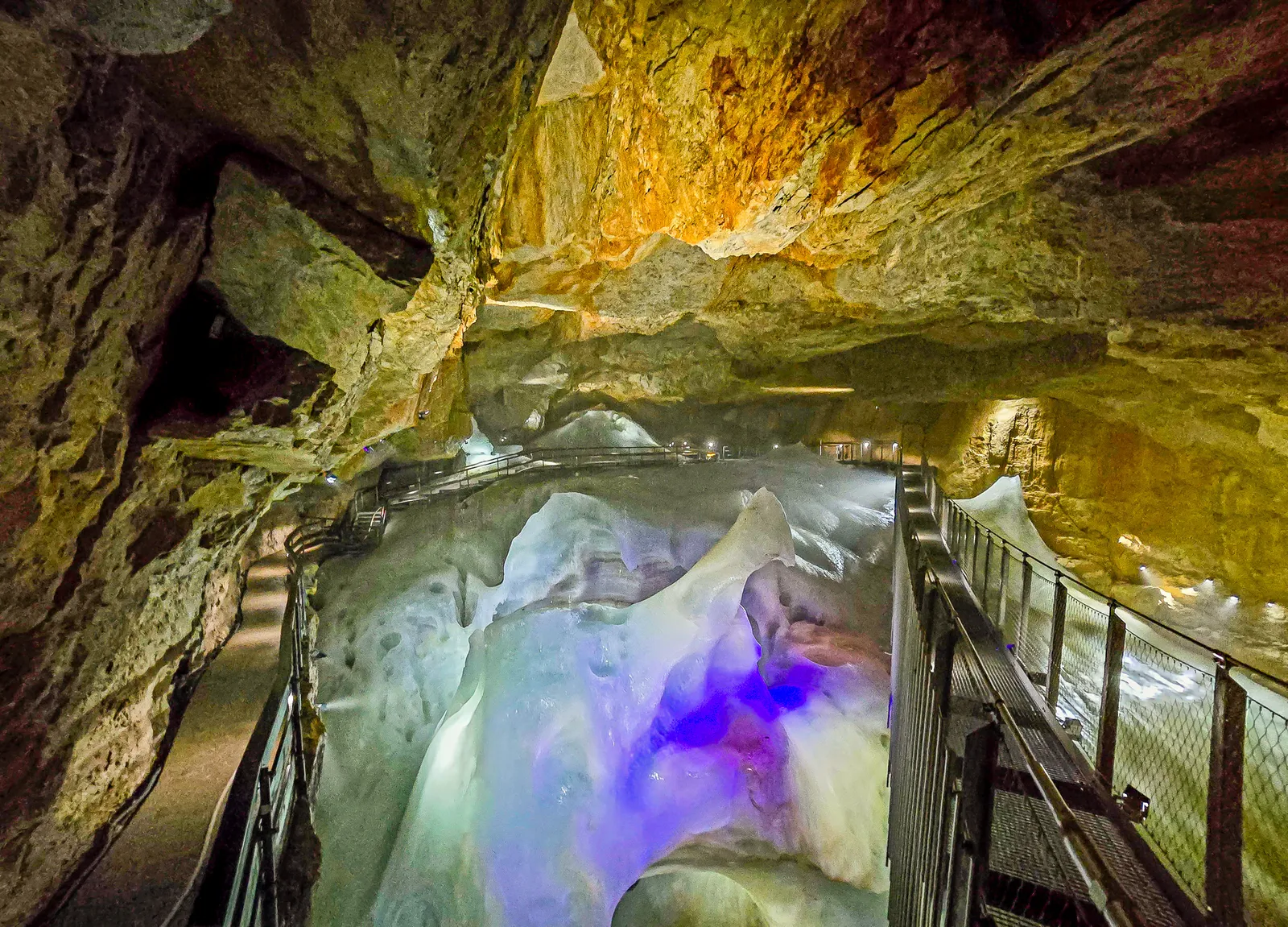
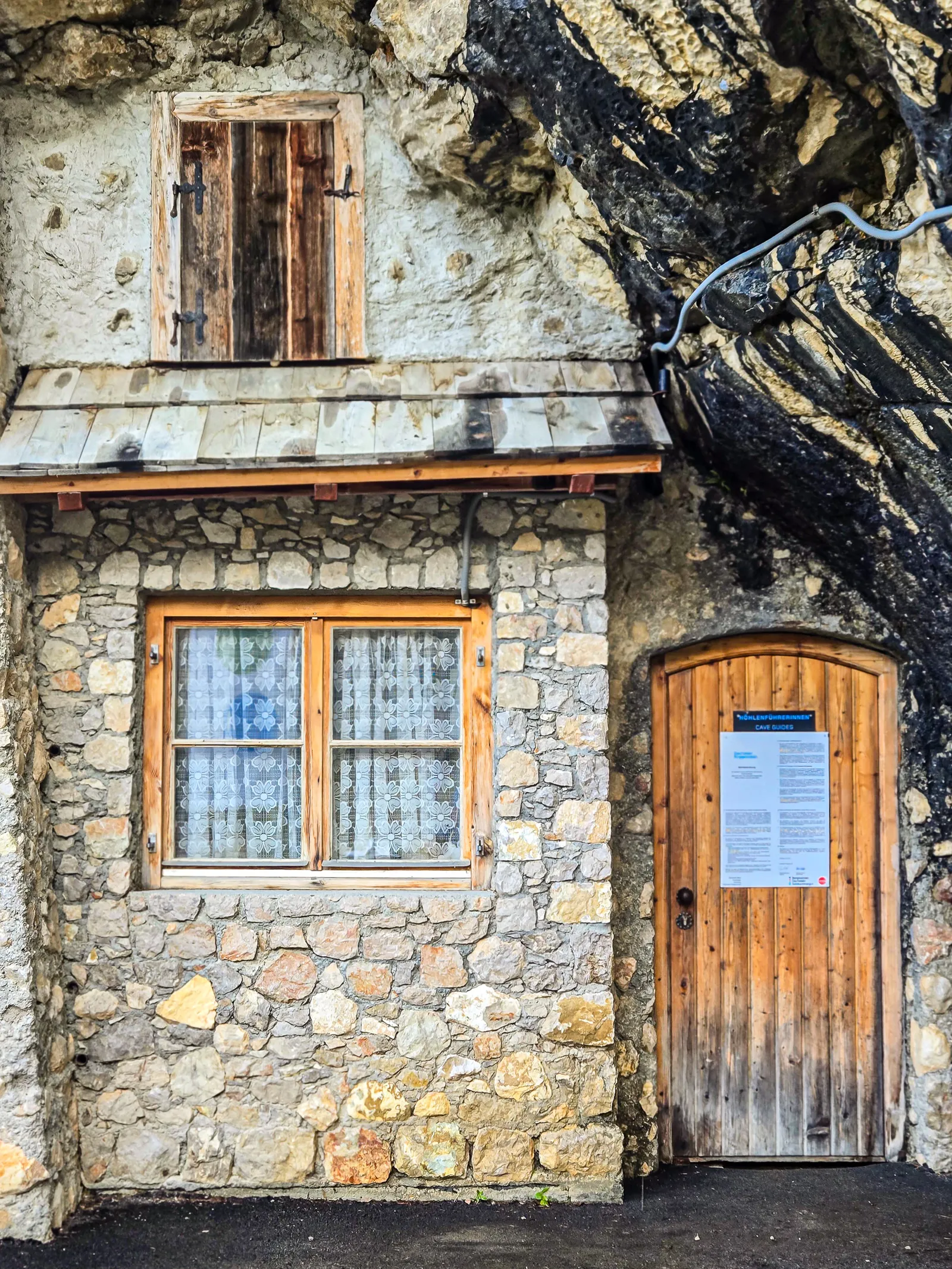
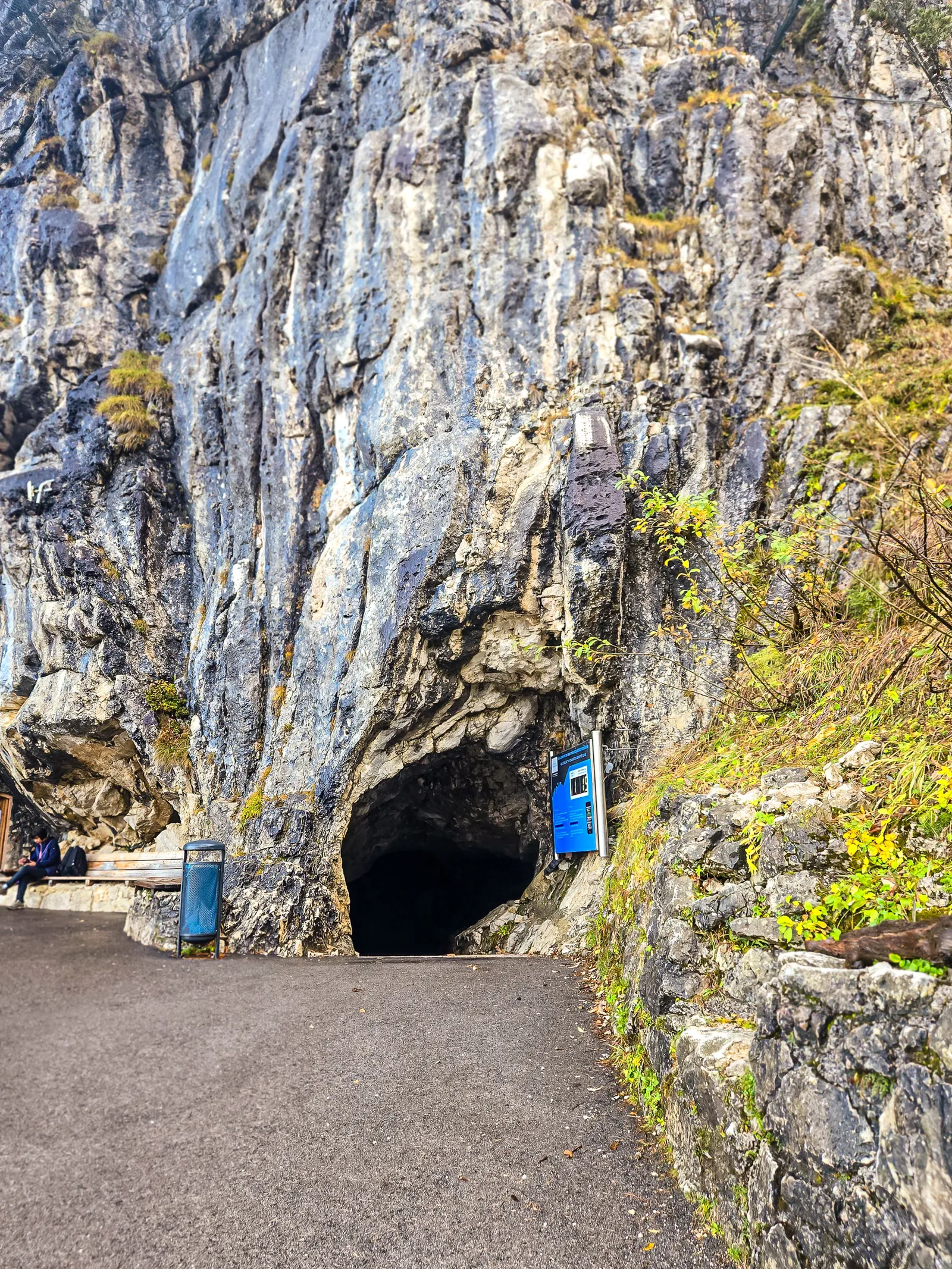
The first gondola carried us to Schönbergalm, where visitors are assigned an entry time before making the 20 minute uphill walk to the cave entrance. Stepping inside felt like entering another world. During the 50 minute guided tour, we explored vast limestone chambers filled with frozen waterfalls, towering ice formations, and a suspension bridge spanning an illuminated ice chamber.
One of the highlights was sharing the tour with a group of elementary school children. Their excitement and curiosity were contagious, making the visit even more enjoyable.
Afterward, we returned to Schönbergalm and boarded the second cable car toward the Krippenstein summit.
Five Fingers: suspended above the valley
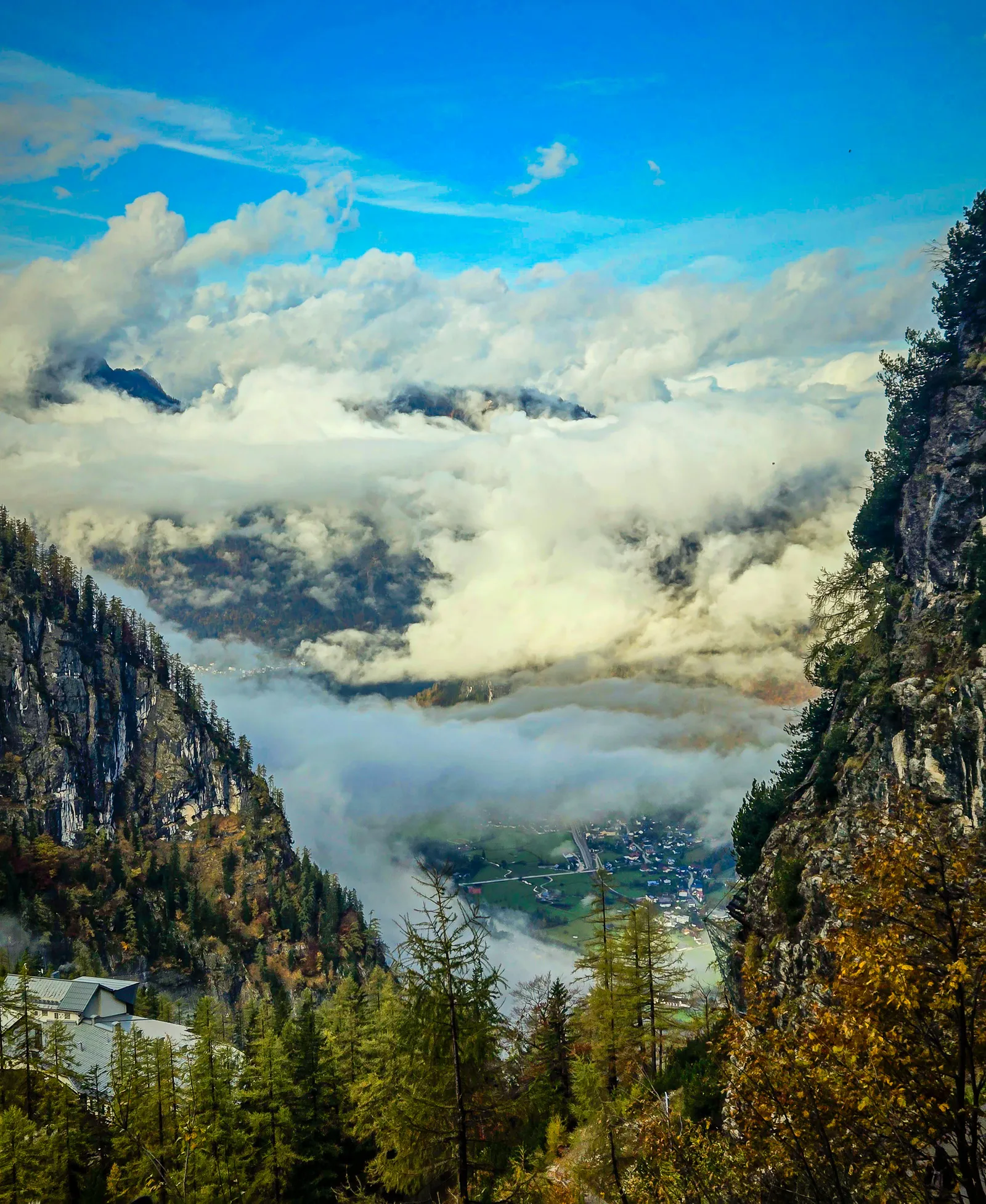
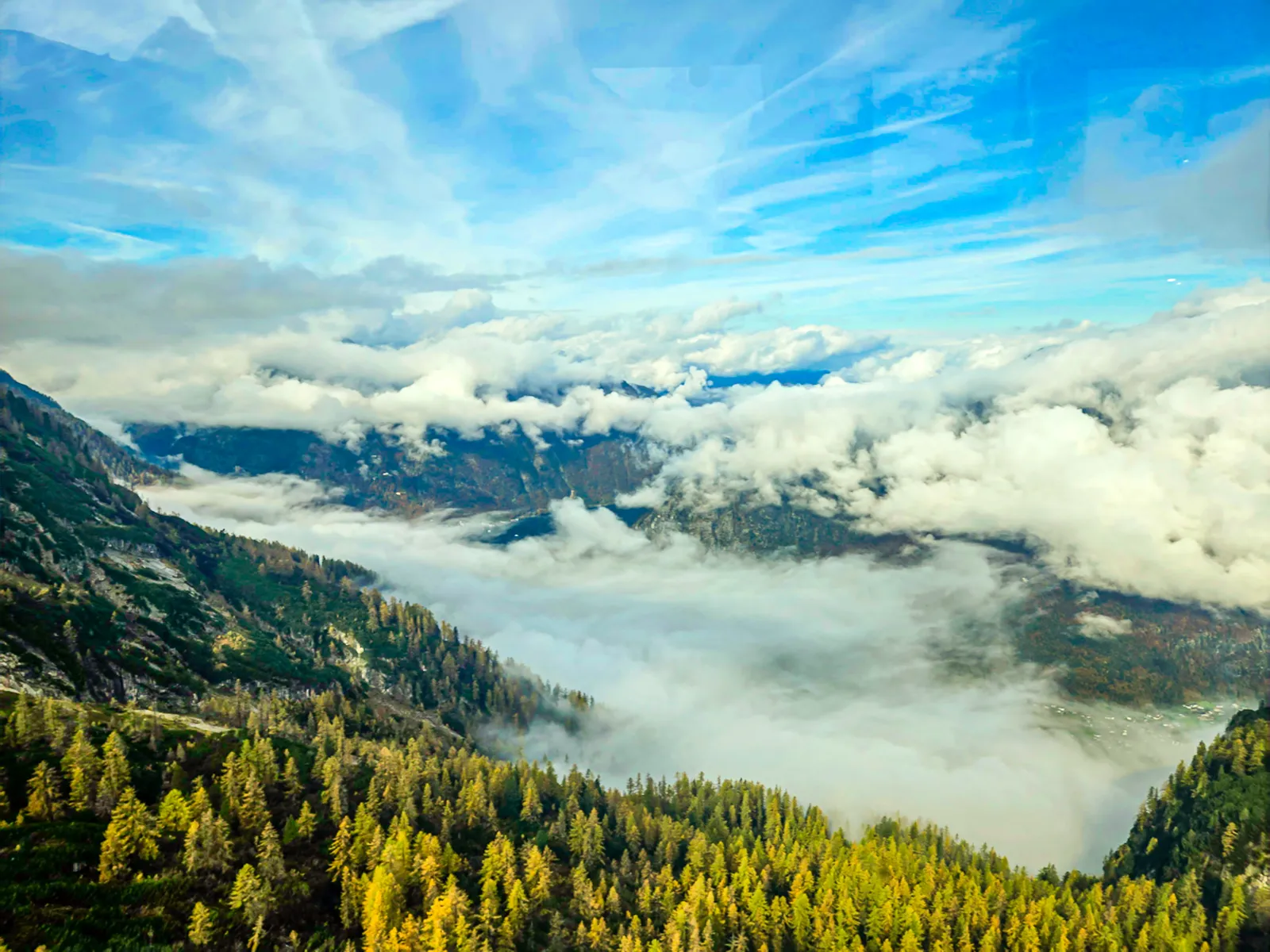
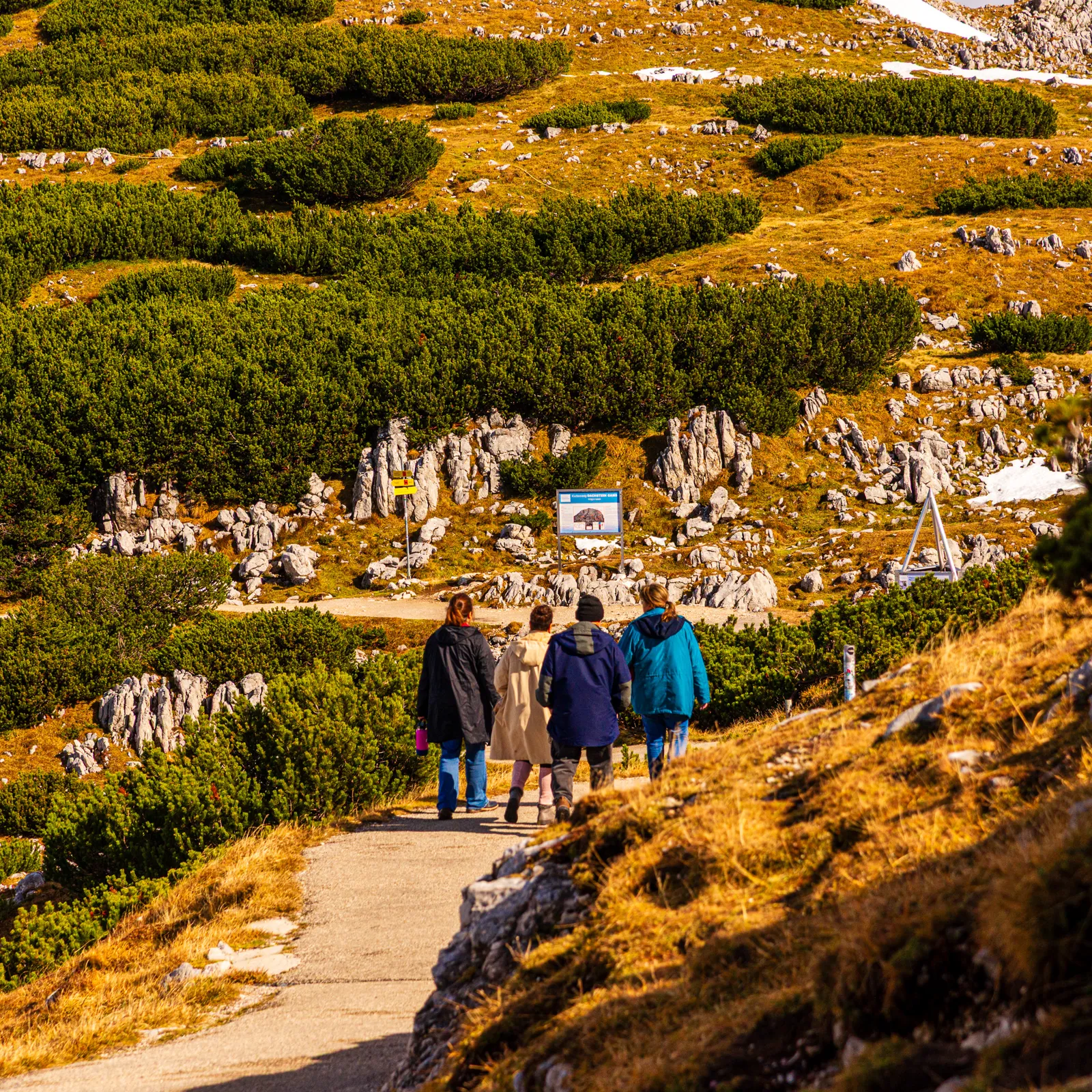
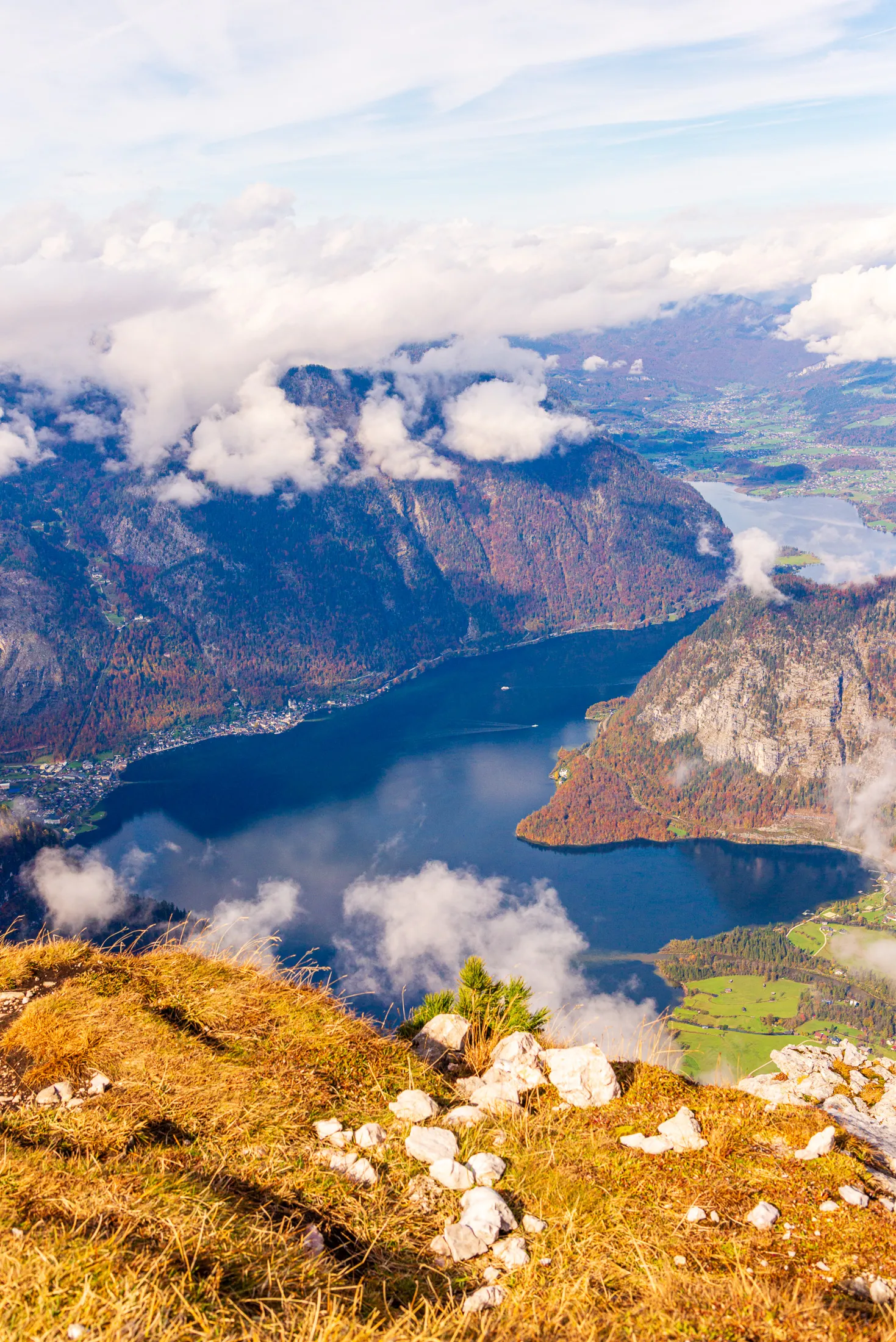
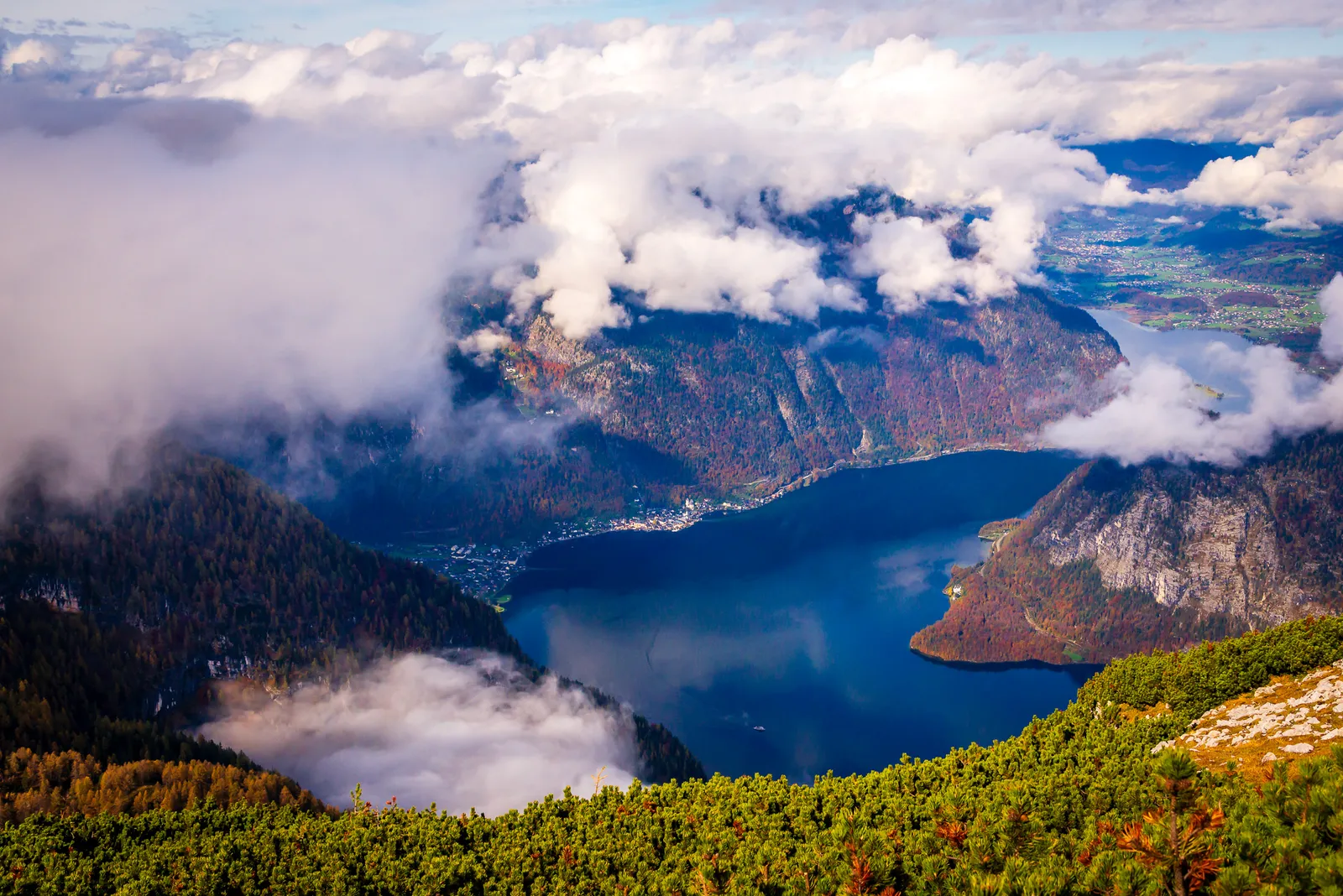
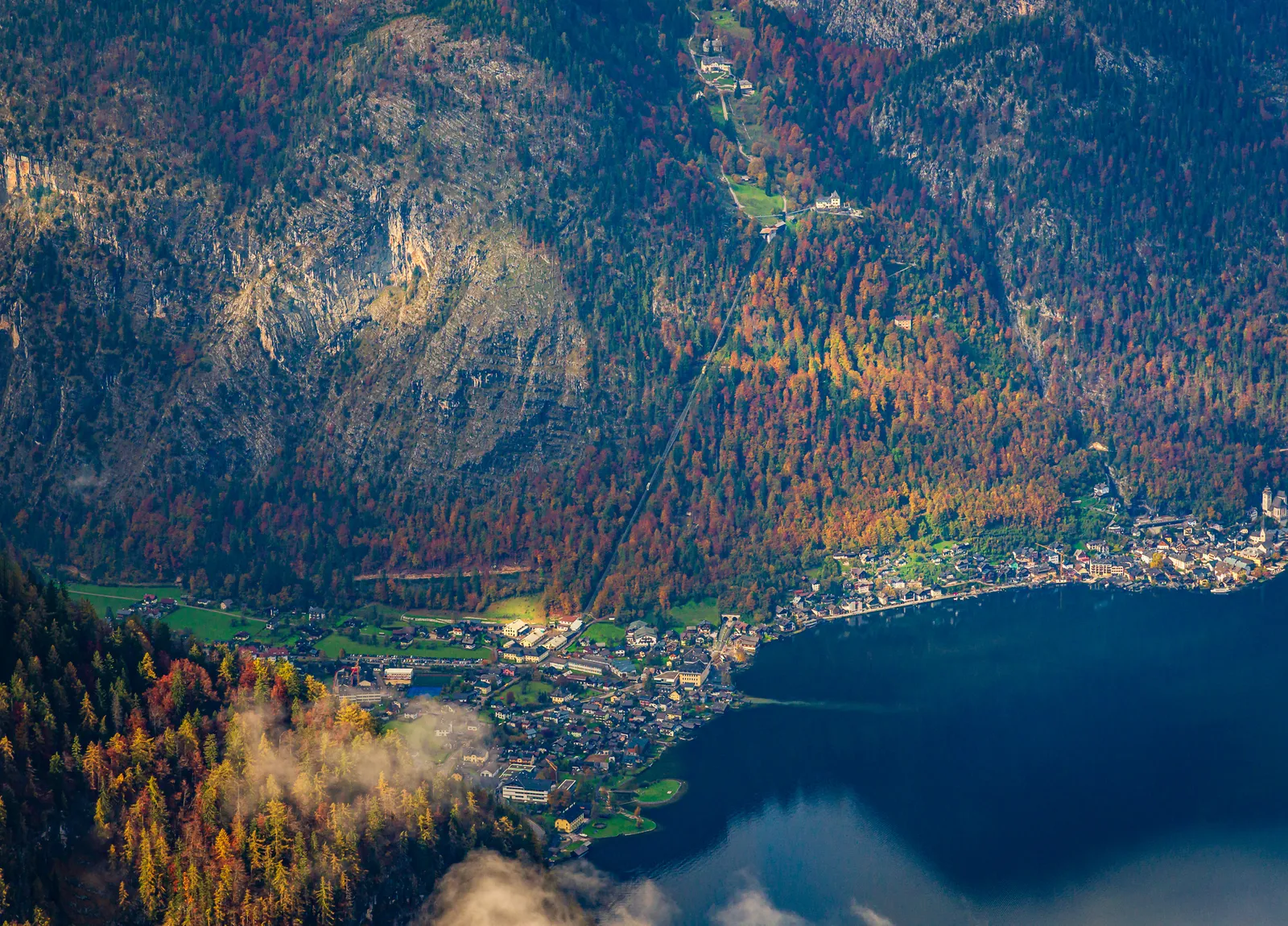
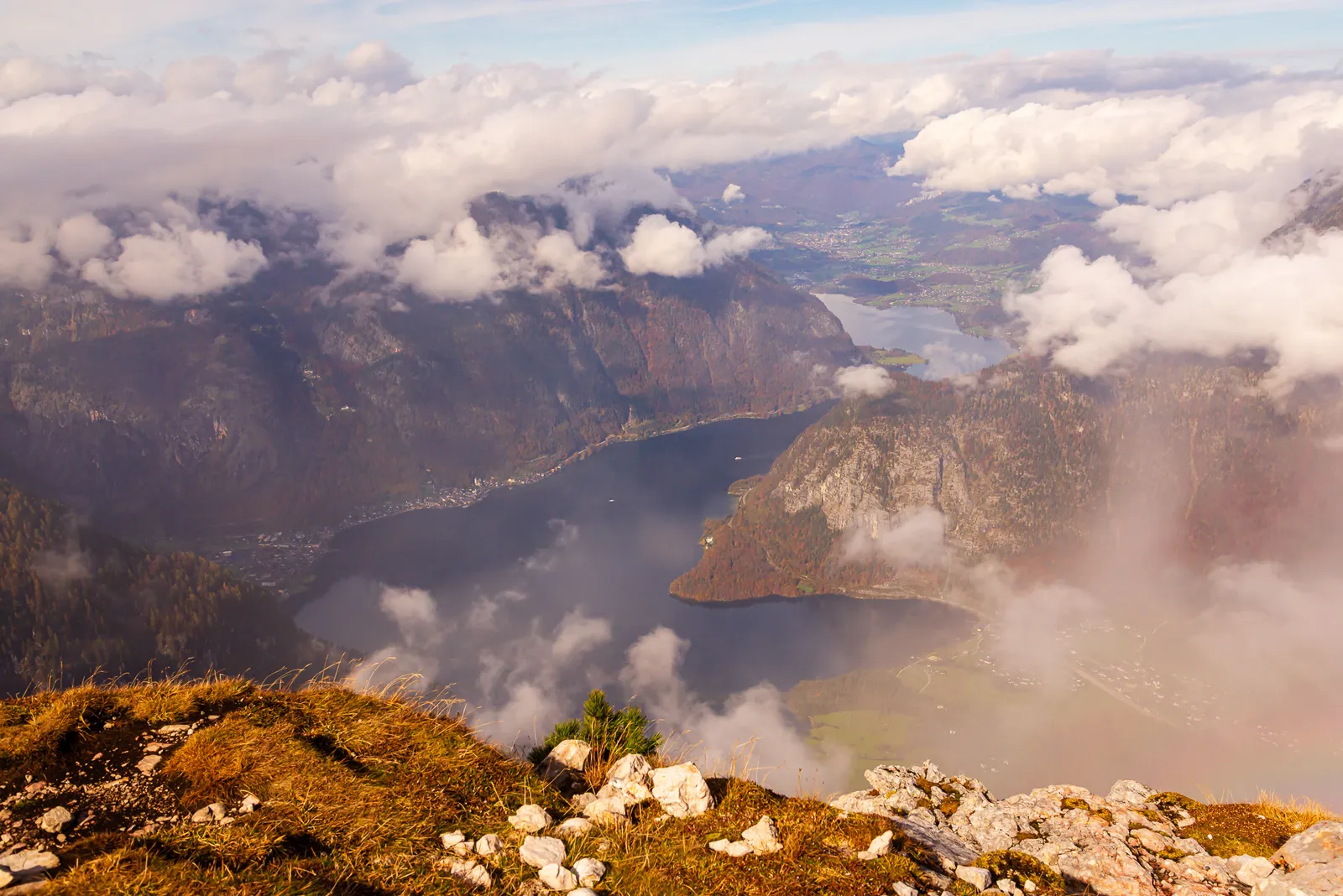
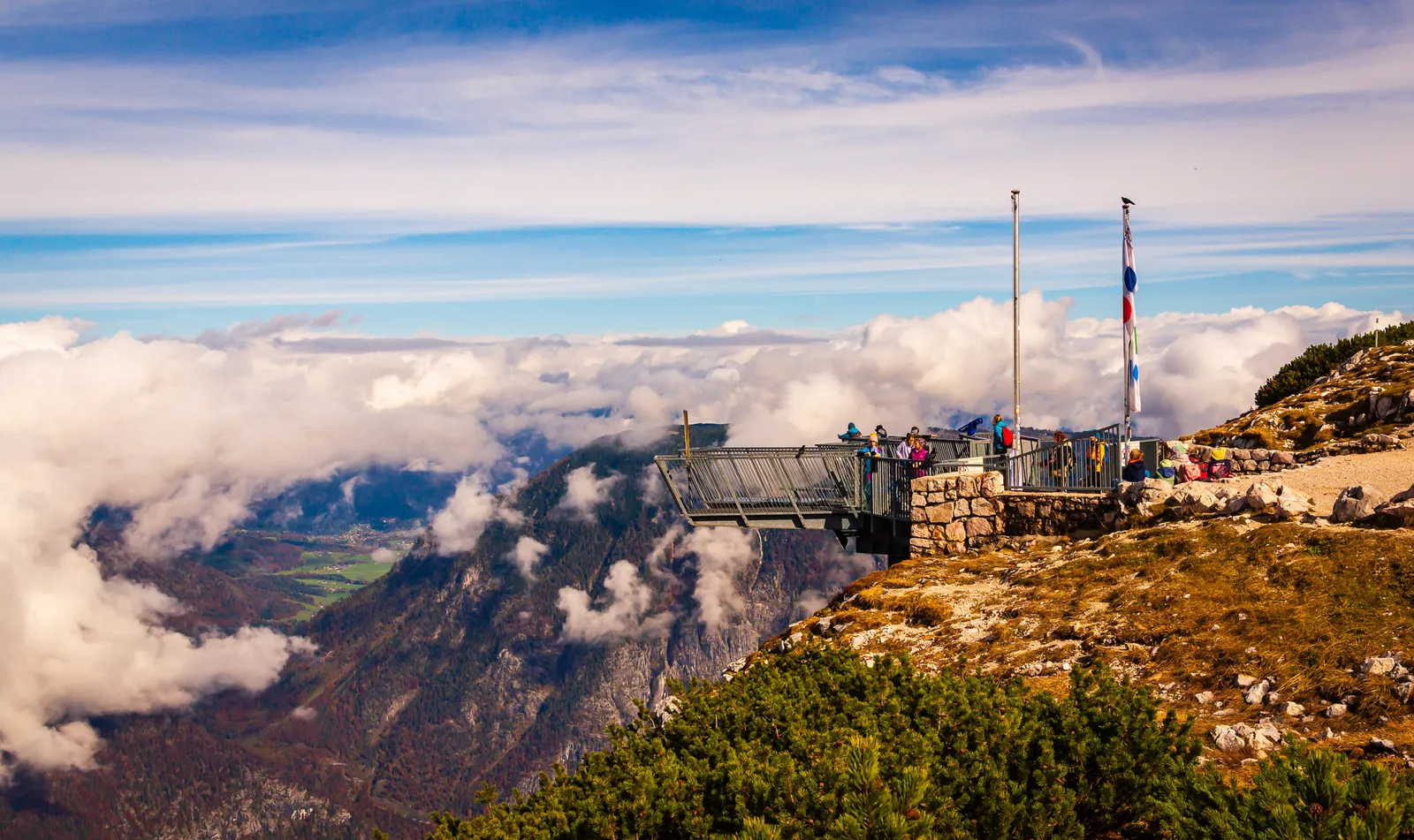
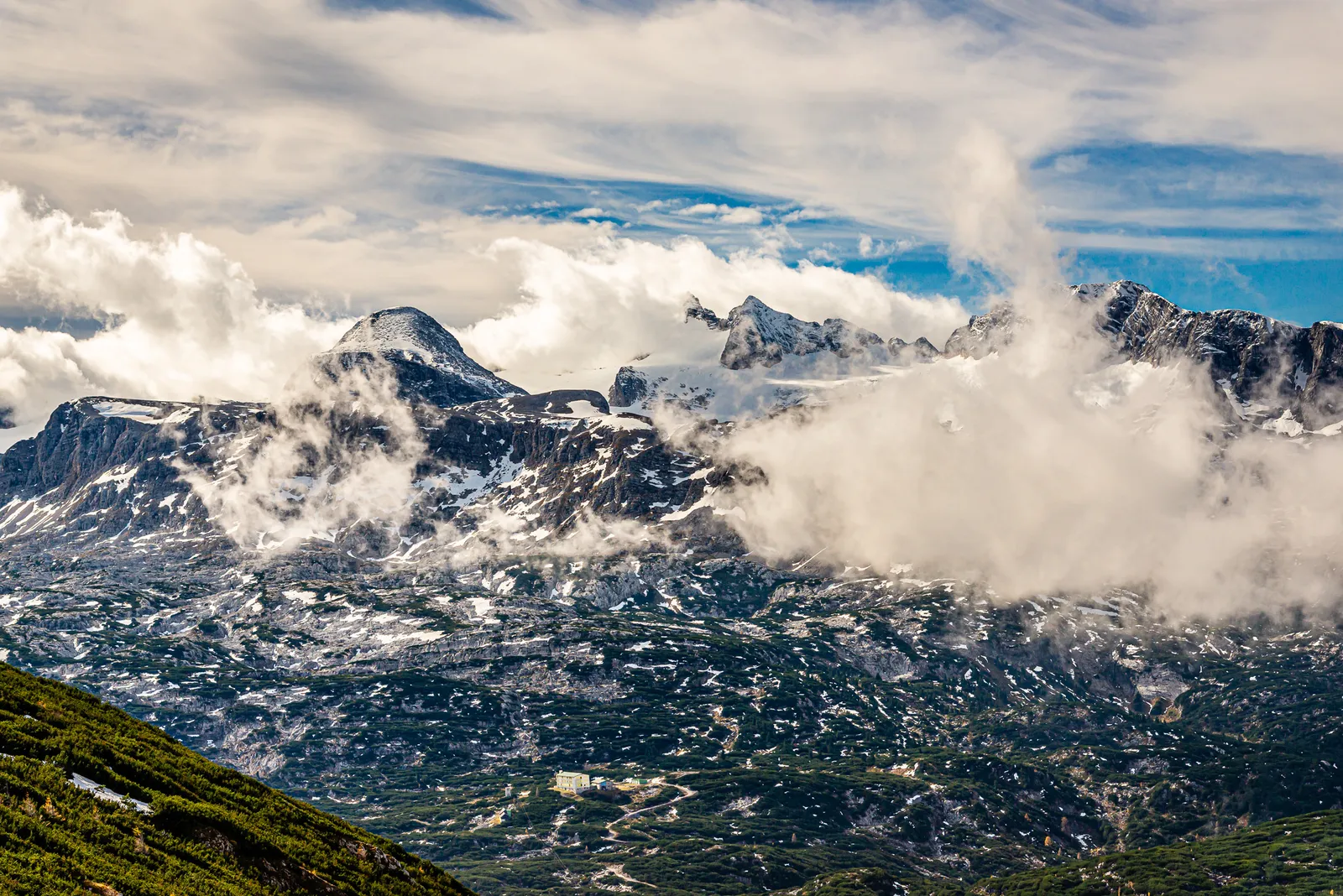
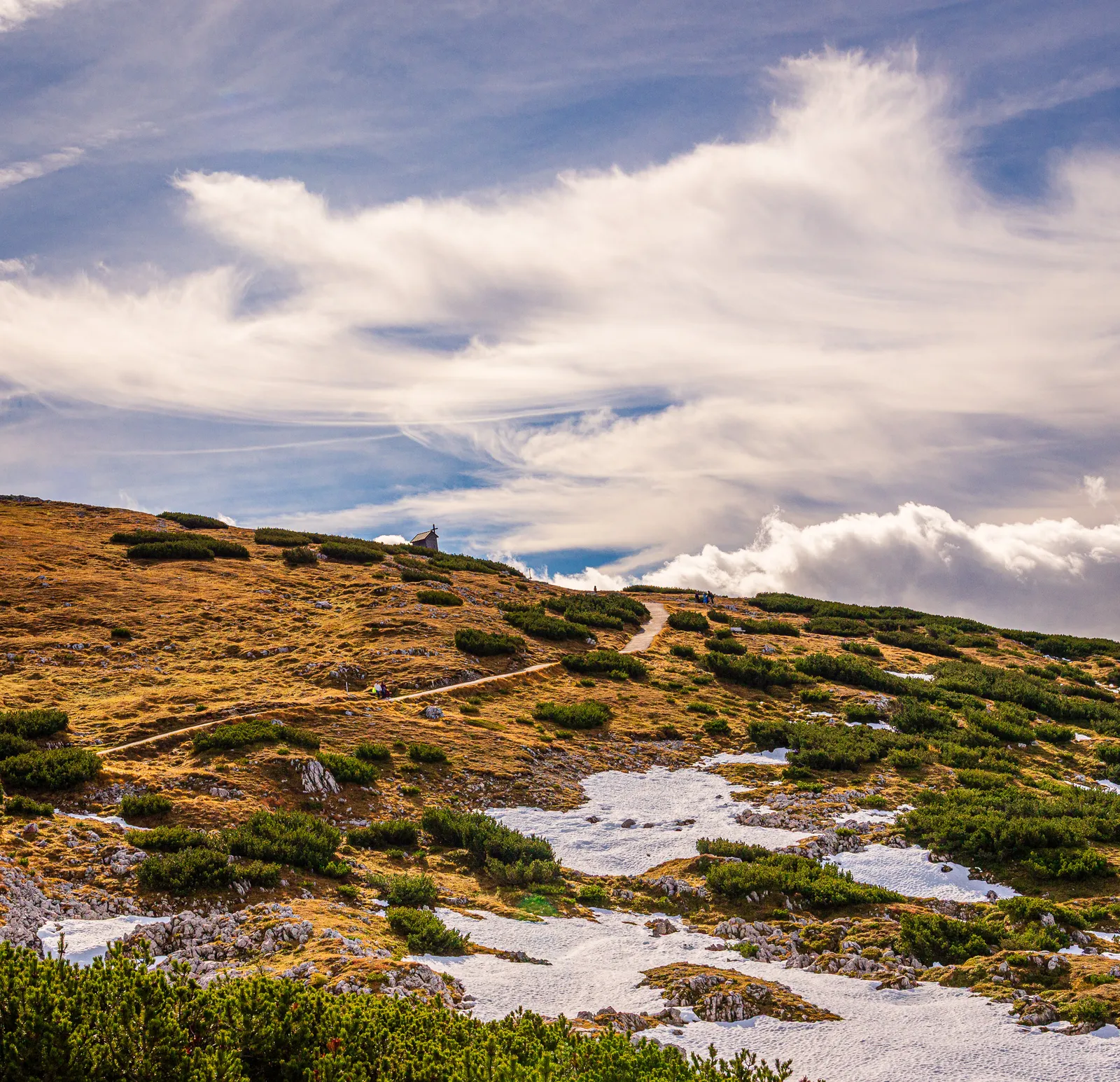
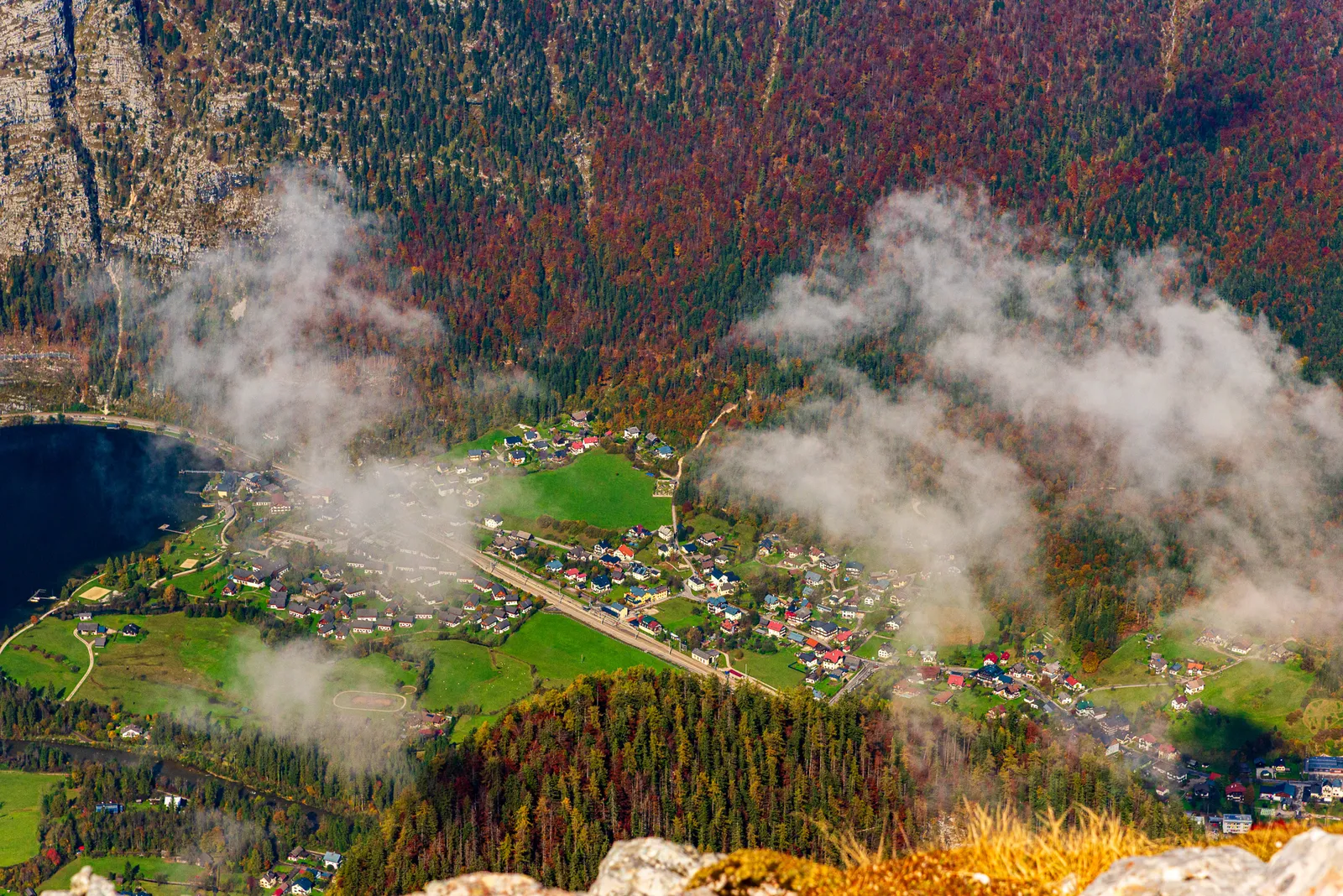
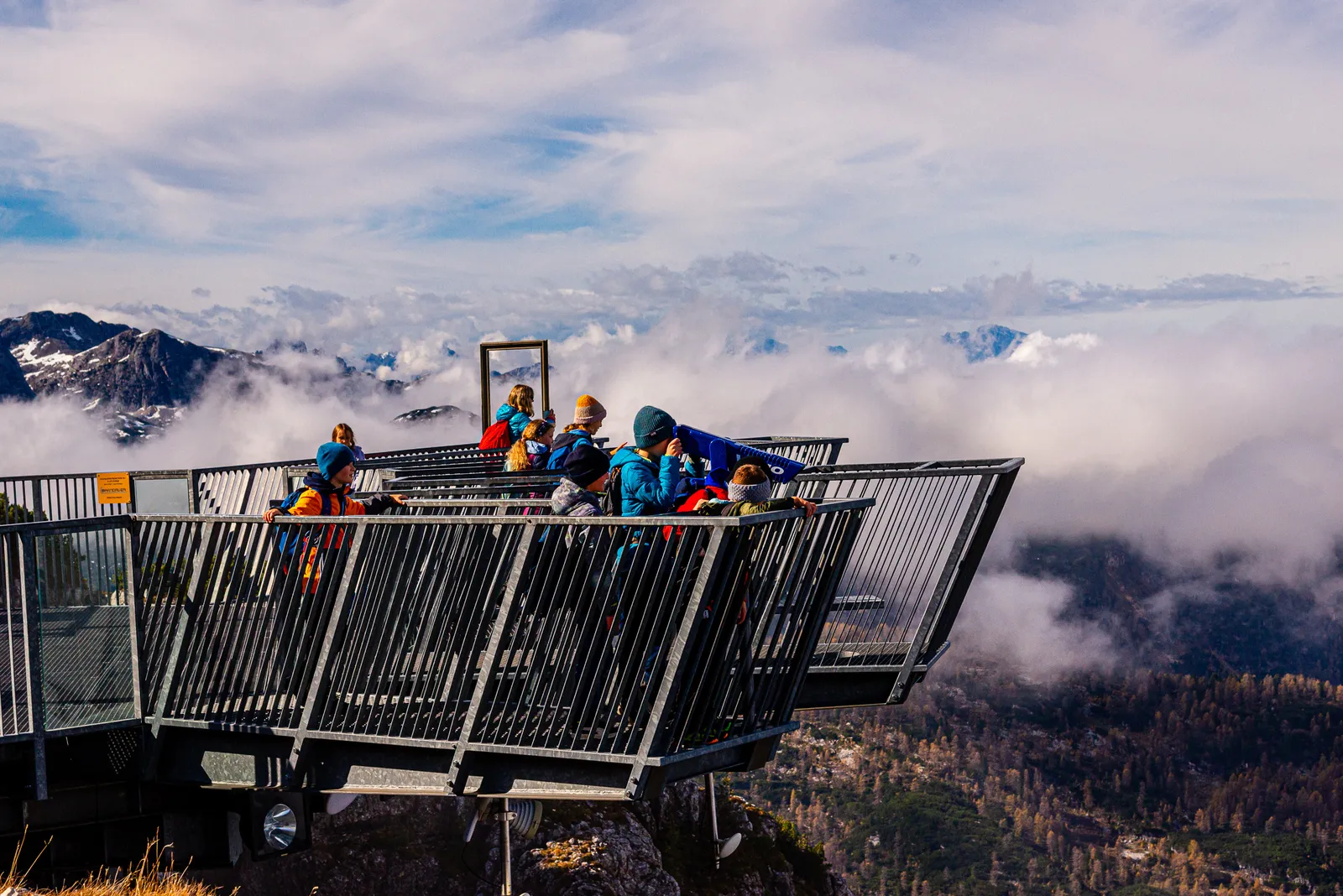
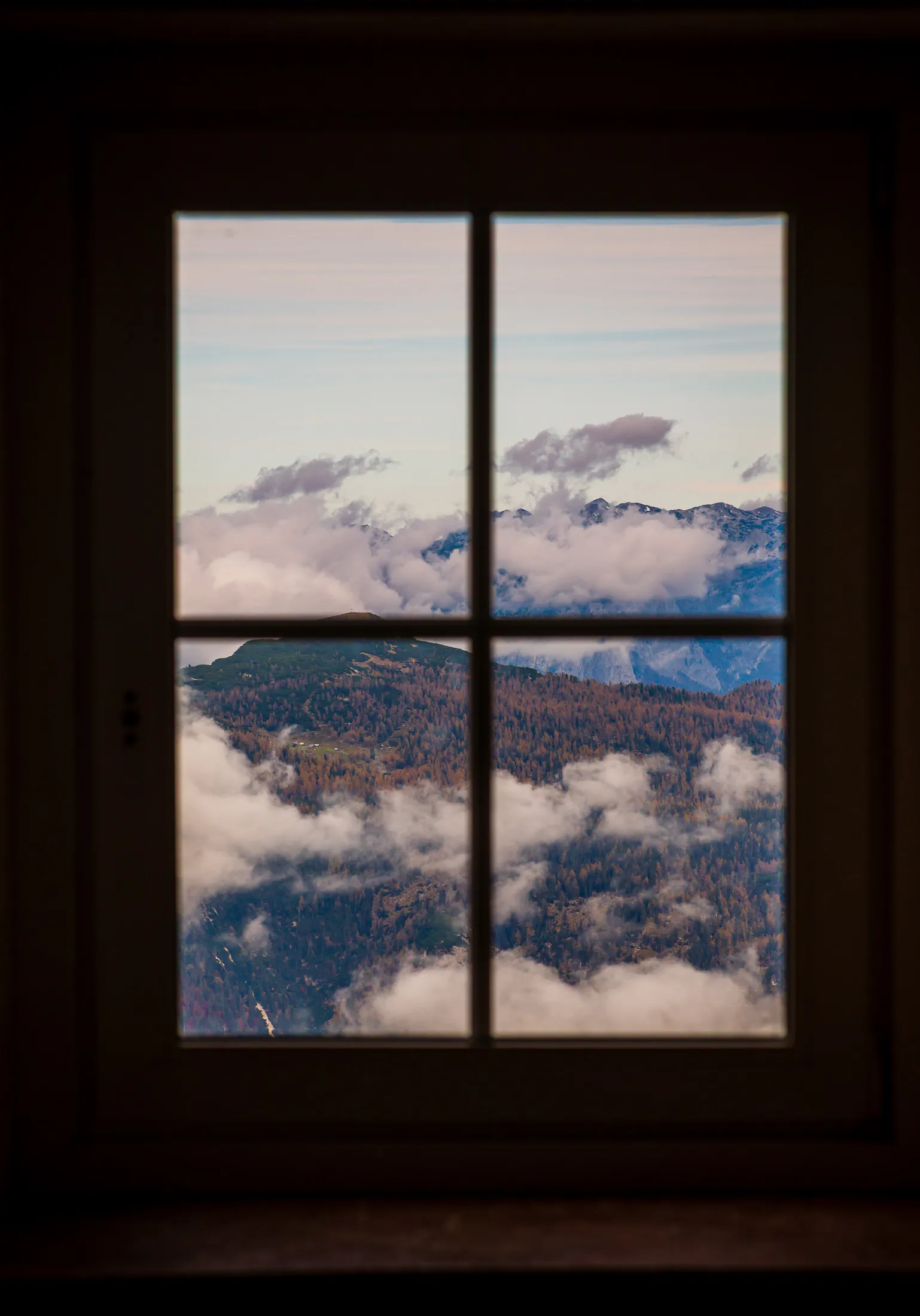
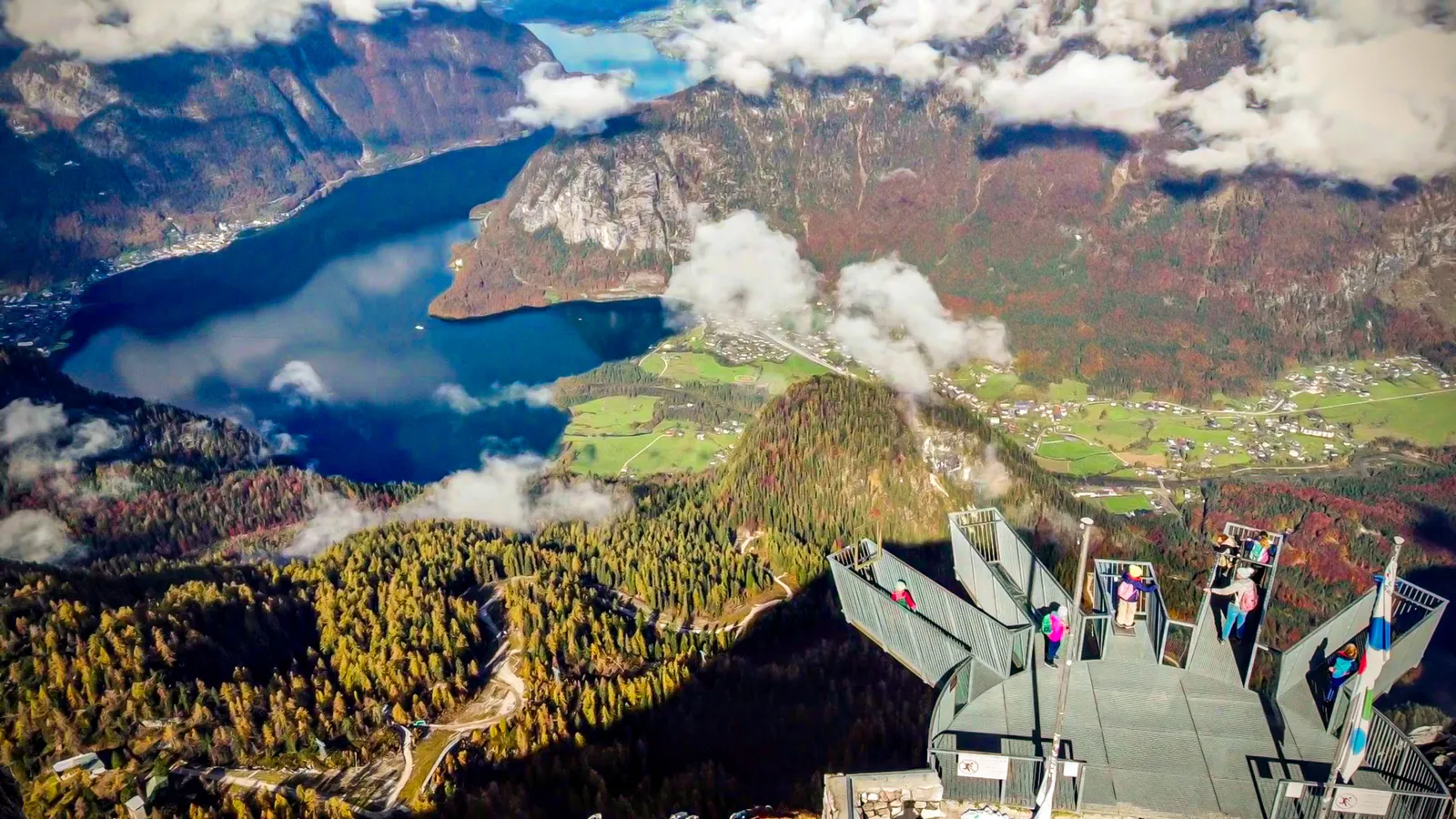
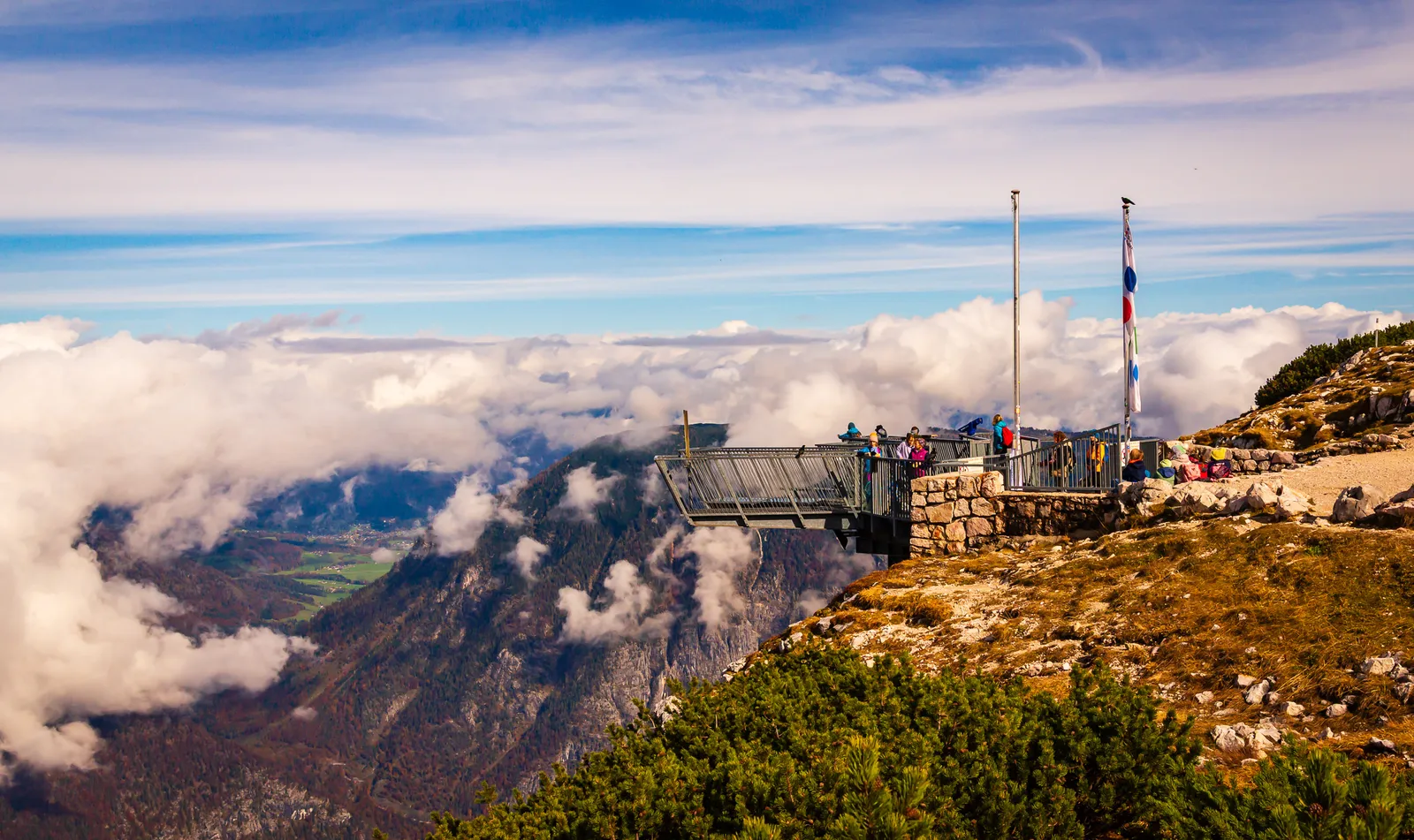
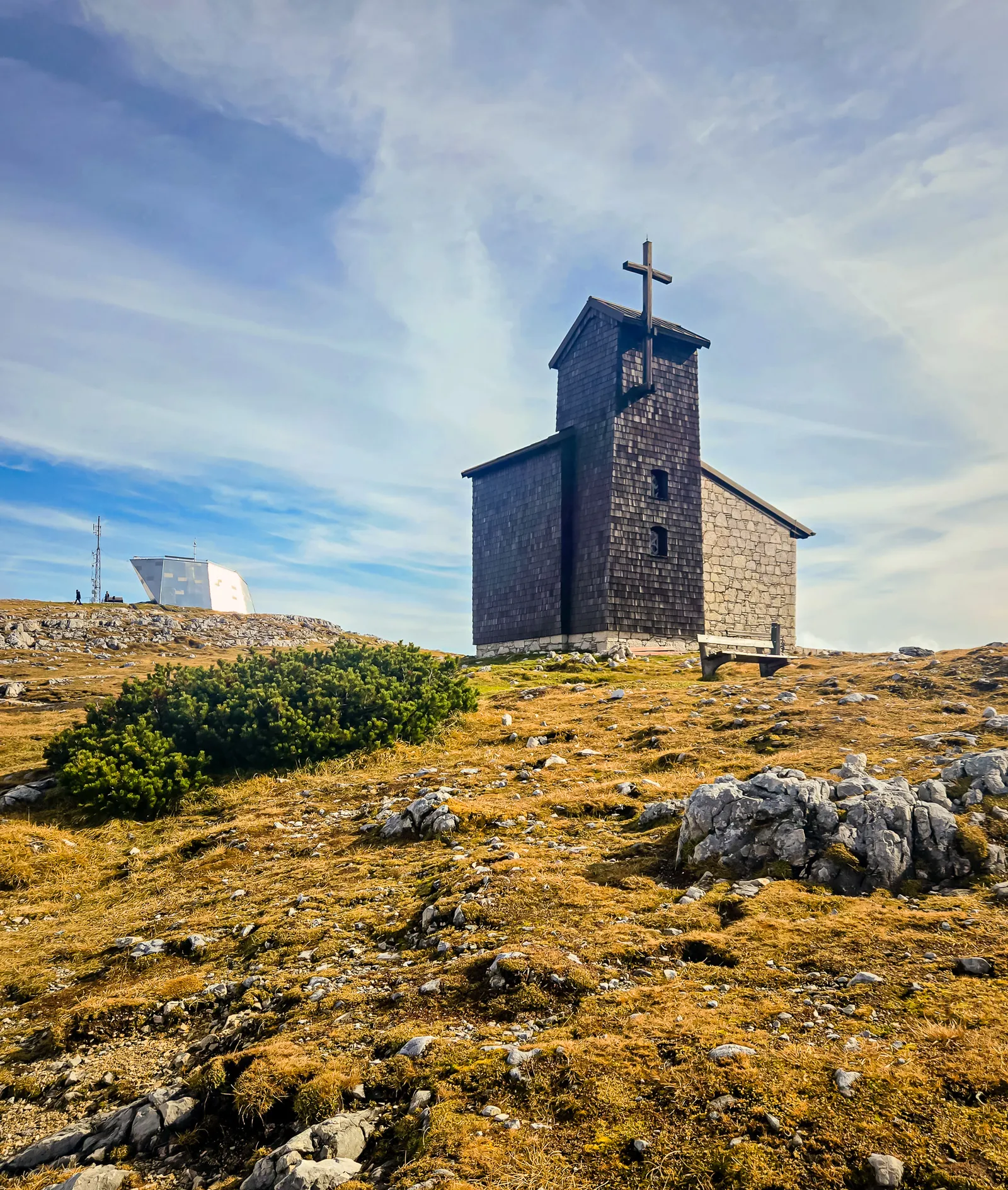
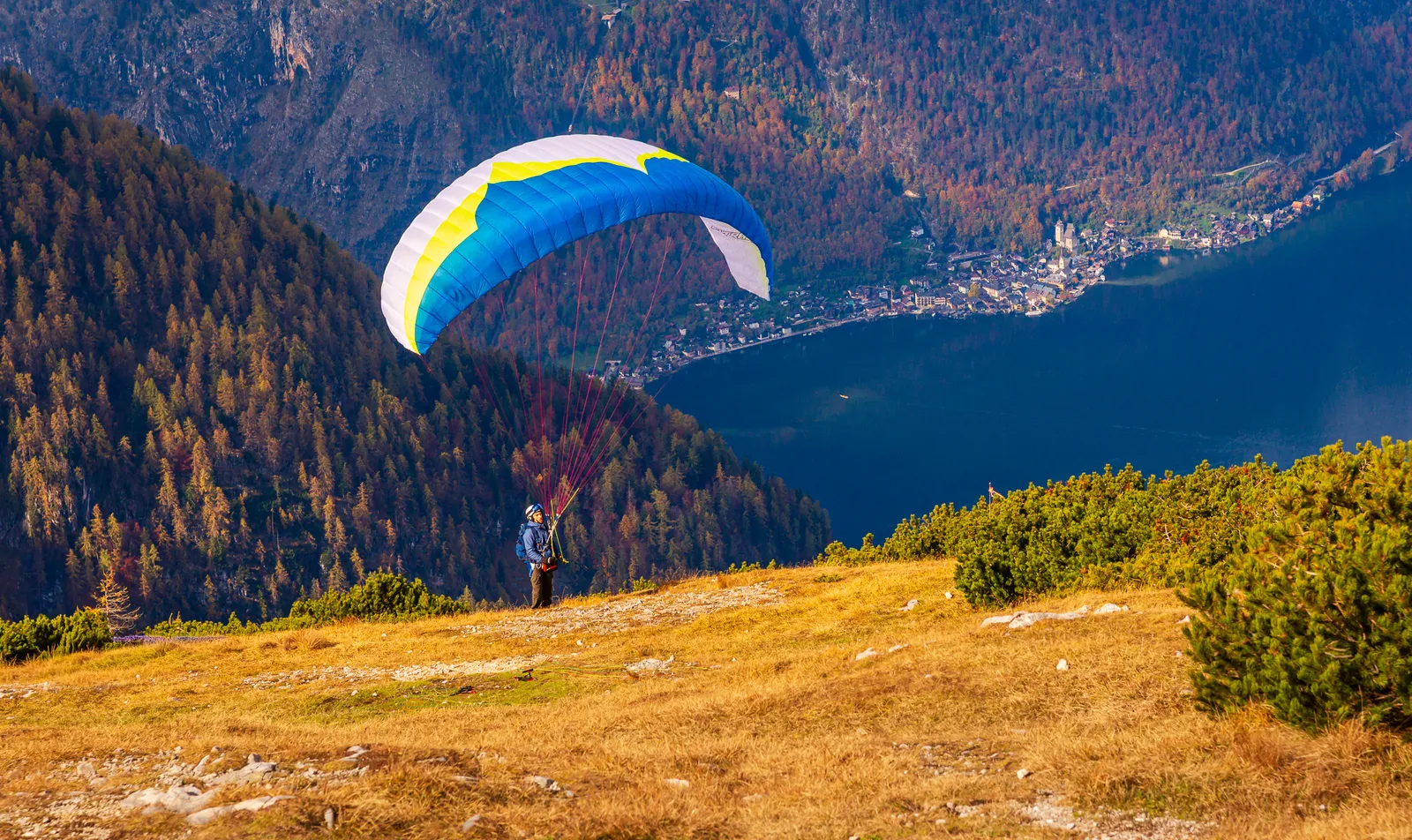
From the upper cable car station, a scenic 25 minute walk across the alpine plateau led us to the famous Five Fingers viewing platform. Suspended nearly 400 meters above the valley floor, the five narrow platforms extend over the cliff like the fingers of an outstretched hand, offering spectacular views of Hallstatt, Lake Hallstatt, and the surrounding Alps.
As we took in the scenery, we spotted the same group of elementary school children from the ice cave tour. It was fun watching them confidently walk to the end of each platform without the slightest hesitation or fear of heights. If you're visiting the Hallstatt region, the Five Fingers viewing platform is well worth adding to your bucket list.
Before taking the cable car back down the mountain, we stopped for lunch at Lodge am Krippenstein. Sitting on the terrace with panoramic views of the Dachstein Mountains was the perfect way to end our visit in the Austrian Alps.
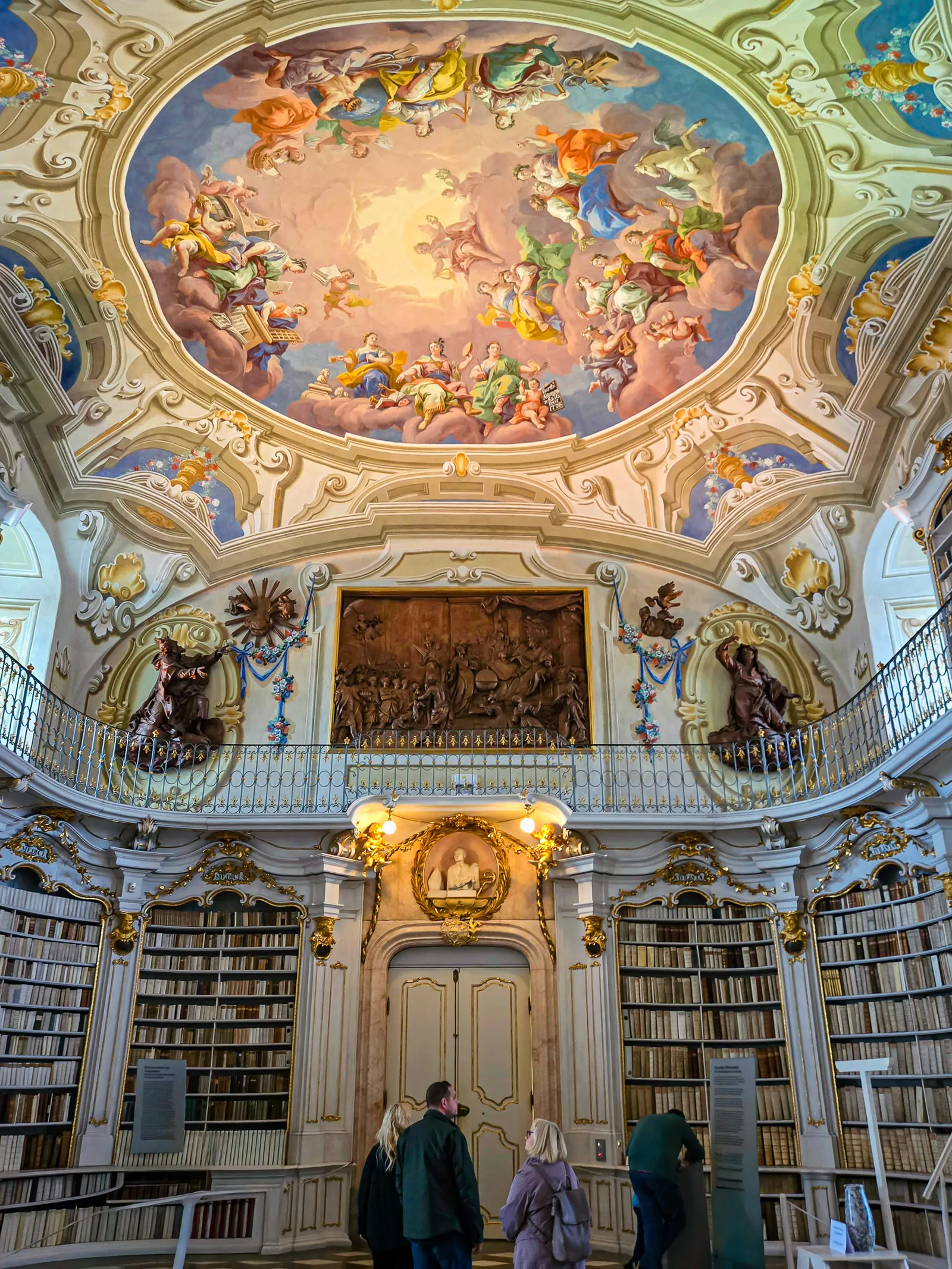
The Admont Abbey Library, Austria
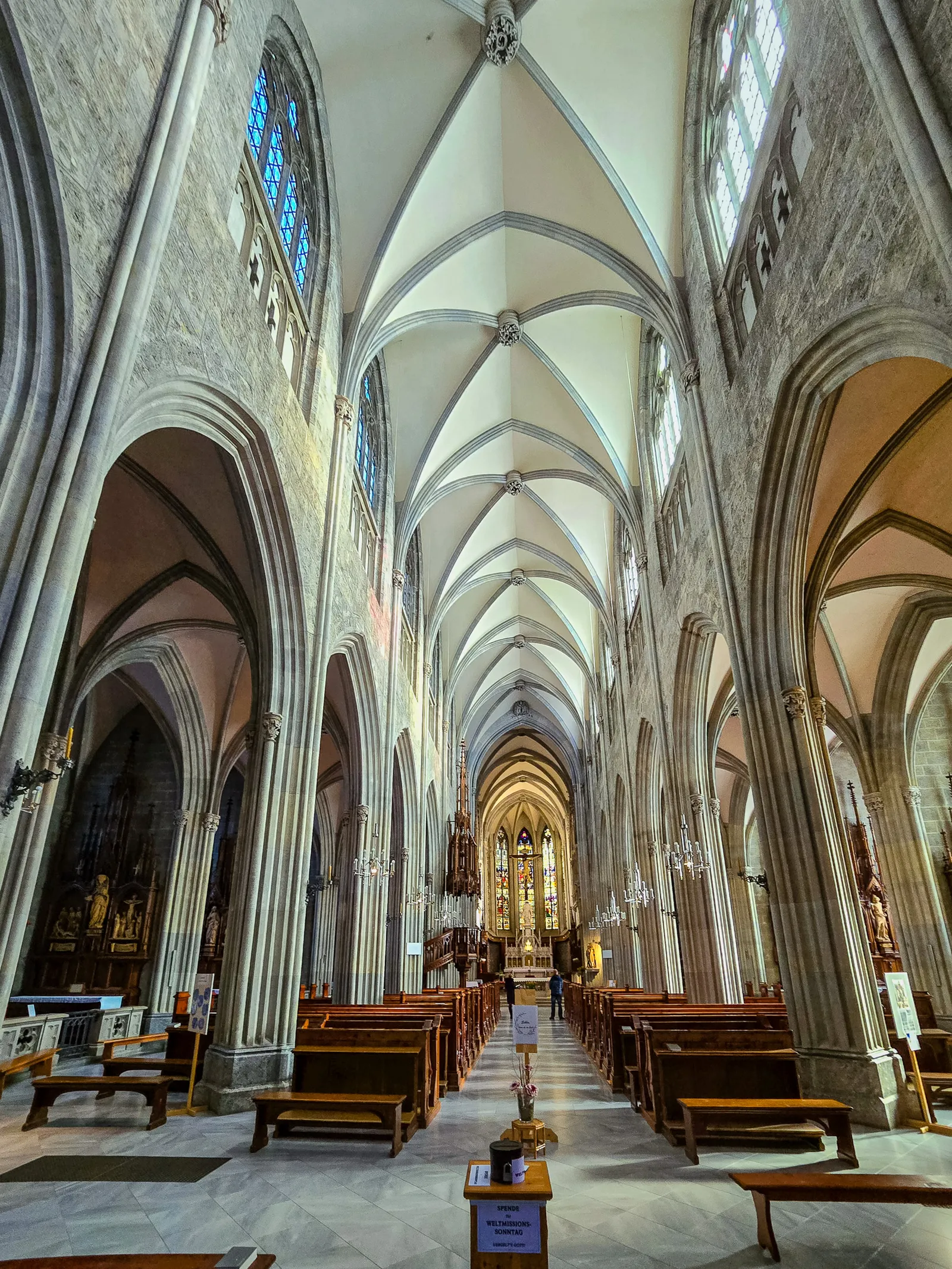
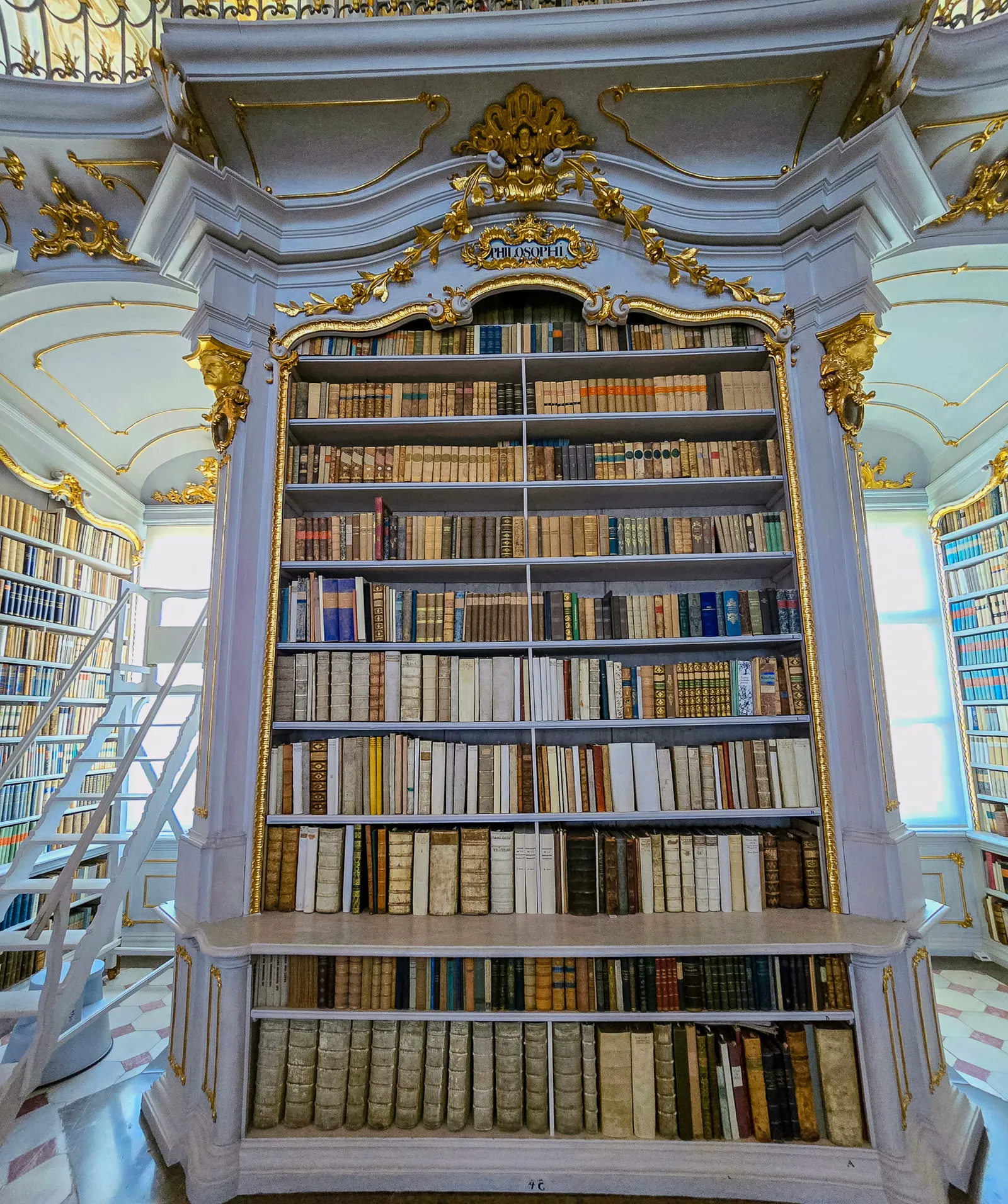
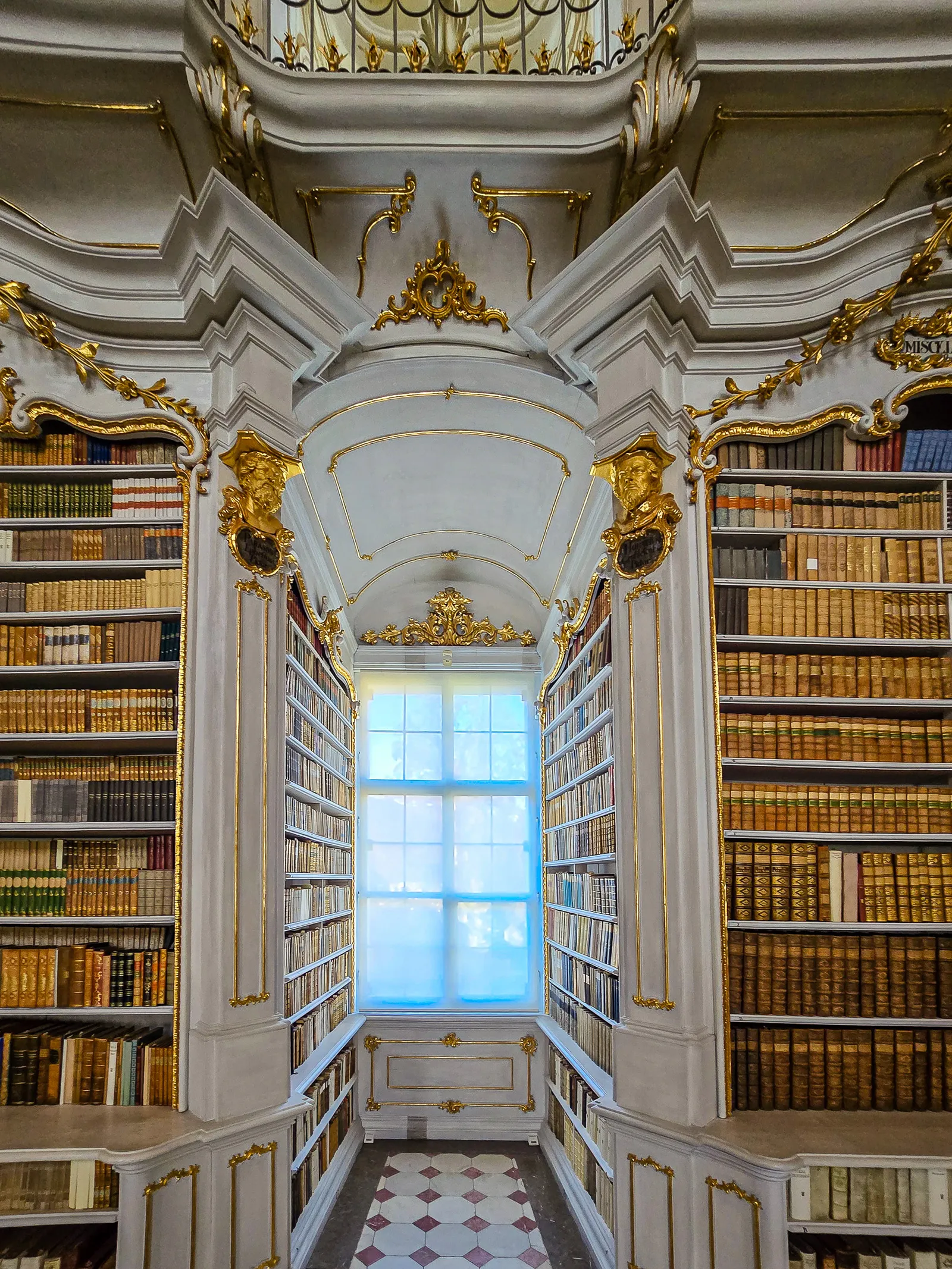
Packing up the car is always a chore, but once everything's in place, the excitement takes over. After a warm goodbye to our host, Josef, we set off for one of Austria's great cultural treasures: the Admont Abbey Library. Tucked into a small town along the Enns River in Styria, it holds the title of the largest monastic library in the world.
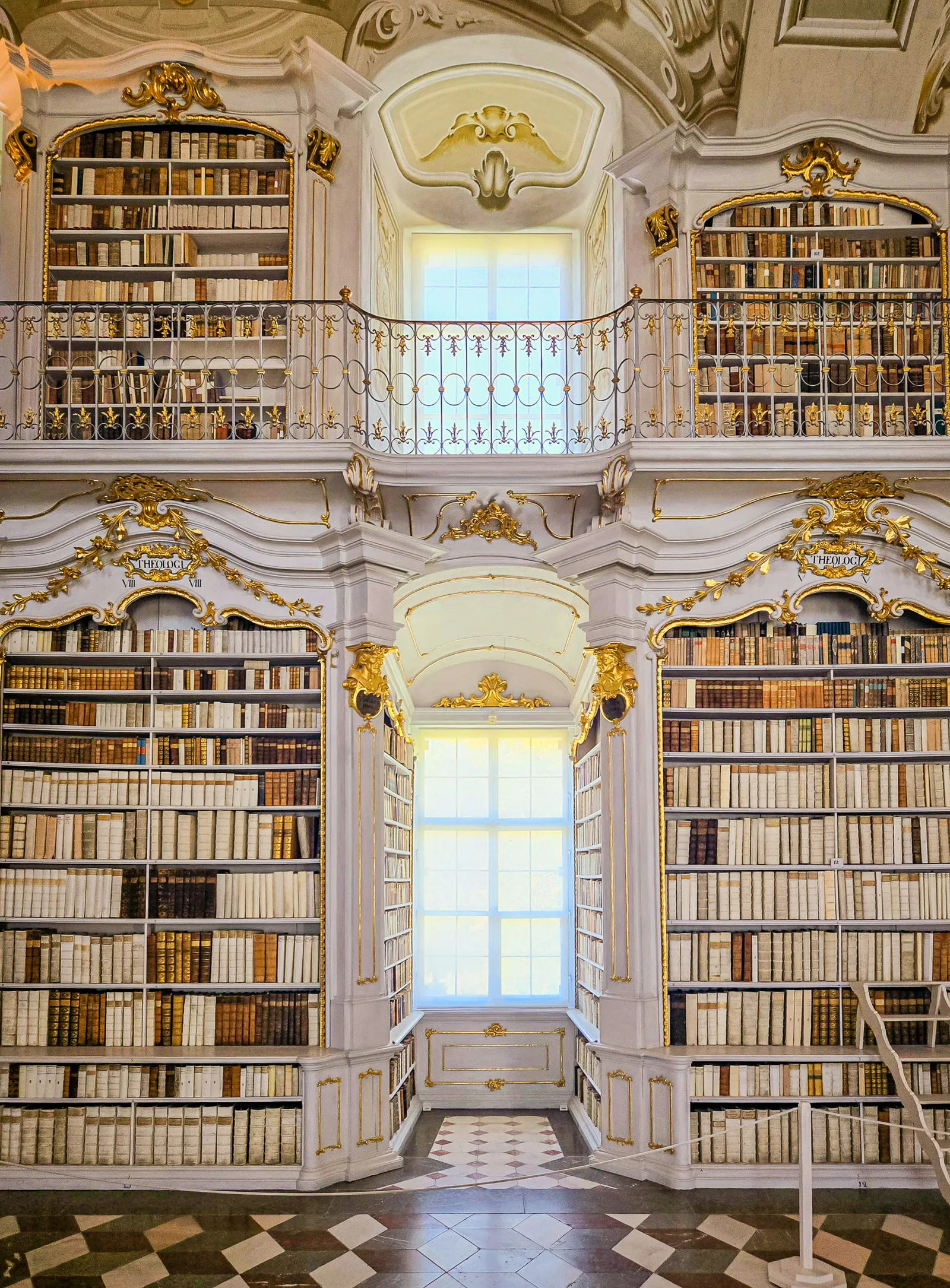
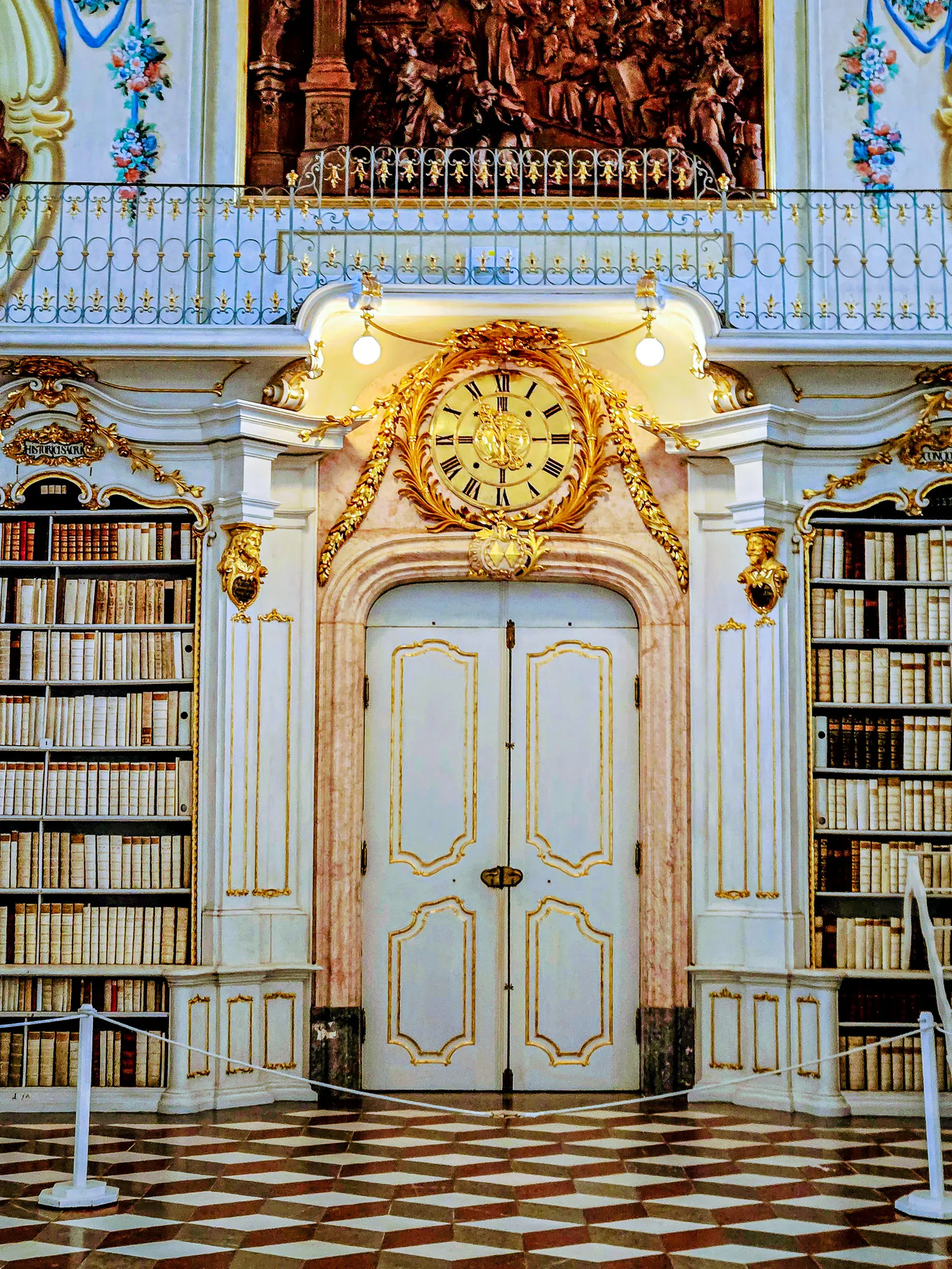
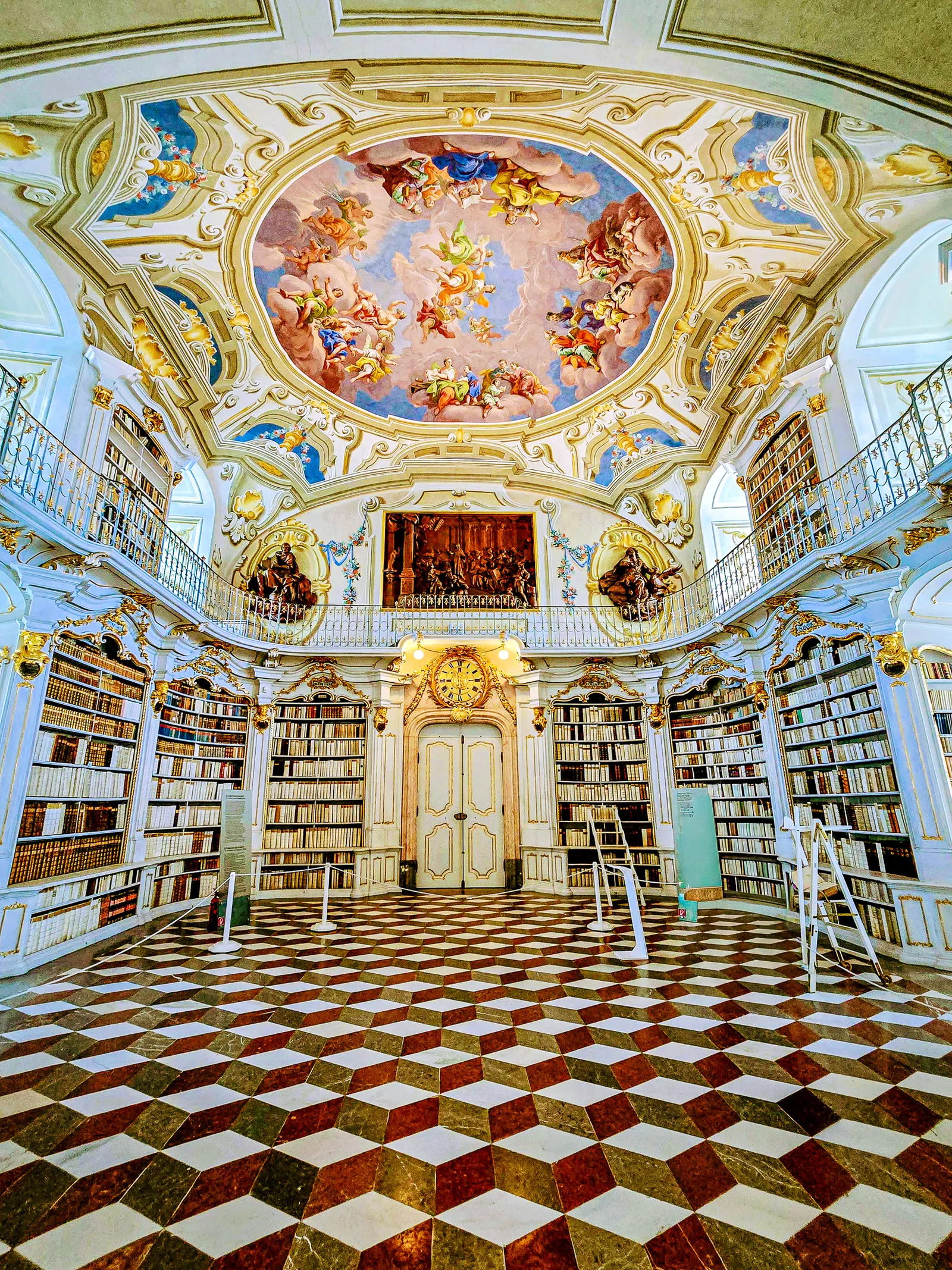
Social media loves to claim this Baroque masterpiece inspired the library in Disney's Beauty and the Beast, and it's easy to see why. The white-and-gilded, multi-story bookcases, the sweeping ceiling frescoes, the theatrical sense of scale, it all mirrors the animation almost perfectly. Disney has never confirmed a direct connection, but the resemblance is undeniable.
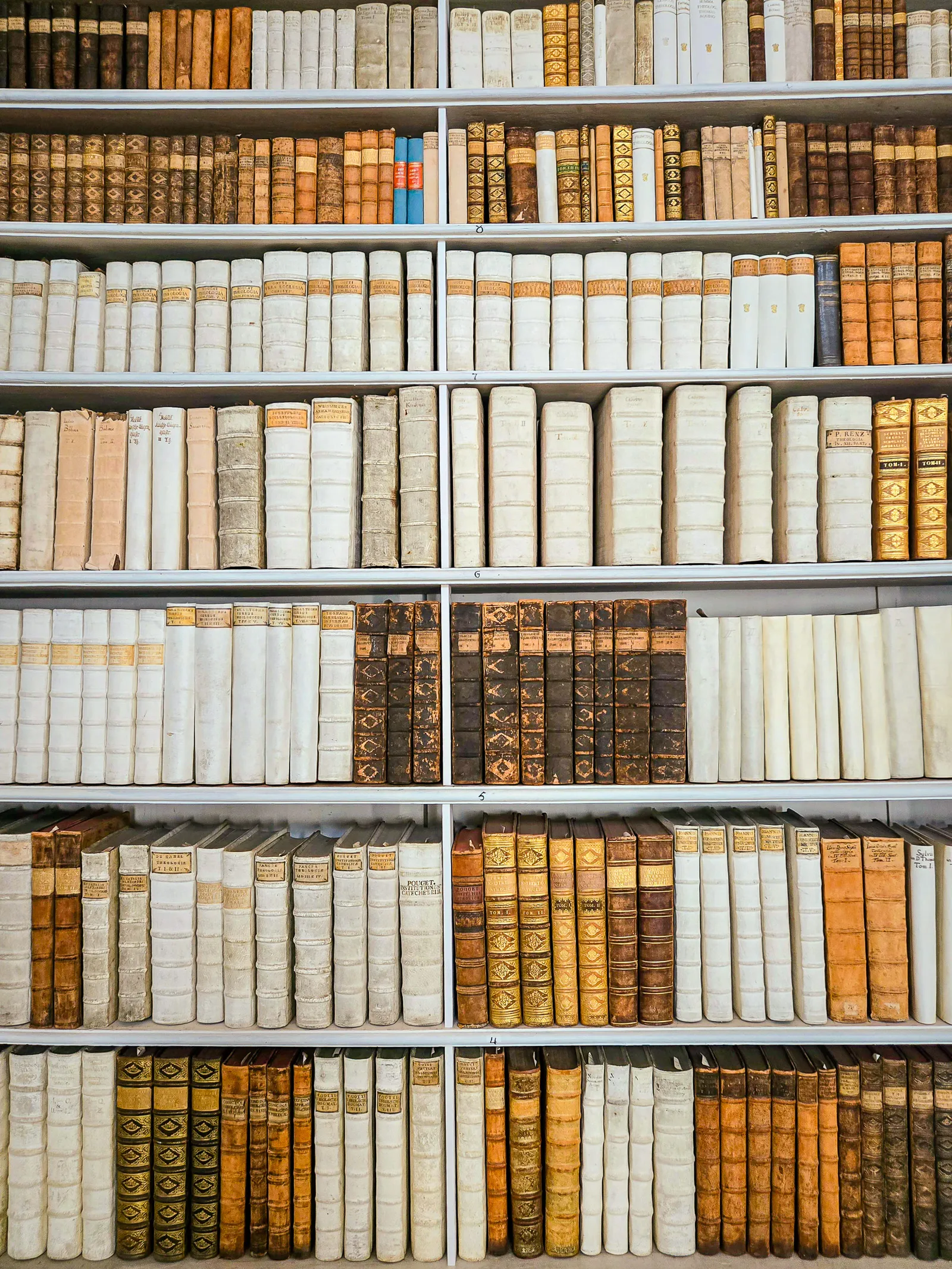
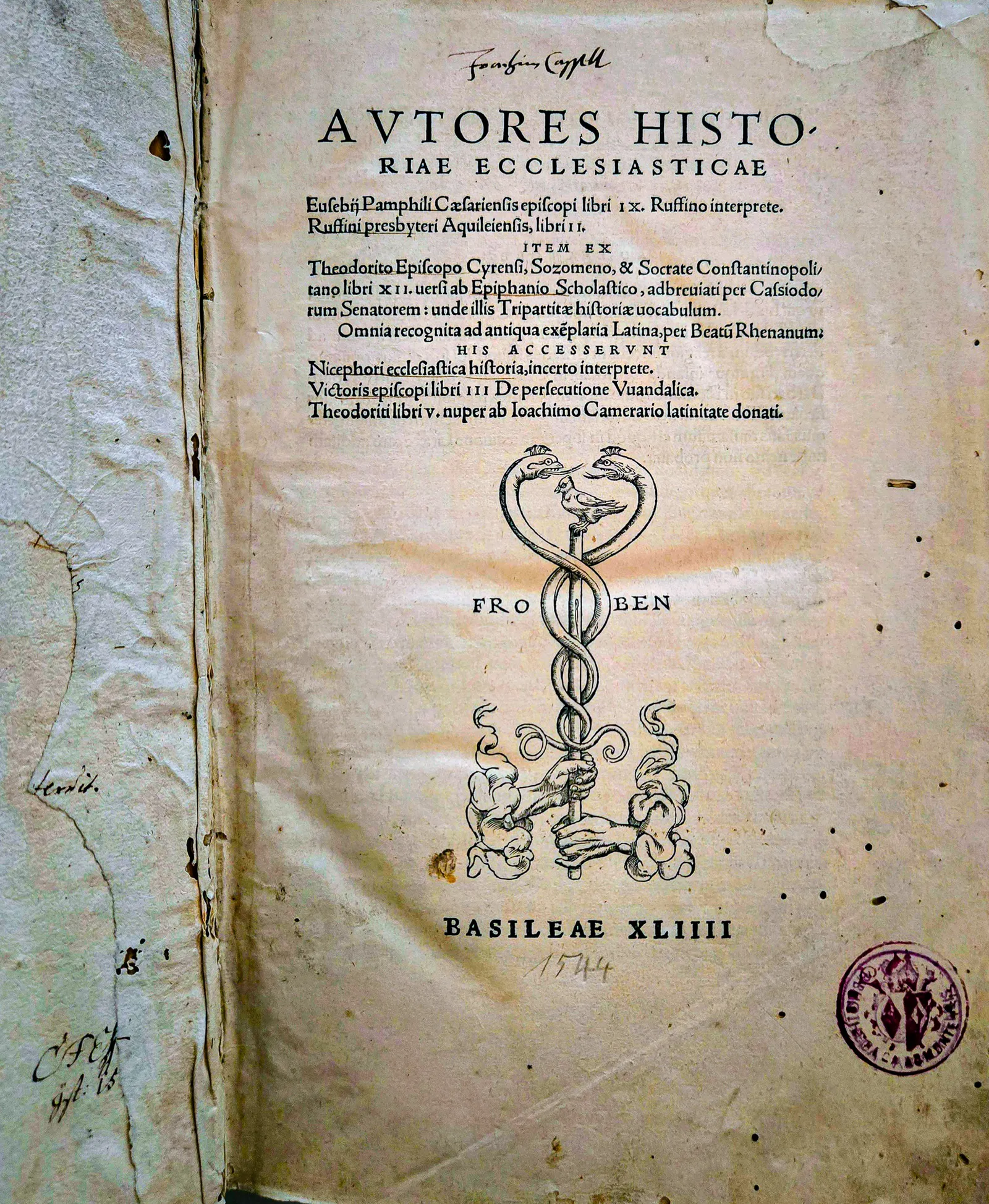
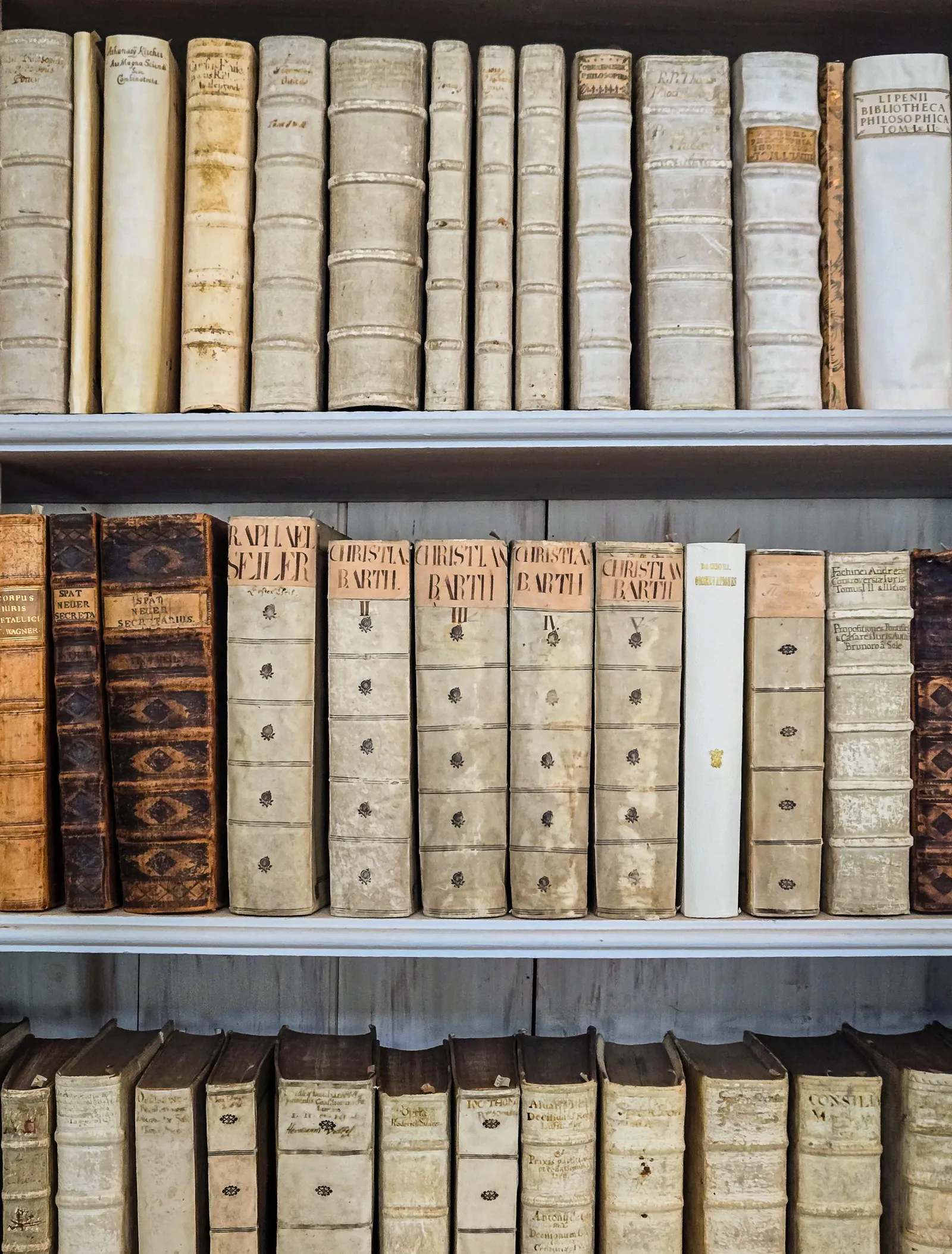
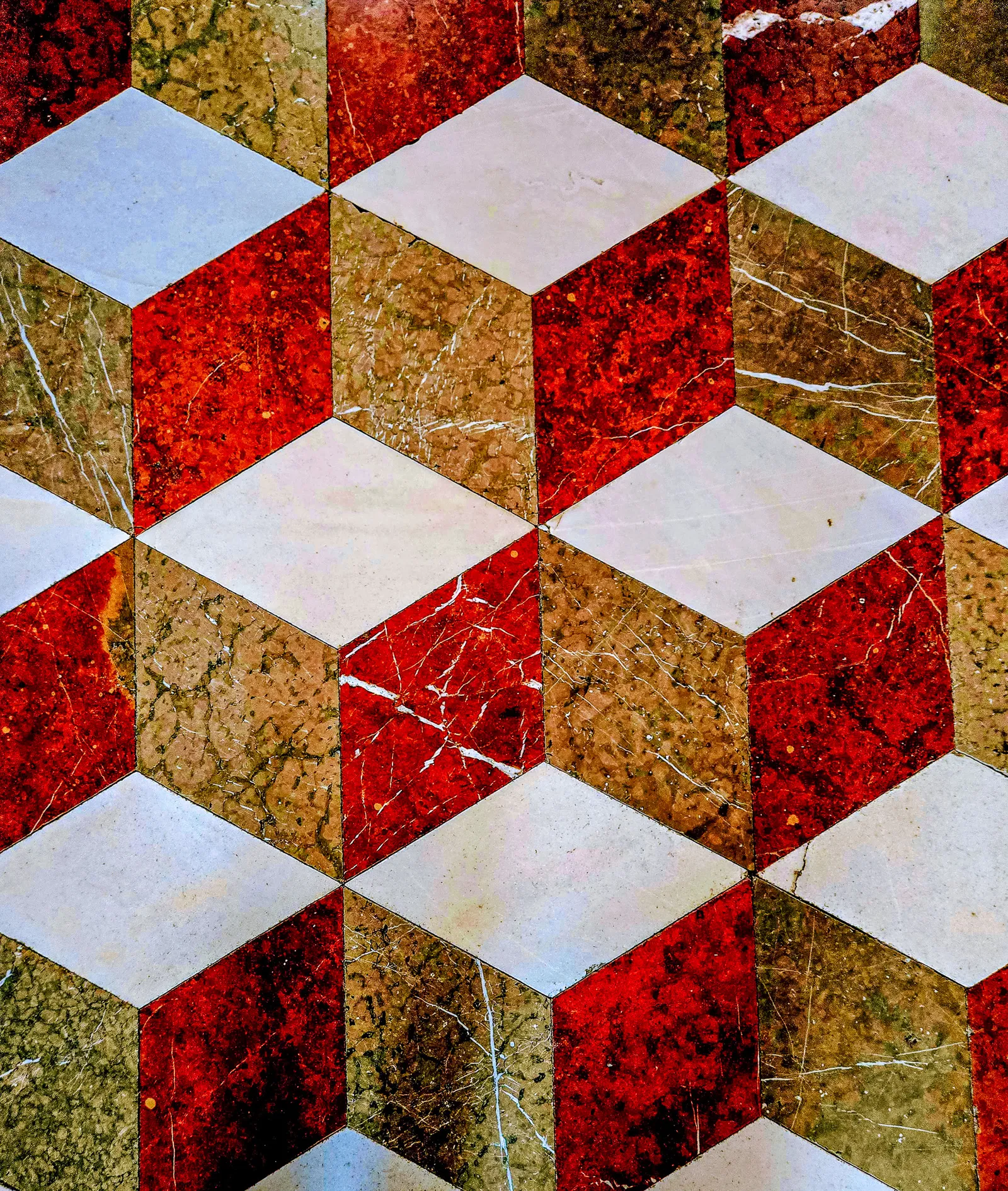
Completed in 1776 and attached to a Benedictine abbey founded in 1074, the library hall stretches 70 meters long and represents late-Baroque design at its absolute height. Hidden doors, ornate sculptures, and elaborate architectural detail combine to create one of the most dramatic interiors in Europe. The abbey's broader collection holds around 200,000 volumes, with roughly 70,000 on display in the hall itself, including medieval manuscripts produced in the abbey's own 12th-century scriptorium. Remarkably, this entire literary treasure survived a devastating fire in 1865 that leveled much of the surrounding monastery, sparing the library while the rest of the complex burned.
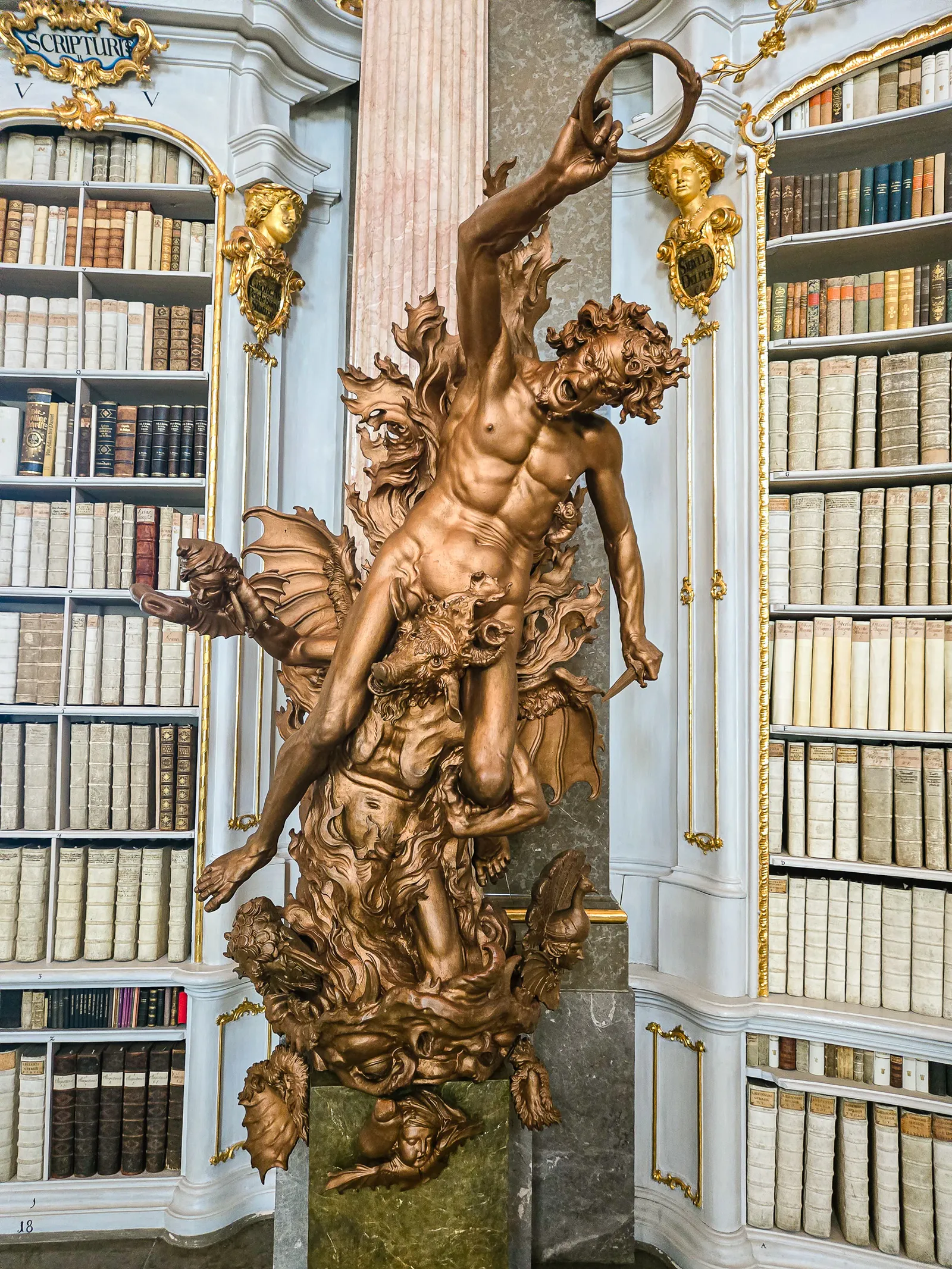
What I first mistook for statues turned out to be carved wood: Josef Stammel's gripping sculptures from around 1760, known as "The Four Last Things", Death, Judgment, Heaven, and Hell.
These are not your typical, quiet library decorations. Stammel (1695–1765) spent over four decades creating masterpieces for the Benedictine monks, and he pulled no punches with the details. Standing up close to these dramatic, commanding figures, the imagery of the afterlife is powerful enough to make any visitor pause mid-stride and think. Today, the library remains a Baroque treasure that narrowly escaped history, blending art, intellect, and survival under one magnificent roof. Afterward, we wandered Admont itself for tea and shopping, a quintessential village that rounded out the day perfectly.
The start of Our Danube River Cruise
After touring Admont Abbey, we drove to Passau, the starting point for our seven-day Danube cruise with Viva Cruises. Finding the city? Easy. Reaching the dock through Passau's maze of one-way streets? Not so much.
I dropped my family at the gangway with the luggage, then faced the solo mission: return the rental car to Enterprise across town and taxi back before the 4 PM embarkation deadline. Nothing like manufactured stress to spice up the vacation.
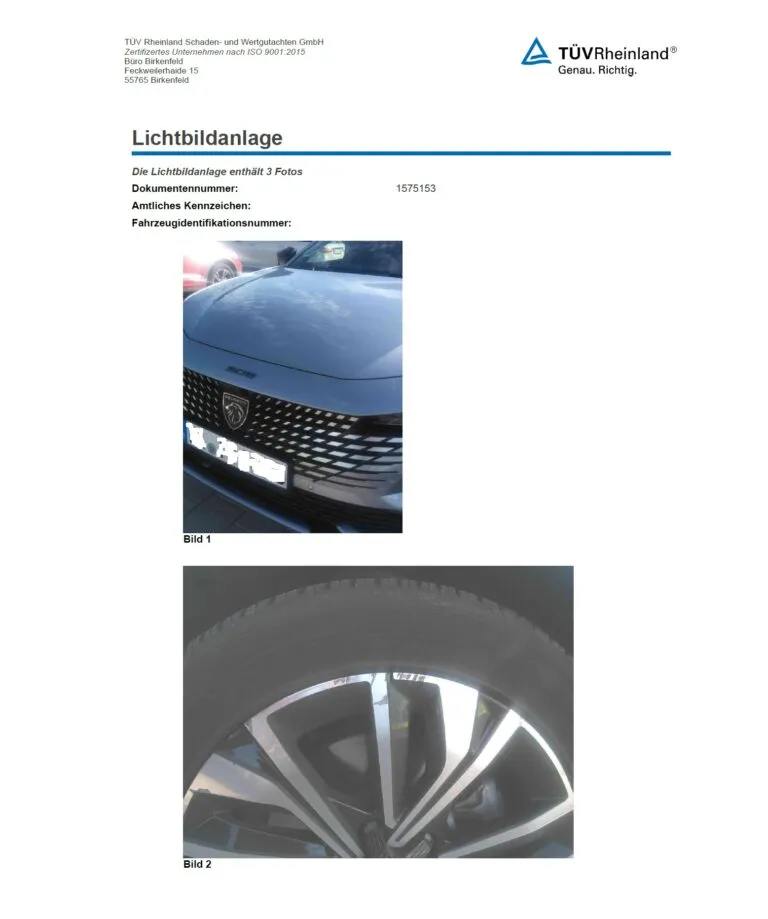
At Enterprise, the initial inspection went smoothly and apparently, received the all clear. Until I started walking toward my waiting taxi. "Sir? Sir!" That callback is never good news.
When I returned, the attendant asked where I had damaged the tire rim. "What? Excuse me?" Apparently somewhere between Munich and Passau, I'd kissed a curb hard enough to leave a mark on the front rim.
Anxiety at embarkation
Exactly what I needed while trying to make it back before embarkation. My stress level was already high, and this pushed it over the edge. The manager's indifferent attitude didn't help, the kind of stereotype you hope isn't true but occasionally encounter.
I had insurance through my credit card, but that meant dealing with the claims process once I got home. Perfect. The taxi ride back to the dock was spent replaying the whole thing in my head, wondering how it even happened. Not the start I wanted for the cruise, but after a couple of sparkling drinks, my mood finally shifted back into vacation mode.
During our week long cruise down the Danube, we docked in four countries, each port showcasing its own distinct character. These stops offered a mix of history, architecture, river views, and local culture, a perfect snapshot of Central Europe from the water.
The Danube and the many views
Melk, Austria → Esztergom, Hungary → Budapest, Hungary → Bratislava, Slovakia → Vienna, Austria → Linz, Austria
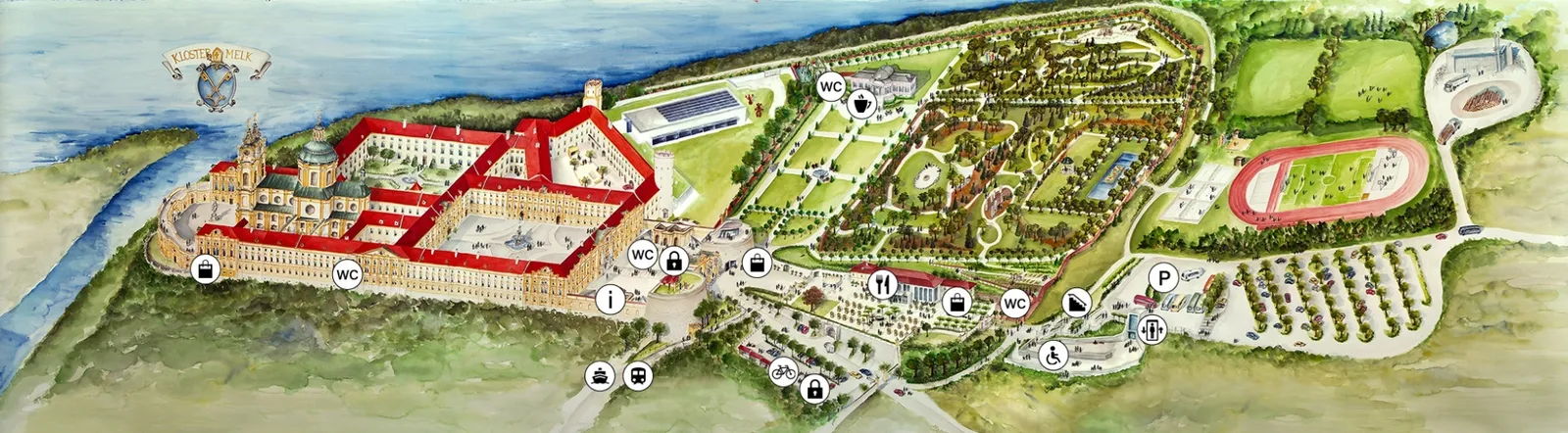
Melk, Austria The highlight was the massive Benedictine Abbey towering above the town. Visible for miles across the Wachau Valley, the abbey is a sprawling complex of Baroque splendor, including its famous library. We especially enjoyed wandering through the peaceful gardens, which offered panoramic views of the Danube.
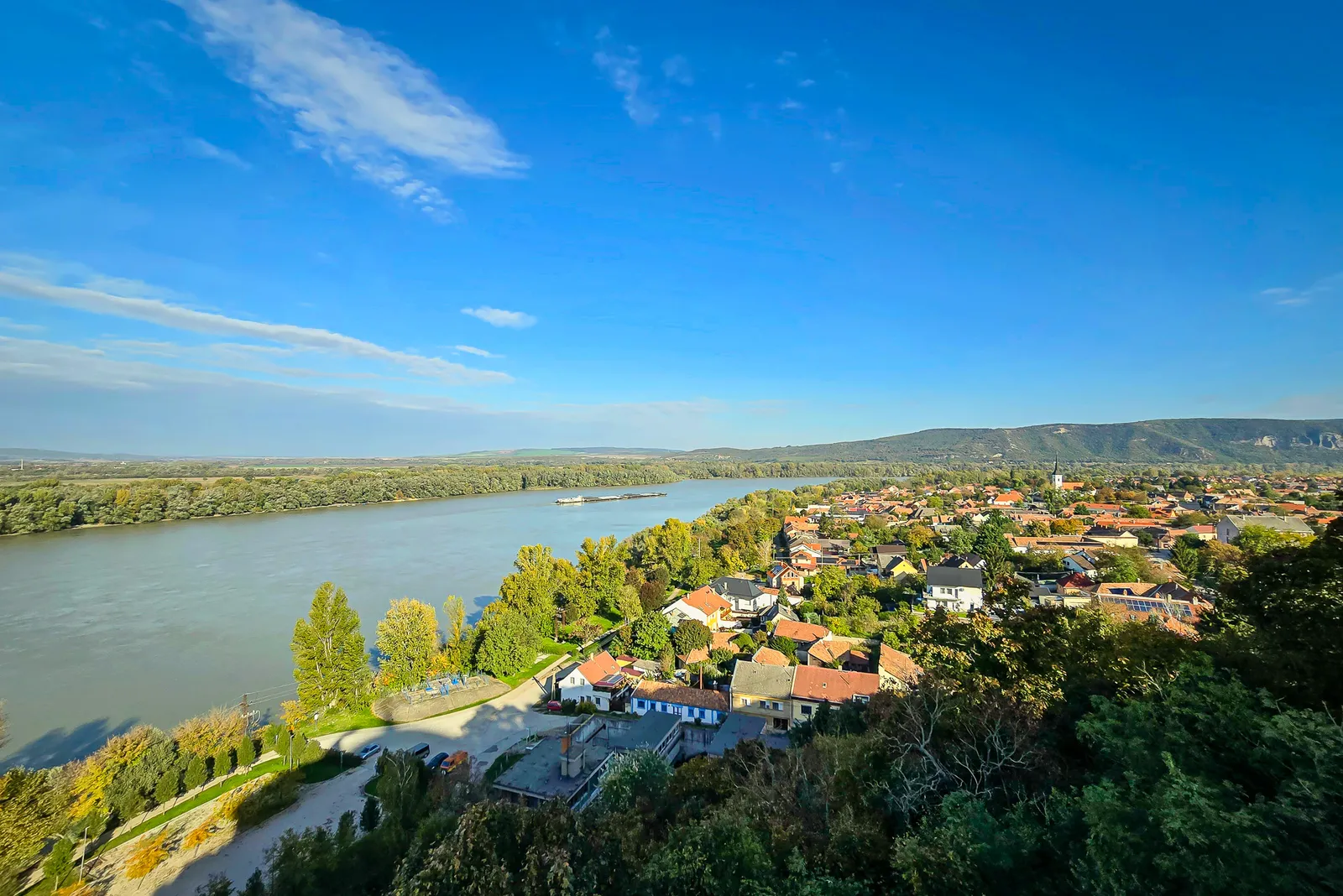
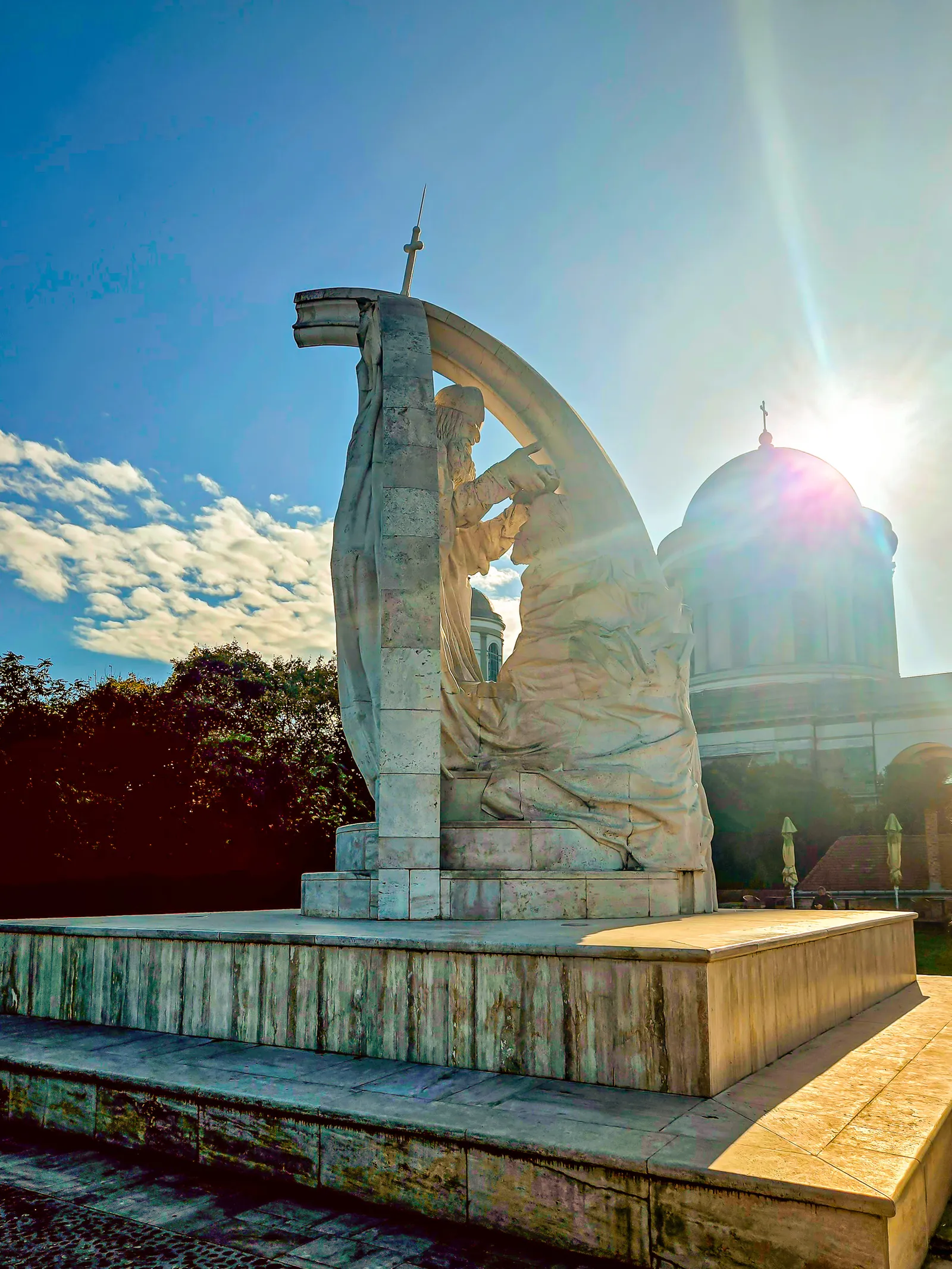
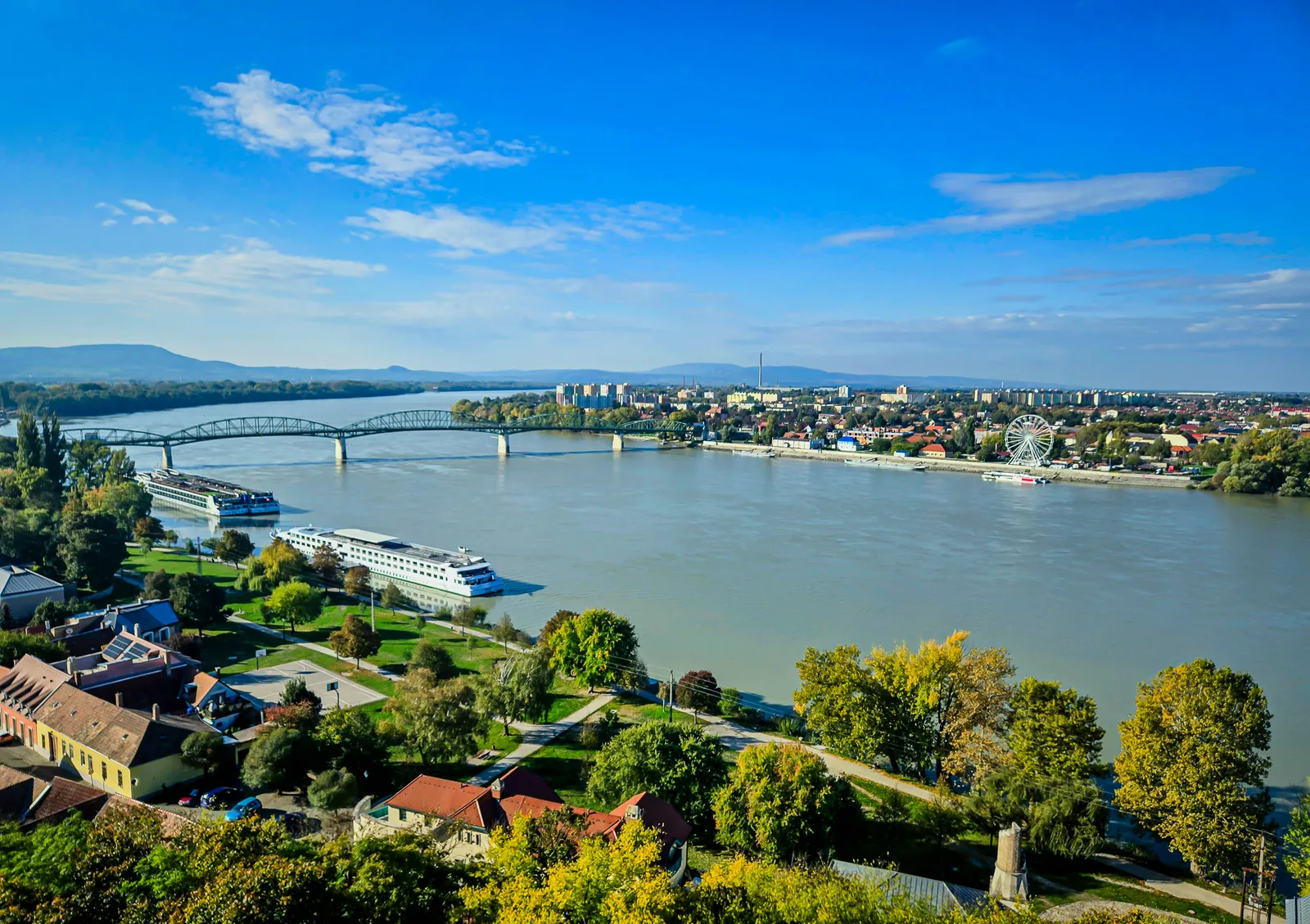
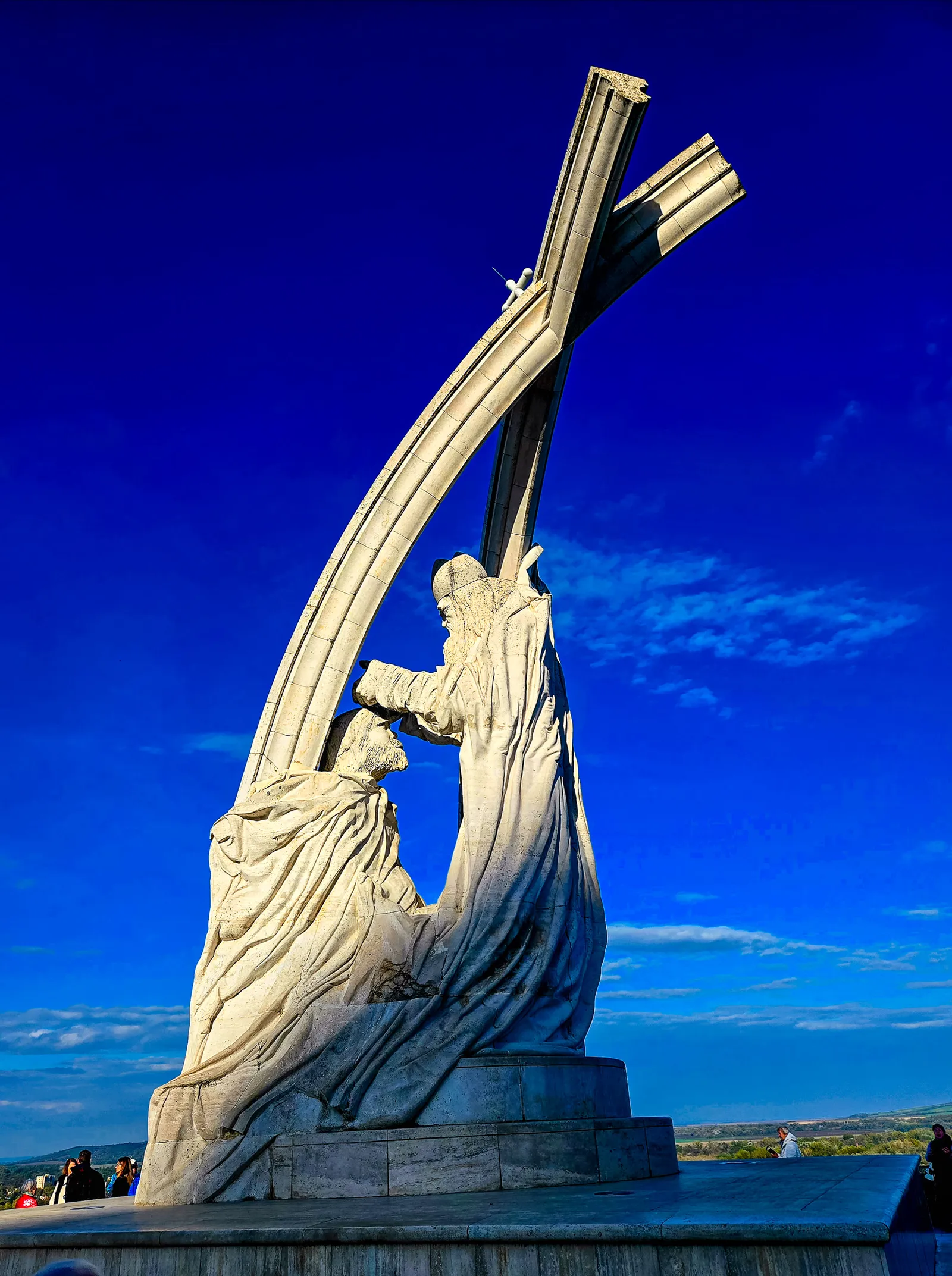
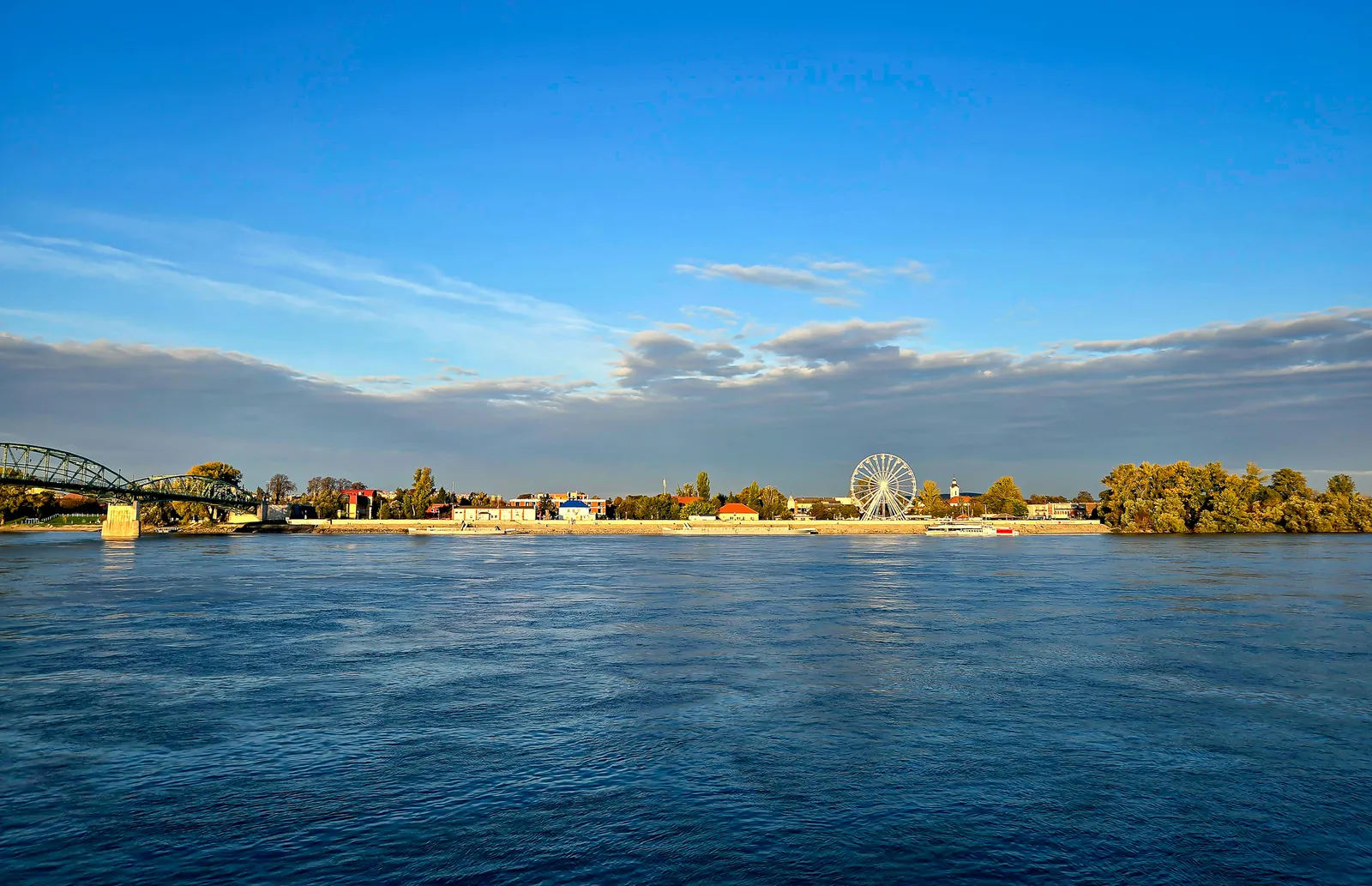
Esztergom, Hungary Once the capital of Hungary, Esztergom provided a memorable excursion. Our guide shared stories of Soviet occupation, religious suppression, and resilience. The basilica, though in need of much restoration, is an impressive structure perched on a hill, it stands out in contrast to the rest of the surrounding landscape.
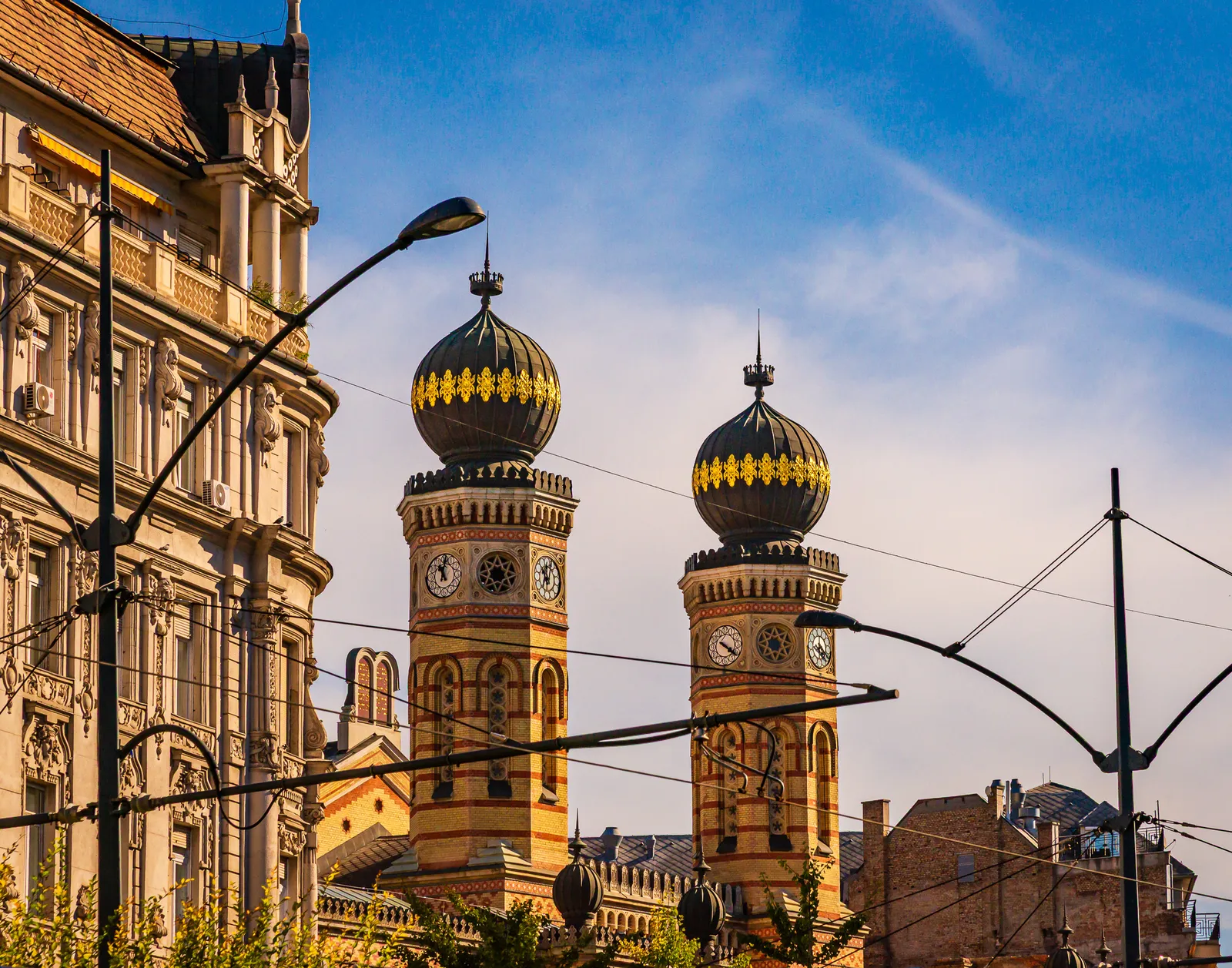
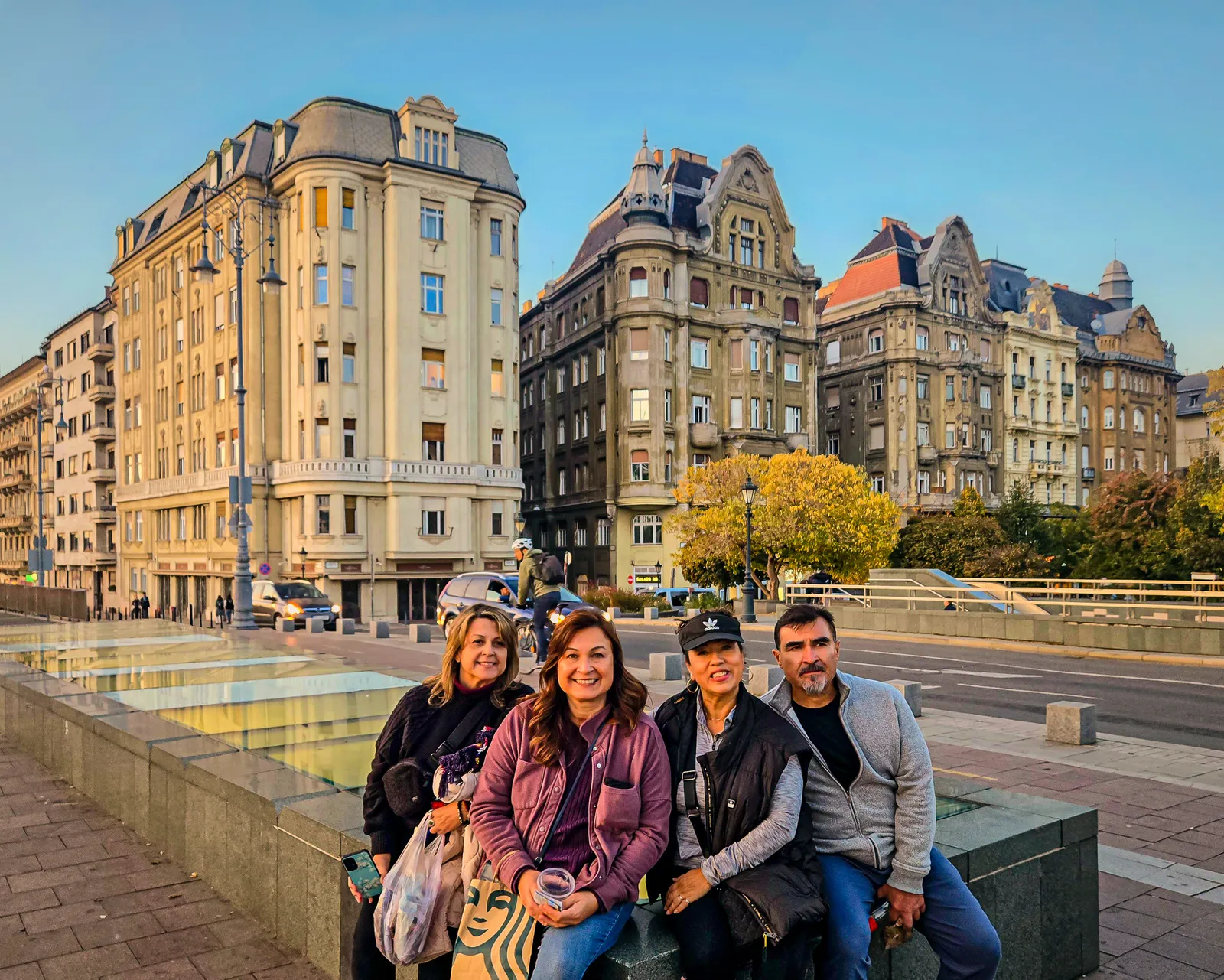
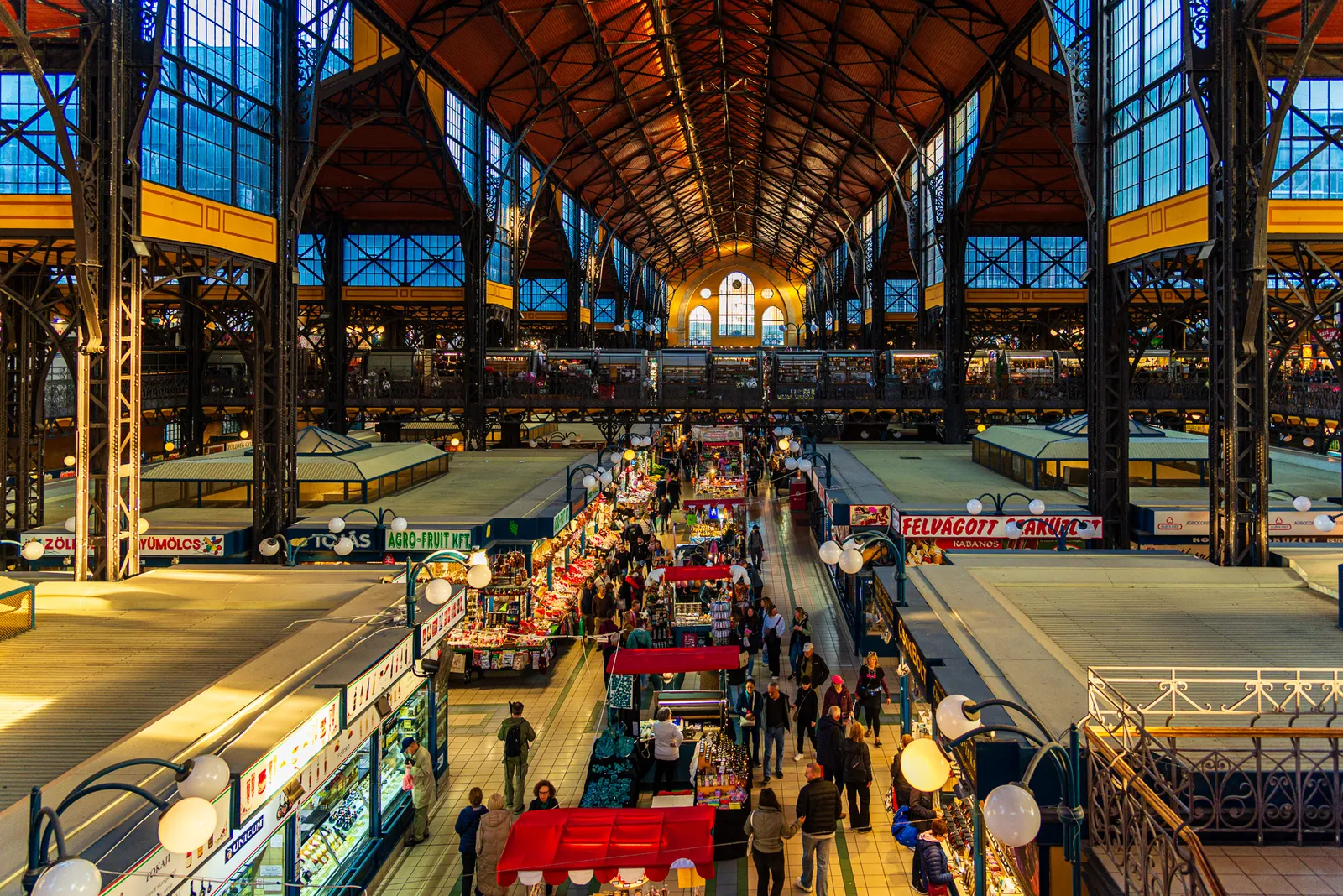
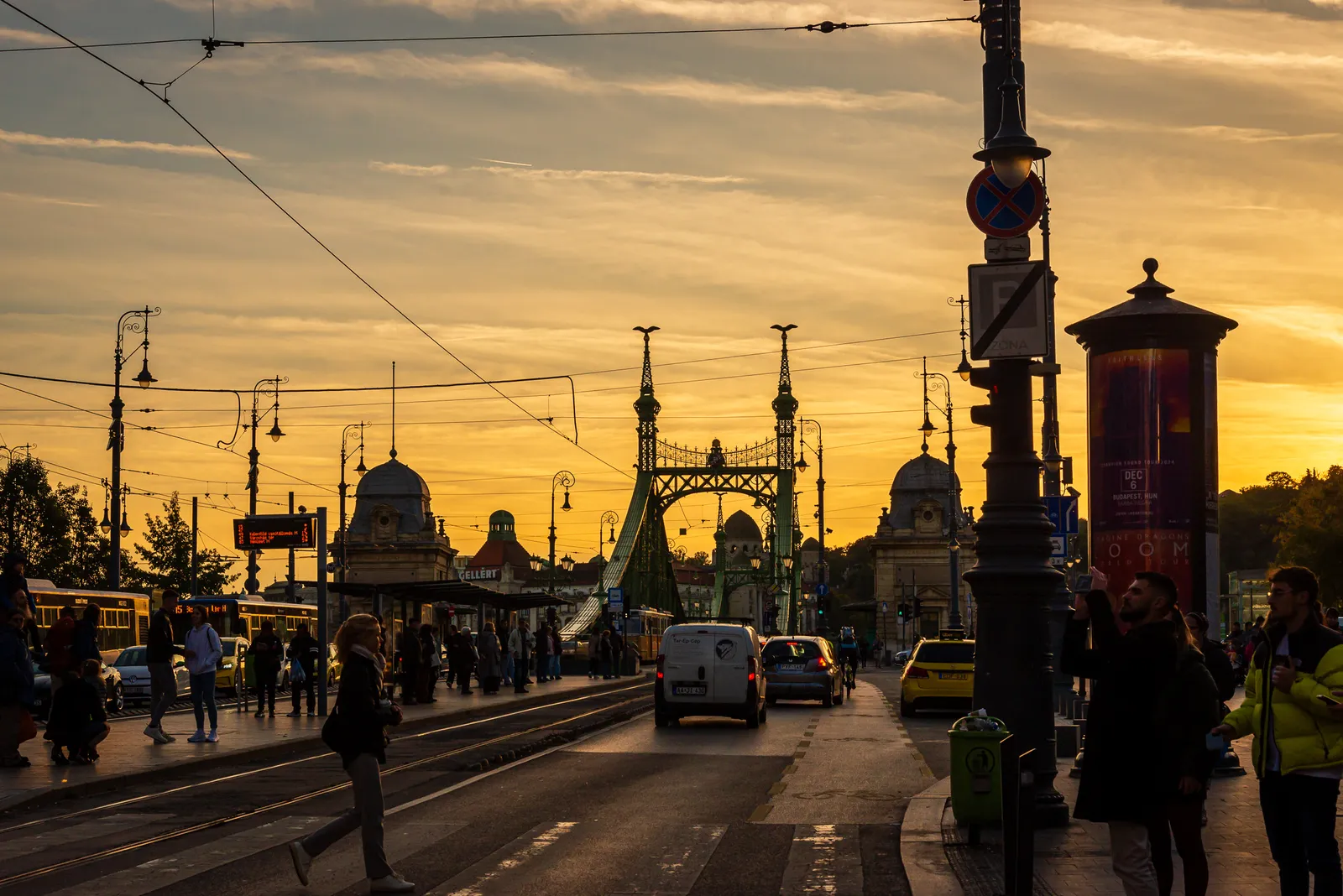
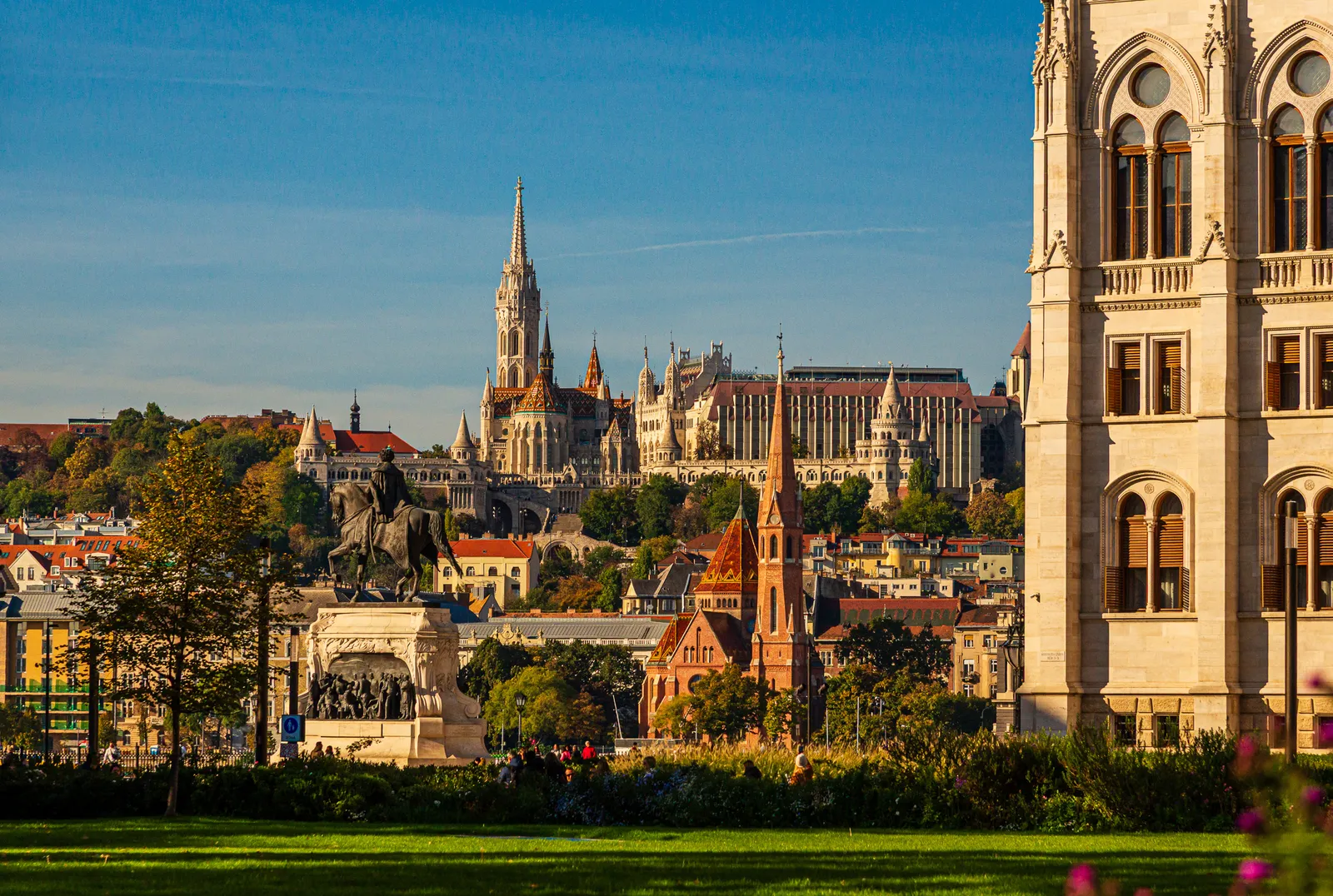
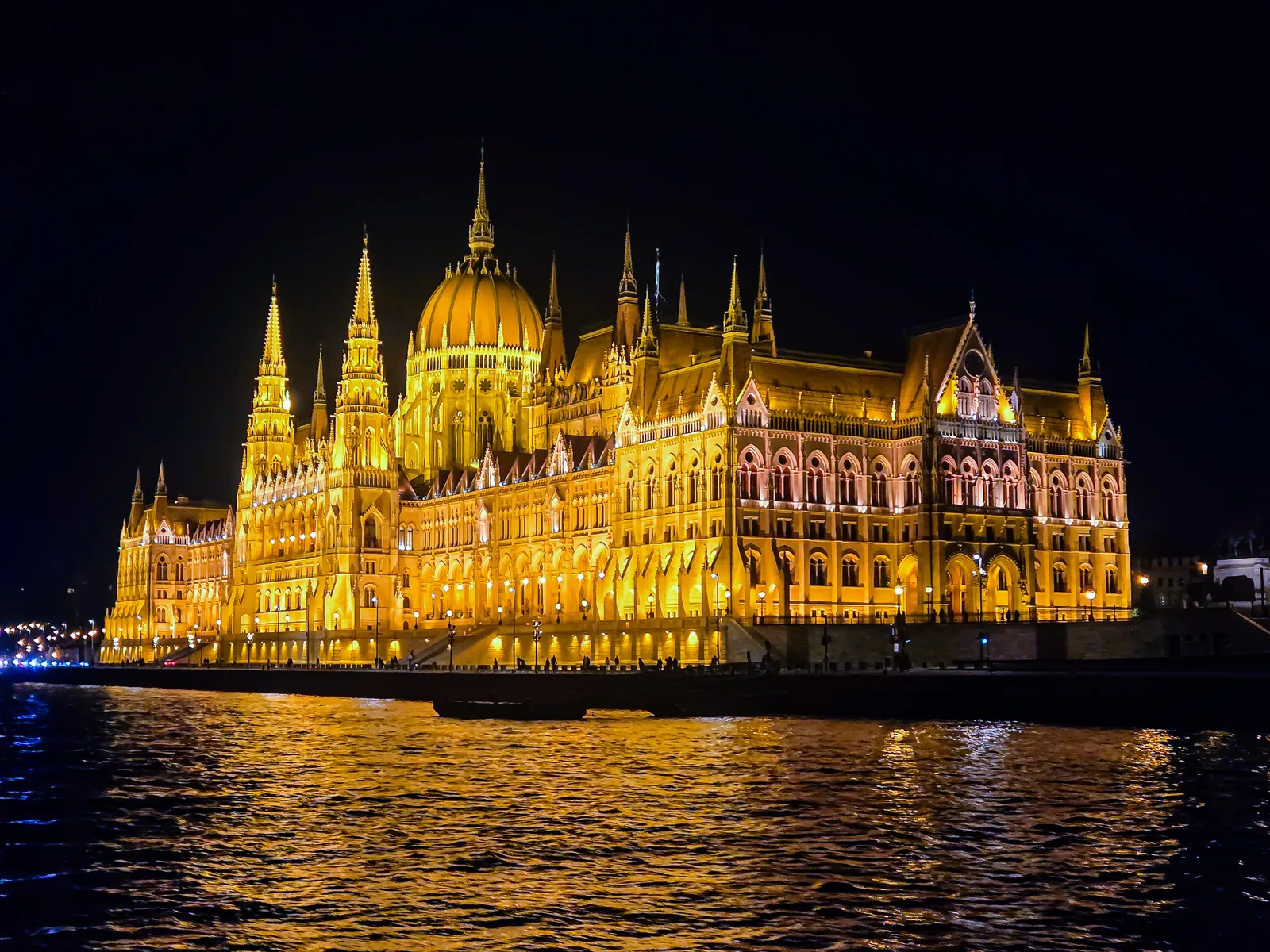
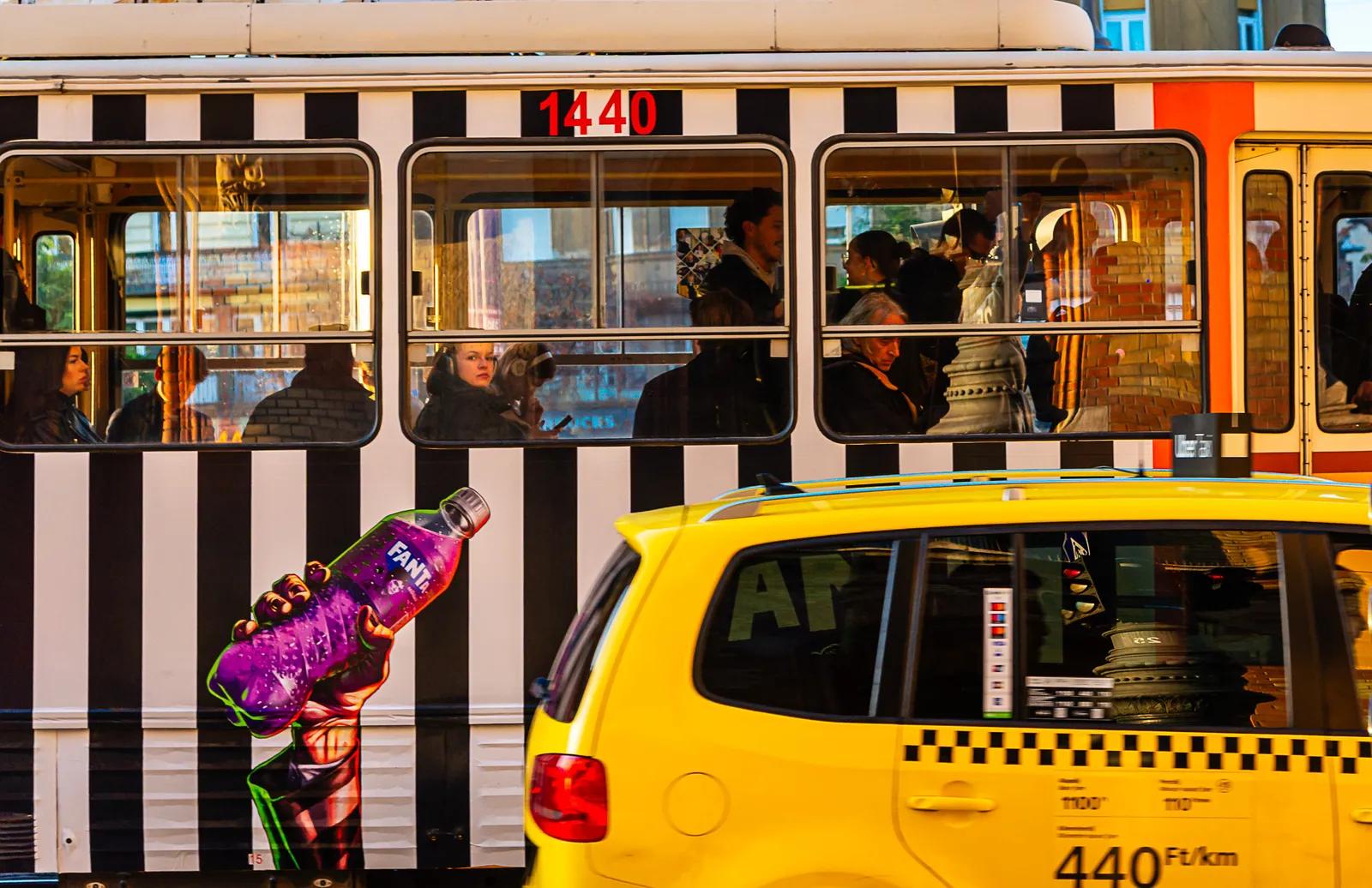
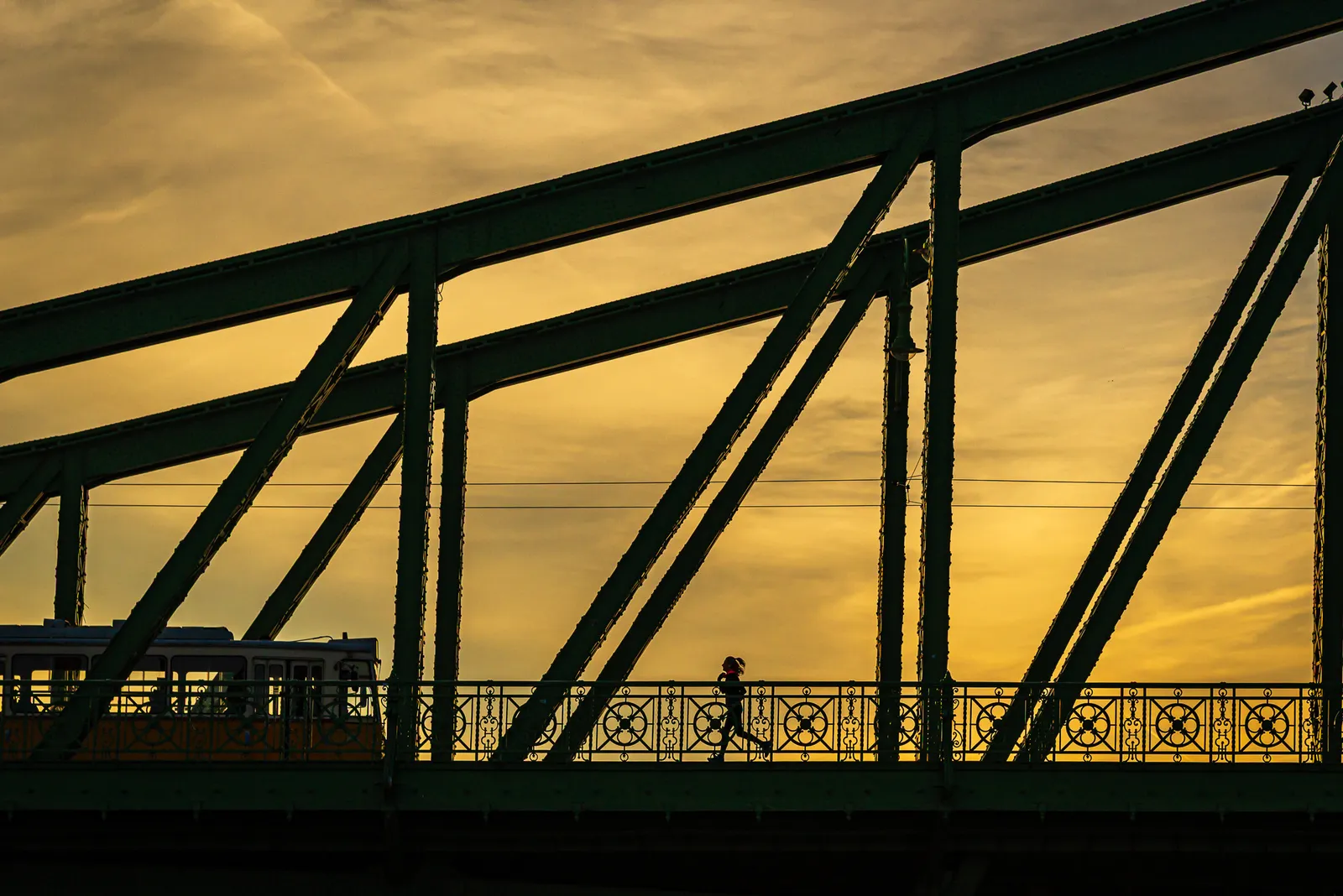
Budapest, Hungary Budapest truly lives up to its nickname, The Pearl of the Danube. We had an excellent walking tour with a knowledgeable guide and the highlight was our evening river cruise, where we sailed by the illuminated Parliament Building and waterfront. The Great Market Hall was worth the stop as well.
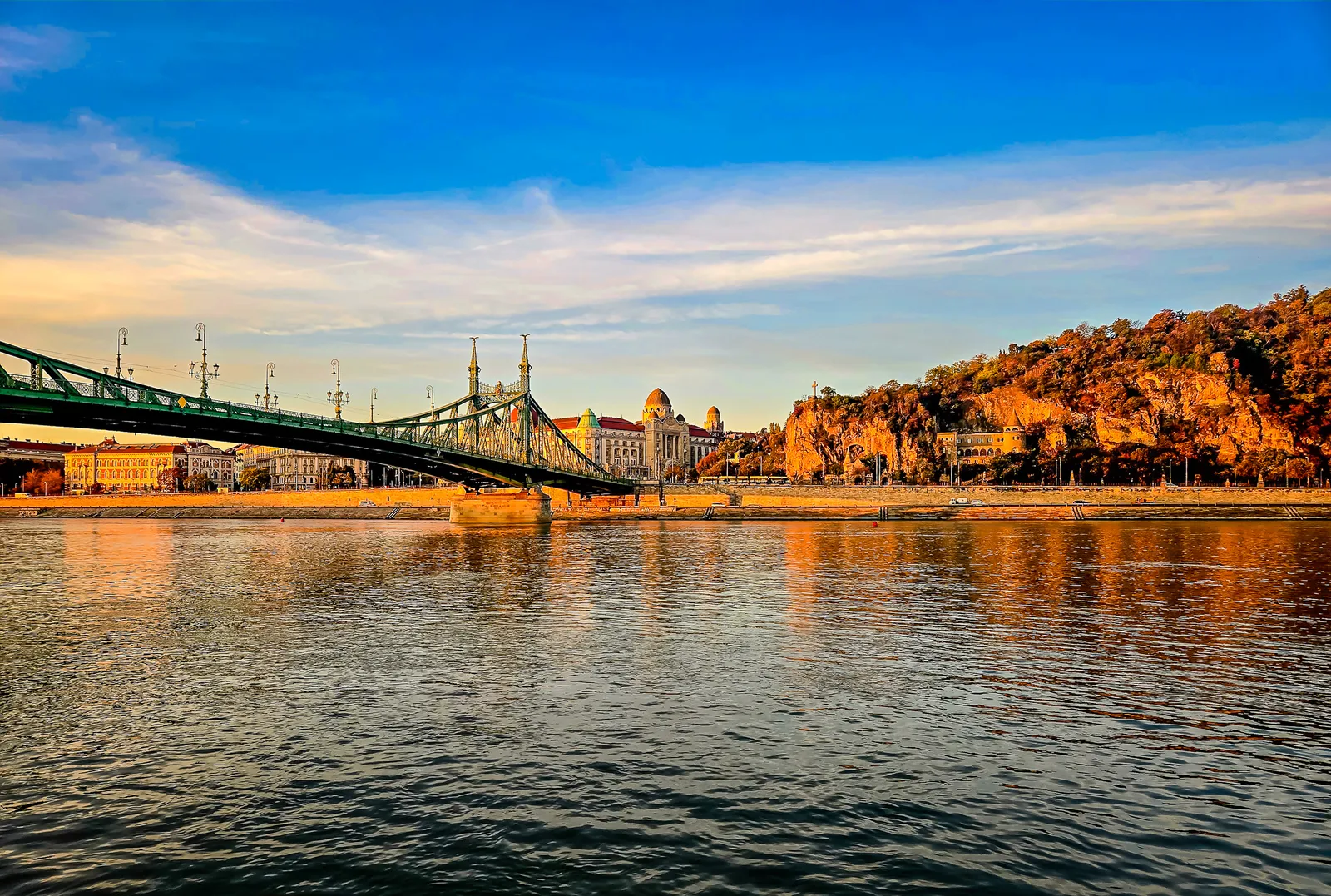
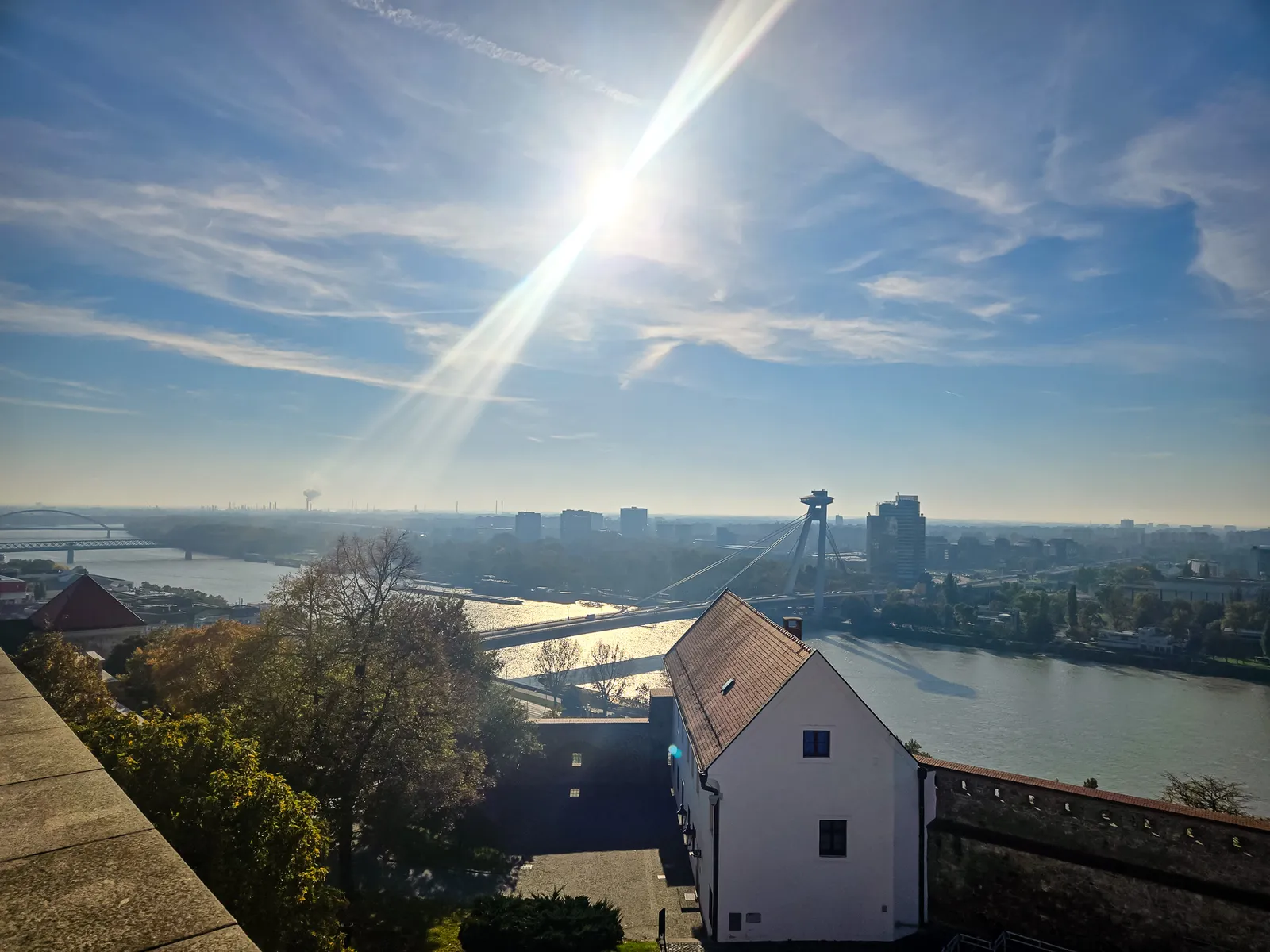
Bratislava, Slovakia This capital featured a charming Old Town, but beyond that, it didn't leave a strong impression. A pleasant visit, but not a standout.
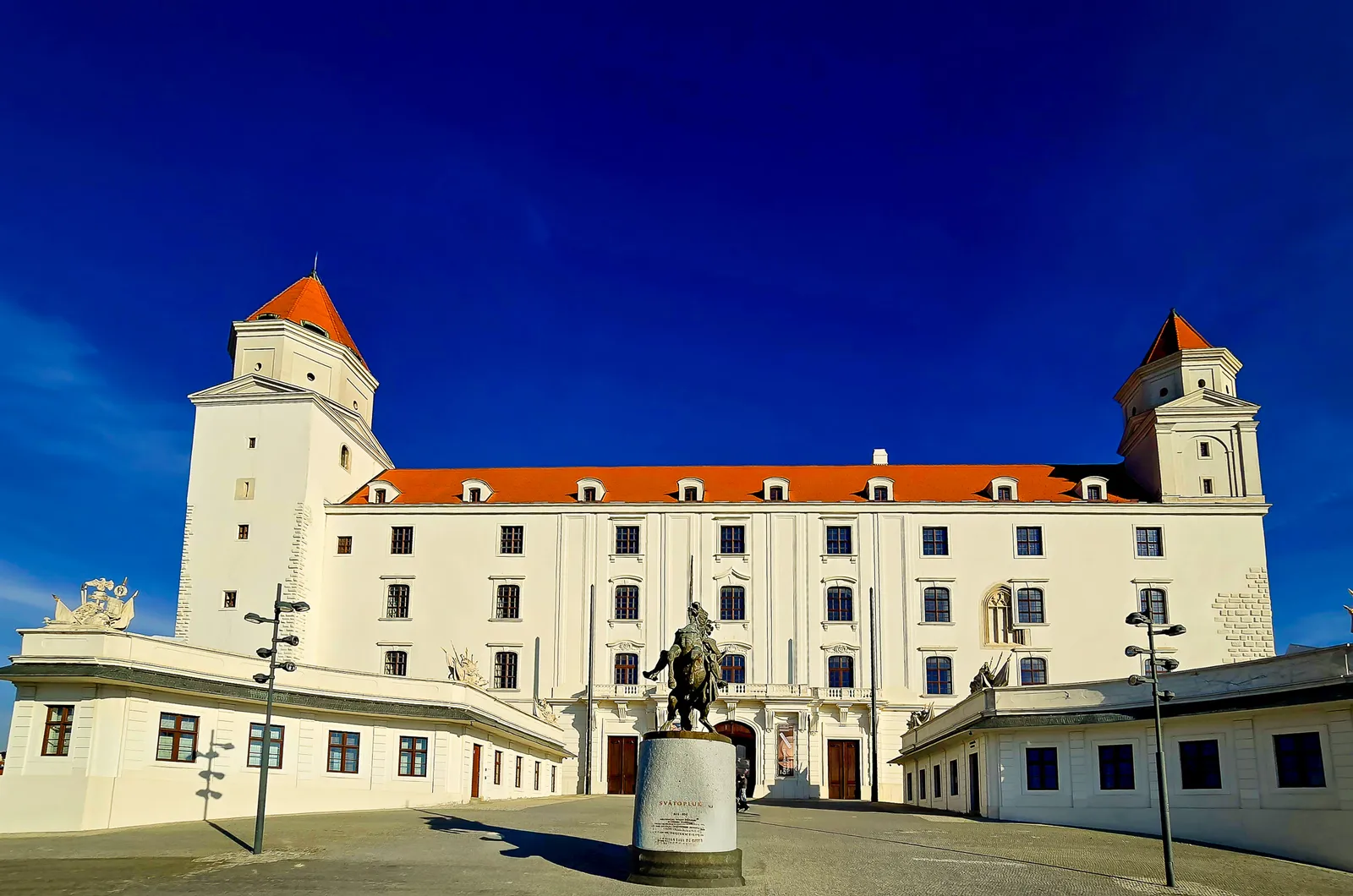
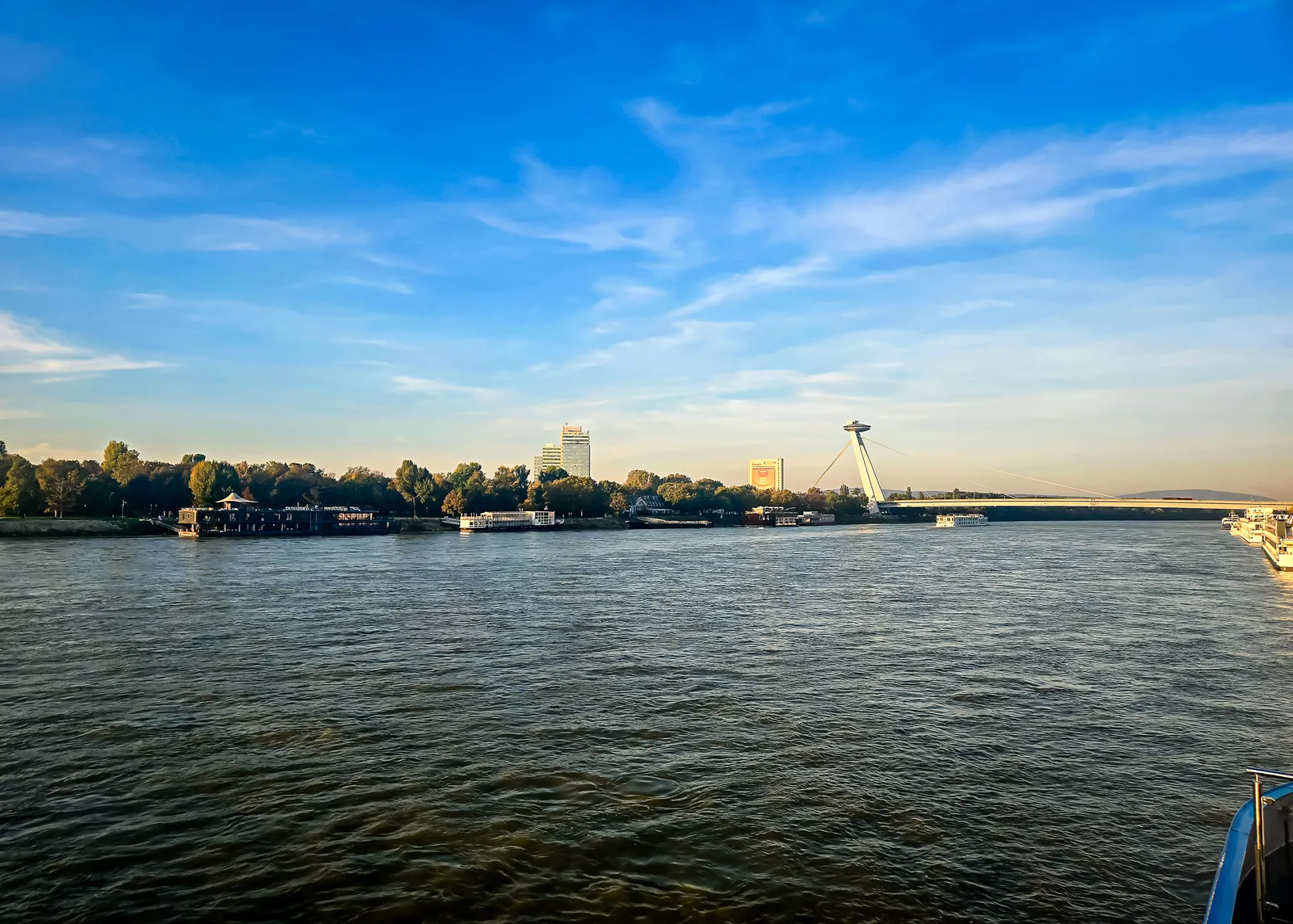
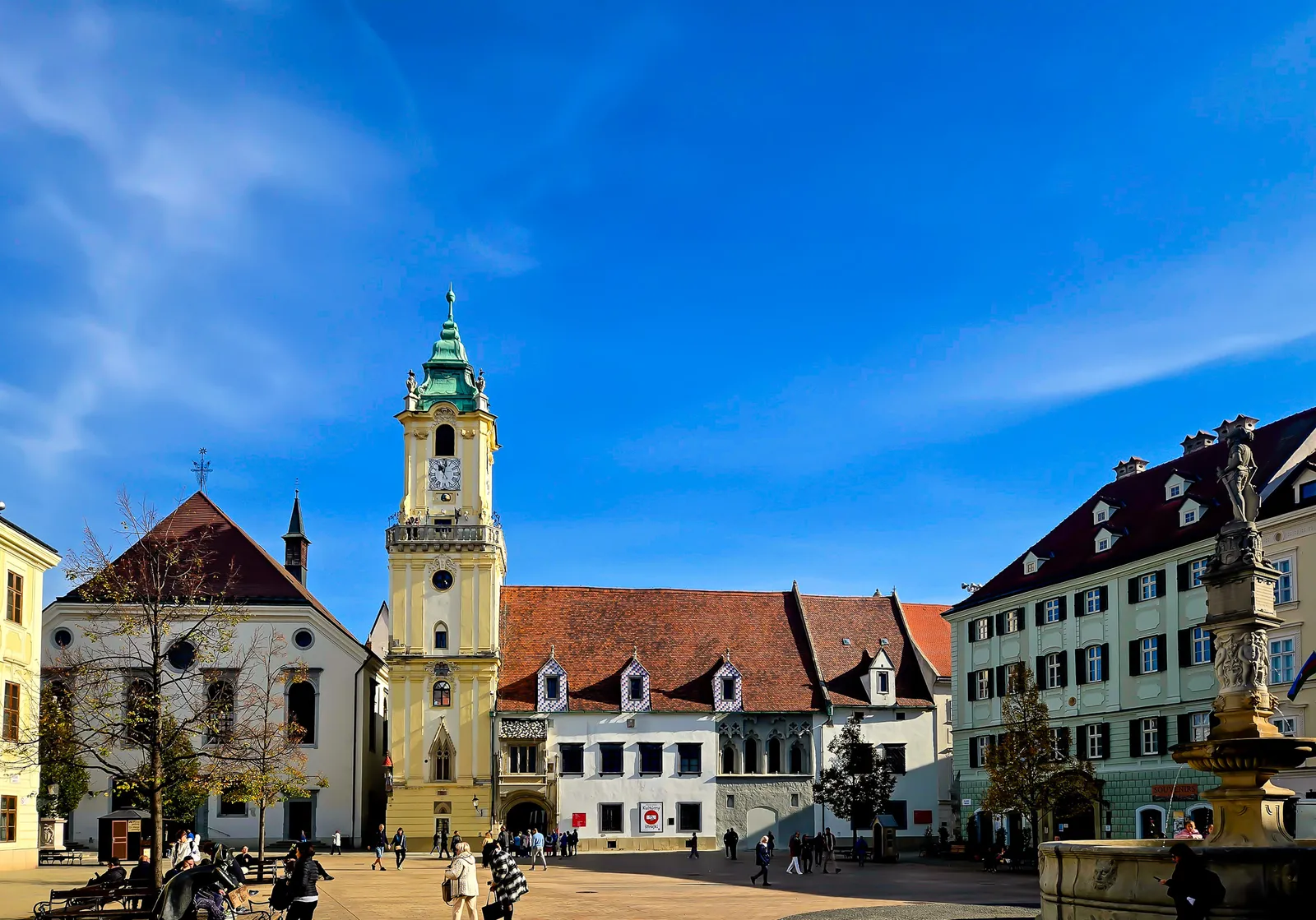
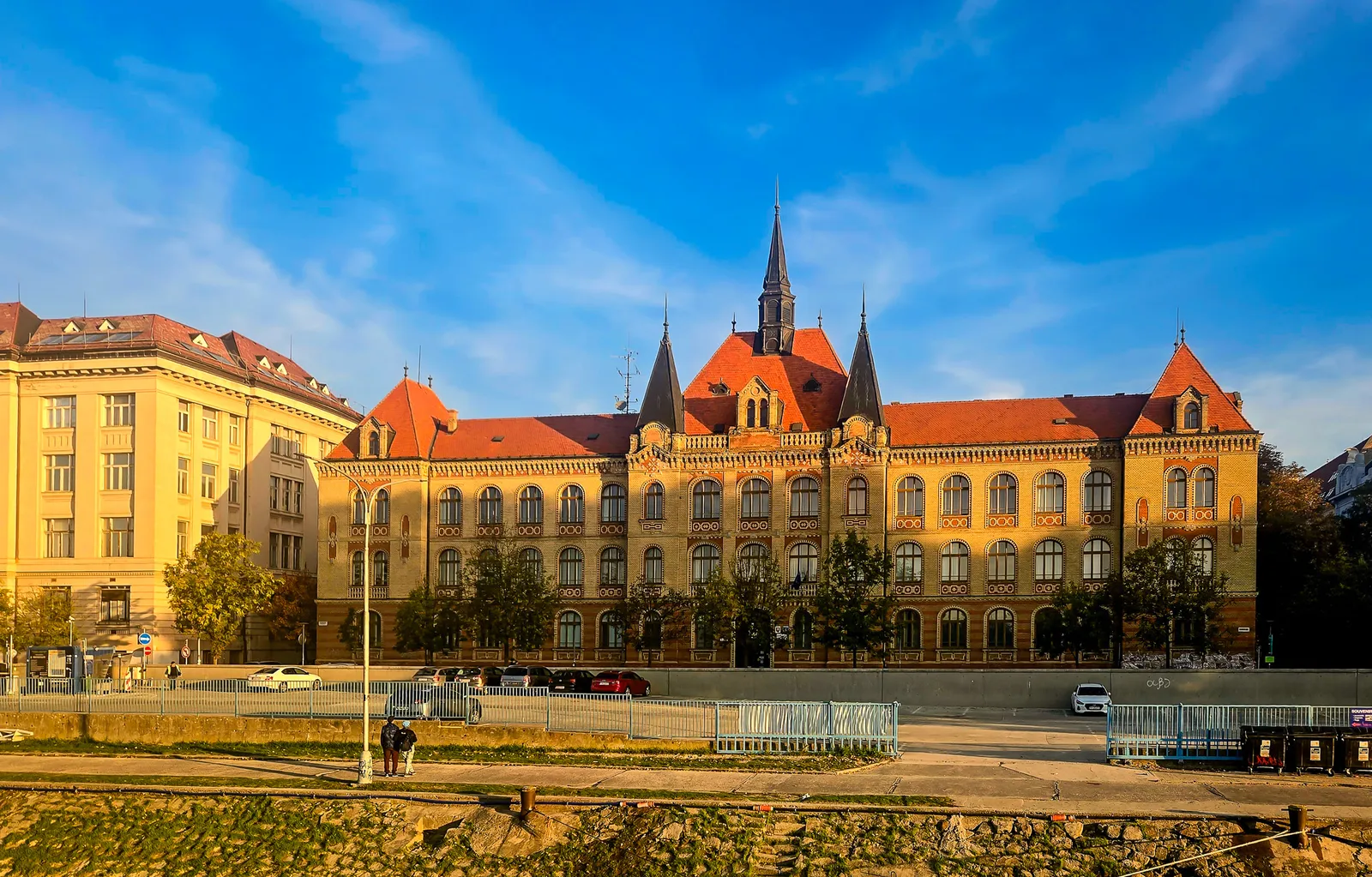
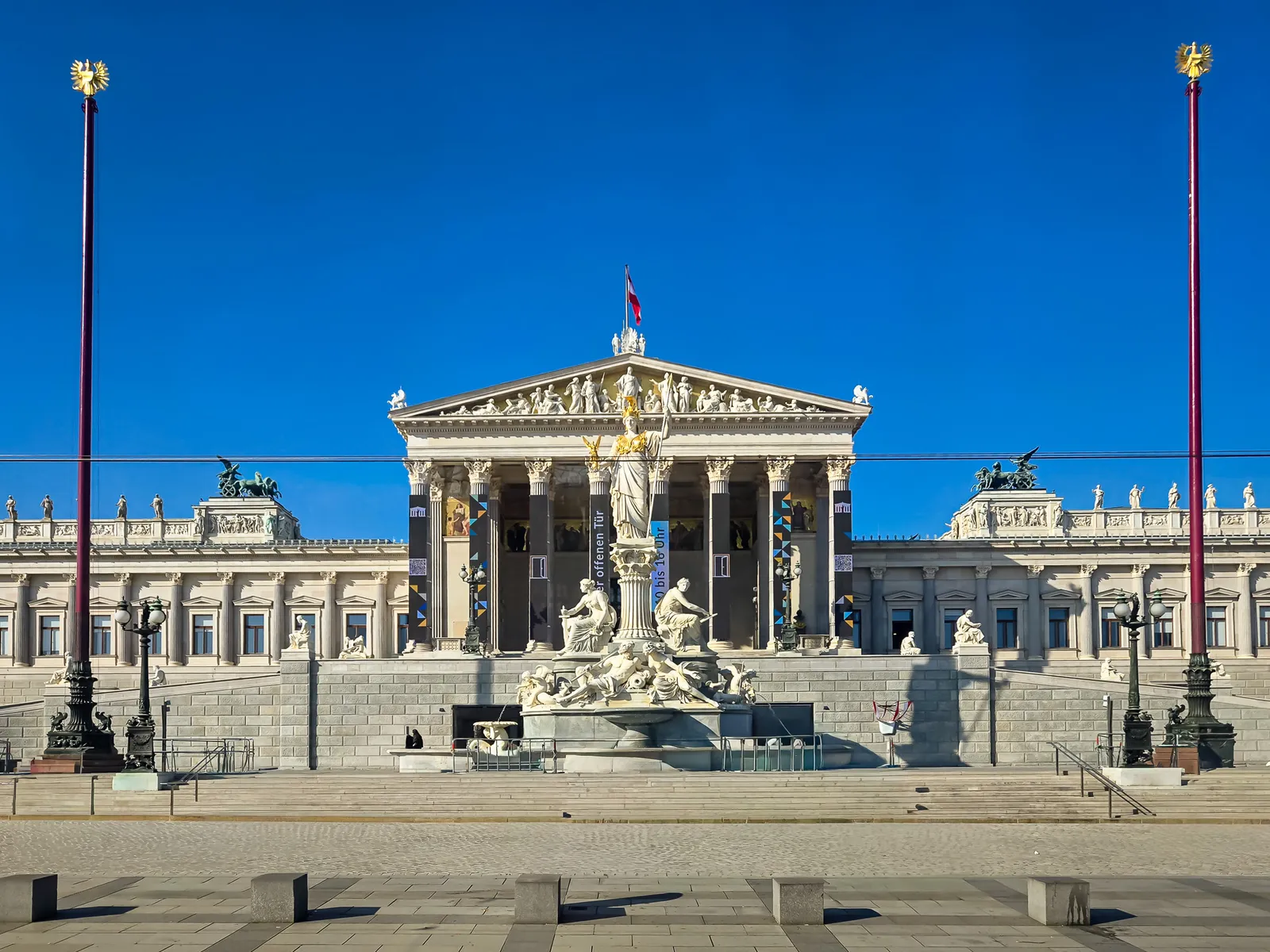
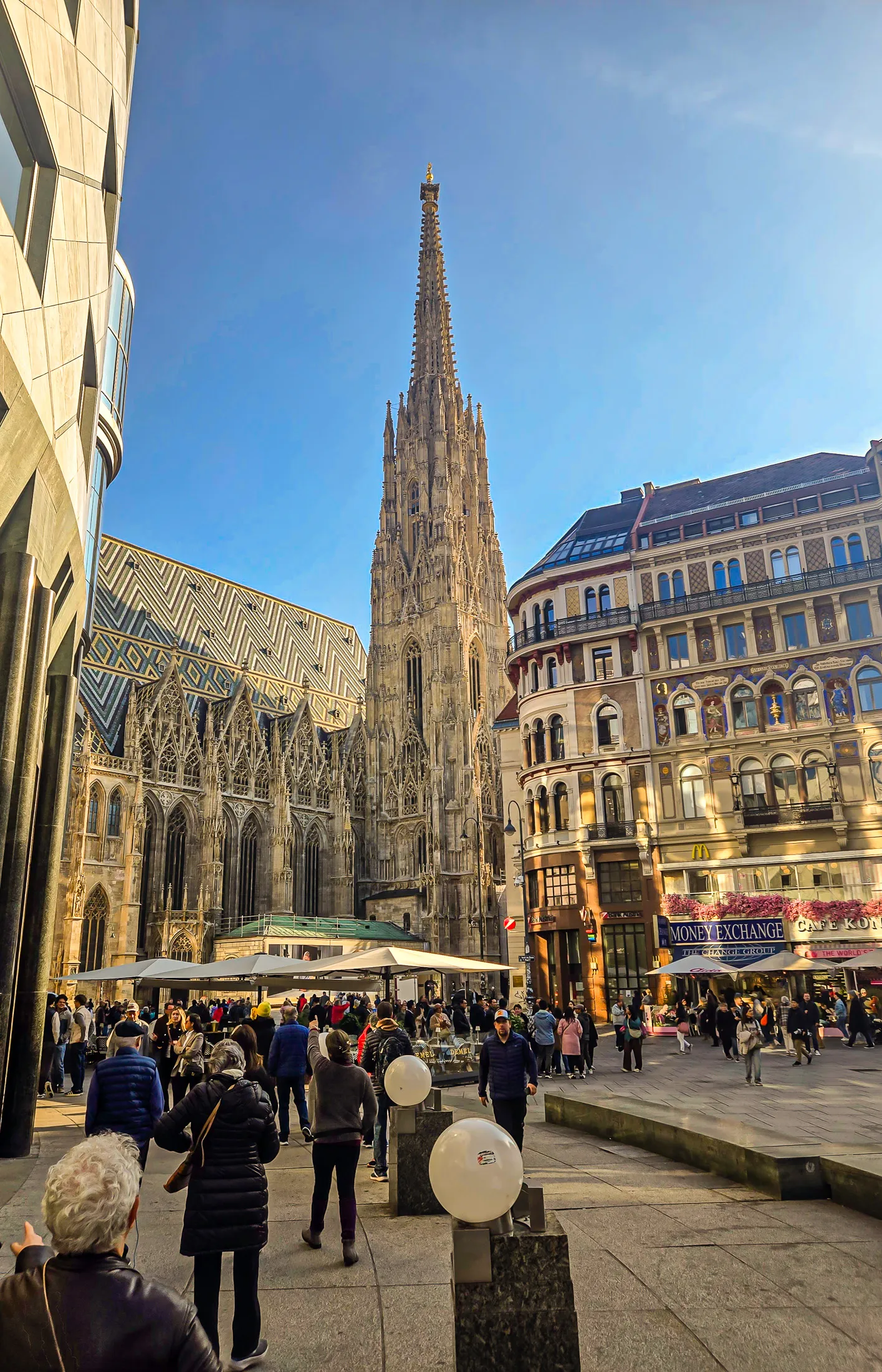
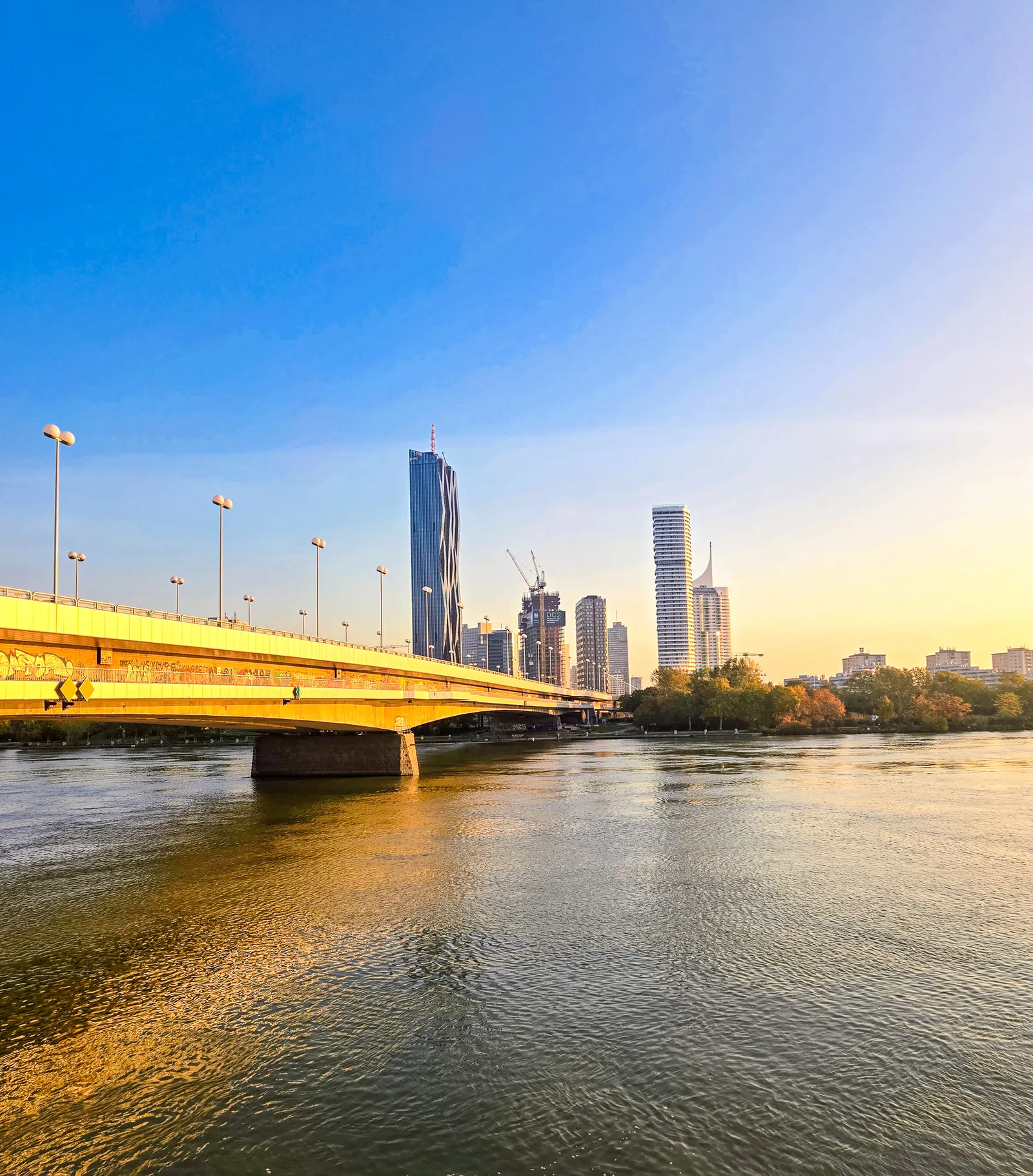
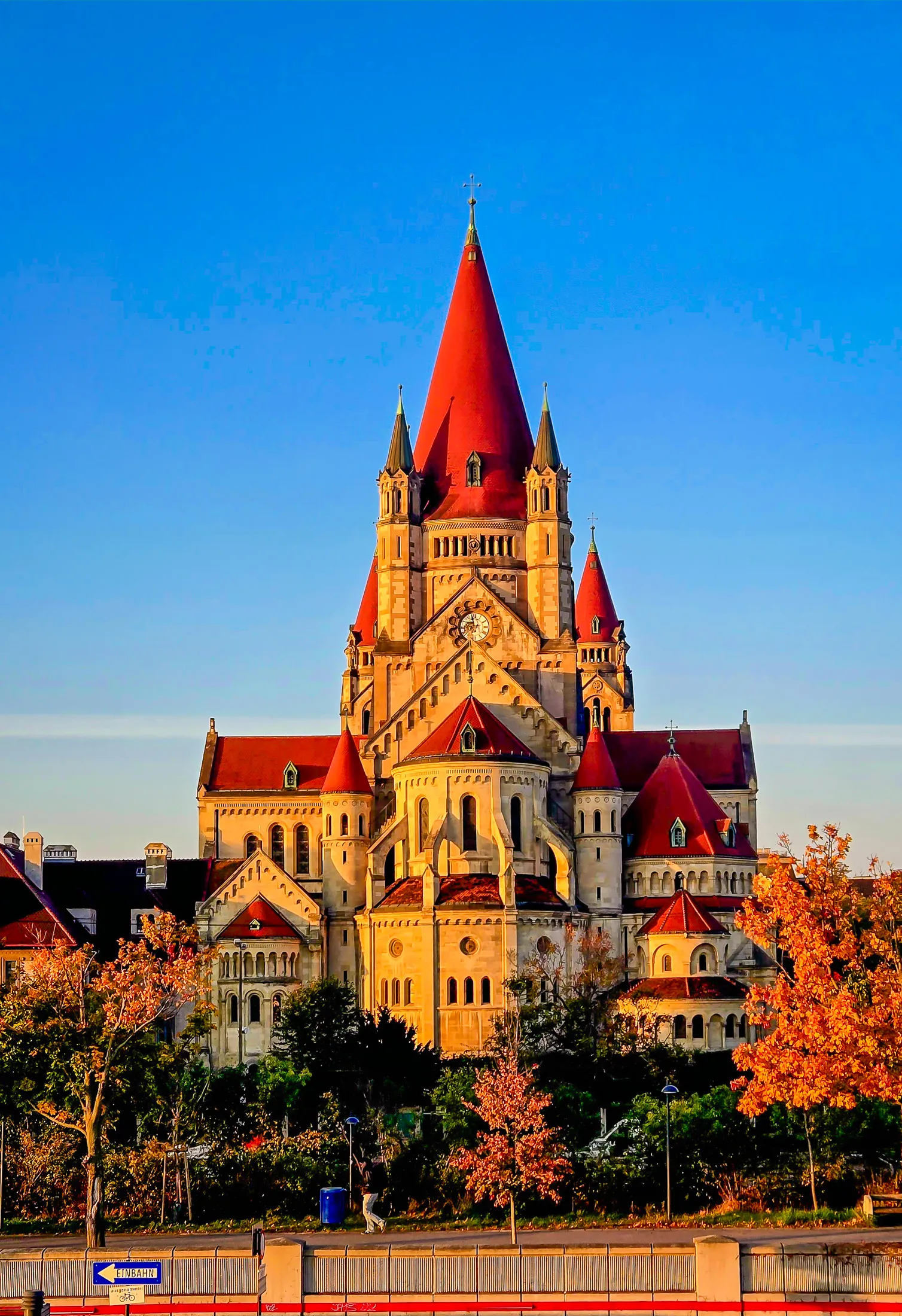
Vienna, Austria Vienna truly has an age-old vibe, with its grand architecture, rich history, and different shopping experiences.
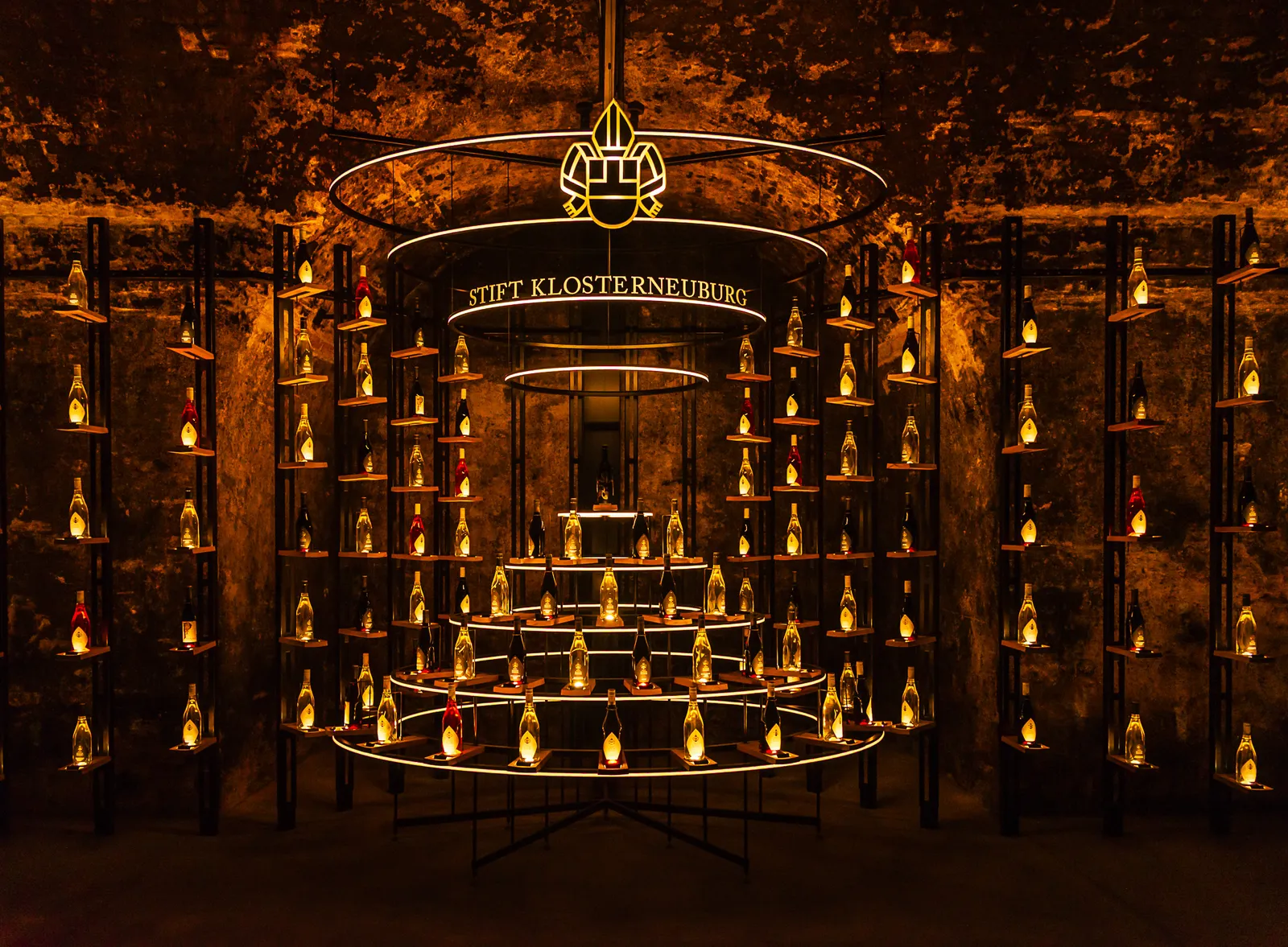
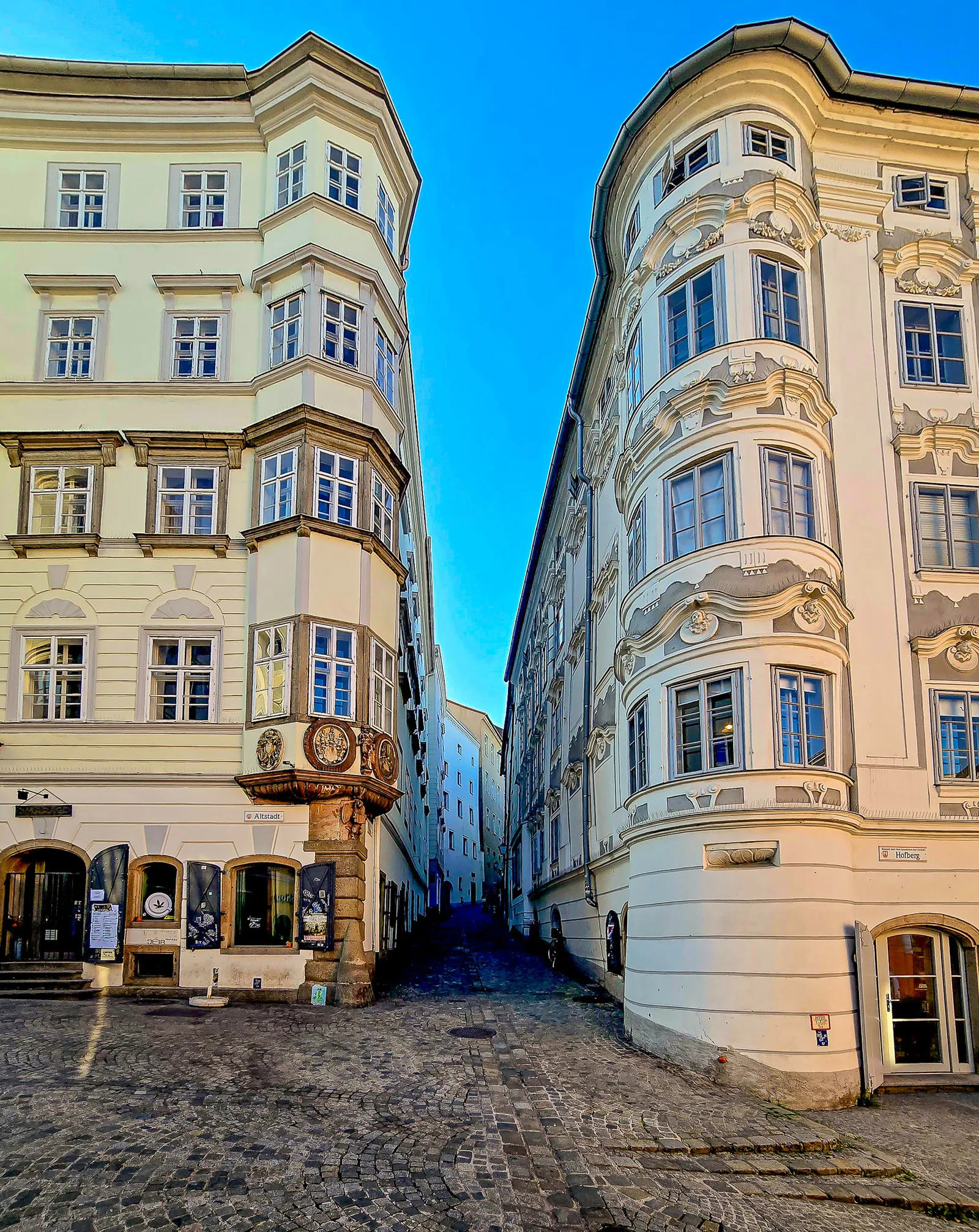
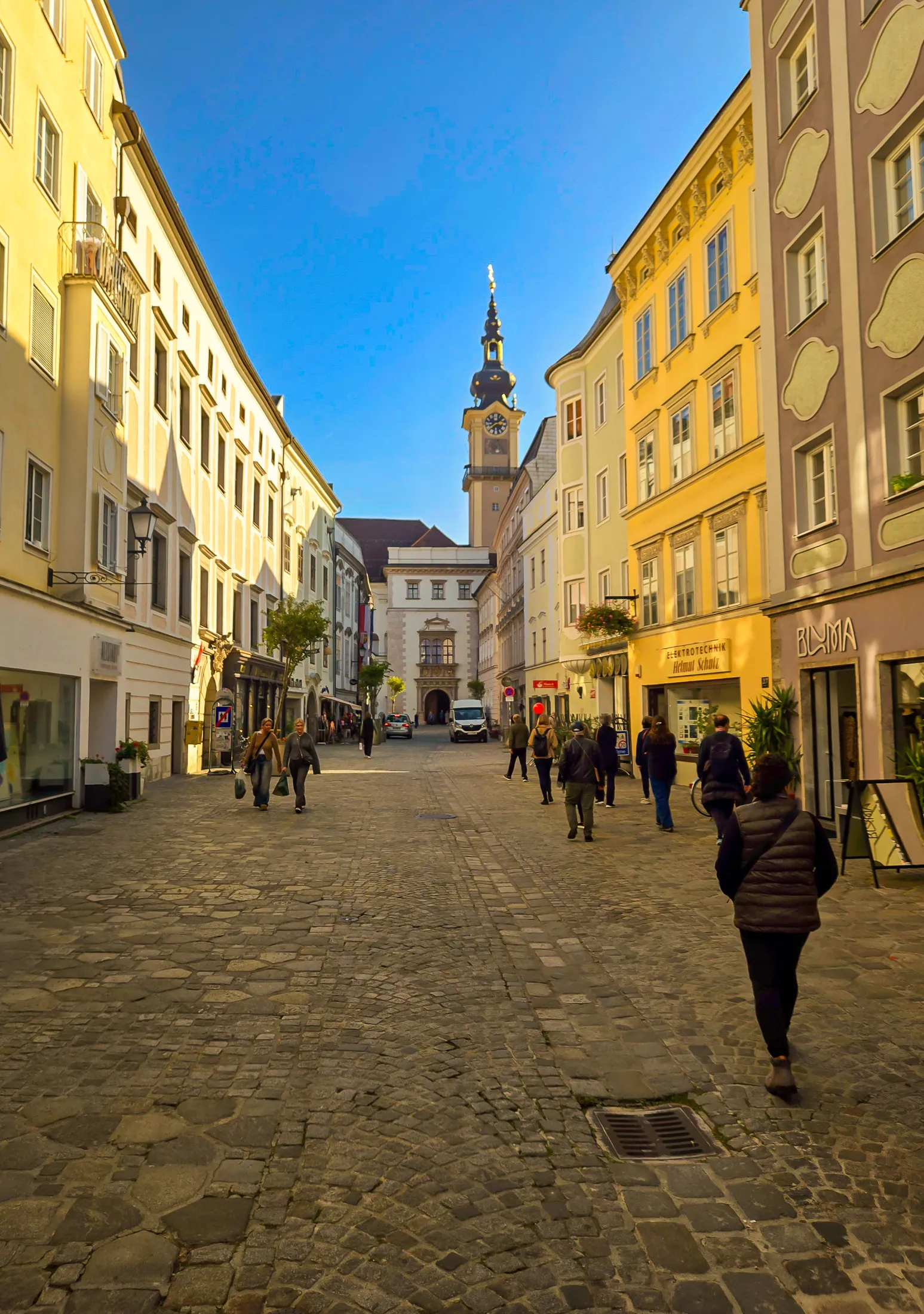
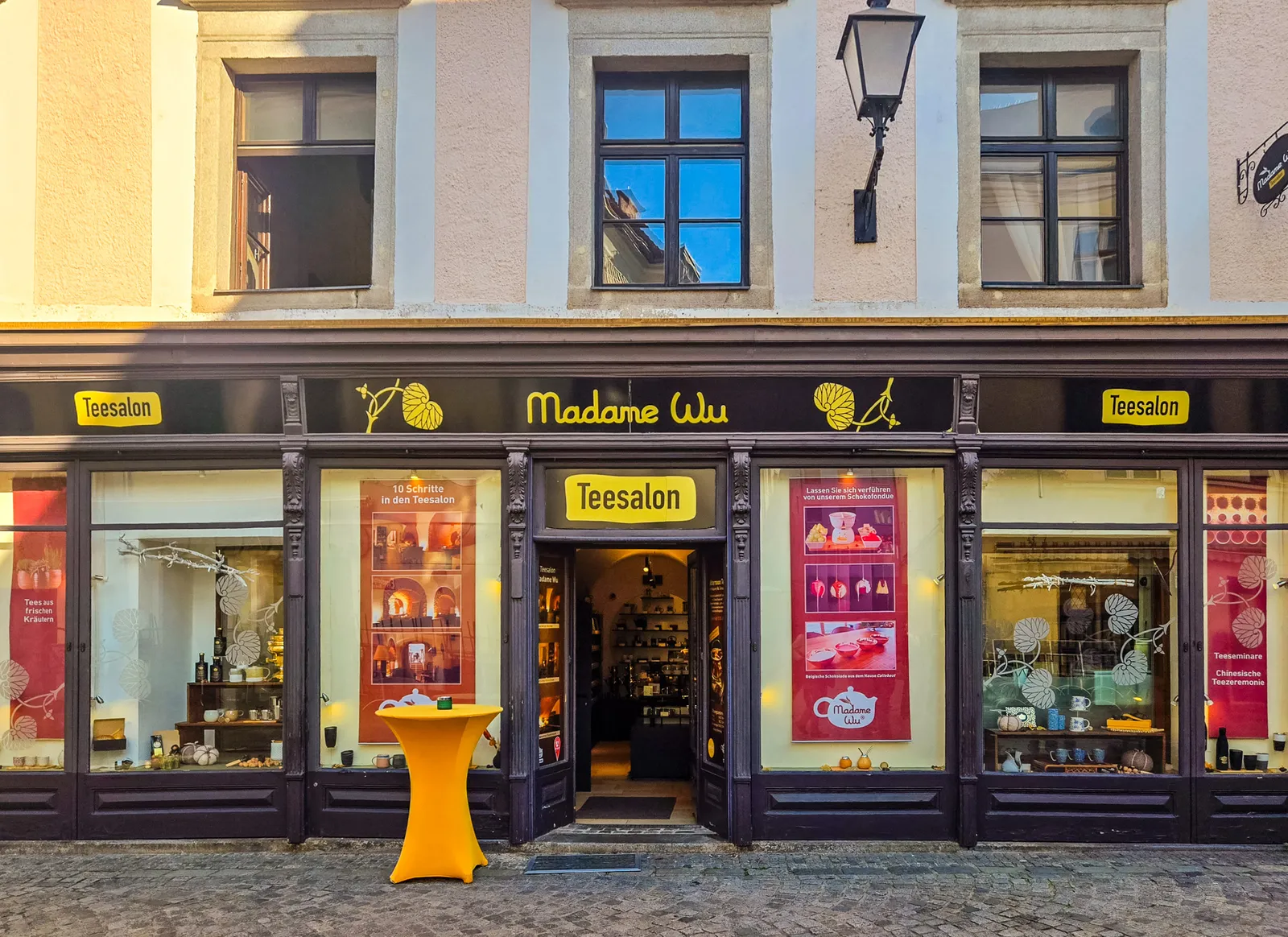
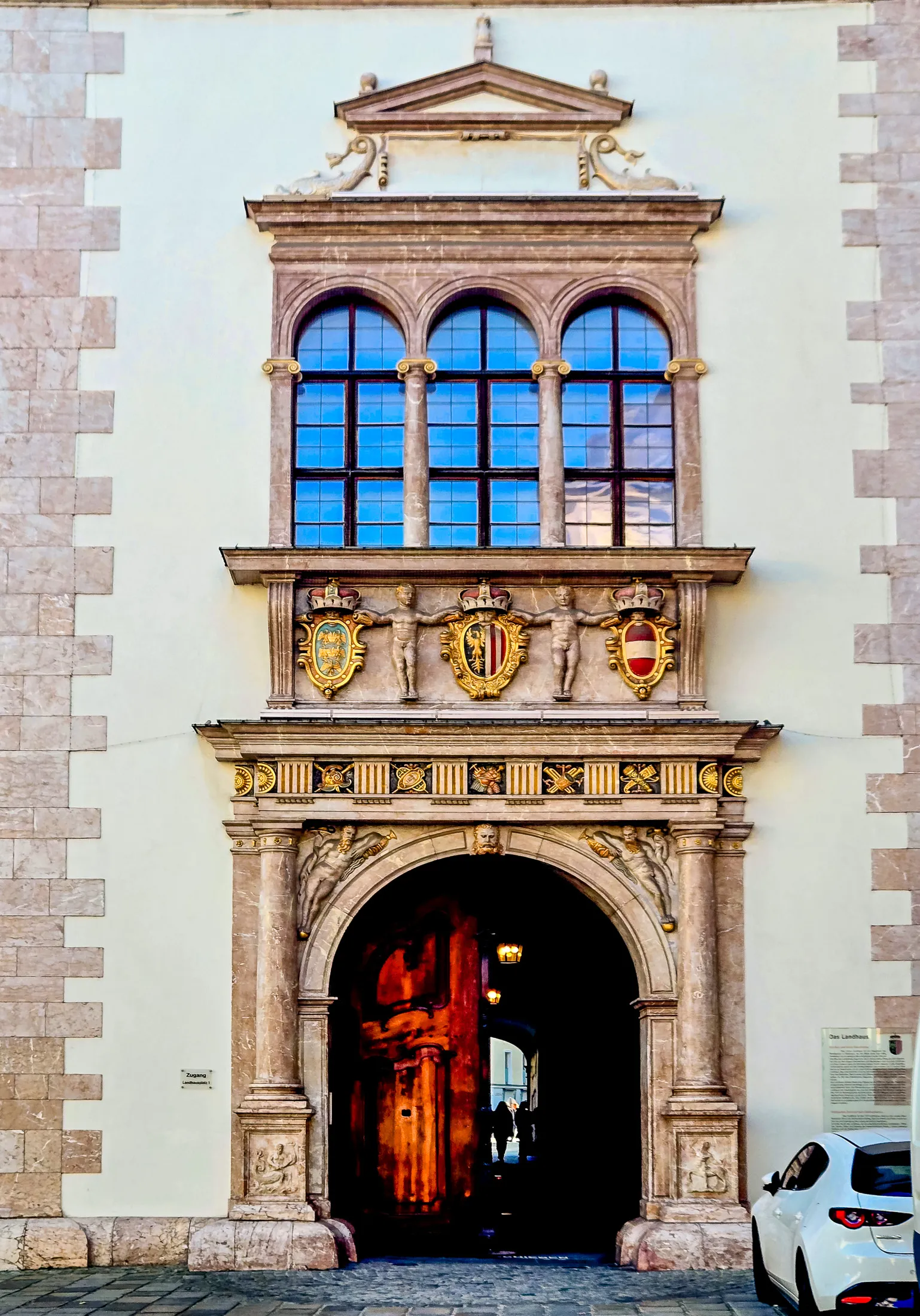
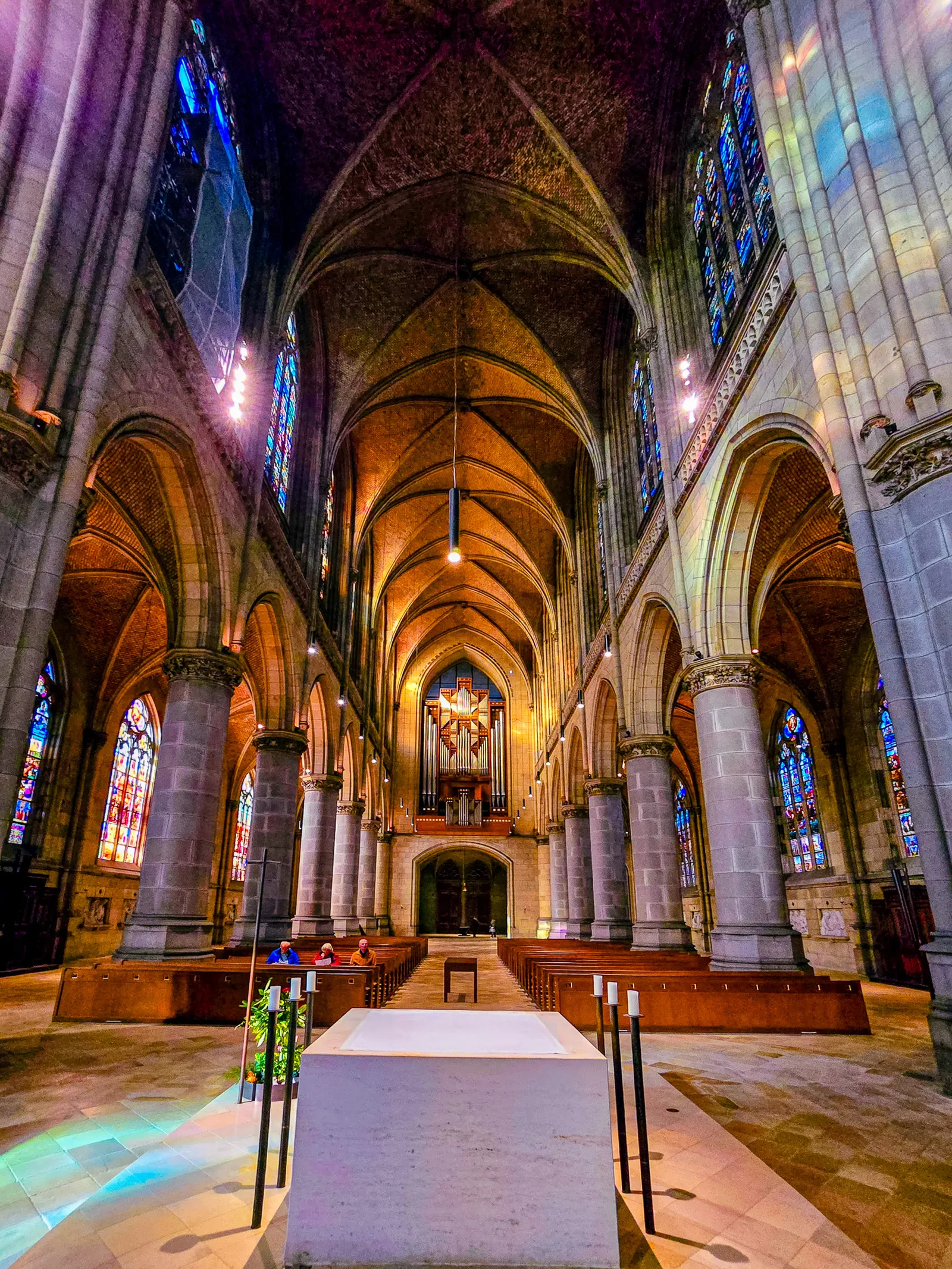
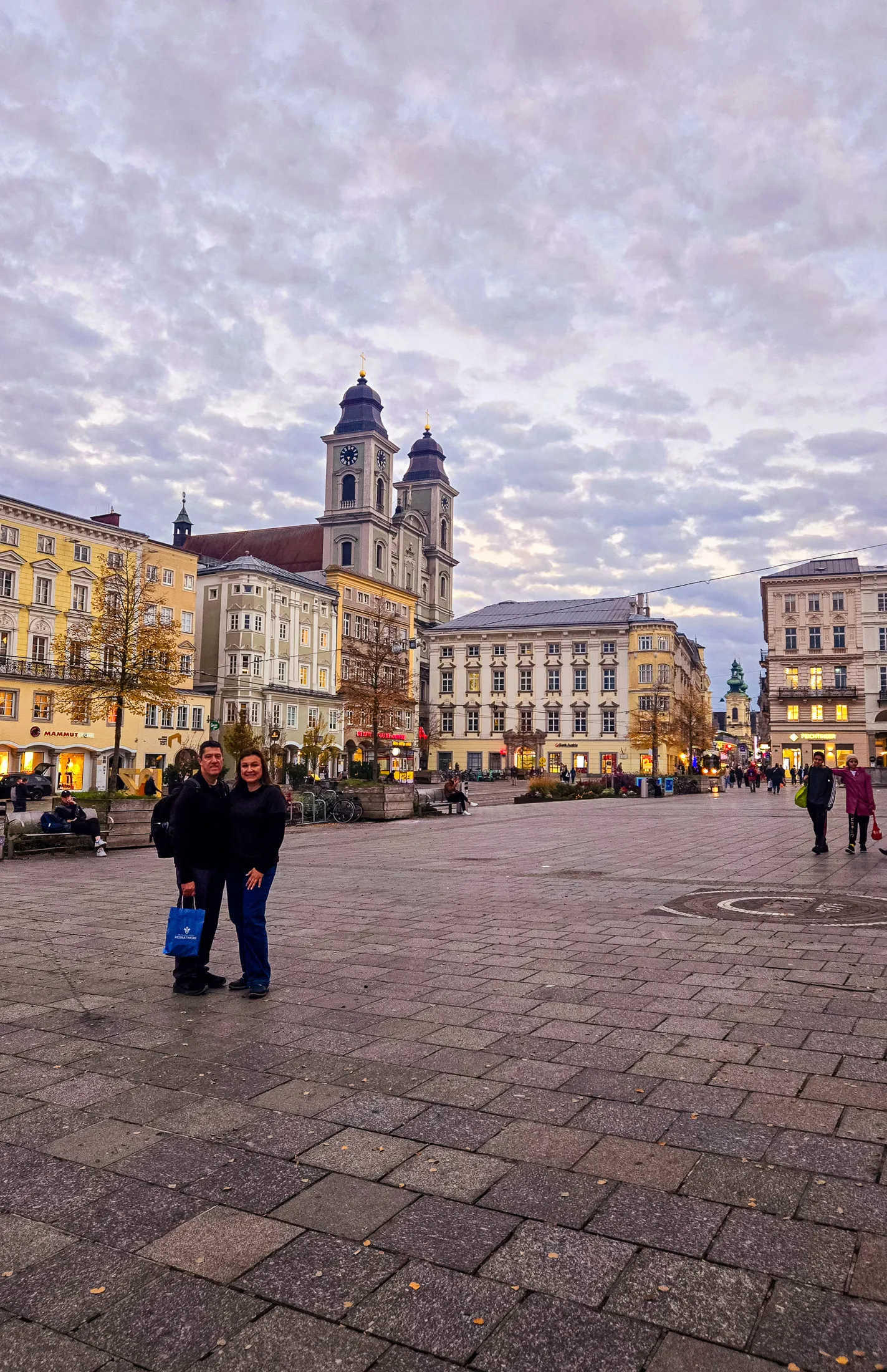
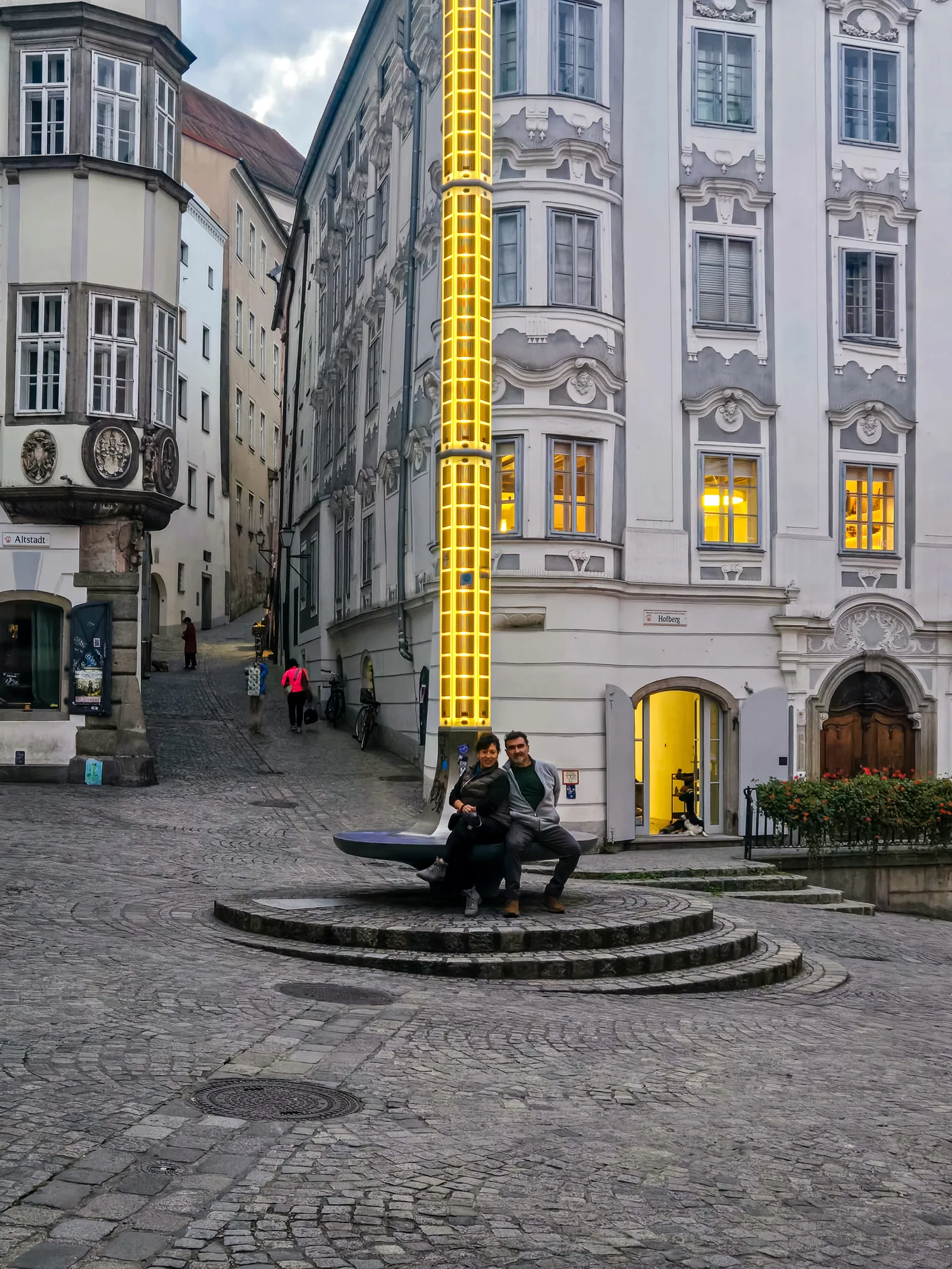
Linz, Austria Our final stop offered a mix of historical charm and modern artistic flair. We strolled through the old town, enjoyed coffee and pastries at a lovely café, and did some shopping. I found a fantastic vintage shop and picked up a few well-aged postcards and a couple of World War I service pins.
From the Three Rivers to Nuremberg
After our river cruise, we disembarked in Passau and spent some time exploring the downtown. We walked along Ludwigstraße, one of the city's main shopping streets, browsing boutiques, shoe stores, and cafés. We even stepped inside the Marianische Votivkirche, the small votive church tucked right along the street, before grabbing fish and chips nearby.
Then came the less glamorous part of the afternoon: my mile long walk to pick up the rental car from Enterprise. Once I finally had the car, I looped back to collect everyone and we set off toward Nuremberg.
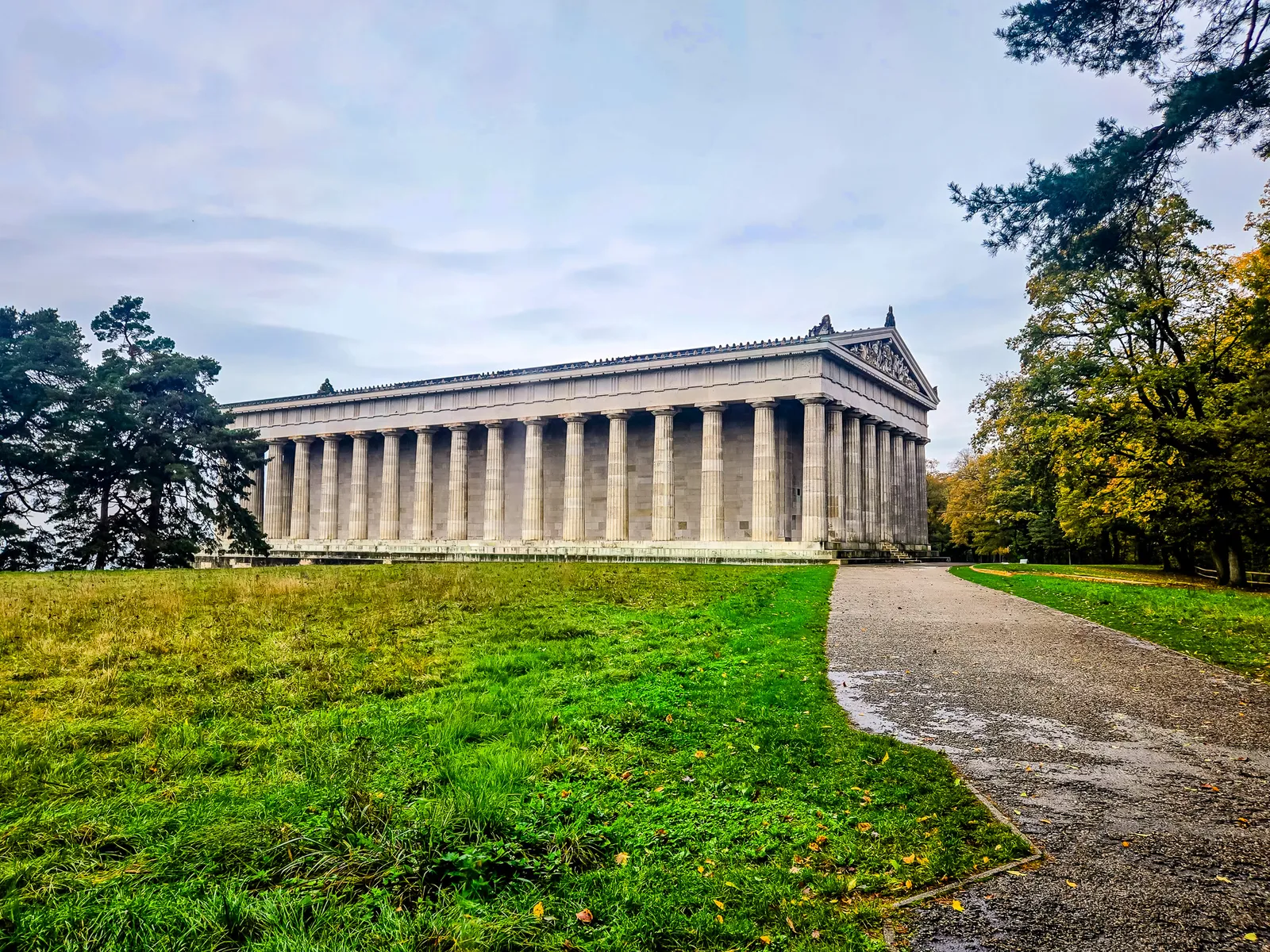
Making good time on the road, I decided to take a short detour to Walhalla, and it was absolutely worth it. Massive and commanding above the Danube, Walhalla is a neo classical hall of fame built between 1830 and 1842 by King Ludwig I to honor notable figures from German history. Inspired by the mythic Valhalla of Norse legend, it contains 130 busts and 65 plaques commemorating politicians, scientists, artists, and resistance fighters spanning more than 2,000 years.
The German Parthenon, a national hall of fame
Leaving Passau and heading toward Nuremberg, the drive is direct and easy on the Autobahn. We made a quick stop at McDonald's, near Obertraubling and then circled back toward Donaustauf. Even in the rain, the area was beautiful. The road narrows into a winding two lane route that climbs gently through small villages and open countryside — rolling hills, patches of forest, and occasional glimpses of the Danube as you get closer to the memorial.
As we approached Walhalla, the road became more rural, curving through quiet neighborhoods before leading to the designated parking area. It runs on a simple honor system setup: no gate, no attendant, just a posted fee and a machine where you pay.
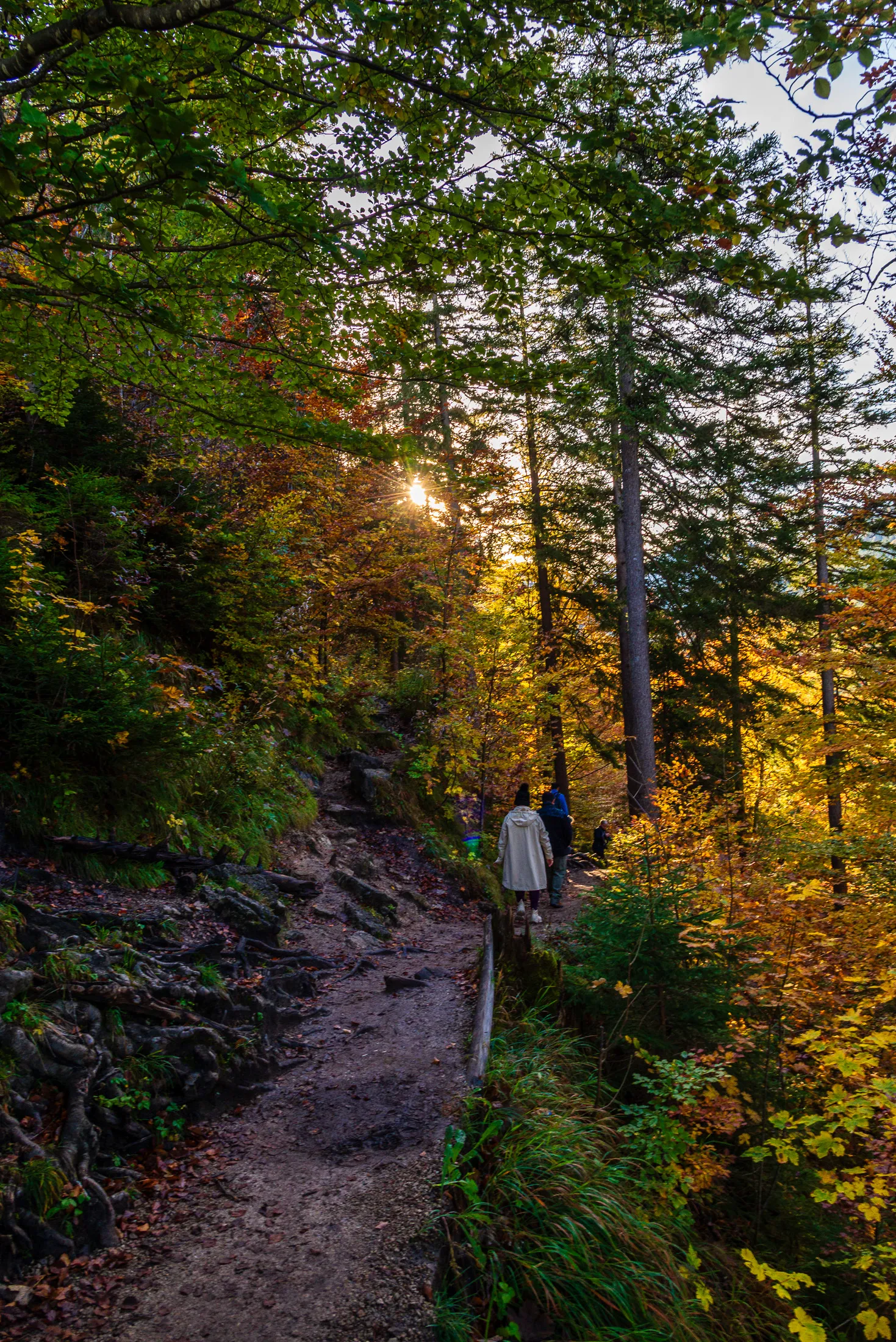
The parking lot sits below the memorial, and the structure isn't visible from there. Instead, you follow a half mile uphill path that winds through a canopy of trees. In autumn, the entire walkway glows with orange and gold leaves, creating a peaceful approach to the site.
At the top, Walhalla finally comes into view, massive, white, and commanding above the river. The doors were open when we arrived, so we peeked inside just long enough to see the marble interior and rows of busts lining the hall. Impressive, no question, but we chose to keep our visit outdoors and stay on the move.
We walked the grounds, took in the sweeping views over the Danube, snapped a few photos, and then continued the drive to Nuremberg. Even without going inside, Walhalla was absolutely worth the detour.
You can get a real time feel for the walkway from the video I shot during our visit.
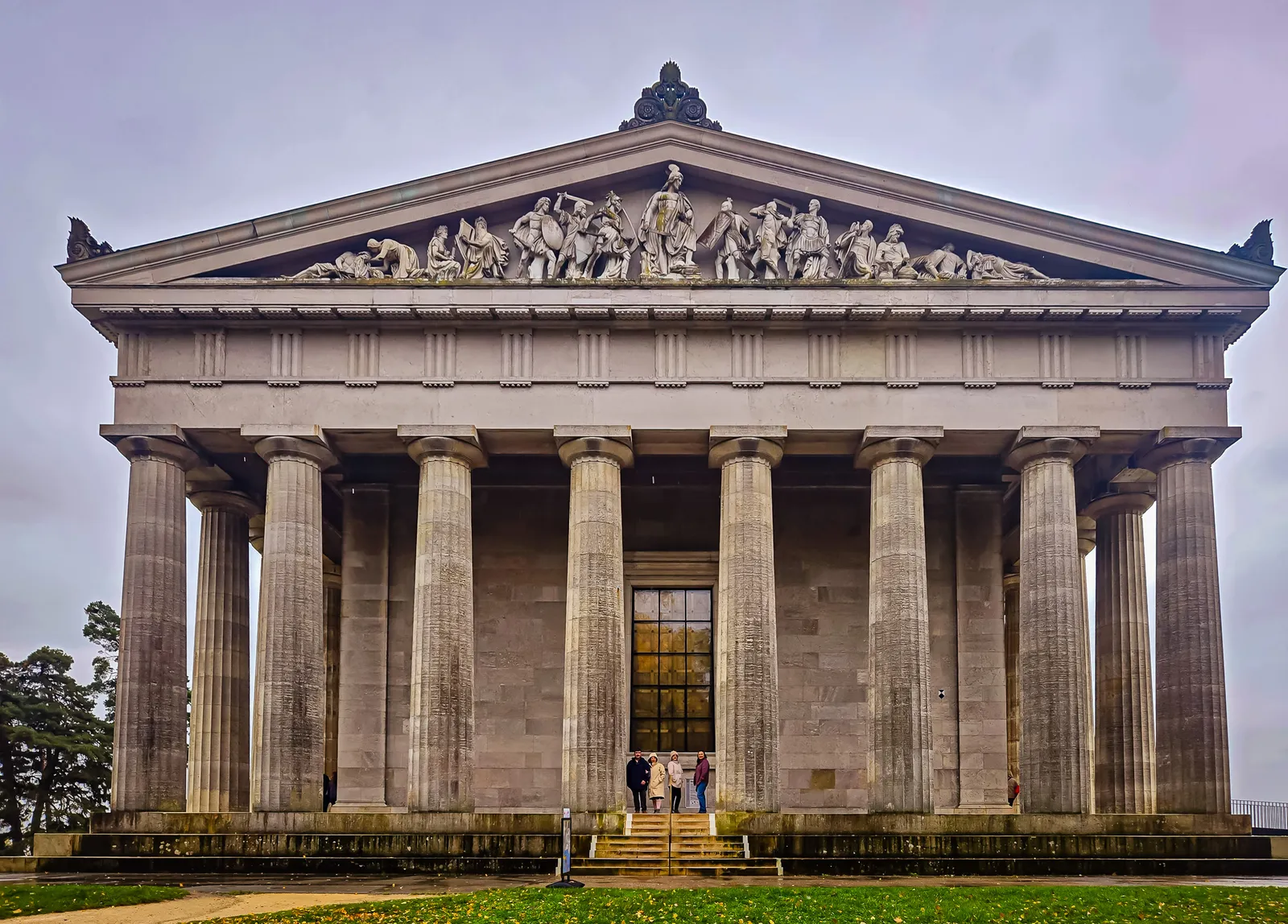
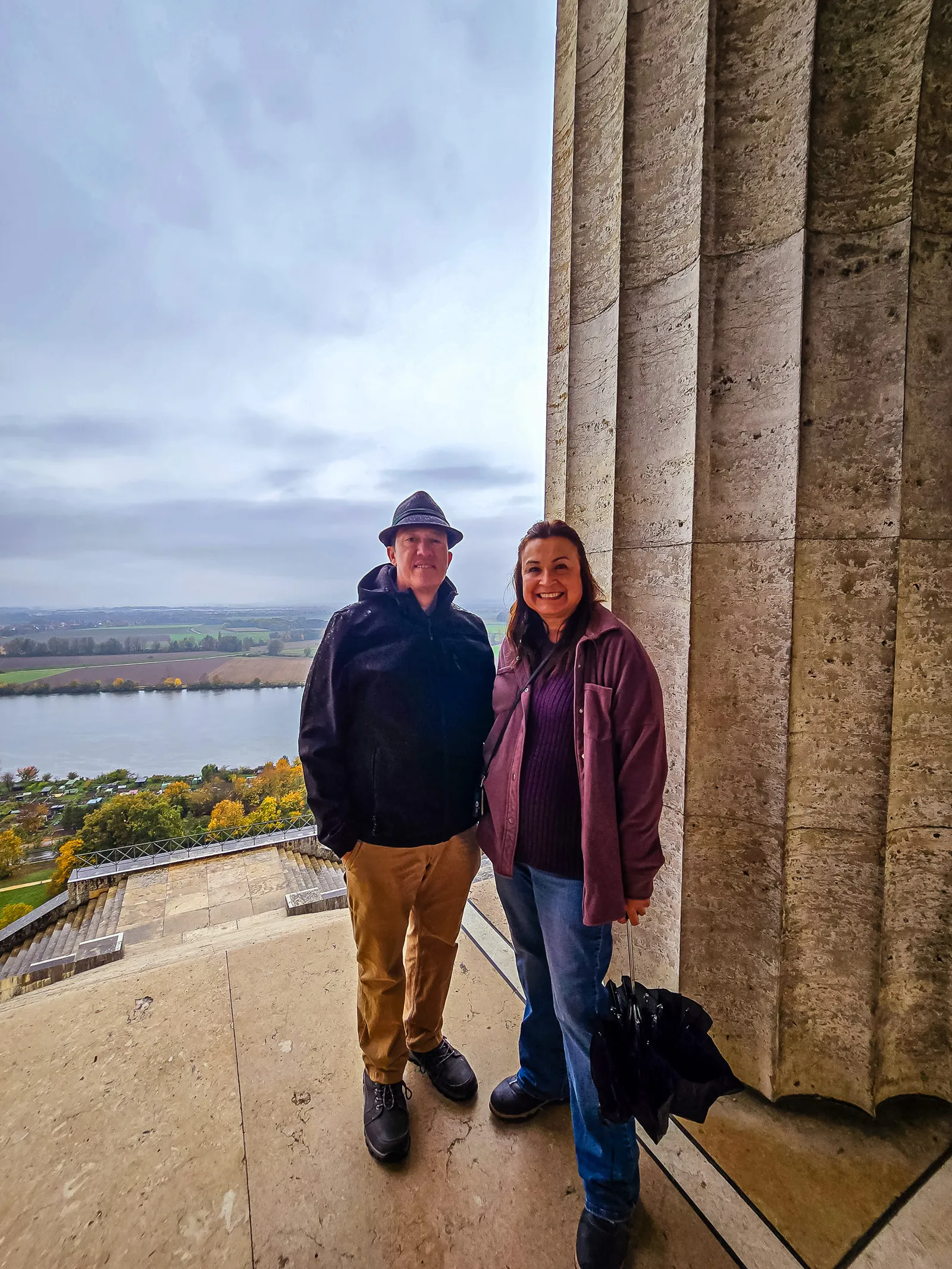
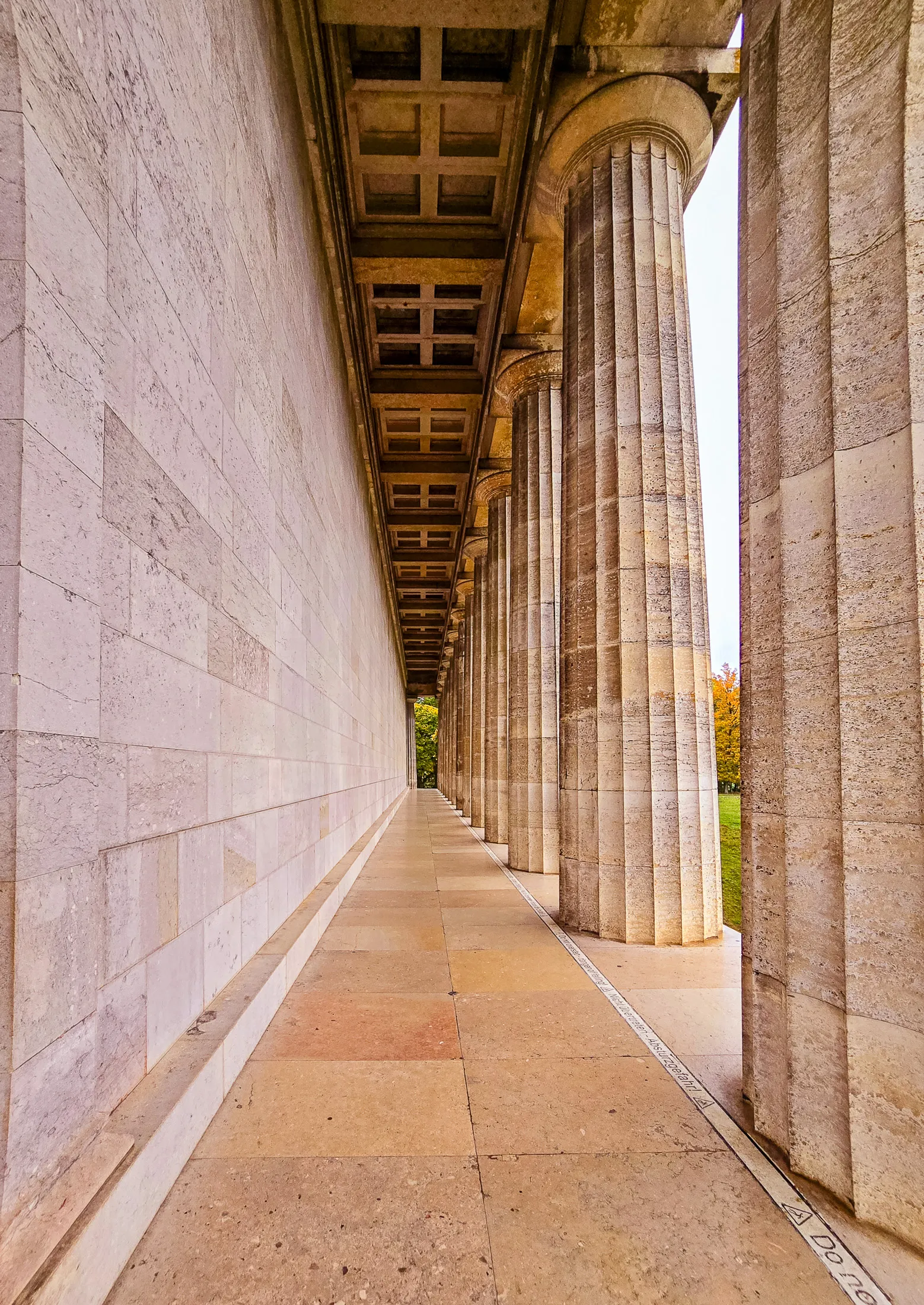
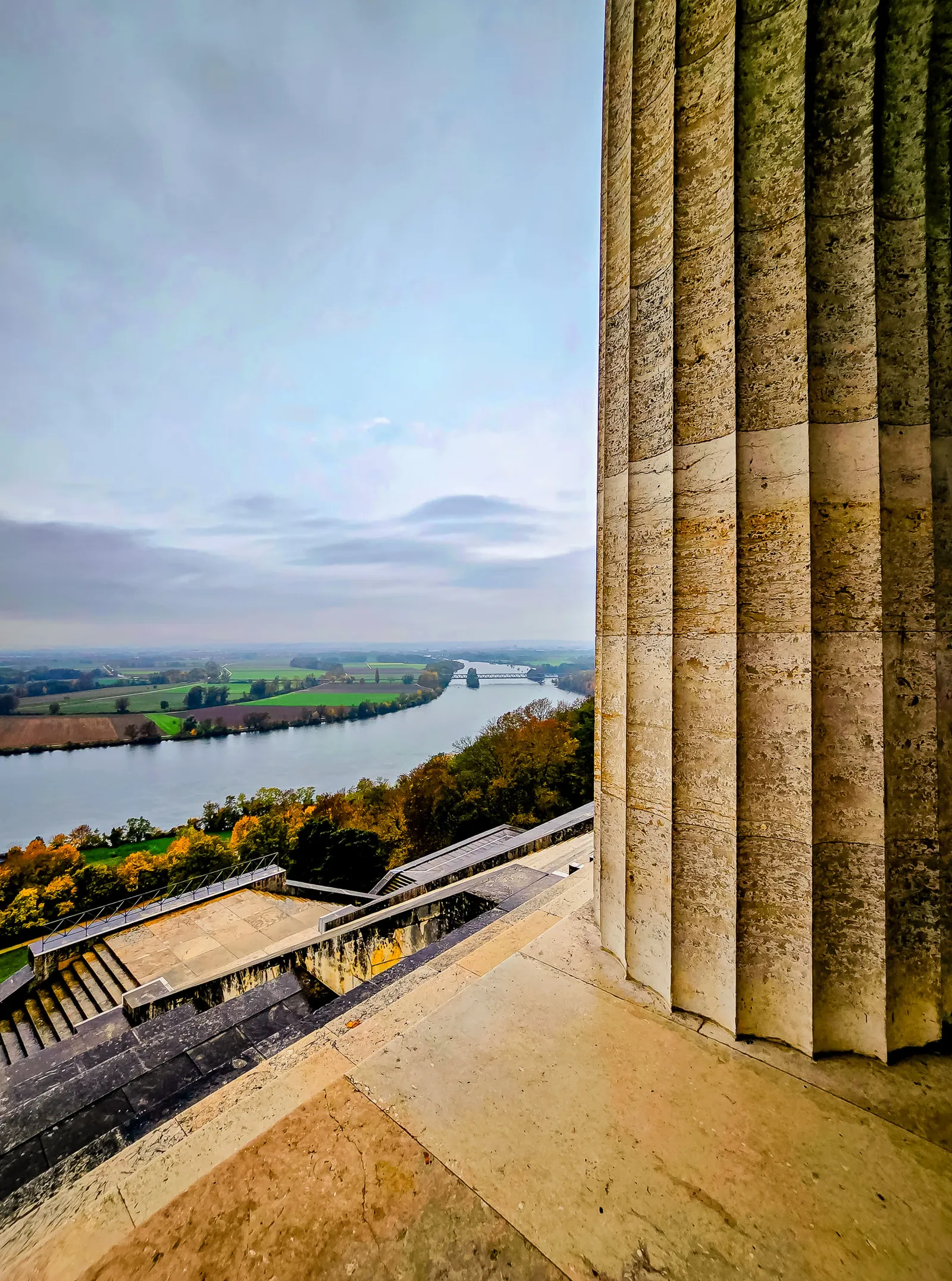
Watch this part of the journey
Where Medieval Glory Meets Modern Remembrance
After the drive from our river cruise and hotel check-in, we found Papa Walters, a charming restaurant housed in what looked like a converted apartment building. The homey atmosphere provided the perfect welcome to Nuremberg, a city that would challenge us to reconcile its medieval grandeur with its darkest chapter.
The next morning, we met our guide, Andreas, and traveled by train to the Rally Grounds just outside Nuremberg. Side note: Before getting on the train, we took a quick bathroom break. While waiting for the others, three state police approached me for ID. Standing alone, apparently, I looked suspicious enough to warrant attention. Fortunately, Andreas arrived in time to explain I was part of his tour group. Not exactly the cultural exchange I'd planned, but definitely memorable.
Monuments and Propaganda
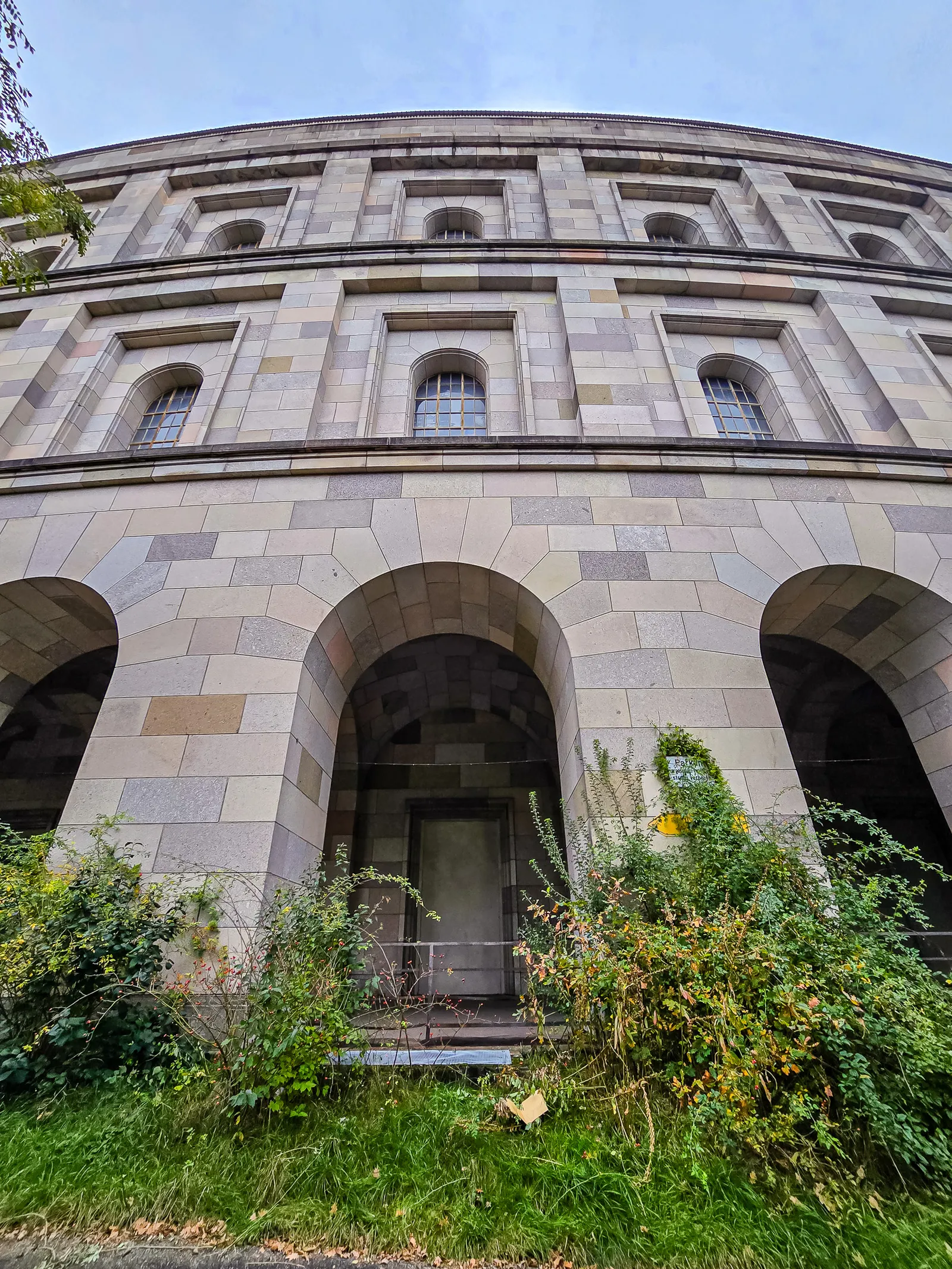
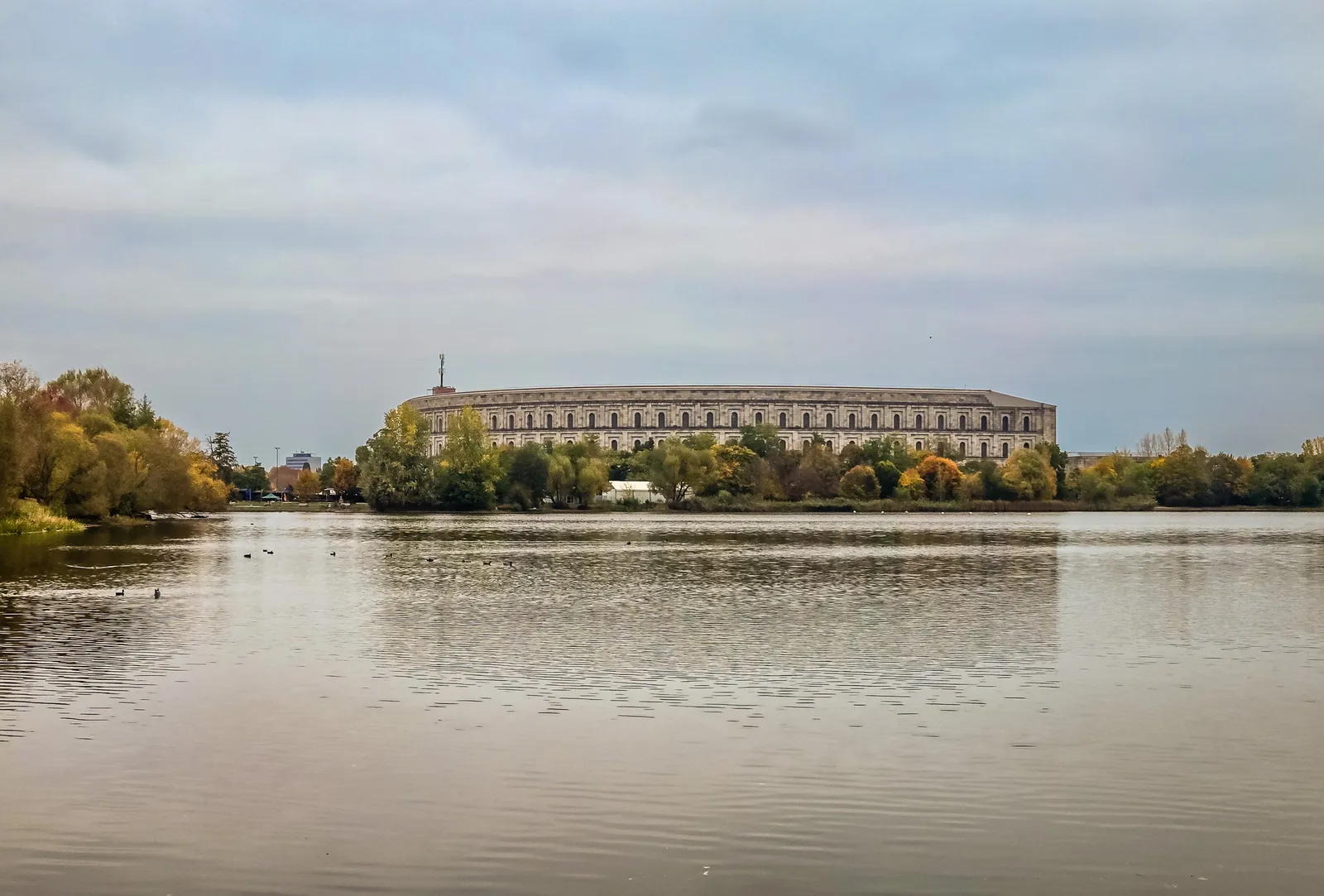
We took the train to the former Nazi Party Rally Grounds outside Nuremberg. From the station, we followed the shoreline of Dutzendteich, a quiet lake beside the massive Congress Hall. Modeled on Rome's Colosseum, the building was meant to hold 50,000 people but was never finished. Today its north wing houses the Documentation Center, where exhibits confront the history of the Nazi regime and the propaganda once staged on these grounds.
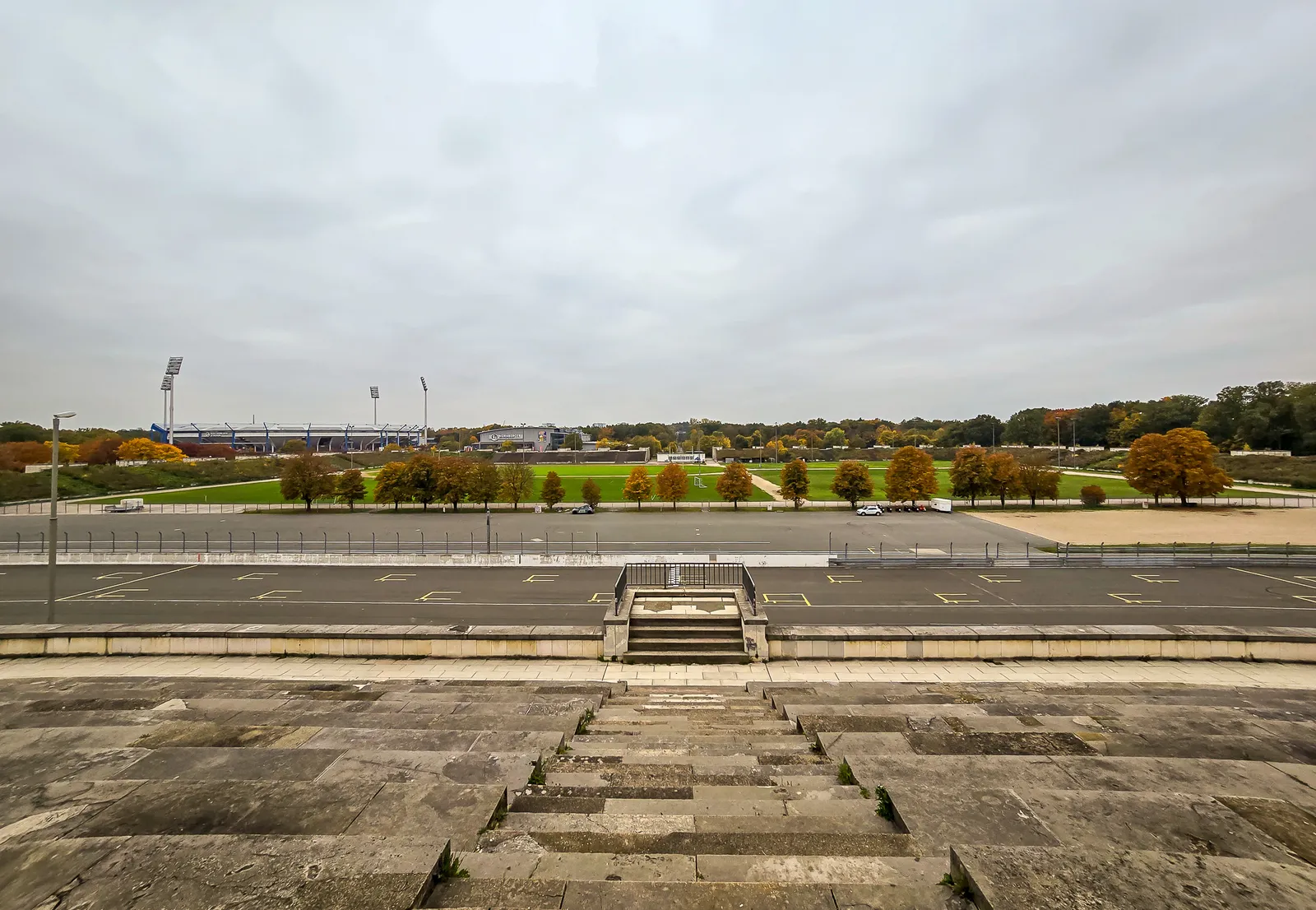
The real centerpiece is Zeppelinfeld, Albert Speer's parade ground for the annual Nuremberg Rallies held between 1933 and 1938. Up to 200,000 participants gathered here as Hitler addressed the crowds from the grandstand, a scene made infamous by the torchlight processions in Leni Riefenstahl's Triumph of the Will.
One of the site's most symbolic moments came in 1945, when the U.S. Army demolished the swastika that crowned the grandstand, marking the regime's collapse at the very place it had staged its greatest displays of power.
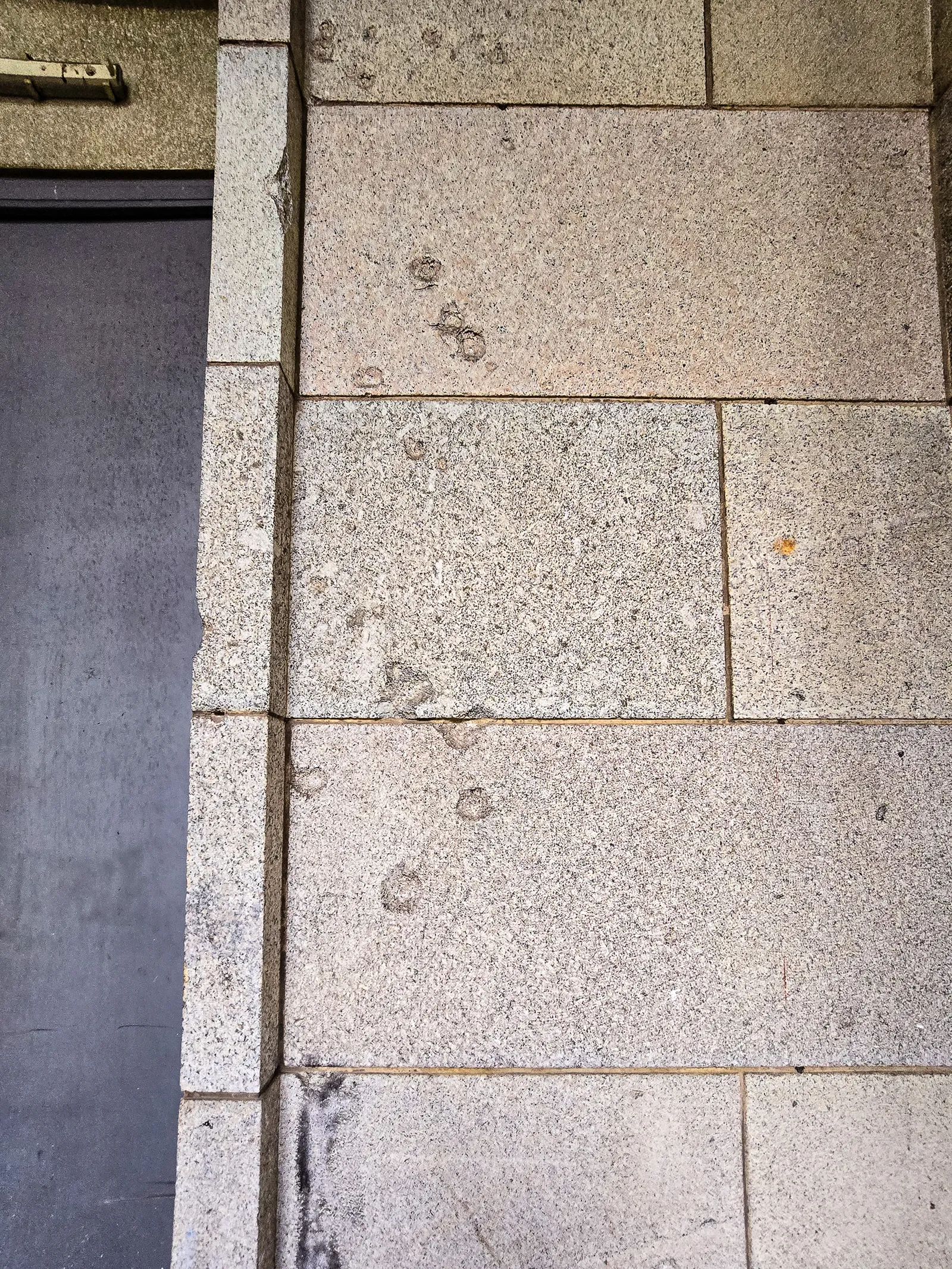
For decades the site was left to deteriorate. In 2019, the City of Nuremberg launched an €85 million preservation project, not to restore the grounds to their former state, but to stabilize them for education and remembrance. Standing there today, the weight of history is impossible to ignore. The same grounds that once hosted mass rallies now welcome students and visitors from around the world, learning where hatred, propaganda, and unchecked power can lead.
Two Cities, One Complex Legacy
Following our tour of the Rally Grounds, we took a bus into Old Town, where Andreas introduced us to Nuremberg's unique blend of medieval history and World War II remembrance.
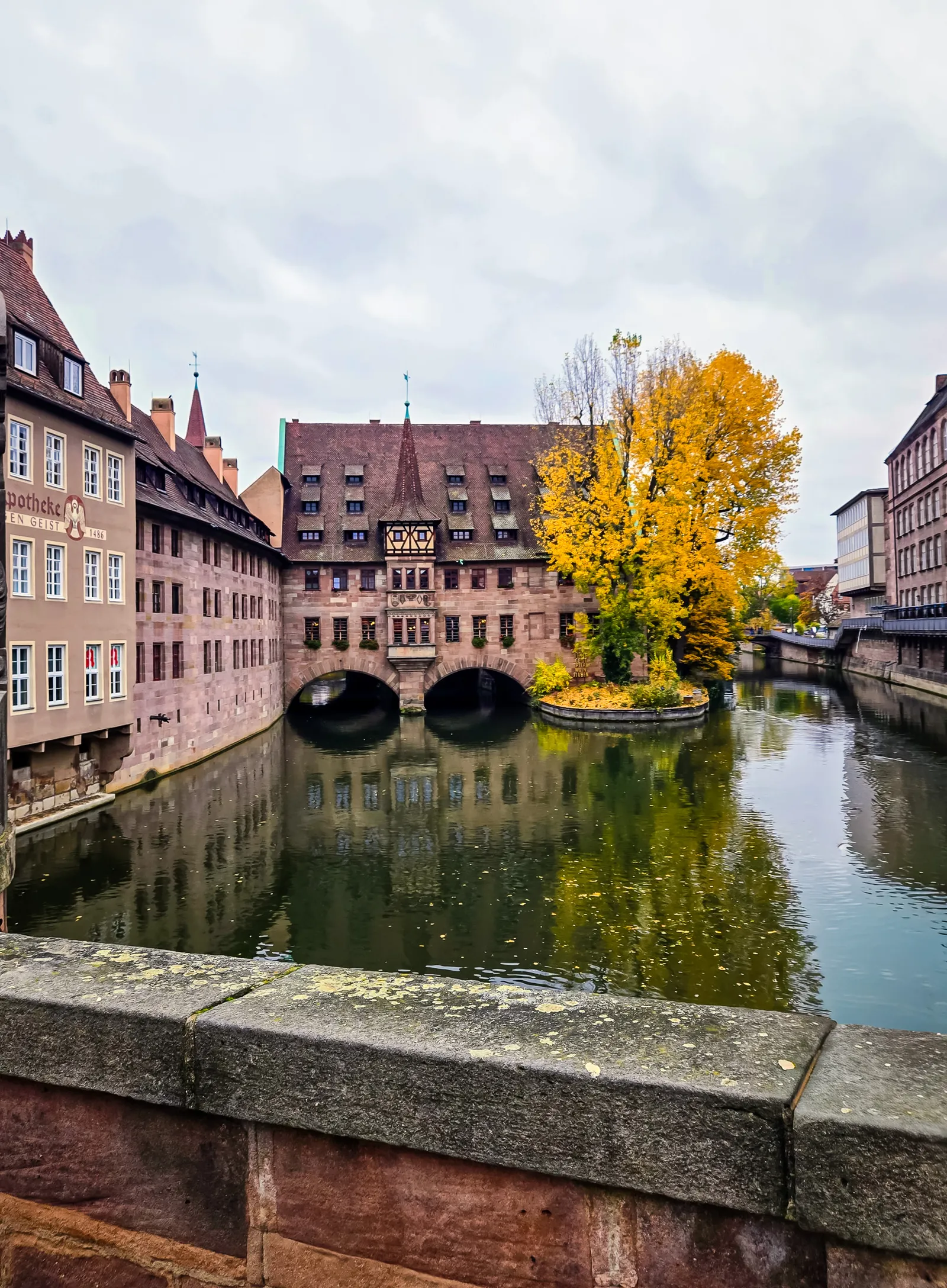
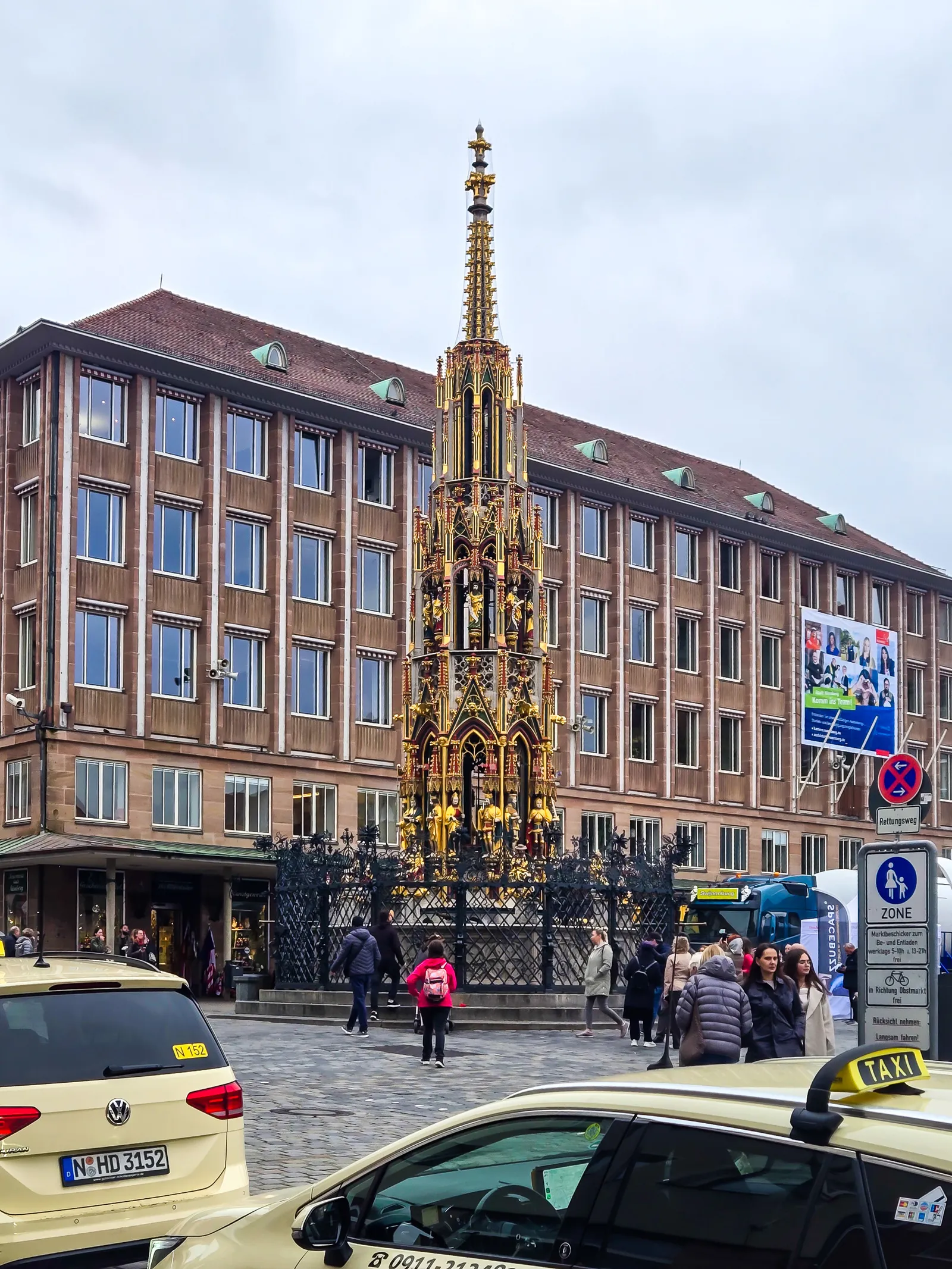
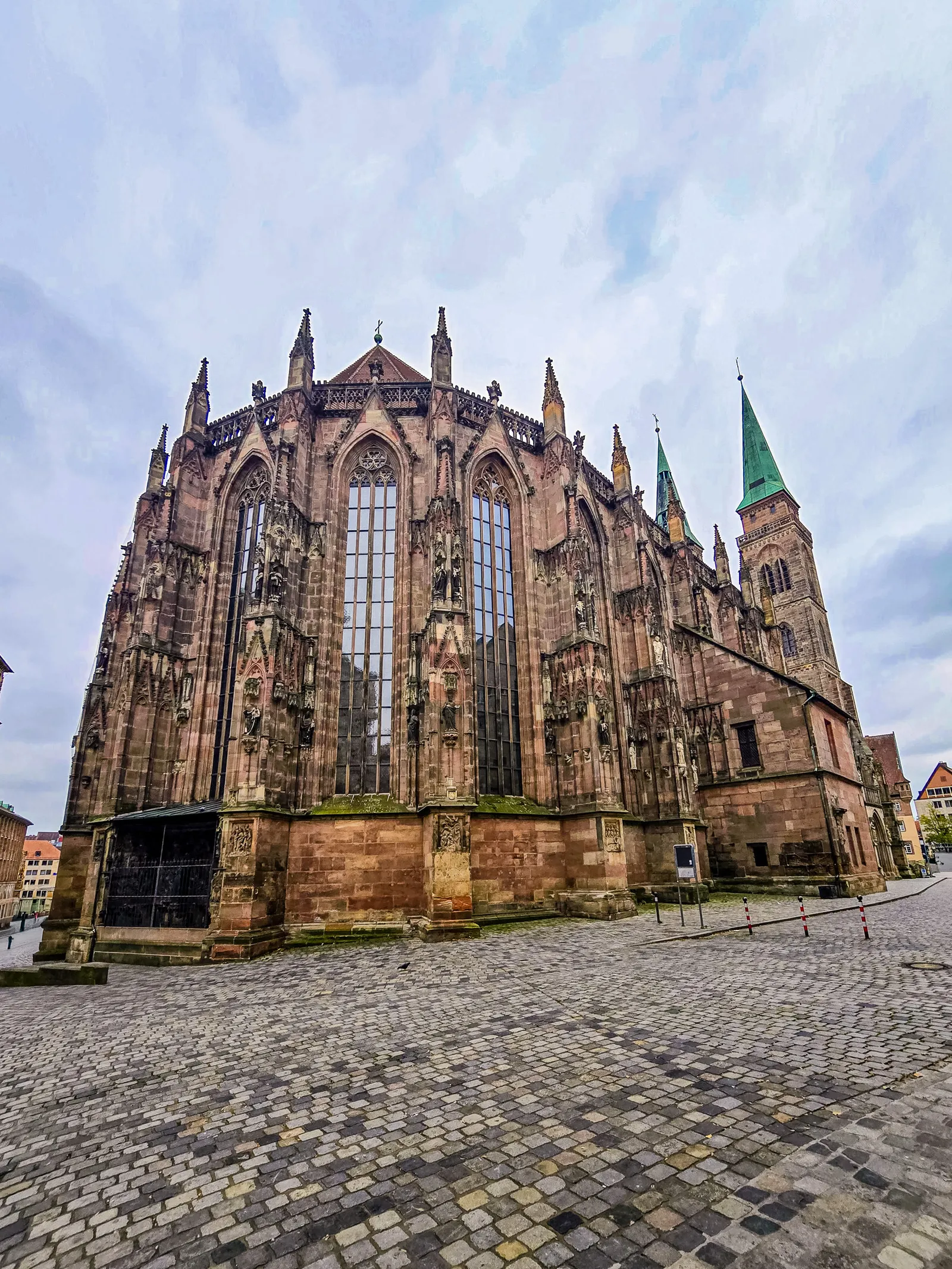
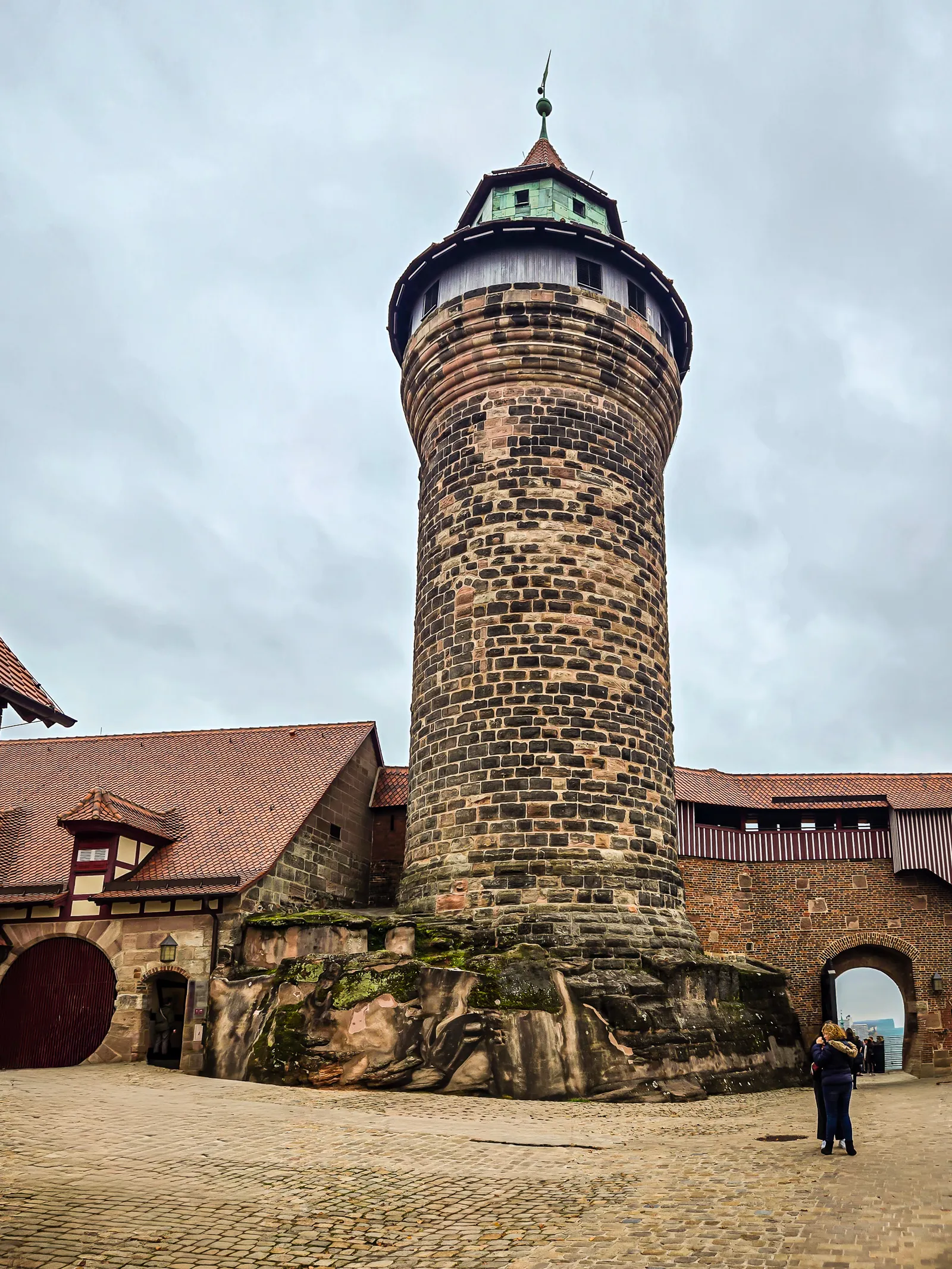
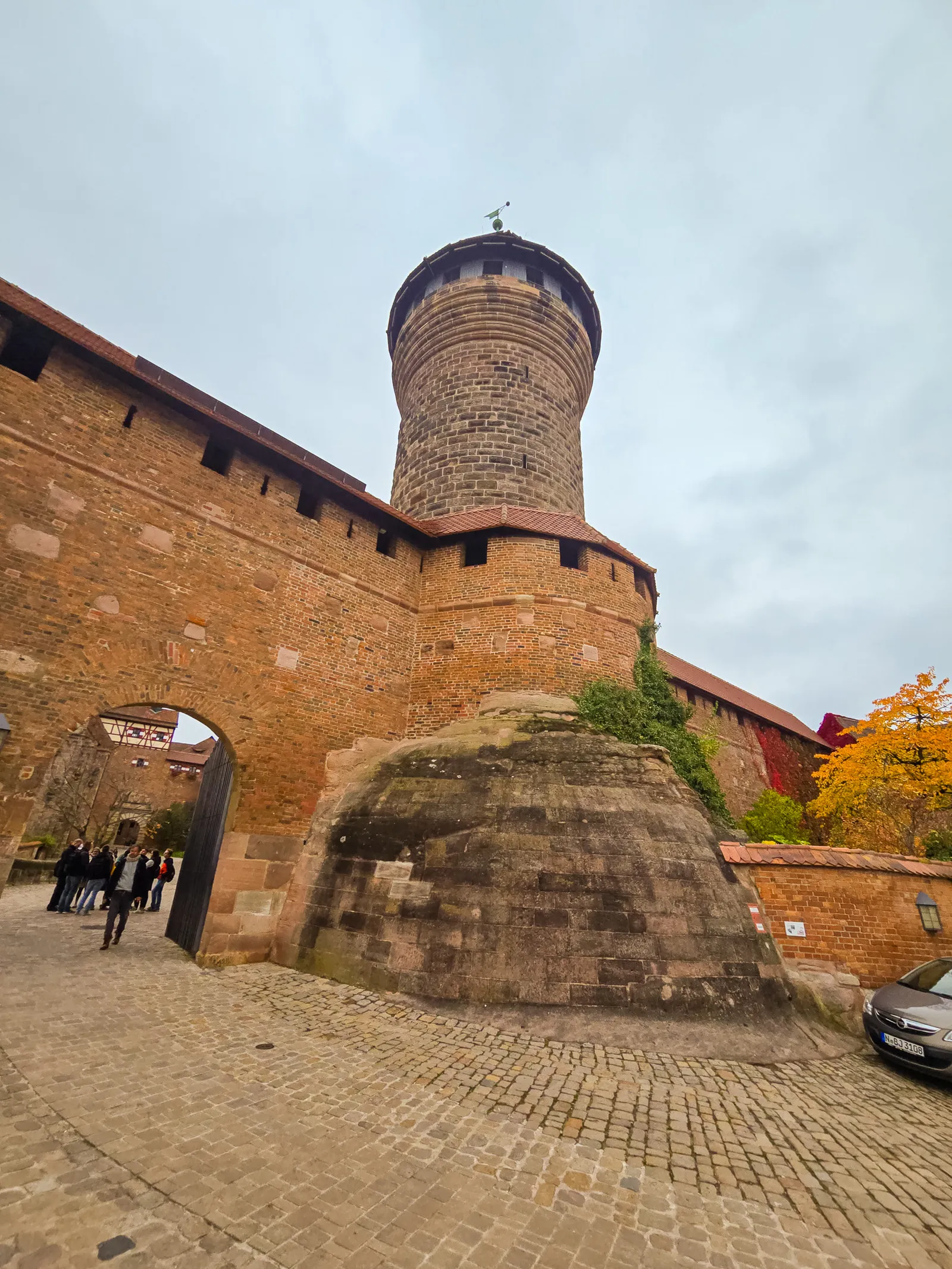
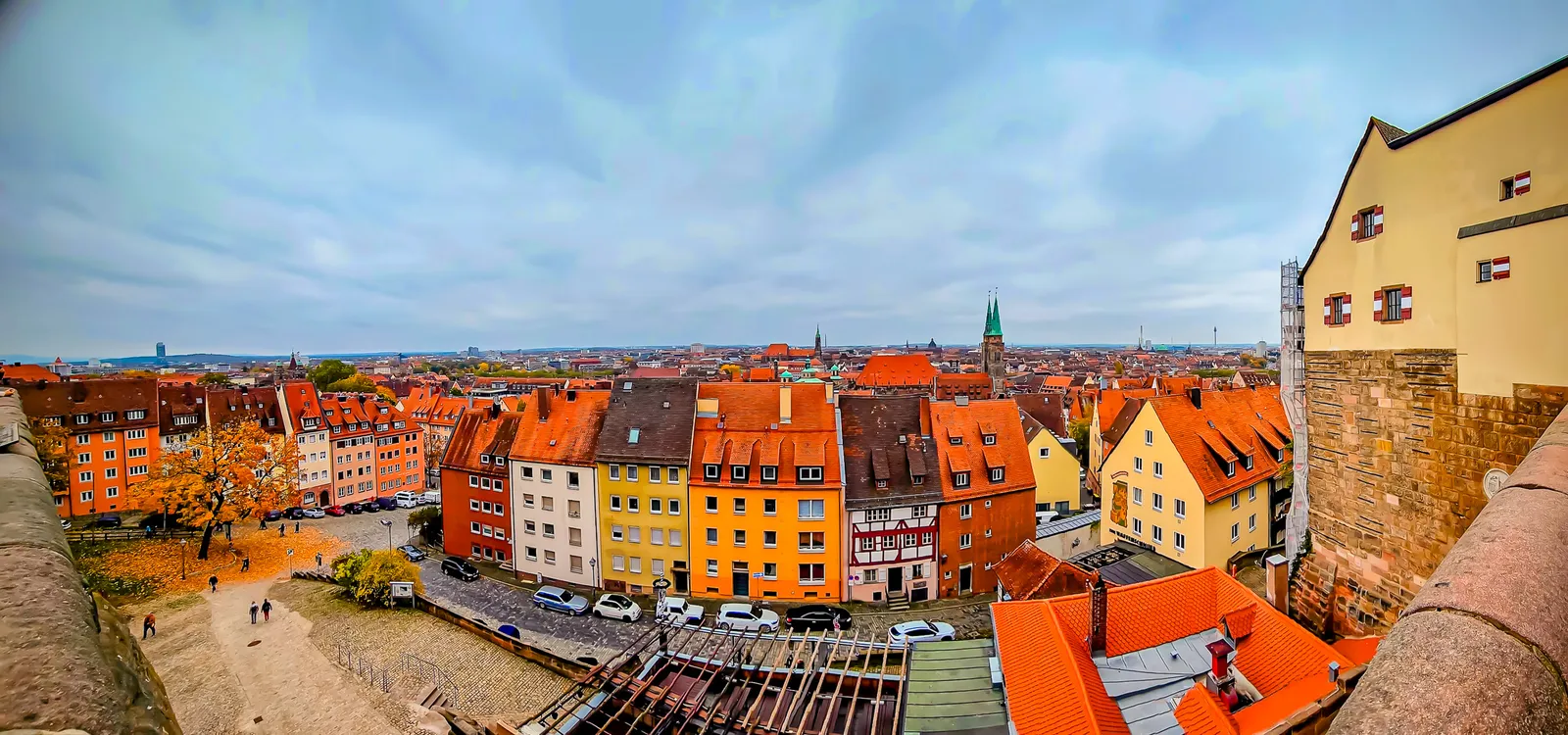
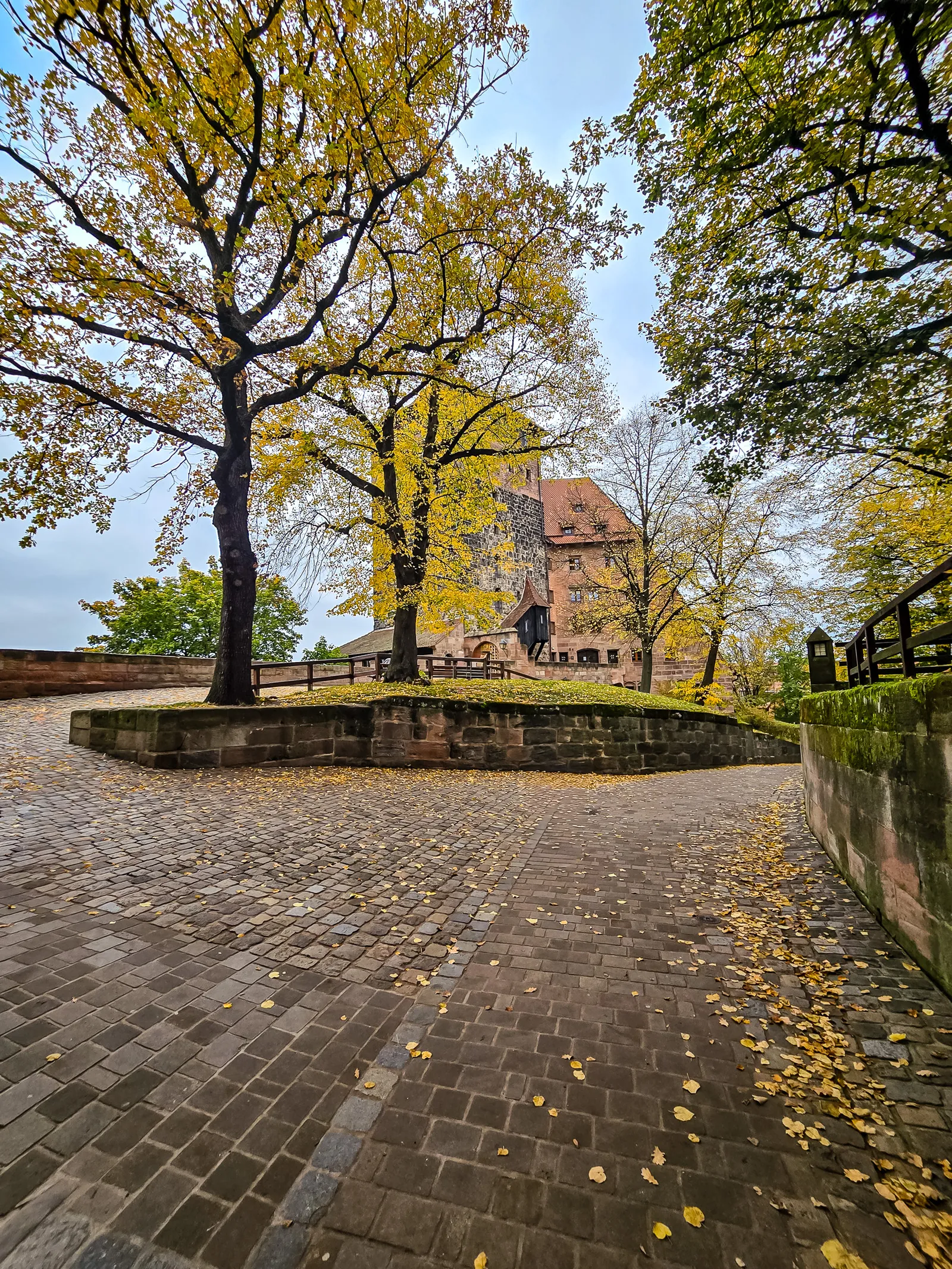
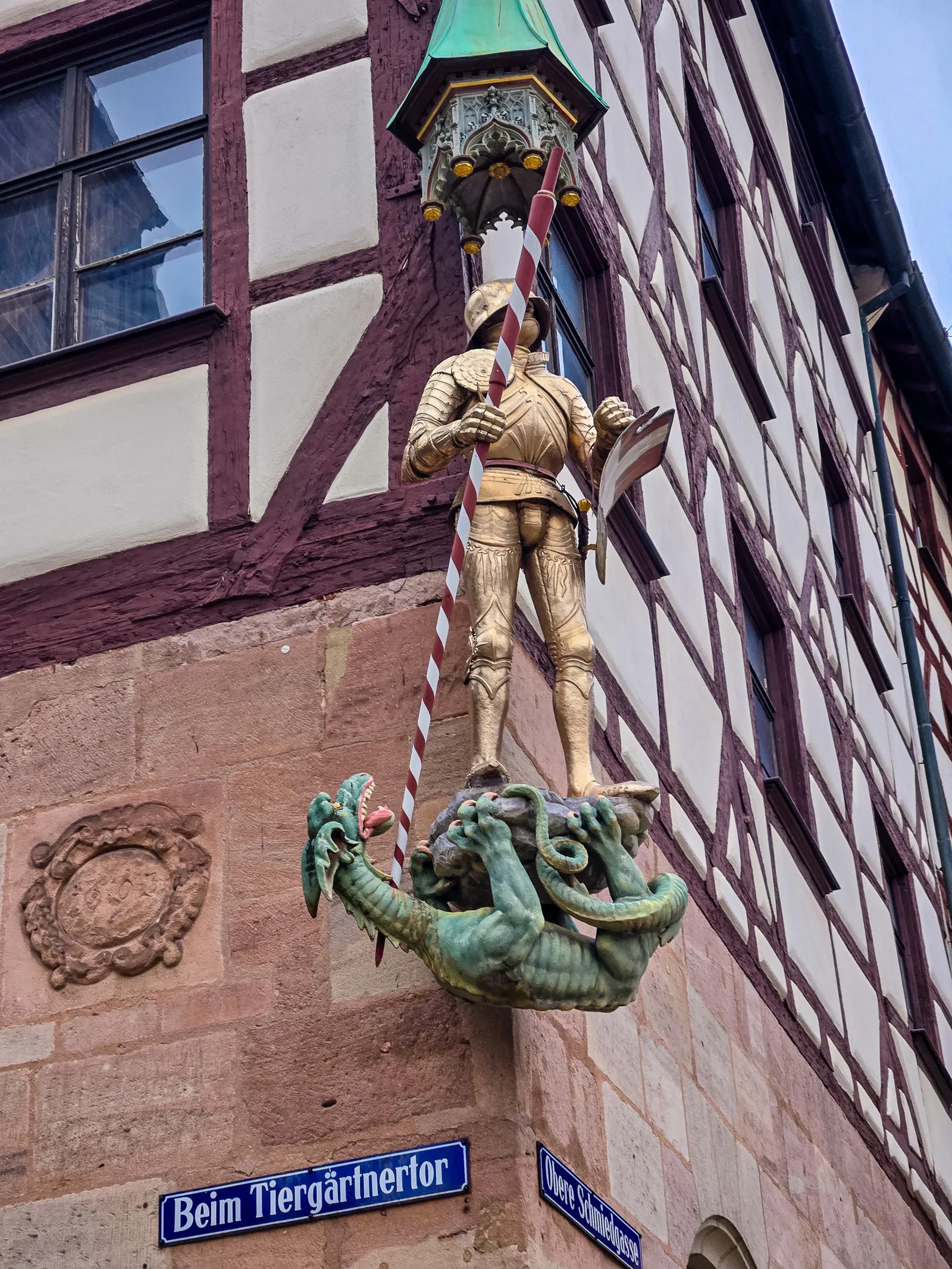
For centuries, Nuremberg was one of the Holy Roman Empire's most important cities. Emperors held Imperial Diets here, the Imperial Regalia were safeguarded within its walls, and artists like Albrecht Dürer helped shape its cultural legacy. Walking through the Old Town, we admired the Kaiserburg fortress, Gothic churches, and medieval walls that still define the city's skyline.
Andreas explained why the Nazis chose Nuremberg for their rallies. By associating themselves with the city's imperial past, they sought to portray their regime as the continuation of German greatness. That symbolism ended in 1945, when Allied bombing destroyed much of the Old Town. The city was painstakingly rebuilt after the war, using original stone whenever possible.
After the tour, Andreas recommended Wirtshaus Hütt'n, where we enjoyed traditional Franconian pork knuckle and a local red ale. Over lunch, he shared how modern Nuremberg embraces its medieval heritage while ensuring its darkest chapter is never forgotten.
Arriving in Bavaria's Capital
The last leg of our journey took us from Nuremberg to Munich, a 2.5 hour drive that felt like the beginning of the end. As the trip wound down, I realized I'd grown fond of the daily rhythm of packing up and hitting the road. What once felt like a chore had become part of the adventure.
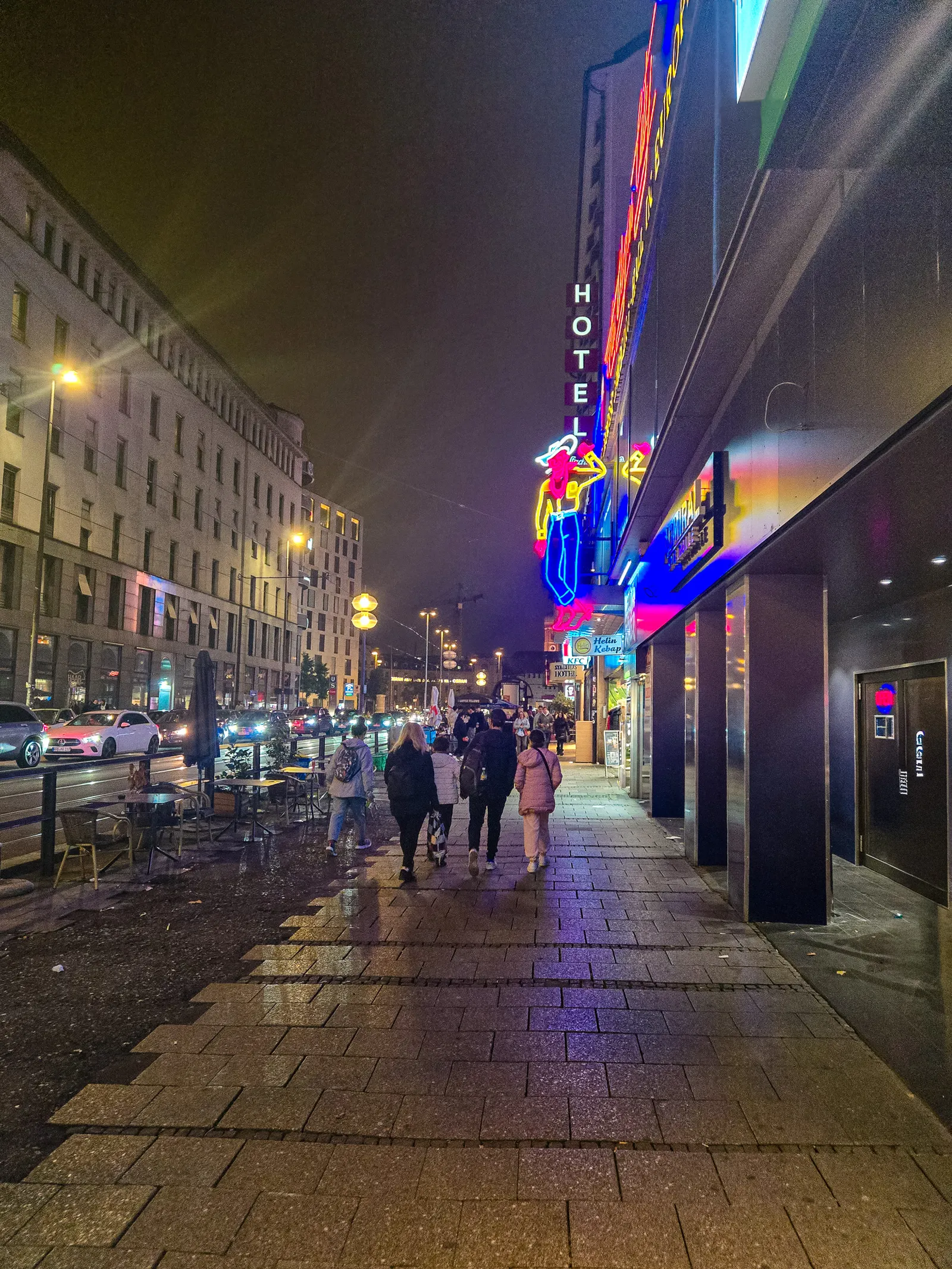
Driving into the city, we were struck by the number of cyclists weaving through the streets. Modern energy and historic architecture gave Munich its own edge. After checking into our hotel, we split up to explore on our own.
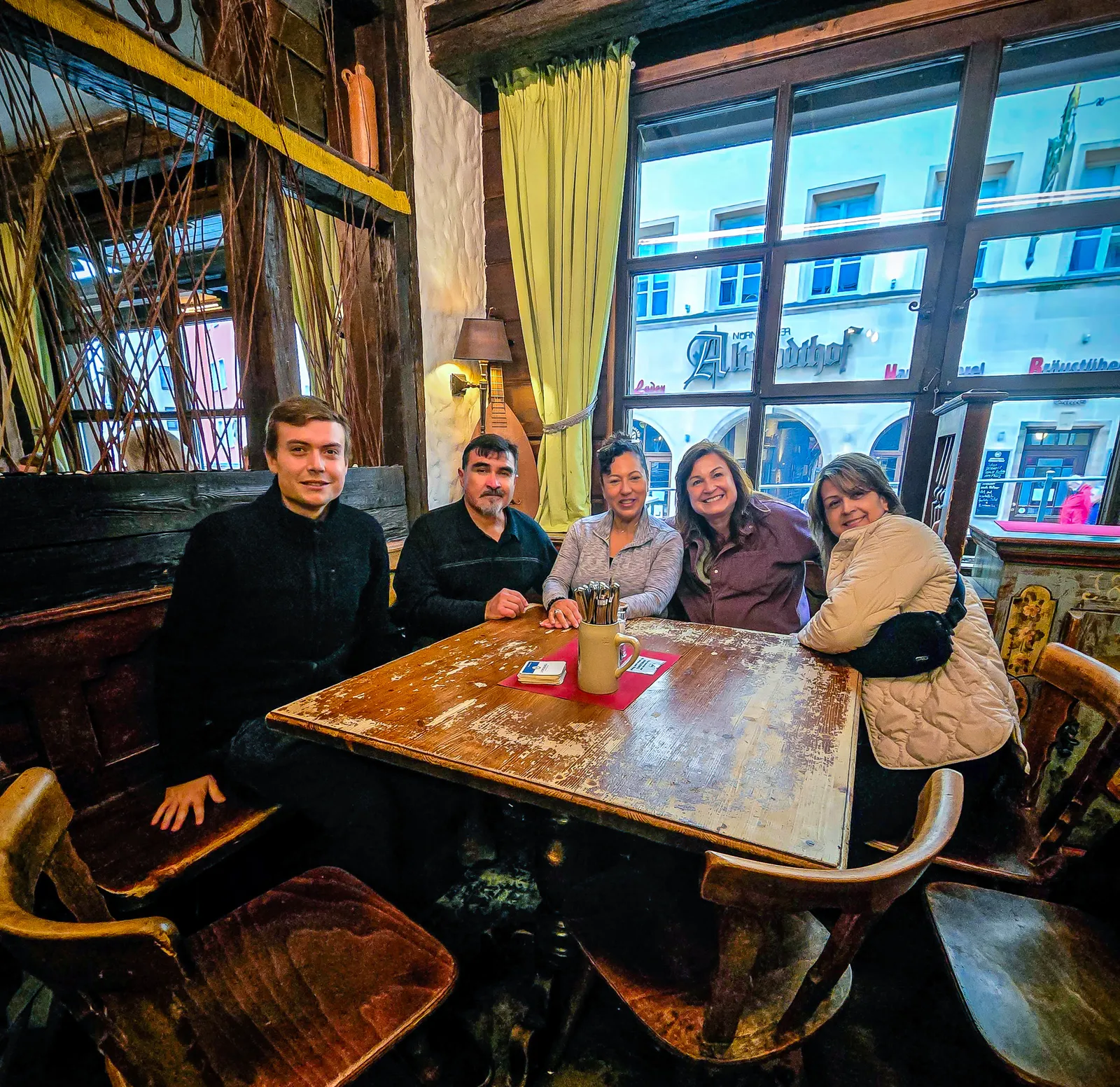
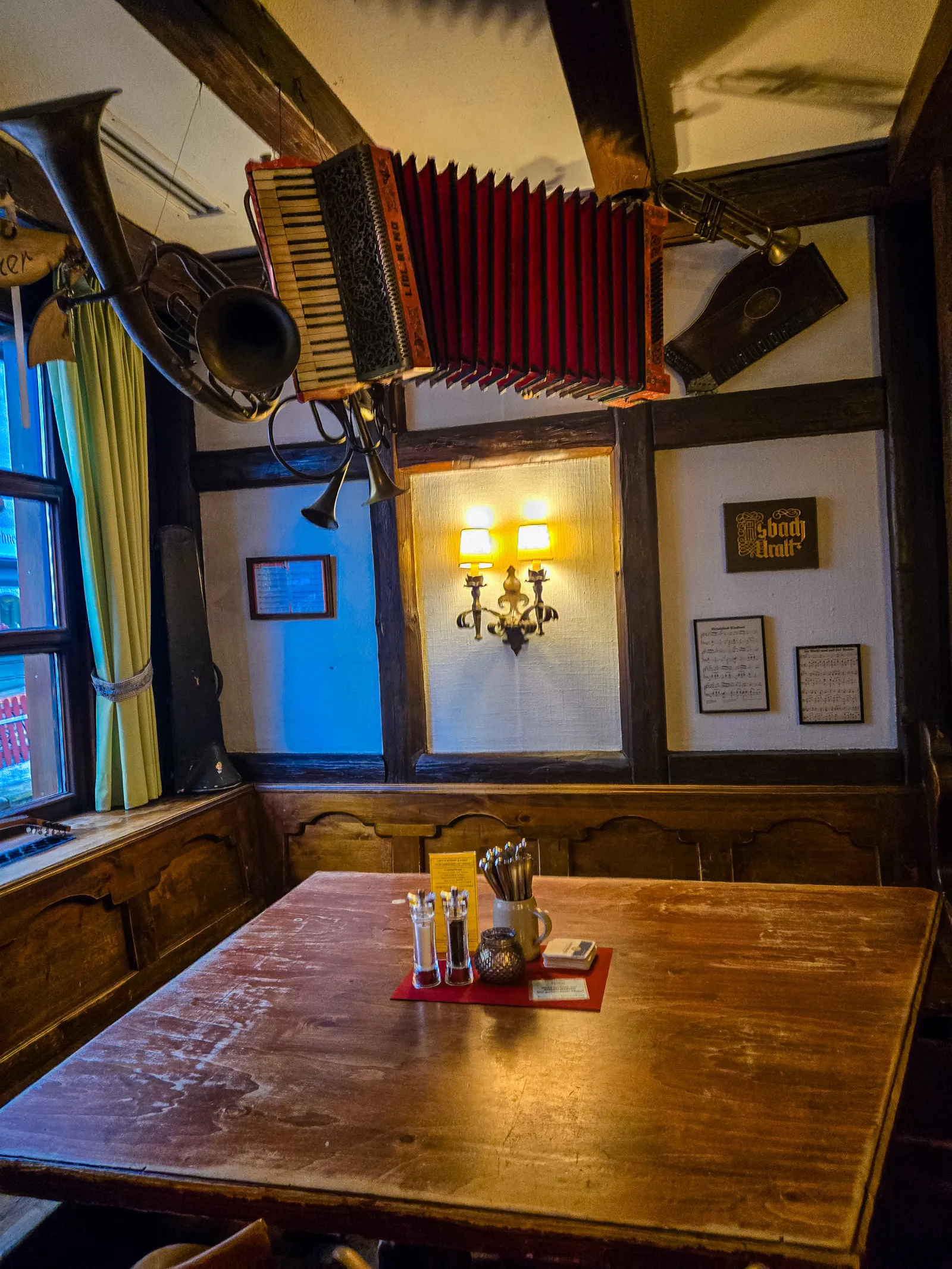
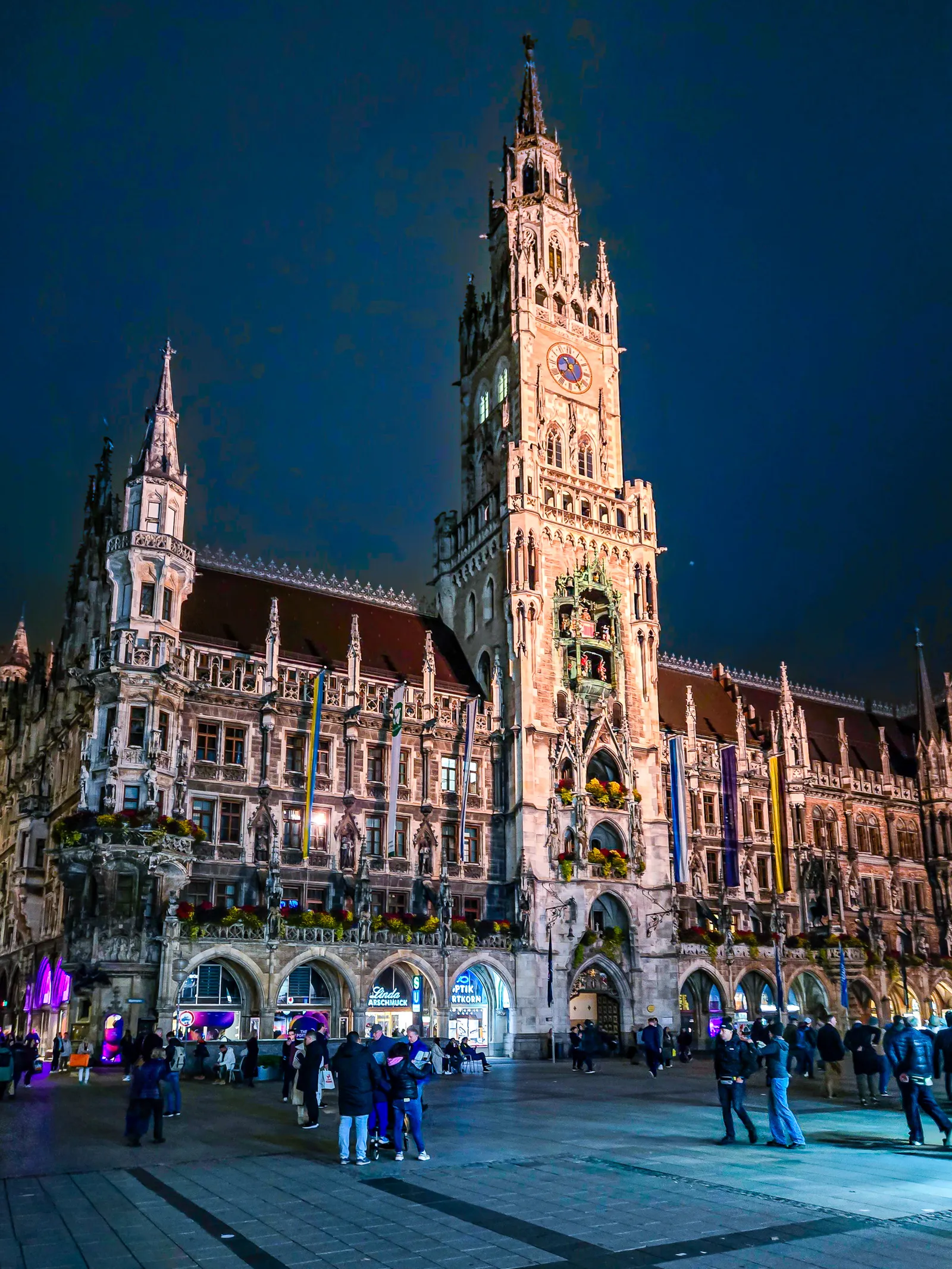
My path led me to Marienplatz, the heart of Munich's old town, surrounded by Gothic spires and crowds. From there, I found a traditional beer hall for Bavarian food and a few generous pours of local beer. One tradition worth noting: if you're a small party, expect to be seated with a larger group at the same table. It feels awkward at first, but it's part of the communal spirit of Bavarian dining.
After a bit too much beer, I somehow managed to send an SOS message to my sister-in-law. On my way back to the hotel, I ran into her and the rest of our group, and we ended up at KFC, a fast food detour that stood in sharp contrast to the Bavarian feast I'd just had.
Back at the hotel, my brother-in-law, sister-in-law, and I capped off the evening with one last drink at the bar. The bartender shared his own story, a fitting close to a relaxed first night in Munich.
A necessary remembrance
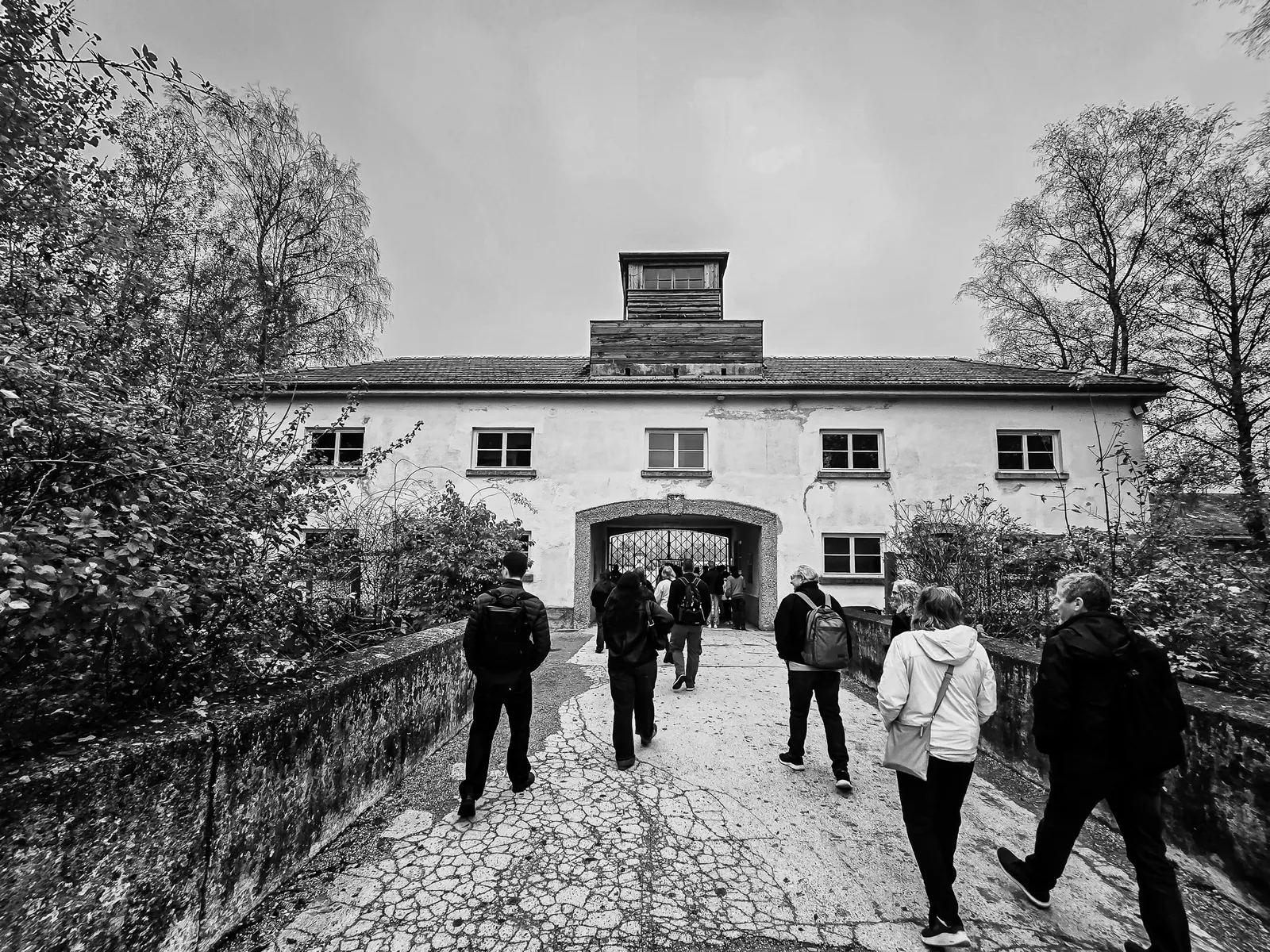
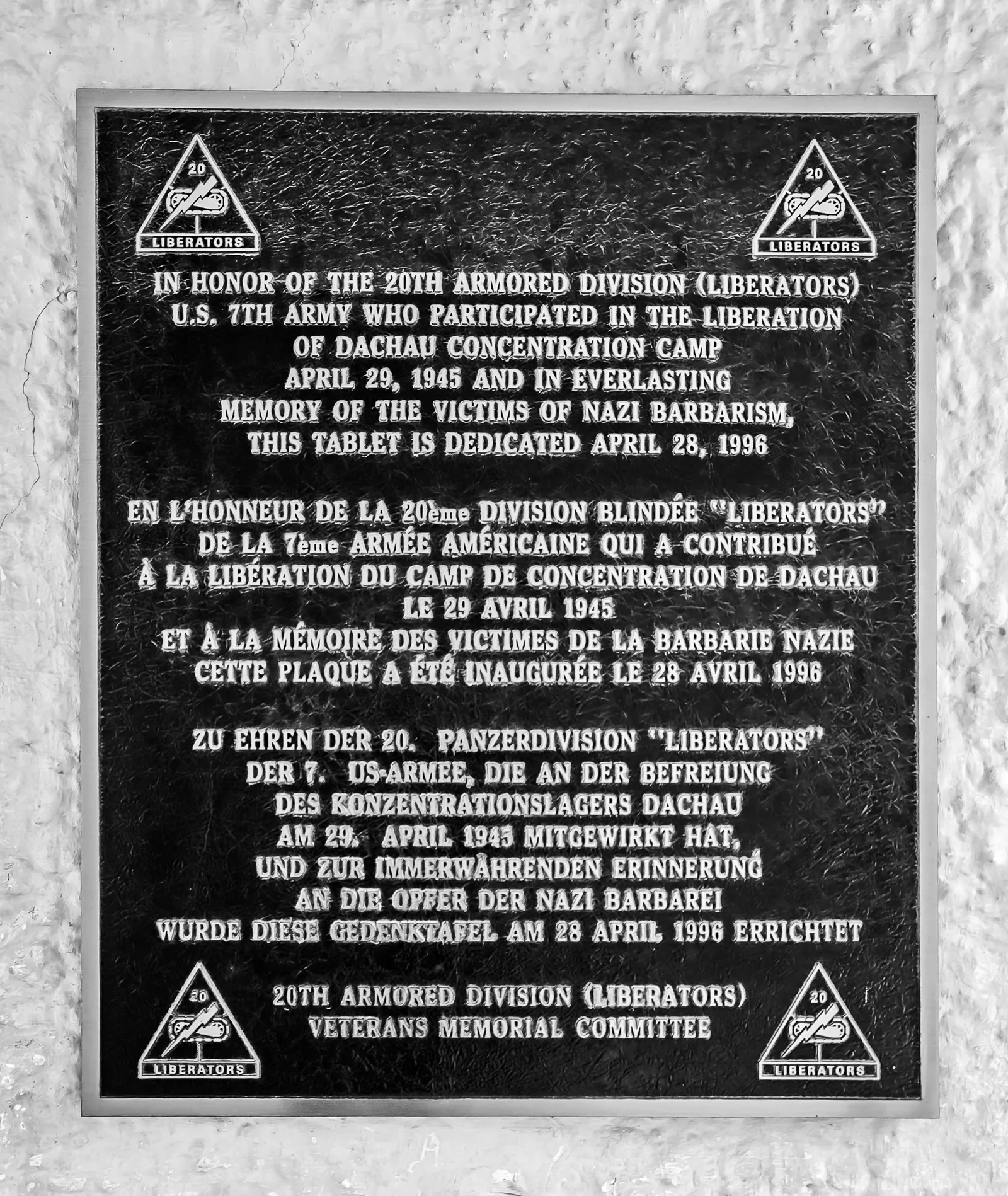
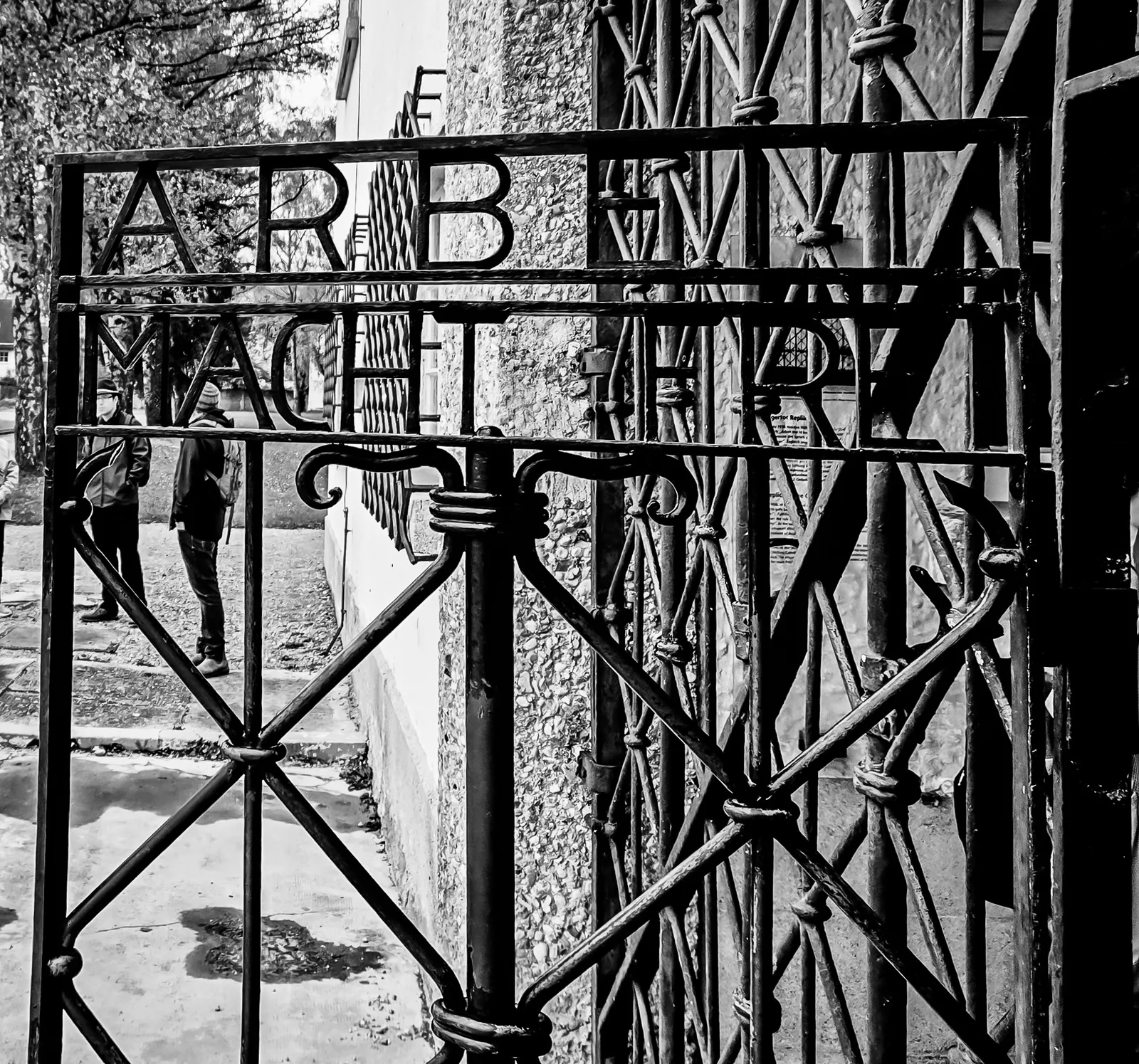
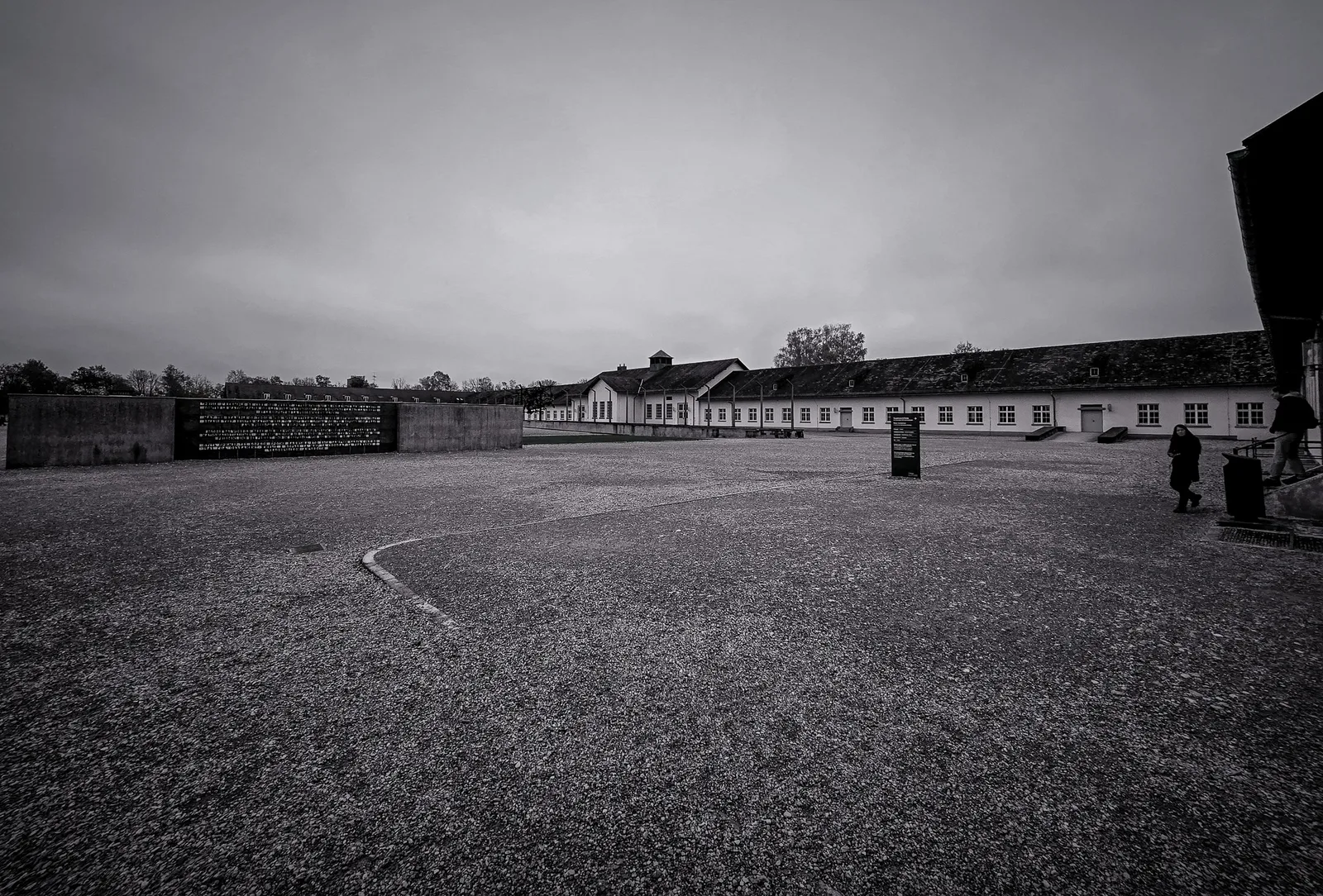
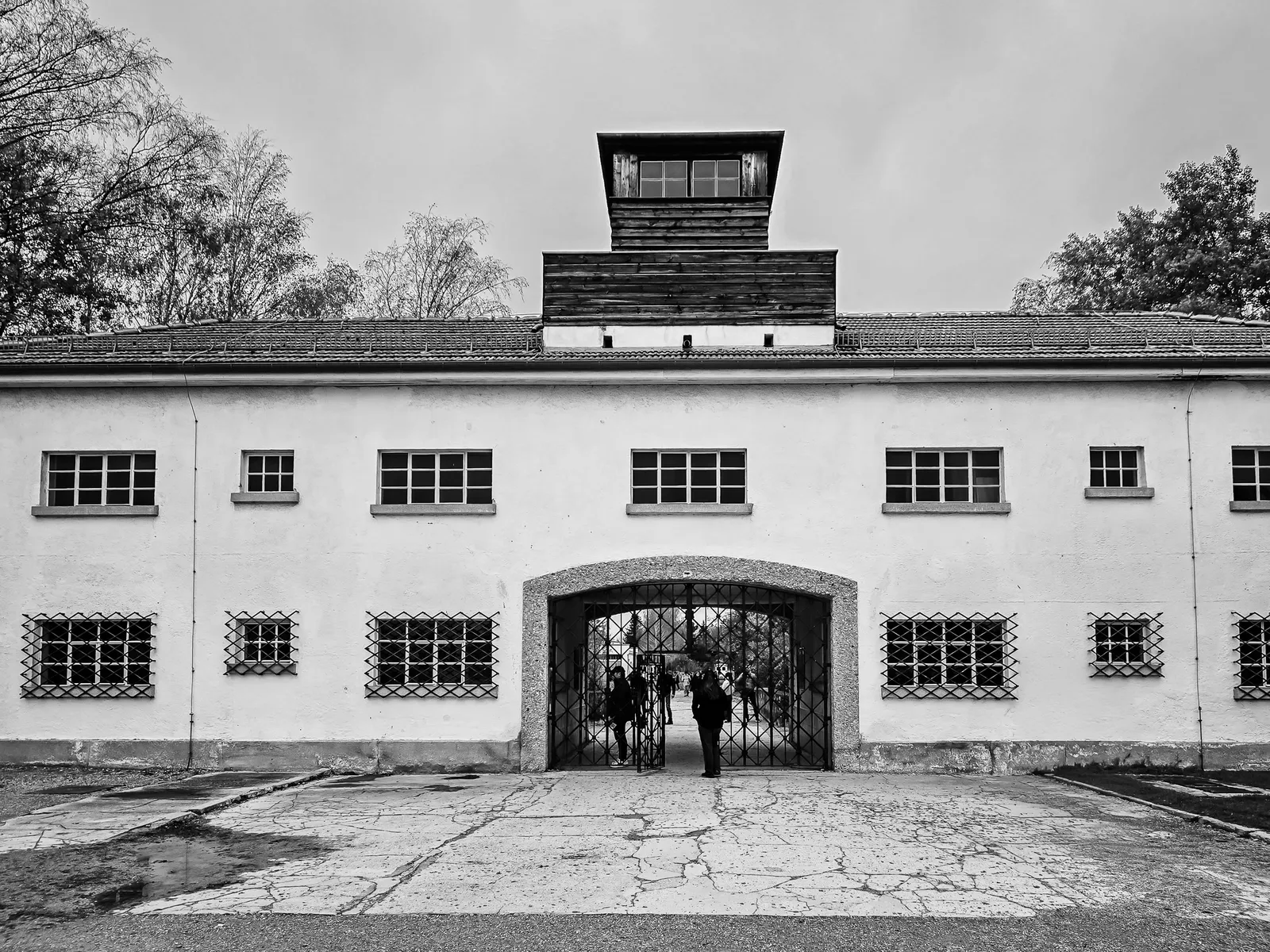
The next morning brought a complete tonal shift. While I couldn't check everything off my Munich list, visiting Dachau Concentration Camp Memorial Site became the most significant part of my entire Germany trip.
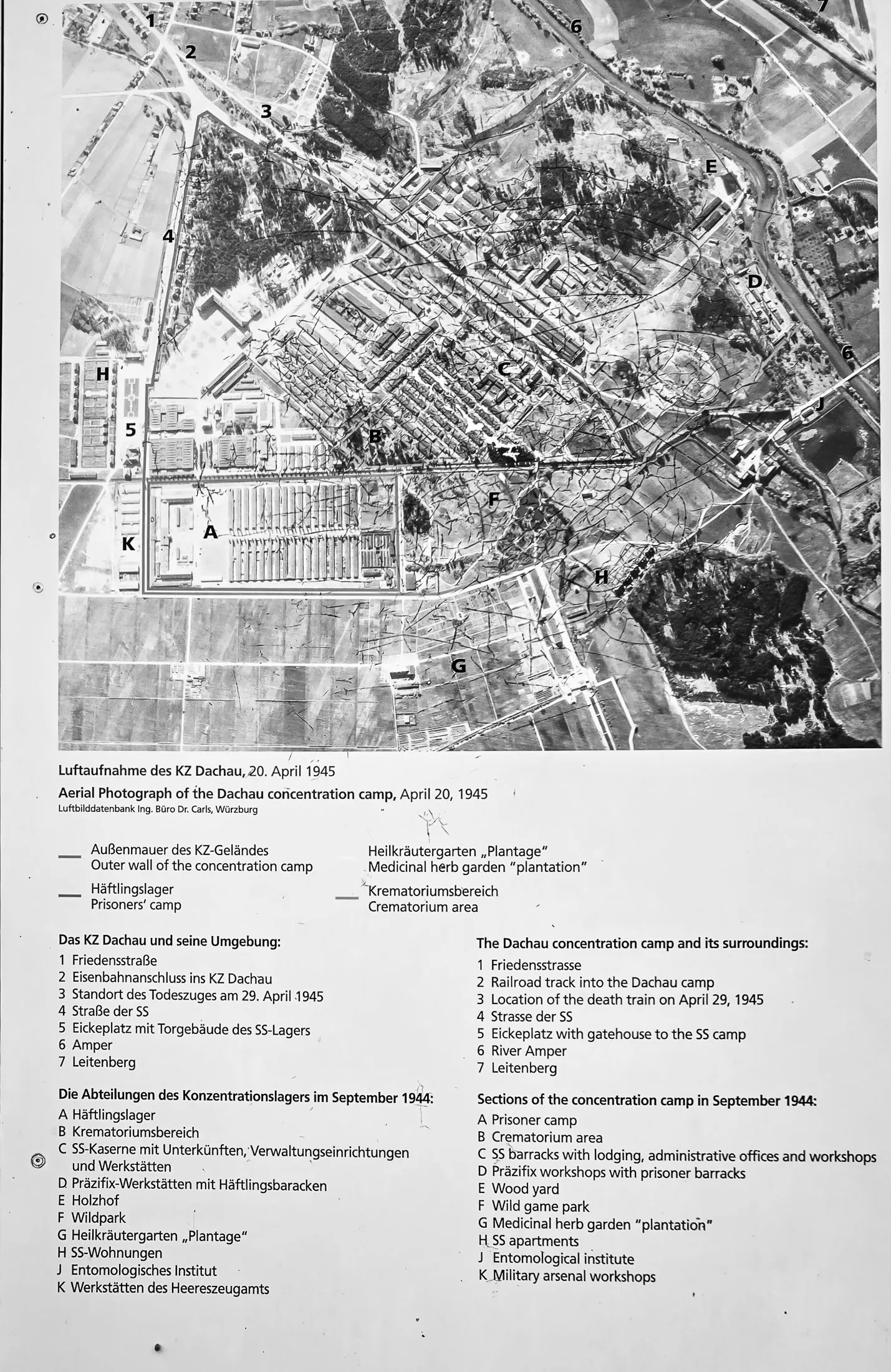
Dachau holds a particular place in Nazi history, it was the first concentration camp, opened in March 1933, just weeks after Hitler came to power. Originally intended for political prisoners, it became the model for all other camps that followed. Heinrich Himmler appointed Theodor Eicke as commandant, and Eicke's systematic brutality became the blueprint for the entire concentration camp system. The guards trained here would go on to run camps across Nazi-occupied Europe.
Walking through Dachau
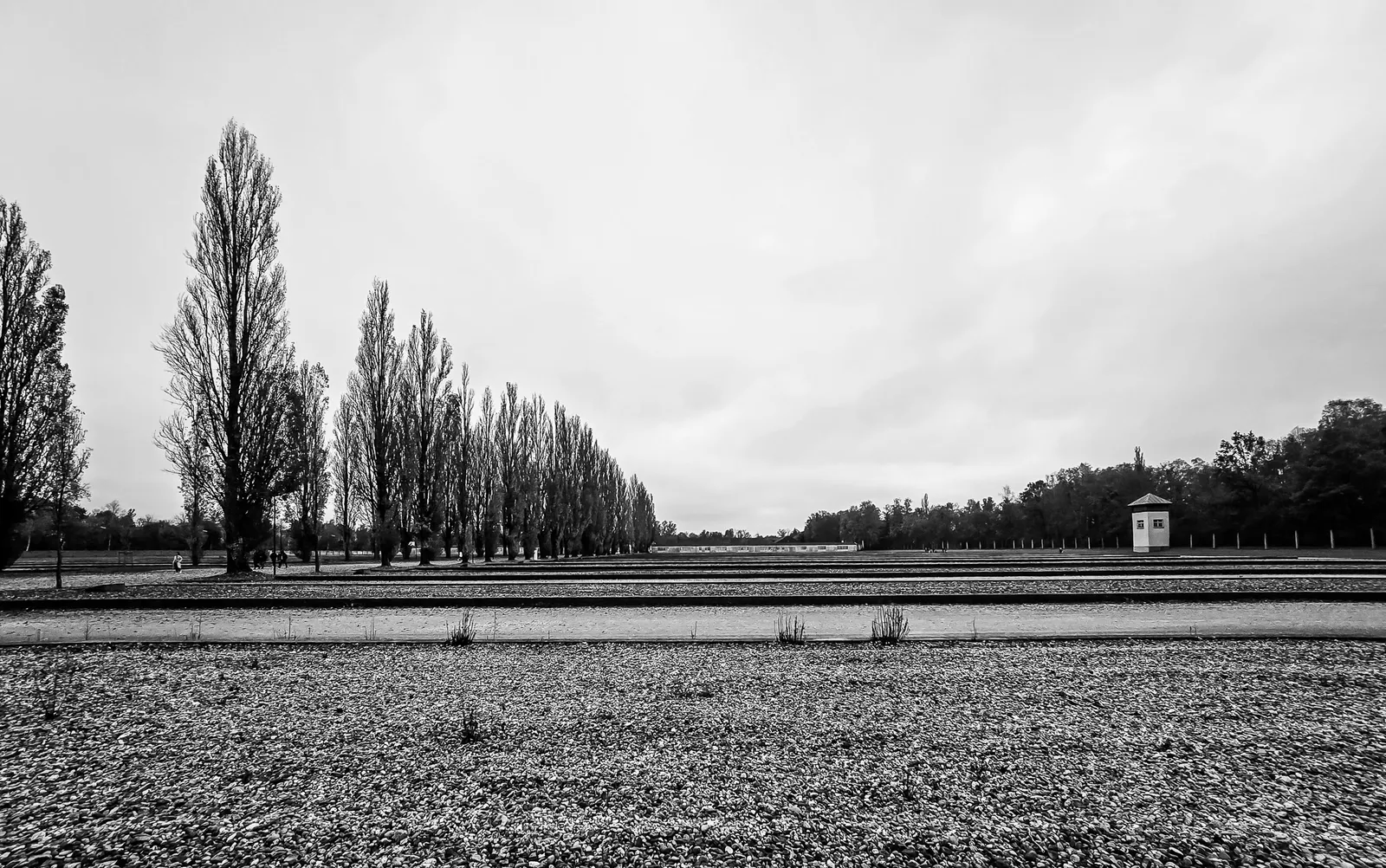
The reconstructed barracks show the camp's evolution, from housing 5,000 prisoners to cramming over 30,000 by 1945. The museum doesn't soften the progression: early propaganda photos showing "humane" conditions versus the reality of forced labor, medical experiments, and mass murder. Over 200,000 prisoners passed through Dachau; at least 41,500 were murdered here.
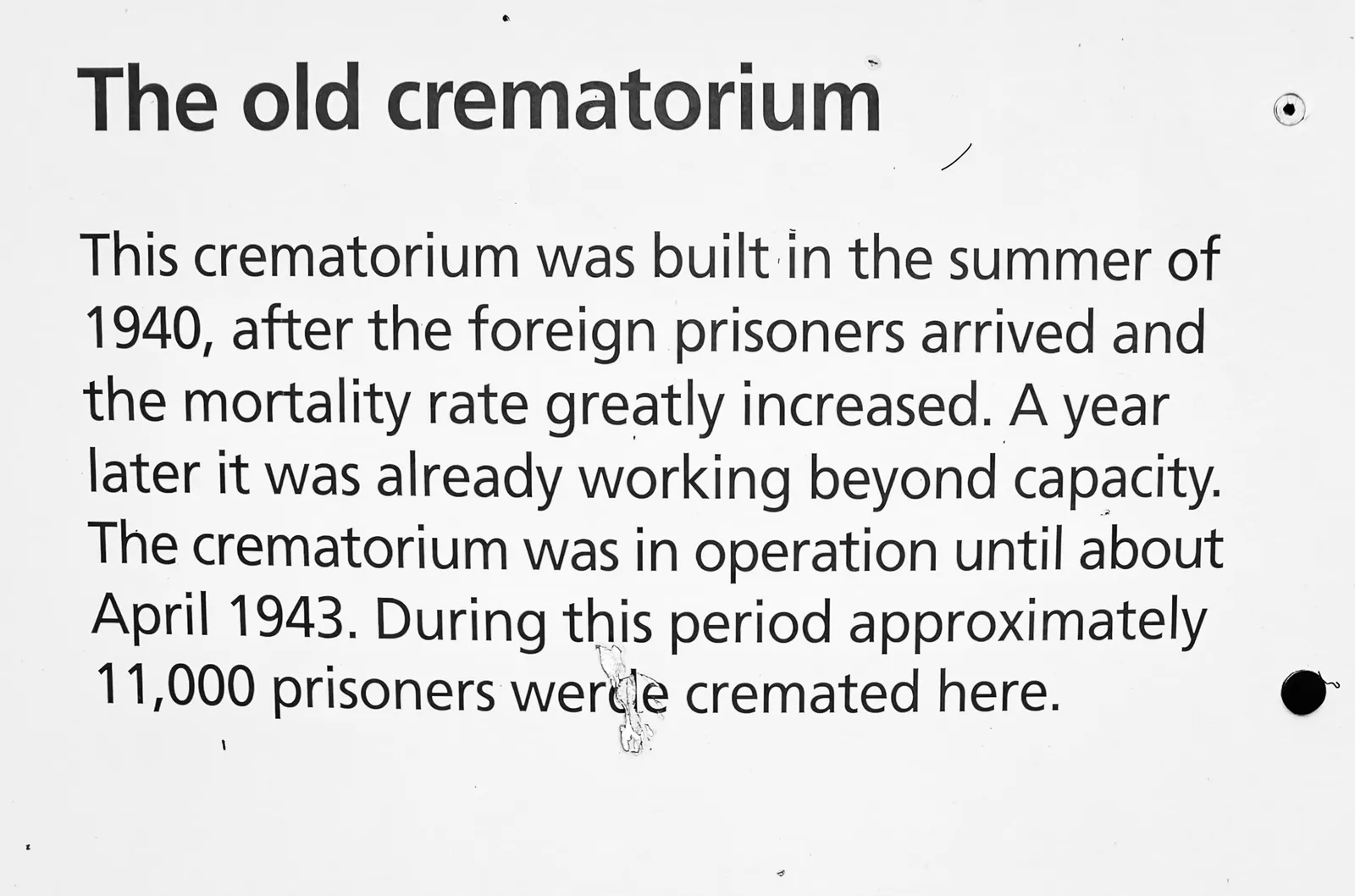
The crematorium area hits especially hard. Built in 1942, it includes a gas chamber disguised as a shower room. While historians debate how extensively it was used for mass killings compared to camps like Auschwitz, its mere existence shows the infrastructure of genocide being perfected. Standing in that room, reading "Brausebad" (shower bath) above fake shower heads, knowing prisoners stood where you're standing, it's overwhelming.
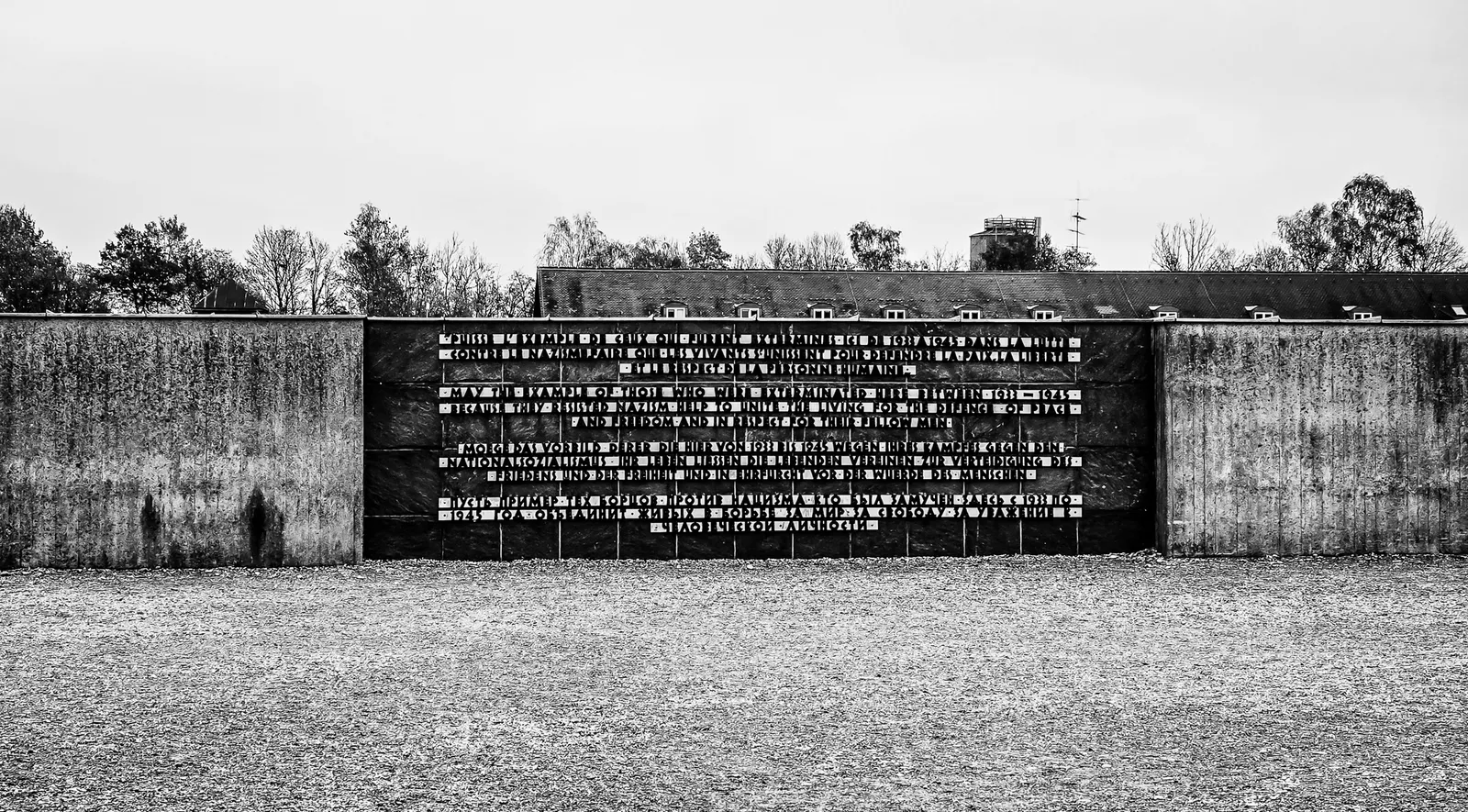
"Never Again": Survivor-Created Memorial
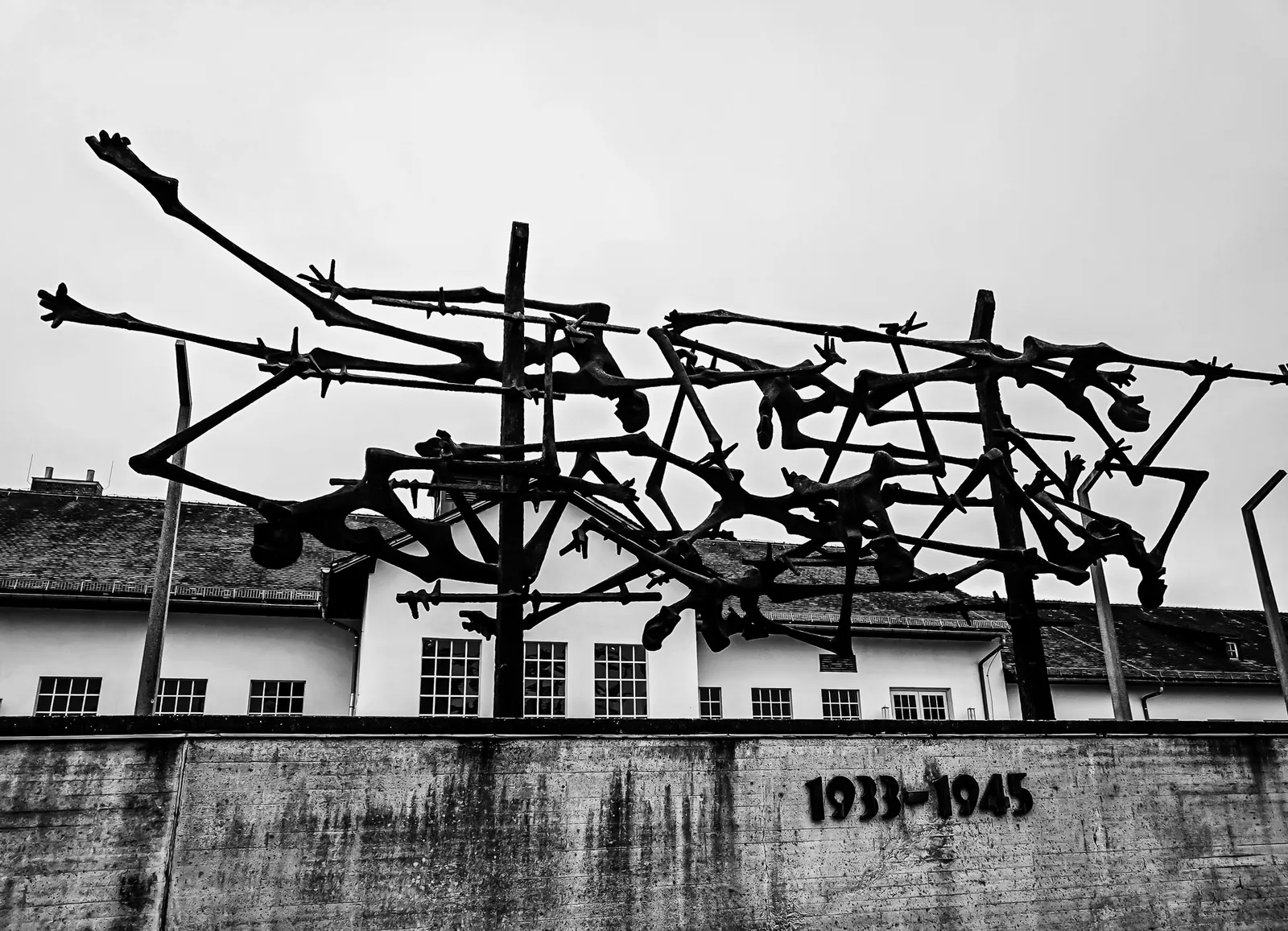
The International Memorial, designed by Yugoslav Holocaust survivor Nandor Glid, shows skeletal figures caught in barbed wire. The inscription in multiple languages reads "Never Again." Former prisoners insisted on preserving Dachau as a warning, ensuring future generations could witness where hatred and dehumanization lead.
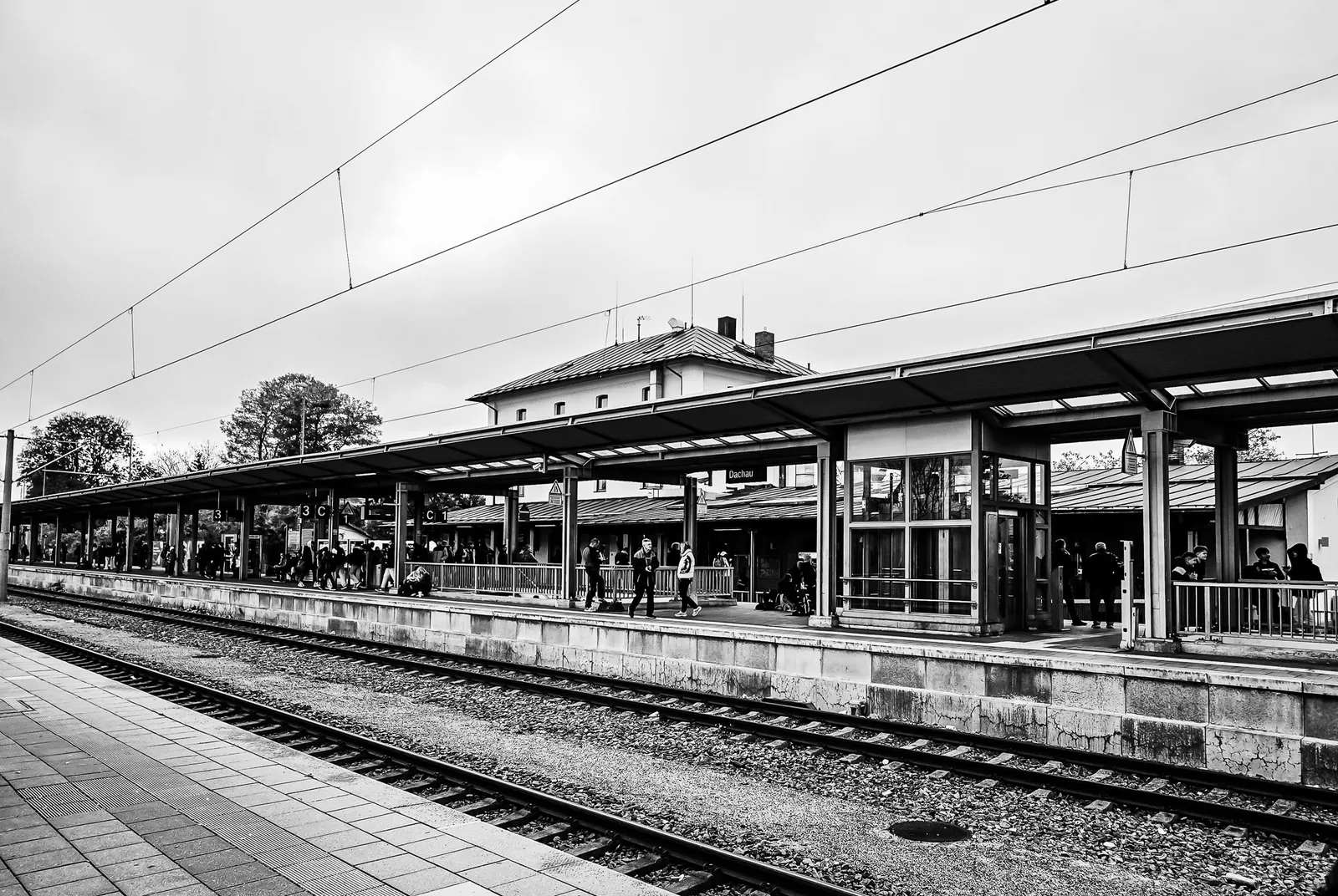
The memorial is easily accessible, a 20-minute S-Bahn ride from Munich followed by a short bus trip. I'd strongly recommend taking a guided tour. The historians who lead them provide crucial context you might miss on your own, like pointing out where the SS quarters were (now a Bavarian police training facility) and explaining how locals claimed they didn't know what was happening despite the camp being clearly visible from town.
Mechanical clock and Munich's New Town Hall Tour
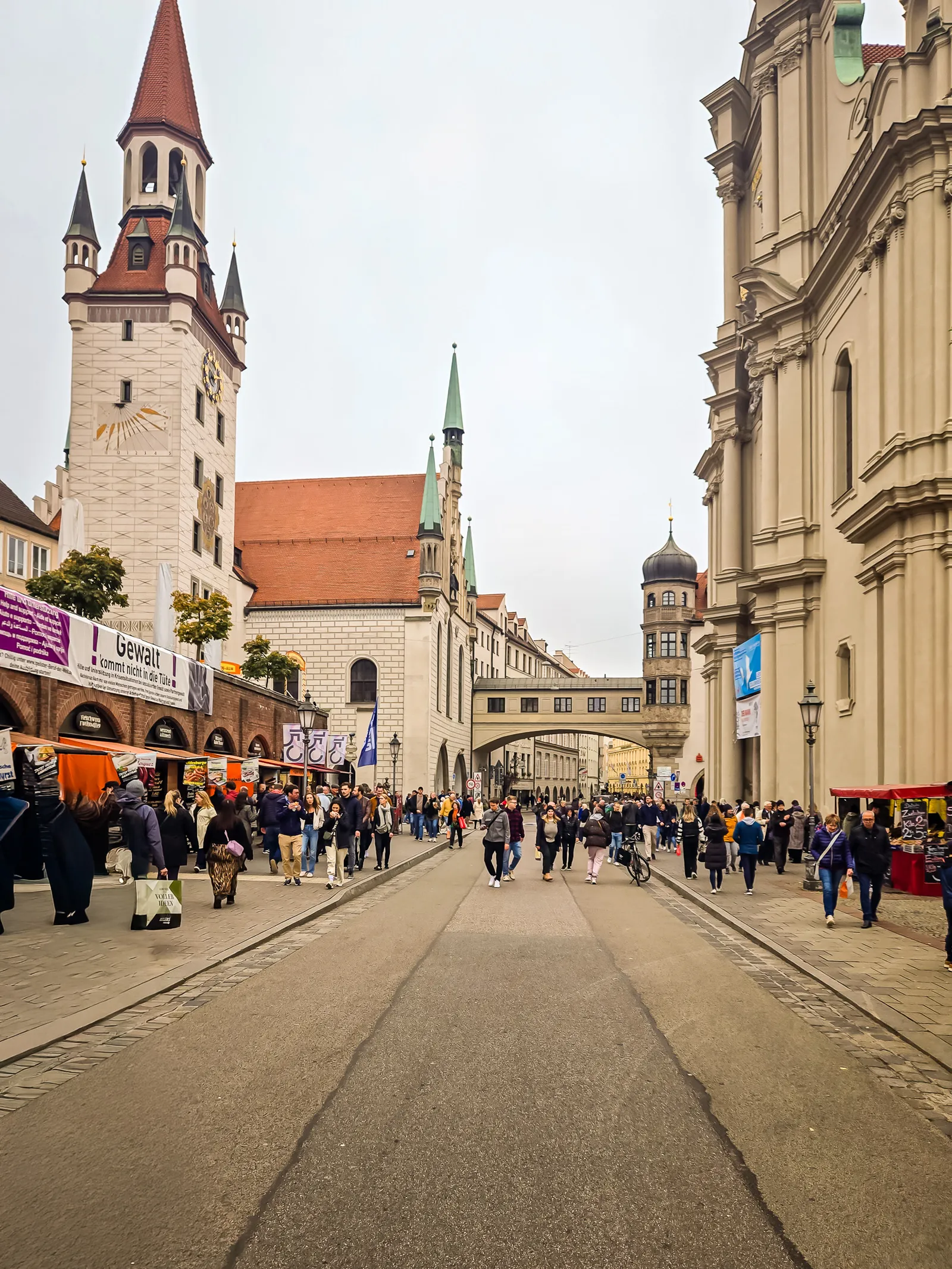
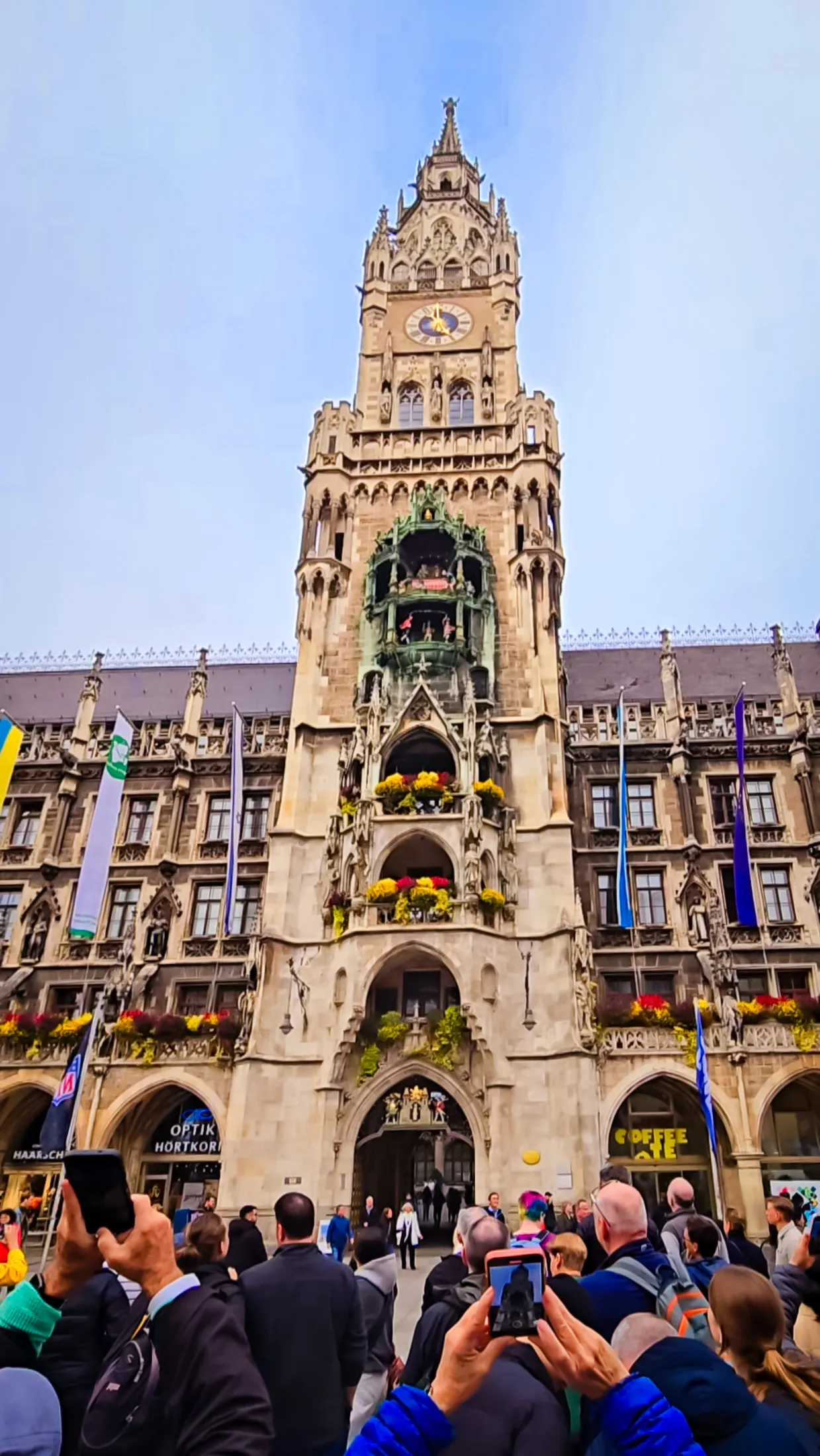
After our tour of Dachau, we made our way back to Marienplatz to watch the Rathaus-Glockenspiel, one of Munich's most beloved attractions. Installed in 1908, this ornate clock features 43 bells and 32 life sized figures that reenact two Bavarian stories: a jousting tournament celebrating Duke Wilhelm V's wedding in 1568, and the coopers' dance commemorating the end of the plague in 1517. Each performance lasts about 12–15 minutes and concludes with a golden rooster crowing three times.
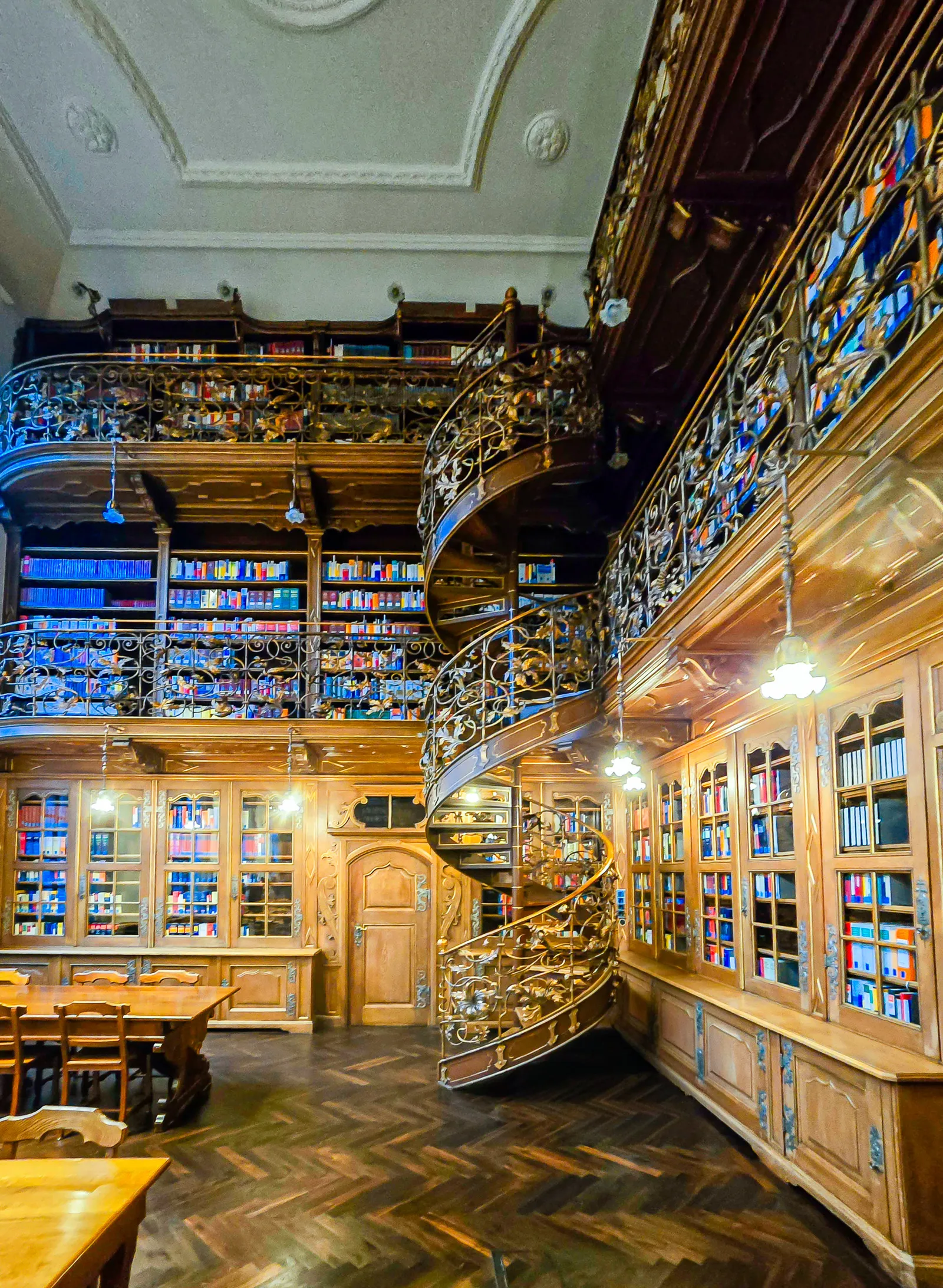
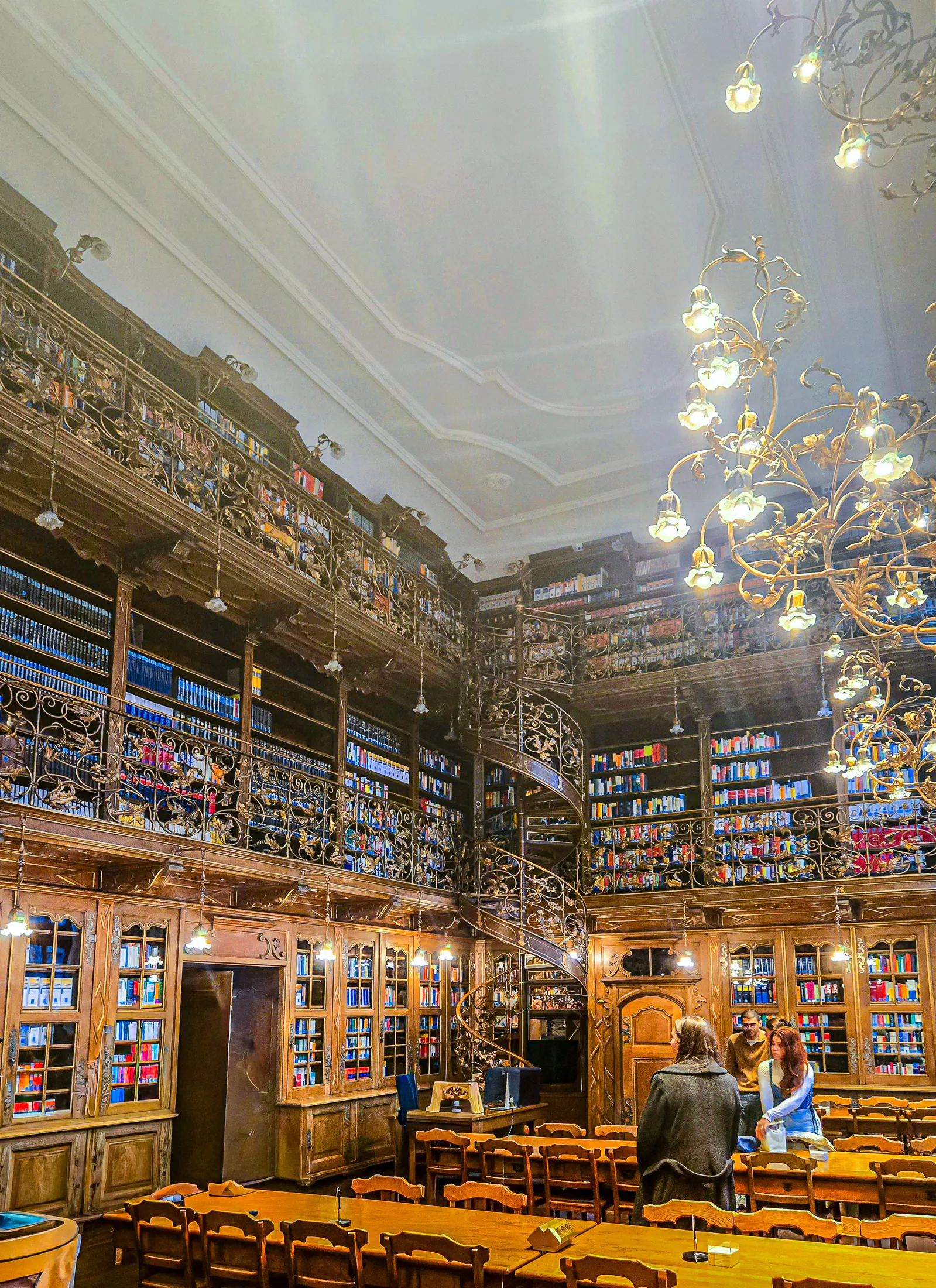
Crowds gather daily at 11 a.m. and 12 p.m., with an additional 5 p.m. show from March to October, making it a lively blend of history, tradition, and entertainment in the heart of the city. While the Glockenspiel carries plenty of history and tradition to appreciate, my wife and I couldn't help but laugh at the crowds oohing and ahhing. The old, weathered mechanics are charming, but there's nothing about them that truly warrants such "amazement." Our timing worked out seamlessly, just as the Glockenspiel finished, we strolled a short distance to the New City Hall for a tour of its historic Law Library. Tucked inside the Town Hall, this is not only a photogenic gem but also a working library still used by scholars and students today. Popularized by TikTok and Instagram, the space feels straight out of a fairytale. Its Art Nouveau design, wrought iron spiral staircases, and towering shelves of books have made it a favorite stop for visitors chasing that "Hogwarts" or Beauty and the Beast vibe. Access is only possible through guided tours, which makes the experience feel all the more special.
Places missed and reflections
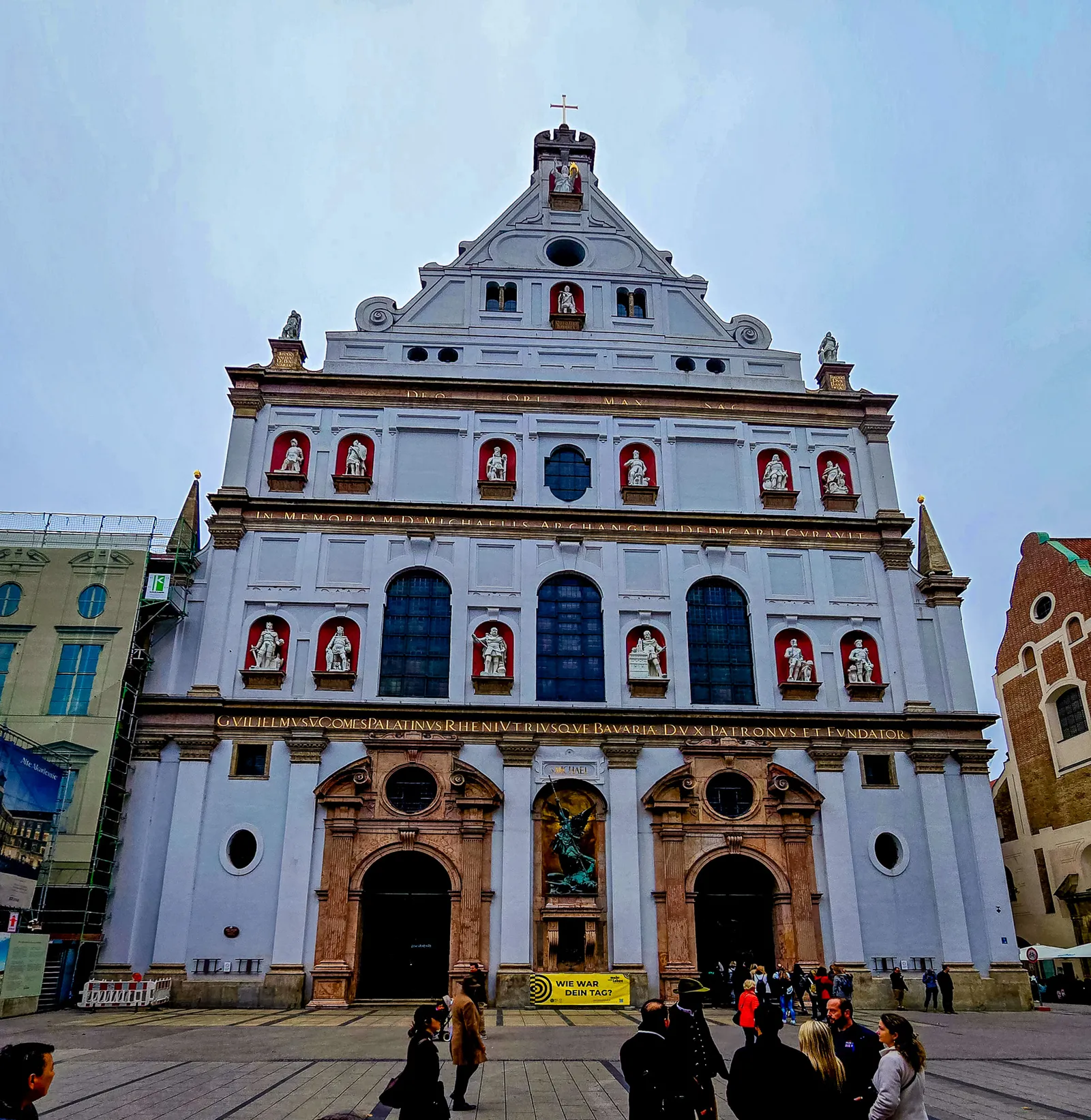
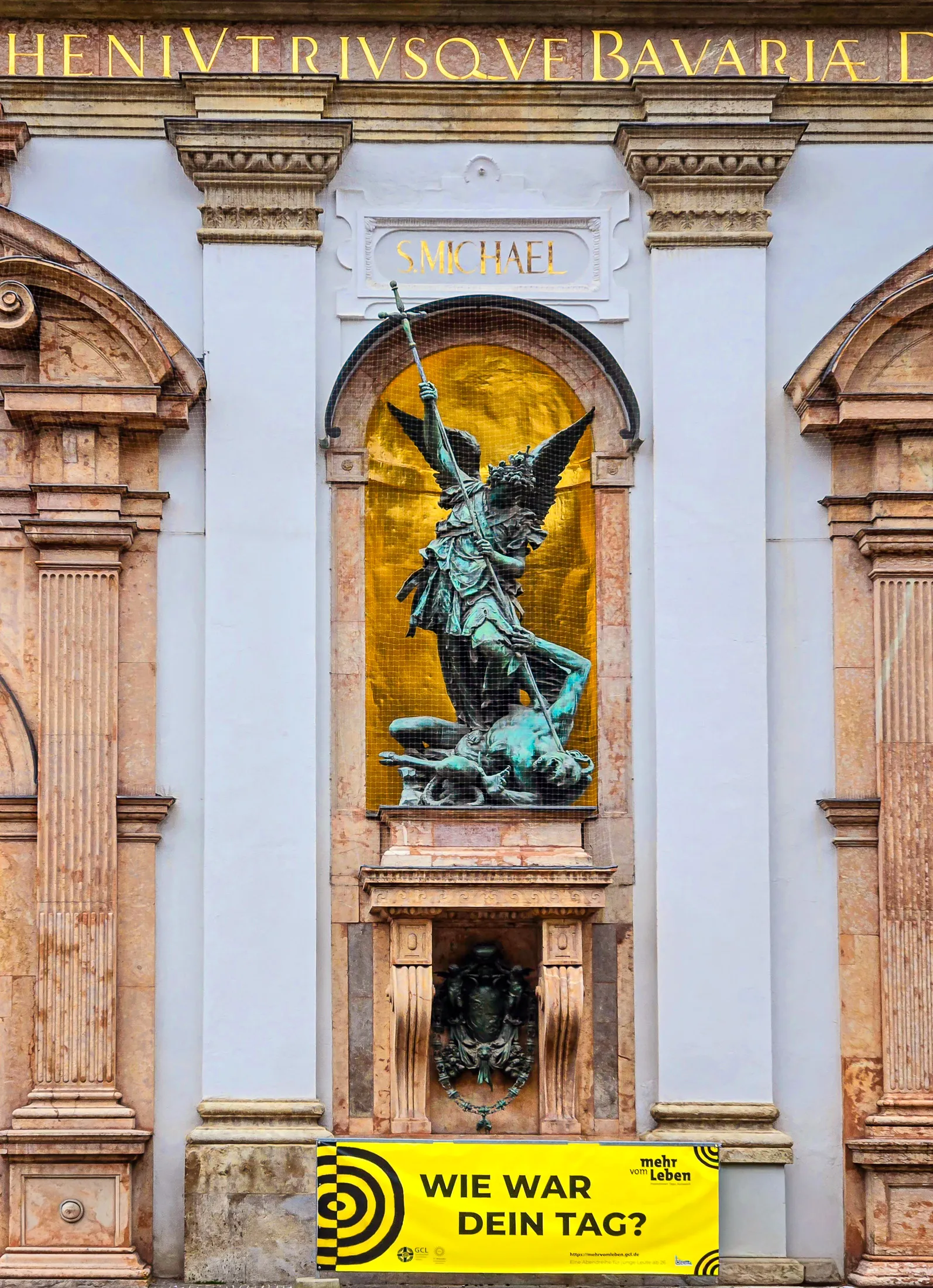
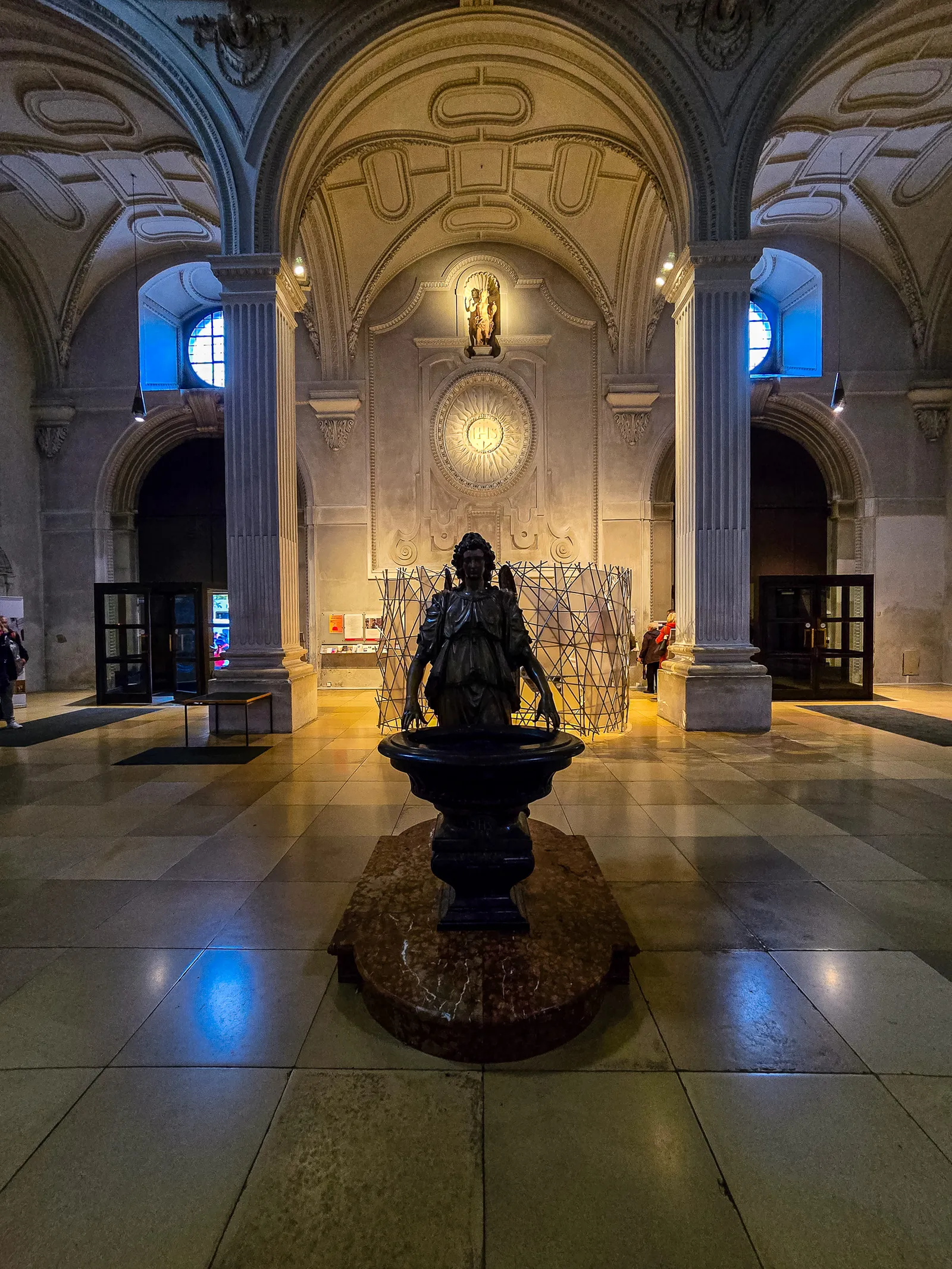
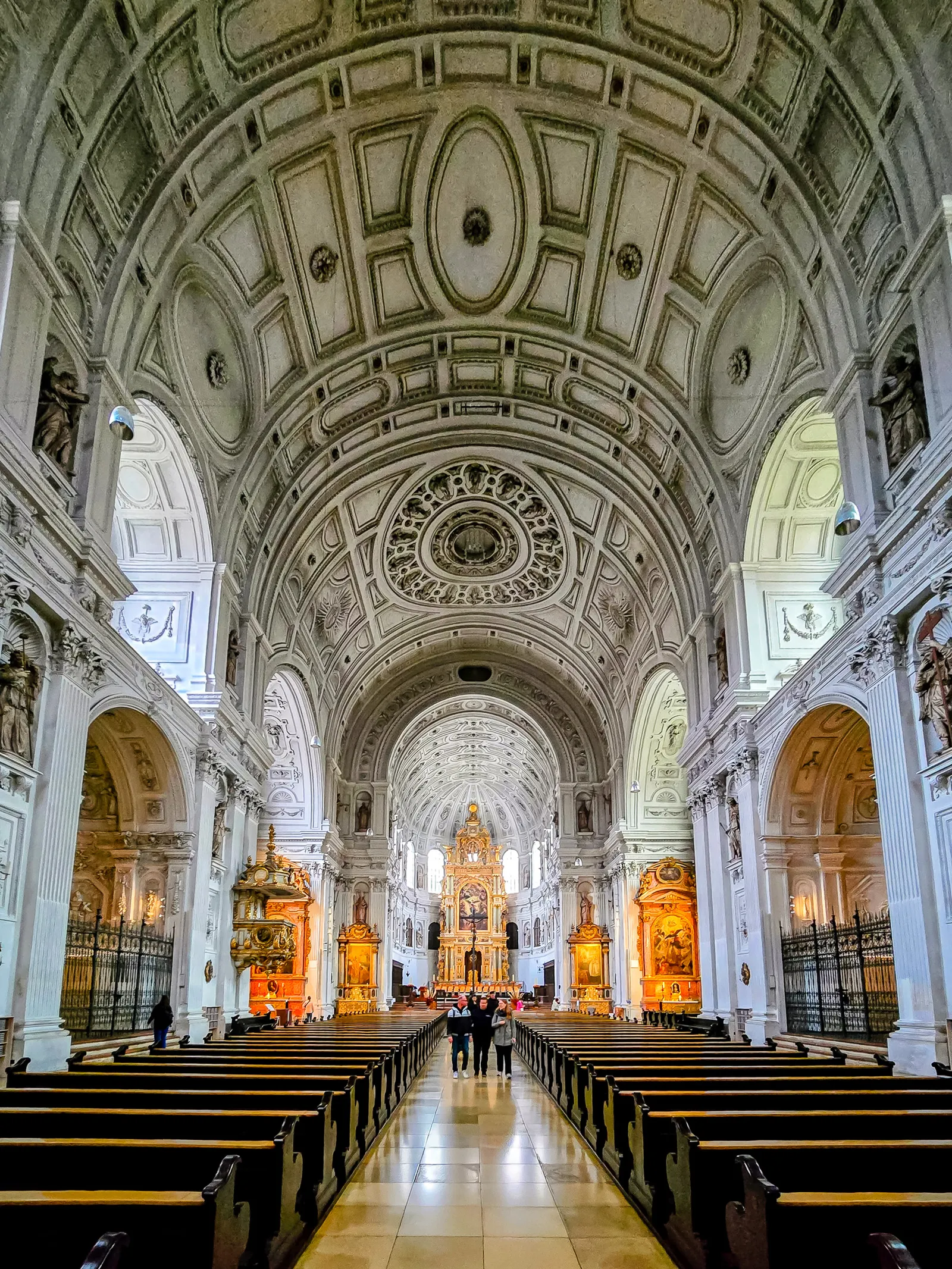
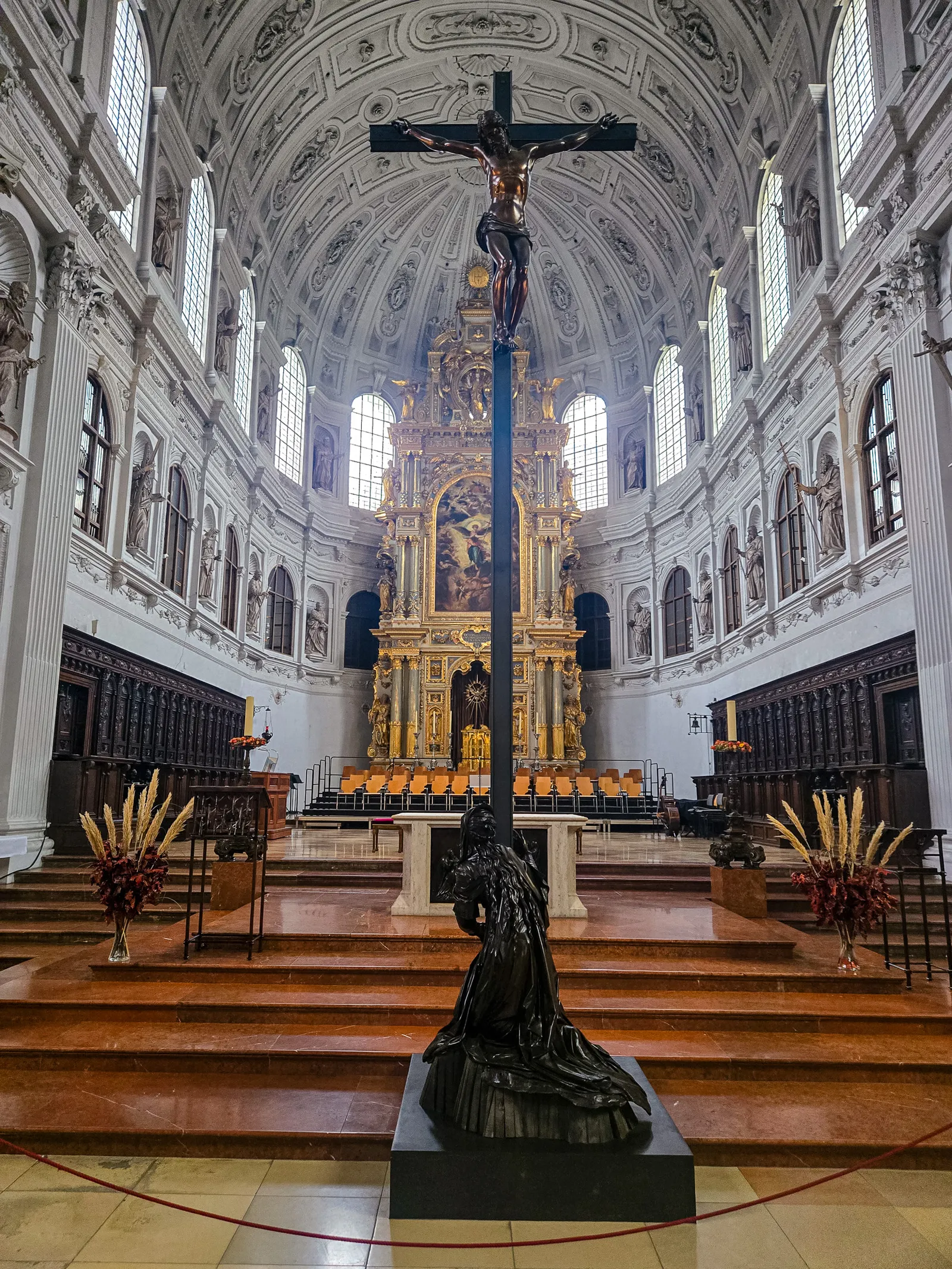
With only a day and a half in Munich, my ambitious itinerary quickly collided with reality. The Munich Residenz, the sprawling palace that served as the home of Bavaria's rulers for centuries, remained on my list. So did Nymphenburg Palace, the Castle of the Nymphs, with its expansive Baroque gardens. I had also hoped to stroll through the English Garden and watch surfers ride the famous Eisbach wave. Yes, river surfing in the heart of Munich has been a tradition since the early 1970s. Unfortunately, time slipped away. Poor planning also meant missing the climb to the top of either the Frauenkirche or St. Peter's Church for panoramic views of the city.
If you visit Munich, allow more than half a day for the area around Marienplatz alone. Between the Glockenspiel, the churches, the Viktualienmarkt, and the surrounding streets, there is far more to see than most first time visitors expect.
Germany delivered everything we had hoped for: fairy tale castles, dramatic gorges, rich history, and beautiful landscapes. While we occasionally found the locals reserved, and at times a bit direct, we also experienced genuine kindness. One memorable conversation was with a street vendor from Guatemala who had traveled the world before choosing Germany as his permanent home.
Austria, however, completely won us over. The scenery, the welcoming atmosphere, and the slower pace made it an easy favorite. Hope to return to the converted mill loft in Hallstatt someday.
After 18 days of traveling through four countries, what stays with me most is not just the famous landmarks, but the rhythm of the journey itself. Packing and unpacking became second nature. Unexpected detours turned into some of our favorite memories. Traveling with family added its own challenges, but it also made every experience richer. Looking back, I have come to realize that the best trips are rarely the smoothest. They are the ones that take you beyond your comfort zone and leave you with stories worth telling.